Sikorsky S-34

Sikorsky’s first attempt to build an amphibian, the six-seat S-34 NX883, flew in 1926. During a test flight in November 1927, piloted by Capt. Collier and with Igor Sikorsky as observer, it developed engine trouble while flying low over water and sank after forced landing. The two men were rescued and taken ashore by motor boat.

Sikorsky S-34 NX883

Engines: two 200hp Wright J-4
Wingspan: 50’5″
Sponsons width: 12’0″
Length: 34’0″
Useful load: 1600 lb
Max speed: 111 mph
Cruise: 90 mph
Stall: 52 mph
Range: 360 mi
Ceiling: 15,000′
Seats: 7

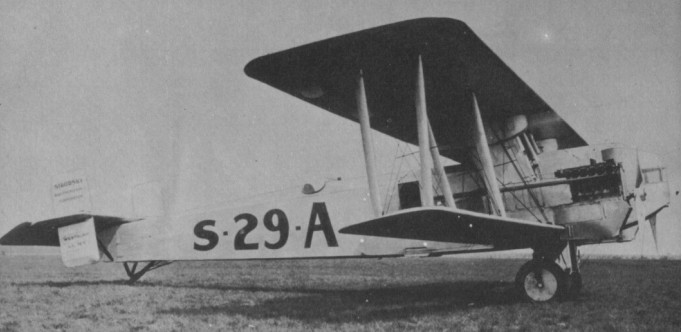
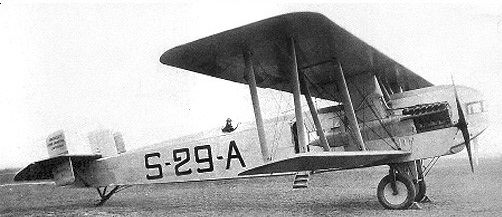
Sikorsky S-29-A

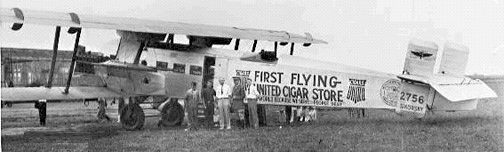
S-29-A 2756

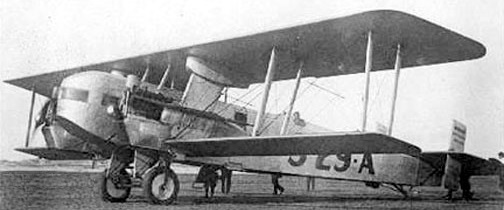
In New York, Sikorsky formed a small company and started to build the S-29-A, a twin-engined 14 passenger and freight carrier. With $5,000 finance from the great pianist and composer Sergei Rachmaninoff the S-29-A was completed. The suffix “-A” denoted “Made in America,” as 28 previous S-numbers were all built and utilized in Russia. First Sikorsky built in the US, originally had 220hp Hispano-Suizas

With Hisso engines

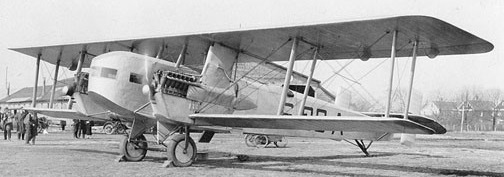
Rachmaninoff accepted the position of first vice-president of the struggling corporation. The engines were old, some of the parts from junkyards. On 4 May 1924 a take-off was attempted. With too many loyal passengers the aircraft flew, but crashed. The aircraft was rebuilt repowered with Liberty 12 engines.

With Liberty Engines

It was owned by Roscoe Turner and made many long-distance flights in the East and Midwest 1925-27, was even used to deliver two grand pianos.

In 1928, Howard Hughes bought the S-29A for use in his epic film “Hell’s Angels”. To simulate a First World War German Gotha bomber, he painted it black, with Maltese cross insignia and with machine-guns above the mid-fuselage cockpit, at side hatches and above and below the nose. In the film, the aircraft is seen to spin down and crash. Few of the viewers realized that the pilot had parachuted to safety, but that the man releasing the smoke trail from the rear fuselage had not known that the S-29A was out of control and died when it slammed into the ground.

S-29-A
Engines two 400hp Liberty 12
Wingspan: 69’0″
Length: 49’10”
Useful load: 4225 lb
Max speed: 115 mph
Cruise: 100 mph
Stall: 56 mph
Ceiling: 12,300 ft
Seats: 16

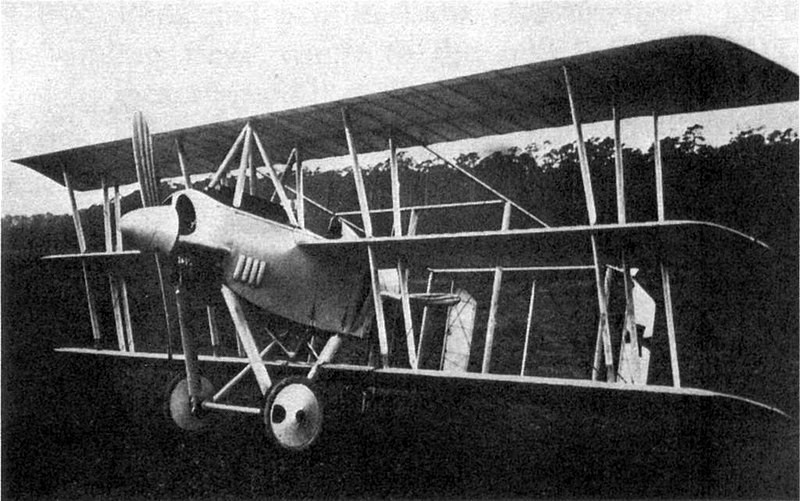
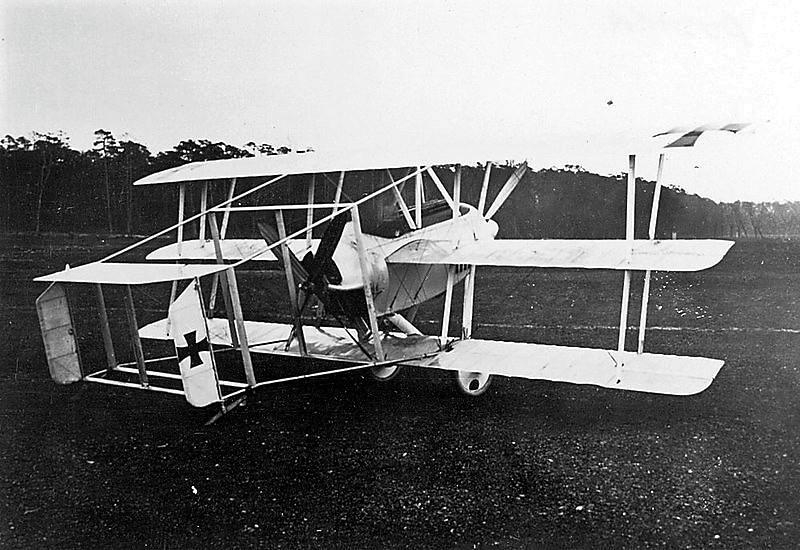
Siemen Schkukert DDr.I

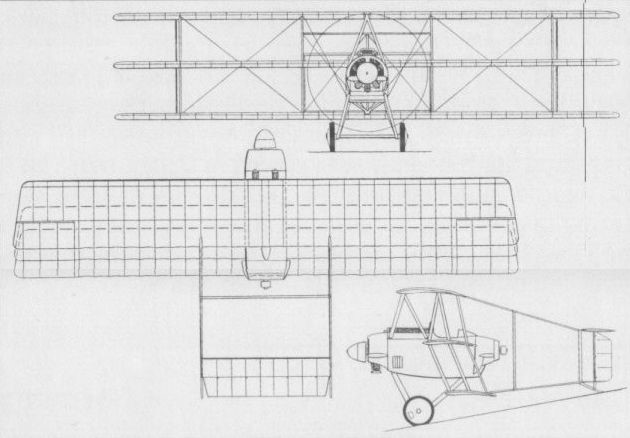
The Siemens-Schuckert DDr.I was a World War I German twin engine, push-pull configuration triplane fighter aircraft.

The DDr.I was one of the first aircraft to have two engines on the same centre line, one in tractor configuration and the other a pusher. It was a triplane with constant chord, straight edged, square tipped wings of equal span and marked stagger. These were divided into two bays by pairs of near-parallel interplane struts. The upper wing was braced over the fuselage with a pair of N-form struts, leaning inward from the upper fuselage to common mountings on the wing centre line. The middle wing of the triplane was positioned at shoulder height on the fuselage and the lower wing passed unbraced below. There were short span ailerons on each wing.

The smoothly faired and contoured short fuselage of the DDr.I positioned the open pilot’s cockpit between two 110 hp (82 kW) Siemens-Halske Sh.I nine cylinder rotary engines, one with a two blade tractor propeller and the other driving a four blade pusher turning just aft of the lower wing trailing edge. The empennage was mounted on four longitudinal, tubular outrigger beams, braced with vertical and transverse members. There were no fixed rear surfaces; the single piece, constant chord elevator reached between the two upper beams and a pair of similarly shaped rudder went from the upper to the lower beams, hinged further aft than the elevator but with their lower ends on a hinged frame that moved with it. The DDr.I had a fixed conventional undercarriage, with its mainwheels on a single axle mounted on wide spread V-struts attached to the lower fuselage at the lower corner points of each engine’s firewall.

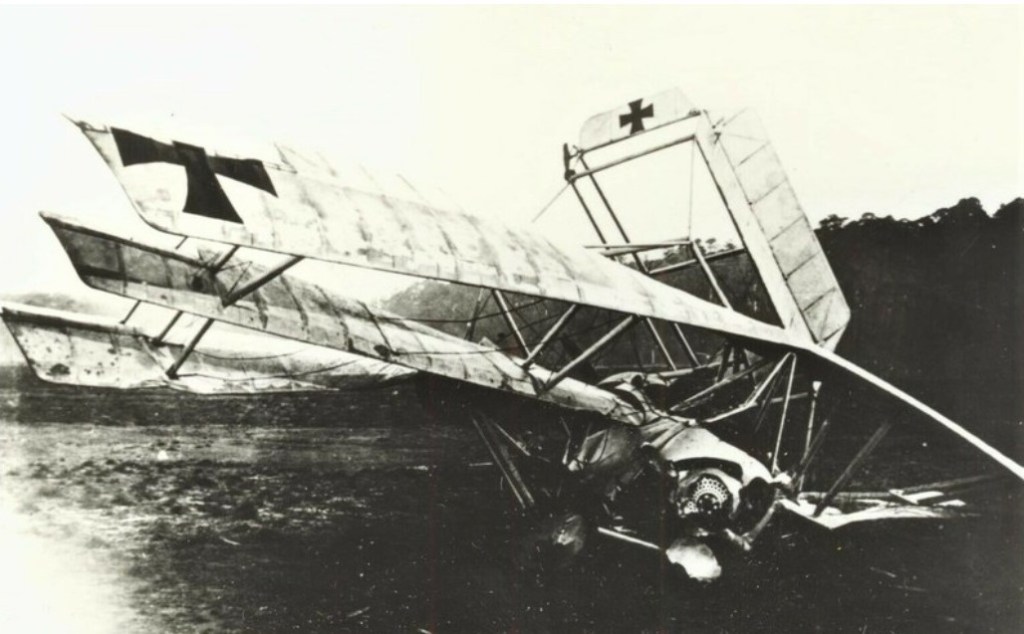
Engine control problems and a lack of stability experienced in the first flight, made on 9 November 1917, led to a crash; the aircraft was not rebuilt and plans for a more powerful version, the DDr.II, powered by two 160 hp (119 kW), Siemens-Halske Sh.III eleven cylinder rotary engines were abandoned.

Powerplant: 2 × Siemens-Halske Sh.1, 82 kW (110 hp) each
Propellers: 2/4-blade; the tractor propeller had two blades and the pusher four.
Wingspan: 10.9 m (35 ft 9 in)
Wing area: 30 m2 (320 sq ft)
Length: 5.8 m (19 ft 0 in)
Empty weight: 680 kg (1,499 lb)
Gross weight: 910 kg (2,006 lb)
Crew: One
Armament: 2×7.9 mm (0.311 in) calibre LMG 08/15 (Spandau) synchronised machine guns

SIAI-Marchetti SV-20

As a result of the seeming success of the SH-4, SIAI-Marchetti’s Sezione Volo Verticale (Vertical Flight Division) was formed in 1968 under the leadership of Dr. Emilio Bianchi.

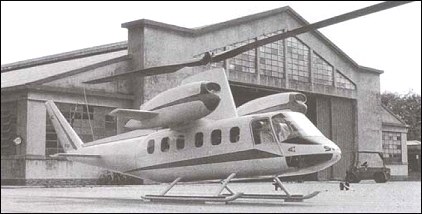
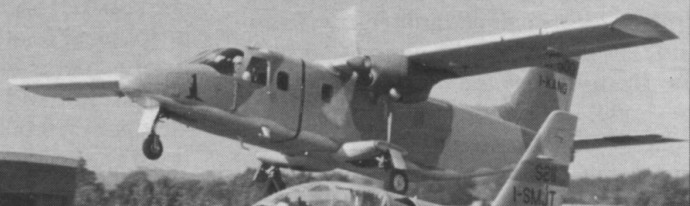
In July of that year, development began of the SV-20A (A = Alato or “winged”) – a 14-seat twin-engine, winged, high-speed helicopter – as well as the SV-20C (C = “compound”) – an improved performance version with a pusher propeller. The SV-20 was a project to design a helicopter that weighed 4,000kg when carrying a load greater than its empty weight and cruised at 390km/h.

In December 1968, fabrication of dynamic components and major dynamic assemblies, as well as a number of airframes, was begun (first flight was originally expected in 1970). A full-scale mock-up of the SV-20A was also completed and was shown at the Paris Air Show. By the end of 1972, about 200,000 manhours had been spent on the SV-20 design, including wind tunnel testing at the Universities of Turin, Milan, and Pisa, but a prototype was not completed.

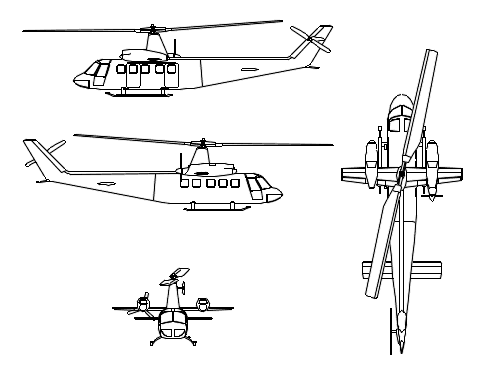
The SIAI-Marchetti SV-20 had a two-blade teetering-hub main rotor, anti-torque rotor and a high mounted cantilever wing. The SV-20C compound added a three-blade variable pitch pusher propeller driven by the right engine. The two United Aircraft of Canada PT6C engines would have been built under license by Motoren-und-Turbinen-Union (the successor to MAN) in Germany. Each engine had a maximum rating of 900hp, and were located in two nacelles on the wing; the Turbomeca Astazou XIVA or Rolls-Royce RS.360 were considered as alternates based on customer preferences. The cabin was designed to transport 12 passengers or 1250kg of cargo in addition to the two pilots. The SV-20C was projected to be about 80kg heavier than the SV- 20A, but about 110km/h faster.

The wings of the SV-20 had movable surfaces acting as flaps or ailerons, allowing the pilot to vary the load between the rotor and the wing. During high speed flight, the rotor was to be partially unloaded by the wing and the surfaces were used to augment roll control. A version with a “Fenestron” type tail rotor was planned in 1970.
Production jigs reportedly had produced numerous examples of many components by the end of 1972. A market of 500 units was expected, producing 40-60 SV-20s per year. Three prototypes were planned, but, despite initial talks with the FAA and the Registro Aeronautico Italiano (RAI) in January 1972, none of the prototypes were ever completed and the project was abandoned the following year. Agusta, which had acquired 30% of SIAI-Marchetti in 1970, had increased its stake to about 60% by 1973 and reached complete ownership in 1983.

CV-20C
Engines: 2 x PT6C-30, 671kW
Main rotor diameter: 12.86m
Tail rotor diameter: 2.50m
Length overall: 15.63m
Height overall: 3.55m
Wing span: 6.0m
Max take-off weight: 4000kg
Empty weight: 1950kg
Max speed: 390km/h
Cruising speed: 352km/h
Hover ceiling, OGE: 4400m
Hover ceiling, IGE: 6000m
Rate of climb: 9.65m/s
Range: 815km
Endurance: 3.7h
Savoia Marchetti SM.102

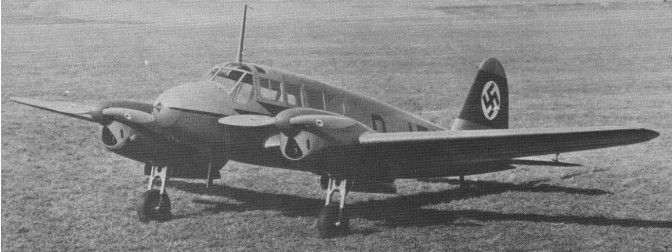
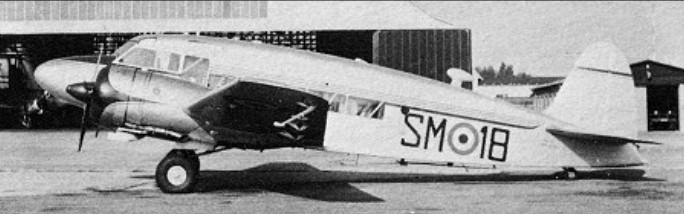
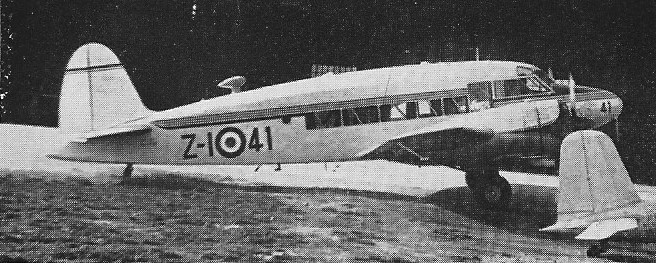
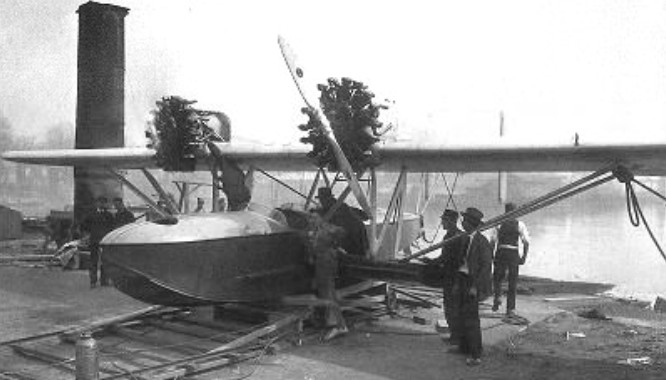
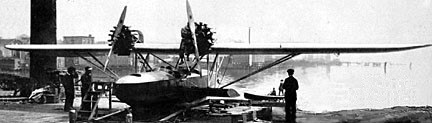
Twin-engined light transport aircraft accommodating eight passengers. The first prototype flew on 24 February 1949. Originally powered with two 500 hp Ranger SVG-770-C1B, the type was modified to take two Pratt & Whitney R-985 Wasp Junior radials and a small batch was built for the Italian Air Force.

Gallery

Engines: two Pratt & Whitney R-985 Wasp Junior
Wingspan: 18 m / 59 ft 1 in
Length: 43 ft
Height: 11 ft 5 in
Empty weight: 7600 lb
Max take-off weight: 5050 kg / 11133 lb
Max. speed: 330 km/h / 205 mph at 3280 ft
Cruise: 180 mph at 11,480 ft
Time to 5000ft: 6 mon
Service ceiling: 19,700 ft
Max range: 932 mi

SIAI Marchetti SF.600TP Canguro / General Avia SF600TP Cangaru / VulcanAir SF600TP Cangaru

The prototype SF600TP Cangaru (Kangaroo) general utility transport was built by General Avia and made its first flight on 30 December 1978. Production examples entered service in an air taxi role on 8 April 1988.

SIAI Marchetti SF.600TP Canguro Article

A choice of fixed or retractable undercarriage versions was available, the engines being 450 shp (335 kW) Allison 250-B17F turboprops.

Projected military versions of the twin-turboprop SF.600TP Canguro include a swing-tail cargo transport, an electronic warfare aircraft, and a maritime surveillance variant with an undernose 360o -scan Bendix RDR-1400 search radar. Two underwing and two underfuselage hardpoints are provided.

The basic utility version can be equipped with 12 inward facing seats for paradropping, four stretchers for medevac, or Zeiss type cameras for photographic reconnaissance, and can also be used for target or glider towing.

In 1990 the PADC in the Philippines started assembling S 211s, followed by SF 260 TPWs and SF 600 Canguro in agreement with SIAI Marchetti of Italy.

The SF.600 Canguro was taken over by VulcanAir.

SF.600TP
Engines: 2 x Allison 250-B17C turboprops, 450 shp (335 kW)
Max take-off weight: 3300 kg / 7275 lb
Wingspan: 15 m / 49 ft 3 in
Length: 12.15 m / 40 ft 10 in
Height: 4.6 m / 15 ft 1 in
Max. speed: 305 km/h / 190 mph
Ceiling: 7300 m / 23950 ft
Range: 1580 km / 982 miles

SIAI-Marchetti F.20 Condor / General Avia F.20 Condor

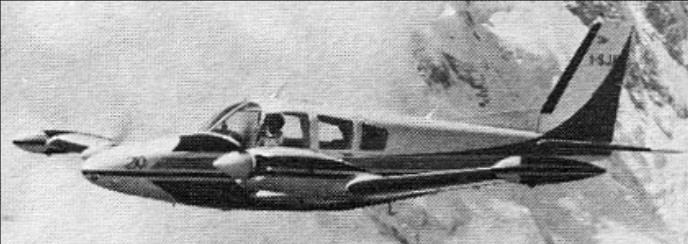
The four-seat twin-turboprop Condor was designed and developed to the prototype stage by General Avia for military duties such as multiengine and weapons training, maritime surveillance, SAR, anti-tank, and ground attack.

Following the first flight in May 1983, SIAI-Marchetti has been responsible for flight testing the F.20TP Condor aircraft, which can be fitted with two stores pylons under each wing. Low-priority development continued for some time.