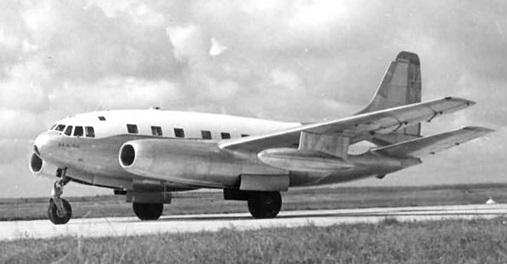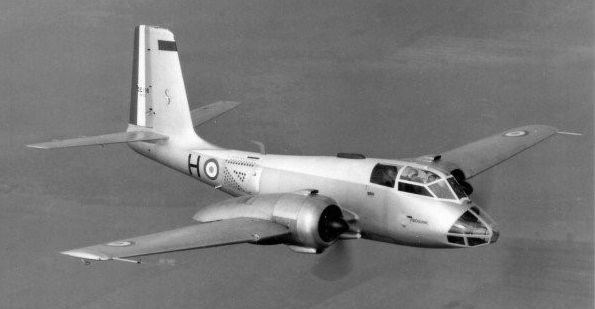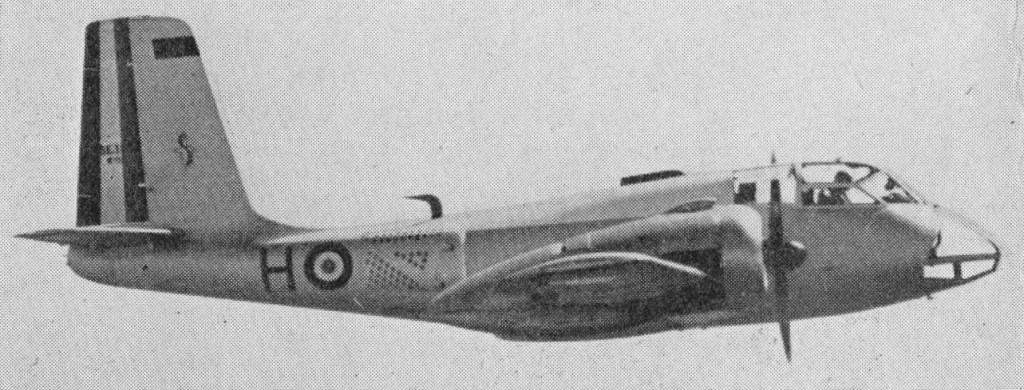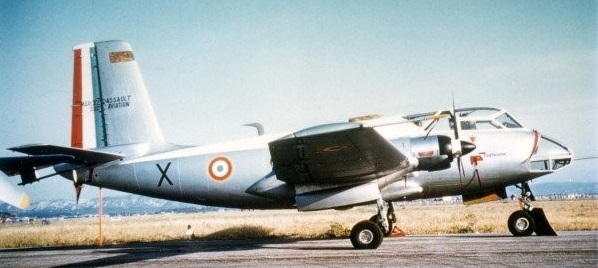
Sud-Ouest SO.4050 Vautour

After the cancellation of the SO.4000, the Sud-Ouest design team turned to a more refined type, the SO.4050 Vautour that eventually entered service in three versions optimized for MK.IIN all-weather interception, Mk.IIA close support, and Mk.IIB bombing from medium and high altitudes.

Sud-Ouest SO.4050 Vautour Article

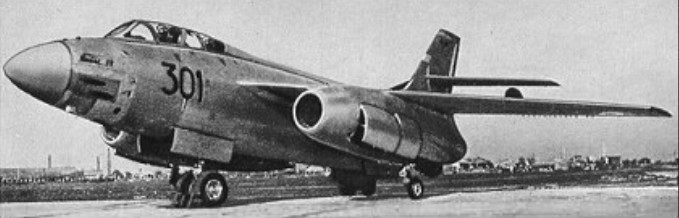
The SNCASO SO.4050 Vautour (Vulture) was first flown on 16 October 1952. Midway in size between small fighters and jet medium bombers, it had the same layout as the much bigger Boeing B 47, with a mid-high 35 degree swept wing, under-slung engines, a fighter type nose cockpit and so-called bicycle landing gear. The front wheels retract forward and the rear wheels rearward. Small balance wheels were under each engine nacelle. Fitted with conventional ailerons, rudder, all-moving tailplane, split flaps, and an air brake on each side of the rear fuselage.

Each engine was fed from its own set of fuel tanks. The inner 17 fuel tanks had an automatic system to “isolate” cells which caught fire or to neutralize leaks in the passages. The pilot could direct or divert flow of fuel in case of damaged pipes or engine malfunction. The Vautour didn’t have inflight refuelling devices. Only the experimental (FR-AF) IIA(R) s/n 8, was tested as an air tanker for the Mirage-4.

The Vautour prototype was the first French twin-jet aircraft to exceed the speed of sound in a shallow dive. Various engines were fitted in the three prototype and six pre-production models but all production Vautours had Atar turbojets.

Produc¬tion took place later in three versions. The Vautour IIA is a single seat tactical fighter, of which 30 were built, the first production machine flying on 30 April 1956. Twenty-five Vautour II-As were supplied to Israel.

Vautour IIA
Vautour IIB

Only one of the six pre-production Vautours was a bomber, the others consisting of two tactical support aircraft and three all-weather fighters. The Vautour IIB had a single seat pilot cockpit similar to that of the Vautour IIA attack version, but added a glazed nose for a navigator/bombardier who could use a conventional bombsight. Navigation was mainly by a twin gyro platform and Doppler radar, and considering the small dimensions of the aircraft an excellent bombload could be carried both internally and externally. The first production aircraft of this IIB sub type flew on 31 July 1957 and eventually 40 were delivered to equip the Armee de l’Air’s 92e Escadre, which was the original operating ele¬ment of the Commandement des Forces Aeriennes Strategiques (strategic air command). Special bomb-dropping gear was developed for them in which the weapons were extended below the bomb bay prior to release, to make possible attack a transonic speeds from all altitudes. The Vautour IIB (redesignated Vautour IIAB after fitting one piece tailplanes in the early 1960s) was replaced by the Dassault Mirage IVA from 1965.

The first of 70 Vautour II-N all weather fighters flew on 10 October 1956.
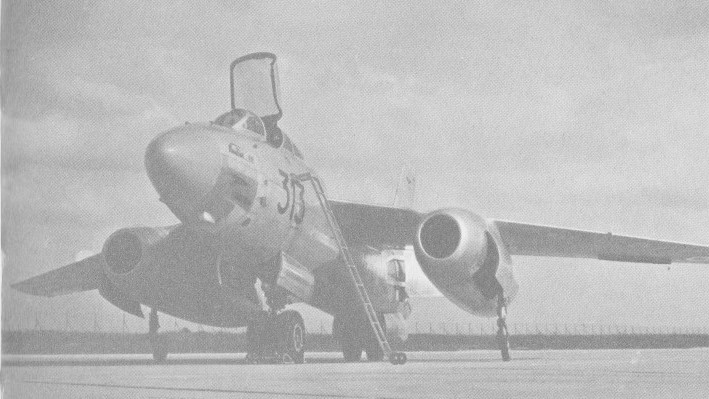
SO.4050 Vautour II-N

It was in service with the air forces of France (II-Bs and II-Ns) and Israel (25 II-As).

Gallery

Mk.IIA
Engine: 2 x SNECMA Atar 101F-3, 34.3kN, 7716 lb
Wingspan: 15.09 m / 49 ft 6 in
Wing area: 484.4 sq.ft
Length: 15.57 m / 51 ft 1 in
Height: 4.5 m / 15 ft 9 in
Max take-off weight: 20000 kg / 44093 lb
Empty weight: 10000 kg / 22046 lb
Internal fuel: 5,364 lt / 17 tanks
Weapon bay fuel capacity: 3,000 lt (2 x 1,500 lt tanks)
External fuel: 2 drop tanks of 1,300 lt or 600 lt
Max fuel capacity: 10,964 lt / 8,771 kg
Max. speed: 1105 km/h / 687 mph at SL
Ceiling: 15000 m / 49200 ft
Armament: 4 x 30mm cannons, 1850kg / 6000 lb of bombs
Seats: 1

Mk.IIB
Type: two seat bomber
Engines: 2 x Powerplant: 2 x SNECMA Atar 101 E 3 turbojets, 3500 kg (7,720 lb)
Wing span: 15.1 m (49 ft 6.5 in)
Length: 15.55 m (51 ft 0.25 in)
Height: 4.32 m (14 ft 2 in)
Wing area: 45.00 sq.m (484.4 sq ft)
Empty wt: 10470 kg (23,082 lb)
MTOW: 21000 kg (46,300 lb)
Max speed: 1100 km/h (685 mph) at low level and 950 km/h (590 mph) at 12190 m (40, 000 ft)
Radius with max bombload: 930 km (580 miles)
Max range: 5950 km (3,700 miles)
Armament: internal six bombs of 340 kg (750 lb)
Hardpoints: four – 500 kg (1, 102 lb) each
Weapon bay fuel capacity: 3,000 lt (2 x 1,500 lt tanks)
External fuel: 2 drop tanks of 1,300 lt or 600 lt

Mk.IIN
Engines: 2 x SNECMA Atar 101E-3 turbojet, 7716 lb
Wingspan: 49 ft 6.5 in
Length: 14 ft 1.75 in
Wing area: 484.4 sq.ft
Empty weight: 23,150 lb
MTOW: 45,635 lb
Internal fuel: 4426 lt
Weapon bay fuel capacity: 3,000 lt (2 x 1,500 lt tanks)
External fuel: 2 drop tanks of 1,300 lt or 600 lt
Max fuel capacity: 10,026 lt / 8,021 kg
Max speed SL: 685 mph
Max ROC: 11,800 fpm
Service ceiling: 50,000 ft
Armament: 4 x DEFA cannon
Hardpoints: 4
Seats: 2

IIBR
Engines: 2 x Powerplant: 2 x SNECMA Atar 101 E 3 turbojets, 3500 kg (7,720 lb)
Max speed: 1100 km/h (685 mph) at low level and 950 km/h (590 mph) at 12190 m (40, 000 ft)
Radius with max bombload: 930 km (580 miles)
Max range: 5950 km (3,700 miles)
Empty wt: 10470 kg (23,082 lb)
MTOW: 21000 kg (46,300 lb)
Wing span: 15.1 m (49 ft 6.5 in)
Length: 15.55 m (51 ft 0.25 in)
Height: 4.32 m (14 ft 2 in)
Wing area: 45.00 sq.m (484.4 sq ft)
Weapon bay fuel capacity: 1 x 1,500 lt tank
External fuel: 2 drop tanks of 1,300 lt or 600 lt
Max fuel capacity: 9,464 lt
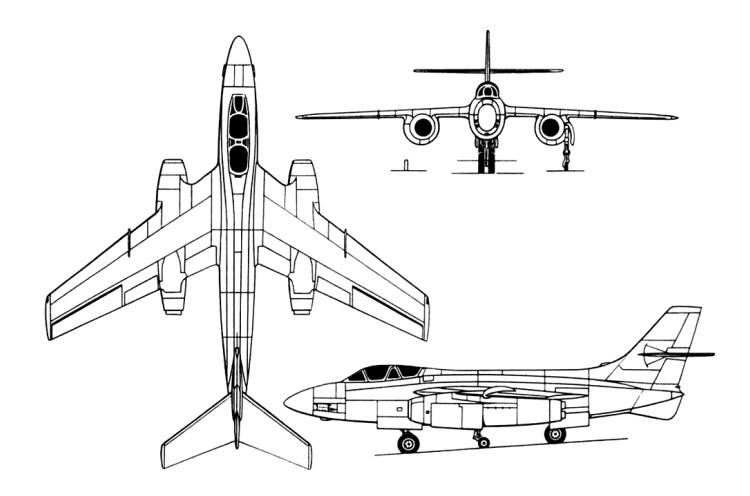
Sud-Ouest SO 4050 Vautour

Sud-Ouest SO 4000

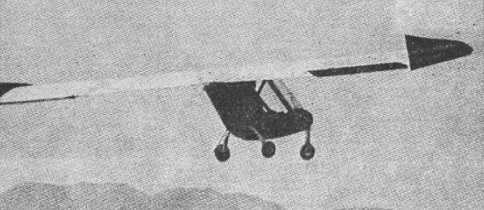
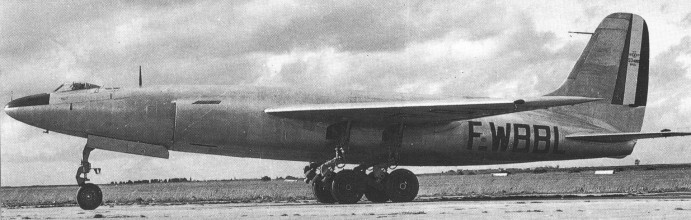
The SO 4000 was developed by the Société Nationale de Constructions Aéronautiques de Sud-Ouest (SNCASO) to meet an Armée de l’Air requirement formulated shortly after WWII for a twin-turbojet bomber capable of high subsonic speeds and having a maximum loaded weight of 25-30 tonnes. The SO 4000 project competed with the NC 270 project tendered by the SNCA du Centre, and after the flight testing of manned scale models, the SNCASO bomber was selected for further development. The half-scale model predecessors of the SO 4000 were the SO M.1 glider (F-WFDJ) and the powered SO M.2 (F-WFDK).

The single prototype of the full-scale SO 4000 bomber, (F-WBBL) had been rolled out for the first time on 5 March 1950. While essentially similar in configuration to the M.1 and M.2, the SO 4000 featured a tall undercarriage comprising a single nosewheel and tandem mainwheels each with independent legs. This undercarriage proved somewhat fragile, collapsing during ground trials on 23 April. After repairs were completed, flight testing finally commenced at Orleans-Bricy on 15 March 1951, test pilot Daniel Rastel being accompanied by flight engineer Pistrak.

The SO 4000 was powered by two Rolls-Royce turbojets mounted side-by-side in the rear fuselage, these being fed via lateral intakes immediately aft of the pressurised forward fuselage. Fuel was accommodated above the weapons bay in the centre fuselage and proposed defensive armament consisted of remotely-controlled gun barbettes at the wingtips. The 31 deg swept wing had a 10 per cent thickness/chord ratio from root to tip and the control arrangement was fundamentally similar to that of the M.2. The initial flight of the SO 4000 was also to prove its last as the undercarriage collapsed once more on alighting, the programme subsequently being discontinued as a result of a reduction in military credits.

Engines: 2 x Rolls-Royce Nene 102 turbojets, 4,980 lb st (2 260 kgp)
Fuel cap: 1430 ImpGal (6500 lt)
Wing span: 58 ft 7 1/8 in (17,86 m)
Length: 64 ft 9½ in (19,75 m)
Wing area of 807.32 sq ft (75,00 sq.m)
Empty wt: 36,5581b(16 583 kg)
Loaded wt: 48,510 lb(22 005kg)
Estimated performance – Max speed of 528 mph (850 km/h) at 29,530 ft (9 000 m) or Mach 0.78 and 515 mph (830 km/h) at sea level or Mach 0.675.

Sud-Ouest S.O.4000

Sud-Ouest SO.1310 Farfadet

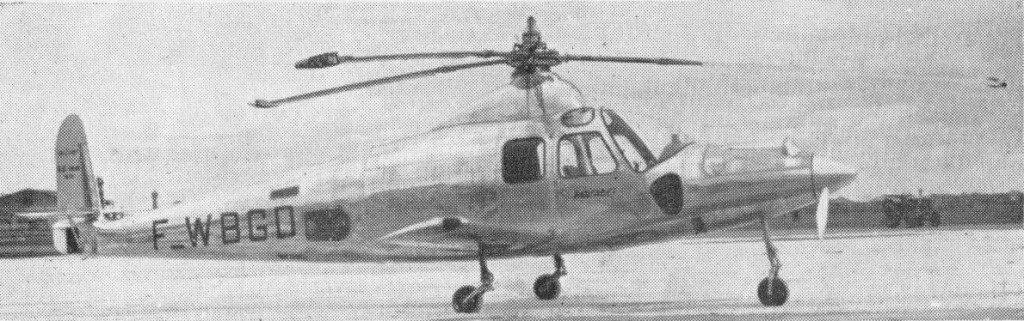
This is the first French convertible. It can take off vertically, hover in the air, land vertically by means of its rotor, and fly forward at a speed greater than that of pure helicopters by means of a fixed wing and an airscrew fully independent of the rotor.

The change from one state to the other is accomplished without any change at all in the external appearance.
The SO.1310 is provided with two independent power units. In the rear is an Arrius II 360hp Turbomeca unit, which supplies the jet rotor with compressed air at take-off. The all-metal three-bladed rotor is identical with the one used in the SO.1120 Ariel III, but with a larger diameter.

In the forepart there is a Turbomeca Artouste II turbo-prop engine with a take-off power of 360 hp, operating a variable-pitch airscrew. During forward flight, the rotor originally used for take-off continues to auto-rotate, but with low lift, and the greater part of the lift is transferred to the fixed wing. Mounted over the fixed wing is the pilot’s cabin, fitted with dual control, and in this cabin there is room for either three passengers, a freight load or two stretchers stacked on top of each other.

The Farfadet single prototype F-WBGD first flew on 8 May 1953. Its maiden flight, lasting about twenty minutes, was made as a true helicopter, the following one, on the same day, with the rotor and the airscrew respectively powered by their individual engines.

SO.1310 Farfadet
Engine: 1 x 360 hp Turbomeca Artouste II gas turbine & 1 x 360 hp Turbomeca Arrius II gas turbine
Rotors: 3-blade tip-powered main rotor; 2-blade propeller
Rotor diameter: 11.2m / 36 ft 6 in
Wingspan: 6.3m / 19 ft
Fuselage length: 10.08m
Height: 3.3m
Weight fully loaded: 1510kg
Empty weight: 995kg
Cruising speed as a helicopter: 155km/h
Cruising speed as an autogyro: 250km/h
Range: 400km / 250 miles at 149 mph
Seats: 3

Sud-Ouest SO.95 Corse II

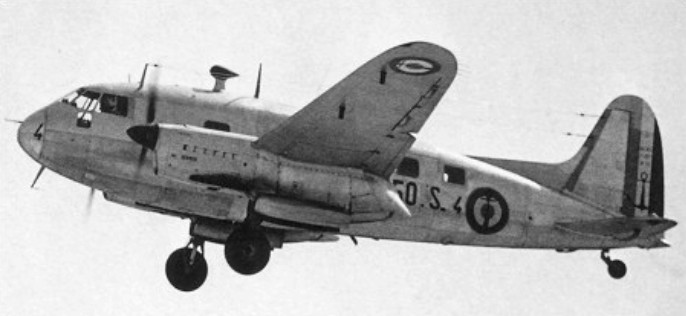
The SO.95 Corse II was a light twin-engined transport, the prototype flying on 17 July 1947. The type was originally fitted with a tailwheel undercarriage, which was retained in the civil version, but the military variant featured a tricycle landing gear. The Corse II was used almost exclusively by the light transport units of the French Naval Air Arm; only two saw regular airline service, operating with Air Services of India between Bombay, Bangalore and Delhi before being withdrawn in 1950.

Engine: 2 x 580hp Renault 12S-02-201 V-12
Max take-off weight: 5600 kg / 12346 lb
Wingspan: 18.00 m / 59 ft 1 in
Length: 12.32 m / 40 ft 5 in
Height: 4.30 m / 14 ft 1 in
Max. speed: 330 km/h / 205 mph
Ceiling: 7000 m / 22950 ft
Range: 1300 km / 808 miles
Crew: 2
Passengers: 10-13

Sud-Ouest SO 30 Bellatrix / Bretagne

SO 30 Bretagne

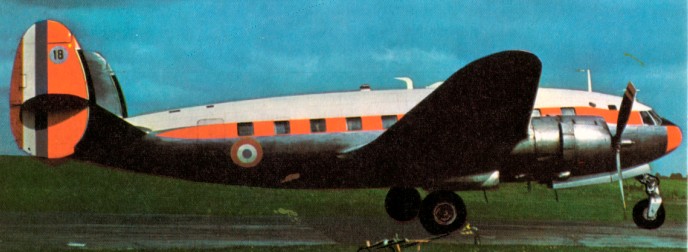
Early in 1941, the Groupe Technique de Cannes initiated the design development of a twin-engined pressurised 23-passenger transport, the SO 30N Bellatrix. Prototype construction was complete by November 1942, but the Italo-German Armistice Commission would not permit flight testing. When, a year later, the line of demarcation between occupied and unoccupied zones of France was abolished, the Bellatrix prototype was hurriedly dismantled and the components distributed in farm outbuildings and barns in the vicinity of Draguignan. After the liberation of the area, the components were recovered and returned to the factory where the aircraft was reassembled and, registered F-BALY, flown for the first time on 26 February 1945. In the meantime, design development had been continuing and a 30-passenger version evolved, this, the SO 30R having 1,650 hp Gnome-Rhóne 14R engines in place of the 1,180 hp G-R14Ns and wing area increased from 775 sq ft (72,00 sq.m) to 88264 sq ft (82,00 sq.m). Two prototypes of this version were built, the SO 30R-01 (F-WAYA) with a single fin-and-rudder assembly and which flew on 6 November 1945, and the SO 30R-02 (F-WAYB) with twin fins and rudders.

Sud-Ouest SO 30 Bellatrix / Bretagne Article

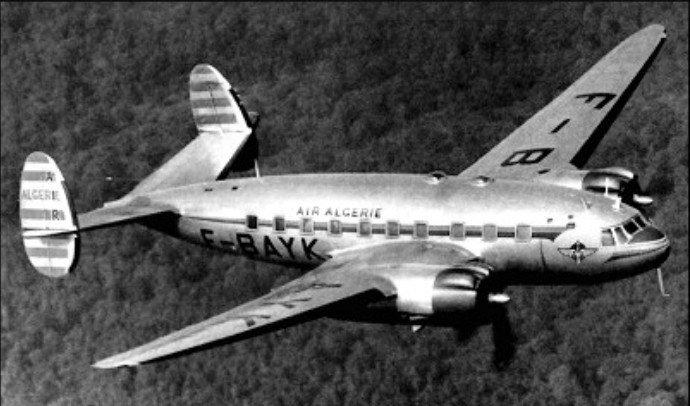
Various changes were subsequently in¬corporated in the design in order to conform with ICAO requirements and Air France recommendations, and the design was still further scaled-up, and a production prototype powered by 1,620 hp Pratt & Whitney R-2800-B43 engines and designated SO 30P Bretagne was flown on 11 December 1947. Production was initiated, and with the 10th aircraft (F-WAYL), flown in September 1949, the -B43 engines gave place to R-2800-CA18s rated at 1,800 hp and developing 2,435 hp with water injection. Internal layouts provided accommodation for 30 or 37 passengers, and the 12th production aircraft (F-WAYO) was later converted as the all-cargo SO 30C with under-fuselage loading doors, trials with this variant commencing on 6 January 1950. Forty-five SO 30P Bretagnes were built, of which 19 went to the Aéronavale and others subsequently to the Armée de lAir. The 24th production example was delivered as a personal transport for the then President of France, eight were used by Air Algêrie, 12 by Air Atlas-Air Maroc (and its successor, Air Maroc), six by Aigle Azur and at least seven by Société des Transports Aèriens de l’Extréme Orient (COSARA).

The SO 30R-02 was eventually modified as a test-bed for Hispano-Suiza-built Rolls–Royce 101 Nene turbojets, this being fitted with a new single fin-and-rudder tail assembly and flown in this form on 15 March 1951, and the second SO 30P (F-WAYD) underwent similar modification for use as a test-bed for the SNECMA Atar 101.

SO 30P Bretagne
Engines: 2 x 1620hp Pratt & Whitney R-2800-B43 Double Wasp 14-cylinder radial
Max take-off weight: 18900 kg / 41668 lb
Wingspan: 26.89 m / 88 ft 3 in
Length: 18.95 m / 62 ft 2 in
Height: 5.89 m / 19 ft 4 in
Max. speed: 416 km/h / 258 mph
Ceiling: 6500 m / 21350 ft
Range: 1500 km / 932 miles
Crew: 2
Passengers: 30-37

SO 30P
Engines: 2 x R-2800-CA18 Double Wasp, 1620 hp
Empty equipped weight: 29,762 lb (13 500 kg)
Loaded weight: 42,990 lb (19 500 kg)
Maximum speed: 303 mph (488 km/h) at 18,045 ft (5 500 m)
Cruise: 272 mph (438 km/h) at 17,390 ft (5 300 m)
Ranges with full reserves: 850 mls (1370 km) with a 7,275-lb (3 300-kg) payload
Ranges with full reserves: 310 mls (500 km) with 9,259-lb (4200-kg) payload
Wing span: 88 ft 3 in (26,90 m)
Length: 62 ft 2in (18,95 m)
Wing area: 925.69 sq ft (86,00sq.m)
Pax cap: 35

Sud-Aviation SA-610 Ludion

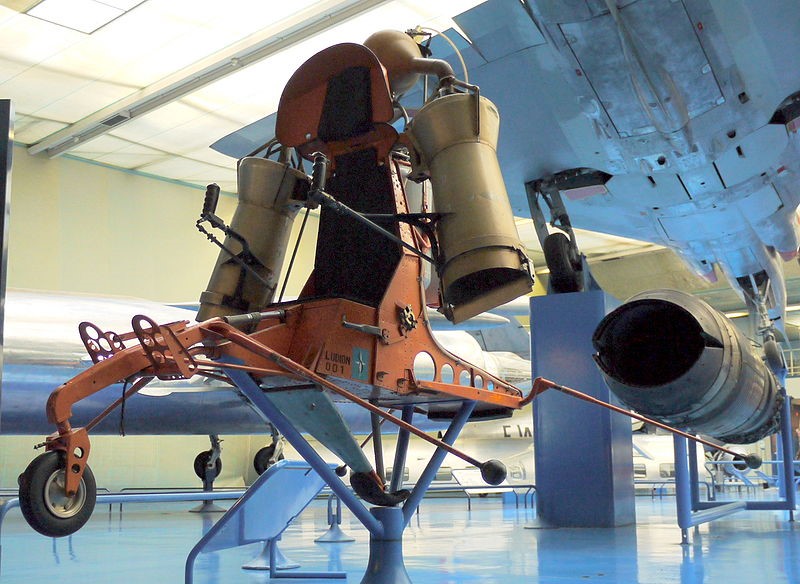
The Sud Aviation/Aérospatiale SA-610 Ludion (Ludion – Cadet) was a tiny, unorthodox VTOL aircraft demonstrated at the 1967 Paris Air Show. It consisted of little more than a chair, behind which were mounted two downward-pointing augmented rocket engines with control provided by thrust vectoring. The Ludion was intended to carry its pilot and 30 kg (66 lb) of equipment up to 700 m (2,300 ft) at an altitude of up to 200 m (600 ft).

The unusual powerplant consisted of a monofuel de-composition chamber fed with pressurised isopropyl nitrate (AVPIN), ignited by a catalyst. The high pressure gasses produced in the de-composition chamber were fed to two augmentor tubes, built by Bertin, either side of the pilots seat, angled slightly outwards. As the gasses entered the augmentor tubes through rocket nozzles, thrust was augmented by inducing airflow through the ducts which acted as aero-thermo-dynamic ducts, due to the heat and kinetic energy added to the flow through the ducts, and the carefully shaped exhaust nozzles.

SA-610 Ludion
Powerplant: 1 × SEPR S178 isopropyl nitrate (AVPIN) decomposition gas generator with augmentor tubes
Length: 1.95 m (6 ft 5 in)
Width: 1.485 m (4 ft 10 in)
Height: 1.6 m (5 ft 3 in)
Empty weight: 90 kg (198 lb)
Gross weight: 170 kg (375 lb) approx
Capacity: payload 30 kg (66 lb)
Crew: 1
Ceiling: 700 m (2,297 ft)

Stroukoff YC-134 Pantobase

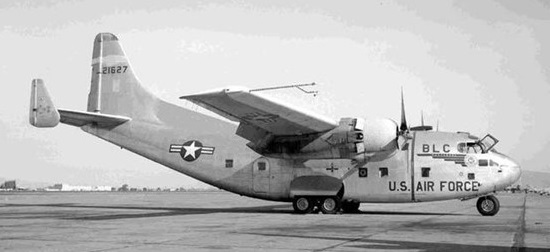
YC-134 52-1627 at Moffett Field, June 1959

The Stroukoff YC-134, designed in 1956, was based heavily on the Fairchild C-123 Provider. The United States military contracted with Stroukoff Aircraft Corporation to develop an improved version of the aircraft, combining features that the company had developed for the YC-123D and YC-123E.

The product of a US Air Force contract in 1956, a single C-123B from the -CN production block (serial 52-1627) was modified by Stroukoff Aircraft to become the YC-134. This aircraft was heavily modified with the following new features:

New Engines: The YC-134 was equipped with two 3,500 hp (2,600 kW) Wright Turbo Compound R3350-89A radial engines, turning four-blade, thirteen foot Aeroproducts constant-speed fully feathering propellers.

A new thickened wing. In the root of the wing they installed two turbocompressors with 400 hp each

Improved Control Surfaces: The YC-134’s horizontal stabilizers were given endplates to improve directional stability.

Improved landing gear: While the nosewheel from the C-123B was retained, both main gears were given a third wheel to improve weight distribution.

Fuel was no longer housed in the rear of the engine nacelles, but in an expanded center-wing fuel tank. In addition, two plumbed hardpoints for 550-gallon drop tanks were also added to each wing.

Stroukoff’s BLC and Pantobase: the YC-134 was fitted with Stroukoff’s own BLC and all three aircraft had they been delivered were to have been fitted with the Pantobase equipment designed for the YC-123E.

The features gave an empty weight increase over the C-123B from 31,058 lb (14,088 kg) to 37,965 lb (17,221 kg), and a maximum loaded weight increase from 60,000 lb (27,000 kg) to 74,700 lb (33,900 kg). The aircraft’s cruising speed was 219 mph (352 km/h), compared to the C-123B’s 190 mph (310 km/h), and the YC-134 had a 1,600-mile (2,600 km) range with a 24,000 lb (11,000 kg) payload. The BLC allowed the YC-134’s take-off distance to decrease from 1,850 feet (560 m) to 750 feet (230 m), very similar to that of the YC-123D.

The aircraft for the first time rose into air on 19 December, 1956, on the tests were obtained good results, and servicemen ordered two additional machines. On them they installed the modernized boundary-layer control system with one more powerful compressor and “pantobase”. The YC-134 gained the designation “Pantobase” after hydro-skis were added. The YC-134 demonstrated following: takeoff on the earth – 244 m, on the snow and the water – 458 m; path on the earth – 320 m, on the snow – 305 m, on the water – 228 m. In the beginning of 1958 all three YC-134 were transferred to the Air Force.

One conversion to a YC-134 (YC-123D) was made in 1956 (53-8068), powered by two 3500hp Wright R-3350, with similar dimensions to the Fairchild C-123B. Fitted with a boundary layer control system, tailplane endplates, and tandem mainwheels.

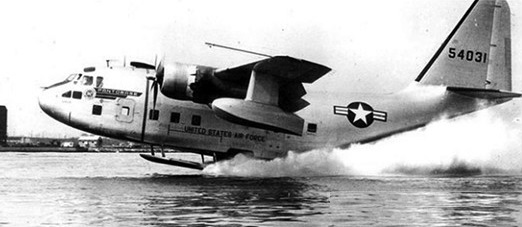
The 1958 YC-134A had a sealed and strengthened fuselage and “Pantobase” multi-purpose landing gear fitted with land/water skis and wingtip floats. Began as Chase C-123B 52-1627 rebuild then was modified by Fairchild as YC-123B with wingtip J44 jets, and later reputedly converted by Stroukoff as YC-134A “Pantobase” with R-3350-89A engines and boundary layer control.

The U.S. Air Force, however, deemed that the YC-134 did not offer substantial improvement over the C-123, nor did it have a requirement for a piston-engined amphibious assault transport, and decided to purchase the Lockheed C-130 Hercules.

YC-134A 55-4031) with Pantobase system for amphibious operations

YC-134-SA
Engine: 2 × Wright R-3350-89A, 3,500 hp
Payload: 24,000 lb
Empty weight: 37,965 lb (17,221 kg)
Max. takeoff weight: 74,700 (33,900 kg)
Cruise speed: 219 mph (352 km/h)
Range: 1,600 miles (2,600 km) with 24,000 lb (11,000 kg) payload
Take-off distance: 750 feet (230 m)

Striplin FLAC / Super FLAC

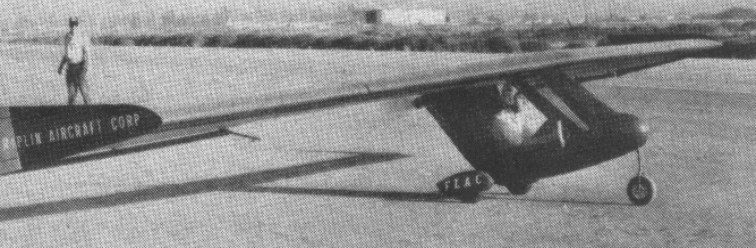
Single seat twin engined high wing mono¬plane with conventional three axis control. Wing has swept back leading edge, and tapering chord; no tail. Pitch/roll control by stabilator; yaw control by tip rudders; control inputs through stick for pitch/roll and pedals for yaw. Cantilever wing; wing profile Worthmann FX 126; double surface. Undercarriage has three wheels in tricycle formation; nosewheel retractable; suspension NC on nosewheel and glass fibre suspension on main wheels. Push right go right nosewheel steering connected to yaw control (Flac). No ground steering (Super Flac). Brakes Nod. Glass fibre/foam fuselage, totally enclosed. Engines driving pusher propeller.

Designed in June 1977, the prototype Flac (Foot Launch Air Cycle) made its first flight on the 24 October 1978 and despite its name was fitted with an auxiliary undercarriage to help the legs of its occupant. A tail less aircraft with a cantilever high wing set at 3 deg incidence with 8 deg of leading edge sweep back, even the earliest Flacs had a closed cabin of glass fibre and polyurethane foam, mounted under the wing. The wing tips were furnished with fins carrying rudders, while the stabilators at the trailing edge acted as elevators when used together or as ailerons when used differentially. The wing structure was glassfibre and epoxy on a foam base, fabric covered between spar and trailing edge. The main undercarriage was mounted on glassfibre legs, while the steerable nosewheel was manually retractable into the fuselage nose.

With two Chrysler Westbend motors giving 9hp each, the Flac cruised at 65mph (105kph) with a Vne of 80mph (129kph), a stall around 20 mph (32 kph) and a climb rate of 1630 ft/min (8.3 m/s). Add in weights of 156 I.P (71 kg) empty and 386 lb (175 kg) at maximum gross and a range of 200 mile (322km) on 5.0 US gal (4.2 Imp gal, 18.9 litre.

In addition to two prototypes, five Flacs had flown by January 1980 and 79 were being built by amateurs. Ken Striplin was not content with that and that Spring announced the Super Flac, which had more space for the pilot’s legs, thanks to a fixed nosewheel, and Soarmaster rather than Chrysler engines.

FLAC
Engine: Mac 101, 12-hp
Cruise: 25-30 mph

Air Cycle II
Engines: 2 x West Bend, 10 hp
Cruise: 65 mph
Stall: 23-30 mph
MAUW: 550 lb
Useful load: 300 lb

Super Flac
Engine: Two Soarmaster, 11.5 hp
Propeller diameter 48 inch, 1.21 m
Power per unit area 0.15 hp/sq.ft, 1.6 hp/sq.m
Fuel capacity 5.0 US gal, 4.2 Imp gal, 18.9 litre
Length overall 7.0ft, 2.13 m
Height overall 4.0ft, 1.22m
Wing span 32.0ft, 9.75m
Mean chord 4.911, 1.47m
Dihedral 8 deg
Sweepback 0 deg
Total wing area 155 sq.ft, 14.4 sq.m
Wing aspect ratio 6.6/1
Empty weight 200 lb, 91 kg
Max take off weight 434 lb, 197kg
Payload 234 lb, 106kg
Max wing loading 2.80 lb/sq.ft, 13.7 kg/sq.m
Max power loading 18.9 lb/hp, 8.6 kg/hp
Never exceed speed 80 mph, 129 kph
Max cruising speed 55 mph, 88kph
Stalling speed 24mph, 39kph
Min sink rate 180ft/min at 36mph, 0.9m/s at 58 kph
Best glide ratio with power off 20/1 at 38 mph, 61 kph
Take off distance 150 ft, 45 m
Landing distance 100 ft, 30 m

Air Cycle II
Engines: 2 x West Bend, 10 hp
Cruise: 65 mph
Stall: 23-30 mph
MAUW: 550 lb
Useful load: 300 lb