Later products included in the late 1940s, the prototype TTS-5 six-seat twin-engined general-purpose transport.
2 Engines
Tachikawa SS-1
From 1937 Tachikawa produced a number of interesting designs which did not go into series production. These included the SS-1 twin-engined low-wing monoplane developed from the Lockheed 14 and intended for high-altitude research.
Tachikawa A-26 / Ki-77
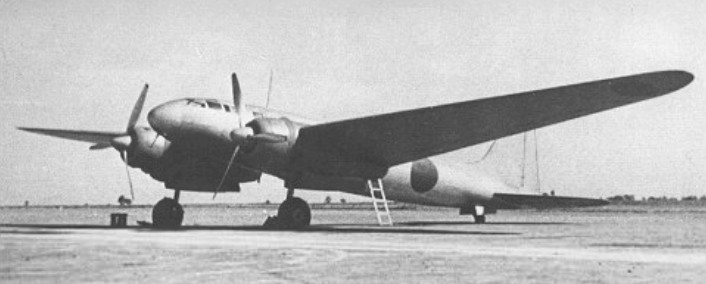
The A-26, later redesignated Ki-77, was a long-distance record aircraft with a remarkably slim fuselage and finely tapered wide-span monoplane wings. The first prototype flew on November 18, 1942, and later set two endurance records during the war. Two were built, the second was lost two months after completion.
Allied code name Clara.
Engines: 2 x Mitsubishi Ha.104ru, 1730 hp
Ki-77
Engines: 2 x Nakajima Ha-115, 875kW / 1170 hp
Max take-off weight: 16725 kg / 36873 lb
Empty weight: 7237 kg / 15955 lb
Wingspan: 29.44 m / 96 ft 7 in
Length: 15.3 m / 50 ft 2 in
Height: 3.85 m / 13 ft 8 in
Wing area: 79.56 sq.m / 856.38 sq ft
Max. speed: 440 km/h / 273 mph
Cruise speed: 300 km/h / 186 mph
Ceiling: 8700 m / 28550 ft
Range: 18000 km / 11185 miles
Crew: 5
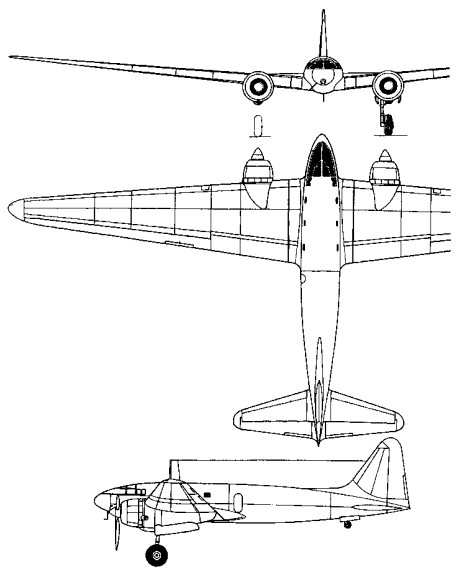
Tachikawa Ki-74
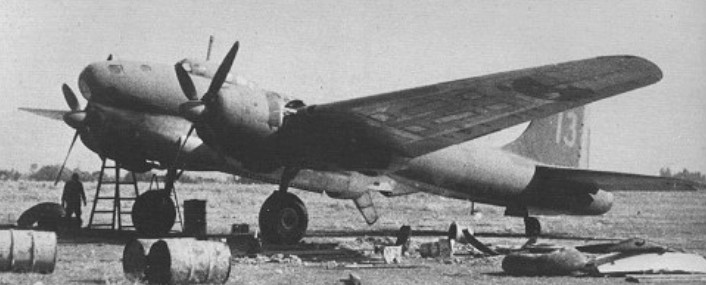
From 1937 Tachikawa produced a number of interesting designs which did not go into series production. The Tachikawa Ki-74 monoplane attracted official support. By 1941 the project had been confirmed as a long-range high-altitude bomber reconnaissance aircraft, and the first of the prototypes, powered by 1641kW turbocharged Ha-211-Ru radials, flew in March 1944.
Thirteen pre-production machines followed, powered by more reliable 1491kW Ha-104 Ru engines, giving a maximum speed of 570km/h at 8500m. They carried 1000kg of bombs and were defended by a single remotely-controlled 12.7mm machine-gun in the tail.
Although not used operationally, the Ki-74 received the Allied codename ’Pat’ when first identified, mistakenly, as a fighter. When it was discovered it was an experimental bomber, the name was feminised as ‘Patsy’.
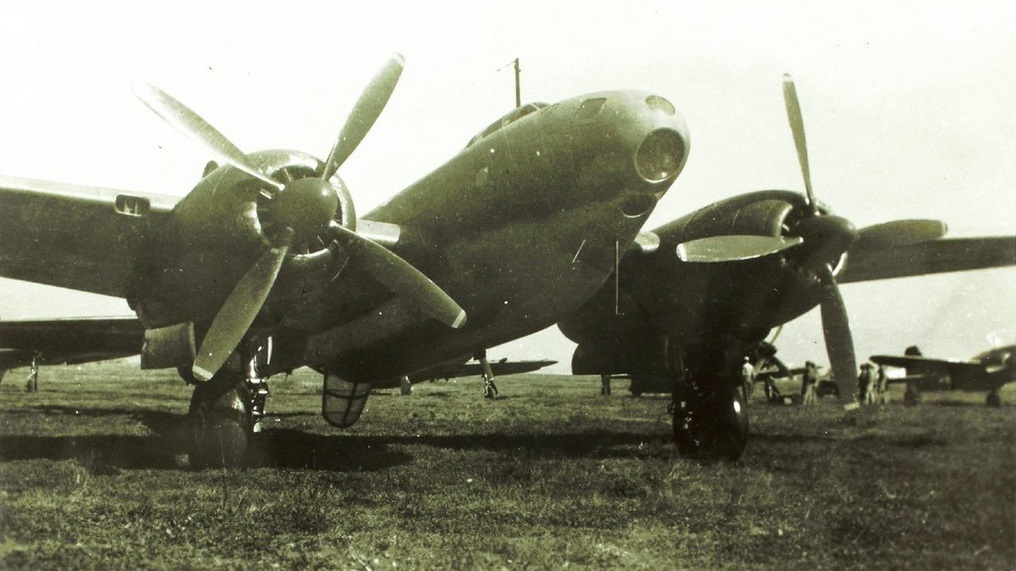
Ki-74
Engines: 2 x Mitsubishi Ha-104-Ru, 1500kW
Max take-off weight: 19400 kg / 42770 lb
Empty weight: 10200 kg / 22487 lb
Wingspan: 27 m / 89 ft 7 in
Length: 17.65 m / 58 ft 11 in
Height: 5.1 m / 17 ft 9 in
Wing area: 80 sq.m / 861.11 sq ft
Max. speed: 570 km/h / 354 mph
Cruise speed: 400 km/h / 249 mph
Ceiling: 12000 m / 39350 ft
Range w/max.fuel: 8000 km / 4971 miles
Armament: 1 x 12.7mm machine-guns, 1000kg of bombs
Crew: 5
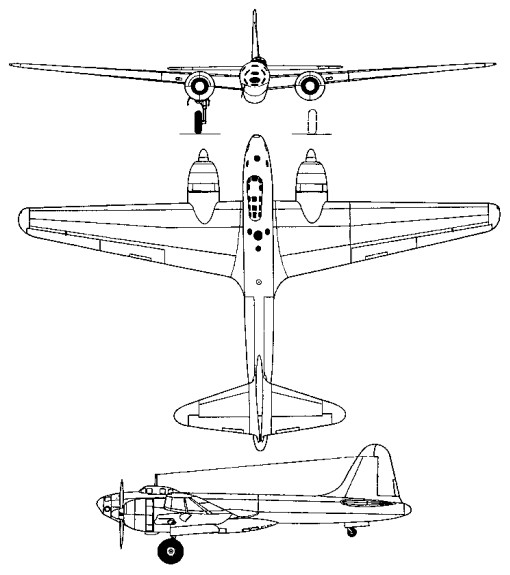
Tachikawa Ki-70
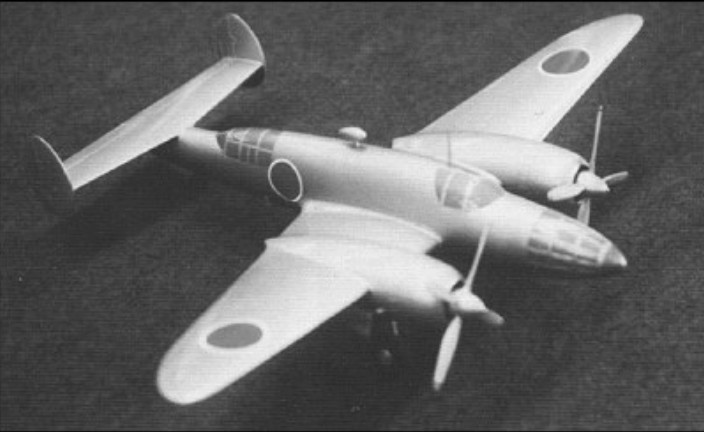
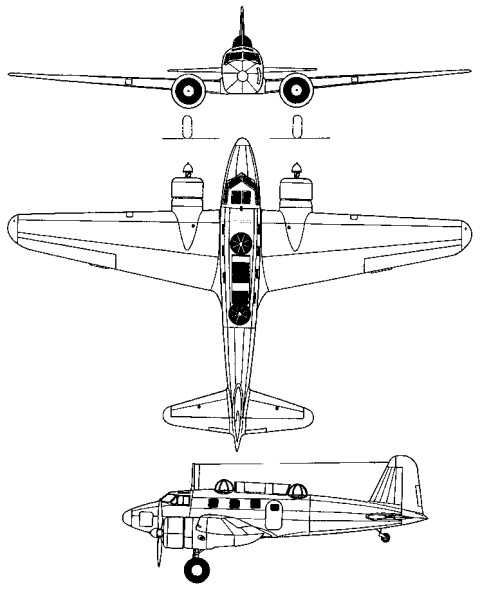
The Ki-70 was a twin-engined high-speed reconnaissance monoplane intended to replace the Ki-46. The first prototype flew in 1943. Built in prototype only, allied code name Clara was allocated as a result of identification in captured enemy documents. ‘Clara’ never appeared in any recognition manuals during the War for its appearance was a mystery until the Wat ended.
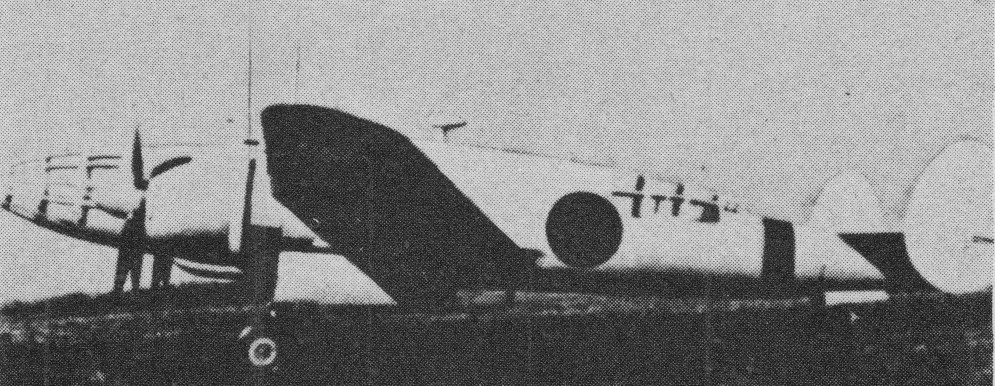
Ki-70
Engines: 2 x Mitsubishi Ha-104M, 1425kW
Max take-off weight: 9855 kg / 21727 lb
Empty weight: 5895 kg / 12996 lb
Wingspan: 17.8 m / 58 ft 5 in
Length: 14.5 m / 48 ft 7 in
Height: 3.46 m / 11 ft 4 in
Wing area: 43 sq.m / 462.85 sq ft
Max. speed: 580 km/h / 360 mph
Cruise speed: 490 km/h / 304 mph
Ceiling: 11000 m / 36100 ft
Range: 2480 km / 1541 miles
Crew: 3
Armament: 1 x 12.7mm machine-guns, 1 x 7.7mm machine-guns
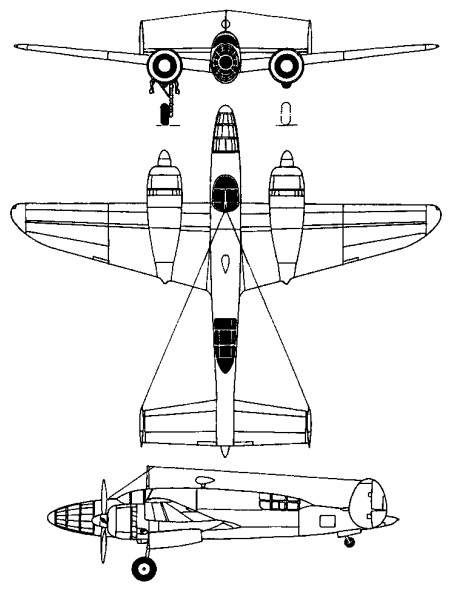
Tachikawa Ki-54 / Y-59
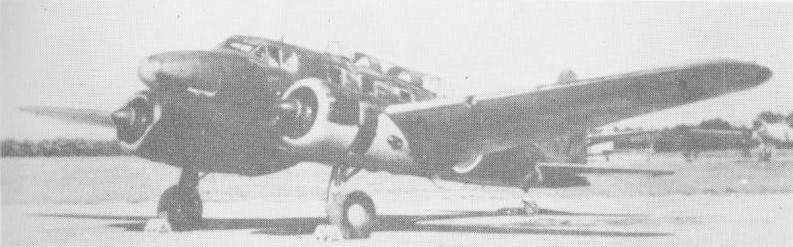
The Ki 54was a 1939 design by Ryokichi Endo of the Tachikawa Hikoki K K, as an advanced trainer/crew trainer, and made its first flight in mid 1940. It was a twin engined, low wing monoplane of all metal construction (except for the control surfaces, which were fabric covered) and had retractable landing gear. It was powered by two wing-mounted Hitachi Ha-13a radial engines. Successful testing led to the initial version intended primarily for pilot training, ordered during 1941 as the Army Type 1 Advanced Trainer Model A (Tachikawa Ki-54a).
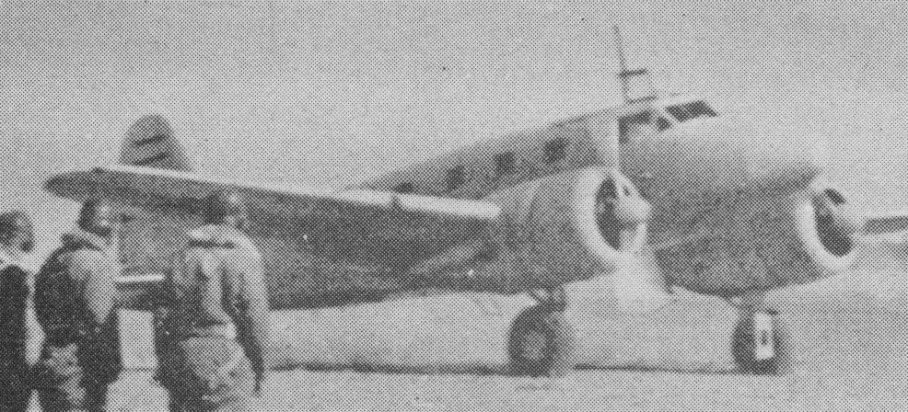
The initial military version, which entered production in 1941, was the Ki 54a or Army Type 1 Advanced Trainer Model A. Both the prototype and the Ki 54a were powered by two 510 hp Hitachi Ha 13a nine cylinder radial engines, each driving a two blade variable pitch propeller. Intended for pilot training, the Ki 54a was built in fairly small numbers before being supplanted by the Model B (Ki 54b), the most widely used version. Both models could carry from five to nine occupants. In the case of the Ki 54b (a bomber crew trainer) there were four stations for gunnery trainees who could each operate a free 7.7 mm (0.303 in) Type 89 machine-gun. The installation was characterized by twin dorsal turrets, a distinctive recognition feature of the Ki 54b.
Its operating reliability and roomy fuselage made the Ki 54 an obvious candidate for light transport and communications duties, and these were the functions of the third production version, the Ki 54c, or Army Type 1 Transport Model C. It differed from the previous variants in being unarmed, and therefore having no turrets on the fuselage. The Ki 54c carried a flight crew of two and eight passengers. Production included about two dozen civil examples (designated Y 59), some of which were used in Manchuria.
A fourth model, the Ki 54d antisubmarine patrol version, or Type 1 Patrol Bomber Model D, could carry an offensive load of 480 kg (1060 lb) of depth charges, but was not built or used in great numbers. Three developed versions of the Ki 54 were not finished before the end of the war. Completion of the Ki 110 prototype a wooden construction version of the Ki 54 was prevented by US air attack. The Ki 114, a development of the Ki 110, and the projected Ki 111 flight-refuelling tanker development of the Ki 59 were never built.
The Ki 54 was the standard aircrew trainer of the Second World War for the pilots of multi-engined aircraft, navigators, bomb aimers, radio operators and air gunners. It. Between 1940 45, Tachikawa produced 1368 examples 1342 of them for the Japanese army air force in a variety of models, all of which were given the name Hickory under the Allied Pacific codename system.
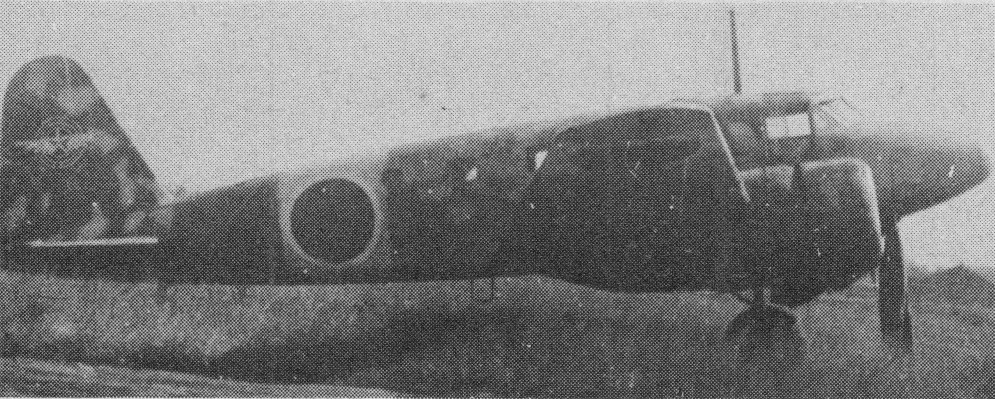
Ki 54b
Engines: 2 x Hitachi Ha-13a, 380kW
Span: 17.9 m (58 ft 9 in)
Length: 11.94 m (39 ft 2 in)
Height: 3.58 m / 12 ft 9 in
Wing area: 40 sq.m / 430.56 sq ft
Empty weight: 2954 kg / 6512 lb
Gross weight: 3897 kg (8590 lb)
Maximum speed: 376 km/h (234 mph)
Ceiling: 7180 m / 23550 ft
Range: 960 km / 597 miles
Crew: 2
Passengers: 8
Armament: 4 x 7.7mm machine-guns
Swearingen SJ30 / Sino Swearingen SJ30-2 / Emivest Aerospace Corp SJ30

Swearingen announced the official formation of Sino-Swearingen to complete development and construct the eight place SJ30 business jet. The company is a joint venture between Swearingen and Sino Aerospace Investment Corporation, a grouping of Taiwanese investors, including Taiwan Aerospace Corporation. With the formation of the new company construction will start on a new 18, 600sq.m (200,000 sq ft) assembly plant in Martinsburg, West Virginia (major components will be manufactured in Taiwan and shipped to the US), while the original SJ30 prototype has returned to full test and certification flying duties.
Originally the SA-30, renamed SJ30, first flew on 13 February 1991.
Sino Swearingen Aircraft Corporation has flown their SJ30-2 business jet (first flown 1996) at an altitude of 49,000 ft. This cruise level of the aircraft exceeds that of most of the business twinjets or commercial airliners in production. The SJ30-2 is a seven-place twin jet aircraft with an IFR range of 2,500 nm. The aircraft will cruise at speeds in excess of Mach 0.80 and will maintain a “sea level cabin” to 41,000 ft (owing to its pressurization differ¬ential being 12.0 psi).
SA-30 / SJ30
Engines: 2 x 1900 lb Williams Intl FJ44 turbofan
Wingspan: 36’4″
Length: 42’4″
Useful load: 4150 lb
Max speed: 541 mph
Cruise: 512 mph
Range: 2390 mi
Ceiling: 41,000′
Seats: 8
SJ30-2
Engines: (2) FJ44-2A Williams Rolls
Overall Length: 46.80 ft (14.26 m)
Overall Height: 14.19 ft (4.33 m)
Wing: Span: 42.33 ft (12.90 m)
Sweep (@ 1/4 Chord): 30.1 deg
Dihedral: 2.3 deg
Area: 190.69 sq ft (17.71 sq m)
Aspect Ratio: 9.40
Mean Aerodynamic Chord (MAC): 5.12 ft (1.56 m)
High Speed Cruise: Mach 0.83 / 560 MPH / 486 KTAS / 901 Km/H
Long Range Cruise 2,875 sm (2500 nm): 0.76Mach / 502MPH / 436KTAS / 807Km/H
Stall Speed: 91 KCAS
FAA Take-Off Balanced Field Length GW: 3,939 ft (1200 m)
FAA Landing Distance: 2,941 ft (896 m)
Seats: Seven Place w/Pilot
Take-Off Thrust: 4,600 lbs total (2,300 lbs ea)
Pressurization: 12.0 psi
Max. Certified Altitude: 49,000 ft
Cabin Altitude is Sea Level Up To: 41,000 ft
Mmo Above 29,500 ft: Mach 0.83
Vmo Up To 29,500 ft: 320 KCAS (593 km/h)
Vref: 105 KCAS
Speed Brake Operation: No Speed Limit
Max. Ramp Wt: 14,050 lbs (6373 kgs)
Max. Take-Off Wt: 13,950 lbs (6327 kgs)
Max. Landing Wt: 12,725 lbs (5772 kgs)
Max. Zero Fuel Wt: 10,500 lbs (4763 kgs)
Basic Operating Wt: 8,650 lbs (3923 kgs)
Max. Fuel Quantity: 4,850 lbs (2199 kgs)
Max. Baggage Compartment Wt: 500 lbs (227 kgs)
Horizontal Tail: Span: 14.56 ft (4.44 m)
Sweep (@ 1/4 Chord): 33 deg
Dihedral: 0 deg
Area: 36.72 sq ft (3.41 sq m)
Aspect Ratio: 5.77
Mean Aerodynamic Chord (MAC): 2.72 ft (0.83 m)
Vertical Tail: Span: 7.21 ft (2.20 m)
Sweep (@ 1/4 Chord): 55.5 deg
Dihedral: 46.80 sq ft (4.35 sq m)
Area: 11.56 sq ft (1.07 sq m)
Aspect Ratio: 1.11
Mean Aerodynamic Chord (MAC): 7.10 ft (2.17 m)
Ventral Fin: Total Area: 11.56 sq ft (1.07 sq m)
Ventral Rudder Area: 1.95 sq ft (0.18 sq m)
Landing Gear: Width Between Main Gear: 6.85 ft (2.09 m)
Wheelbase: 18.84 ft (5.74 m)
Tire Size: 16 in x 4.4 in
Swearingen SA227 Merlin / Metro
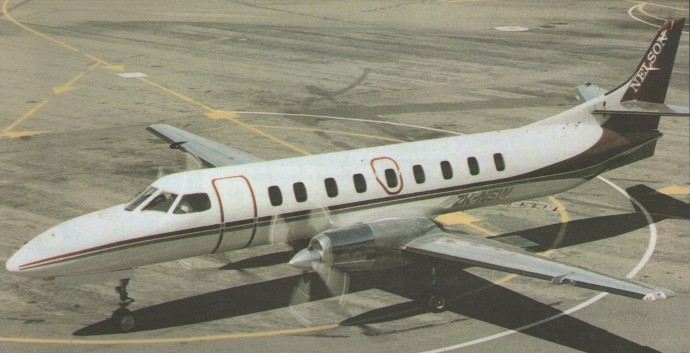
The evolution of the Merlin started in the early 1960s, with an air stair door and engine conversion for the Beech Twin Bonanza. Swearingen was also fitting bigger engines on Queen Airs, and the first Merlin strongly reflects his background with these two Beech conversions. The Merlins I and II consisted of a new fuselage mounted on modified Queen Air or Twin Bonanza wings and landing gear. The Merlin I was to be a pressurized piston powered airplane, the Merlin II a turboprop. The model I was never produced because Swearingen couldn’t find a piston engine that satisfied him. The II made its debut with Pratt & Whitney PT6 turboprops in 1969, but by the time it reached the IIB version, it was powered by Garrett AiResearch TPE 331s with a shaft horsepower of 665 each, and it had a takeoff weight of 10,000 pounds.
Swearingen SA227 Merlin / Metro Article
The next step had to be the development of a new wing. There just weren’t that many Twin Bonanzas and Queen Airs out there, waiting to donate their wings to a Merlin. There may also have been some reluctance on the part of prospective buyers to consider a new airplane with used wings. Thus came the Merlins III and IV.
Dramatically improved performance, extended payload-range capability and a host of safety features transformed the Metro II into the Metro III. Providing the the improved performance is a 10 foot extension to the earlier model’s wing, combined with an uprating of the twin Garrett AiResearch TPE turbo-props from 840 SHP to 1,100 SHP. Water methanol injection is standard for hot and high take-offs, as well as being available for power augmentation during normal take-offs. Rated at 1,100 SHP wet, 1,000 SHP dry, power is now absorbed by new four-bladed Dowty Rotol props. Turning at 1,590 rpm (compared with 2,000 rpm on the Metro II), the interior noise level has been dramatically reduced to about half that of the previous model about a 6 Db drop.
Fairchild was building the Merlin’s wings under contract to Swearingen when the recession of 1970 squeezed the airplane business. Fairchild wound up with both an interest in the company and an in¬terest in keeping the airplanes going. The Merlin III was under development at about the time the small jets were first coming to market; to be a viable offering, it had to offer something the jets lacked. This had to be range, for there was no way a turboprop could match the jets’ speed. The first Merlin III had AiResearch 840 shp engines and a fuel capacity of 662 USG. The maximum range at economy cruise, with a 45 minute reserve, was 2,353 nautical.
Other changes to the Metro II include a cleaning up of the engine nacelle and improved fire containment. The gear doors now close when the wheels are lowered, which not only improves the single-engine gear-down performance, but also assists in lowering the Vmca to 5 knots slower than the series II aircraft. Cowlings are stainless steel for improved fire resistance, while all flammable fluid lines are physically isolated from electrical componentry and wiring. Fire extinguishers are located in each engine nacelle.
In all there are some 1070 major engineering changes over the Metro II, mainly covering safety related items, and this effectively ups the new aircraft’s empty weight by about 550 lbs.
The Metro III is certified to 14,000 pounds (6,350 Kg.) MAUW, with a 12,500 lb zero fuel weight. Approved by both F.A.A. under new SFAR 41 and by ICAO Annex 8.
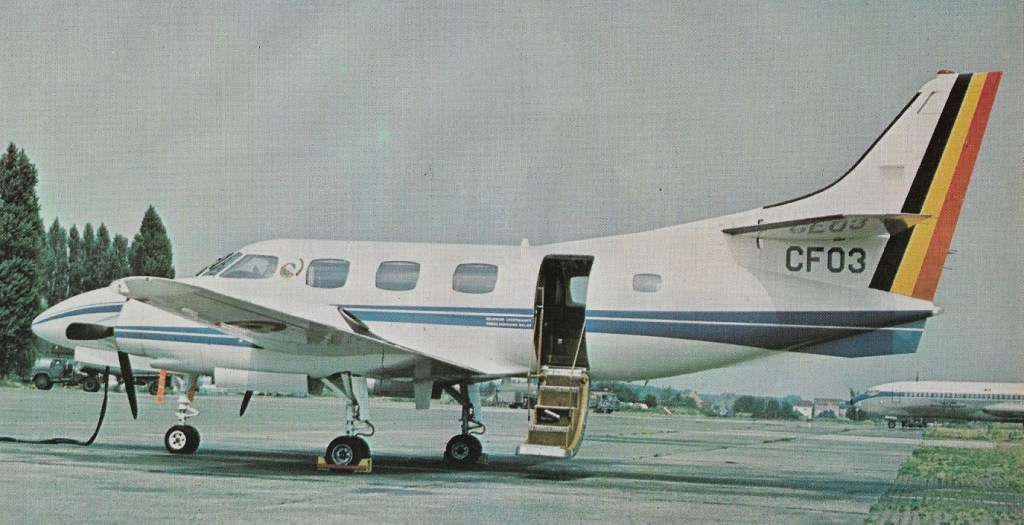
The Merlin IIIB has 900 shp Garrett AiResearch TPE 331-10U-501G engines, four blade instead of three blade props, and an extra gear in the reduction system that limits the prop to 1,591 rpm and makes the props turn to the left. Prop rpm for the III was 2,000, so this is a significant reduction.
Certification of the IIIB by the FAA was confirmed on 3 November and the first production example was delivered to Teterboro Aircraft Services on 1 December.
The Merlin IIIB is normally flown in the 25,000 to 28,000 foot range. At gross weight, it takes 17 or 18 minutes to reach 26,000 feet. Flight Level 260 is close to where the maximum range and maximum speed lines meet on the chart. The speed up there at 12,000 pounds is 269 knots at .52 nautical miles per pound of fuel burned, for a flow of about 530 pounds an hour. At 10,000 pounds, a more common mid cruise weight, the specific range can be as high as .6 nautical miles per pound of fuel consumed, with a cruise speed still over 260 knots, at 30,000 or 31,000 feet.
The Merlin IIIB is a purpose-built, high capability executive aircraft. Powered by a brace of 900 s.h.p. Garrett Ai-Research turboprops, the IIIB can wind out to a 300 knot cruise, carry eight passengers and crew of two for over a thousand miles. (Initial rate of climb at gross is 2,782 fpm, while over a thousand feet per minute can be averaged right on through to the service ceiling of 31,000 feet.) Single engine rate of climb at gross is 700 fpm; service ceiling with one out 16,500 feet. The Metro III also exists in an all-cargo configuration, known as the Expediter, with changes which permit payloads of 5,000 lb (2 268 kg). Fairchild, by 1990, had begun delivery of 13 C-26A versions to the US ANG.
The Merlin III is like the VI, only shorter, lighter and faster. It has a six passen¬ger cabin with a slide out potty in the rear. An equipped III will weigh, 7,200 to 7,300 pounds empty, 12,500 at gross. It has a maximum cruise speed of 275 knots, nine knots faster than the IV. Both aircraft have a 12,560 pound ramp weight and a landing weight of 11,500 pounds.
The primary difference in the two airplanes is range. The IV will carry crew, three passengers and baggage 1,875 nm at 226 knots, or at high cruise it will take the three 1,390 nm at 265 knots. The III will carry three passengers 2,255 nm at 257 knots in economy cruise, or 1,610 nm at 275 knots in high cruise.
Sharing the same wing and fuselage section with that of its big brother the Metroliner, the 17 foot shorter Merlin fuselage is pressurised to 7 psi differential, allowing cabin pressure to remain at sea level during a 17,000 foot cruise, or a 7,300 foot cabin at 31,000 feet. Going hand in hand with the capable pressurisation system, interior sound levels too have been designed with comfort in mind. Big slow turning four-bladed props, coupled with increased sound-proofing over earlier models, results in remarkably low cabin noise levels — similar in fact to a jet, and with a silky, vibration-free smoothness in flight that would hardly ruffle the surface of the boss’s gin and tonic. Elbow room in the cabin too is excellent. Maximum cabin width is a generous 5.2 feet; headroom is 4.8 feet.
Range and payload combinations are flexible. With a crew of two and virtually no payload, range is better than 2,000 miles (this with 4,342 pounds of fuel total), while with a full payload of 1,770 pounds on board the Merlin achieves 1,100 miles at 288 knots, still retaining a 45 minute reserve. Fuel flow shows around 600 pph.
Fully reversing prop blades and powered anti-skid braking assist with the field performance. Low pressure tyres are fitted and the Garretts can be equipped with water-methanol injection as an optional extra.
Developed from the Metro II, the Metro III version is operated by several air forces as a utility transport. The US Air National Guard designates its variant the C-26A. Other models are the Metro III(H) with a 16,000-lb (7,258-kg) maximum take-off weight (ANG C-26B), and the Expediter all-freight model with a 4,780-lb (2,168-kg) payload.
For specialized military roles, the manufacturer provides the Metro III Special Missions Version – A Special Missions aircraft based on the Metro III airframe is available for various maritime patrol/surveillance and ASW duties. Mission equipment includes a Litton 360 deg scan APS-504(V) or AIL APS-128D search radar in an underfuselage radome for maritime surveillance, and a sonobuoy acoustic processor and a MAD tailboom for the ASW role. Optional equipment in both cases comprises low-light TV, infrared linescanner, Flir, Doppler radar, and a searchlight. Maximum take-off weight is 7,257kg (16,000lb), and endurance with auxiliary fuel tanks is ten hours. Also operated by the Swedish Air Force as Tp 88s.
The Merlin IV has the same basic airframe/engine combination as the Swearingen Metro commuter airliner, but there the similarity ends. The IV systems are so different from the Metro, and the capabilities of the airplanes are so distinct, that the two have separate type certificates.
The IV is a 10 passenger airplane in standard corporate configuration. It weighs 12,500 pounds maximum for takeoff and cruises at 265 knots. The design has what engineers sometimes call “maximum mission capability”: that is, with full tanks, full avionics and miscellaneous equipment, it will accommodate only the crew for maximum range ferry purposes. From this condition you trade off range for payload to a maximum of 2,800 2,900 pounds in passengers and baggage and 1,500 pounds of fuel.
Behind the rear cabin bulkhead is a pressurized, 136 cubic foot, 500 pound limit baggage/cargo compartment accessible through a 53 inch wide door on the left side of the fuselage. A second, un-pressurized, 45 cubic foot baggage compartment in the nose will hold up to 800 pounds, less the weight of avionics boxes. Cabin pressure differential is seven psi, which gives the IV a sea level cabin at 16,000 feet, its maximum cruise speed altitude. There are dual pressurization, heat and air conditioner systems.
The Swearingen Aviation Corporation, a subsidiary of Fairchild Industries, added 17 feet to the length of an executive turboprop fuselage to create an airplane for both airlines and corporate operators. The 1976 models of the long Swearingen were called the Merlin IVA and the Metro II. The former is a corporate airplane, the latter is used for airline operations. The Merlin and Metro 4 are air conditioned and pressurized. When it is used as an executive transport, the Merlin’s passenger load is usually lower and larger fuel loads can handle much longer trips with the average executive load. When cargo carrying missions are combined with passenger operations, a Metro II “Expediter” version of the airplane is available. Its movable bulkheads and removable interiors facilitate a quick change from passenger to cargo operations or to any mixture of the two. The Swearingen Metro II and Merlin IVA received a restricted category certification that will permit them to operate at gross weights of up to 14,000 pounds. Special mission editions of the turboprops, designed for patrols or aerial photography, are able to carry 648 gallons of fuel, for up to 10 hours of endurance.
Fairchild’s SA 227-DC Metro 25 flew for the first time on 25 September 1989.
The Fairchild RC-26 offered an aerial surveillance option for local and federal law enforcement agencies, allowing them to cut down on high-speed chases and more easily gather evidence on drug trafficking organizations. During the eight-year span of operations, the RC-26 flying flew over 4000 hours contributing the seizure of one billion dollars’ worth of narcotics and leading to over one thousand arrests.
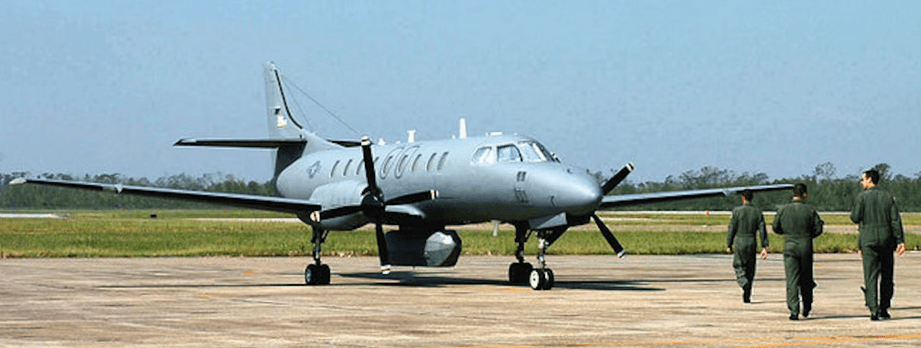
In addition to supporting counter-narcotics operations, the RC-26 crew supported emergency management agencies during natural disasters including forest fires on the west coast, flooding in the Midwest and hurricane Maria in Puerto Rico. The aircraft provided vital imagery of affected areas to emergency crews on the ground.
Fairchild Metro III
two/three-crew light transport
Engines: two l,000-shp (746-kW) Garrett TPE33I-l1U-611G turboprops
Maximum speed 320 mph (515 km/h) at 12,500 ft (3,810 m)
Initial climb rate 2,350 ft (716 m) per minute
Service ceiling 27,500 ft (8,380 m)
Range 1,000 miles (1,609 km) with maximum passenger payload
Empty weight 8,737 lb (3,963 kg)
Maximum take-off 14,500 lb (6,577 kg)
Wing span 57 ft 10 in (17.37 m)
Length 59 ft 4.25 in (18.09 m)
Height 16 ft 8 in (5.08 m)
Wing area 309.0 sq ft (28.71 sq.m)
Payload: 20 passengers or 4,880 lb (2,214 kg) of freight
Metro IIIA
Engines: Garrett, 840 shp
TBO: 2500 hr
Max cruise: 278 mph
Econ cruise: 244 mph
Stall: 83 mph
Fuel cap: 4342 lb
Service ceiling: 28,900 ft
SE service ceiling: 15,000 ft
ROC: 2530 fpm
SE ROC: 620 fpm
Min field length: 2150 ft
Payload with full fuel: 389 lb
Max range: 2487 sm
High speed range: 1953 sm
Max payload: 2060 lb
Range with max payload: 1154 sm
Pressurisation diff: 7.0 psi
Seats: 11
Gross wt: 12,500 lb
Equipped empty wt: 7769 lb
Useful load: 4731 lb
SA227-AC Metro III-41
Engines: 2 x Garrett TPE-331-IIU-601G, 1000 shp
Props: Dowty-Rotol 4-blade, 106-in
Seats: 22
Length: 59.4 ft
Height: 16.7 ft
Wingspan: 57 ft
Wing area: 309 sq.ft
Wing aspect ratio: 10.5
Maximum ramp weight: 14,100 lb
Maximum takeoff weight: 14,000 lb
Standard empty weight: 8397 lb
Maximum useful load: 5703 lb
Zero-fuel weight: 12,500 lbs
Maximum landing weight: 14,000 lb
Wing loading: 45.3 lbs/sq.ft
Power loading: 7 lbs/hp
Maximum usable fuel: 4342 lb
Best rate of climb: 2500 fpm
Certificated ceiling: 31,000 ft
Max pressurisation differential: 7 psi. 8000 ft cabin alt @: 32,400 ft
Maximum single-engine rate of climb: 760 fpm @ 133 kts
Single-engine climb gradient: 344 ft/nm
Single-engine ceiling: 16,000 ft
Maximum speed: 271 kts
Normal cruise @ 25,000ft: 264 kts
Fuel flow @ normal cruise: 509 pph
Endurance at normal cruise: 8 hrs
Stalling speed clean: 97 kts
Stalling speed gear/flaps down: 87 kts
Turbulent-air penetration speed: 174 kts
SA227-AC Metro III-41B
Engines: 2 x Garrett TPE-331-IIU-601G, 1000 shp
Props: Dowty-Rotol 4-blade, 106-in
Seats: 22
Length: 59.4 ft
Height: 16.7 ft
Wingspan: 57 ft
Wing area: 309 sq.ft
Wing aspect ratio: 10.5
Maximum ramp weight: 14,100 lb
Maximum takeoff weight: 14,000 lb
Standard empty weight: 8397 lb
Maximum useful load: 5703 lb
Zero-fuel weight: 12,500 lb
Maximum landing weight: 14,000 lb
Wing loading: 45.3 lbs/sq.ft
Power loading: 7 lbs/hp
Maximum usable fuel: 4342 lb
Best rate of climb: 2500 fpm
Certificated ceiling: 31,000 ft
Max pressurisation differential: 7 psi
8000 ft cabin alt @: 32,400 ft
Maximum single-engine rate of climb: 760 fpm @ 133 kts
Single-engine climb gradient: 344 ft/nm
Single-engine ceiling: 16,000 ft
Maximum speed: 271 kts
Normal cruise @ 25,000ft: 264 kts
Fuel flow @ normal cruise: 509 pph
Endurance at normal cruise: 8 hrs
Stalling speed clean: 97 kts
Stalling speed gear/flaps down: 87 kts
Turbulent-air penetration speed: 174 kts
Merlin IIIA
Engine: 2 x TPE 331-3U-303G, 840 hp
Seats: 11
Length: 42.159 ft / 12.85 m
Height: 16.732 ft / 5.1 m
Wingspan: 46.26 ft / 14.1 m
Wing area: 277.496 sq.ft / 25.78 sq.m
Wing loading: 45 lb/sq.ft 220.0 kg/sq.m
Pwr loading: 7.44 lb/hp
Gross wt: 12,500 lb / 5670.0 kg
Empty wt: 7600 lb
Equipped useful load: 4531 lb
Payload max fuel: 189 lb
Range max fuel/cruise: 1720nm/6.3hr
Range max fuel / range: 2266nm/9.3hr
Ceiling: 31,000 ft
Max cruise: 272 kt
Max range cruise: 245 kt
Vmc: 104 kt
Stall: 84-97 kt
1.3 Vso: 109 kt
ROC: 2530 fpm
SE ROC: 620 fpm @ 143 kt
SE ceiling: 13,500 ft
Min field length: 3075 ft
Take off distance: 3051 ft / 930 m
Landing distance: 2854 ft / 870 m
Fuel cap: 4342 lb
Cabin pressure: 7 psi
Crew: 2
Merlin IIIB
Engines: 2 x AiResearch TPE 331 1OU 501G, 900 shp
Props: Full feathering, reversible, 106 in, dia
TBO: 3,000 hrs
Length: 42 ft. 1 in
Height: 16 ft. 9 in
Wingspan: 46 ft. 3 in
Wing area: 277.5 sq. ft
Max ramp wt: 12,600 lbs
Max takeoff wt: 12,500 lbs
Standard empty wt: 7,600 lbs
Max useful load: 4,900 lbs
Max landing wt: 11,500 lbs
Zero fuel wt: 10,000 lbs
Wing loading: 45 lb/sq.ft
Power loading: 6.9 lb/hp
Max usable fuel: 648 USG/4,342 lbs
Max rate of climb: 2,782 fpm
Service ceiling: 31,400 ft
Single engine rate of climb: 700 fpm
Single engine climb gradient: 304 ft/nm
Single engine service ceiling: 16,500 ft
Max speed: 309 kts
Normal cruise (@ 22,000 ft. and 12,000 lbs.): 280 kts
Fuel flow at normal cruise: 600 pph
Endurance at normal cruise, no reserve: 7.2 hrs
Stalling speed, clean: 103 kts
Stalling speed, flaps down: 89 kts
Turbulent air penetration speed: 190 kts
Max pressurization differential: 7 psi.
8,000 ft. cabin altitude @: 32,400 ft.
Merlin IVA
Engines: 2 x Garrett AiResearch TPE 331 3U-303G,840 shp
Prop: Hartzell 3 blade,constant speed, full feathering, reversing, 102 in. dia
Length: 59 ft. 4 in
Height: 16 ft, 8 in
Wingspan: 46 ft. 3 in
Airfoil: NACA 652A215 at root 642A425 at tip
Aspect ratio: 7.71
Wing area: 277.5 sq. ft
Wing loading: 45 lbs/sq.ft
Empty weight: 8,553 lbs
Useful load: 3,947 lbs
Payload with full fuel: 235 lbs
Ramp weight: 12,560 lbs
Maximum takeoff weight: 12,500 lb
Power loading: 7.44 lbs./hp
Usable fuel capacity: 554 gals/13,712 lbs
Baggage area: 143 cu. Ft
Minimum runway requirement: 2,050 ft
Rate of climb: 2,400 fpm
Single engine rate of climb: 650fpm
Service ceiling: 27,000 ft
Single engine service ceiling: 14,700 ft
Maximum cruise (@ 16,000 ft.): 269 knots
High altitude cruise (@ 24,000 ft.): 240 knots
Maximum range (45 minute reserve): 1,810 nm
Stall speed, clean: 97 knots
Stall speed, gear and flaps down: 86 knots
SA227-AT Merlin IVC-41
Engines: 2 x Garrett TPE-331-IIU-601G, 1000 shp
Props: Dowty-Rotol 4-blade, 106-in
Seats: 13/16
Length: 59.4 ft
Height: 16.7 ft
Wingspan: 57 ft
Wing area: 309 sq.ft
Wing aspect ratio: 10
Maximum ramp weight: 14,100 lbs
Maximum takeoff weight: 14,000 lbs
Standard empty weight: 9100 lbs
Maximum useful load: 5000 lbs
Zero-fuel weight: 12,500 lbs
Maximum landing weight: 14,000 lbs
Wing loading: 45.3 lbs/sq.ft
Power loading: 7 lbs/hp
Maximum usable fuel: 4342 lbs
Best rate of climb: 2500 fpm
Certificated ceiling: 31,000 ft
Max pressurisation differential: 7 psi.
8000 ft cabin alt @: 32,400 ft
Maximum single-engine rate of climb: 760 fpm @ 133 kts
Single-engine climb gradient: 344 ft/nm
Single-engine ceiling: 16,000 ft
Maximum speed: 297 kts
Normal cruise @ 25,000ft: 268 kts
Fuel flow @ normal cruise: 527 pph
Endurance at normal cruise: 7.7 hrs
Stalling speed clean: 97 kts
Stalling speed gear/flaps down: 87 kts
Turbulent-air penetration speed: 174 kts
SA227-AT Merlin IVC-41B
Engines: 2 x Garrett TPE-331-IIU-601G, 1000 shp
Props: Dowty-Rotol 4-blade, 106-in
Seats: 13/16
Length: 59.4 ft
Height: 16.7 ft
Wingspan: 57 ft
Wing area: 309 sq.ft
Wing aspect ratio: 10.5
Maximum ramp weight: 14,100 lbs
Maximum takeoff weight: 14,000 lbs
Standard empty weight: 9100 lbs
Maximum useful load: 5000 lbs
Zero-fuel weight: 12,500 lbs
Maximum landing weight: 14,000 lbs
Wing loading: 45.3 lbs/sq.ft
Power loading: 7 lbs/hp
Maximum usable fuel: 4342 lbs
Best rate of climb: 2500 fpm
Certificated ceiling: 31,000 ft
Max pressurisation differential: 7 psi.
8000 ft cabin alt @: 32,400 ft
Maximum single-engine rate of climb: 760 fpm @ 133 kts
Single-engine climb gradient: 344 ft/nm
Single-engine ceiling: 16,000 ft
Maximum speed: 297 kts
Normal cruise @ 25,000ft: 268 kts
Fuel flow @ normal cruise: 527 pph
Endurance at normal cruise: 7.7 hrs
Stalling speed clean: 97 kts
Stalling speed gear/flaps down: 87 kts
Turbulent-air penetration speed: 174 kts
SA227-TT Merlin IIIC-23
Engines: 2 x Garrett TPE-331-IOU-530G, 900 shp
Props: Dowty-Rotol 4-blade, 106-in
Seats: 8/11
Length: 42.2 ft
Height: 16.8 ft
Wingspan: 46.3ft
Wing area: 277.5 sq.ft
Wing aspect ratio: 7.7
Maximum ramp weight: 12,600 lbs
Maximum takeoff weight: 12,500 lbs
Standard empty weight: 8090 lbs
Maximum useful load: 4510 lbs
Zero-fuel weight: 12,500 lbs
Maximum landing weight: 12,500 lbs
Wing loading: 45.0 lbs/sq.ft
Power loading: 7 lbs/hp
Maximum usable fuel: 4342 lbs
Best rate of climb: 2800 fpm
Certificated ceiling: 31,000 ft
Max pressurisation differential: 5.5 psi
8000 ft cabin alt @: 32,400 ft
Maximum single-engine rate of climb: 780 fpm @ 135 kts
Single-engine climb gradient: 346 ft/nm
Single-engine ceiling: 16,500 ft
Maximum speed: 309 kts
Normal cruise @ 25,000ft: 290 kts
Fuel flow @ normal cruise: 525 pph
Endurance at normal cruise: 7.7 hrs
Stalling speed clean: 102 kts
Stalling speed gear/flaps down: 89 kts
Turbulent-air penetration speed: 189 kts
SA227-DC Metro 23
Engines: 2 x Garrett TPE-331-12
MTOW: 7484 kg
SA227-TT Merlin IIIC-41
Engines: 2 x Garrett TPE-331-IOU-530G, 900 shp
Props: Dowty-Rotol 4-blade, 106-in
Seats: 8/10
Length: 42.2 ft
Height: 16.8 ft
Wingspan: 46.3 ft
Wing area: 277.5 sq.ft
Wing aspect ratio: 7.7
Maximum ramp weight: 13,330 lb
Maximum takeoff weight: 13,230 lb
Standard empty weight: 8150 lb
Maximum useful load: 5180 lb
Zero-fuel weight: 12,500 lb
Maximum landing weight: 13,230 lb
Wing loading: 47.7 lbs/sq.ft
Power loading: 7.4 lbs/hp
Maximum usable fuel: 4342 lb
Best rate of climb: 2650 fpm
Certificated ceiling: 31,000 ft
Max pressurisation differential: 7 psi
8000 ft cabin alt @: 32,400 ft
Maximum single-engine rate of climb: 680 fpm @ 138 kt
Single-engine climb gradient: 296 ft/nm
Single-engine ceiling: 14,500 ft
Maximum speed: 309 kt
Normal cruise @ 25,000ft: 290 kt
Fuel flow @ normal cruise: 525 pph
Endurance at normal cruise: 7.7 hrs
Stalling speed clean: 104 kt
Stalling speed gear/flaps down: 92 kt
Turbulent-air penetration speed: 189 kts
Fairchild (Swearingen) C 26 Metroliner
Engines: 2 x TPE 331 11U, 809 shp
Length: 59.383 ft / 18.1 m
Height: 16.732 ft / 5.1 m
Wingspan: 57.087 ft / 17.4 m
Wing area: 308.927 sq.ft / 28.70 sq.m
Max take off weight: 14502.3 lb / 6577.0 kg
Weight empty: 9181.6 lb / 4164.0 kg
Max. payload weight: 5300.8 lb / 2404.0 kg
Max. speed: 278 kts / 515 km/h
Landing speed: 87 kts / 161 km/h
Cruising speed: 248 kts / 460 km/h
Initial climb rate: 2362.20 ft/min / 12.00 m/s
Service ceiling: 27428 ft / 8360 m
Wing loading: 46.95 lb/sq.ft / 229.00 kg/sq.m
Range: 575 nm / 1065 km
Crew: 2
Payload: 20 pax
C-26B
MTOW: 16,000 lbs (7258 kg)
Swearingen SA226 Metro
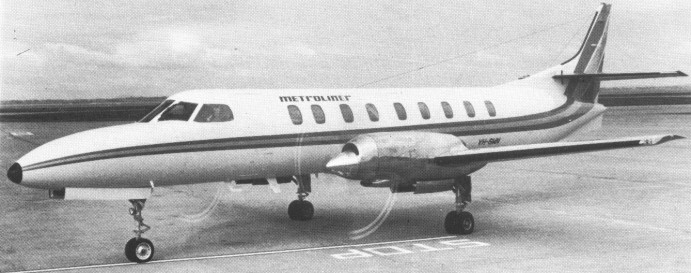
The Metro was developed by Swearingen on the basis of the Beech Queen Air as a commuterliner, and first flew as the SA-226TC 26 August 1969. The first production version was priced at $743,750 in 1974, less avionics. Twenty were built.
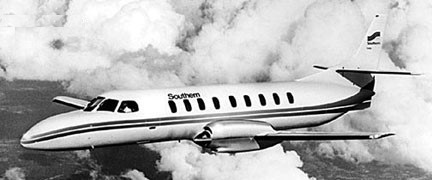
The Metro II SA226-TC of 1975 had minor improvements, larger cabin windows.
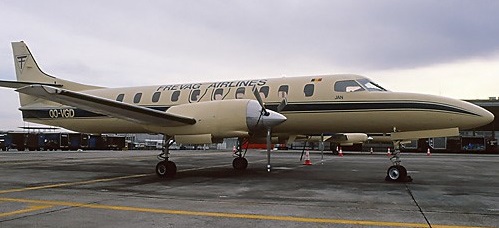
The Metro II can convert from a high density 20 seat configuration, to an all cargo configuration in 30 minutes.
1969 Metro
Engines: two 840hp Garrett AiResearch TPE-331-3UW-303G
Wingspan: 46’4″
Length: 59’5″
Useful load: 5125 lb
Max speed: 292 mph
Cruise: 278 mph
Stall: 99 mph
Range: 995-2400 mi
Ceiling: 27,490′
Seats: 21-22
Metro II SA226-TC
Engines: Two Garrett TPE331-3UW-3003G / optional 350 lb Aerojet General JATO
Max speed: 294 mph
Cruise: 279 mph
Stall: 99 mph
SA226-TC Metro II
Engines: 2 x Garrett TPE 331 3UW-304G, 840 shp
Empty wt: 8150 lb
MTOW: 12,500 lb (later 13,100 lb)
Pax cap: 20
Cruise: 235 kts @ 15,000 ft, 252 kts @ 10,000 ft
Cargo holds: 181 cu.ft
Press differential: 7 psi
SL cabin alt: 16,000 ft
Max op alt: 25,000 ft
ROC @ MTOW: 2400 fpm
SE ROC: 650 fpm
Engines: Garrett, 940 shp
TBO: 2500 hr
Max cruise: 283mph
Econ cruise: 230 mph
Stall: 86 mph
Fuel cap: 4342 lb
Service ceiling: 27,000 ft
SE service ceiling: 14,700 ft
ROC: 2400 fpm
SE ROC: 650 fpm
Min field length: 2050 ft
Payload with full fuel: 293 lb
Max range: 2110 sm
High speed range: 1665 sm
Max payload: 4430 lb
Range with max payload: 435 sm
Pressurisation diff: 7.0 lb. psi
Seats: 22
Gross wt: 12500 lb
Equipped empty wt: 8219 lb
Useful load: 4281 lb
Metro II
Engines: 2 x Garrett TPE 331-3UW-303G, 940 hp
Seats: 22
Wing loading: 45 lb/sq.ft
Pwr loading: 6.65 lb/hp
Gross wt: 12,500 lb
Operating wt: 7869 lb
Equipped useful load: 4500 lb
Payload max fuel: 158 lb
Zero fuel wt: 12,500 lb
Range max fuel/cruise: 1474 nm/5.8 hr
Range max fuel / range: 1915 nm/ 7.9 hr
Service ceiling: 25,000 ft
Max cruise: 255 kt
Max range cruise: 244 kt
Vmc: 91 kt
Stall: 86-98 kt
1.3 Vso: 112 kt
ROC: 2400 fpm
SE ROC: 650 fpm @ 133 kt
SE Service ceiling: 14,000 ft
Min field length: 2050 ft
Cabin press: 7 psi
Fuel cap: 4342 lb
Supermarine 525
Three aircraft were ordered to Specification N.9/47 for a naval fighter, and, configurationally similar to the Type 505 apart from the undercarriage. In February 1950, the contract covering the third prototype was amended to introduce sweptback wings, and this, as the Type 525, became, in effect, the prototype of the Scimitar.
The Type 525 has an all moving tail with narrow chord elevators and a tail braking parachute in the streamlined fairing of the tailplane and fin. A V type arrester hook is housed in clamshell doors below the rear fuselage, and there is a fuel tank of 58 gal. capacity in the fuselage between the two jet pipes. The 525 has slotted ailerons, of a similar type to those of the Swift.
Very large flap area is provided for deck landing, wing flaps being of the chord increasing type with a slot effect, and extra area is gained by two additional hinged surfaces below the fuselage. The wing also has full span slats which are extended for slow speed control. Since the long stroke undercarriage with its large diameter wheels retracts into the fuselage forward of the flaps, fairing doors for the wheel wells are provided and close to preserve the airflow after the undercarriage is extended. The 525 also has fuselage -mounted air brake flaps hingeing forward just below the leading edge of the wing on the fuselage.
2 x RR Avon
 All Aero