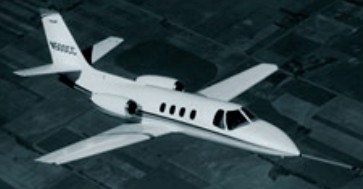
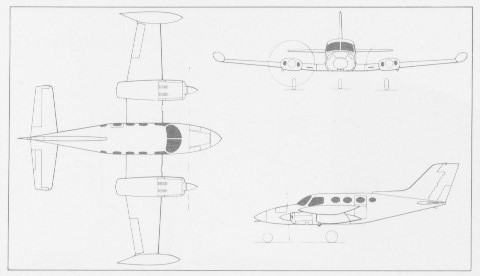
Announced in 7 October 1968, Cessna’s first business jet, the FanJet 500, made its maiden flight on September 15, 1969. Renamed the Model 500 Citation shortly after the first flight, the eight-seat Model 500 has an overall configuration similar to that of earlier Cessna twins except for its powerplant installation. This featured two 990kg Pratt & Whitney Canada JT15D-1 turbofans, mounted in pods on each side of the rear fuselage just aft of the wing trailing edge.
First flown on 15 September 1969, development flying resulted in a number of changes, and it was not until 1972 that initial deliveries were made. The Citation received FAR Part 25 certification in September 1971 and the first Citation business jet was delivered to Levitz Furniture Corp in 1972.
Cessna 500 Citation – the 50th built
In 1976 deliveries began of an improved Model 501 Citation I with increased wing span and similarly rated but improved JT15D-1A engines. This was followed soon after by the Citation 1/SP version certificated for single-pilot operation. This had JT15D-1A engines, thrust reversers, and a slightly increased wingspan. When production ceased in June 1985, 691 Citation Is had been delivered.
CE-500 Citation I Engines: 2 x P&W JT15D-1A, 2,200 lbs thrust. Seats: 7/8. Length: 43.5 ft. Height: 14.3 ft. Wingspan: 47.1 ft. Wing area: 279 sq.ft. Wing aspect ratio: 7.8. Maximum ramp weight: 12,000 lbs. Maximum takeoff weight: 11,850 lbs. Standard empty weight: 6605 lbs. Maximum useful load: 5395 lbs. Zero-fuel weight: 9500 lbs. Maximum landing weight: 11,350 lbs. Wing loading: 42.5 lbs/sq.ft. Power loading: 2.7 lbs/lb. Maximum usable fuel: 3807 lbs/564 USG. Best rate of climb: 2680 fpm. Certificated ceiling: 41,000 ft. Max pressurisation differential: 8.5 psi. 8000 ft cabin alt @: 41,000 ft. Maximum single-engine rate of climb: 800 fpm @ 108 kts. Single-engine climb gradient: 425 ft/nm. Single-engine ceiling: 21,000 ft. Maximum speed: 352 kts. Max range: 1,326 nm. Normal cruise @ 33,000ft: 352 kts. Fuel flow @ normal cruise: 967 pph. Stalling speed clean: 93 kts. Stalling speed gear/flaps down: 82 kts. Balanced field length: 2,930 ft. Turbulent-air penetration speed: 183 kts. Seats: 10. Takeoff distance (50 ft) 3,275 ft. Landing distance (50 ft) 2,300 ft
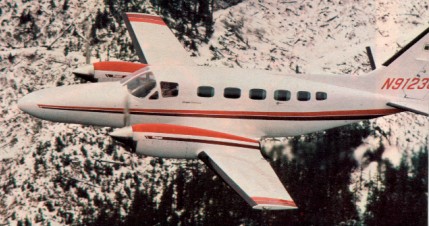
On 15 November 1974, Cessna announced the development of a new turboprop-powered pressurised executive transport designated Cessna Model 441. The prototype was flown for the first time on 26 August 1975 and by the time that initial deliveries began in September 1977 the type had been given the name Conquest and the basic airplane sold for US$850,000. The aircraft was certified on 19 August 1977, and powered by two Garrett TPE331 turboprop engines to provide the high-altitude/high-speed performance that Cessna required for this 11-seat transport. The Model 441 Conquest incorporated the wing and landing gear of the Model 404 Titan, with the span increased by the use of wingtip extensions. The pressurised and air-conditioned cabin could accommodate up to 10 passengers, although a four-seat de luxe version was offered for executive use. The Cessna 441 wings are of “failsafe” construction, meaning there is no life limit requiring either fail safe design or established fatigue life limits. The useful load of the 441 is 48 percent of its gross weight. The cabin is pressurized to 6.3 psi for a 10,000 foot cabin at 33,000 feet. The 441 will climb to 33,000 in 22 minutes. The wing is of bonded construction, with 30 percent chord Fowler type flaps utilized to lower the landing speed. Maximum cruise is 277 knots. VFR range with 10 and baggage will be 1,150 nm; it will be 1,830 nm with five and baggage. The airplane exceeded every performance standard set for it before the certification program began, including a 10 knot increase in maximum cruising speed at 33,000 feet, to 287 knots. In early 1978, one of the first production aircraft being involved in a crash resulting in the Conquest being grounded by Cessna. Modification of the tail unit was carried out before the type was re-certificated, and aircraft that were already completed had to be modified with a new tailplane. A 400 lb gross weight increase is possible for the Corsair when owners fit the later standard stronger wheels and change tyres from 8 to 10 ply. On completing these changes they now have a Conquest I and the original big brother becomes Conquest II. In 1983 the Model 441 was redesignated and marketed as the Conquest II and by 1986 when production ceased, 353 examples had been sold.
Conquest – Engines: 2 x Garrett AiResearch TPE 331 8 401S/402S, 635.5 shp, 474kW Props: Hartzell three blade, constant speed, full feathering, reversible, 90 in dia. TBO: 3,000 hrs. Length: 11.89 m / 39 ft 0 in Height: 4.01 m / 13 ft 2 in Wingspan: 15.04 m / 49 ft. 4 in. Wing area: 23.56 sq.m / 253.60 sq ft Wing loading: 38.8 lb/sq.ft. Power loading: 7.88 lb/hp. Seats: 9. Empty wt: 5,929 lbs. Useful load: 3,996 lbs. Payload with full fuel: 813 lbs. Max ramp wt: 9,925 lbs. Max Take-off weight: 4468 kg / 9850 lb Usable fuel cap: 475 USG/3,183 lb. Max landing wt: 9,360 lbs. Max zero fuel wt: 8,100 lbs. Max allowable payload: 2,171 lbs. Max ROC: 2,435 fpm. SE ROC: 715 fpm. SE climb gradient at 120 kt (Vyse): 358 ft. per nm. Service ceiling: 37,000 ft. Maximum operating altitude without oxygen for each occupant: 25,000 ft. Maximum operating altitude with oxygen for each occupant: 33,000 ft. SE service ceiling: 21,380 ft. Max speed: 295 kts. Max cruise, at 24,000 ft: 293 kts. Max range cruise, at 33,000 ft: 257 kts. Duration at max cruise: 5.68 hrs. Duration at max range cruise: 9.4 hrs. Max range: 2,196 nm / 4245 km / 2638 miles. Stalling speed, clean: 89 kt. Stalling speed, full flaps: 74 kts. Pressurization differential: 6.3 psi. 10,000 ft. cabin at: 33,000ft. Takeoff dist 50 ft obstacle: 2,465 ft. Landing Dist 50 ft obstacle: 1,875 ft. Seats: 11.
CE-441 Conquest Engines: 2 x Garrett TPE-331-8-403S, 635 shp. Props: McCauley 3-blade, 93-in. Seats: 8. Length: 34.7 ft. Height: 12.8 ft. Wingspan: 42.7 ft. Wing area: 229 sq.ft. Wing aspect ratio: 9.5. Maximum ramp weight: 9925 lbs. Maximum takeoff weight: 9850 lbs. Standard empty weight: 5682 lbs. Maximum useful load: 4243 lbs. Zero-fuel weight: 8500 lbs. Maximum landing weight: 9360 lbs. Wing loading: 38.8 lbs/sq.ft. Power loading: 7.8 lbs/hp. Maximum usable fuel: 3183 lbs. Best rate of climb: 2435 fpm. Certificated ceiling: 35000 ft. Max pressurisation differential: 6.3 psi. 8000 ft cabin alt @: 28500 ft. Maximum single-engine rate of climb: 715 fpm @ 120 kts. Single-engine climb gradient: 358 ft/nm. Single-engine ceiling: 21380 ft. Maximum speed: 295 kts. Normal cruise @ 33,000ft: 287 kts. Fuel flow @ normal cruise: 372 pph. Endurance at normal cruise: 7.4 hrs: Stalling speed clean: 90 kts. Stalling speed gear/flaps down: 76 kts. Turbulent-air penetration speed: 167 kts.
In November 1977 Cessna initiated the design of a new pressurised aircraft and the prototype flew for the first time on 12 September 1978. The aircraft combined the airframe of the Model 421 Golden Eagle with two Pratt & Whitney of Canada PT6A turboprop engines. Other features included the dihedral tailplane of the Model 404. The new aircraft was introduced in 1980 as the Cessna Model 425 Corsair. Like the Model 421, the Corsair offered six/eight seats in varying. The Corsair was certified in mid-1980 and first deliveries made in November the same year. Late in 1982 the aircraft was retrospectively designated and marketed as the Corsair I and 226 had been delivered when production terminated in 1986. The Garrett-engined Corsair II was built as the Model 441 A 400 lb gross weight increase is possible for the Corsair when owners fit the later standard stronger wheels and change tyres from 8 to 10 ply. On completing these changes they now have a Conquest I and the original big brother becomes Conquest II.
CE-425 Corsair Engines: 2 x P&W PT6A-112, 450 shp, 335kW. Props: McCauley 3-blade, 93-in. Seats: 6/8. Length: 10.93 m / 35 ft 10 in Height: 3.84 m / 12 ft 7 in Wingspan: 13.45 m / 44 ft 2 in Wing area: 20.90 sq.m / 224.97 sq ft Wing aspect ratio: 8.7. Maximum ramp weight: 8275 lbs. Maximum takeoff weight: 8200 lbs. Standard empty weight: 4915 lbs. Maximum useful load: 3360 lbs. Zero-fuel weight: 6740 lbs. Maximum landing weight: 8000 lbs. Wing loading: 36.4 lbs/sq.ft. Power loading: 9.1 lbs/hp. Maximum usable fuel: 2452 lbs. Best rate of climb: 2027 fpm. Certificated ceiling: 30000 ft. Max pressurisation differential: 5 psi. 8000 ft cabin alt @: 23500 ft. Maximum single-engine rate of climb: 434 fpm @ 111 kts. Single-engine climb gradient: 235 ft/nm. Single-engine ceiling: 18500 ft. Maximum speed: 264 kts. Normal cruise @ 26,000ft: 257 kts. Fuel flow @ normal cruise: 400 pph. Endurance at normal cruise: 5.1 hrs: Stalling speed clean: 88 kts. Stalling speed gear/flaps down: 79 kts. Turbulent-air penetration speed: 154 kts.
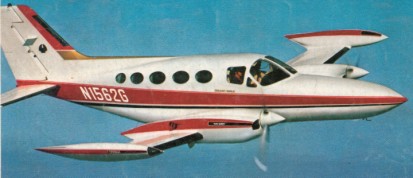
A development of the CE 411A, designed in 1965 as the replacement for the model 411, the pressurised model 421 was not a great deal different in external appearance. The CE-421 first flew on 14 October 1965. Derived from the Model 401/411, the Model 421 differed primarily in its original configuration by having a fail-safe pressurised fuselage structure and an AiResearch air-conditioning and pressurisation system. Deliveries of initial production aircraft began in May 1967, following certification of the type on the fist day of that month.
Two new versions of the Model 421 were introduced for 1970, the Model 421B Golden Eagle and Model 421B Executive Commuter. Both had a number of improvements including lengthening of the nose to provide more avionics and baggage capacity, an increase in wing span, strengthening of the landing gear for operation at higher gross weights, and many detail refinements. The Executive Commuter was basically the same as the Golden Eagle, but the interior was laid out with lightweight easily-removable seating to provide alternative passenger/cargo configurations which could accommodate a maximum of 10 passengers. Production increased so that 1000 models had been built by 1975. These two versions were replaced in 1976 by the Model 421C Golden Eagle, which introduced some important changes. These included a new wing that dispensed with the distinctive wingtip tanks, replaced by integral fuel tanks of the type introduced at a later date on the Model 414. Other changes provided increased area for the vertical tail surfaces and larger-capacity engine turbochargers. Four versions were available, the Model 421C Golden Eagle and Model 421C Executive Commuter, both produced in Model 421C II, versions with a factory-installed avionics/equipment package.
The Executive Commuter was discontinued for 1978, the Golden Eagle then being available in standard as well as Model 421C II and Model 421C III versions with differing avionics/equipment packages. By late-1985 when production ceased, 1,909 Golden Eagles of all versions had been delivered, including three examples for the Royal New Zealand Air Force.
CE-421 Engines: 2 x Continental GTSIO-520-N, 280kW Max Take-off weight: 3379 kg / 7449 lb Empty weight: 2129 kg / 4694 lb Wingspan: 12.53 m / 41 ft 1 in Length: 11.09 m / 36 ft 5 in Height: 3.49 m / 11 ft 5 in Wing area: 19.97 sq.m / 214.96 sq ft Max. speed: 478 km/h / 297 mph Cruise speed: 356 km/h / 221 mph Ceiling: 9205 m / 30200 ft Range: 2752 km / 1710 miles
CE-421B Golden Eagle Engine: Continental GTSIO 520H, 375 hp. Prop: 3 blade, 90 in, full feathering. Wing span: 41 ft. 10 in. Length: 36 ft. 1 in. Height: 11 ft. 7 in. Wing area: 211.09 sq. ft. Wing loading: 34.25 lb./sq. ft. Seats: 6-8. Empty weight, equipped: 5,000 lbs. Useful load, equipped: 2,250 lbs. Gross weight: 7,250 lbs. Max landing weight: 7,200 lbs. Power loading: 9.67 lb/hp. Fuel cap (std): 170 USG. Fuel cap (with res): 196 to 248 USG. Baggage cap: 1,340 lb/ 73.3 cu.ft. Takeoff dist: 1,838 ft. Takeoff dist 50 ft: 2,325 ft. SE takeoff dist 50 ft: 4,283 ft. ROC: 1,950 fpm. SE ROC: 345 fpm. Service ceiling: 31,800 ft. SE service ceiling: 15,000 ft. Max speed: 283 mph/246 kts. Cruise speed (75% power): 270 mph/234 kts. Economical cruise: 224 mph/194 kts. Range (at max cruise, std tanks): 1,067 sm/926 nm. Range (at econ. cruise, std tanks): 1,194 sm/1,031 nm. Stall speed (clean): 97 mph/84 kts. Stall speed (gear & flaps down): 86 mph/75 kts. Landing dist: 720 ft. Landing distance 50 ft: 2,178 ft.
CE-421C Golden Eagle Engines: Continental GTSIO-520-L, 375 hp each. TBO: 1600 hrs. Props: McCauley 3-blade, 90-in. Seats: 8. Length: 36.4 ft. Height: 11.5 ft. Wingspan: 41.1 ft. Wing area: 215 sq.ft. Wing aspect ratio: 7.9. Maximum ramp weight: 7500 lbs. Maximum takeoff weight: 7450 lbs. Standard empty weight: 4640 lbs. Maximum useful load: 2860 lbs. Zero-fuel weight: 6733 lbs. Maximum landing weight: 7200 lbs. Wing loading: 34.7 lbs/sq.ft. Power loading: 9.9 lbs/hp. Maximum usable fuel: 1572 lbs/262 USG. Best rate of climb: 1940 fpm @ 111 kts. Climb gradient: 1049 ft/nm. Rate of climb @ 8,000 ft: 1640 fpm. Certificated ceiling: 30,000 ft. 8000ft cabin alt @: 21,700 ft. Maximum single-engine rate of climb: 350 fpm @ 111 kts. Single-engine climb gradient: 189 ft/nm. Single-engine service ceiling: 14900 ft. Maximum speed: 258 kts. Max cruise speed: 241 kts. Range max fuel/75% pwr: 1310nm/5.3hr. Range max fuel / 55%: 1457nm/7.3hr. 75% cruise: 242 kt. 55% cruise: 201 kt. Cruise @ 65% pwr @ 8,000ft: 190 kts. Cruise @ 65% power @ 18,000ft: 208 kts. Fuel flow @ 65% pwr @ 18,000 ft: 230 pph. Endurance at 65 % pwr @ 18,000 ft: 6.7 hrs. Max range: 1,487 nm. Stalling speed clean: 83 kts. Stalling speed gear/flaps down: 74 kts. Turbulent-air penetration speed: 150 kts. Takeoff Dist 50 ft obstacle: 2,323 ft. Landing Dist 50 ft obstacle: 2,293 ft.
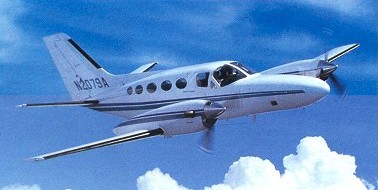
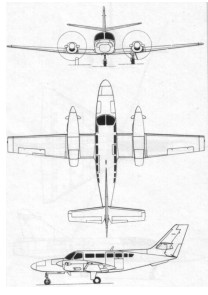
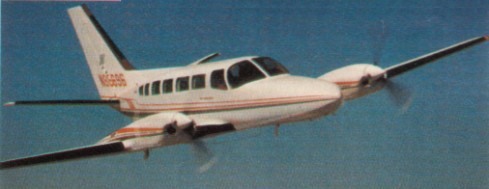
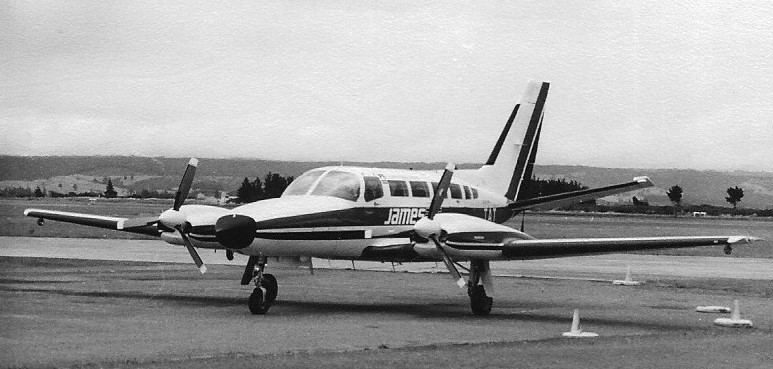
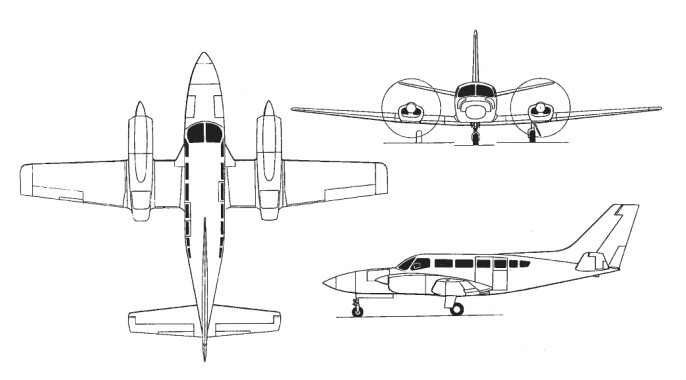
To provide the pressurised 414 twin-engined transport, Cessna married the basic fuselage of the Model 421 with the wing developed for the Model 401. The resulting aircraft was flown for the first time on 1 November 1968 and certificated during the following August. New features introduced on the aircraft included engine cowlings with flush intakes to improve engine cooling and an accurate fuel monitoring system developed by Cessna to provide better fuel management. From the time of its introduction until 1976, improvements introduced for the Model 402 were reflected in the Model 414, and in that year the name Chancellor was adopted. It was available for 1976 in standard and Model 414 II versions, the latter incorporating a package of factory-installed avionics and equipment. After 513 of the original Model 414s had been built, Cessna combined the air¬frame that was developed for the Golden Eagle in 1978 with the 310 hp engines of the 414 to produce the 414A Chancellor. The engines are direct drive Continental TSIO 520s. The gross weight and useful load of the new airplane both are substantially greater than those of the old 414, which gives it much better payload and endurance numbers and makes it a more viable corporate transport. The pressure differential five pounds per square inch is greater so that the airplane can cruise at higher altitudes. Major changes included a redesigned and increased-span wing incorporating integral fuel tanks and more baggage capacity in an extended nose.
Cessna CE-414A
Versions available between 1978 and 1986, were the standard Model 414A Chancellor, the Chancellor II and later the Chancellor III, all with differing factory installed avionic/equipment packages. When Model 414/414A production ended in 1986 a total of 1,067 variants had been built.
The old 414’s service ceiling was 11,350 feet, and with the same engines and gross weight 400 pounds greater, the new airplane does 19,850 feet. The new airplane has four and a half feet more span as well as 30 more square feet of wing area, and these two factors do wonders for single engine ceiling. On the old 414, fuel was carried in as many as six tanks, only two of which were standard equipment. Fuel management included the operation of transfer pumps, the monitoring of fuel return and the bother of tank selection. The new air¬plane carries a standard 103 gallons in each wing, virtually no management is required and the total capacity is greater than was available with all six tanks on the 414.
Scenic Air Lines, in 1977, acquired from American Jet Industries engineering and manufacturing rights for turboprop conversions of Cessna Models 402 and 414, now known as Turbo Star 402 and Turbo Star Pressurised 414.
CE-414 Engine: 2 x Continental TSIO-520-N, 310 hp. Seats: 7. Wing loading: 32.4 lb/sq.ft. Pwr loading: 10.2 lb/hp. Gross wt: 6350 lb. Empty wt: 4126 lb. Equipped useful load: 1889 lb. Payload max fuel: 671 lb. Range max fuel/75% pwr: 1168nm/5.1hr. Range max fuel / 55%: 1309nm/7.2hr. Ceiling: 30,100 ft. 75% cruise: 225 kt. 55% cruise: 183 kt. Vmc: 84 kt. Stall: 74-86 kt. 1.3 Vso: 96 kt. ROC: 1580 fpm. SE ROC: 240 fpm @ 105 kt. SE ceiling: 11,350 ft. Min field length: 2350 ft. Fuel cap: 600/1218 lb. Cabin pressure: 4.2 psi.
CE-414A Chancellor Engines: Continental TSIO-520-NB, 310 hp, 231kW. TBO: 1400 hrs. Props: McCauley 3-blade, 76.5-in. Seats: 6/8. Length: 11.09 m / 36 ft 5 in. Height: 3.49 m / 11 ft 5 in. Wingspan: 13.45 m / 44 ft 2 in. Wing area: 20.98 sq.m / 225.83 sq ft. Wing aspect ratio: 8.6. Wing loading: 29.7 lb/sq.ft. Power loading: 10.8 lb/hp. Maximum ramp weight: 6785 lbs. Maximum takeoff weight: 3062 kg / 6750 lbs. Standard empty weight: 4368 lbs. Maximum useful load: 2417 lbs. Zero-fuel weight: 6515 lbs. Maximum landing weight: 6750 lbs. Wing loading: 29.9 lbs/sq.ft. Power loading: 10.9lbs/hp. Maximum usable fuel: 1236 lbs/204 USG. Best rate of climb: 1520 fpm @ 108 kts. Climb gradient: 853 ft/nm. Rate of climb @ 8,000 ft: 1400 fpm. Certificated ceiling with oxygen equipment: 30,000 ft. Certificated ceiling without oxygen equipment: 25,000 ft. 8000ft cabin alt @: 21700 ft. 10,000ft cabin alt at: 26,500 ft. Maximum single-engine rate of climb: 290 fpm @ 108 kts. Single-engine climb gradient: 161 ft/nm. Single-engine service ceiling: 19850 ft. Maximum speed: 235 kts. Max cruise, 77.5 % power at 24,500 ft: 225 kts. Duration at max cruise: 5.67 hrs. Cruise @ 65% pwr @ 8,000ft: 177 kts. Cruise @ 65% power @ 18,000ft: 190 kts. Fuel flow @ 65% pwr @ 18,000 ft: 180 pph. Endurance at 65% pwr @ 18,000 ft: 6.5 hrs: Econ cruise, 60.8% power at 20,000 ft: 187 kts. Duration at econ cruise: 7.14 hrs. Stalling speed clean: 82 kts. Stalling speed gear/flaps down: 72 kts. Turbulent-air penetration speed: 144 kts. Takeoff Dist 50 ft obstacle: 2,595 ft. Landing dist 50 ft obstacle: 2,393 ft. Pressurization differential: 5.0 psi.
1980 Cessna 414A Engines: RAM Overhauled TSIO-520-B, 335 hp TBO: 1600 hour Propellers: McCauley Series Saber Tip C500, Model 3AF32CC515, 3 Bladed Prop TBO: 2000 Gross Ramp Weight: 7140 lb Max Gross Takeoff Weight: 7105 lb Empty Weight: 5120.72 lb Useful Load: 1979.28 lb Useful load W/full main tanks (206USG): 743.28 lb Nose Baggage capacity: 332 lb Fuel burn: 35.8GPH @ 185-195K @ 16000 – 17000 Ft. Range with 206USG: 800 miles w/ 1 hr reserve. Seats: 7 / 8
CIDC Turbo Star 414 / Cessna 414 Engines: 2 x Allison 250-B17B, 420 hp. Seats: 6/8. Wing loading: 33.5 lb/sq.ft. Pwr loading: 7.7 lb/hp. Max TO wt: 6525 lb. Empty wt: 3705 lb. Equipped useful load: 2492 lb. Payload max fuel: 534 lb. Range max fuel/cruise: 996 nm/4.4 hr. Range max fuel /range: 1390 nm/ 6.7 hr. Service ceiling: 25,000 ft. Max cruise: 226 kt. Max range cruise: 209 kt. Vmc: 81 kt. Stall: 70-85 kt. 1.3 Vso: 91 kt. ROC: 2180 fpm. SE ROC: 510 fpm @ 86 kt. SE ceiling: 13,800 ft. Min field length: 1290 ft. Fuel cap: 1512/1958 lb.
When flown for the first time on 18 July 1962, the Cessna Model 411 then represented the company’s largest business aircraft. Generally similar in configuration to the Model 310, it differed by having slightly increased wing span and area, a lengthened fuselage, more powerful 254kW Continental GTSIO-520-C flat-six turbocharged engines and accommodation for a crew of two and four to six passengers. Priced at $120,000, the 6-7 place was indicating 240mph optimum cruise at 22,000 ft with a range over 1000 mi with standard fuel, in tests.
Deliveries begin of the Model 411 in 1965, but production of the Model 411 was discontinued in June 1978, after the production of 400 examples, a small number of which were supplied to the French air force.
Engines: 2 x 254kW Continental GTSIO-520-C Gross weight: 6500 lb Top speed: 265 mph Cruise: 230 mph at 16,000 ft Wingspan: 39.86 ft Length: 33 ft Height: 11.1 ft Price: $120,000
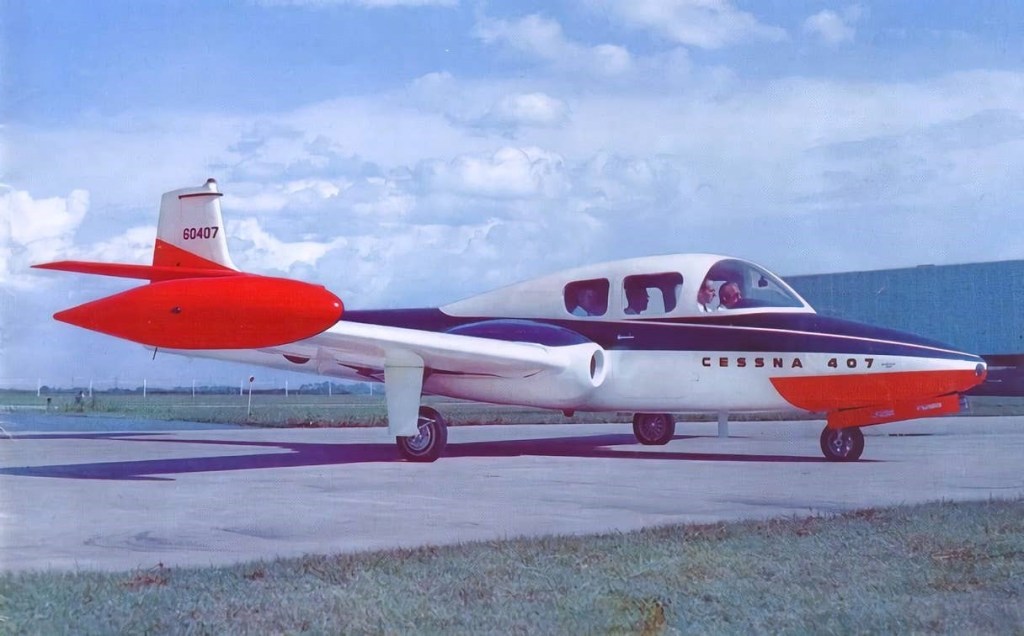
A four seat development of the T 37A CE airframe, the forward fuselage redesigned to take four persons in pressurised cabin. Entry to cabin via large door in starboard side. Rear seats removable for cargo or special mission equipment.
Powered by two Continental C 356 9 turbojets, the prototype (N34267 serial number 627) first flew September 1959 and later modified with bulbous radar nose. One only built.
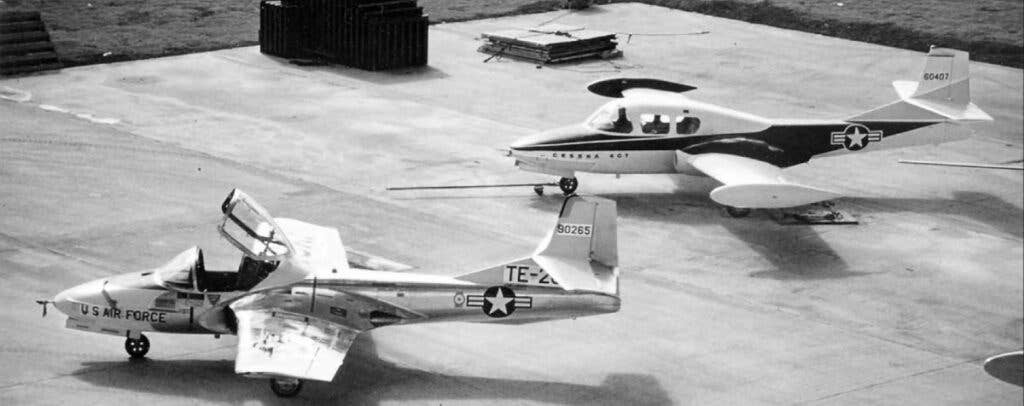
By utilizing many of the same components and tooling as the T-37, much of the necessary development work could be avoided. Building a full-scale wooden mock-up and beginning construction of the first prototype, the marketing group began a sales tour, pitching the concept at various locations around the U.S.
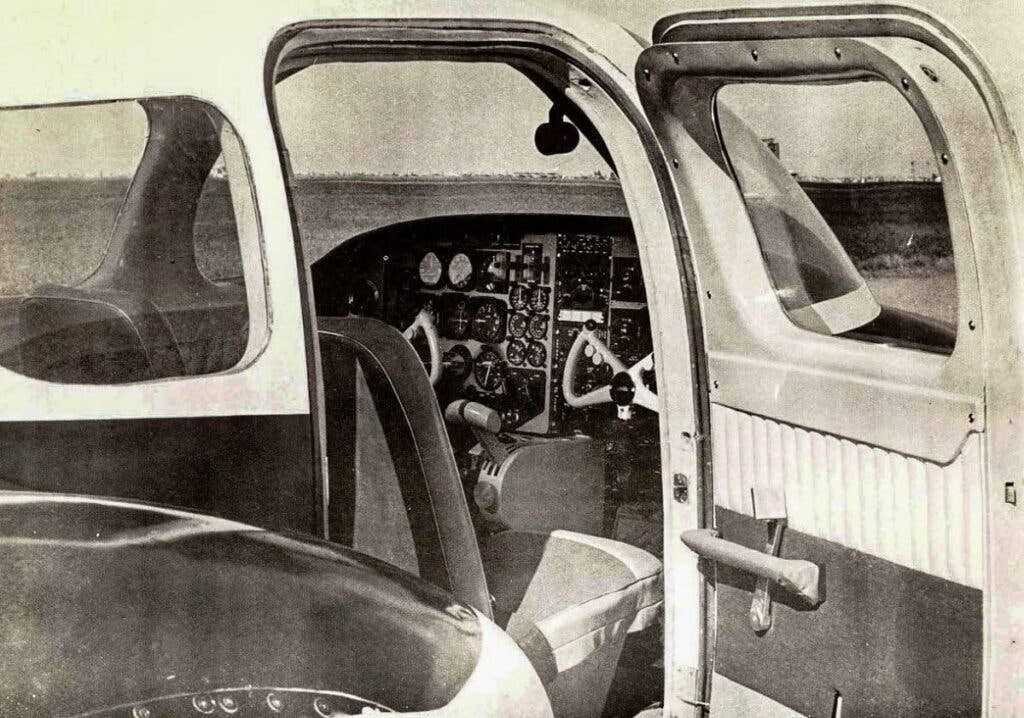
Outwardly similar to the T-37, the 407 utilized the same tail section and wing as the jet trainer but repositioned the engine nacelles 9 inches outward to create more internal space. The cabin utilized this additional space to accommodate four passengers and their baggage. Occupants could easily step into the low-slung cabin without the need for separate steps or ladders, a welcome change from the MS.760, which required occupants to climb a stepladder and clamber into the cockpit from above.
The 407 would incorporate a pressurized cabin for passenger comfort. This helped to enable a rather impressive service ceiling of 46,400 feet. At a more typical cruising altitude of 35,000 feet, the 407’s cabin altitude would have been maintained at a reasonable 8,000 feet.
With a 4,657-pound empty weight and 9,300-pound gross weight, the team boasted a range of 1,380 nm and a maximum level speed of 423 knots. The stall speed was listed as a relatively low 84 knots, making the jet capable of accessing runways of around 3,000 feet in length.
Ultimately, the 407 was not to be. The mock-up pictured was, in fact, a T-37 with a wooden cabin section. And while construction of actual cabin sections was underway, the entire 407 project was abandoned in favor of the Citation family, the first of which flew in 1969. Interestingly, the FAA registry shows that Cessna registered a 407 as N34267.
It was reported in July 1982 that with financial support from the French Government, Reims Aviation and Cessna were collaborating in the development of a new pressurised turboprop twin for utility and business use. A variant of the Cessna 400 series, it was known as the Reims-Cessna 406-5 and was to be powered by PT6A-112 engines derated to 500 shp each. Th gross weight was to be about 9260 lb / 4200 kg, of which 4410 lb / 2000 kg would be useful load, and the max range to be more than 1460 miles / 2350 km. The prototype was being built by Cessna, bu Reims Aviation was to be responsible for flight development and eventual production.
The Caravan II is a French-based design jointly developed by Cessna and the company’s European licensee, Reims Aviation. The twin-turboprop unpressurized aircraft uses Conquest II wings, a Titan-type fuselage with seating for up to 12 passengers and 500 shp (373 kW) Pratt & Whitney Canada PT6A-112s. As well as business use, the Caravan II is operated as a target tug by the French Army, as a freighter with side cargo door and as a coastal surveillance aircraft.
The Cessna Model 404 Titan prototype (N5404J), a new twin engine business/commuter/cargo aircraft, made its maiden flight at Wichita, Kansas, on 26 February 1975. Identified initially as the Cessna Model 404 and later named Titan, this new twin engine aircraft became available in Ambassador (with executive or standard passenger interior) and Courier (utility passenger/cargo) versions. In the summer of 1976, Cessna unveiled the large six to 10 place Titan, with 375 hp turbocharged engines, the airframe of which would also be used for the Conquest turboprop. The Titan was certificated in the latter part of 1976, initial deliveries began in October 1976 and at year’s end, 17 had been delivered. Its turboprop look alike is scheduled to receive FAA approval sometime in 1977. With greater wing area and more powerful engines, it was more economic than the earlier 402. The Cessna 404 Titan shares the basic airframe of the 441 but is piston powered and not pressurized. Large cargo doors make it easy to load. A cockpit door allows entry after the cabin has been stacked to the ceiling. Power is essentially the same as for the 421 375 hp Continentals and top cruise at 10,000 feet is 194 knots. Maximum useful load is 3,546 pounds, or about 500 pounds more than for the 421 and 1,000 pounds more than for the 402. Total fuel, in integral wing tanks, is 340 gal¬lons. Titan deliveries were to begin in mid ¬1976. Essentially a stretched model 402B Titan was the first Cessna twin featuring a wet wing with out the characteristic tip tanks. Able to carry 10 passengers. The newly-designed wet wing of bonded, fail-safe construction has a relatively high aspect ratio of 8.7 which reduces induced drag. This feature gives an important spin-off to the operator in that the Titan can carry relative large payloads over long distances. At 10,000 ft and 65 percent power it can carry up to 2,500 lbs of cargo 690 nm at 188 kts with a 45 minute fuel reserve. In the passenger configuration it can carry ten people and 500 lbs of baggage 915 nm at 196 kts with the same fuel reserves. The hydraulically-operated Fowler flaps, of bonded, honeycomb construction, give the Titan reasonably good short-field capability. The geared 375 hp turbocharged Continental engines are installed in streamlined nacelles which are some 17 inches longer than other Cessna 400-series aircraft installations, due to the compartmented concept whereby certain “hot” engine components are partitioned from “cold” engine accessories. This results in efficient engine cooling obviating the need for cowl flaps. Further noticeable differences from other Cessna 400-series aircraft are the larger tailplane surfaces and the dihedral on the horizontal stabilizer. The trailing link undercarriage is designed for softer landings.
The Ambassador executive version offers luxurious seating accom¬modation which can be removed to carry freight, while the Courier version offers high density seating (up to 14 for the commuter model) that can quickly be removed to convert to a freight-carrying role. Both aircraft are available with 11 different options of accessories and avionics. The Freighter is a twin engine cargo plane, with a utility interior and swing away cargo doors. Until the spring of 1982, seven variants were available, comprising the standard Titan Ambassador, the Titan Ambassador II and Titan Ambassador III, the two latter having factory-installed avionic/equipment packages; the standard Titan Courier and Titan Courier II versions, the latter with the same avionic/equipment package as the Ambassador II; and the standard Titan Freighter and Titan Freighter II versions, both able to carry 1588kg of cargo and equipped with factory-installed avionics and impact resistant polycarbonate interiors to protect the fuselage from payload damage. When Titan production ceased in April 1982, 378 had been sold.
CE-404 Titan First built: 1976. Engines: Continental GTSIO-520-M, 375 hp each. TBO: 1600 hrs. Props: McCauley 3-blade, 90-in. Seats: 10. Length: 39.5 ft. Height: 13.3 ft. Wingspan: 46.3 ft. Wing area: 242 sq.ft. Wing aspect ratio: 8.7. Maximum ramp weight: 8450 lbs. Maximum takeoff weight: 8400 lbs. Standard empty weight: 4834 lbs. Maximum useful load: 3616 lbs. Zero-fuel weight: 8100 lbs. Maximum landing weight: 8100 lbs. Wing loading: 34.7 lbs/sq.ft. Power loading: 11.2 lbs/hp. Maximum usable fuel: 2064 lbs. Best rate of climb: 1,575 fpm @ 96 kts. Climb gradient: 984 ft/nm. Rate of climb @ 8,000 ft: 1345 fpm. Service ceiling: 26,000 ft. Maximum single-engine rate of climb: 230 fpm @ 108 kts. Single-engine climb gradient: 128 ft/nm. Single-engine service ceiling: 10100 ft. Maximum speed: 217 kts. Cruise @ 65% pwr @ 8,000ft: 178 kts. Cruise @ 65% power @ 18,000ft: 193 kts. Fuel flow @ 65% pwr @ 18,000 ft: 230 pph. Endurance at 65 % pwr @ 18,000 ft: 8.8 hrs Stalling speed clean: 83 kts. Stalling speed gear/flaps down: 70 kts. Turbulent-air penetration speed: 158 kts. T/O dist: 1788 ft (545m), (to 50 ft: 2367 ft (721m)). Ldg dist: 1100 ft (335m), to 50ft: 2130 ft (649m).
CE-404 Titan Courier Engines: 2 x Continental GTSIO 520 M, 375 hp. Max speed: 232 kts. Max cruise speed: 217 kts. Max range: 1,836 nm. Max usable fuel: 344 USG. ROC: 1,575 fpm. ROC SE: 230 fpm. Service ceiling: 26,000 ft. Service ceiling SE: 10,100 ft. Takeoff dist 50 ft obstacle: 2,367 ft. Landing dist 50 ft obstacle: 2,130 ft. Empty wt: 4823 lb. Useful load: 3577 lb. Max ramp wt: 8,450 lbs. Max zero fuel wt: 8,100 lbs. Max Useful load: 3622 lbs. Seats: 11. Length: 39.5 ft. MTOW: 8400 lb.
CE-404 Titan Ambassador Engines: 2 x Continental GTSIO 520 M, 375 hp, 280kW. Wingspan: 14.12 m / 46 ft 4 in Length: 12.04 m / 39 ft 6 in Height: 4.04 m / 13 ft 3 in Wing area: 22.48 sq.m / 241.97 sq ft Max speed: 232 kts. Max cruise speed: 217 kts. Max range: 1,836 nm. Range @ 193 kt: 793nm. Fuel cap: 1250 lb. ROC: 1575 fpm. ROC SE: 230 fpm. Service ceiling: 26,000 ft. SE service ceiling: 10,100 ft. TO dist 50ft: 2367 ft. Ldg dist 50 ft: 2130 ft. Empty wt: 4803 lb. Max ramp wt: 8,450 lbs. Max Take-off weight: 3810 kg / 8400 lb Max zero fuel wt: 8,100 lbs. Max Useful load: 3643 lbs. Max usable fuel: 344 USG. Seats: 9.
Freighter Engines: 2 x Continental GTSIO 520 M, 375 hp. Max speed: 232 kts. Max cruise speed: 217 kts. Max range: 1,836 nm. Max usable fuel: 344 USG. ROC: 1,575 fpm. ROC SE: 230 fpm. Service ceiling: 26,000 ft. Service ceiling SE: 10,100 ft. Takeoff dist 50 ft obstacle: 2,367 ft. Landing dist 50 ft obstacle: 2,130 ft. Max ramp wt: 8,450 lbs. Max zero fuel wt: 8,100 lbs. Max Useful load: 3778 lbs. Seats: 2.
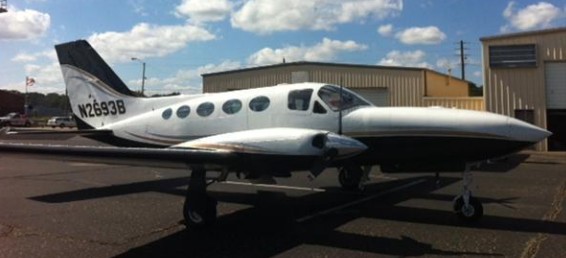
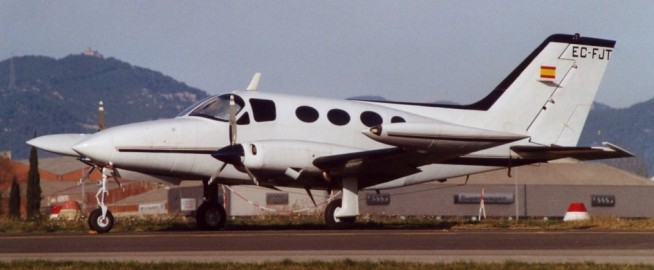
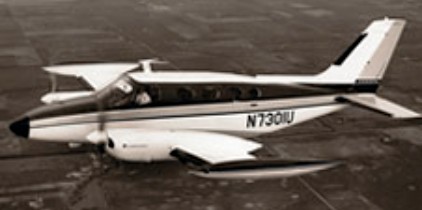
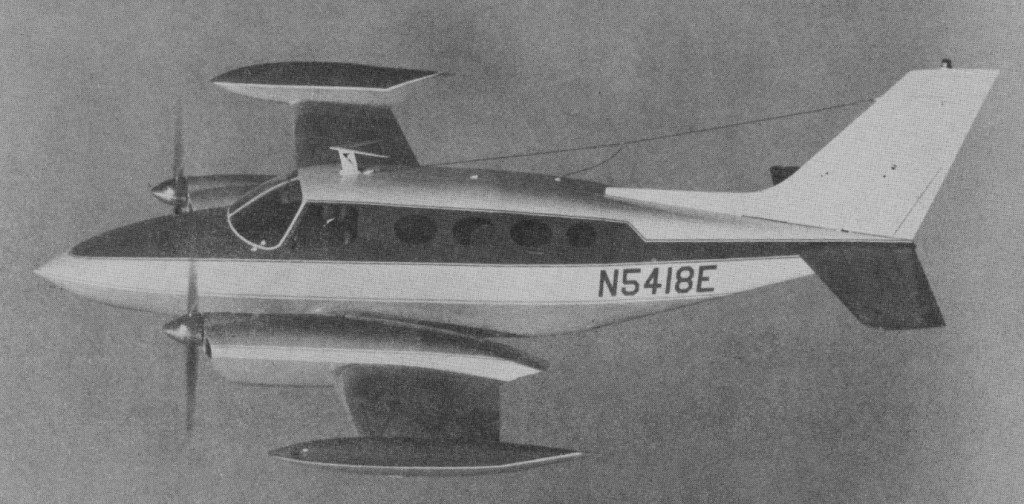
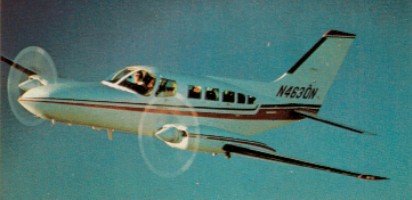
On 26 August 1965 Cessna flew the prototype of an aircraft generally similar to the 411 which served for two new aircraft, the Model 401 and Model 402, and when FAA certification of the Model 401 prototype was awarded on 20 September 1966 it covered also the Model 402. These two aircraft represented lower-cost versions of the Model 411, differing primarily by having two 224kW Continental TSIO-520-E flat-six engines and some reduction in basic installed equipment. The Model 401 accommodated a crew of two and four to six passengers, but the Model 402 had a cabin layout which permitted a quick change from nine-seat commuter use to an all-cargo configuration. Production of the Model 401 was phased out in mid-1972, with development then being concentrated on the Model 402 which, in December 1971, had been named Utiliner. At the same time a new version of the Model 402 was introduced as the Businessliner. Both versions, powered by 242kW TSIO-520-VB engines, were progressively improved and remained in production for some time, as the 10-seat Utiliner II small convertible passenger/ cargo airliner and the Businessliner II executive transport able to carry 2-6 passengers. The final version was the Businessliner III corporate transport fitted with more sophisticated avionics, including weather radar. Nearly 500 model 402 were built before the introduction of the improved model 402B. The 402C Utililiner converts from cargo hauler to ten seat commuter in a matter of minutes, with air conditioning, stereo, refreshment center as options.
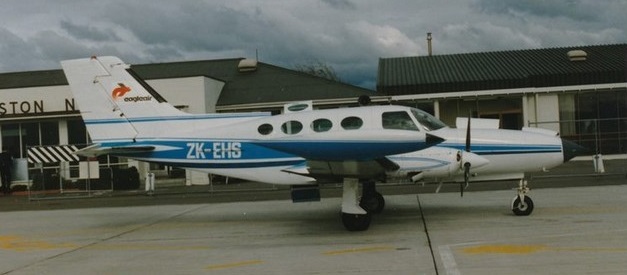
Cessna 402B ZK-EHS
Major changes were the large cargo doors and the additional square shaped windows.
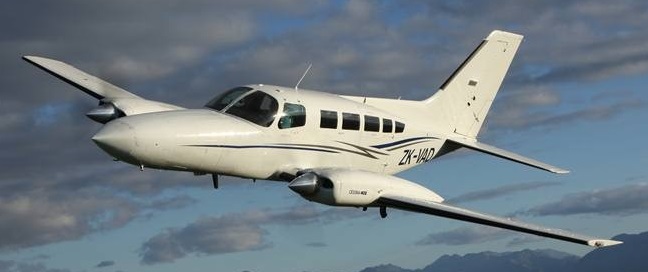
There are some substantial differences between the B and C. Power per engine is up from 300 to 310 horsepower for normal operation and up to 325 for takeoff and single-engine operation. There’s almost five feet more wingspan. The 402C’s maximum gross weight is 550 pounds greater than the 402B’s, and the empty weights of comparably equipped airplanes are very close. So almost the whole increase goes to useful load.
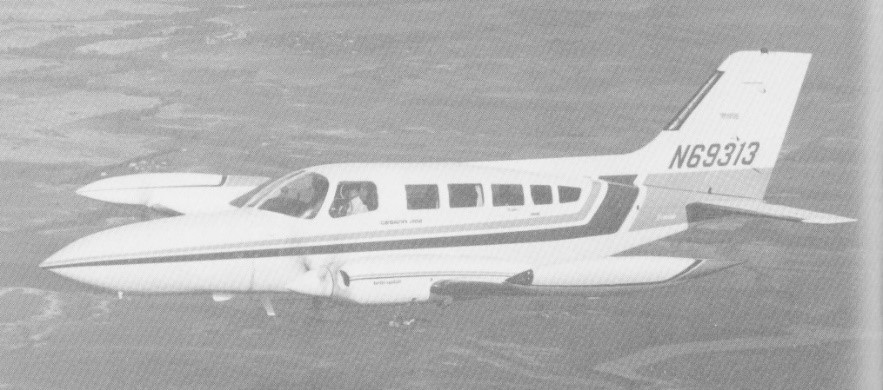
Cessna 402 Businessliner
Available as Utililiner (for commuter work) or Businessliner (replacing the model 411), sales picked up so that a further 1400 had been built by 1978.
Cessna 402C
A downturn in sales led to production ceasing in 1986 by which time a total of 1,540 Cessna 402 variants had been built, including 12 delivered to the Royal Malaysian Air Force in 1975.
Scenic Air Lines, in 1977, acquired from American Jet Industries engineering and manufacturing rights for turboprop conversions of Cessna Models 402 and 414, now known as Turbo Star 402 and Turbo Star Pressurised 414.
CE-402 Engines: 2 x Continental TSIO-520-E, 300 hp Wingspan: 39 ft 10.25 in / 12.15 m Length: 36 ft 1 in / 11.00 m Empty weight – Utiliner: 3738 lb / 1695 kg Empty weight – Businessliner: 3728 lb / 1691 kg MTOW: 6300 lb / 2857 kg Max cruise 75% 10,000ft / 3050m: 189 kt / 218 mph / 351 kph Max ROC SL: 1610 fpm / 491 m/min Service ceiling: 26,180 ft / 7980 m Max range 25,000ft/7620m – 1218lb/552kg fuel-no res: 1423 nm / 1639 mi / 2637 km Seats: 10 Cabin length: 15 ft 10 in / 4.83 m Cabin max width: 4 ft 8 in / 1.42 m Cabin max height: 4 ft 3 in / 1.30 m Cabin volume: 222.4 cu ft / 6.30 cu m Cabin baggage capacity: 500 lb / 227 kg Nose baggage – 2: 350 lb / 159 kg & 250 lb / 113 kg Wing lockers: 2 x 120 lb / 54 kg
CE-402B Engine: 2 x TSIO-520-E, 300 hp. Seats: 10. Wing loading: 32.2 lb/sq.ft. Pwr loading: 10.5 lb/hp. Gross wt: 6300 lb. Empty wt: 3864 lb. Equipped useful load: 2066 lb. Payload max fuel: 848 lb. Range max fuel 75% pwr: 1132nm/5.3hr. Range max fuel 55% pwr: 1206nm/7.1hr. Service ceiling: 26,180 ft. 75% cruise: 210 kt. 55% cruise: 171 kt. Vmc: 83 kt. Stall: 73-83 kt. 1.3 Vso: 95 kt. ROC: 1610 fpm. SE ROC: 225 fpm @ 103 kt. SE service ceiling; 11,320 ft. Min field length: 2220 ft. Fuel cap: 600/1218 lb.
CE-402C Engines: Continental TSIO-520-VB, 325 hp each. TBO: 1600 hrs. Props: McCauley 3-blade, 76.5-in. Seats: 6/8. Length: 36.4 ft. Height: 11.5 ft. Wingspan: 44.1 ft. Wing area: 226 sq.ft. Wing aspect ratio: 8.7. Maximum ramp weight: 6885 lbs. Maximum takeoff weight: 6850 lbs. Standard empty weight: 4077 lbs. Maximum useful load: 2805 lbs. Zero-fuel weight: 6515 lbs. Maximum landing weight: 6850 lbs. Wing loading: 30.3 lbs/sq.ft. Power loading: 11.1 lbs/hp. Maximum usable fuel: 1236 lbs. Best rate of climb: 1,450 fpm @ 109 kts. Climb gradient: 817 ft/nm. Rate of climb @ 8,000 ft: 1325 fpm. Service ceiling: 26,900 ft. Maximum single-engine rate of climb: 301 fpm @ 104 kts. Single-engine climb gradient: 176 ft/nm. Single-engine service ceiling: 14,800 ft. Maximum speed: 231 kts. Cruise @ 65% pwr @ 8,000ft: 181 kts. Cruise @ 65% power @ 18,000ft: 196 kts. Fuel flow @ 65% pwr @ 18,000 ft: 196 pph. Endurance at 65 % pwr @ 18,000 ft: 6.1 hrs: Stalling speed clean: 78 kts. Stalling speed gear/flaps down: 68 kts. Turbulent-air penetration speed: 147 kts.
1979 402C Utililiner Engines: 2 x Continental TSIO 520 VB, 325 hp. Max speed: 231 kts. Max cruise speed: 213 kts. Max range: 1,234 nm. Max usable fuel: 204 USG. ROC: 1,450 fpm. ROC SE: 301 fpm. Service ceiling: 26,900 ft. Service ceiling SE: 14,800 ft. Takeoff dist 50 ft obstacle: 2,195 ft. Landing dist 50 ft obstacle: 2,485 ft. Max ramp wt: 6885 lbs. Max zero fuel wt: 6,515 lbs. Max useful load: 2,808 lbs. Seats: 8.
1979 402C Businessliner Engines: 2 x Continental TSIO 520 VB, 325 hp, 242kW. Max Take-off weight: 3107 kg / 6850 lb Empty weight: 1845 kg / 4068 lb Wingspan: 13.45 m / 44 ft 2 in Length: 11.09 m / 36 ft 5 in Height: 3.49 m / 11 ft 5 in Wing area: 20.98 sq.m / 225.83 sq ft Max speed: 231 kts / 266 mph. Max cruise speed: 213 kts / 191 mph. Max range: 1,234 nm. Max usable fuel: 204 USG. ROC: 1,450 fpm. ROC SE: 301 fpm. Service ceiling: 26,900 ft / 8200 m. Service ceiling SE: 14,800 ft. Takeoff dist 50 ft obstacle: 2,195 ft. Landing dist 50 ft obstacle: 2,485 ft. Max ramp wt: 6,885 lbs. Max zero fuel wt: 6515 lb. Max useful load: 2,780 lbs. Seats: 10.
CIDC Turbo Star 402 / CE-402 Engines: 2 x Allison 250-B17B, 420 hp. Seats: 6/10. Wing loading: 33.5 lb/sq.ft. Pwr loading: 7.7 lb/hp. Max TO wt: 6525 lb. Empty wt: 3414 lb. Equipped useful load: 2783 lb. Payload max fuel: 1043 lb. Range max fuel/cruise: 1050 nm/4.6 hr. Range max fuel /range: 1459 nm/ 7 hr. Service ceiling: 25,000 ft. Max cruise: 228 kt. Max range cruise: 210 kt. Vmc: 81 kt. Stall: 70-84 kt. 1.3 Vso: 91 kt. ROC: 2180 fpm. SE ROC: 510 fpm @ 86 kt. SE ceiling: 13,800 ft. Min field length: 1290 ft. Fuel cap: 1344/1740 lb.

 All Aero