An eight-seat executive and multipurpose aircraft, with rear-mounted wings, canards, and twin piston or turboprop engines.
2 Engines
Commonwealth Aircraft Corp / CAC CA-4 Woomera
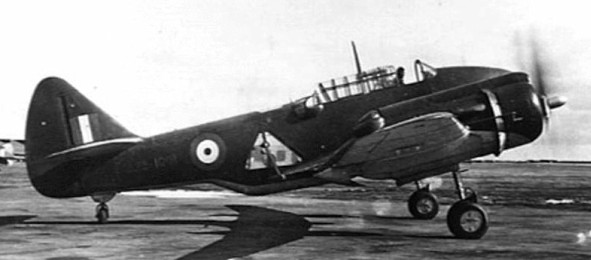
The RAAF order for CAC Woomera bombers were cancelled before the aircraft was cleared for operation.
Engines: 2 x Pratt & Whitney R-1830-S3C3-G Twin Wasp 14-cylinder radial, 1,200 hp
Wingspan: 59.22 ft (18.05m)
Length: 39.60 ft (12.07m)
Height: 18.14 ft (5.53m)
Empty Weight: 12,782lbs (5,798kg)
Maximum Take-Off Weight: 22,932lbs (10,402kg)
Maximum Speed: 282 mph (454kmh; 245kts)
Maximum Range: 2,225 miles (3,580km)
Rate-of-Climb: 2,090 ft/min (637m/min)
Service Ceiling: 23,507 ft (7,165m)
Armament:
2 x 20mm Hispano cannons in nose
2 x 7.7mm machine guns in nose
2 x 7.7mm machine guns in rear-facing barbettes
1 x 7.7mm machine gun in ventral position
4 x 250lb bombs OR 2 x 500lb bombs OR 2 x torpedoes with 4 x 25lb bombs
Accommodation: 3
Hardpoints: 4
Comac C-919
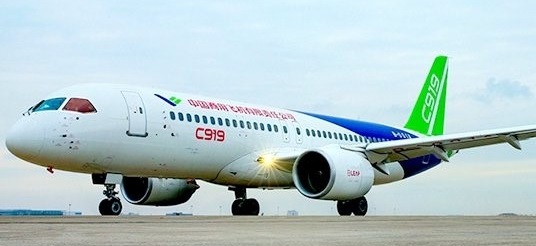
Designed to compete with the Airbus 320 and Boeing 737, the C-919 aircraft was made by the Commercial Aircraft Corporation of China, Comac; founded in 2008 with the purpose of producing the first commercially functioning aircraft for passengers – something the state-run company had previously failed to succeed in doing in the 1970s. The C stands for “COMAC” and “China”, 9 means “forever” while 19 refers to its capacity of 190 passengers. The C also has the implication that forms an “ABC” parallel situation with Airbus and Boeing. In Mandarin Chinese, 9 (Chinese: 九; pinyin: jiǔ) is a homophone of 久, meaning “forever” as a Chengyu in Chinese: 天长地久; pinyin: tiān cháng dì jiǔ.
Several components from the plane were imported, including the landing gear of German origin, Austrian interior and Franco-American engines. The aircraft, primarily constructed with aluminium alloys, is to be powered by either CFM International LEAP or ACAE CJ-1000A turbofan engines, and can carry 156 to 168 passengers in a normal operating configuration up to 5,555 km (3000 nmi).
The center wing box, outer wing box, wing panels, flaps, and ailerons are planned to be built in Xi’an, China; the center fuselage sections are planned to be built in Hongdu, China. Aluminium-lithium alloys account for 8.8% of the structure and composite materials for 12%. The air frame will be made largely of aluminum alloy. Aircraft design and assembly is performed in Shanghai.
The wing is supercritical, increasing aerodynamic efficiency by 20% and reducing drag by 8% compared to a non-supercritical one. The center wing box was originally intended to use carbon fibre composites. It was changed later to an aluminum design to reduce design complications.
Both Pratt & Whitney and CFM International offered to provide the engines for the aircraft, the former offering the PW1000G and the latter the LEAP-1C; the latter was ultimately selected.
The engine’s nacelle, thrust reverser and exhaust system will be provided by Nexcelle, with such features as an advanced inlet configuration, the extensive use of composites and acoustic treatment and an electrically operated thrust reverser. Michelin will supply Air X radial tyres. Its integrated modular avionics architecture is based on Ethernet.
Comac applied for a type certificate for the aircraft from the Civil Aviation Authority of China on 28 October 2010. In June 2011, COMAC and Irish low-cost airline Ryanair signed an agreement to co-operate on the development of the C919. The production of the prototype began on 9 December 2011.
Canada’s Bombardier Aerospace has been collaborating since March 2012 on supply chain services, electrical systems, human interface and cockpit; and on flight training, flight-test support, and sales and marketing, from June 2013.
In 2012 the C919 order book stood at 380 units worth US$26 billion, and averaging $68.4 million. In June 2015, the China National Radio predicted a $50 million price, cheaper than the B737 or A320 list prices.
It rolled out on 2 November 2015 and first flew on 5 May 2017. The C-919’s maiden voyage lasted 79 minutes, taking off and returning to the Shanghai Pudong International airport. The flight was a particularly symbolic moment for China, as a sign of their entrance and rise into the aviation world, and was broadcast live on state-controlled television.
Comac powered on its second prototype on 28 July 2017. The first has not flown since the maiden flight but no major issues have surfaced while small improvements were being made. On September 28, it made its second flight at 10,000 ft (3,000 m), which lasted 2 hours 46 minutes, although it was supposed to last one more hour. On November 3, it made its third flight in 3h 45min, reaching 3,000 m (9,800 ft). It was then transferred on 10 November from Shanghai to Xian to continue its flight test campaign, a 2h 24min, 1,300 km (700 nmi) flight reaching 7,800 m (25,600 ft) and Mach 0.74 (825 km/h; 445 kn). The second prototype made its first flight on 17 December 2017.
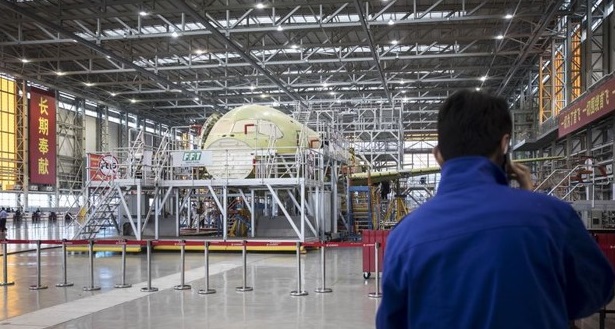
The delay between first and subsequent flights underline the program immaturity by maiden flight: flying early at low speed and altitude is possible but faster and higher is limited by aeroelastic flutter needing ground vibration testing and aircraft instrumentation which were not ready in May. Due to flight testing problems, the 2020 introduction previous schedule was delayed to 2021, for China Eastern Airlines. In February 2018, the first prototype was flying more than once a week.
Part of the problem is that Comac’s home base is Shanghai Pudong International Airport, one of the busiest airports in the country. The company decided to transfer its first test aircraft in November to Yanliang in Xi’an, a city in western China. That should make for a better base to conduct tests.
At the November 2010 Zhuhai Airshow, Comac announced orders for 55 C919 aircraft from six airlines, with an additional 45 options. The purchasing airlines or lessors included China Eastern Airlines, Air China, Hainan Airlines, China Southern Airlines, CDB Leasing Company, and GE Capital Aviation Services. On 19 October 2011, Chinese ICBC Leasing ordered 45 C919s and agreed to be the launch customer. On 11 November 2014, Comac announced at the 2014 Zhuhai Airshow that China Merchants Bank’s aircraft leasing division made a firm commitment for 30 C919s, and that total orders were now up to 450 aircraft.
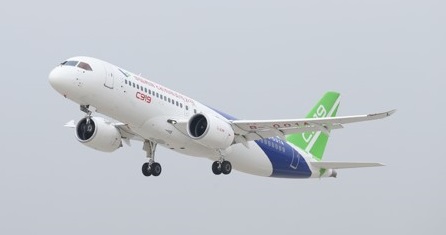
At the June 2015 Paris Air Show, Ping An Leasing signed a letter of intent for 50 C919s, becoming one of Comac’s largest customers, and Puren Group signed a letter of intent for seven C919s and seven ARJ21s, intended for the start-up Puren Airlines. In November 2016 COMAC has received an order for 20 C919s including 5 firm from Shanghai Pudong Development Bank Financial Leasing and for 36 C919s from CITIC Group Financial Leasing including 18 firm. While no down payments were needed before its maiden flight, 500,000 yuan ($76,000) were deposited subsequently for each firm order. The last ICBC Leasing order for 55 on 5 December 2017 brought the order book to 785. In February 2018, its total order book was for 815, before the order for 200 from HNA Group in June 2018, along with 100 ARJ-21s.
In February 2018, Comac had 815 orders mostly from Chinese leasing companies or airlines with the exception of GE, before the order for 200 from HNA group.
In June 2018, Aviation Week reported the flight-test aircraft grounding for modifications, extending the schedule by three months but maintaining a 2020 certification target. The two prototypes were having their flaps and tailplanes modified, due to delamination of the carbon-fiber reinforced plastic elevators. Fuel tanks were also modified. The third test aircraft was also being modified and maximum-rate pressurization was tested.
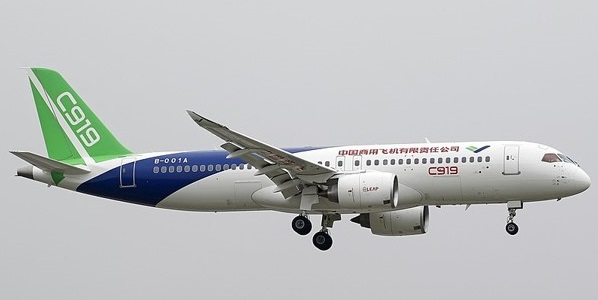
C919
Engines: 2 x CFM LEAP-1C, 31,000 lbf (137.9 kN)
Wingspan: 35.8 m / 117.5 ft
Length: 38.9 m / 127.6 ft
Height: 95 m / 39.2 ft
Empty weight: 42,100 kg / 92,815 lb
MTOW: 72,500 kg / 159,835 lb
Maximum payload: 20,400 kg / 45,000 lb
Maximum fuel: 19,560 kg / 43,122 lb
Cruise: Mach 0.785 (450 kn; 834 km/h)
Range: 4,075 km / 2,200 nm
Approach speed: 135 kn (250 km/h)
Takeoff dist: 2,000 m (6,600 ft)
Landing dist: 1,600 m (5,200 ft)
Seats: 188-168
C919
Wingspan: 33.6 m / 110 ft
Wingspan with winglets: 35.4 metres / 116 ft
Fuselage width: 3.96 m / 13.0 ft
Fuselage height: 4.166 m / 13.67 ft
Fuselage cross-section: 12.915 sq.m / 139.02 sq ft
Payload capacity: 20.4 tonnes
Cruise: Mach 0.785 / 450 kn / 834 km/h
Operating ceiling: 12,200 m / 39,800 ft
Range std: 4,075 km / 2,200 nmi
Range ER: 5,555 km / 2,999 nmi
Comac ARJ21
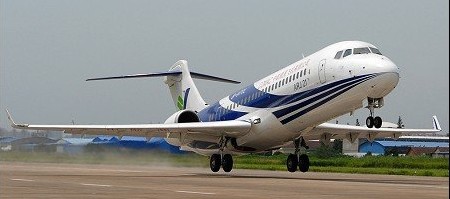
The Comac (formerly ACAC) ARJ21 Xiangfeng (Soaring Phoenix in Chines) is a 2008 twin-engined regional airliner. It is the first passenger jet to be developed and indigenously produced by the People’s Republic of China.
ARJ21-700
Engines: 2 x 6954kg General Electric CF34-10A
Take-off weight: 43500 kg / 95902 lb
Empty weight: 24955 kg / 55017 lb
Wingspan: 27.29 m / 90 ft 6 in
Length: 33.46 m / 110 ft 9 in
Height: 8.44 m / 28 ft 8 in
Wing area: 79.86 sq.m / 859.61 sq ft
Max. speed: 876 km/h / 544 mph
Cruise speed: 724 km/h / 450 mph
Ceiling: 11900 m / 39050 ft
Range: 3700 km / 2299 miles
Crew: 2
Passengers: 90
Colomban MC10 / MC12 / MC15 Cri-Cri (Cricket)
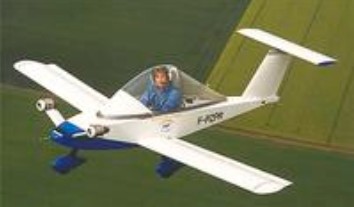
It was in 1971, when aircraft designer Michel Colomban started work on this small aircraft Cri Cri with two engines. His target was to build small, economic plane with two engines, which would be able to flying also some aerobatic maneuvers. Colomban originally planned the Cri-Cri in wood and fabric.
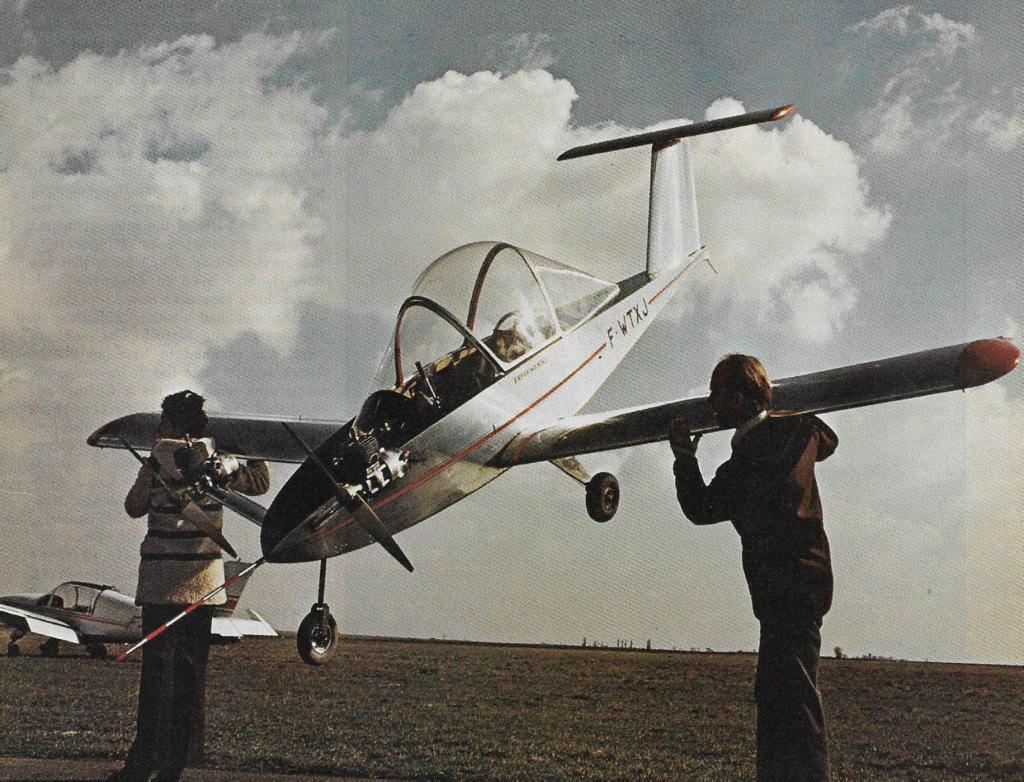
A spar was made with a thin plywood web, but with alloy caps glued on. The bonding was so effective, and the alloy so quick and easy to use, Colomban decided to go toward metal construction, using a lighter material than aluminium for the non-stressed parts of the inner structure. In time he settled on Klegecell, a polyvinyl-chloride (PVC) foam.
The wooden wing was planned to have an NACA 23012 section, but the foam/metal wing used a Colomban-modified Wortman 19% thick design. This changed to 21.7% later. The par is AU 4 G-1 alloy with an I-beam section. The ribs, 32 per panel in the prototype, were sawed out of a stack of Klegecell sheets.

Price of this plane shouldn’t exceed 1000 USD, including two engines – these prices are from 1970. Construction took around 1500 working hours for the Cri-Cri plane, which name is after nickname of Michel’s daughter, prepared for it’s first flight. The prototype was first flown in 1973, with two 9 hp engines.
The Cri-Cri features brakes, flaps, full harness, nosewheel steering and inflight adjustable rudder pedals. The prototype had ground adjustable variable pitch 68cm / 26.75in in diameter.
Cricket is fully aerobatic (at 170 kg) and was built in France under the approval of the French EAA, the Fleseau du Sport de LAir (RSA).
CriCri is the world’s smallest twin-engine airplane at 16 feet and 160 pounds. Powered with two 12-hp Swedish snowmobile Valmet engines, the tiny twin was first shown at the 1981 Oshkosh Fly-In.
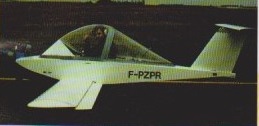
With trhe help of a Canadian businessman, worldwide marketing was established. Development of a kit to accompany the plans soon followed.
The kit product diverged from the original design in a few critical areas, notably, the flaperon torque tube. The new company elected to replace the aluminium tube with a steel one of smaller diameter. The steel tube had some torsional flexibility that harmonised with the flaps themselves and a few crashes resulted from severe flutter problems.
Unaccustomed to huge damages sought in the US lawsuits ($10,000,000) Colomban, whose relationship with the Canadian company had cooled considerably, pulled the airplane from all markets in the Western hemisphere. The company was forbidden to sell kits for the Cri-Cri and spare parts suddenly disappeared.
After those Yves Duval and Nicolas Charmont, a third Cricri jet was flying in France. Dominique Bonnaire made him his first flight in this configuration on May 5, 2011. The engine selected was 2 Jetcat P200SX giving a thrust of about 45 kg.
Dominique Bonnaire was the builder and owner of this Cricri, flying since 1996.
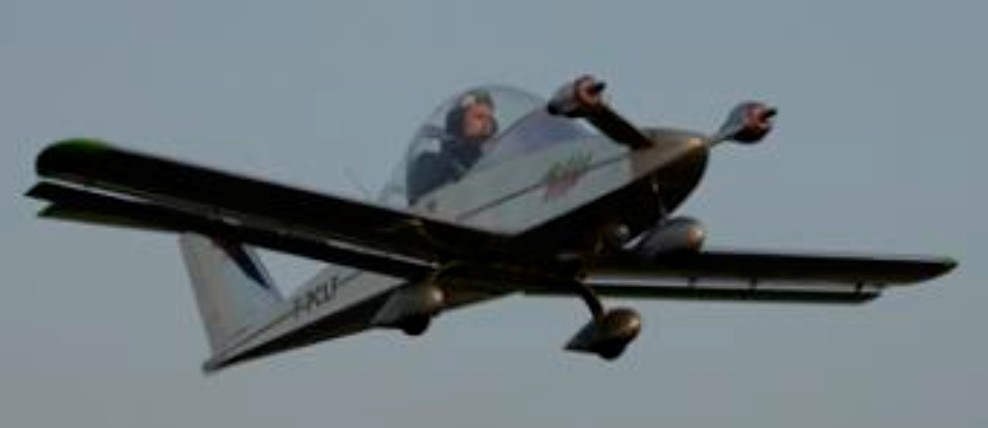
MC-10 Cri-Cri
Stall: 39 kt / 45 mph / 72 kmh
Cruise: 108 kt / 124 mph / 200 kmh
VNE: 159 kt / 183 mph / 295 kmh
Empty Weight: 80 kg / 176 lbs
MTOW Weight: 170 kg / 375 lbs
Climb Ratio: 600 ft/min / 3 m/s
Take-off distance (50ft obstacle): 330 ft / 101 m
Landing distance (50ft obstacle): 495 ft / 151 m
MC12
Gross Wt. 380 lbs.
Empty Wt. 160 lbs.
Fuel capacity 6 USG.
Wingspan 16’.
Length 12’10”.
Wing area: 33 sq.ft.
Engine 2 x 12-hp Vlamet.
Vne: 160 mph.
Top mph 127.
Cruise mph 110.
Stall mph 42.
Climb rate 850.
Takeoff run 480.
Seats: 1.
Design load: +9 / -4G.
Rate of roll: 180o/sec.
MC-15
Engine: 2 x JPX 212, 15 hp
Wing span: 4.9 m
Wing area: 3.1 sq.m
MAUW: 170 kg
Empty weight: 80 kg
Fuel capacity: 23 lt
Max speed: 220 kph
Cruise speed: 190 kph
Minimum speed: 72 kph
Climb rate: 6.5 m/s
Seats: 1
Fuel consumption: 8.6 lt/hr
Plan price (1998): 2650 F
Bonnaire Cricri jet
Engines: 2 Jetcat P200SX, 45 kg thrust
Wingspan: 4.90 m
Length: 3.90 m
Height: 1.22 m
Empty weight: 78 kg
MAUW: 175 kg
Fuel capacity: 24 litres
Cruise speed: 240 Km / h
Maxi speed: 270 Km / h
Maxi load: +6 /-3G
Cockatoo Codock
In 1933 Cockatoo Dockyard & Engineering designed and built a twin-engined monoplane, the Codock, for Sir Charles Kingsford-Smith, who had made the first Pacific air crossing in 1928. A six-seat monoplane of the cantilever-wing Fokker type, it was powered by two 165 hp Napier Javelin engines.
CMASA R.S.14
twin-engined, twin-float reconnaissance seaplane.
Served throughout Second World War.
CMASA BGA
twin-engined floatplane/bomber (1936)
Clement-Bayard Montgolfier
First flew on 31 July 1913.
Length: 73.5 m
Width: 12.2 m
Capacity: 6,500 cu.m
Engines: 2 x Clément Bayard 90 cv
Top speed: 60 km/h.
Clement-Bayard N° 5 / livré à la Russie / Condor
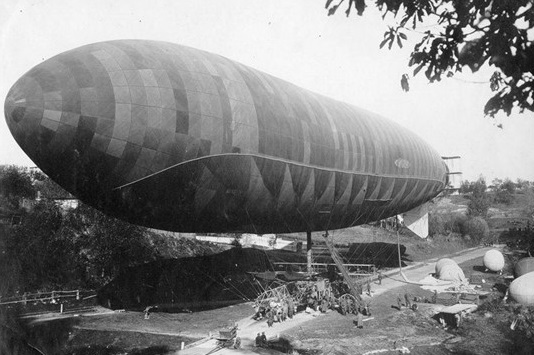
A non-rigid dirigible first flown on 9 February 1913. Acquired in 1913 from France by Russia, the airship was named “Condor”.
To the beginning of the WWI in Russia there were 14 dirigible. Condor was not used owing to the slow speed of flight.
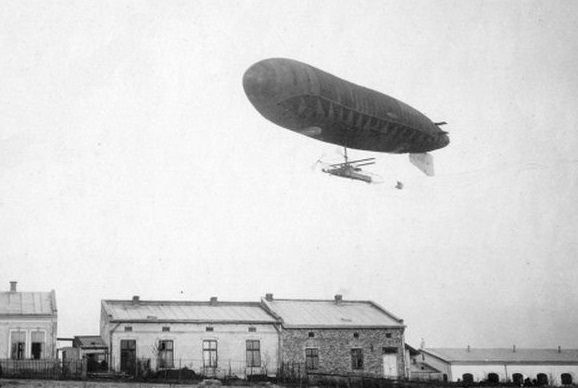
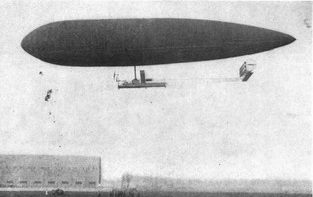
In the spring of 1915, the airship was dismantled.
Length: 86 m
Width: 13.5 m
Capacity: 9,600 cu.m
Engines: 2 x Clément Bayard 130 cv
Maximum speed: 55 kph
 All Aero