First aircraft built was a six-seat passenger transport (twin-engined PT-6), but only two built.
2 Engines
CSS CSS-12
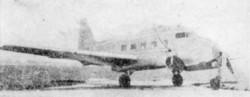
Designed by Dr. Eng. Leszek Dulęba, the CSS-12 airliner was the first all-metal aircraft built in Poland after World War II.
Construction: metal, the cabin accommodated 2 crew and 10 passengers. Landing gear retractable in flight. The drive consisted of two in-line 12-cylinder Argus As411 A1 engines, with a power of 427 kW (580 hp) each.
The prototype flew on November 22, 1950. by L. Lech. After a year, the trials were discontinued, as the priority was given to the serial production of military aircraft. Work was resumed in 1955, as a result of which a second horizontal stabilizer was added. The prototype showed good flight characteristics and performance (Eng. A. Abłamowicz set an international altitude record on it), but the lack of interest in the aircraft on the part of LOT Polish Airlines and the lack of appropriate engines meant that the CSS-12 did not go into mass production. After the aircraft was written down in 1960, the front part of the fuselage was transferred to the NOT Museum of Technology in Warsaw, and the remaining part of the fuselage with wings was placed in the Jordan garden of WSM Sady Żoliborskie in Warsaw. In February 1967, the front part of the fuselage was transferred to the Museum of Aviation and Aeronautics in Krakow.
Crusader Aircraft AF-4
Between 1933-1934 built Crusader AF-4 four-seat cabin monoplane with two Menasco in-line engines and twinbooms carrying twin tail.
Creative Flight Aerocat
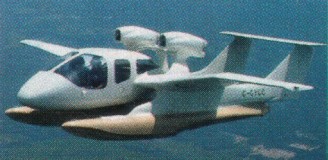
Aerocat SR
Cruise: 175 mph
Stall: 50 mph
Range: 1120 sm
Rate of climb: 1200 fpm
Takeoff dist: 600 ft
Landing dist: 450 ft
Engine: Lycoming , 210 hp
HP range: 180-320 hp
Fuel capacity: 68 USG
Empty weight: 1600 lb
Gross weight: 2700 lb
Length: 27 ft
Wing span: 34 ft
Wing area: 165 sq.ft
Seats: 4
Cockpit width: 56 in
Landing gear: retractable nose
Aerocat SRX
Cruise: 150 mph
Stall: 50 mph
Range: 960 sm
Rate of climb: 1100 fpm
Takeoff dist: 600 ft
Landing dist: 450 ft
Engine: Crossflow, 250 hp
HP range: 200-300 hp
Fuel capacity: 68 USG
Empty weight: 1800 lb
Gross weight: 2700 lb
Length: 27 ft
Wing span: 34 ft
Wing area: 165 sq.ft
Seats: 4
Cockpit width: 56 in
Landing gear: retractable nose
Aerocat TR
Cruise: 175 mph
Stall: 50 mph
Range: 1090 sm
Rate of climb: 1200 fpm
Takeoff dist: 600 ft
Landing dist: 450 ft
Engines: 2 x Jabiru 3300, 130 hp each
HP range: 210-300 hp
Fuel capacity: 68 USG
Empty weight: 1800 lb
Gross weight: 2700 lb
Length: 27 ft
Wing span: 34 ft
Wing area: 165 sq.ft
Seats: 4
Cockpit width: 56 in
Landing gear: retractable nose
Aerocat TRX
Cruise: 155 mph
Stall: 50 mph
Range: 980 sm
Rate of climb: 1100 fpm
Takeoff dist: 600 ft
Landing dist: 450 ft
Engines: 2 x Jabiru 3300, 130 hp each
HP range: 210-300 hp
Fuel capacity: 68 USG
Empty weight: 1800 lb
Gross weight: 2700 lb
Length: 27 ft
Wing span: 34 ft
Wing area: 165 sq.ft
Seats: 4
Cockpit width: 56 in
Landing gear: retractable nose
Craft Aerotech 200
A plans and kits two-seat and twin-engined rotorcraft
Convertawings Model A / Quadrotor
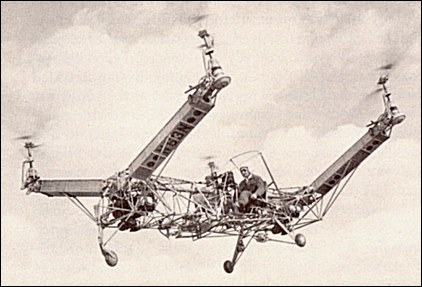
As the result of Convertawings’ further developmental work on this four rotor configuration, a first prototype was completed in 1955 and it has flown successfully.
The four rotors of this helicopter are mounted laterally on outriggers in two tandem pairs. The four rotors were positioned in an “H” configuration, and the design incorporated simplified hubs with strap-mounted blades, a form of “hinge-less” rotor. The control mechanism is extremely simplified and obtained by differential change of thrust between the rotors. There is no cyclic control, but only collective control. In the experimental prototype the fuselage was of tubular steel, the booms supporting the rotors in aluminium alloy. Power is provided by two engines connected to the rotor drive system by multiple vee belts. Shafting and transmission cases ensure inter-connection between the four rotors, so that either engine can drive all of them. There is a tricycle undercarriage with two wheels in the rear section and a nose wheel which can swivel.
The first flights took place in March 1956, flown by its designer and test pilot, D.H.Kaplan. Despite successful testing and development, military support for the Quadrotor ceased after cutbacks in defense spending.
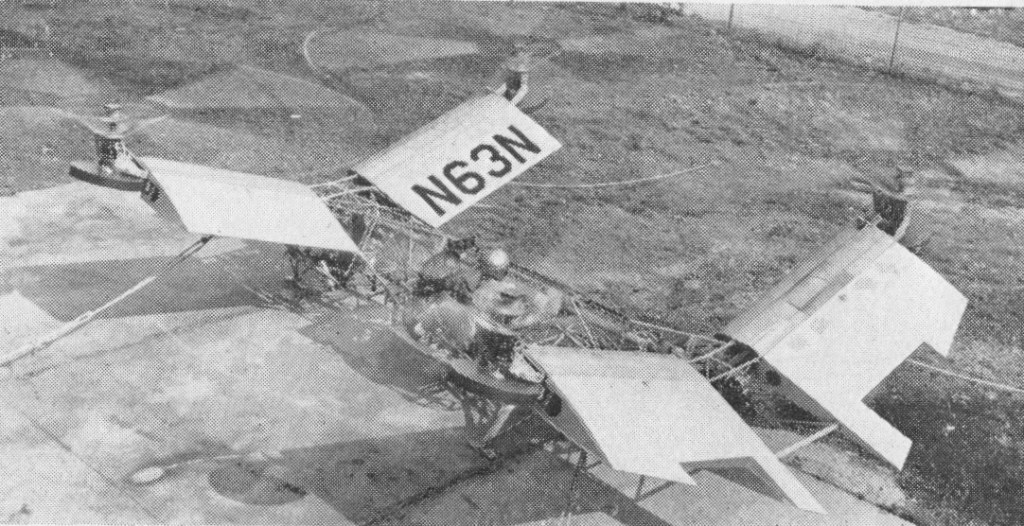
The Quadarotor A was a small test vehicle for the Projecled 60-76 passenger Model E Quadrotor on the same general lines. The Model E is intended to have four R-1820 piston-engines or Dart turboprops, mounted directly under the rotors.
However, the design – particularly its control system – was a precursor of future experimental vertical-rising aircraft.
Model A
Engines: 2 x Continental 0-90, 90hp
Rotor diameter: 5.92m / 15 ft
Gross weight: 998kg / 1,950 lb
Number of seats: 1
Convair 600 / 640
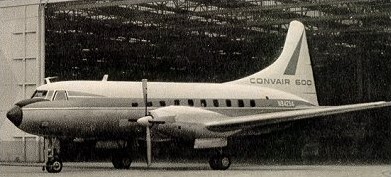
The prototype Convair 600 (a converted 240D) was powered by Rolls-Royce Dart R.Da 10 turboprops, and first flew on 12 May 1965.
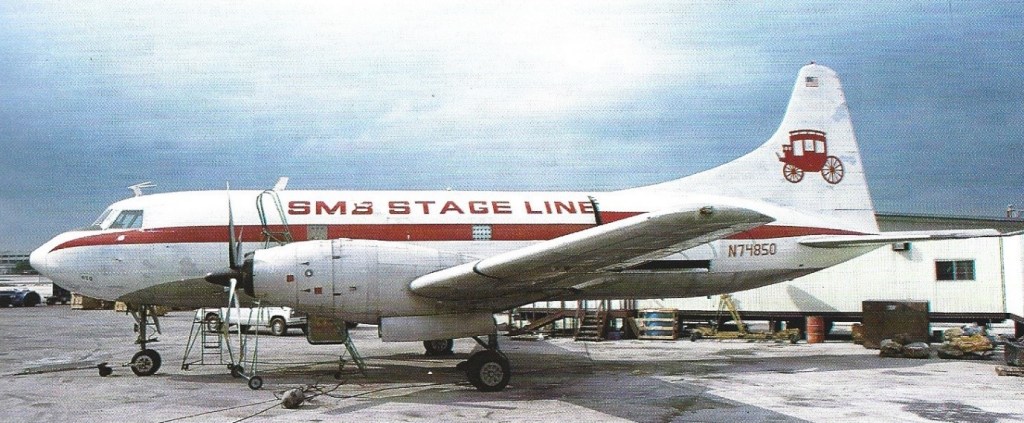
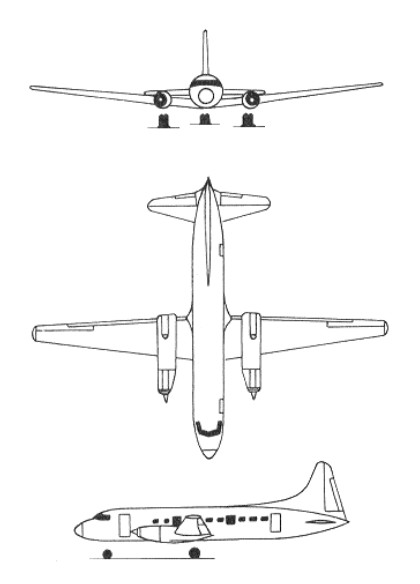
About 240 aircraft were modified from Convair 240 (Convair 600) and Convair 340 / Convair 440 (Convair 640) with the Rolls-Royce turbo-props installed.
Engines: Rolls Royce Dart 10 Mk 542 4 turboprops, 2,750 shp.
Length: 74 ft 8 in.
Wingspan: 91 ft 9 in.
Speed: 309 mph.
Ceiling: 24,600 ft.
Range: 1,230 mls.
Convair 640
Engines: 2 x Rolls-Royce RDa. 10/1 Dart turbo-prop, 2256kW
Max take-off weight: 25855 kg / 57001 lb
Empty weight: 13733 kg / 30276 lb
Wingspan: 32.11 m / 105 ft 4 in
Length: 24.84 m / 81 ft 6 in
Height: 8.59 m / 28 ft 2 in
Wing area: 85.47 sq.m / 919.99 sq ft
Cruise speed: 465 km/h / 289 mph
Ceiling: 6000 m / 19700 ft
Range w/max.fuel: 3138 km / 1950 miles
Range w/max.payload: 1979 km / 1230 miles
Crew: 2-3
Passengers: 49-56
Convair 580 / CV5800
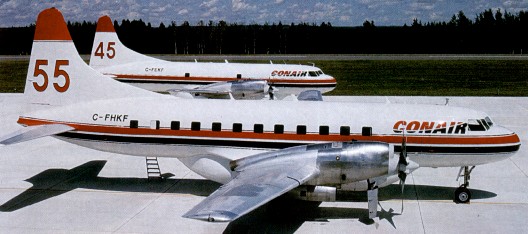
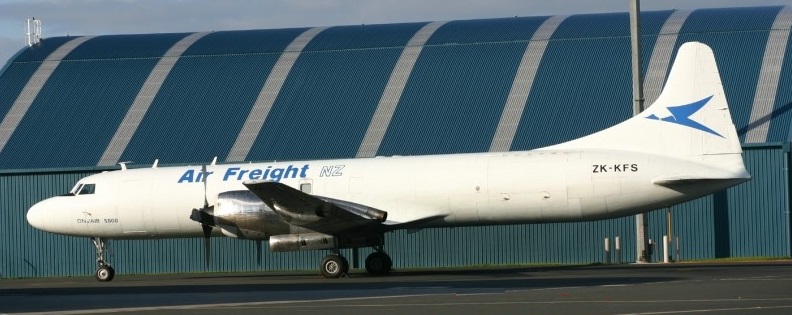
The Convair 580 is a turbine powered development of the Convair 340/440. Standard Pratt and Whitney R2800 piston engine (2,000hp) Convairs were converted to take a pair of Allison 501-D turboprop engines developing 2796kW (3750ehp) and driving four-bladed propellers. Development work was carried out by PacAero Engineering Corp, the extra power allowed a gross weight increase to 53,200 lb. for take off following some structural modification including an enlarged horizontal and vertical tailplane. The conversion line was opened at Pacific Airmotive Corp. Burbank, California, following certification in 1960. The last 580 was delivered in July 1969 after 170 aircraft had been converted. In all-passenger configuration it could carry 39 passengers.
Kelowna Flightcraft R&D Ltd., Allison Gas Turbine and General Dynamics teamed to launch the Convair 5800 Program. The Convair Model 340, 440, and 580 Airplanes were converted with a fourteen foot, three inch stretch to provide increased capacity. The 5800 is powered by the Allison 501-D22G (Series III) Propjet Engine, de-rated to 4300 TSHP.

The CV5800 featured a reconditioned airframe with a projected life in excess of 100,000 hours, modern, all new lightweight electrical wiring, all new flight control system cables, dual point underwing pressure refuelling, roller floor system, and passenger, cargo, or Combi models with approved Class E cabin.
All have Honeywell EFIS Flight Decks. The passenger model 5800 has 78 seats, and wide body interior with overhead bins. The cargo versions have a 120 inch cargo door and pallets and containers are compatible with DC-9 and B-727 aircraft. There is a 9-G Tie-down system.
CV580
Engines: 2 x Allison 501-D turboprop, 2796kW (3750ehp).
MAUW: 53,200 lb.
CV5800
Engines: 2 x Allison 501-D22G
Propellers: Hamilton Standard 54H60-164
Cruise speed: 325 mph
Range with 21,000 lb payload: 750 statute miles
Range with20,000 lb payload: 900 statute miles
Convair XF2Y Sea Dart
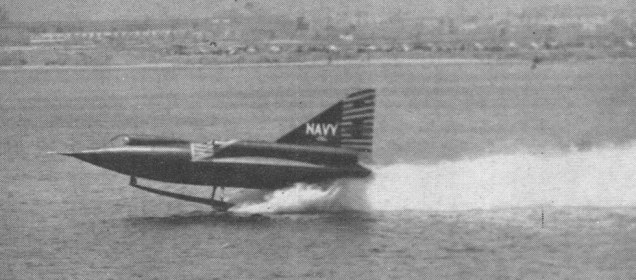
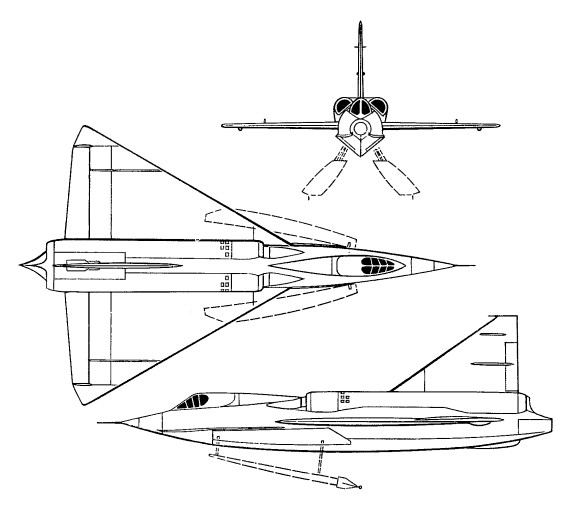
Convair was selected to produce a waterplane interceptor, and the result was XF2Y Sea Dart. The company was instructed to investigate the ‘blended hull’ concept, in which the hull rode so low in the water that the wings provided part of the required buoyancy until the aeroplane had accelerated sufficiently to rise onto a planing bottom, while the National Advisory Committee for Aeronautics (from 1958 the National Aeronautics and Space Administration) investigated the hydro-ski concept. When extended, the hydro-skis lifted the accelerating aeroplane onto the surface of the water, where the skis planed and so allowed the aeroplane to reach take-off speed; and when retracted they formed the lower surface of the fuselage without creating any drag.
The inlets for its two 3400-lb (1542-kg) thrust Westinghouse J34-WF-32 turbojets located in the dorsal position where they would be shielded from spray.
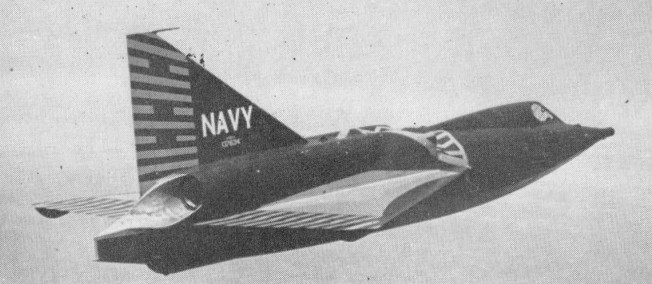
The concept embodied in the Convair Model 2-2 proposal was sufficiently interesting for the US Navy to award a contract for a prototype XF2Y-1 on 19 January 1951, followed by an order for 12 production F2Y-1 fighters on 28 August 1952; to this was added subsequently four YF2Y-1 pre-production aircraft.
First flown on 9 April 1953, the prototype offered performance much below expectations and this factor, coupled with serious vibration problems with the hydro-skis, led to the XF2Y-1 and the production F2Y-1s being cancelled.
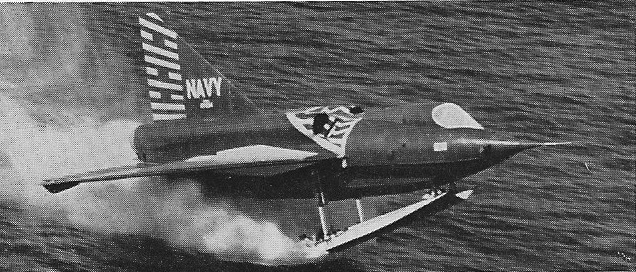
During test runs there was considerable vibration and pounding from the two hydro-skis and these were replaced by a single V-shaped ski. More power was needed than the 1542kg thrust provided by each of the Westinghouse J34-WE-32 turbojets installed in the prototype and the first YF2Y-1. This latter aircraft was re-engined with two J46-WE-2s, the rear fuselage being modified to accommodate the engine afterburners and the same powerplant was installed in the remaining three YF2Y-1s. On 3 August 1954 the YF2Y-1 exceeded a speed of Mach 1 in a shallow dive, the first seaplane to become supersonic, but only two of these aircraft were used in a limited test programme that was terminated finally during 1956.
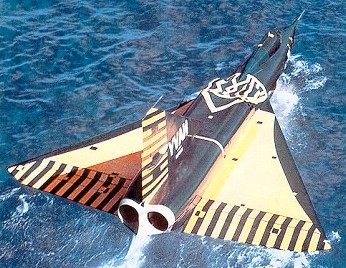
YF2Y Sea Dart
Engines: 2 x Westinghouse J46-WE-32, 2722kg
Wingspan: 10.26 m / 33 ft 8 in
Length: 16.03 m / 52 ft 7 in
Height: 6.32 m / 20 ft 9 in
Wing area: 52.30 sq.m / 562.95 sq ft
Max take-off weight: 7495 kg / 16524 lb
Empty weight: 5739 kg / 12652 lb
Max. speed: 1118 km/h / 695 mph
Ceiling: 16705 m / 54800 ft
Range: 826 km / 513 miles
Crew: 1
YF2Y-1
Engines: 2 x Westinghouse J46-WE-8 turbojets, 4,800 lb. thrust
Wingspan: 30 ft. 6 in
Length: 41 ft. 2 in
Loaded weight: approx. 22,000 lb.
Armament: 4×20 mm. cannon
Crew: 1.
Convair 440 Metropolitan
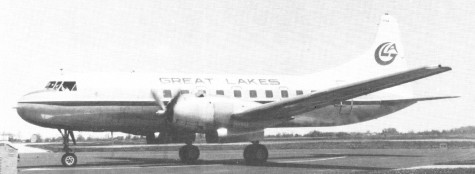
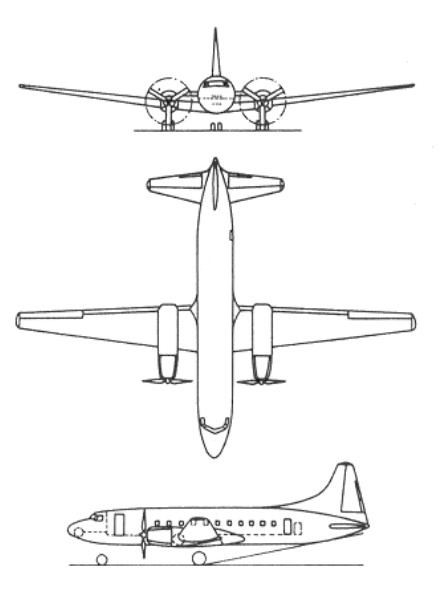
The 440 was a development of the 340 with modifications to increase speed by about 8km/h and to reduce the noise level in the cabin. Special kits were also made available to convert 340 to 440 standard with longer engine nacelles and a longer “radar nose”. Accommodation was provided for between 44 and 52 passengers. The prototype first flew on 6 October 1955 and 162 were built before production was phased out in the spring of 1958. A few were also operated by the USAF and US Navy.
Convair CV-440 Metropolitan Article
A total of 209 CV-340s was built, followed by 186 CV-440s.
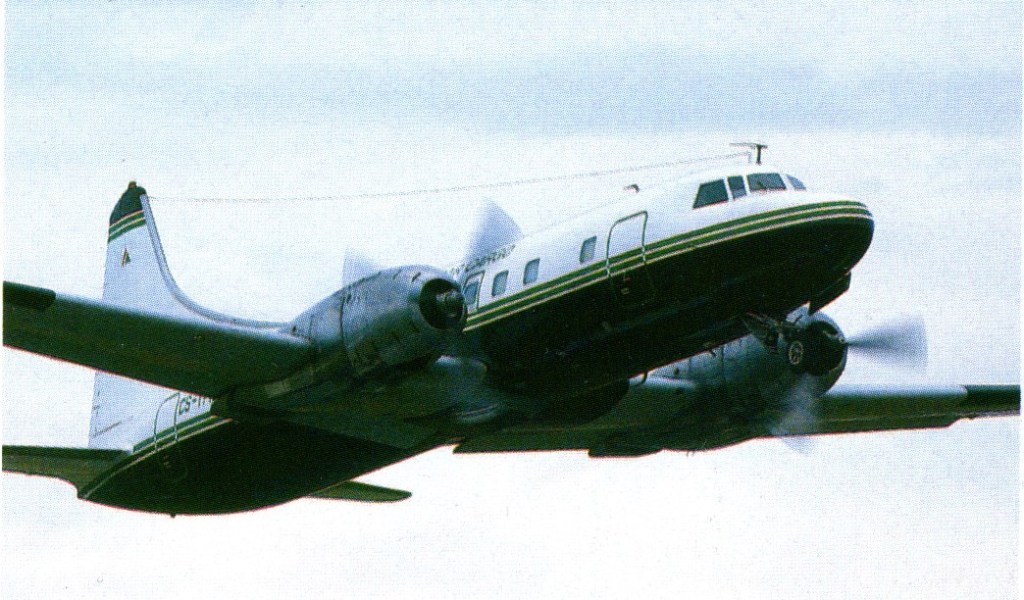
Variation:
Convair 540
Convair 440
Engines: 2 x Pratt-Whitney R-2800-CB16 Double Wasp, 1864kW
Max take-off weight: 22226 kg / 49000 lb
Empty weight: 15111 kg / 33314 lb
Wingspan: 32.11 m / 105 ft 4 in
Length: 24.13 m / 79 ft 2 in
Height: 8.59 m / 28 ft 2 in
Wing area: 85.47 sq.m / 919.99 sq ft
Cruise speed: 465 km/h / 289 mph
Ceiling: 7590 m / 24900 ft
Range w/max.payload: 756 km / 470 miles
Passengers: 52
 All Aero