Curtiss Twin JN / JN-5 / Model 1B

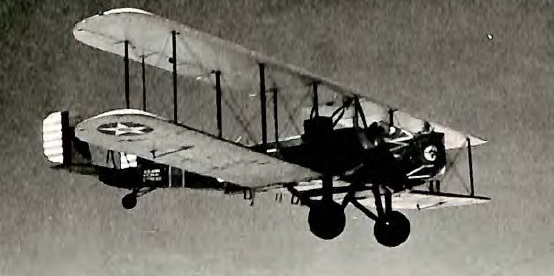
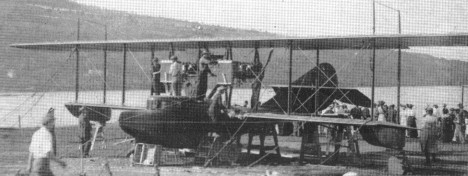
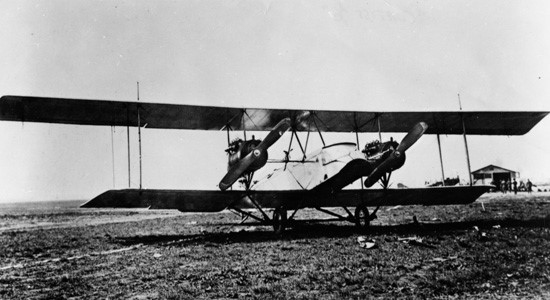
The Curtiss Twin JN (retrospectively called the Model 1B and also known as the JN-5) was an Experimental aircraft built by the Curtiss Aeroplane and Motor Company for the United States Army Air Service. It was a biplane, designed for observation missions.

Based on the successful Curtiss JN-4, the Twin JN used the same wing structure, but the wingspan was extended by enlarging the center section. Lateral control was achieved with the tail of a Curtiss R-4. The Twin JN was powered by a pair of 90 hp (67 kW) Curtiss OXX-2 engines located between the wings.

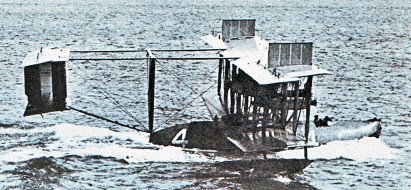
Eight were built in 1916, and one aircraft was evaluated by the United States Navy as a twin-float seaplane.

Engines: 2 × Curtiss OXX-2 water-cooled V-8, 90 hp (67 kW) each
Wingspan: 52 ft 9⅜ in (16.08 m)
Wing area: 450.3 ft2 (41.83 m2)
Length: 29 ft 0 in (8.83 m)
Height: 10 ft 8⅜ in (3.26 m)
Empty weight: 2,030 lb (921 kg)
Gross weight: 3,110 lb (1,411 kg)
Maximum speed: 80 mph (129 km/h)
Service ceiling: 11,000 ft (3,350 m)
Crew: two

Curtiss 76 / XA-14

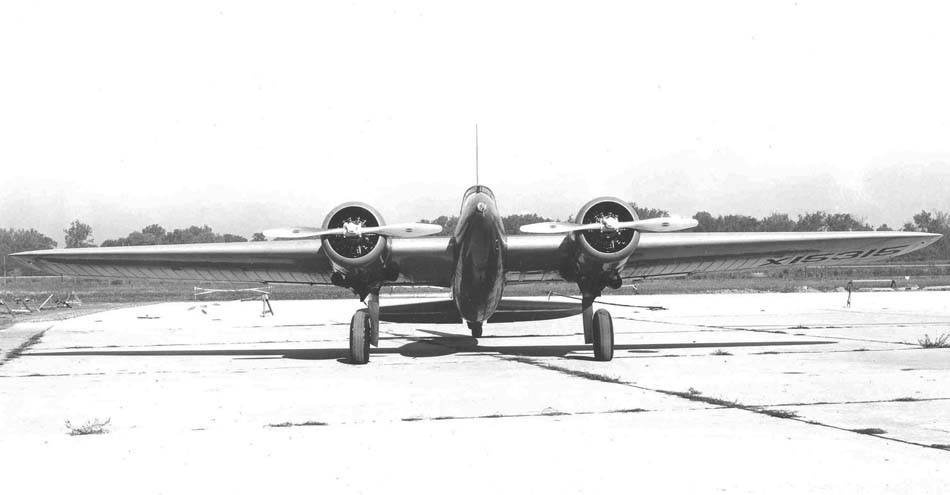
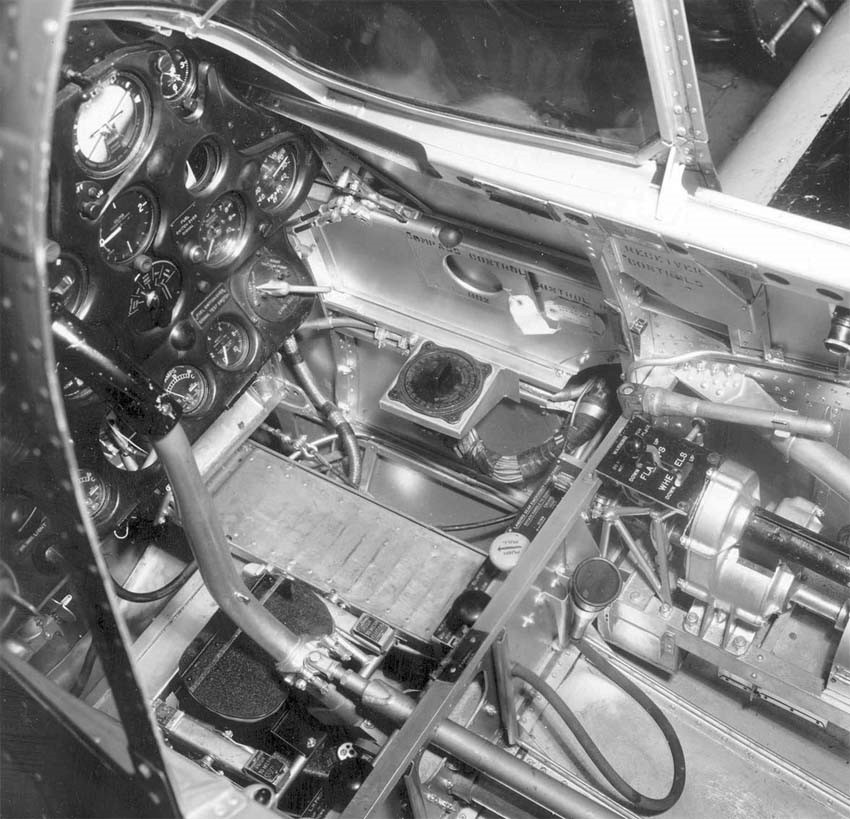
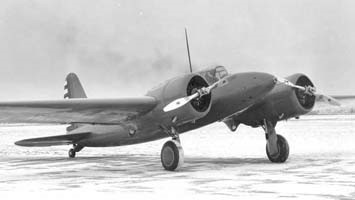
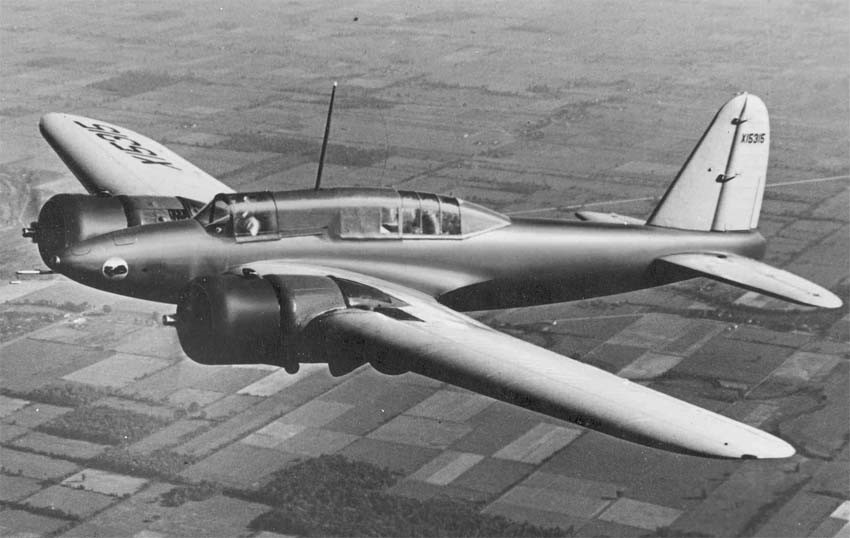
In 1934, Curtiss began work on a brand new twin-engined attack aircraft, which received the designation Model 76 and the name “Shrike”. Originally built as an in-house venture as the Curtiss Model 76, the 76 was of all-metal construction with an oval section semi-monocoque fuselage, described as “pencil slim” with a fabric covering of ailerons, rudder and stabilizers. The main landing gear retracted into the engine nacelles, the rear wheel also retractable

First flying on 17 July 1935, with the civil registration NX15314, the first multi-engine attack aircraft tested by the United States Army Air Corps at the Wright Field air base in Ohio, but in the fall it was returned to the company for improvements. Carrying a crew of two, it was as fast as the standard pursuit aircraft in service at the time.

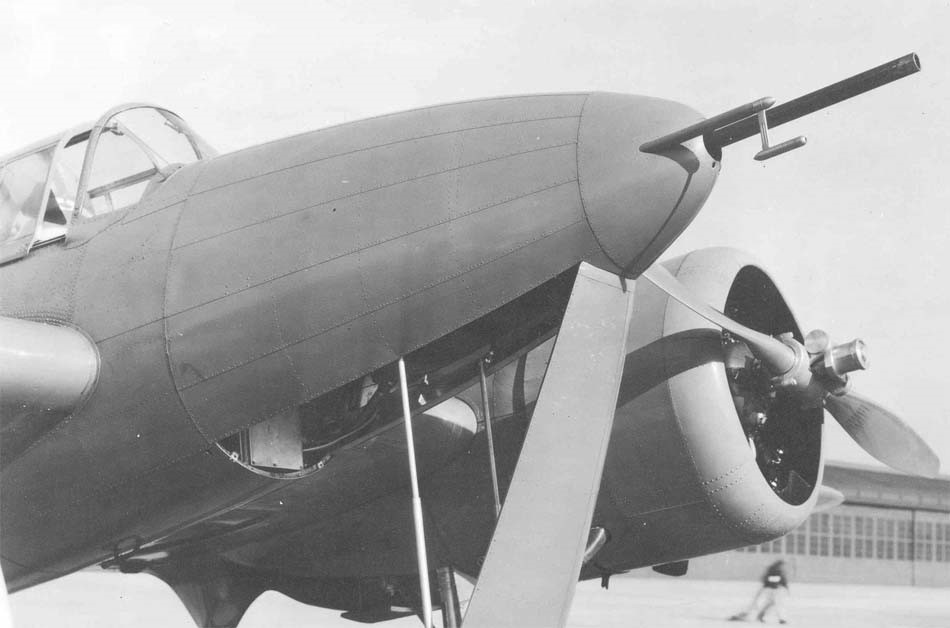
The XA-14 was extensively tested, at one stage being fitted with a 37 mm (1.46 in) nose cannon. Powered by two experimental Wright XR-1510 radial engines, flight testing was sufficiently impressive that after the USAAC appraisal the Model 76 was returned to Curtiss and fitted with two 775 hp (578 kW) Wright R-1670-5 Cyclone engines with two-blade constant-speed propellers. This configuration was accepted by the Army with the designation XA-14 given to the sole example. It had standard Army markings with the serial number 36-146.

The Great Depression of 1929-1932 severely curtailed military allocations. The price of a single Wright engine was then $ 90,000, which was considered excessively expensive for mass construction.

On 23 July 1936, 13 pre-production versions, re-engined with two Wright R-1820-47 Cyclone twin-row radials with three-blade propellers, were ordered into production as the Y1A-18.

The only prototype XA-14 was initially planned to be used to set aviation records, but instead in June 1936 this aircraft was tested with a new 37-mm cannon (sometimes it was called YA-14). At the end of the year, it was dismantled for scrap after 158 hours of flight time.

Gallery

Engines: 2 × Wright R-1670-5 Whirlwind, 775 hp (578 kW) each
Wingspan: 59 ft 5 in (18.11 m)
Length: 40 ft 3 in (12.27 m)
Height: 10 ft 9 in (3.2.7 m)
Empty Weight: 3680 kg
Max takeoff weight: 11,750 lb (5,330 kg)
Maximum speed: 254 mph (221 kn, 409 km/h)
Cruising speed: 340 km / h
Range: 825 mi (717 nmi, 1,328 km)
Service ceiling: 27,100 ft (8,260 m)
Crew: two
Armament:
4 × .30 in (7.62 mm) M1919 Browning machine guns forward-firing
1 × .30 in (7.62 mm) machine gun aft-firing
650 lb (295 kg) bombs in internal bay
Curtiss 99 / XF15C

US Navy interest in the mixed-power concept for shipboard fighters had resulted in orders for three prototypes of the Ryan XFR-1, and 100 production FR-1s.
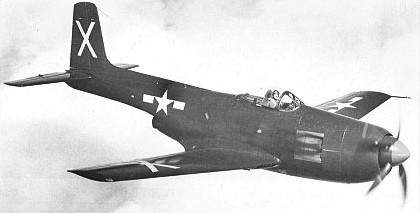
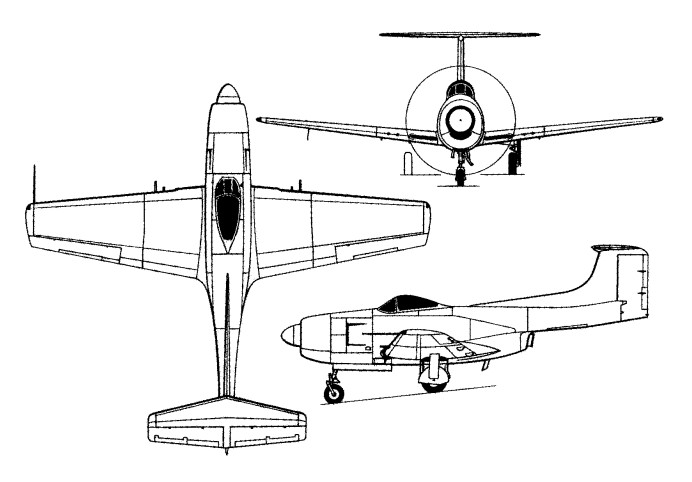
Taken a stage further, on 7 April 1944 a contract for three prototypes of the more powerful XF15C-1 was placed with Curtiss. This was to be powered by a 2,100hp Pratt & Whitney R-2800-34W 18-cylinder two row radial in the front with a four-bladed propeller and a 1226kgp Allison-Chalmers J36 (Halford H-1B) turbojet in the belly. Armament was to comprise four wing-mounted 20mm cannon.
The first XF15C-1 was flown on 27 February 1945, without the turbojet installed, this fitted by April, but the aircraft was lost on 8 May when it crashed during a landing approach. The second XF15C-1 flew on 9 July 1945, and was joined soon after by the third, both subsequently having their low-set horizontal tail surfaces replaced by a T-tail arrangement. The flight test programme continued until October 1946, by which time the US Navy had lost interest in the mixed power arrangement and cancelled further development.

Engines: 1 x Pratt & Whitney R-2800-34W 18-cylinder two row radial, 2,100hp / 1566 kW
and 1 x Allison-Chalmers J36 (Halford H-1B) turbojet, 1226kgp / 2700-lb
Max take-off weight: 7543 kg / 16630 lb
Empty weight: 5 737 kg
Wingspan: 14.63 m / 47 ft 12 in
Length: 13.41 m / 43 ft 12 in
Height: 4.65 m / 15 ft 3 in
Wing area: 37.16 sq.m / 399.99 sq ft
Max. speed: 469 mph / 755 km/h
Range: 2228 km / 1384 miles

Cutiss T-32 Condor / BT-32 / CT-32 Condor / R4C

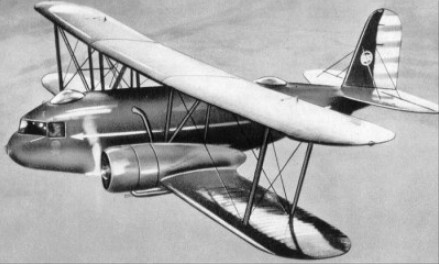
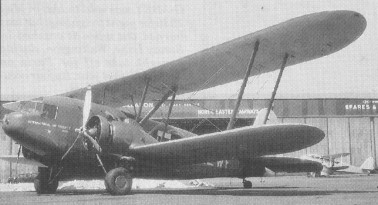
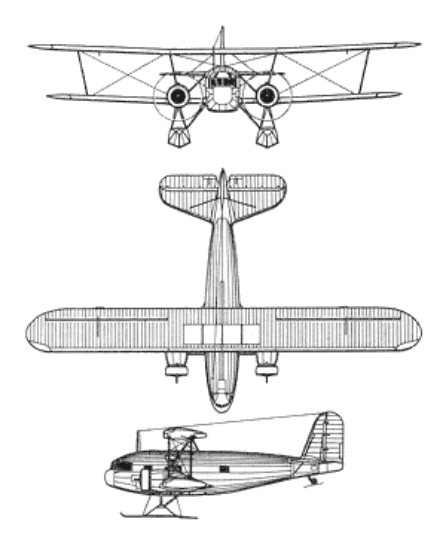
Not to be confused with the Curtiss B-2 or its 18-passenger Condor airliner development, the Condor was a 15-passenger commercial biplane airliner of the early 1930s, powered by two 529-536.5kW Cyclone radial engines. It was produced in two versions: for normal daytime flying and as a convertible day- and night-sleeper transport with six compartments, each accommodating two berths/seats.

Curtiss T-32 Condor Article

In 1933 American Airlines began flying the 18 seat Curtis Condor, the first US sleeper plane.

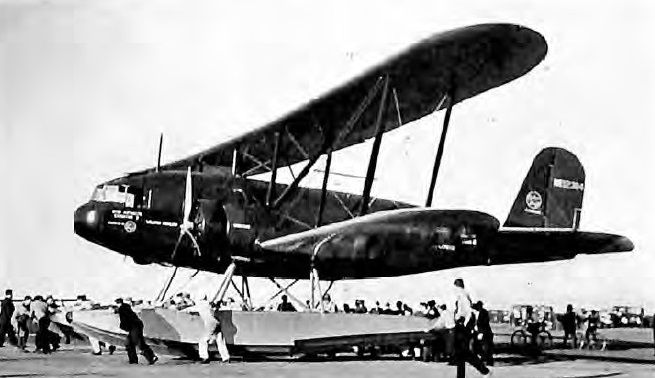
Byrd Antarctic Expidition Curtiss-Wright Condor on Edo floats

Two went to the USN as R4C in 1934 for Antarctic service. One was used on the Byrd Antarctic Expedition. They were transferred to the USMC in 1935. Two were operated as R4C-1 (9584 & 9585). Both R4C-1s were abandoned to the snowdrifts in 1941 by the US Antarctic Service, and at least one is still down there somewhere.

Air Corp Conquerer-powered Curtiss Condor

An all-cargo version was produced as the CT-32.

As a military heavy bomber with troop-carrying and ambulance capability, the Condor was supplied to China. Armament comprised five 7.62mm machine-guns and up to 1,800kg of bombs.

T-32 Condor

AT-32-C

BT-32
Crew: 2-4
Passengers: 12-24
Engine: 2 x Wright “Cycl. SR-1820-F3”, 520kW
Take-off weight: 7620 kg / 16799 lb
Empty weight: 5192 kg / 11446 lb
Wingspan: 25.9 m / 84 ft 12 in
Length: 15.0 m / 49 ft 3 in
Height: 4.4 m / 14 ft 5 in
Wing area: 125.5 sq.m / 1350.87 sq ft
Max. Speed: 274 km/h / 170 mph
Cruise speed: 235 km/h / 146 mph
Ceiling: 7150 m / 23450 ft
Range w/max.fuel: 2700 km / 1678 miles
Range w/max.payload: 550 km / 342 miles
Armament: 3 machine-guns, 1800kg of bombs

Curtiss CT-1

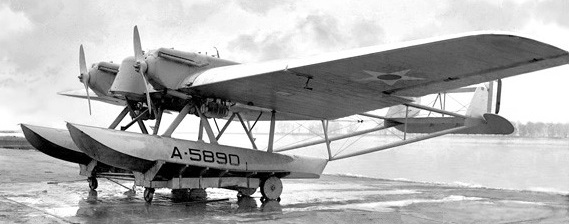
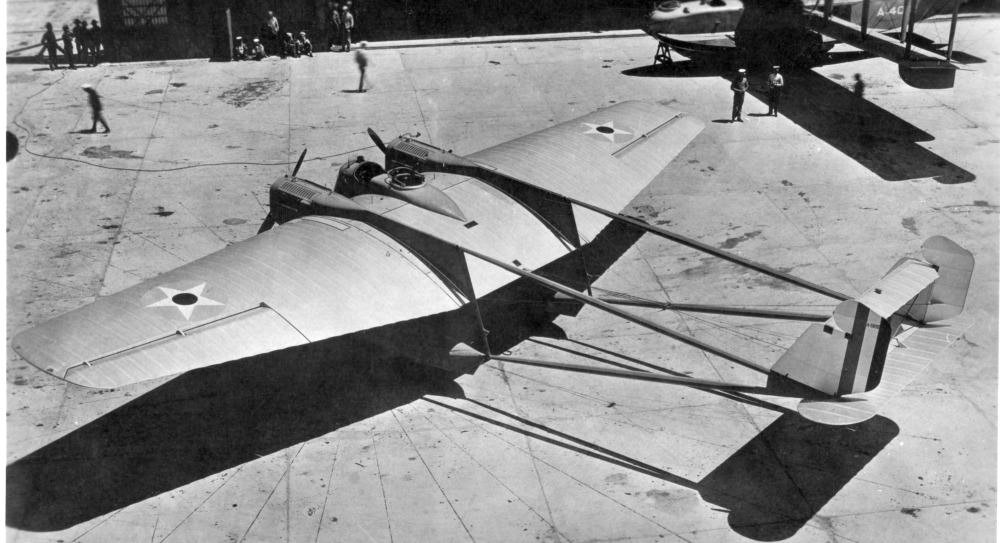
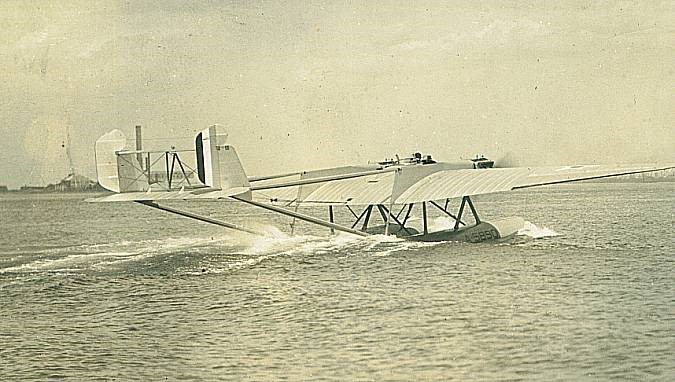
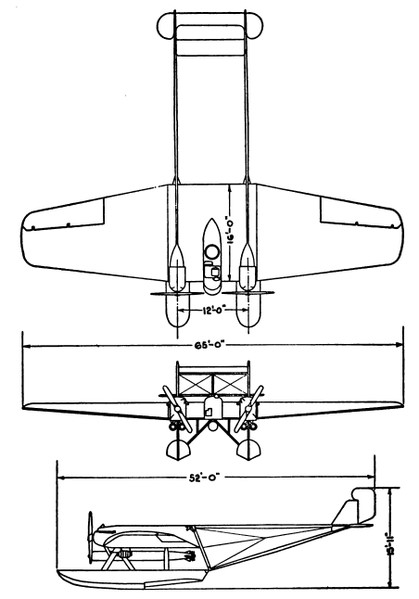
The US Navy was looking for a new torpedo bomber following a demonstration of sinking a battleship with an aircraft. A specification was announced requiring a twin floatplane that could be sled launched and crane recovered at sea. The aircraft had a maximum span of 65 feet (20 m) which could be broken down into 25 feet (7.6 m) sections for shipboard storage.

Designed by Wilbur Gilmore, the Curtiss CT-1 aircraft had twin booms, twin tails, twin floats and a single cockpit. A turret was placed high above and behind the pilot to have a full 360 degree firing arc. The thick airfoil wings were cantilevered without struts or wires using three spars. The fuselage was made of traditional welded tube frame with the-then new technology of an aluminum skin. The rest of the aircraft was of welded tube with a fabric covering. The engine nacelles were deeply recessed into the wings. Two under-wing Lamblin radiators provided cooling. Engine stands were located for mechanics to work on the aircraft. Single-engine operation resulted in a height loss of 100 ft per minute.

The first water taxi tests were performed by Bert Acosta on 2 May 1921 at NAS Rockaway, resulting in larger rudders added for stability. The sheet metal formed motor mounts and tail structure required reinforcement. The engines overheated, and could only fly for 20 minutes at a time.

Prototypes of the Curtiss CT-1, Stout ST-1, Fokker FT-1 and Blackburn Swift F were evaluated at the Annacostia Naval Yard. The CT-1 was demonstrated to the US Navy at the Annacostia Naval Yard and at the war college at Fort McNair, Washington, D.C. The aircraft was given the serial number A-5890, and the navy designation CT-1, for “Curtiss” “Torpedo bomber (number one)”-“variant one”. Curtiss won an initial contract to build nine torpedo bombers on June 30, 1920, but the order was cancelled and only one acceptance prototype was built. The aircraft was constructed in Rockaway, New York.

Gallery

Engines: 2 × Curtiss D-12, 350 hp (260 kW) each
Propellers: 2-blade
Wingspan: 65 ft (20 m)
Airfoil: Curtiss C-32
Length: 52 ft (16 m)
Height: 15 ft 5 in (4.70 m)
Gross weight: 11,208 lb (5,084 kg)
Cruise speed: 93 kn; 172 km/h (107 mph)
Range: 304 nmi; 563 km (350 mi)
Service ceiling: 5,300 ft (1,600 m)
Crew: 3 Pilot, Assistant Pilot, Gunner

Curtiss NC

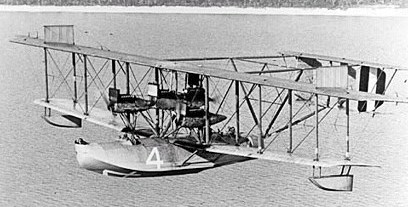
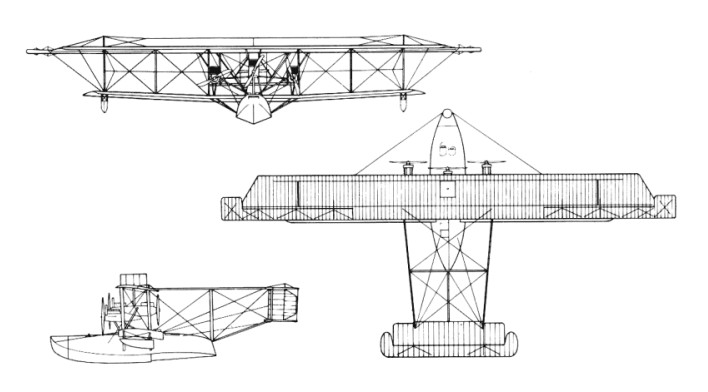
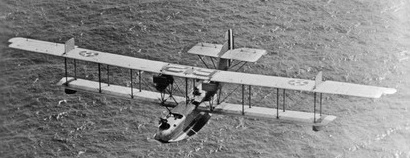
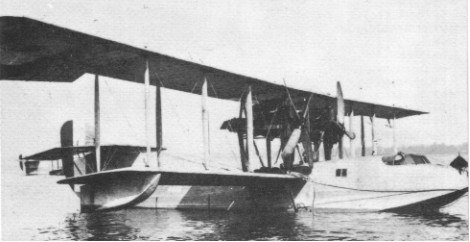
During 1917, the US Navy Bureau of Construction and Repair collaborated with Glenn Curtiss in an effort to produce a flying-boat that would be capable of crossing the Atlantic without difficulty and be immediately available for operations. Preliminary designs, drawn up by naval team which included Commander Jerome Hunsaker, were developed by Curtiss and his engineers. The selected configuration was a wide-span biplane with three tractor engines, a short hull to accommodate a crew of five, and a biplane tail supported on booms projecting from the upper wing and the rear of the hull. Detail design was carried out by the Curtiss staff, except for the hull which was the work of US Navy Commander Holden Richardson. Soon afterwards Curtiss received an order for production of the NC as it had by then been designated (NC for Navy-Curtiss). Four aircraft were to be built by Curtiss, and it was decided that the Naval Aircraft Factory would build six more.
Existing factory space at the Curtiss Garden City, New York factory was greatly expanded with US Navy help for production of the NCs, which were to be taken by road in sections for final assembly at Rockaway Naval Air Station. When World War I ended only the NC-1 had been completed and the original purpose of the design no longer existed. Although the NAF NCs were cancelled, the US Navy decided to go ahead with the four Curtiss ‘boats which would be used in a transatlantic flight to the UK. It was felt that the publicity gained by such a flight would be of great value to the US Navy.

Three NC boats (NC-1, NC-3 and NC-4) left Trepassey Bay, Newfoundland on 16 May 1919, NC-2 having already come to grief. Both the NC-1 and the NC-3 came down at sea short of Horta in the Azores, which was to be the first stop. Neither could take off again, the NC-1 being abandoned and its crew taken off by ship, but the NC-3 was able to taxi in to Horta. Only the NC-4 completed the journey to Plymouth successfully, arriving on 31 May following stops at Horta, Ponta Delgada, Lisbon, and Ferrol del Caudillo. The total distance flown from take-off at Rockaway, New York on 8 May was 6317km, completed in 57 hours 16 minutes total flight time.

NC-1
Engines: 3 x 360-hp/268-kW Liberty inlines in tractor layout
Later – four engines as three tractors and one pusher

NC-2
Engines: two tractors and one pusher
Later two tractor/pusher tandem pairs

NC-3
As four-engined NC-l

NC-4
Engine: 4 x 400-hp / 298kW Liberty 12A inline piston
Maximum take-off weight: 28,000 lb / 12,701 kg
Empty weight: 7257 kg / 16,000 lb
Wingspan: 38.40 m / 125 ft 12 in
Length: 20.80 m / 68 ft 3 in
Height: 7.44 m / 24 ft 5 in
Wing area: 226.77 sq.m / 2440.93 sq ft
Max. speed: 137 km/h / 85 mph at sea level
Service ceiling: 760 m / 2500 ft
Climb to 2,000 ft (610 m): 10 min 0 sec
Endurance 14 hours 45 minutes.

Curtiss H.12 Large America

By July 1916 first examples of a larger Curtiss flying boat design began arriving in England. Designated H.8, these were quickly modified to accept more powerful twin 250 hp Rolls Royce engines, and redesignated Curtiss H.12s, or ‘Large Americas’.
Although the lightly constructed hull was easily damaged in rough seas, the Large America was extensively used by the R.N.A.S. for anti submarine, anti Zeppelin and general reconnaissance duties.

Engines: 2 x 345 h.p. Rolls Royce Eagle.
Length 46.1 ft (14.03 m)
Wingspan 95 ft (28.96 m)
Weight empty 7,360 lb (3,340 kg)
Crew: 4
Armament: Five or six machine guns
Bomb load: 4 x 230 lb (100 kg).
Max speed: 100 mph (160 kph)
Ceiling: 12,500 ft (3,800 m) fully loaded

Curtiss H.8 America         

The two-engine Curtiss flying boat America was built in 1914 for an attempted flight across the North Atlantic. Before it could be completed Britain was at war with Germany. John Porte, the intended pilot, returned to the Navy, closely followed by the America, which became the forerunner of all the large Curtiss flying boats.
By July 1916 first examples of a larger Curtiss flying boat design began arriving in England. Designated H.8, these were quickly modified to accept more powerful twin 250 hp Rolls Royce engines, and redesignated Curtiss H.12s, or ‘Large Americas’.
20 similar models that were either modified or manufactured in England, marking the beginning of England’s flying-boat industry. The aircraft were used extensively for antisubmarine patrol.