Designed by Captain Didier of the French Army the Didler Oiseau Bleu (Bluebird) was a twin-engine monoplane with two 3 hp engines, each with a propeller. The wingspan was 16 ft 6 in and length 8 ft 6 in.
2 Engines
Diamond DA62
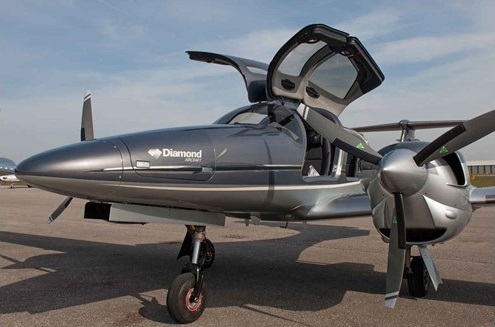
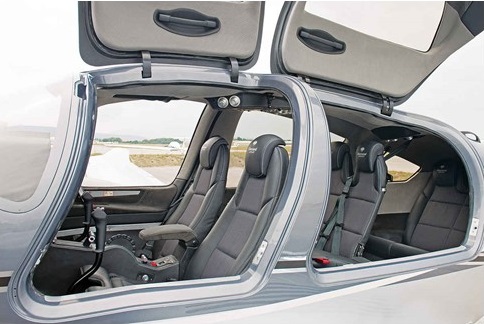
In developing this airplane, Diamond Aircraft founder and CEO Christian Dries challenged his team to create a simple-to-operate, fuel-efficient twin and wrap it around a passenger compartment mimicking the latest luxury SUVs. With its third-row seating option, oversize doors and seats that fold flat to accommodate bulky items, the DA62 is a utility vehicle.
The DA62s twin 180-horsepower Austro AE330 diesel engines burn less than 10 USgallons per hour per side at maximum continuous power, propelling the airplane to a top speed of around 200 knots. At 75 percent power and the speed is 187 ktas, but fuel burn drops to 7.4 gph per side.
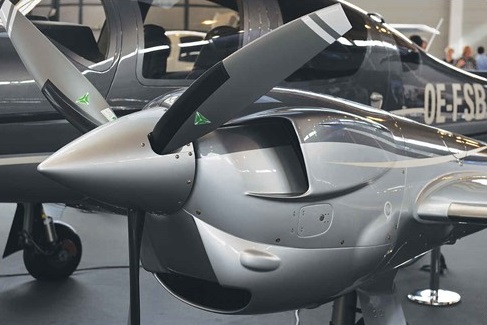
The DA62’s diesel engines are encased in cowlings that seem oddly misshapen, a result of packaging Mercedes-Benz diesel car engines on an airplane.
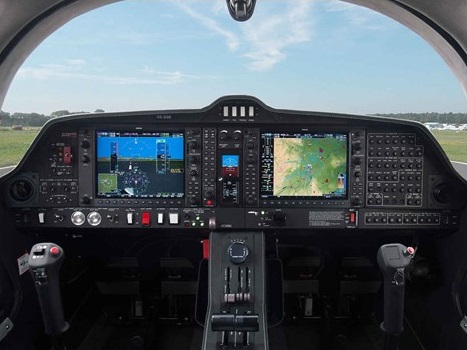
The DA62 has the same center control stick, throttle placement and cockpit display layout as the Diamond DA40 and DA42. Round-dial backup instruments have been replaced with an electronic standby instrument with emergency battery. The seats are leather with seatback adjustments, but they don’t move fore and aft. Instead, the rudder pedals can be adjusted forward and back to accommodate a variety of pilots. An armrest is in the center of the cockpit between the pilots.
The DA62’s three large gull-wing doors and the forward-folding seats, plus smart placement of handholds, make entry and exit from the DA62 easy. There are cup holders for the front-seat occupants and a variety of LED interior lighting options throughout the cabin. Options include air conditioning, a 36-gallon aux fuel tank, Garmin weather radar and satellite data receiver, and Avidyne TAS600 traffic advisory system. New for the DA62 is an upgraded metallic paint option that lets buyers choose colors other than the standard white found on many carbon-composite aircraft.
It features aluminum fuel tanks sandwiched between the carbon-fiber main wing spars for crashworthiness, and incorporates Diamond’s trademark high-impact fixed seats that are attached to strategically located crush points in the floor. The composite monocoque cabin design was borrowed from the Formula 1 racing world. The airplane has undergone crashworthiness testing similar to what is -performed in the auto industry. The DA62 also offers full icing protection with its TKS weeping wing option.
The U.S. spec version offers a 5,071-pound gross weight (versus 4,400 pounds for the European version to avoid the ATC fees levied on heavier airplanes) and a 1,300-nautical-mile range with a full-fuel payload of over 1,000 pounds. Its 2.0-liter Austro compression ignition engines, meanwhile, sip jet-A fuel and a 13,000-foot single-engine service ceiling (at max gross weight) and turbocharged power. There are two baggage compartments in the nose that can accommodate full-size suitcases, golf bags and more. The DA62’s useful load in the international spec version is 1,609 pounds.
At $1.08 million (2016) for the U.S. model before typical options, the DA62 compares well with the competition. The short engine overhaul interval is 1,000 hours at the moment for the new Austro AE330s. Based on the Mercedes-Benz diesels in B-class automobiles, the engine is a proven design, and the 1,000-hour limitation is projected to be short-lived as Diamond gains experience with the aero engine. The company hopes to increase TBO to as high as 2,400 hours eventually. Other required engine maintenance, meanwhile, includes inspection of the generators at 300 hours, and replacement of the high-pressure fuel pump and inspection of the two-mass flywheel at 600 hours.
The Diamond DA62 options include third-row seating accommodating seven people, increased 5,071-pound maximum takeoff weight, built-in oxygen, air conditioning, TKS icing protection, Garmin GWX 70 weather radar and GSR 56 satellite data receiver, Avidyne TAS600 traffic advisory system, 36-gallon auxiliary fuel tank, metallic paint and more.
The DA62 earned its type certification in Europe in April 2015.
The airplane is simple to operate. The engine start procedure involves hitting the master switch, flipping the engine master on, waiting a moment to ensure the glow plug annunciation is out and then pushing the engine start button. That’s it. The Austro diesels come to life in an instant as the dual-channel full authority digital engine controls (fadec) manage rpm and continuously check for faults while the only other job is to glance at the oil pressure indication. As long as the gauges are in the green, it’s good to go.
The before-takeoff run-up procedure is stress free. It involves setting the parking brake, manually selecting the A and B channels of the electronic engine control units (EECU) to ensure both are online, and then pushing and holding the engine run-up buttons. The AE330’s fadec computers automatically increase power to 1,950 rpm and perform a number of health checks, including cycling the props. The throttles never physically move and there aren’t any prop levers to move in the first place. If no fault messages appear on the Garmin G1000 primary flight display when the test sequence is completed, you’re ready for departure.
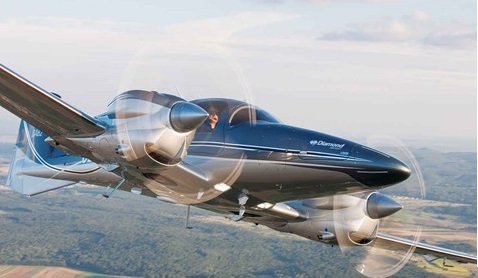
Rotation is at 80 knots, climb is at 110 kias, and the DA62 cruise climb speed is 128 kias. The left is the critical engine in the DA62 and the ¬propeller automatically feathers. The single-engine best rate-of-climb airspeed is 87-knot (blue line).
Max continuous power of 95 percent at 14,000 feet gives around 195 ktas with the twin AE330s burning 18.6 gph. 60 percent power shows 170 ktas and 11.8 gph fuel consumption. With one engine-out, at 100 knots in level flight, fuel burn is 3.6 gph. Even with less than half fuel on board, at this rate the flight endurance would still be more than 11 hours.
By design, pilot workload is low in all flight regimes. Fitted with the latest generation of Garmin G1000 avionics with synthetic-vision technology (SVT) and electronic stability and protection (ESP), plus a three-axis Garmin GFC 700 autopilot and GWX 70 weather radar, there’s an argument to be made that the DA62 is the among the most capable and easiest-to-fly piston airplanes ever produced.
Landing targets 90 knots on final with full flaps selected. Max demonstrated crosswind component with full flaps in the DA62 is 25 knots, slightly better than in the DA42, even with its slender wing spanning nearly 48 feet.

2016 Diamond DA62
Standard price: $1.08 million
Engines: 2 x Austro Engines AE330, 180 hp
Props: MT 3-blade 76 inches)
Wingspan: 47 feet 10 inches
Wing area: 184.1 square feet
Length: 30 feet 1 inch
Height: 9 feet 3 inches
Wing loading: 27.54 lb/sq.ft
Power loading: 14.08 lb/hp
Max takeoff weight: 5,071 lb
Standard empty weight: 3,461 lb
Max useful load: 1,609 lb
Payload with full fuel: 1,021 lb
Max usable fuel: 86.4 USgallons (with aux tanks)
Max rate of climb: 1,346 fpm
Single-engine rate of climb: 288 fpm
Service ceiling: 20,000 ft
Max speed: 204 kias
Cruise speed: (14,000 feet, max cont. power) 193 kias
Max range: 1,275 nm
Stall speed (clean): 70 kias
Stall speed (full flaps): 64 kias
Takeoff distance: 1,265 ft
Takeoff distance over 50 ft: 2,097 ft
Landing distance: 1,259 ft
Diamond DA42 / Twin Star
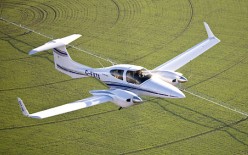
Diamond’s DA42 Twin Star (now referred to only as the DA42 because of a lawsuit by Aérospatiale) is an all-composite four-seater with twin turbocharged diesel engines that can operate on automotive diesel or Jet A1 fuel. At takeoff the engines develop full power at a quiet 2,300 rpm, and feature automatic prop (FADEC) control and autofeather. The Twin Star was designed to incorporate the Garmin G1000 all class cockpit from the beginning, and trailing landing gear give the twin a smooth transition to landing and taxi. Optional equipment available for the DA42 include oxygen, anti/de-ice and air conditioning.
The first flew on 9 December 2002.
2007 Diamond DA42 Twin Star
Engines: Thielert TAE Centurion 1.7, 135 hp@SL to 10,000 feet
TBO hrs.: 1000/2400
Fuel type: Diesel/Jet A1
Propeller type: MT 3-blade
Landing gear type: Tri./Retr.
Max ramp weight (lbs.): 3935
Gross weight (lbs.): 3935
Landing weight (lbs.): 3935
Empty weight, std. (lbs.): 2761
Useful load, std. (lbs.): 1174
Payload, full std. fuel (lbs.): 839
Useful fuel (gals.): 50
Oil capacity (qts.): 8
Wingspan: 44 ft.
Overall length: 28 ft. 1 in.
Height: 8 ft. 2 in.
Wing area (sq. ft.):177.2
Wing loading (lbs./sq. ft.): 22.2
Power loading (lbs./hp.): 14.6
Seating capacity: 4
Cabin doors: 2
Cabin width (in.): 46
Cabin height (in.): 50
Cruise speed (kts.): 80% power: 172
Max range (w/ reserve) (nm): 60% power: 1129
Fuel consumption (USgph): 80% power: 12.5
Turbo critical altitude (ft.): 8000
Vso (kts.): 56
Best rate of climb, SL (fpm): 1280
Service ceiling (ft.): 18,000
Takeoff ground roll (ft.): 1130
Takeoff over 50-ft. obstacle (ft.): 1730
Landing ground roll (ft.): 1069
Landing over 50-ft. obstacle (ft.): 1877
DA42-L360
Engine 2x Lycoming I0-360 counter rotating, 180 hp
Propellers 2x MT 3-blade constant speed full-feathering propeller (counter-rotating)
Airworthiness category Normal
Length 28 ft 1 in
Height 8 ft 2 in
Wing span 44 ft
Maximum take-off weight 3,935 lbs
Useful load 1,180
Fuel capacity, total / usable 79 gal / 76 gal
Fuel 100 LL Avgas
Take-off distance, 50-foot obstacle 1,500 ft
Landing distance, 50-foot obstacle 1,877 ft
Rate of climb, sea level 2,000 fpm
Maximum demonstrated operating altitude: 18,000 ft
Maximum single-engine ceiling (standard day): 7,500 ft +
Maximum cruise speed: 180+ ktas
Economy cruise speed at 55% power: 140 ktas
Maximum landing gear extension speed: 195 kias
Maximum demonstrated crosswind: 20 kts
Range, 55% power (30 min reserve): 700 nm
DA42-NG
Engine 2x Austro Engine AE 300 turbocharged, common-rail injected 2.0 liter diesel engine with EECDU single-lever control
Horsepower 170 hp
Propellers 2x MT MTV-6-R-C-F / CF187-129 3-blade Constant Speed
Airworthiness category Normal
Length 28 ft 1 in
Height 8 ft 2in
Wing span 44 ft
Wing area 175.3 sq ft
Seats 4
Empty weight 3,119 lbs
Maximum take-off weight (MTOW) 4,189 lbs
Useful load 1,070 lbs
Fuel capacity (standard / long range) 50 US gal / 76 US gal
Fuel grades Jet A1 / Diesel
Rate of climb, sea level MTOW: 1,150 fpm
Rate of climb, 10,000 ft MTOW: 1,020 fpm
Maximum operating altitude: 18,000 ft
Maximum air speed: 192 kts IAS
Cruise speed at 75% in 14,000 ft: 175 kts TAS
Cruise speed @ 60% in 14,000 ft: 152 kts TAS
Range, at 75%, standard / long range tank: 614 nm / 950 nm
Range, at 60%, standard / long rang tank: 707 nm / 1,180 nm
DA42 TDI
Engines: 2 x TAE Centurion 2.0 Turbo Diesel, 132 hp
Propellers: MT 3-blade composite constant speed, full-feathering
Airworthiness category: Normal
Length: 28 ft 1 in
Height: 8 ft 2in
Wing Span: 44 ft
Maximum takeoff weight: 3,935 lbs
Useful load: 1,174 lbs
Fuel capacity, usable standard: 50 US gal
Fuel capacity, usable extended: 72 US gal
Fuel: Jet A-1
Takeoff distance, ground roll: 1,130 ft
Takeoff distance, 50-foot obstacle: 1,730 ft
Landing distance, ground roll: 1,069 ft
Landing distance, 50-foot obstacle: 1,877 ft
Rate of climb, sea level: 1,280 ft/min
Maximum operating altitude: 18,000 ft
Maximum SE ceiling (standard day): 10,000 ft
Cruise speed at 80%: 168 kts/12.5 gal/hr total
Economy at 60%: 151 ktas/8.8 gal/hr total
Stall speed, full flaps gear down: 56 kias
Stall speed, clean: 62 kias
Maximum landing gear operating speed: 194 kts
Maximum demonstrated crosswind: 20 kts
Range, at 80% extended fuel: 917 nm
Range, at 60% extended fuel: 1,129 nm
Del Mar DH-20
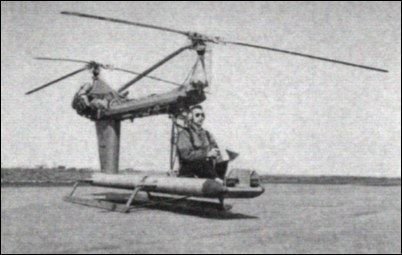
The DH-20 helicopter was tested in 1968. No series production.
Engine: 2 x AiResearch GTP-30-100 turboshafts
Rotor diameter: 4.88m
Take-off weight: 500kg
Max speed: 135km/h
Range: 180km
de Havilland Canada DHC-8 Dash 8 / E-9 Widget / Bombardier Q400
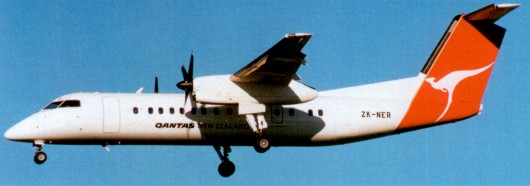
The Dash 8, of high wing monoplane configuration powered with two P&W 120s, was announced by de Havilland Canada in 1979 as a complement to the larger four engined STOL capable Dash 7. The company’s first transport not optimised for short take-off and landing. The go-ahead to cut metal was announced in September 1980 and the prototype Dash 8 series 100 rolled out in Downsview, Ontario, in April 1983.
de Havilland Canada DHC-8 Article
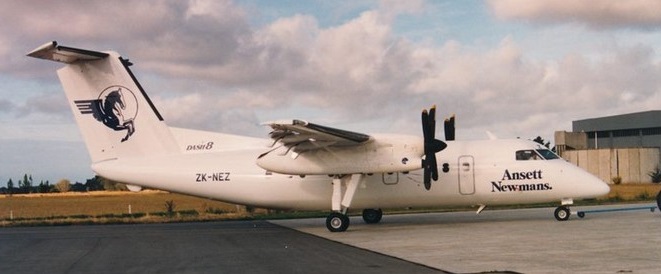
The fuselage cargo-loading door is standard, and other features include a retractable tricycle landing gear with twin-wheel units, large-span T-tail, and a high-mounted wing carrying two fuel-efficient Pratt & Whitney PW120 advanced turboprop engines driving large-diameter slow-turning four-bladed propellers (originally the PT7A) ensuring very low noise levels. These engines also have safety features which ensure that if one fails the other automatically increases its output to 1492kW.
The prototype of the 36-seat Series 100 flew for the first time on 20 June 1983. Canadian certification followed on 28 September 1984. The first customer was to be norOntair of Canada on 23 October 1984.
Orders for the initial 100 series production version had reached 230 by 1990.
The -100A series followed in 1990. The -100A model had a revised interior with more headroom and enhanced PWI20A engines and in 1992 was offered with the more powerful PW121 engines.
In 1992 the production switched to the Dash 8-200 and the first deliveries began in April 1995. The Dash 8-200 has PW123C engines, which gave the -200 series an increase in top speed of 30 knots over the 100 series. The -200B series has the PW123Bs for better ‘hot and high” performance. From April 1996 all Dash 8 aircraft delivered were fitted with a computer-controlled noise and vibration suppression system (NVS). To reflect this the name was changed to Dash 8Q (for “quiet”). In 1998 this was changed again to Dash 8-Q200 when the new interior was introduced. The Dash 8-Q200 holds 37 passengers.
Boeing, within a month of purchasing DHC, signalled their commitment to the enterprise by announcing mid-1985 the development of a stretched 50/56 passenger Dash 8 Series 300 for a first flight on 15 May 1987 (modified Series 100 prototype). This became the -300 series and the first aircraft was an earlier prototype Dash 8 converted to the new length of 25.68 metres. It first flew on 15 May 1987. Canadian certification followed on 15 February 1989 and the first deliveries were to Time Air later on 27 February 1989, FAA type approval on 8 Tune 1989.
The stretch for the series -300 was effected with a “plug,” forward and aft of the wing. of 3.43 metres. The wings also have a greater span of 27.43 metres over 25.91 metres. Other smaller changes were a larger toilet, a repositioned galley and a new galley door, an additional wardrobe, dual air conditioning packs and the option for an APU. Orders for the Srs 300 were in excess of 100 by 1990, deliveries starting in February 1989. The Dash 8-300 provides a very good single engine performance, being able to climb to 14,000 feet at maximum all up weight or descend to 16,000 feet on one engine.
Further variants of the 300 series were offered with the first, the -300A, being in 1990 with increased higher gross weights, interior improvements and the standard PW123A engines. The -300B was introduced in 1992 with PW123B engines as standard. All Dash 8-300 aircraft built since April 1996 have also been fitted with NVS and throughout the ’90s Boeing Canada worked on variants for both military and civil applications. Two transport versions are in service with the Canadian Department of National Defence as CC 142s and four navigation trainers are on order as CT-142. The USAF has two on inventory as E¬9As for range control on the Gulf Missile Test range.
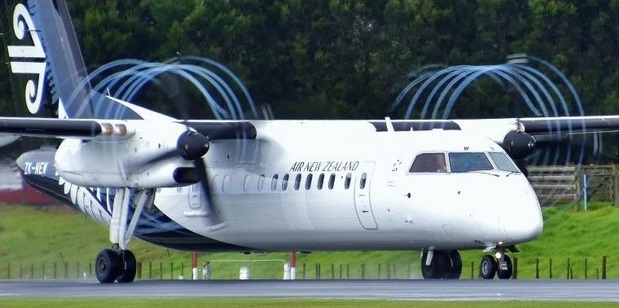
In 1986 de Havilland Canada, by then part of Bombardier, started development of a larger 50-seat regional airliner. 1998 the aircraft where renamed Dash 8Q-300s when the new interior was introduced.
Six twin-turboprop Dash 8s ordered by the Canadian Armed Forces have long-range fuel tanks, rough-field landing gear, strengthened floors, and other equipment changes. Designated Dash 8Ms by DHC, four will be used as navigation trainers, while the other two will be allocated to transport duties in Europe, replacing Dash 7s.
The 1987 commercial variant was the stretched 50-56-seat Series 300. The 37-seat Dash 8 Series 200 and 50-seat Series 300 turboprops were being produced at the rate of two per month in 1998.
Launched in June 1995 as stretch of Series 300, the -Q400, can hold 70 passengers, equipped with a computer-controlled noise and vibration suppression system, indicated by the “Q” (standing for quiet) before the model/number designator. First flown on 31 January 1998, FAA FAR Pt 25 approval was received on 8 February 2000. First delivery was to SAS Commuter 20 January 2000, followed by service entry 7 February on the Copenhagen, Denmark, to Poznan, Poland route.
The low-noise Dash 8 Q became the standard version from 1996
By January 1991 the Dash 8 order book stood at 361 aircraft, comprising 251 Series 100s and 110 Series 300s, with around 230 delivered. A Q300 delivered to Air Nippon on 6 March 2001 was the 600th Dash 8.
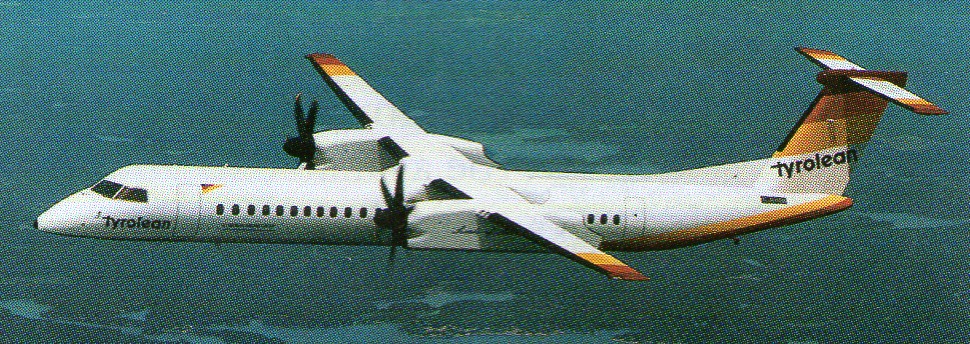
In June 2009 Bombardier sold the Q400 aircraft program to Longview, the company that owns Viking Air. A separate company called DeHavilland Aircraft of Canada was created to build and support the Q400.

In 2025 a used Q400 plane can be purchased for about $5 million and can be retrofitted for firefighting for an additional $5 million.
Variants:
CC-142: designation of two Series 100s bought by the Canadian. Department of National Defence but operated since March 1987 by the Canadian Forces at Lahr, Germany. Used as passenger/cargo transports, the aircraft are equipped with long-range fuel tanks, rough field landing gear,, high strength floors and a special-mission-related avionics fit.
CT-142: designation of four Series 100s, acquired by the Canadian DND, and operated as specially configured navigation trainers by the Canadian Forces. Otherwise equipped similarly to the CC-142, the trainers are distinguished by their extended noses.
Dash 8M-100: two specially-equipped Series 100s used by the Canadian Department of Transport to calibrate ILS, VOR and MLS systems at Canadian airports.
Dash 8M-300ASW Triton: designation of a proposed maritime patrol or anti-submarine warfare version of the Series 300 equipped with Harpoon or Exocet-type anti-shipping missiles mounted on lower side fuselage sponson hardpoints, and four underwing pylons, outboard of the engines, capable of carrying missiles, torpedoes, mines, sonobuoys or searchlights. With a full range of ASW sensors including FLIR, MAD and search radar operated by a six-man crew, maximum endurance is over 11 hours.
E-9A: designation of two standard Series 100 aircraft acquired by the US Air Force in 1985 as airborne platforms to perform telemetry and data link duties in connection with drone and missile testing at Tyndall AFB, Florida. Modified by the Sierra Research division of LTV, the E-9A carries a large fuselage fairing containing a steerable phased-array antenna, underfuselage search radar and special avionics. Both aircraft were delivered in 1988.
Specifications:
Dash 8 Series 100
Engines: 2 x Pratt & Whitney Canada PW120A turboprops, 1491kW
Take-off weight: 15650 kg / 34503 lb
Empty weight: 9979 kg / 22000 lb
Wingspan: 25.91 m / 85 ft 0 in
Length: 22.25 m / 73 ft 0 in
Height: 7.49 m / 25 ft 7 in
Wing area: 54.35 sq.m / 585.02 sq ft
Cruise speed: 497 km/h / 309 mph
Ceiling: 7620 m / 25000 ft
Range w/max.payload: 2010 km / 1249 miles
Dash 8 Series 200
Engines: 2 x Pratt & Whitney Canada PW120A turboprops, 1491kW
Take-off weight: 15650 kg / 34503 lb
Empty weight: 9979 kg / 22000 lb
Wingspan: 25.91 m / 85 ft 0 in
Length: 22.25 m / 73 ft 0 in
Height: 7.49 m / 25 ft 7 in
Wing area: 54.35 sq.m / 585.02 sq ft
Cruise speed: 497 km/h / 309 mph
Ceiling: 7620 m / 25000 ft
Range w/max.payload: 2010 km / 1249 miles
Dash 8 Series Q200
Engines: 2 x Pratt & Whitney Canada PW120A turboprops, 1491kW
Take-off weight: 15650 kg / 34503 lb
Empty weight: 9979 kg / 22000 lb
Wingspan: 25.91 m / 85 ft 0 in
Length: 22.25 m / 73 ft 0 in
Height: 7.49 m / 25 ft 7 in
Wing area: 54.35 sq.m / 585.02 sq ft
Cruise speed: 497 km/h / 309 mph
Ceiling: 7620 m / 25000 ft
Range w/max.payload: 2010 km / 1249 miles
DHC 8 Dash 8-300
Length: 84.318 ft / 25.7 m
Height: 24.606 ft / 7.5 m
Wingspan: 89.895 ft / 27.4 m
Wing area: 604.937 sqft / 56.2 sq.m
Max take off weight: 41101.2 lb / 18640.0 kg
Weight empty: 24696.0 lb / 11200.0 kg
Max. weight carried: 16405.2 lb / 7440.0 kg
Max. speed: 286 kts / 530 km/h
Landing speed: 76 kts / 141 km/h
Cruising speed: 270 kts / 500 km/h
Initial climb rate: 1771.65 ft/min / 9.00 m/s
Service ceiling: 25098 ft / 7650 m
Wing load: 68.06 lb/sq.ft / 332.00 kg/sq.m
Range: 891 nm / 1650 km
Engine: 2 x Pratt & Whitney 123, 1751 shp
Crew: 2
Payload: 50-56pax
Dash 8-300A
Payload: 6272kg
Dash 8-311
Engines: 2 x Pratt & Whitney of Canada PW123 turboprops, 2,380-shp.
Props: four bladed Hamilton Standard 14SF-23.
Max cruise: 287 kts.
Initial ROC: 1800 ft/ min.
Empty wt: 11.657 kg.
MTOW: 19,505 kg.
Cruise 92%: 276 kts.
Fuel flow @ 92%: 360 kg/hr each.
Seats: 56.


de Havilland Canada DHC-6 Twin Otter
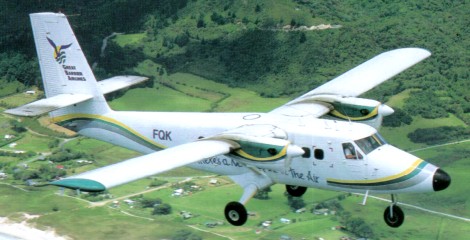
In 1964 de Havilland Canada announced that it was developing a twin-turboprop high-wing monoplane with STOL capability to provide accommodation for 13 to 18 passengers as the de Havilland Canada DHC-6 Twin Otter. Design of the aircraft’s wing includes double-slotted trailing-edge flaps and ailerons which can be drooped simultaneously with the flaps to enhance STOL performance. Fixed tricycle landing gear can have optional float or ski installations, as well as the standard wheels.
Jointly funded by the Canadian Department of Defence and de Havilland Canada, the first of an initial batch of five made its maiden flight on 19 May 1965. The first three aircraft were powered by two 432kW Pratt & Whitney Aircraft of Canada PT6A engines, but the fourth and subsequent examples of this first Twin Otter Series 100 production version had PT6A-20 engines of similar output.
de Havilland DHC-6 Twin Otter Article
Its design philosophy is directed towards operation from short semi-prepared runways for services in localities where air connections have not previously been practical, and its emphasis is on engineering simplicity and operational versatility. This is reflected by such features as urethane blocks as shock absorbers in the main undercarriage shoulders. Another selling point is the quickly convertible 384 cu.ft cabin from passengers to a maximum freight load of 4250 lb carried over 100 nm stage lengths with reserves.
The principal impact of the Twin Otter, and a feature which has already resulted in sales and options for about 30 aircraft, is probably its STOL performance to and from 50 ft of about 1000 ft. The CAR 3 distances are still only 1700 ft for take-off and 2160 ft for landing. At the start of its European tour at the Hanover Air Show, the Twin Otter demonstrator was able to join the Do27s and Porters ferrying passengers across the town to the small airstrip of the main industrial fair, and it was also able to get in and out of Heligoland’s 190m strip off the German coast.
The Twin Otter has full-span double-slotted flaps, with the outer sections also operating as ailerons, but has no exotic high lift devices. Its tricycle undercarriage has an electrically-driven hydraulic pump providing power for steering, toe brakes and flaps, with a nosewheel – tiller on the port control wheel. The Twin Otter cockpit has entry doors each side so that the crew can get in and out when the cabin is packed to capacity with freight.
The Twin Otter has roof-mounted engine controls, which increase available cockpit space and the PT6s can be left in the flight idle gate for taxying except for occasional aft movement into the Beta range, to prevent excess speed building up on the ground. Further aft movement of the power levers through the idle gate selects reverse pitch, which enables the Twin Otter to back out of restricted parking spaces.
There are two main power references-torque, in lb/sq.in, and turbine gas temperature, with respective limits of 42.5 and 750 deg C.
During take-off, it would be easy to over boost the engines by opening the power levers to their full extent, so if the outside air temperature is on the low side, the torque-meters have to be watched to avoid exceeding the limit. In hot weather the limiting factor becomes exhaust temperature.
After raising flap, the Twin Otter climbs at 110 kt on 41 lb/sq.in torque, with the airscrew rpm pulled back to 90 per cent and climbed at nearly 2 000 ft/min. Levelling out with power reduced to 33 lb/sq.in torque and 78 percent rpm (330 shp per engine) gives an indicated 140-145 kt., which trued out to 155-160 kt. for a fuel flow of 225 lb per hour per engine.
One of the most useful aspects of Twin Otter performance is the’large usable speed range between Vno Of 160 kt. and a flapdown stall with power of well below 40 kt. IAS, including a manoeuvre speed for bush flying of around 55 kt. with about 25 per cent power and full flap.
To eliminate large changes of trim with flap movement, the Twin Otter retains the same trim tab interconnection that was introduced in its single-engine predecessor. This ensures a comfortable limit to, the nose-up pitch accompanying flap retraction during an overshoot. Clean and power off, slight aileron snatch precedes pre-stall buffet, with some lateral hunting at 65 kt. which continues after the mild break-away at about 60 kt. IAS. With the full 40 degrees of flap extended, a gentle and straight stall break occurs at about 42 kt. IAS, power oft. Aerodynamic buffet gives about 8 kt. stall warning in all configurations
With 30 degrees (take-off) of flap extended, Vmc is 64 kt., and single-engine flight is completely uncomplicated. Feathering the port (critical) propeller from a 92 kt. climb resulted in light rudder loads, even before wind milling stopped, although the Twin Otter runs out of rudder trim at just below 85 kt, a long way before Vmc. There was no difficulty in showing a single engine en route climb of more than 300 ft/min.
Before landing, the nosewheel tiller has to be checked for centering, and then a spectacularly steep approach is achieved with full flap and just a trickle of power at only 65 kt. With restricted reverse pitch a 250 ft ground run is achieved.
The price, in basic form, in 1966 was (Canadian) $275000 approx. The PT6A-20 starts operational life with an overhaul period of 1200 hours.
Some 30 Twin Otters were due for completion by the end of 1966, and production was to continue at the rate of about six per month.
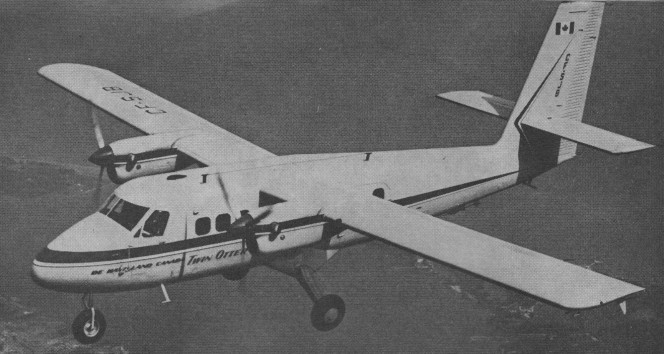
Delivered in July 1966, the first Twin Otter Series 100 entered service in 1966, and, following manufacture of 115 of that version, production switched to the Twin Otter Series 200. It differed by having increased baggage capacity in a lengthened fuselage nose and was certificated for operation at a higher gross weight. After 115 had been built the production Twin Otter Series 300 was introduced, this having more powerful 652 shp PT6A-27 engines which make possible an increase of almost 454kg in maximum take-off weight. Later production aircraft had a 20-seat commuter interior as standard and all floatplane versions, irrespective of series, retain the shorter fuselage nose of the original Series 100. Specialised equipment that has been developed to enhance the capabilities of these popular aircraft includes a ventral pod to carry 272kg of freight and an expendable fabric membrane tank holding 1818 litres of water for water-bombing fire-fighting operations.
The 300S model features several improvements: high-capacity brakes, an antiskid system, wing spoilers, refined electrical and hydraulic systems, propeller automatic feather, and improved fire protection. In addition, six 300S enhanced STOL performance DHC-6-300s were built in the mid 1970s. Earlier models, the series 100 and 200, were fitted with 570 shp engines. Access to the two man cockpit is through a car-like door on each side or through the cabin. The standard “Commuter” version will accommodate 20 passengers, but optional arrangements are available.
In 1982 DH Canada offered two specialised military versions designated Twin Otter Series 300M basic military transport (15 troops, 20 passengers or 2,270kg of cargo) or COIN version armed with cabin-mounted machine-guns and four underwing hardpoints, and the 300MR maritime reconnaissance version equipped with undernose Litton AN/APS-504 360 degree scan search radar, comprehensive avionics, an infrared linescanner, and a wing-mounted searchlight. Although a prototype 300MR was flown, the only buyer as Senegal with a single aircraft.
The Twin Otter has seen wide use with air forces and government agencies. Military operators include Argentina, Canada, Chile, Ecuador, Ethiopia, France, Haiti, Jamaica, Nepal, Norway, Panama, Paraguay, Peru, the USA and Venezuela.
When the last Twin Otter was delivered in December 1988 production had reached 844.
Field Aviation Co of Mississauga, Ontario, developed an update package for the aircraft which has prompted a first contract by Wideroe Flyveselskap to modernise that airline’s fleet of nine aircraft. Principal differences are the four-bladed propellers on the two Pratt & Whitney Canada PT6A-27 turboprops and a brand new interior.
Viking announced the re-launch of the type and in 2010 ten Twin Otter 400s were in various stages of assembly at Calgary with production ramping up to build one-and-a-half aircraft every four weeks.
Viking Air completed a ten-minute maiden flight of the first new-build DHC-6 Series 400 Twin Otter on February 16, 2010. The aircraft (c/n 845) flew from the company’s assembly facility at Calgary in Alberta. It has been assigned the registration C-FMJO and is configured with a commuter cabin and was to be delivered to launch customer Zimex Aviation of Switzerland for use on oil and gas industry contracts throughout North Africa.
By 2016 the Twin Otter series 400 was in series production by Viking Air and a number were in service, including two operated by Loganair, Glasgow, Scotland.
Variants:
Twin Otter 300S: designation of six aircraft fitted with 11 seats, an improved high-capacity anti-skid braking system and wing spoilers, built for the 1973 experimental Air Transit service linking downtown STOL airports in Montreal and Ottawa.
Twin Otter Series 400: proposed development to meet US FAR 36 noise regulations. Not built.
UV-18A: two standard Series 300s delivered October 1976 onwards to the US Army Alaska National Guard, followed by four more in 1979 and 1982. Operating on wheels, floats or skis they are used for command, personnel or logistic flights within Alaska.
UV-18B: two standard Series 300s delivered to the US Air Force Academy in 1977 and used for sporting parachuting activities.
Specifications:
De Havilland Canada DHC 6 Twin Otter
Engine: 2 x Pratt&Whitney Canada PT6A 20, 643 shp
Wingspan: 65 ft (19.81 m)
Length: 49.5 ft (15.1 m)
Height: 18.6 ft (5.67 m)
Wing area: 420 sq.ft (39.02 sq.m)
Max take off weight: 11,000 lb (4990 kg)
Weight empty: 5850 lb (2653 kg)
Max. fuel: 2488 1b (1128 kg)
Max. payload: 4250 lb (1928 kg)
Max. speed: 239 kt / 442 km/h
Max. cruise at 10,000 ft (3050 m): 158 kt (293 kph)
Service ceiling: 25,500 ft (8354 m)
Single-engine ceiling: 8500 ft (2590 m)
Initial climb: 1550 ft/min (7.87 m/sec)
Single-engine climb: 315 ft/min (1.59 m/sec)
Cruising altitude: 10007 ft / 3050 m
Wing loading: 25.01 lb/sq.ft / 122.0 kg/sq.m
Range full fuel / 2420 lb (1105 kg) payload: 710 nm (1320 km)
Range with max. payload: 100 nm (185 km)
STO to 50 ft (15 m): 1090 ft (332 m)
Short landing from 50 ft (15 m): 980 ft (298 m)
CAR 3 distance take-off: 1700 ft (518 m)
CAR 3 distance landing, 2 160 ft (658 m)
Crew: 2+20
DHC-6 Twin Otter
Engine: 2 x PT6A-27, 620 hp.
Seats: 22.
Wing loading: 29.8 lb/sq.ft.
Pwr loading: 10.08 lb/hp.
Gross wt: 12,500 lb.
Empty wt: 7387 lb.
Equipped useful load: 4944 lb.
Payload max fuel: 1754 lb.
Range max fuel/cruise: 763nm/4.1hr.
Range max fuel / range: 895nm/6.1hr.
Ceiling: 26,700 ft.
Max cruise: 182 kt.
Max range cruise: 148 kt.
Vmc: 68 kt.
Stall: 58-74 kt.
1.3 Vso: 75 kt.
ROC: 1600 fpm.
SE ROC: 340 fpm @ 80 kt.
SE ceiling: 11,600 ft.
Min field length: 1500 ft.
Fuel cap: 2583/3190 lb.
DHC-6 Twin Otter
Engines: 2 x Pratt & Whitney (UACL) PT6A 27 turboprop, 652 shp.
Prop: 8 ft 6 in (2.59 m) dia 3 blade.
Wing span: 65 ft 0 in (19.81m).
Length: 51 ft 9 in (15.77 m).
Wing area: 420 sq ft (39.02 sq.m).
Gross weight: 12,500 lb (5,670 kg).
Max cruising speed: 210 mph (338 kph) at 10,000 ft (3,050 m).
Range: 745 miles (1,198 km) with 3250 lb (1474 kg) payload.
Crew: 1 or 2
Accommodation: 20 passengers or equivalent freight load.
DHC 6-300
Engines: 2 x P&W PT6A-27, 620 shp / 486kW.
Props: Hartzell 3-blade, 102-in.
Seats: 20.
Wingspan: 19.81 m / 65 ft 0 in
Length: 15.77 m / 52 ft 9 in
Height: 5.94 m / 20 ft 6 in
Wing area: 39.02 sq.m / 420.01 sq ft
Wing aspect ratio: 10.1.
Maximum ramp weight: 12,508 lbs.
Maximum takeoff weight: 5670 kg / 12,500 lbs.
Standard empty weight: 6873 lbs.
Maximum useful load: 5635 lbs.
Zero-fuel weight: 12,300 lbs.
Maximum landing weight: 12,300 lbs.
Wing loading: 29.8 lbs/sq.ft.
Power loading: 10.1 lbs/hp.
Maximum usable fuel: 3190 lbs.
Best rate of climb: 1600.
Service ceiling: 8140 m / 26,700 ft.
Maximum single-engine rate of climb: 340 fpm @ 79 kts.
Single-engine climb gradient: 258 ft/nm.
Single-engine ceiling: 11,600 ft.
Maximum speed: 182 kts.
Normal cruise @ 10,000ft: 182 kts.
Fuel flow @ normal cruise: 664 pph.
Endurance at normal cruise: 4.3 hrs:
Stalling speed clean: 74 kts.
Stalling speed gear/flaps down: 58 kts.
Turbulent-air penetration speed: 136 kts.

de Havilland Canada DHC-5 Buffalo
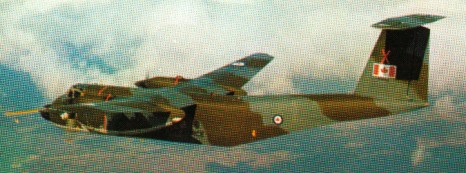
Developed from the DHC-4 Caribou, being an enlarged fuselage version of that aircraft, the de Havilland Canada DHC-5 Buffalo was known originally as the Caribou II.
de Havilland Canada DHC-5 Buffalo Article
Four were ordered for evaluation by the US Army, their development cost shared by the US Army, together with the Canadian government and de Havilland Canada; the first of these transports made its maiden flight on 9 April 1964.
To meet the requirements of the US Army for a transport, the DHC-5 can carry loads such as the Pershing missile, a 105-mm howitzer or 3/4-ton truck. The Buffalo can accommodate 41 troops, 35 paratroops, 24 stretchers, or up to 18,000 lb (8,164 kg) of freight (Including vehicles).
No further orders resulted from US Army evaluation of the DHC-5 (designated originally YAC-2 by the US Army, and later C-8A), but the Canadian Armed Forces acquired 15 of the DHC-5A which it designated CC-115: six were converted subsequently for deployment in a maritime patrol role. Following delivery of 24 to the Brazilian air force and 16 to the Peruvian air force, the production line was closed down.
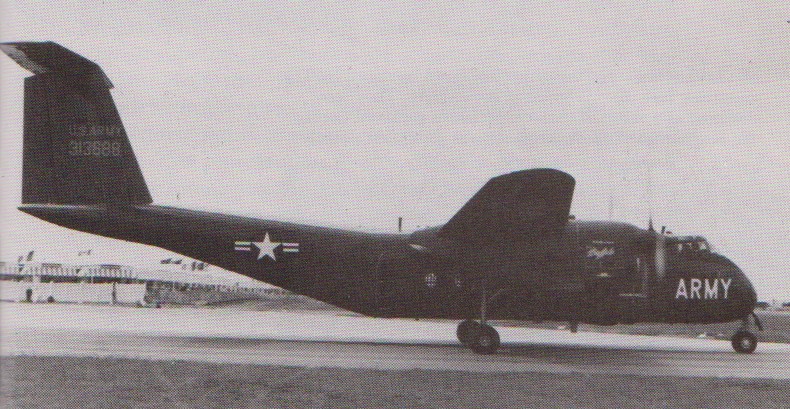
In 1974 production of an improved DHC-5D Buffalo was initiated. This had more powerful engines which permitted operation at higher gross weights, and offered improved all-round performance. Production of the Buffalo ended in 1982, but the last of 122 aircraft built was not delivered until April 1985. DHC-5Ds were bought by the armed forces of Abu Dhabi (5), Cameroun (3), Chile (1), Ecuador (3), Egypt (10), Kenya (8), Mauritania (1), Mexico (3), Sudan (4), Tanzania (6), Togo (2), Zaire (3) and Zambia (7).
With interest being shown by civil operators, DH Canada developed the DHC-5E Transporter, certificated in Canada in 1981. Generally similar to the military Buffalo, it could seat 44 passengers in a standard layout but with quick-change passenger/cargo and VIP/executive interior. Two were acquired by Ethiopian Airlines.

The de Havilland Canada XC 8A research aircraft, modified by the addition of an air cushion landing system (ACLS) designed by Bell Aerospace, made its first flight on 31 March 1975. An air cushion beneath the aircraft was created by an inflated rubberized nylon trunk pierced with hundreds of vent holes, making it possible to take off from or land on virtually any surface, including water.
Variants:
DHC-5B: designation of proposed version with General Electric CT64-P4C engines, not built.
DHC-5C: designation of proposed version with Rolls-Royce Dart RDa.12 engines, not built.
NASA/DITC XC-8A: designation of C-8A following conversion for use as an augmentor wing research aircraft; extensively modified, it has clipped wings, fixed landing gear, two Rolls-Royce Spey engines with vectored nozzles complementing the augmentor wings.
XC-8A ACLS: redesignation of C-8A following conversion for use as an Air-Cushion Landing System research aircraft; instead of conventional landing gear it has an inflatable but perforated rubber air cushion which permits operation from and to almost any type of surface, including ice, rough airfields, soft soils, snow, swamps and water.
NASA/Boeing QSRA: redesignation of C-8A following conversion for use as a Quiet Short-haul Research Aircraft; this aircraft has a new wing incorporating upper-surface blowing and boundary-layer control; engines are four Avco Lycoming F102 turbofans.
DHC-5D
Engines: 2 x General Electric CT64-820-4 turboprop, 3,133 shp / 2336kW
Max take-off weight: 22317 kg / 49201 lb
Empty weight: 11412 kg / 25159 lb
Wingspan: 29.26 m / 96 ft 0 in
Length: 24.08 m / 79 ft 0 in
Height: 8.76 m / 29 ft 9 in
Wing area: 87.79 sq.m / 944.96 sq ft
Wing loading: 52.07 lb/sq.ft / 254.00 kg/sq.m
Cruise speed: 420 km/h / 261 mph
Ceiling: 7620 m / 25000 ft
Range w/max.fuel: 3280 km / 2038 miles
Range w/max.payload: 416 km / 258 miles
Payload: 41 Pax. / 8160kg
Crew: 2-3
Passengers: 44
Gemini
Engine: 2 x General Electric CT64 turboprop, 3,133shp.
Installed pwr: 4680 kW.
Span: 29.3 m.
Length: 24.1 m.
Wing area: 87.8 sq.m.
Empty wt: 11,410 kg.
MTOW: 22,320 kg.
Payload: 8165 kg.
Cruise speed: 420 kph.
Initial ROC: 555 m / min.
Ceiling: 7600 m.
T/O run: 700 m.
Ldg run: 260 m.
Fuel internal: 7980 lt.
Range/payload: 1112 km with 8165 kg.
Capacity: 41 pax.
DHC-5 Buffalo CC-115
Engines: 2 x General Electric, 3055 shp.
Wing span: 96 ft 0 in (29.266 m).
Length: 79 ft 0 in (24.08 m).
Height: 28 ft 8 in (8.73 m).
Max TO wt: 49,200 lb (22316 kg).
Max level speed: 261 mph ( 420 kph).
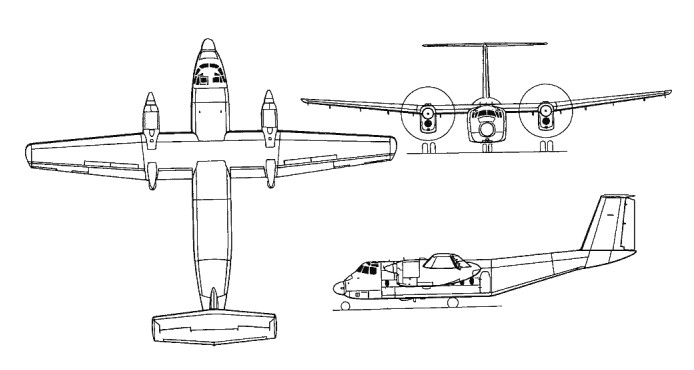
de Havilland Canada DHC-4 Caribou
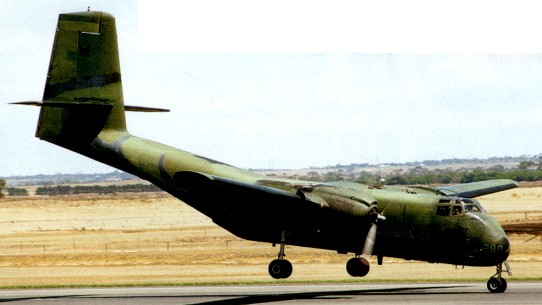
The decision to build the de Havilland Canada DHC-4 Caribou was taken in 1956, the object being to develop an aircraft combining the load-carrying capability of the Douglas DC-3 with the STOL performance of the Beaver and Otter.
de Havilland Canada DHC-4 Caribou Article
First flown on 30 July 1958 the de Havilland Canada DHC 4 Caribou is powered by two 1,450hp Pratt & Whitney R 2000 Twin Wasp radials. It can carry 36 troops, 26 paratroops, 22 stretchers, or freight (including vehicles) up to 8,740 lb (3,965 kg) in weight.
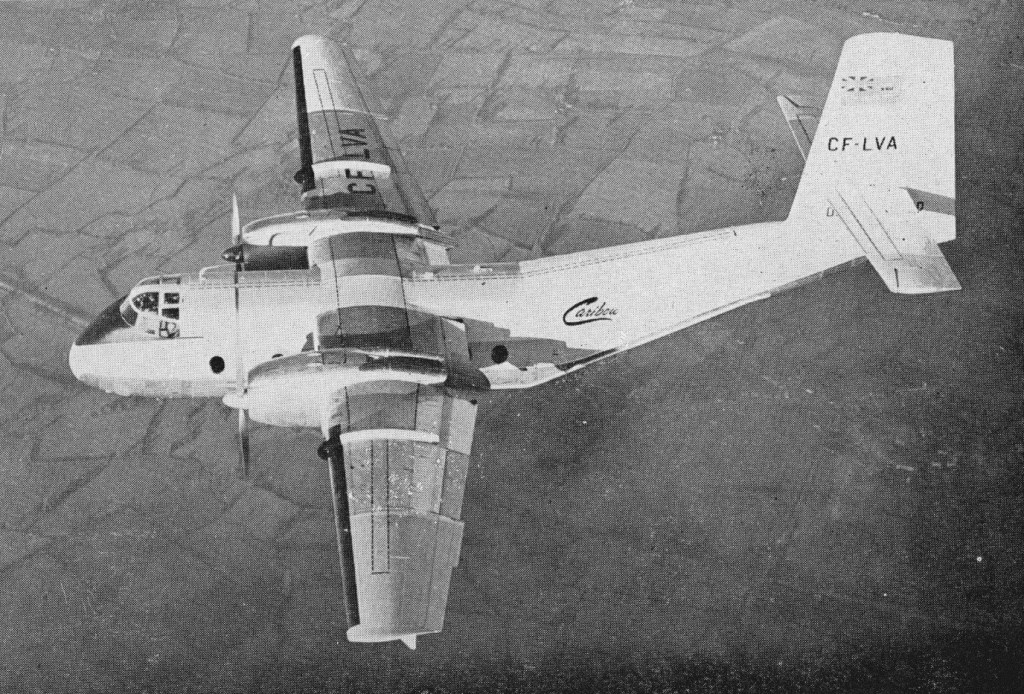
The Caribou is a twin-engined high-wing monoplane with full-span double-slotted Fowler flaps and fully-reversible propellers, which allow it to achieve steep approach and very short take-offs and landings. The high wing centre-section has marked anhedral and distinctive high placement of the tail provide easy access to a large cargo compartment, while the low-pressure tyres permit operation on unprepared runways. The rear door was designed as a ramp for items weighing up to 3048kg. The Caribou is not pressurised and is not fitted with auto-pilot or weather radar.
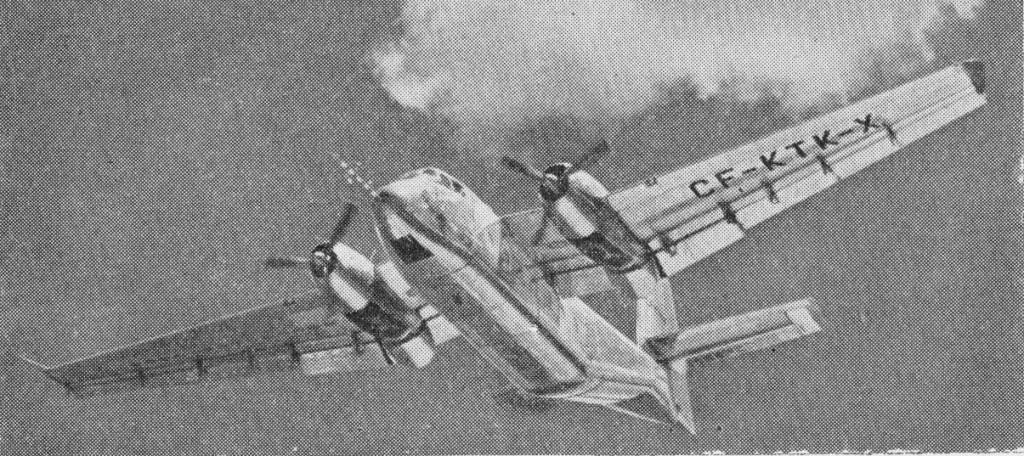
The Canadian army placed an order for two and the US Army followed with five, the US Secretary of Defense waiving a restriction which limited the US Army to fixed-wing aircraft with an empty weight less than 2268kg.
The Caribou served with the RCAF as the CC-108 and with the US Army as the AC-1 (1962 designation CV-2A). As a result of its evaluation of the first five aircraft the US Army adopted the Caribou as standard equipment and placed orders for 159.
The second batch of aircraft was designated CV-2B. Following tension on the border between China and India, the US Army handed over two Caribous to the Indian Air Force in early 1963. In January 1967 the 134 Caribous still in service with the US Army were transferred to US Air Force charge as C-7A and C-7B transports.
A YAC 1 Caribou evaluation aircraft, fourth off the Downsview line and redesignated as a CV 2A in 1962, was used by the ‘Golden Knights’ parachute team.
Eighteen Caribous were ordered for the RAAF in May 1963 and the first aircraft, A4-134, was handed over at Downsview, Toronto in Februrary 1964. Three aircraft were then ferried by No.38 Sqn crews to Australia via Europe. Three later Caribous on ferry were diverted to form RAAF transport Flight Vietnam.
In total the RAAF received 29 Caribous.

In 1964 three US Army CV-2 Caribou flew Travis AFB, California, via Hawaii, Wake Island, Guam, the Philippines to Vietnam in elapsed time of just under 65 hours. Manned by crews from 10th Air Transport Brigade from Ft. Benning, Ga. The Caribou flew combat missions in South Vietnam. The Army CV-2s were joined by three from the RAAF.
It was the last piston-engined aircraft in the Royal Australian Air Force. The Caribou was last operated by No 38 Squadron from RAAF Base Townsville.
In Canadian service the Caribou was replaced by the DHC-5 Buffalo and surplus examples were sold to a number of nations including Colombia, Oman and Tanzania. Many of the Canadian aircraft had been loaned to the United Nations, seeing extensive international service. Production ended in 1973. The DHC-4A model supplanted the DHC-4 on the production line from aircraft no. 24: the two models are very similar apart from the later model’s increase in weight, maximum take-off weight of the DHC-4 being 11793kg. Total production was 307.
The newly independent Kenya built a small air force, assisted by British advisors. The first planes to be acquired were DHC Beavers and Caribou. Kenyan pilots were trained by the RAF in Britain.
DHC-4A Caribou
Engines: 2 x Pratt & Whitney R-2000-7M Twin Wasp, 1,450 hp / 1081kW
Max take-off weight: 12927 kg / 28499 lb
Empty weight: 8283 kg / 18261 lb
Wingspan: 29.15 m / 96 ft 8 in
Length: 22.12 m / 73 ft 7 in
Height: 9.68 m / 32 ft 9 in
Wing area: 84.72 sq.m / 911.92 sq ft
Max. speed: 348 km/h / 216 mph
Cruise speed: 293 km/h / 182 mph
Service Ceiling: 7560 m / 24800 ft
Range w/max.payload: 389 km / 242 miles
Crew: 2
Passengers: 32
de Havilland DH 125 / Beech Hawker / U-125
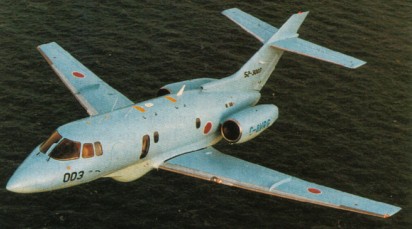
In 1961, with thoughts of reviving a pre-war name for the jet replacement to the Dove, the 125 was originally billed as the de Havilland Jet Dragon in the early sixties. Designed specifically for the business aircraft category, the DH 125, accommodates a crew of two and from six to twelve passengers. The first of two prototypes flew on 13 August 1962, as the DH.125, with Rolls-Royce Viper 20 engines producing 1350kg of thrust each. The first production aircraft had a 0.9m greater wingspan and 1.2m longer fuselage as well as Viper 520 engines.
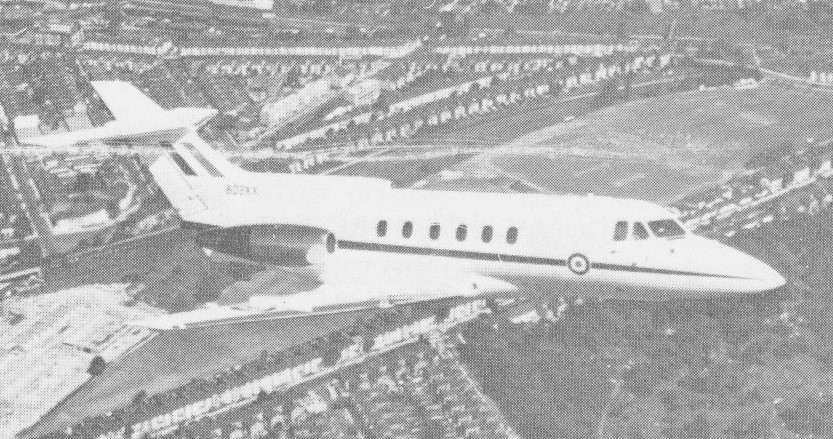
The original DH 125 was marketed by de Havilland, Hawker Siddeley, Beechcraft-Hawker and finally British Aerospace.
In 1963 the DH.125 was to be sold in the US by Atlantic Aircraft Sales Corp and AiResearch Aviation Services for a fully equipped price of US$740,000.
In 1965 Hawker Siddeley’s DH 125 flew one-stop from Wilmington, Del. To Los Angeles in 6 hr 50 min against headwinds of 110 mph following a 17 day US tour during which it made 107 demonstration flights. IIt flew at 35-39,000 ft with one stop at Wichita, Kan. AiResearch, the US distributor had the basic price at $575,000 and completely equipped at $750,000.
The original DH 125 evolved through the 1A, 3ARA, to the 400 Series.
Twenty Srs.2s were equipped as Dominie navigation trainers for the Royal Air Force.
The more significant changes took place from the advent of the 400 series. It was at this point that the Beech Aircraft Corporation took over the marketing of the 125 in North America between 1968 and 1972. The Series 400, since 1970, was marketed in the United States as the Beechcraft Hawker BH 125. It featured a centre cabin aisle recessed below the level of the floor supporting the seats on either side. This gave sufficient cabin height to allow a passenger stand-up headroom.
Their big contribution was a major improvement to the cockpit layout and ergonomics of the 400. The 600 series saw a two foot extension to the fuselage with corresponding benefits in passenger appeal. and first flew on 21 January 1971.
The 700 series brought the switch from straight jet Viper power to the fanjet power of the Garrett TFE 731-3.
Hawker Siddeley continued to build the jet in Great Britain, but its agreement with Beech was terminated in middle of 1975.
Continued development of the BAe 125 led to the Srs 800, which made its first flight on 26 May 1983, and the BAe 1000. The BAe 125-800 is an extensively revised development of the earlier -700 series, featuring more powerful engines (two Garrett TFE731-5R-1H turbofans) and new longer span outboard wing sections. Capable of 533 mph maximum cruising speed, the -800 has an economy cruise of 461 mph at 40,000 feet over 3454 miles (5560 km). Latest state of the art aerodynamic design theory has been incorporated in the 10 foot outboard wing panel, increasing the span by 4 foot 4½ inches. Fuel tankage has increased from 9440 lbs to 10,000 lbs with a corresponding increase in NBAA VFR range from 2660 nm in the 700 to 3000 nm in the 800 model. Digital autopilot and avionics allow the 800 to join the “glass cockpit” group. Numerous other 800 improvements include a new acrylic windshield, deletion of the ventral fin, nose wheel doors closed when gear down and architectural changes in the cabin area giving increased width and height.
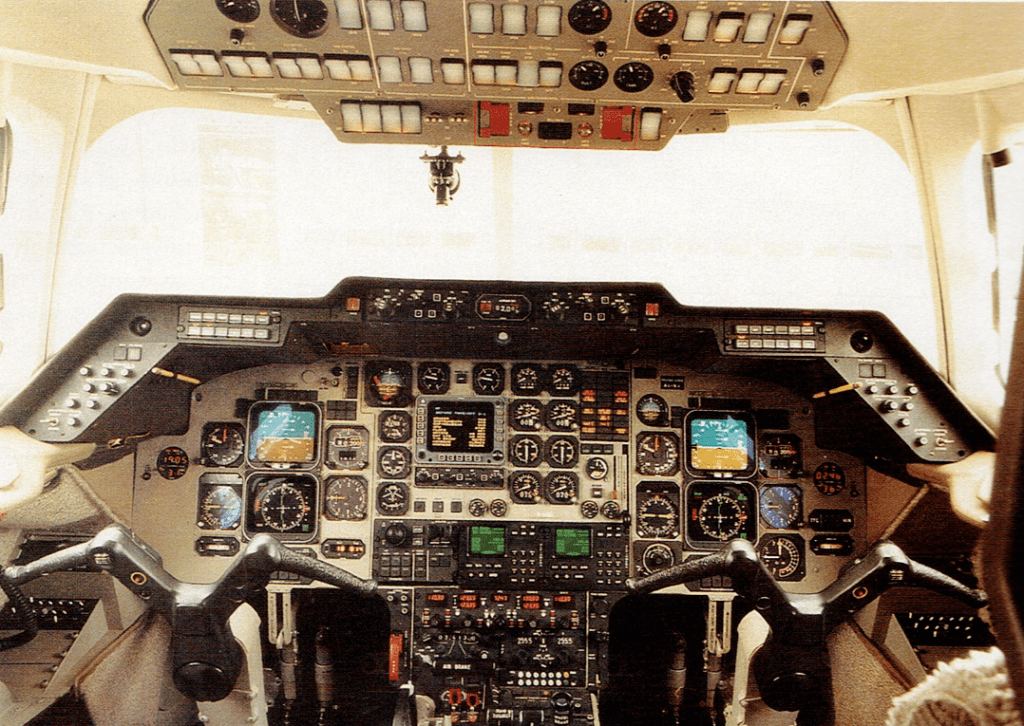
By 1985, 585 DH125 derivatives had been ordered.
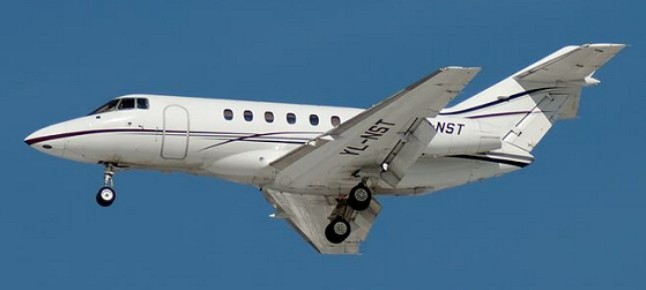
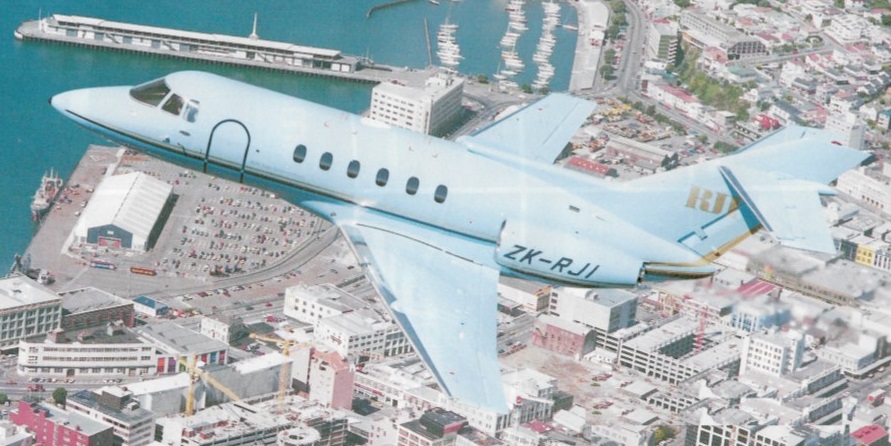
The series 800 Hawkers were built in the UK until Raytheon purchased the production rights from Hawker Siddeley in 1993, and two years later the 800XP went into service. Over 1,000 of both models flying. The 800XP got an interior upgrade in 1999. Pilots got the Honeywell SPZ 8000 avionics suite or can choose the Rockwell Collins EFIX-86 system as an option. The Hawker 800XP has been extremely well received for fractional aircraft ownership programs, as well as finding service with the U.S. Air Force, the Republic of China and in Japan.
After the purchase of the BAe Corporate Jets division by Raytheon, the BAe 125-800 was renamed the Hawker 800, and the BAE 125-1000 renamed the Hawker 1000. Hawker 1000 variant production ended in 1998.
The Japanese Air Self Defence Force have selected three BAe 125 800s for flight inspection duties in 1989, the first time in the history of the JASDF that a non American, foreign-built aircraft has been ordered. These were designated U-129As.
Orders exceed 187 by 1990, in addition to 573 of earlier versions, and the USAF took delivery of six BAe 125-800s, designated C 29A, for flight inspection duties in 1989.
In 1996, production was transferred to United States.
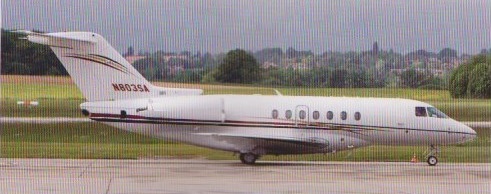
HS125 Srs 400
Engines: Two 3,360 lb (1,525 kg) st Rolls Royce Bristol Viper 522 turbojet.
Wing span: 47 ft 0 in (14.33 m)
Length: 47 ft 5 in (14.45 m).
Wing area: 353 sq ft (32.8 sq.m).
Gross weight: 23,300 lb (10,568 kg).
Max cruising speed: 510 mph (821 kph) at 31,000 ft (9,450 m).
Typical range: 1,762 miles (2,835 km).
Accommodation: 12 passengers
Crew: 2
DH125-600
Engines: 2 x Rolls Royce Vi¬per 601 turbofans, 3,750 lb.
Wing span: 47 ft 0 in (14.33 m).
Length: 50 ft 5.75 in (15.39 m).
Height: 17 ft 3 in (3.51 m).
Max TO wt: 25,000 lb (11,340 kg).
Empty wt. 12,700 lb
Max level speed: 345 mph (555 kph).
Stall 94 mph
Initial climb rate 4,500 fpm
Ceiling 41,000 ft.
Fuel cap: 9,450 lb.
Max range 45min res: 1,570 nm.
Max operating speed: 345 mph (555 km/h) IAS.
Takeoff distance (50′) 5,350 ft.
Landing distance (50′) 2,550 ft.
Seats 9
BAe125-700
Engines: 2 x Garrett TFE 731-3R, 3700 lbs thrust.
Seats: 8/14.
Length: 50.8 ft.
Height: 17.6 ft.
Wingspan: 47 ft.
Wing area: 353 sq.ft.
Wing aspect ratio: 6.3.
Maximum ramp weight: 25,000 lbs.
Maximum takeoff weight: 24,800 lbs.
Standard empty weight: 13,700 lbs.
Maximum useful load: 11,300 lbs.
Zero-fuel weight: 16,050 lbs.
Maximum landing weight: 22,000 lbs.
Wing loading: 70.3 lbs/sq.ft.
Power loading: 3.4 lbs/lb.
Maximum usable fuel: 9450 lbs.
Best rate of climb: 3000.
Certificated ceiling: 41,000 ft.
Max pressurisation differential: 8.4 psi.
8000 ft cabin alt @: 41,000 ft.
Maximum single-engine rate of climb: 1350 fpm @ 195 kts.
Single-engine climb gradient: 415 ft/nm.
Single-engine ceiling: 21,600 ft.
Maximum speed: 450 kts.
Normal cruise @ 37,000ft: 428 kts.
Fuel flow @ normal cruise: 1450 pph.
Stalling speed clean: 119 kts.
Stalling speed gear/flaps down: 83 kts.
Turbulent-air penetration speed: 230 kts.
BAe125-800
Engines: 2 x Garrett TFE 731-5R-1H turbofans.
Max cruise: 533 mph.
Economy cruise: 461 mph at 40,000 feet over 3454 miles (5560 km).
Pax cap: 14.
Hawker 800XP
Engines two 4,669-lb. Honeywell TFE731-5BR turbofans
Gross wt. 28,120 lb.
Empty wt. 16,245 lb.
Fuel capacity 1,492 gal
Max cruise 447 kts
Long range cruise 402 kts
Range 2,285-2,621 nm.
Ceiling 41,000 ft
Takeoff distance 5,030 ft
Landing distance 2,650 ft
Seats 8-15
Hawker Siddeley HS 125 Dominie T. Mk 1
Engine : Bristol Siddeley Viper 301, 13342 N / 1360 kp
Length : 47.408 ft / 14.45 m
Height: 16.503 ft / 5.03 m
Wingspan : 47.014 ft / 14.33 m
Wing area : 352.952 sqft / 32.79 sq.m
Max take off weight : 21201.1 lb / 9615.0 kg
Weight empty : 11404.3 lb / 5172.0 kg
Max. speed : 435 kts / 805 km/h
Service ceiling : 41011 ft / 12500 m
Wing load : 60.07 lb/sq.ft / 293.0 kg/sq.m
Range : 1477 nm / 2736 km
Crew : 2
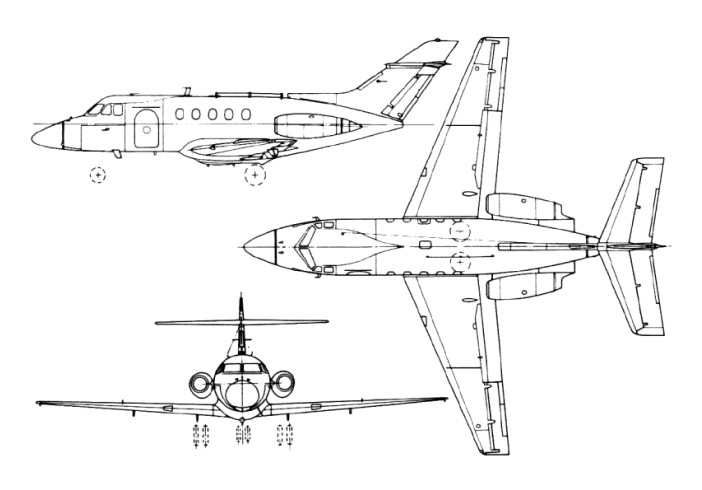
de Havilland DH 110 Sea Vixen
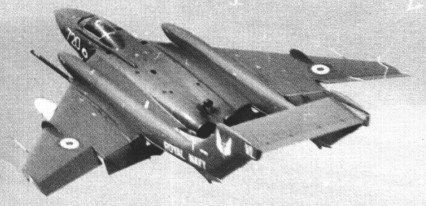
The D.H.110 was designed during 1946 to meet the requirements of the Royal Navy for an advanced carrier-based all-weather fighter (Specification N.40/46) and of the RAF for a night fighter (F.44/46). In 1949, orders were placed for seven night fighters and two long range fighter prototypes for the RAF and two night fighter and two strike fighter prototypes for the RN, but the Naval version was later cancelled and the RAF order reduced to two (to Specification F.4/48) on economy grounds.
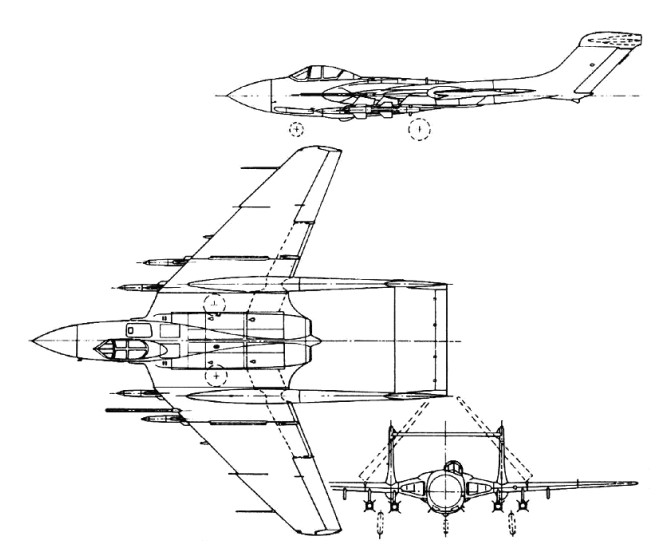
The mid-set wings have 40 degrees sweepback and conventional ailerons, rudders and Fowler flaps are fitted. The rear portion of the all-moving tailplane is deflected upward separately to avoid trim changes when the flaps are lowered. ‘Dog-tooth’ wing leading edges, air intakes in the wing roots and a large air-brake under the centre-fuselage are fitted.
The tricycle undercarriage has a single wheel on each unit. The main wheels retract inward into the wings, and the nose wheel retracts rearward.
A fire-control radar is fitted in the nose.
de Havilland DH 110 Sea Vixen article
The prototypes first flew on 26 September 1951 and 25 July 1952, powered by 7,500 lb st (3405 kgp) Avon RA7s. The pilot occupied a single cockpit offset to port, with the observer alongside in the fuselage nacelle; provision was made for radar in the nose and four 30 mm Aden cannon in the fuselage. After the loss of the first prototype and selection of the Gloster Javelin to meet the F.4/48 requirement, the second D.H.110 was modified to have an all-flying “slab” tailplane, variable gearing in the aileron and tailplane primary control circuits, reduced ventral fin area and cambered leading edge extensions outboard of the wing fences.
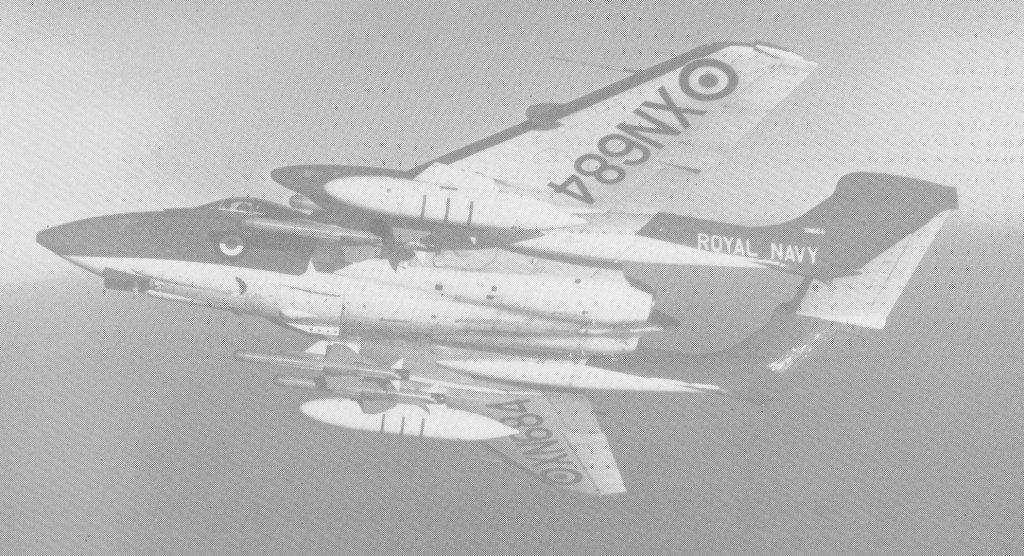
Royal Navy interest in the D.H.110 revived in 1952 and while the second prototype was used for preliminary deck landing trials, a new semi-navalised prototype was built as the Mk 20X, making its first flight on 20 June 1955.
The first production Sea Vixen flying on 20 March 1957. It was followed by the fully-navalised Sea Vixen FAW Mk 1 which had folding wings, revised tail unit, longer stroke undercarriage, new GEC radar, nosewheel steering, ejection seats, 11,230 lb st (5 100 kgp) Avon 208s, and armament of 28 x 2-in (5,08-cm) rockets in retractable packs in the nose plus four Firestreak JR AAMs or rocket pods or two 1,000-lb (454-kg) bombs under wings. An intensive period of flying trials was undertaken in the first half of 1959 by the Sea Vixen FAW.1 in the hands of No.700 “Y” Flight at RNAS Yeovilton.

114 Sea Vixen FAW Mk 1s were built and the first Royal Navy squadron (No 892) was formed on 2 July 1959. This version subsequently equipped five other squadrons, including No 766 all-weather training and No 899 HQ Squadrons
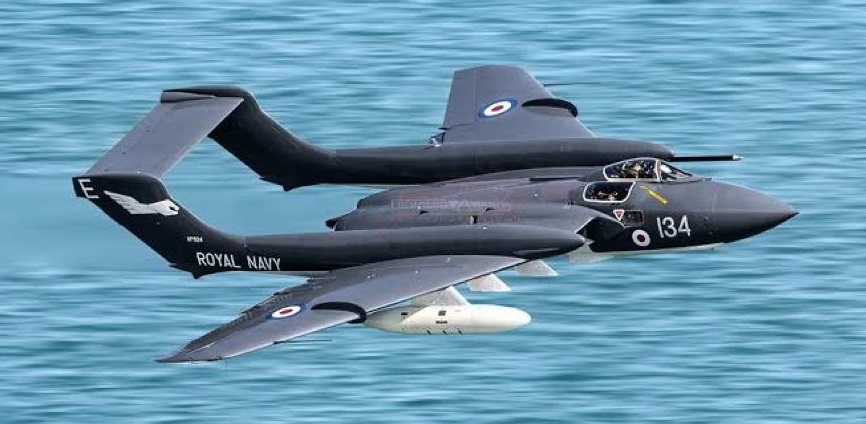
The Sea Vixen FAW Mk 2 differed in having extra fuel in forward extensions of the tail booms and provision to carry Red Top AAMs in place of Firestreaks. Prototypes flew on 1 June and 17 August 1962, and were followed in 1963-66 by 29 new production Mk 2s and 67 converted Mk 1s. Service use continued until 1972, after which about two dozen Sea Vixens were converted to pilotless drones for use as targets at the Aberforth range.
Prototype
Engines: 2 x 7,500 lb st (3405 kgp) Avon RA7
FAW Mk 1
Engine: 2 x Rolls-Royce Avon RA 208, 11,230 lb st (5100 kgp)
Wingspan: 15.2 m / 49 ft 10 in
Length: 16.3 m / 53 ft 6 in
Height: 3.4 m / 11 ft 2 in
Wing area: 60.2 sq.m / 647.99 sq ft
Max. speed: 1158 km/h / 720 mph
Ceiling: 14630 m / 48000 ft
Armament: 28 x 2-in (5,08-cm) rockets, four Firestreak JR AAMs or rocket pods or two 1,000-lb (454-kg) bombs
Crew: 2
Sea Vixen FAW Mk 2
Engine: 2 x RR Avon 208, 11250 lb.
Span, 51 ft 0 in (15,54 m)
Length, 55 ft 7 in (16,94 m).
Height, 10 ft 9 in (3,28 m)
Wing area, 648 sq ft (60,19 m).
Loaded weight 41,575 lb (18875 kg).
Max speed, 690 mph (1110 km/h) at sea level.
Initial climb 1½ min to 10,000 ft (3050 m), 5 min to 42,500 ft.
Service ceiling, 48,000 ft (21792 m).
 All Aero