Professor Claude Dornier started his first aircraft company in 1922 as the successor to the “Do” division of the Zeppelin Werke, GmbH. When aircraft manufacturing became forbidden in Germany after World War II, Dornier continued his design work in Spain. There he developed the Do 25, a general-purpose airplane that later evolved into the Do 27.
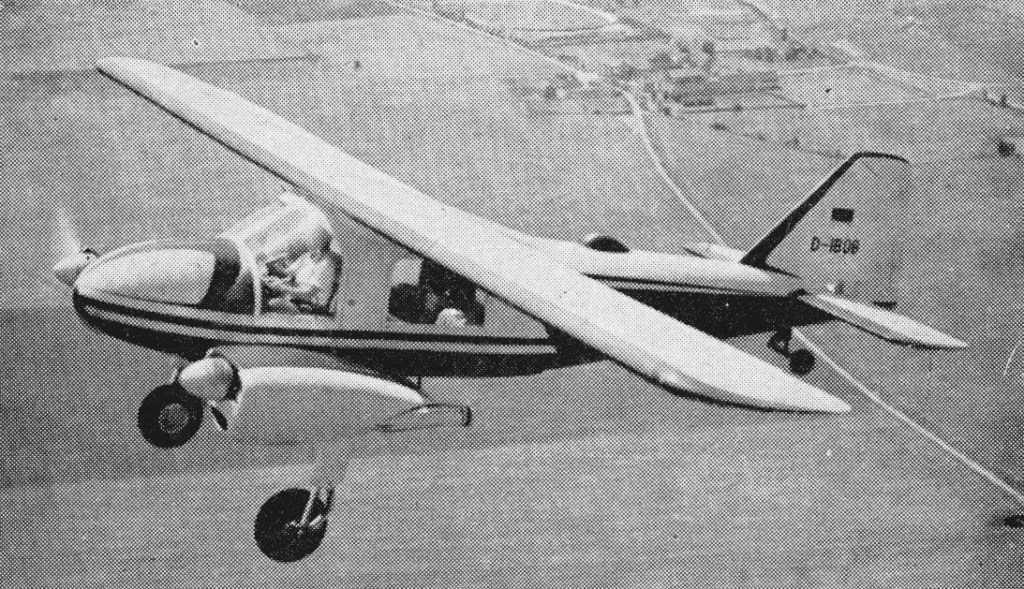
The Do 28 began as a simple twin-engined derivative of the Do 27, the basic structure being retained virtually unchanged. The prototype flew for the first time on 29 April 1959, with two 180 hp Lycoming O-360-A1A engines, and the second machine introduced 250 hp Lycoming O-540-A1D engines and an increase in wingspan and area. This version entered production as The Do 28A1 in 1960, eighty produced by mid-1963.
1960
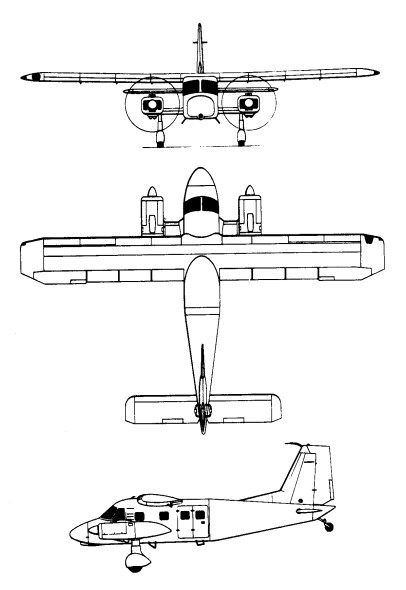
The Do 28 was produced until 1971. The Skyservant’s twin Lycomings and landing gear are mounted on stub wings that protrude from the lower fuselage directly underneath the main wings.
The Do 28B, introduced in 1963, featured 25 modifications, including the redesign of the nose, an enlarged tailplane, and auxiliary tanks in the wingtips. Two versions were available; the Do 28B1 and Do 28B2. The B2 having turbocharged engines.
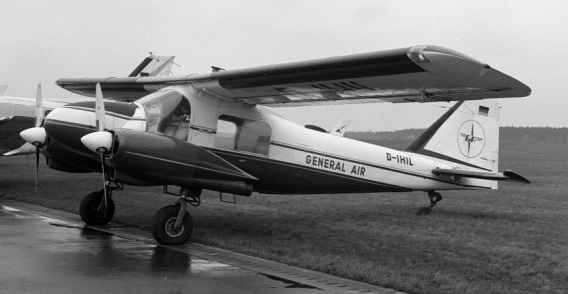
While the original Do 28 series had an advantage over the Do 27 by providing twin-engine safety and enhanced performance, it did not have any more internal space, the cabin dimensions being identical to those of its predecessor. Financial assistance provided by the German Ministry of Economics helped Dornier to develop the layout into a bulkier, higher-powered STOL transport which could carry up to 13 passengers and this redesigned version was designated Dornier Do 28D, later being named Skyservant. The redesign was so drastic that, apart from the layout and designation, the Do 28D bore little resemblance to the Do 28B. The prototype flew on 23 February 1966, receiving type approval a year later.
Dornier Do-28A-1 Skyservant D-IHIL (3002)
Developed as the Do 28D-1, the type won FAA certification on 19 April 1968 and military type approval in January 1970. Orders for 125 were placed for the German Luftwaffe and Bundesmarine, and other military deliveries have been made to Ethiopia, Morocco, Nigeria, Turkey and Zambia. More than 220 Skyservants are in operation world-wide. A Do 28D-1 set several class records for piston-engined business aircraft in 1972, including an altitude of 8624m with a 1000kg payload, as well as several time-to-height records. It was followed by the Do 28D-2, which introduced a number of refinements. In 1980, a Luftwaffe Do 28D-2 was re-engined with Avco Lycoming TIGO-540 turbocharged engines under a contract from the German Federal Ministry of Defence prior to upgrading that country’s military Skyservants; the new designation was Do 28D-2T.
Further development of the basic Do 28D design continued under a new designation: Do 128 Skyservant. Two basic designs were offered, the Do 128-2 and Do 128-6. Both 10-passenger models, the main difference was in powerplant, the Do 128-2 having two Avco Lycoming IGSO-540 piston engines and the Do 128-6 two 298kW Pratt & Whitney PT6A-110 turboprops. The latter had first been seen in prototype form as the Do 28D-5X, known then as the TurboSky and powered by two 447kW Avco Lycoming LTP 101-600-1A turboprops flat-rated to 298kW. The Do 128-6 had, in addition, a new fuel tank, reinforcements to the underwing engine supports and other modifications. Orders and options for 30 Do 128-6s from African customers were announced, the first going to Lesotho Airways. A variant of the Do 128-6 was also delivered to Cameroun for maritime patrol work, equipped with a 360 deg MEL Marec surveillance radar. Production ceased in the mid-1980s.
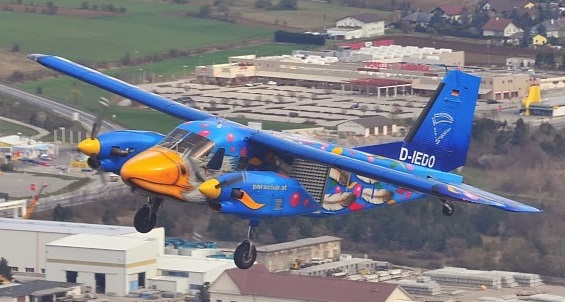
A Slovakian Do-28 G92 derivative of the Skyservant is fitted with two Walter M601-D2 turbine engines. It will haul 15 skydivers to altitude 4 times in one hour.
Dornier DO 28 D Skyservant Length : 37.402 ft / 11.4 m Height : 12.795 ft / 3.9 m Wingspan : 50.853 ft / 15.5 m Max take off weight : 8048.3 lb / 3650.0 kg Max. speed : 173 kt / 320 km/h Service ceiling : 24278 ft / 7400 m Range : 992 nm / 1837 km Engine : 2 x Lycoming IGSO-540-A1E, 375 hp Crew : 2+12
Do-28D-1 Engines two 380 hp Lycoming O-540. Gross wt. 8,470 lb Empty wt. 5,066 lb Top speed 202 mph. Cruise 170 mph. Stall 65 mph. Vmca: 42 kts. Initial climb rate 1,180 fpm. Range 1,255 minle. Ceiling 25,200 ft Takeoff distance (50′) 1,020 ft Landing distance (50′) 1,000 ft Seats 12-13.
Do 128-2 Engine: 2 x Avco Lycoming IGSO-540-A1E, 283kW Max take-off weight: 3842 kg / 8470 lb Empty weight: 2346 kg / 5172 lb Wingspan: 15.55 m / 51 ft 0 in Length: 11.41 m / 37 ft 5 in Height: 3.9 m / 12 ft 10 in Wing area: 29 sq.m / 312.15 sq ft Max. speed: 325 km/h / 202 mph Cruise speed: 211 km/h / 131 mph Ceiling: 7680 m / 25200 ft Range: 642 km / 399 miles
Do-128-6 Engine: 2 x P&WAC PT6A. Installed pwr: 600 kW. Span: 15.9 m. Length: 11.4 m. Wing area: 29 sq.m. Empty wt: 2540 kg. MTOW: 4350 kg. Payload: 1275 kg. Cruise speed: 340 kph. Initial ROC: 385 m / min. Ceiling: 8580 m. T/O run (to 15m): 555 m. Ldg run (from 15m): 435 m. Fuel internal: 895 (+475) lt. Range/payload: 1460 km with 805 kg. Capacity: 12 pax.
The Do 13 was first flown on February 13, 1933, with the same powerplant as its predecessor. Substitution of Junkers type ‘double wing’ trailing edge flaps, similar to those of the Ju 52/3m, gave it improved landing characteristics, and when the Sh 22 engines were replaced by a pair of 750 hp 12-cylinder liquid cooled BMW VIUs, driving four blade propellers, the bomber was redesignated Do 13C. After further attempts to overcome deficiencies in the wing structure, it was ordered into series production by the Luftwaffe as the Do 23. Two hundred and twenty-two Do 11s were reordered as Do 13Cs, but after about a dozen of these had been delivered, they were found to be even less satisfactory than the Do 11 C and D, and production was halted while the airframe was restressed and modified. Production was resumed after the first flight, on September 1, 1934, of the Do 13e prototype for the production Do 23F, with BMW VId powerplant. This was quickly followed by the Do 23G, which became the principal service version and returned to the BMW VIU engine. All unfulfilled orders for the Do 11 and 13 were transferred to the Do 23 contract, deliveries of which began in spring 1935, and had totalled just over 200 when production ended in late 1935. The Do 23 was not destined for a long service life. From mid 1936 it began to be replaced by the Do 17, Ju 88 and He 111. It was then relegated to second line duties, including training. Although obsolete by the outbreak of the Second World War, a small number did continue in service with Minensuchstaffeln during the early war years, equipped with a large degaussing ring for clearing British mines from around the German coast.
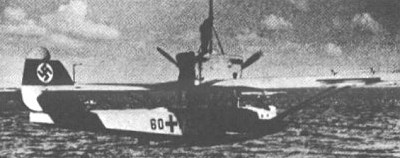
The 1935 Do 18 was originally produced as a transatlantic mail-carrying flying-boat and used on the South Atlantic service of Deutsche Luft-Hansa. Evolved as a civil and military successor to the Dornier Wal, the first of five Do 18 prototypes (registered D AHIS) flew on March 15, 1935, powered by two 540 hp Junkers Jumo 5 engines. These five prototypes were delivered to Deutsche Luft¬hansa. It was available in two forms as the Do 18E and Do 18F, with an AUW of 10,000kg and 11,000kg and with larger wings. A total of about 160 was eventually built during 1936 40, the major Luftwaffe versions being the Do 18D (about 75 built) and Do 18G and H (71 built).
The Do 18D 1, D 2 and D 3 differed in equipment only and were delivered from mid¬-1936. By the autumn of 1939 they equipped single Staffeln of five Kustenfliegergruppen (coastal aviation groups). Powered by 600 hp Jumo 205C engines, they were only lightly armed with single bow and dorsal 7.9 mm (0.311 in) MG 15 machine guns, and could carry two 50 kg (110 lb) bombs beneath the starboard wing. Do 18Ds took part in many early wartime campaigns, among them Poland, Norway and the Battle of Britain.
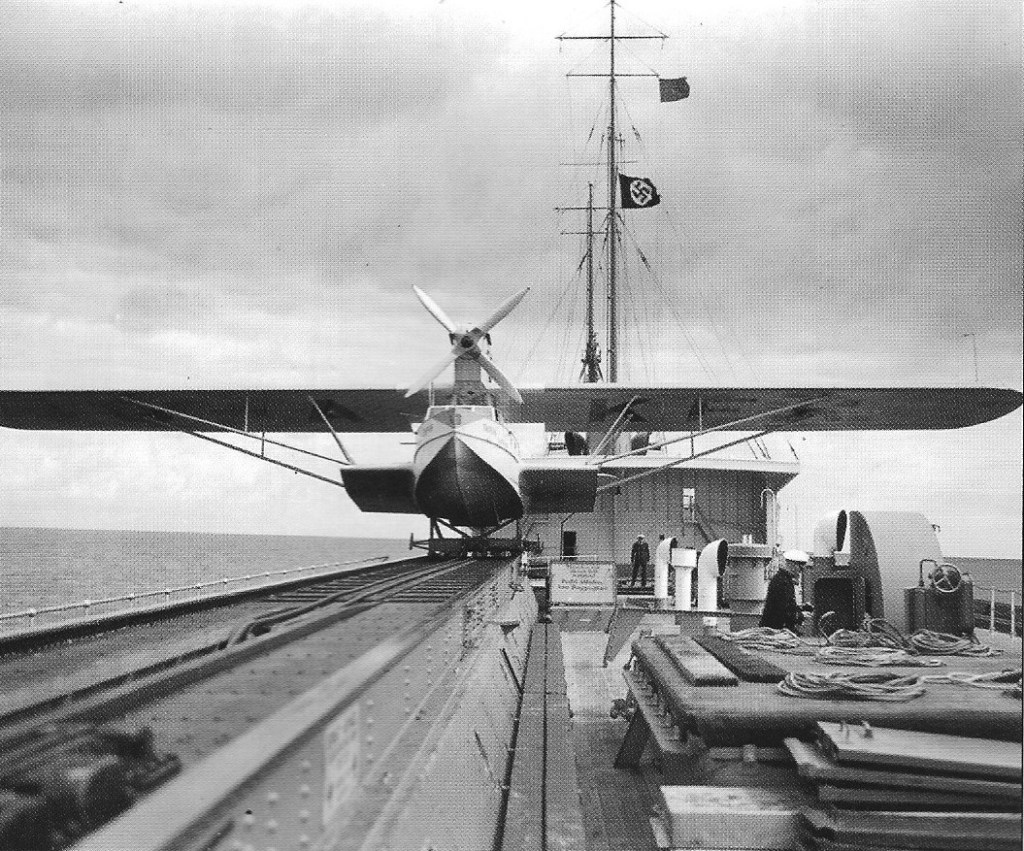
On 27 March 1938 a Do.18 catapulted from the ship Westfalen, anchored off the English coast, and flew 5245 miles / 8440 km non-stop to Caravelas, Brazil, to set a new endurance record for seaplanes.
The Do 18G-1, which entered service from mid 1939, had 880 hp Jumo 205D engines, a 13 mm (0.51 in) MG 131 in the bow, a 20 mm (0.79 in) MG 151 in a power operated dorsal turret, and provision for rocket assisted takeoff.
On Sunday 8 October 1939: During a patrol flight over the North Sea, a Lockheed Hudson coastal reconnaissance plane of 224 Sqn became the first English aircraft to shoot down a German plane, a Dornier Do.18 flying boat.
The Do 18H 1 was a six seat unarmed trainer version. Both the Do 18D and the Do 18G had been withdrawn from first line service by autumn 1941, but some G 1s were converted to Do 18N 1s for air/sea rescue duties. One Do 18 was redesignated Do 18L when its two 447kW Junkers Jumo 205 were replaced by 671kW BMW 132N. Do 18 were also operated as reconnaissance and search-and-rescue aircraft by the Luftwaffe, more than 70 being built for this purpose, plus a number of Do 18H trainers.
Do-18E Engines: 2 x Jumo 205, 440kW Max take-off weight: 10000 kg / 22046 lb Empty weight: 6260 kg / 13801 lb Wingspan: 23.7 m / 77 ft 9 in Length: 19.3 m / 63 ft 4 in Height: 5.4 m / 17 ft 9 in Wing area: 98.0 sq.m / 1054.86 sq ft Max. Speed: 260 km/h / 162 mph Cruise speed: 240 km/h / 149 mph Ceiling: 4200 m / 13800 ft Range w/max.fuel: 5100 km / 3169 miles Range w/max.payload: 2600 km / 1616 miles Crew: 4
Do 18G-1 Span: 23.70 m (77 ft 9 in) Length 19.25 m (63 ft 2 in) Gross weight: 10759 kg (23719 lb) Maximum speed: 267 km/h (166mph)
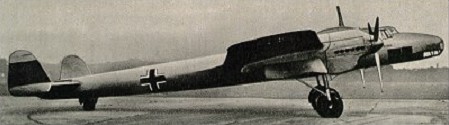
Designed originally from an outline specification drawn up in July 1932 which referred to a “high-speed passenger transport and mailplane” as a six-passenger plane for Deutsche Luft Hansa’s European route network. From the outset the Do 17 was in fact a dedicated medium bomber and reconnaissance aircraft.
The first prototype, the Do 17c, shortly afterwards to be re-designated Do 17V1, was flown on 23 November 1934, powered by a pair of 660 hp BMW VI 12 cylinder liquid cooled V type engines, this having a single fin-and-rudder tail assembly whereas the second prototype, the Do 17 V2 (formerly Do 17a), was fitted with a twin fin-and-rudder assembly for comparison. The V2 flying on 18 May 1935.
Three prototypes were completed for DLH, each of them having a single fin and rudder; but their slimness was also their commercial undoing, the very narrow fuselage making it extremely difficult for passengers to reach their seats. Following its rejection by DLH, the Do 17 design languished for a time, until the RLM (Reichsluftfahrtministerium, or German aviation ministry), seeking a new medium bomber for the Luftwaffe, was persuaded to evaluate the Dornier aircraft for this role.
The RLM ordered further prototypes, beginning with the Do 17 V4, which flew in the late summer of 1935. These were generally similar to the first three prototypes, except for having twin fins and rudders (to make the aircraft a more stable bombing platform) and a decrease of 0.55 m (1 ft 9A in) in overall length. They carried a crew of three, and had an all metal fuselage, metal and fabric covered wings, and fully retractable mainwheels and tailwheel. All were broadly similar, except for the installation of 775 hp Hispano Suiza 12 Ybrs liquid cooled V type engines in the Do 17 V5 and a defensive armament of a single hand operated 7.9 mm (0.311 in) MG 15 machine gun in the cockpit of the Do 17 V7.
The Do 17 was a highly advanced design for the early 1930s, grouping all crew members in the forward fuselage and it was faster than virturally any single-seat fighter then existant. Preparations for the large-scale production of the Do 17 at Dornier’s Manzell, Allmansweiller and Löwenthal factories were underway by early 1938, when plans were also being fprmulated for additional productiom by Henschel at Berlin-Schönefeld, Siebel at Halle and by the Hamburger Flugzeugbau.
The first version to go into production, towards the end of 1936, was the Do 17E-1 bomber, based on the Do 17 V9, which had a further reduction of 0.90 m (2 ft 111 in) in the length of the nose. The Do 17E-1, powered by two 750 hp BMW VI 7.3 engines, carried a short range internal bombload of 750 kg (1653 lb) and had a defensive armament of two MG 15 machine guns, one above the fuselage and one below.
Do 17
In parallel production was the Do 17F 1, a photographic reconnaissance counterpart to the E 1 with two cameras and an extra fuel tank installed in the bomb bay. Both versions were in squadron service with Luftwaffe units by the summer of 1937, the Do 17E-1 initially equipping the I. Gruppen of KG 153 and KG 155 while the F 1 went to the long-¬range reconnaissance group Fernatifklarungsgruppe 122. During 1937 38 the Do 17E and F were included among the types of Luftwaffe aircraft selected to equip units of the Condor Legion sent by Germany to fight on the Nationalist side in the Spanish Civil War. Here their performance made them virtually immune from interception by their opponents’ fighters.
The principal shortcomings of the Do 17 revealed over Spain were its limited warload and its poor defence against attack from below and to the rear, and the Do 17M did little to remedy these defects.
General re-equipment of the Do 17E-mounted Kampfgruppen was held in abeyance pending availability of the much improved second generation Do 17Z which was following the Do 17M by less than a year and utilised most of the gigs and tooling employed by the earlier model.
The Do 17P reconnaissance equivalent production was launched in 1938 by Henschel, Hamburger Flugzeubau and Siebel, a total of 330 being built for the Aufklärungsgruppen.
In July 1937, at about the time these first production models were reaching their first squadrons, an international military aircraft competition was staged at Dijbendorf, near Zilrich in Switzerland. One of the competitors was the French Dewoitine D 510, generally considered at that time to be the best single seat fighter in service anywhere in Europe. This fast and manoeuvrable little fighter was totally out-classed by an example of the Do 17, a twin engined bomber even though this was not revealed at the time. The Do 17 concerned was a specially stripped down prototype, the Do 17 V8, fitted with DB 600A engines specially boosted to give 1000 hp each. The Do 17 V8’s performance had many side effects, not least on fighter design thinking in countries both inside and outside Europe. A more direct result was an expression of interest in the Do 17 itself from the Yugoslav government, which eventually placed an order for 20 of the German bombers. These export examples were designated Do 17K, and at the request of the customers were powered by Yugoslav built 980 hp French Gnome Rhone 14 N radial engines. The ‘pure’ bombers were designated Do 17Kb 1; reconnaissance models were designated Do 17Ka 2 and Ka 3, the latter doubling also in the bombing and attack roles. In addition to those supplied from German production, manufacture of the Do 17K was also undertaken under licence, in 1939 40, by the Drzavria Fabrika Aviona (state aircraft factory) at Kraljevo, near Belgrade. The additional available power gave the Do 17K a useful increase in both speed and range, notwithstanding an improved internal bombload (in the Kb 1) of 1000 kg (2205 lb) and an armament increased to three 0.312 in (7.92mm) FN Browning machine guns and one 20mm (0.79 in) Hispano cannon. Seventy Do 17Ks were still in service with the Yugoslav air force when the country was invaded by Germany in early April 1941. Later that month two of them escaped to Greece with a consignment of gold bullion. Losses during the fighting in Yugoslavia were fairly heavy, but those Do 17Ks that survived were passed on in early 1942, after the occupation, to the newly created Croatian air force. The improvements in weapon capacity and performance exhibited by the Do 17K had, in fact, been evolved for two generally similar versions for the Luftwaffe, the Do 17M bomber and Do 17P reconnaissance bomber, the increased power being derived respectively from a pair of 900 hp supercharged Bramo 323AA or 865 hp BMW 132M radial engines. In 1938 these began gradually to replace the Do 17Es and Do 17Fs in service, and by September 1938 combined production of the Do 17E, F, M and P series totalled 580. Three experimental models to be evolved during 1937 38 were the Do 17L, Do 17R and Do 17S. The Do 17L (two prototypes only) was a four seat pathfinder version with 900hp Bramo 323AA engines. The two Do 17R prototypes were testbeds, one powered by 950 hp Daimler Benz DB 600G engines and the other by 1100 hp DB 601As. The Do 17S (three built, first flight early 1938) was a high-speed reconnaissance version with DB 600G engines and a crew of four. None of these went into production, but between them the R and S series led to the Do 17U, of which 15 were produced in 1938 and distributed among nine Karripfgruppen (bomber groups) for pathfinder duties. The Do 17U carried a crew of five and was powered by 950 hp DB 600A engines.
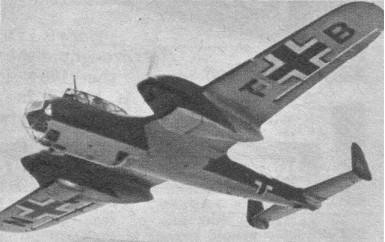
Dornier Do.17Z
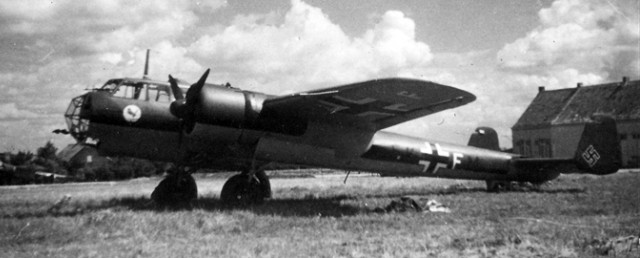
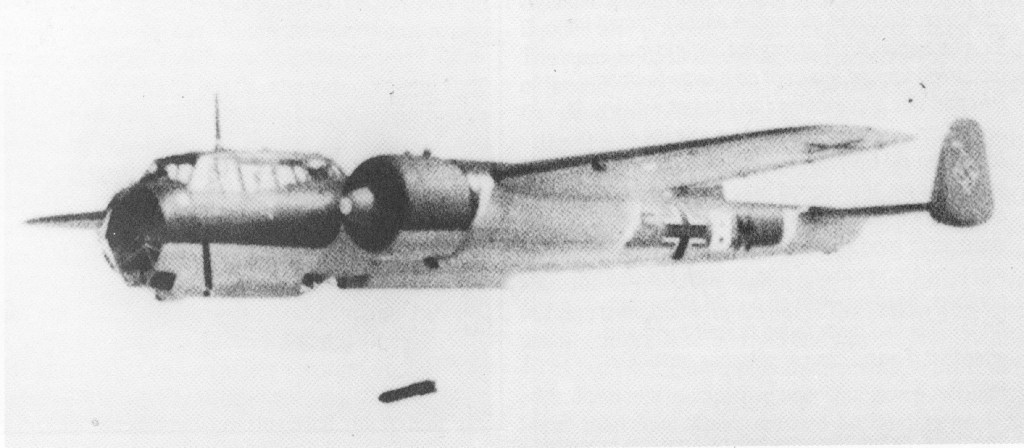
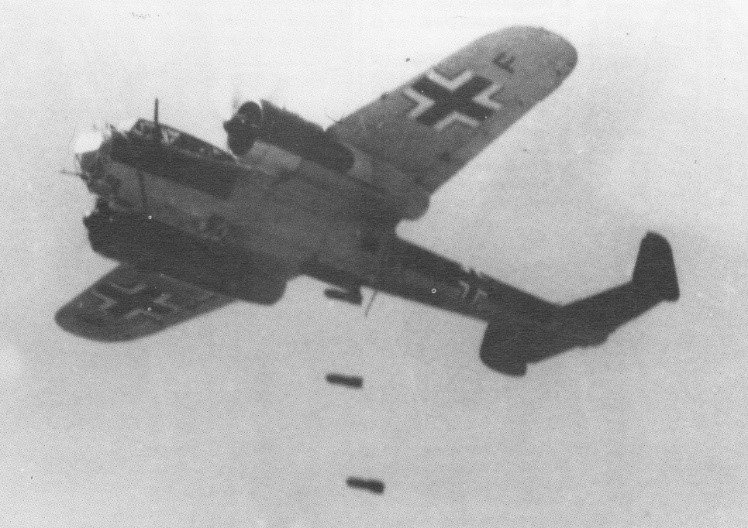
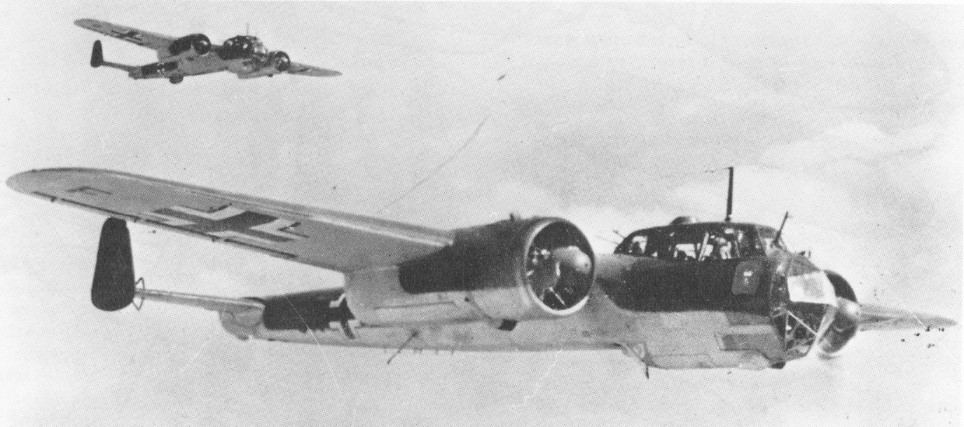
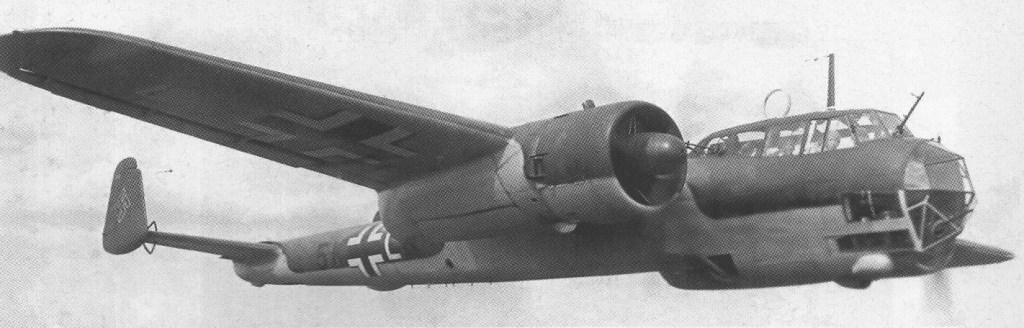
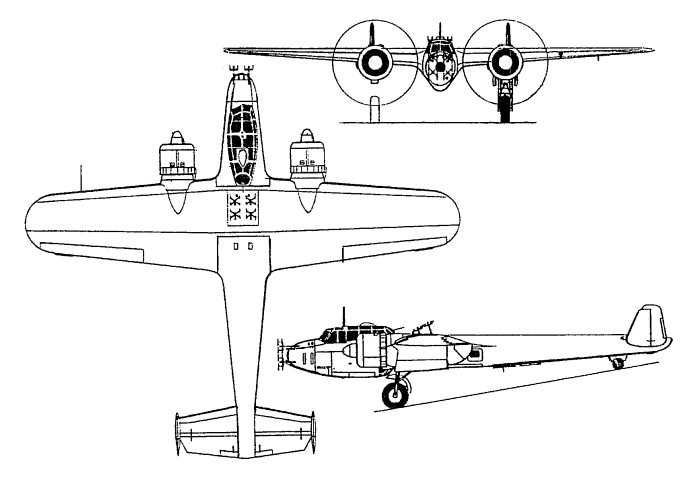
The final version in the Do 17 production series, and the one produced in the greatest quantity, was the Do 17Z. The Do 17Z, the design of which begun early 1938, featured an entirely new forward fuselage, A progressive development of the Do 17S/Do 17U, it appeared in late 1938 and broke away from the Do 17’s earlier ‘Flying Pencil’ image by adopting as standard the deeper, more angular and more extensively glazed nose section first seen on the Do 17S.
Do 17Z
This permitted a heavier defensive armament (which the Do 17 now needed) of up to six MG 15 guns, five of them aimed manually. The Do 17Z series carried a crew of four or five, and were powered at first by Bramo 323A 1 and (from the Z 2) by 1000 hp Bramo 323P series engines.
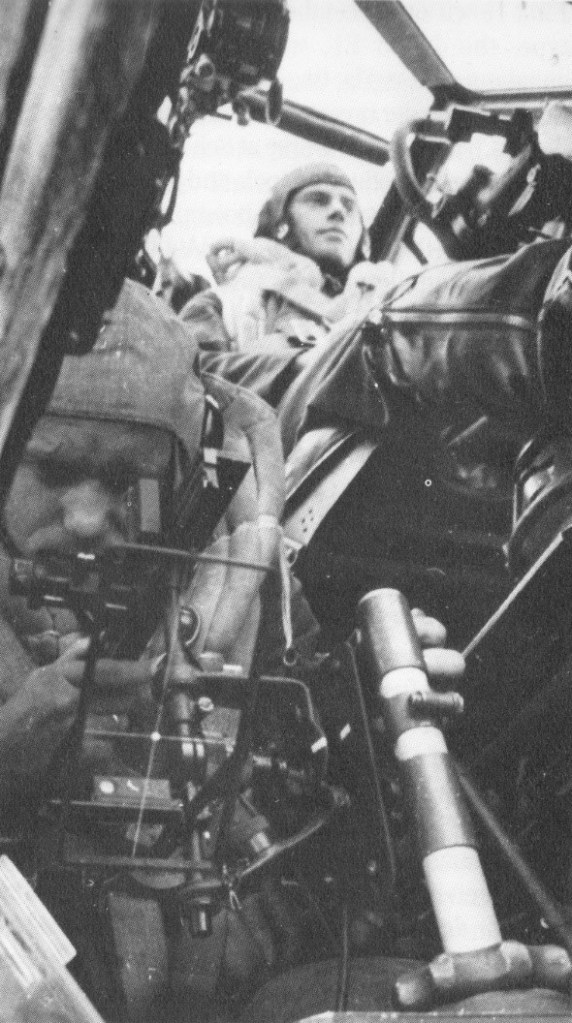
The downward-firing MG 15 machine gun which was poked through a hatch in the floor of proceeding Do 17 versions had too limited a field of fire to provide protection from below and to the rear. Crew accommodation had always been cramped thus, for the Do 17Z, the cockpit roof raised and fully glazed. The nose containing the bombardier’s station was extensively glazed with a series of small, flat panels, and the lower part was bulged and extended aft to a point just forward of the wing leading edge, terminating in a position for an aft-firing MG 15 machine gun.
Do 17Z bombardier station
Approximately 525 examples of the Do 17Z were built, of which the Do 17ZA (delivered from January 1939) and the Do 17Z 2 (the most numerous sub type) were bombers, the Do IV 3 (22 built) a recon-naissance model, the Do 17ZA a dual control training version of the Z 2, and the Do IV 5 a version of the Z 2 for rescue duties.
The pre-series Do 17Z-0, which appeared late in 2938, was a four-seat bomber, defensive armament comprising three 7,0mm MG 15 guns – one on a pillar-type mounting at the rear of the flight deck, a second protruding through the starboard panels of the windscreen and the third on a hemispherical mounting firing below the fuselage. This armament was augmented on the production Do 17Z-1 by a fourth MG 15 protruding through the nose cone. Appearing before the end of 1938, the Do 17Z-1 was under-powered by its two 900 hp BMW-Bramo 323A-1 radial engines when carrying a full 2205 lb / 1000 kg bombload. Bombload wasreduced to 1100 lb / 500 kg, but was restored to the full load early in 1939 with the appearance of the Do 17Z-2 with 1000 hp Bramo 323P engine with two-speed superchargers. Restoration of the full bombload dictated some reduction in fuel load reducing penetration with maximum load to 205 mi / 330 km.
Do 17Z-2
Lacking the load carrying capability of the He 111 and the speed of the Ju 88, production was tapering off by the end of 1939 and terminated during early summer of 1940 after about 500 were delivered.
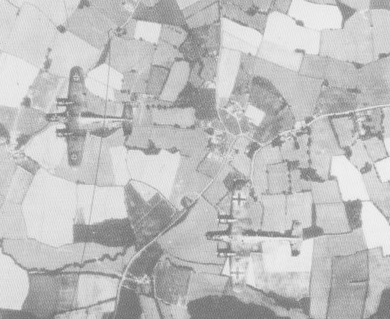
The Do 17Z-2 was to perform the first operational sortie of WW II when aircraft of III/KG 2 took-off from Heiligenbeil, East Prussia, 45 minutes after the official outbreak of war, to bomb approaches to the rail bridge at Dirschau, a major link across the Polish Corridor.
Equipping nine Kampfgruppen of KG 2, KG 3, KG 76 and KG 77, the Do 17Z-2 was in the forefront when the first attacks on channel convoys took place in July 1940, and the Kommodore of KG 2, Oberst Fink, was assigned the title of Kanalkampfführer with the task of clearing the channel of British shipping, his Do 17Z-2s providing the principle component of the battle group entrusted with this mission. On Adler Tag the Do 17Z-2s of KG 2 bombed Eastchurch as the sole Kampfgeschwader failing to receive Goering’s postponement order, losing four aircraft in the process.
The Do 17Z-2s of KG 3 bombed Eastchurch and Rochester two days later, and on the 16th those of KG 76 attavked West Malling, following up this mission with attacks on Biggin Hill and Kenley on the 18th. The incursions over Britain of the Do 17Z rapidly revealed the deficiencies of its defensive armament, fotward maintenance units first adding two MG 15 machine guns which could be fired laterally from the radio operator’s position and then another pair to provide a total of eight defensive machine guns.
The Dornier bomber possessed good manoeuvrability and its structural integrity enabled it to undertake shallow diving attacks at speeds in excess of 270 mph / 590 kph, but it carried no armour protection for its crew. Attrition remained high and by mid-September the numerical importance of the Do 17 began to dwindle.
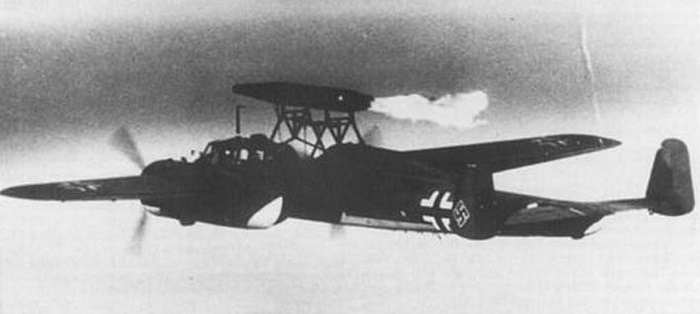
Dornier Do17/Z testbed for Lorin ramjet
Luftwaffe strength returns showed a total of 493 Do 17s on charge on December 2, 1939. Of these, 352 were Do I7s (mostly Z¬2s), 12 were Do 17Rs, 41 were Do 17Ms, and 83 were Do 17Ps. The P and Z models were thus the principal versions encountered during the early attacks on Poland, France, the Low Countries and Britain in 1939 40. They performed reliably and effectively and, despite a fairly high rate of attrition, were popular with their crews. The Do 17 “Flying Pencil” was the first type of German aircraft shot down by an RAF single-seat fighter during the war (a Hurricane of No 1 Squadron on 30 October 1939). Dornier 17 production ended in July 1940 after approximately 1200 of all models had been built. Only one Geschwader (wing), KG2, used the 17Z for more than a year after the invasion of the Soviet Union.
When it became necessary to find improvized night fighters to counter RAF raids on German held targets, a small number of Do 17Zs were converted to this role. After trials in 1939 with a Do 17Z 6 K= I (screech owl) prototype, nine more Z 3s were converted in 1940 to three seat Do 17Z 10 Kauz II night fighters, with a battery of two 20 mm (0.79in) MF FF cannon and four 7.9 mm (0.312 in) MG 17 machine guns in a ‘solid’ nose. Operating with Nachtjagdgeschwader 1 in Holland, the Do 17ZA0 scored its first ‘kill’ on the night of October 18/19, 1940.
In 1938, in the hope of attracting further foreign orders for the bomber, Dornier took two of the pre production Do 17Z Os and used them as export demonstration aircraft under the new RLM type number Do 215. Redesignated Do 215 V1 (with Bramo 323 engines) and Do 215 V2 (with 980 hp Gnome-Rhone 14 N radials), the latter was demonstrated to Yugoslavia, but without securing any orders. The only order forthcoming was from Sweden, which was shown the Do 215 V3, another former Do 17Z 0 refitted with 1075 hp DB 601A inverted V engines. Eighteen of these were ordered for the Swedish air force in mid 1939 as Do 215A 1s, but were not completed before the war. Only three Do 215B 1s had been completed by the end of 1939, but production continued in parallel with the radial engined Do 17Z, and ninety two Do 215B-1s and B 4s were delivered to the Luftwaffe in 1940, production being completed in 1941 with a further six machines.
Do.215B-1
The first of the batch was flown in December 1939, and all were taken over by the Luftwaffe, with minor modifications, as Do 215B 0s or B 1s. Delivered in early 1940, they were followed into production by two generally similar Do 215B 3s for the Soviet Union (the B 2 was not built); and then by the principal Luftwaffe model, the Do 215B 4 (similar to the B 1, and also with 1100 hp DB 601Aa engines, but fitted with different cameras); and the Do 215B 5. This final Do 215B version, some 20 of which were converted on the line from Do 215B 4s, was produced in the latter half of 1940 as a night fighter/intruder aircraft, and had a ‘solid’ nose similar to that of the Do 17Z 10 in which were installed four MG 17 machine guns and two 20 mm (0.79 in) MG FF cannon. The Do 215B 4 differed from the B-1 solely in the type of cameras installed, an RB 50/30 camera being mounted beneath the ventral gun position, and an RB 20/30 camera being mounted on the crew entry hatch. In addition to the cameras, twenty 110 1b (50 kg) bombs could be carried. Two slightly modified machines designated Do 215B 3 were exported to the Soviet Union during the winter of 1939 40.
Do.215
Several Do 215B-1 airframes were converted to Do 215B 5 night fighter configuration and delivered to NJG.2 during late 1940 for operation from Gilze Rijen in the Netherlands, these undertaking intruder sorties against RAF bomber bases. In July 1941 Nachtjagdgeschwader 1 in Holland was the first operational Luftwaffe aircraft to carry the early Telefunken FuG 202 Lichtenstein BC airborne interception radar. Oberleutnant Ludwig Becker of NJG 1, later to become one of the Luftwaffe’s leading night fighter pilots, made the first ‘kill’ using this equipment on August 9, 1941. The Do 215B 5 was fitted with a solid nose housing one 20 mm MG FF cannon and four 7.9 mm. MG 17 machine guns.
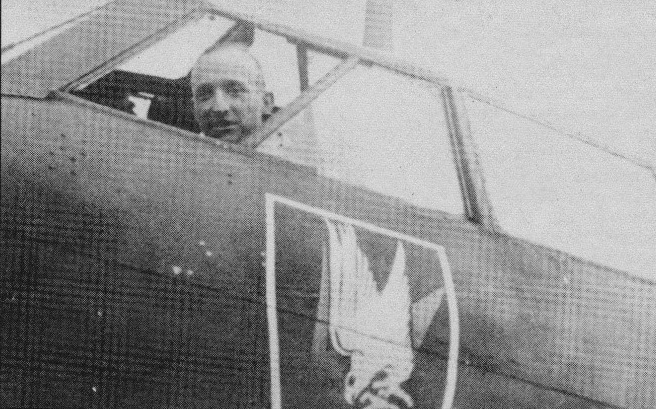
Hauptmann Becker in his Do 17Z-6
In all, 101 Do 215Bs were built before production ended in January 1941. By this time mainstream development of the Do 17/215 bomber concept was well under way in the more advanced form of the Dornier Do 217, the first examples of which had entered service towards the end of the previous year. After 1942, virtually no Do 215s remained in service with first line units, those which survived being reallocated mostly to test and development work. The Do 17, however, following its replacement by the Do 217 in 1942, found a new career as a glider tug and continued in the role to the end of the war.
Do-17 Engine: 2 x BMW Bramo 323P, 770kW Max take-off weight: 8890 kg / 19599 lb Empty weight: 5230 kg / 11530 lb Wingspan: 18.0 m / 59 ft 1 in Length: 15.8 m / 51 ft 10 in Height: 4.6 m / 15 ft 1 in Wing area: 55.0 sq.m / 592.01 sq ft Max. Speed: 410 km/h / 255 mph Cruise speed: 376 km/h / 234 mph Ceiling: 9000 m / 29550 ft Range w/max.fuel: 2000 km / 1243 miles Armament: 4 x 7.9mm machine-guns, 1000kg of bombs Crew: 4
Do.17E Engines: 2 x BMW VI, 750 hp.
Do 17E-1 Span: 18 m (59 ft 1 in) Length: 16.25 m (53 ft 3.75 in) Gross weight: 7040 kg (15,520 lb) Maximum speed: 355 km/h (220 mph)
Do 17Z Engines: 2 x Bramo Fafnir, 1000 hp Top speed: 255 mph Cruise: 216 mph Range: 750-1000 mi Wingspan: 59 ft 0 in Length: 53 ft 0 in
Do 17M-1 Span: 18 m (59 ft 1 in) Length: 16.10 m (52 ft 9.75 in) Gross weight 8000 kg (17,637 lb) Maximum speed: 410 km/h (255 mph)
Do 17Z 2 Span: 18 m (59 ft 1 in) Length: 15.79 m (51 ft 9.75 in) Gross weight: 8590 kg (18,938 lb) Maximum speed: 360 km/h (224 mph) Armament: 2 x 7.92mm MG 15 mg
Do.215 Engines 2 x 1,075 hp Daimler Benz DB 601 A. Length: 51.75 ft (15.75 m). Wing span: 59.1 ft (18m). Weight empty: 12,730 lb (5,770 kg). Max bomb load: 2,200 lb (1,000 kg) Max speed: 300 mph (480 kph). Ceiling: 29,000 ft. (8,800m) fully loaded. Range: 1,860 miles (3,000 km). Range: 900 sm with 2200 lb bombs. Crew: 4. Armament: 4 x mg.
Do 215A-1 Engines: 2 x 1,075 hp Daimler Benz DB 601A. Max speed: 289 mph (465 kph) with a 2,200 lb (1000 kg) bomb load. Max cruise: 257 mph (413.5 kph). Normal range: 965 mls (1553 km). Service ceiling: 31,170 ft (9500 m).
Do 215B-1 Engines: 2 x 1,075 hp Daimler Benz DB 601Aa. Max speed: 239 mph (385 kph) at sea level, 289 mph (465 kph) at 13,123 ft (4 000 m). Tactical radius with max bomb load: 236 mls (380 km). Max ferry range: 1,522 mls (22450 km). Wing span: 59 ft 0in (18.00 m). Length: 52 ft 0 in (15.80 m) Height: 15 ft 1 in (4.60 m). Wing area, 592 sq.ft (55.0 sq.m). Crew: 4. Armament: four 7.9 mm MG 15 mg. MTOW: 19,400 lb (8 800 kg)
Do 215B-3
Do-215B-4 Engines: 2 V-12 Daimler-Benz DB 601Aa with 1100hp/820kW Max speed: 239 mph (385 kph) at sea level, 289 mph (465 kph) at 13,123 ft (4 000 m). Climbing Rate: 1000m in 2min, 18sec Operational Altitude: 9000m Weight empty: 5775kg MTOW: 19,400 lb (8 800 kg) Wing span: 59 ft 0in (18.00 m). Length: 52 ft 0 in (15.80 m) Height: 15 ft 1 in (4.60 m). Wing area, 592 sq.ft (55.0 sq.m). Tactical radius with max bomb load: 236 mls (380 km). Max ferry range: 1,522 mls (22450 km). Armament: One or two 7,92mm Machine Guns in the Nose, two 7,92mm MG in the front glass, two 7,92mm MG in each of the side windows, one 7,92mm MG on the back of the cockpit, one 7,92mm MG in the belly. Max Bomb load: 1000kg Crew: 4.
Do 215B-5 Engines: 2 x 1,075 hp Daimler Benz DB 601Aa. Wing span: 59 ft 0in (18.00 m). Length: 52 ft 0 in (15.80 m) Height: 15 ft 1 in (4.60 m). Wing area, 592 sq.ft (55.0 sq.m). MTOW: 19,400 lb (8 800 kg).
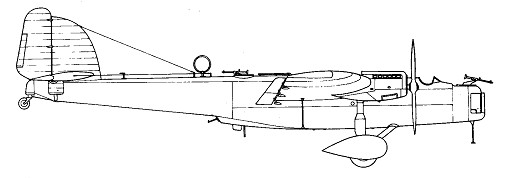
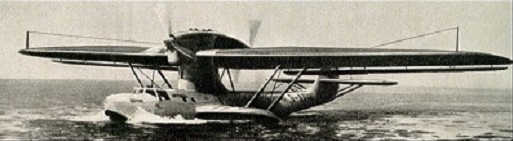
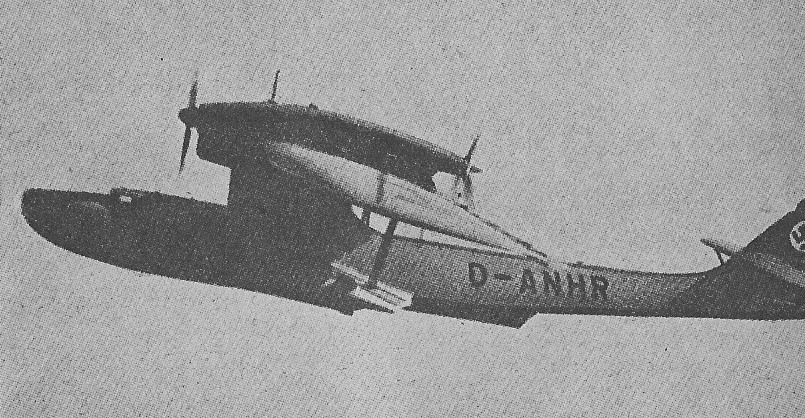
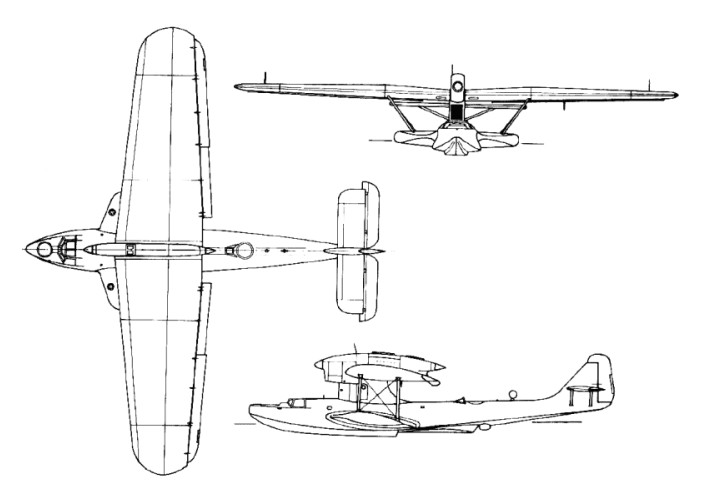
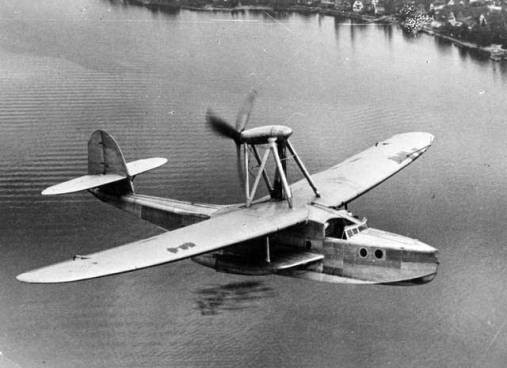
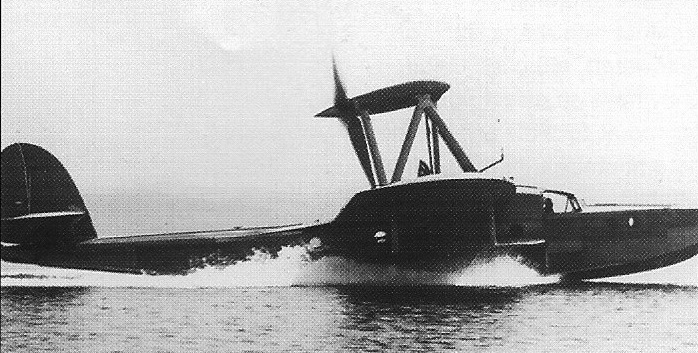
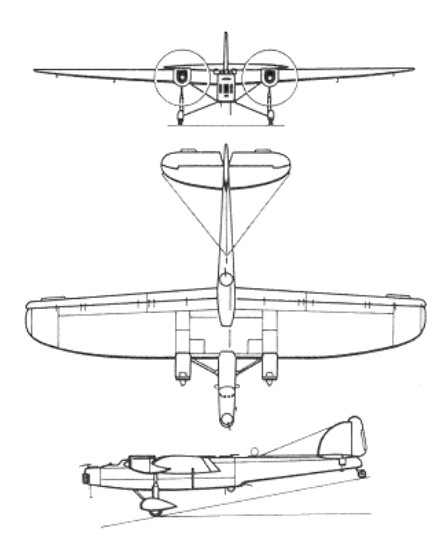
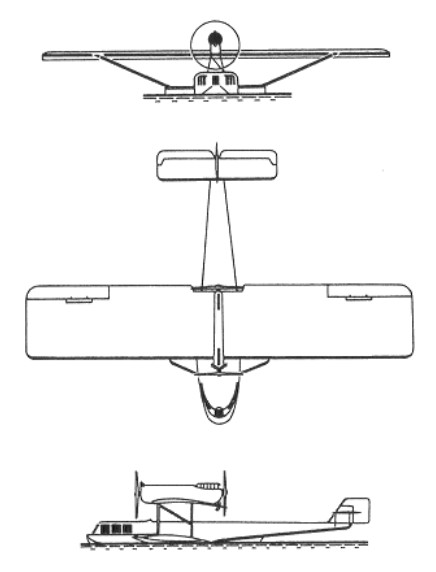
With the Do.14, Dornier used basic the formula of their successful “Wal” series to build a “cleaner” and more modern seaplane in 1936. Apart of its more aerodynamic shape the main characteristic of the Do.14 was its engine installation. Instead of the twin engined tandem layout above its wing, Dornier placed the two engines inside the fuselage. Those engines were situated facing each other and connected to a gearbox that drove the pusher propeller through a vertical shaft. The aircraft flew without any serious problems, yet only one was built, Technology advances had made this engine formula obsolete.
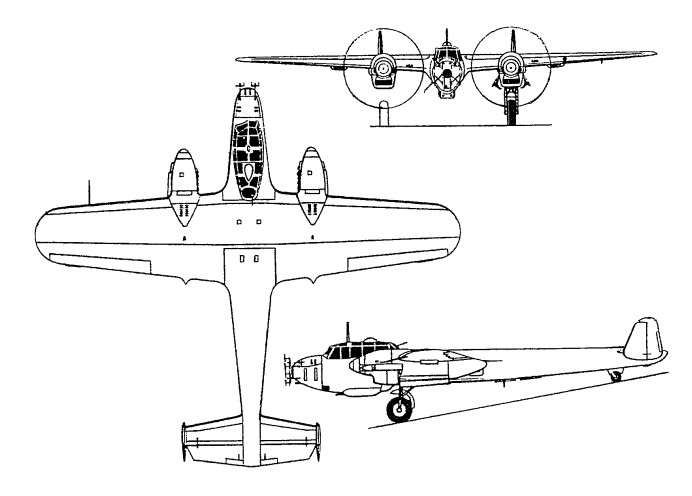
During the late 1920s the German Dornier Metallbauten set up a subsidiary at Altenrhein in Switzerland to build heavy aircraft expressly forbidden under the terms of the Versailles Treaty. The Do P had four engines, the Do Y three, and the Do F was a large twin. All were described as freighters, but their suitability as bombers was obvious. In late 1932 it was boldly decided to put the F into production at the German factory at Friedrichshafen, the designation being changed to Do 11. The Do F, built at Dornier’s Altenrhein factory in Switzerland, and which first flew in May 1932, powered by two 550 hp Siemens built Bristol Jupiter radials and having a retractable main landing gear. The Do 11 had a slim light-alloy fuselage, high-mounted metal wing with fabric covering carrying two 484.4kW Siemens Sh 22B engines (derived from the Bristol Jupiter), and a quaint retractable landing gear whose vertical main legs were laboriously cranked inwards along the inner wing until the large wheels lay flat inside the nacelles. There was obvious provision for a bomb bay and three gun positions. In 1933, well before the official establishment of the Luftwaffe, an official order was placed for a production version of the Do F with two 650 hp Siemens Sh 22B 2 nine-cylinder radials, driving three blade wooden propellers. They were delivered from late 1933 as Do 11Cs to the German State Railways which under the cover of a freight service actually enabled the embryo Luftwaffe to begin training future bomber crews. Although they were so used for freight, gun installations, bomb racks and other military items were delivered separately and secretly. Thus they could be converted quickly into bombers and were openly in service as such in early 1934 with the Befeffiskampfgeschwader (auxiliary bomber wing) of the Luftwaffe. The Do 11C was a twin engined, high wing monoplane, with an all metal fuselage and a glazed observation section in the nose. The crew consisted of a pilot, wireless operator and two gunners, the latter sharing the three single 7.9 mm (0.311 in) MG 15 machine-guns, one each in dorsal and ventral positions and one on a ring mounting forward of the front cockpit. The Do 11C was a contemporary of the Ju 52/3m in the initial formation of Luftwaffe bomber squadrons. It had been planned to deliver 372 Do 11 in 1934 but delays, plus grossly unpleasant handling and structural qualities, led to the development of the Do 11D with modified, shorter span wings, and the Do 11Cs in service were also converted to this standard. This was further developed into the Do 13, by fitting non retractable landing gear and doing away with the glazed nose and the small auxiliary horizontal stabilizers fitted under the Do 11’s tailplane. At least 77 Do 11D were delivered, some later being passed on to another clandestine air force, that of Bulgaria.
The Do 13 was first flown on February 13, 1933, with the same powerplant as its predecessor. Substitution of Junkers type ‘double wing’ trailing edge flaps, similar to those of the Ju 52/3m, gave it improved landing characteristics, and when the Sh 22 engines were replaced by a pair of 750 hp 12¬cylinder liquid cooled BMW VIUs, driving four blade propellers, the bomber was redesignated Do 13C. The Do 13 with fixed (often spatted) landing gear was wholly unacceptable, but in September 1934 testing began of a completely redesigned machine called Do 13e with stronger airframe, Junkers double-wing flaps and ailerons and many other changes. To erase the reputation of its forbear this was redesignated Do 23 and in March 1935 production restarted of Do 23F bombers.
No attempt was made to disguise the function of the bomber: the fuselage having a glazed nose for visual aiming of the 1,000kg bomb load housed in vertical cells in the fuselage, and nose, mid-upper and rear ventral positions each being provided with a 7.92mm MG 15 machine-gun. After building a small number the Dornier plant switched to the Do 23G with the BMW VIU engine cooled by ethylene-glycol. By late 1935 more than 200 had been delivered and these equipped the first five named Fliegergruppen – although about two-thirds of their strength comprised the distinctly preferable Ju 52/3m. Although it played a major part in the formation of the Luftwaffe and continued to the end of World War II to serve in training, trials and research roles, the Dornier Do 23 was not much better than its disappointing predecessors.
Do 11D Span: 26.30 m (86 ft 3.5 in) Length 18.80 m (61 ft 8.25 in) Gross weight 8200 kg (18078 lb) Maximum speed: 260 km/h (161 mph).
Do-13 Engine: 2 x BMW VIU, 540kW Take-off weight: 8750-9200 kg / 19291 – 20283 lb Empty weight: 3150 kg / 6945 lb Wingspan: 25.6 m / 83 ft 12 in Length: 18.8 m / 61 ft 8 in Height: 5.4 m / 17 ft 9 in Wing area: 108.0 sq.m / 1162.50 sq ft Max. Speed: 260 km/h / 162 mph Cruise speed: 210 km/h / 130 mph Ceiling: 4000 m / 13100 ft Range w/max.fuel: 1200 km / 746 miles Armament: 3 machine-guns, 1000kg of bombs Crew: 4
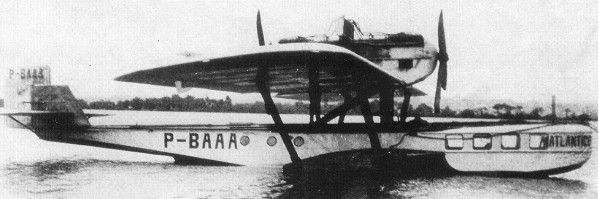
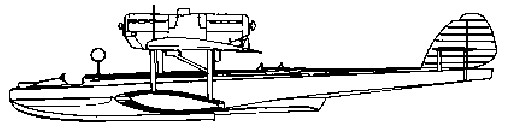
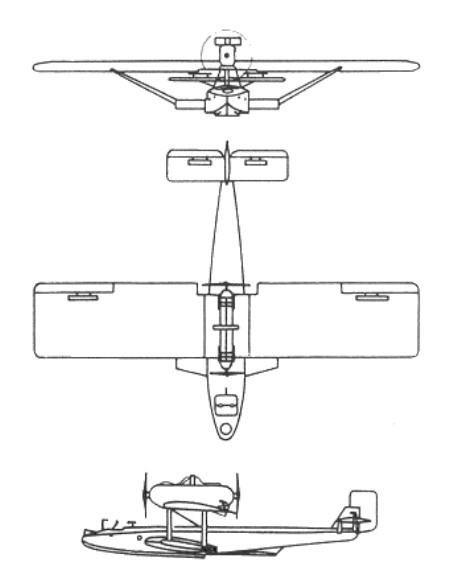
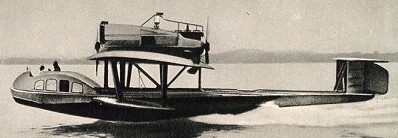
The Wal all-metal flying-boat was a direct development of the Gs I of 1919 and the uncompleted Gs II. The Wal had a two-step hull, strut-braced untapered parasol wing, sponsons, single fin and rudder, and two engines in tandem above the centre section. The prototype flew on 6 November 1922. Because of the Allied ban on German construction of this class of aeroplane, production was undertaken by GMASA in Italy with the first aircraft completed in 1923.
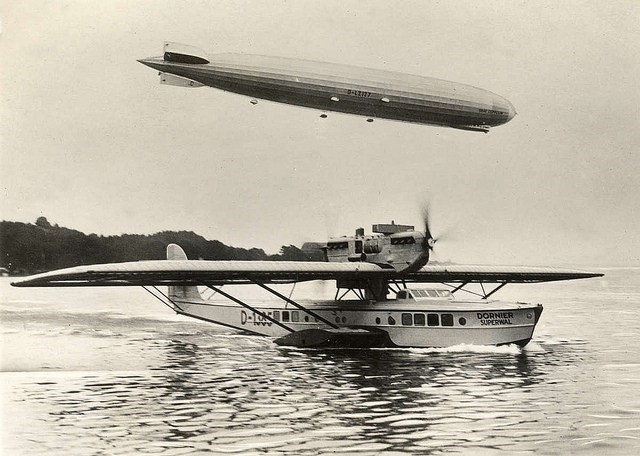
LZ127 Graf Zeppelin & Dornier Wal. 1928
Passenger, mail-carrier and military versions were produced with a wide range of engines of 223.6-559kW. There were four different wing spans and the maximum weight grew from about 4,000kg to 10,000kg. Wals were also built by Piaggio and in Japan, the Netherlands and Spain, and later in Germany. About 300 were built before production ceased in the mid-1930s.
Wals pioneered air services in South America, were widely used in the Mediterranean (with eight-ten seats) and, operating from depot ships, established Luft-Hansa’s South Atlantic mail services.
To carry mail over the Berlin to Rio de Janeiro Atlantic route, Lufthansa converted the 5400 tonne Wesfalen cargo vessel into a floating airbase. The flying boat, usually a Do.J, would land near the ship, and then be hauled by a crane up a ‘dragsail’, a semi-rigid blanket that stretched into the water over the stern to act as a slipway. The Wal was then moved to the bow, from where it was launched into the air by a compressed air catapult. The complete system was first tested in June 1933, 940 miles / 1500 km off the Gambian coast.
Engines: 2 x RR 1928, 265kW Max take-off weight: 4100 kg / 9039 lb Empty weight: 2720 kg / 5997 lb Wingspan: 26.5 m / 86 ft 11 in Length: 16.2 m / 53 ft 2 in Height: 4.7 m / 15 ft 5 in Wing area: 96.0 sq.m / 1033.33 sq ft Max. speed: 180 km/h / 112 mph Cruise speed: 150 km/h / 93 mph Ceiling: 3500 m / 11500 ft Range w/max.fuel: 3600 km / 2237 miles Crew: 2-4 Passengers: 10-12
Wal Engine : 2 x BMW VI, 690 hp Length : 60.039 ft / 18.3 m Height : 17.552 ft / 5.35 m Wingspan : 76.115 ft / 23.2 m Wing area : 1033.344 sq.ft / 96.0 sq.m Max take off weight : 17640.0 lb / 8000.0 kg Weight empty : 10363.5 lb / 4700.0 kg Max. speed : 124 kts / 230 km/h Landing speed : 57 kts / 105 km/h Cruising speed : 108 kts / 200 km/h Initial climb rate : 590.55 ft/min / 3.0 m/s Service ceiling : 9843 ft / 3000 m Wing load : 17.02 lb/sq.ft / 83.0 kg/sq.m Range : 1026 nm / 1900 km Crew : 4 Armament : 2x MG15
The two improved GsIIs under construction at Seemoos fell foul of the Allied Commission and were destroyed in 1919. Dornier commissioned the firm’s Italian subsidiary to continue development and construction of the forbidden type. The GsII, the famous Wal, which flew in 1922, was built under license in Japan, Netherlands, and Spain and would evolve through the 1920s and into the 1930s. Between the first production Wal of 1923 and the military type of 1932, the airplane’s wingspan increased greatly, its engine power more than doubled, and its loaded weight rose from 8820 to 22000 pounds. It was used for civilian mail service and long range reconnaissance, and the commercial and military models differed little.
Engine: 2 x MB IVa, 190kW Take-off weight: 4315 kg / 9513 lb Empty weight: 1200 kg / 2646 lb Wingspan: 21.0 m / 68 ft 11 in Length: 15.3 m / 50 ft 2 in Height: 4.7 m / 15 ft 5 in Wing area: 80.0 sq.m / 861.11 sq ft Max. Speed: 170 km/h / 106 mph Cruise speed: 140 km/h / 87 mph Ceiling: 4250 m / 13950 ft Range w/max.fuel: 600 km / 373 miles Crew: 2 Passengers: 6
After the armistice, Dornier built a six passenger flying boat, the GsI, with the inher¬ently stable broad beam hull and sponsons that characterized his later boats. First flown in July 1919 the GsI went to Switzerland for test flights, it returned to Fredrichshafen on the 10/12/1919. From there it went on a sales tour to the Netherlands on the 3rd March 1920. The craft was a success, but after a demonstration in the Netherlands, the Allies demanded its destruction because the Control Commission had forbidden that category of aircraft. The GsI was scuttled at Kiel-Holtenaeu on the 25 th April 1920 to prevent it falling into the hands of the Allied Inspection Commission.
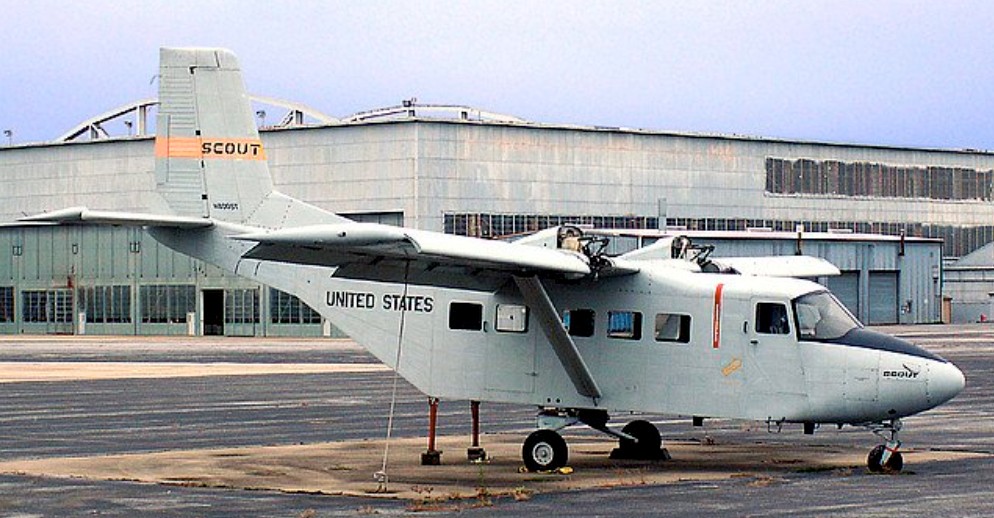
The Skytrader was a conventional high-wing, strut-braced monoplane with fixed tricycle undercarriage designed in Renton, Washington, by laid-off Boeing engineers in 1972. The design was optimised for easy freight handling and featured a fuselage of rectangular cross-section with large loading doors to the side and a loading ramp at the rear. The aircraft’s tail unit was angled upwards from the rear fuselage to facilitate loading operations beneath it, and the main undercarriage was fitted in sponsons on the fuselage sides so as not to intrude into the internal cargo volume. Passenger, freight, executive transport, and water-bomber versions were projected.
Work on the aircraft commenced in 1972 and the prototype (N800ST) flew on 21 April 1975. Marketing the aircraft proved difficult, however, and despite a flurry of initial interest, by 1977, only two firm orders are known to have been placed. Two years later, the bank that had been financing the project collapsed and Dominion went bankrupt. The prototype and the program were purchased the following year by Grant MacCoon, and over the next few years were bought and sold by a number of entities, finally becoming the property of a new firm, Skytrader Corporation, in 1984. Skytrader Corporation was founded in 1984 to develop the Skytrader 800 but with some changes.
Skytrader proposed a revised version of the original design as the Skytrader ST1700 or Conestoga. Originally powered by IO-720s, it was planned to fit Thunder TE495-TC700 liquid-cooled V-8s, but it was then planned with Turbomeca Astazou turboprops. This had a stretched cabin, T-tail, redesigned nose, wings, and landing gear, and was to be turboprop powered. A scaled-down version was to be offered as the ST1400 Commuterliner. Apart from passenger and freight versions, dedicated military versions were also proposed as the Evader, carrying 26 troops, or the smaller Scout. This would have been able to carry 12-15 troops and provision was made for armament in the form of 2.75 in air-to-ground rockets. In 1987, Skytrader announced a deal with Mitsui that would provide $20.5 million to fund FAA certification of the ST1700, and initial production of the Scout.
The Mitsui money never appeared, and the following year, Skytrader made co-production deals with the government of the Philippines and Samsung, but these did not eventuate either. The final chapter in the Skytrader’s development was the entry of the Scout in a US Army competition for an intelligence gathering plane. During the late 1980s, the U.S. Southern Command became interested in acquiring a reconnaissance plane which would do well in the rugged terrain and with the clandestine operations that the command was executing at the time. A contest, named Grizzly Hunter, was opened for interested contractors to enter candidate airplanes for consideration.
The Scout was entered as a joint project between Skytrader and McDonnell Douglas Helicopter, and was selected as the winning design, receiving the designation UV-23. Revisions to the original Scout design included blown wings and new propellers and gearboxes to significantly reduce the aircraft’s IR and noise signatures. The Skytrader 800 prototype was re-engined at this point, and flew with Turbomeca Astazou XIV turboprops. Before any production of the UV-23 could be undertaken, however, Grizzly Hunter was cancelled and replaced by a different requirement which was won by the RC-7. With the Army order falling through, Skytrader declared bankruptcy in April 1989 with intentions on continuing operations and was liquidated in August 1989.
As of 2007, the prototype lay derelict, with engines stripped, at Washington County Regional Airport, in Hagerstown, Maryland.
Skytrader 800 Engines: 2 × Lycoming IO-720-B1A, 400 hp (298 kW) Wingspan: 55 ft 0 in (16.76 m) Wing area: 385 sq.ft (35.77 sq.m) Length: 41 ft 0 in (12.50 m) Height: 18 ft 10¾ in (5.76 m) Empty weight: 4,950 lb (2,245 kg) Gross weight: 8,500 lb (3,855 kg) Maximum speed: 210 mph (338 km/h) Cruise speed: 150 mph (241 km/h) Range: 1,430 miles (2,300 km) Service ceiling: 17,500 ft (5,355 m) Rate of climb: 1,600 ft/min (8.1 m/s) Crew: Two pilots Capacity: 12 passengers

 All Aero