Douglas DB-7 Boston / A-20 Havoc / P-70

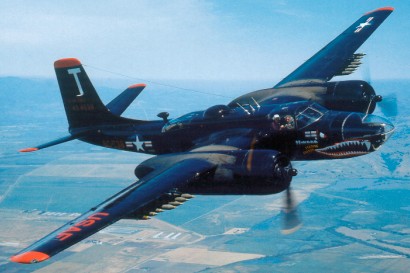
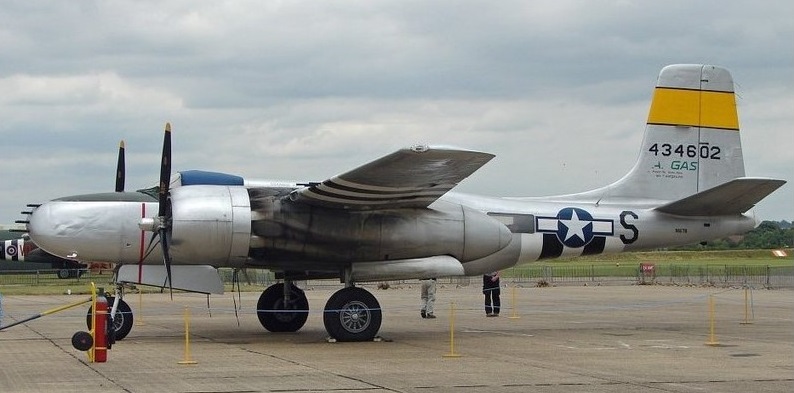
A-20G Havoc

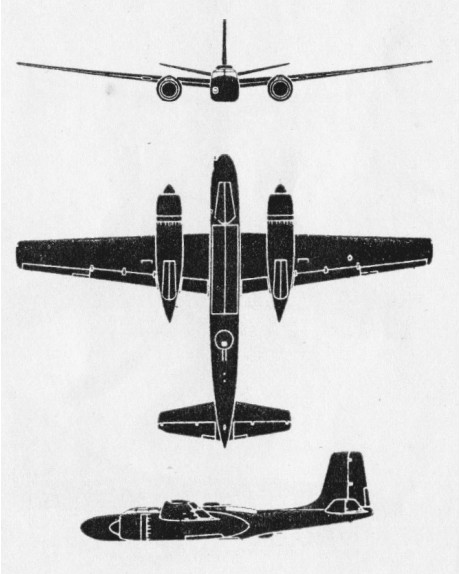
In 1936 Douglas began its Model 7 as a light attack bomber as a private venture, produced to the order of the French government. Begun by Jack Northrop and completed by Ed Heinmann, after considerable refinement this flew on 26 October 1938 as the Model 7B private-venture prototype with 1,100-hp (820-kW) Pratt & Whitney R-1830 radials. The type was maneuverable and fast, and soon elicited a French order for 100 somewhat revised DB-7s.

Douglas DB-7 Boston / A-20 Havoc Article

The first production DB-7 flew on 17 August 1939. When France fell the undelivered aircraft outstanding from French contracts were taken over by the British government and given the name Boston. Only 60 were delivered, and 20 more passed to Great Britain.

Further French orders covered 100 DB-7As and 481 DB-7Bs. Most of these served with the Royal Air Force as Havoc Mk II night fighters and Boston Mk II bombers respectively. Later Bostons were patterned on A-20 aircraft for the US Army Air Forces, and served mainly over North-West Europe.
As delivered to the RAF from the French contracts, the Boston I was powered by two Pratt & Whitney R-1830-S3G-4G engines. It was used mainly for training duties, although some were converted for night fighting and given the British name Havoc. The A-20 was the first of the series built to a US Army specification and was powered by two 1,112kW Wright R-2600-7 Cyclone engines with exhaust-driven turbo-superchargers. It was fitted with American armament and equipment.
As the Boston II for the RAF, the A-20 had R-2600-A5B engines and British armament. Those converted into night fighters became Havocs each with a lengthened nose fitted with 12 forward-firing 7.62mm guns, AI radar and other special equipment depending on the sub-variant – one carried a high-power searchlight in the nose. As an intruder it carried a crew of three and full armament and bombs.
The A-20A for the USAAC/USAAF was powered by two 1,192kW Wright R-2600-11 engines with integral two-speed superchargers. The A-20B was an experimental development of the A-20A, armed with two 12.7mm guns firing forward, one 12.7mm upper flexible gun, one 7.62mm lower flexible gun, and one 7.62mm gun in the tail of each engine nacelle, firing aft. Nacelle guns were remotely controlled by a foot trigger in the rear compartment. The A-20C was powered by two similarly rated R-2600-23 engines. Armament comprised four fixed guns (two on each side of the transparent nose), two on a flexible mounting in the rear cockpit, and one in the lower rear-firing position – all 7.62mm (A20G) or 7.69mm (British Boston Ill). Ejector-type exhaust stacks replaced the collector rings used on the earlier models and range was increased by the addition of a self-sealing fuel tank in the forward and rear bomb-bay compartments. Provision was also made on some aircraft to carry a 900kg naval torpedo.

Douglas A-20 Havocs, 1939

The observer (not only bomb aimer) was completely cut off from the pilot. Because of this the gunner had at the back a duplicate joystick. On high level operations a Vickers K gun was mounted in the rear entrance hatch. A camera was also carried mounted in this hatch.

It may be of interest that the very first operation carried out by the USA against Europe was on July 4, 1942, when six of their Bostons were led by six 226 Squadron Bostons.

A-20 Havoc

The Boston III was powered by R-2600-A5B engines and carried a crew of four as a bomber. The Boston IIIA was similar but built by Boeing. Some Boston III/IIIA were fitted as intruders with four 20mm cannon under the forward fuselage, four 7.69mm guns in the nose, and two 7.69mm guns in the upper flexible position.

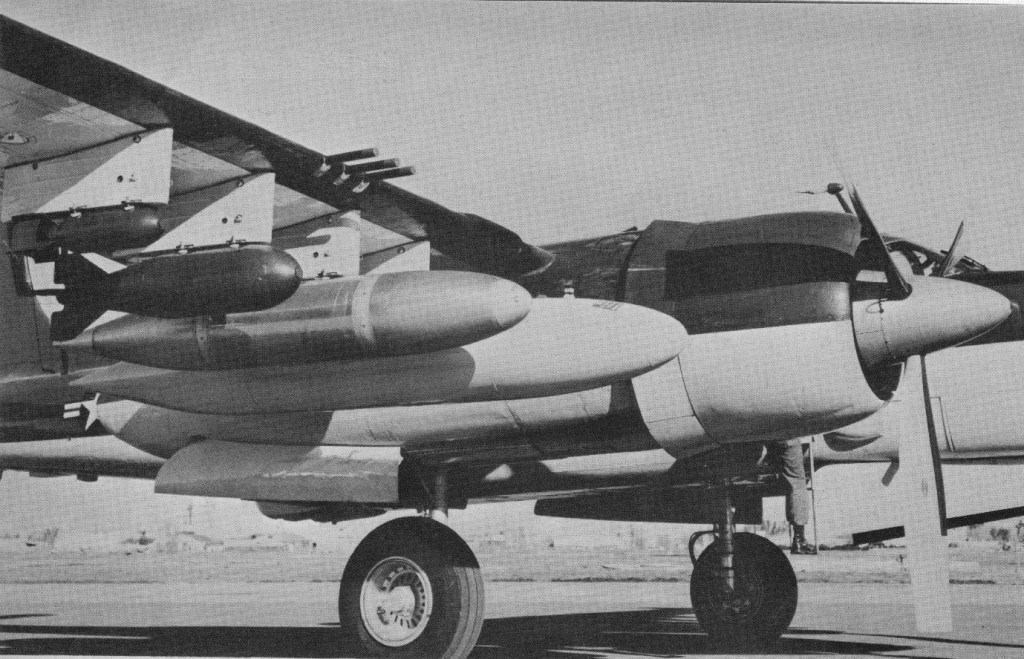
Following the experimental XA-20E, with a 37mm nose cannon and General Electric turrets, the A-20G appeared. This was similar to the A-20C except that the transparent bombardier nose was replaced by a solid nose fitted (in earlier versions) with four 20mm cannon and two 12.7mm machine-guns and ultimately with six 12.7mm guns. A few also had a single 12.7mm upper flexible gun, but this was soon replaced by a power-driven turret armed with two 12.7mm guns. Thicker armour for increased crew protection on ground-attack missions was also added.
The A-20H was powered by two 1,267kW R-2600-29 engines and incorporated minor improvements. The A-20J was identical to the later version of the A-20G except that the attack nose was replaced by a moulded-plastic bombardier’s nose incorporating bombing controls and flight navigation instruments. One in ten A-20G were completed as A-20J to serve as squadron lead planes. Armament consisted of two 12.7mm machine-guns (one in each side of the transparent nose), two in the power-operated dorsal turret and one in the lower rear firing position.
The A-20K was identical to the A-20H except that the attack nose was replaced by a bombardier’s nose, as with the A-20J. The British Boston V was similar. Special US versions of the A-20 appeared as the P-70 night fighter with R-2600-11 engines and armed with four 20mm cannon mounted in a fairing beneath the fuselage bomb bay; the P-70A conversion of the A-20G with R-2600-23 engines and six 12.7mm machine-guns in a solid nose and dorsal and lower guns; the P-70B development of the P-70A for training, with six 12.7mm ‘package’ guns and special radar (converted A-20G/J); the F-3A night photographic-reconnaissance conversion of the A-20J/K; and BD-1/2 target tugs for the US Navy.

Production for the RAF, USAAF, US Navy and Russia ceased on 20 September 1944 after 7,478 had been built (7008 by Douglas and 380 by Boeing). Russia received twice as many as the RAF and only some 800 less than the US Army.

A-20

Gallery

Principal versions
DB-7 (R-1830)
DB-7A (Wright R-2600, many passed to Great Britain as Havoc Mk Is)
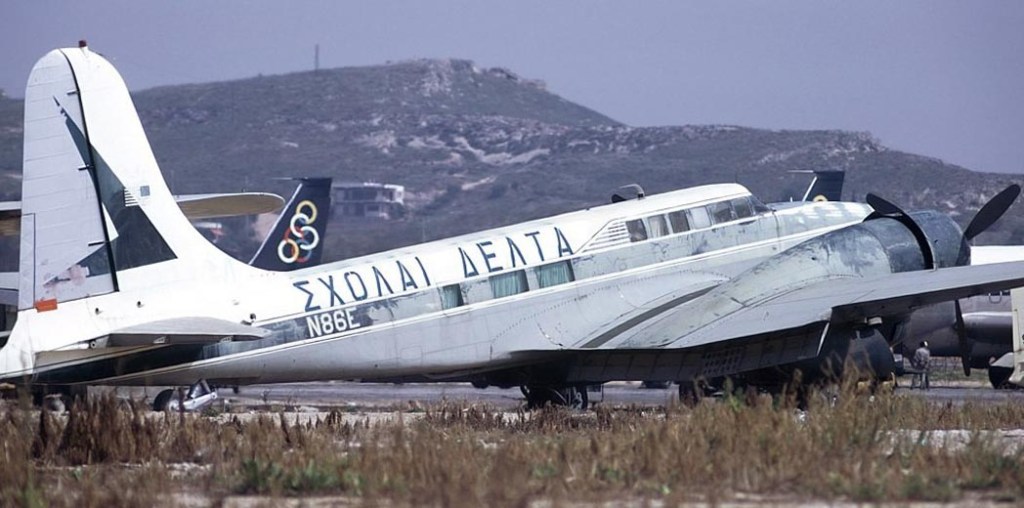
DB-7B (revised systems and larger vertical tail)
Boston Mk I (taken-over DB-7s)
Boston Mk II (taken¬over DB-7Bs converted to Havoc Mk I)
Boston Mk III (British DB-7Bs)
Boston Mk IIIA (200 Lend-Lease A-20Cs with British equip¬ment)
Boston Mk IV (169 Lend-Lease A-20Js with heavier fixed armament)
Boston Mk V (90 Lend-Lease A-20Ks with more power).
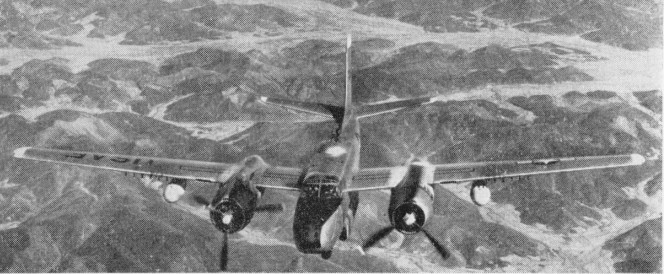
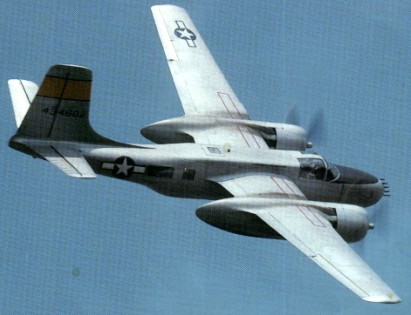
P-70 version of the A-20 became an early night fighter.

DB-7B / Boston Mk III
Engines: two 1,500-hp (1,119-kW) Wright R-2600-A5B Cyclone radial
Maximum speed 311 mph (500 km/h) at sea level
Initial climb rate 2,000 ft (610 m) per minute
Service ceiling 25,170 ft (7,670 m)
Range 525 miles (845 km)
Empty weights: 15,051 lb (6,827 kg)
Maximum take-off 21,580 lb (9,790 kg)
Wingspan 61 ft 4 in (18.69 m)
Length 47 ft 3 in (14.40 m)
Height 18 ft 1 in (5.51 m)
Wing area 464.0 sq ft (43.11 sq.m)
Armament: seven 0.303-in (7.7-mm) machine guns, and up to 2,000 lb (907 kg) of bombs.

A-20G Havoc
Engines: 2 x Wright R-2600-23 Cyclone 14, 1578 hp / 1193kW
Max take-off weight: 12338 kg / 27201 lb
Empty weight: 7250 kg / 15984 lb
Wingspan: 18.69 m / 61 ft 4 in
Length: 14.63 m / 47 ft 12 in
Height: 5.36 m / 17 ft 7 in
Wing area: 43.20 sq.m / 465.00 sq ft
Wing loading: 58.63 lb/sq.ft / 286.00 kg/sq.m
Max. speed: 275 kts / 510 km/h / 317 mph
Cruise speed: 200 kts / 370 km/h / 230 mph
Service ceiling : 25000 ft / 7620 m
Range: 891 nm / 1650 km / 1025 miles
Crew: 4
Armament: 9 x 12.7mm 50 MG (12,7mm) machine-guns, 1800kg of bombs

A-20K

P-70

Douglas D-558 Skystreak / Skyrocket

D-558-1 Skystreak

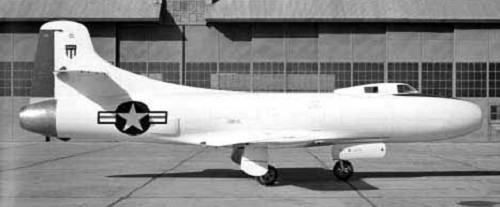
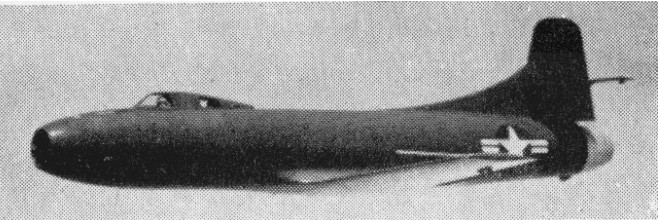
The Douglas company’s initial essay into high-speed research aircraft was the D-558-1 Skystreak which first flew on 14 April 1947 at the beginning of a programme to investigate free-flight air load measurements of the type that were then unobtainable in wing tunnel tests. The D-558-1 was fitted with a pressure-recording system connected to 400 points on the aeroplane’s surface, and powered by a 4,000-lb (1814-kg) Allison J35-A-23 turbojet yielded invaluable research data. The type was later re-engined with the 5000-lb (2 268-kg) thrust J35-A-11, and secured two world air speed records during 1947. The Skystreak set two speed records in 1947. Pilot on the second attempt was Major Marion Carl USMC who averaged 650.92 mph in two runs over a 3 km course.

Douglas D-558 Skystreak Article


The three D-558-I Skystreaks were turbojet-powered aircraft that took off from the ground under their own power.
The D-558-1 Skystreak broke sound barrier in 1948. Of the three built, the first aircraft is on display at the Naval Aviation Museum in Pensacola, Florida. The second D-558-I crashed on3 May 1948, killing NACA pilot Howard C. Lilly. The third Skystreak is owned by the Carolinas Historical Aviation Museum located at the Charlotte International Airport in North Carolina.

Developed from D-558-1 the Skystreak, the D-558-II Skyrocket (first flown 4 February 1948) was built primarily to investigate the properties of swept wings for high-speed flight. The D-558-2 Skyrocket was in essence a swept-wing version of the straight-winged D-558-1 powered by a 3000-lb (1361-kg) thrust Westinghouse J34-WE-22 turbojet supplemented by a 6000-lb (2722-kg) thrust Reaction Motors XLR-8 rocket motor. The type first flew in February 1948 and the rocket engine enabled the Skyrocket to exceed Mach 1 in October 1947 and later, on 20 November 1953, piloted by NACA test pilot A. Scott Crossfield with the turbojet removed and the rocket fuel capacity doubled, it reached Mach 2.01 (1327 mph) at a height of 65,000ft after being released from a Superfortress mother-plane. Three months earlier it had reached 83,235 ft after a similar launch. The D-558-II last flew on 12 December 1956.

D-558-2

The rocket-powered air-launched D-558-II Skyrocket became the first aircraft to exceed Mach 2. The first
D-558-II is on display at the Planes of Fame Museum in Chino, California. The number two Skyrocket, the aircraft used by Scott Crossfield to first break Mach 2, is on display at the National Air and Space Museum in Washington DC. The last D-558-II is displayed on a pedestal at Antelope Valley College, Lancaster, California.

Gallery

D-558-1 Skystreak
Engine: 1 x Westinghouse J34-WE-22 turbojet, 3200 lb thrust.
Length: 35.105 ft / 10.7 m
Wingspan: 25.098 ft / 7.65 m
Wing area: 150.696 sq.ft / 14.0 sq.m
Max take off weight: 9812.3 lb / 4450.0 kg
Top speed: 650.92 mph / 562 kt / 1040 km/h
Wing loading: 65.19 lb/sq.ft / 318.0 kg/sq.m
Crew: 1
Total Flights: 228.
Highest Flight: 83,235 feet

D-558-II Skyrocket
Engine: 1 x Westinghouse J34-WE-22 turbojet, 3200 lb thrust, & 1 x Reaction Motors XLR-8 bi-fuel rocket, 6000 lb thrust.
Wing span: 25 ft (7.62m)
Length: 45 ft 3 in (13.79m)
Height: 3.51 m / 11 ft 6 in
Wing area: 16.26 sq.m / 175.02 sq ft
Crew: 1.
Fastest Flight: 1,291 mph
Total Flights: 161
Highest Flight: 83,235 feet

Douglas A3D / B-66 Destroyer

RB-66B

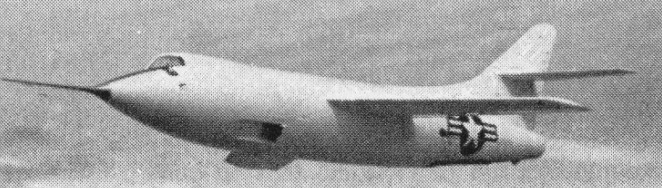
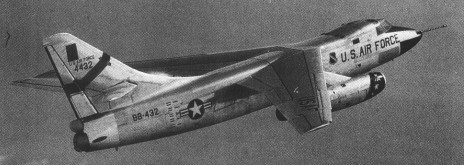
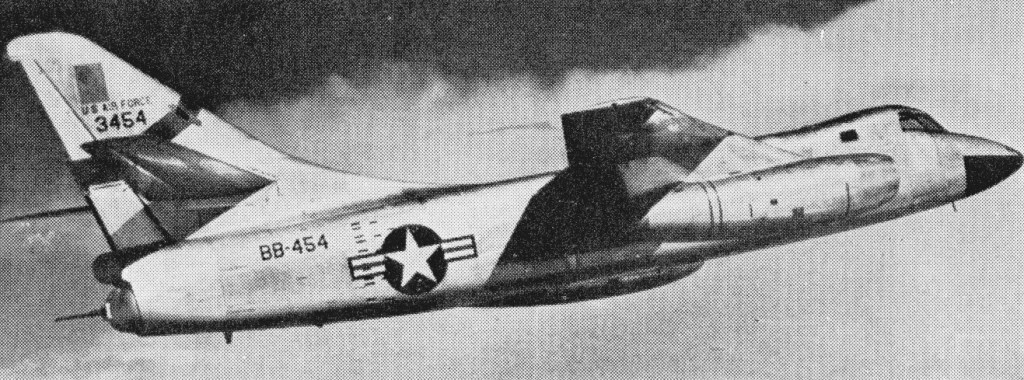
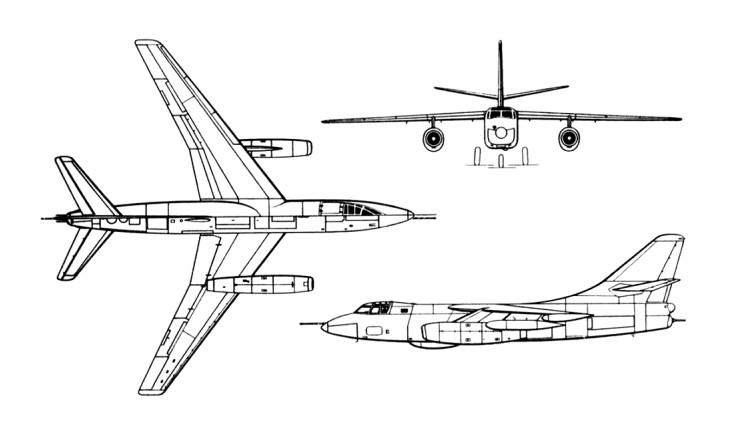
US Air Force involvement in the Korean War highlighted an urgent need for a high performance day/night tactical bomber. To speed the availability of such an aircraft it was planned to procure a land-based version of the A3D Skywarrior then being developed for the US Navy. To this end Douglas was given a contract for five pre-production Douglas RB-66A all-weather/night photo-reconnaissance aircraft, the first of which was flown on 28 June 1954 at the Long Beach plant. Although retaining the basic overall configuration of the A3D Skywarrior, the USAF’s RB-66A Destroyer dispensed with the arrester gear, strengthened landing gear and wing-folding of the naval version; it introduced aerodynamic changes in the wing design, revised accommodation for the three-man crew who were provided with ejection seats, and detail changes in equipment, including a multiple-camera installation and the provision of bombing and navigation radar. Power for this initial version was provided by two 4341kg thrust Allison YJ71-A-9 turbojets.

Douglas A3D / B-66 Article

Successful testing of the RB-66As led to a contract for the first production version, the RB-66B powered by 4627kg thrust Allison J71-A-11s or J71-A-13s. The first of 145 RB-66Bs was flown in March 1955 and deliveries to the USAF began on 1 February 1956.

Deliveries of RB-66 were made to the USAF 19th Tactical Reconnaissance Squadron at RAF Sculthorpe, Norfolk, in 1957 to replace North American RB-45 Tornado.

RB-66

Douglas RB-66s in Europe Article

Production versions included also the B-66B bomber (72 built), which had the same powerplant as the RB-66B and could carry up to 6804kg of bombs in place of reconnaissance equipment.

The new Douglas factory at Torrance (Plant B-6) in May 1954 was in volume production with both the AD-5 and 6 Skyraider and the F4D-1 Skyray, the latter with the J57 turbojet with afterburner. This leaves the El Segundo division almost clear to turn out twin-jet Skywarriors. The U.S.A.F. version of this machine (B-66) is made at Long Beach, and the main factory, at Santa Monica, makes Globemasters and DC-7s.

The RB-66C (36 built), was an electronic reconnaissance and ECM-aircraft with J71-A-11 or J71-A-13 turbojets and a crew of seven including five specialist radar operators, four of them accommodated in what had initially been the bomb bay. The WB-66D (36 built) was a combat-area weather reconnaissance aircraft with J71-A-13 engines and a crew of five (two plus equipment in the bomb bay).

B-66B

ECM versions of the B-66/RB-66 proved of great value during operations in Vietnam, locating, classifying and jamming enemy radars, but withdrawal of US forces from Southeast Asia brought retirement of these aircraft.

Gallery

Douglas WB-66D Destroyer
Variation: Northrop X-21

RB-66A
Reconnaissance-bomber
Engines: 2x Allison J71-A-9 turbojets, 10,000 lb (approx) thrust.
Loaded weight: about 75,000 lb.
Max. speed: over 650 m.p.h.
Ceiling: over 45,000 ft.
Range: over 1,500 miles
Crew: 3
Armament: 2 x 20 mm. tail guns.

RB-66B
Engines: 2 x 4627kg / 10,200 lb thrust Allison J71-A-11s or J71-A-13s
Wingspan: 22.1 m / 72 ft 6 in
Wing area: 72.46 sq.m / 779.95 sq ft
Length: 22.9 m / 75 ft 2 in
Height: 7.19 m / 23 ft 7 in
Max take-off weight: 37648 kg / 83,000 lb
Empty weight: 19720 kg / 43475 lb
Internal fuel: 3738 USG
Max. speed: 1015 km/h / 631 mph at 10,000 ft
Cruise speed: 845 km/h / 525 mph
Ceiling: 11855 m / 38900 ft
Range: 3000 km / 1864 miles
Crew: 3.
Armament: 2 x 20mm M-24A-1 cannon.

RB-66C
Engines: 2 x 4627kg thrust Allison J71-A-11 or J71-A-13 turbojets

Douglas YB-11 / YO-44 / YOA-5

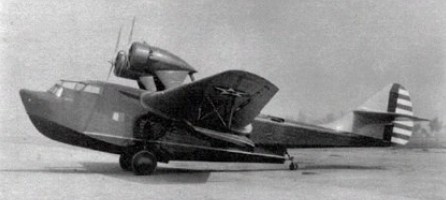
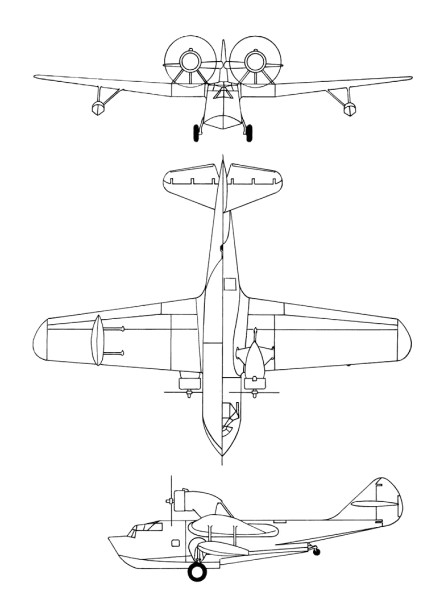
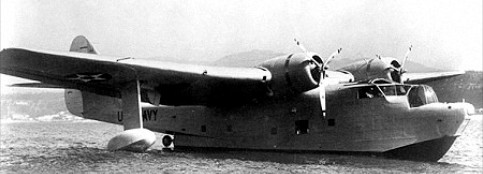
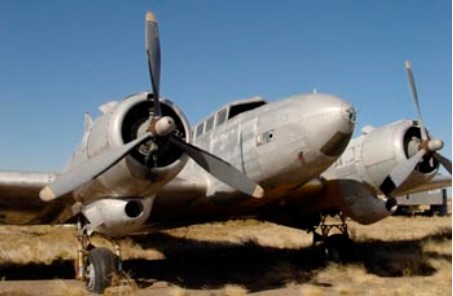
Powered by two Wright R-1820-45 Cyclones rated at 930hp, the YB-11 was to have a crew of five and carry three 7.62mm machine guns. One gun was located in the plexiglas nose turret, and one each in waist positions which were covered by sliding hatches when not in use. The forward part of the wing was of corrugated aluminum with fabric covering from the rear spar back. The fuselage was all metal and the landing gear retracted into depressed wells on the sides.
Before completion, the design was reclassified as an observation type and given the designation YO-44. However, the finished product was delivered with the Air Corps serial number 33-17 as the YOA-5 amphibian. It bore this identification throughout its life.

YOA-5
Max take-off weight: 9080 kg / 20018 lb
Wingspan: 27.36 m / 89 ft 9 in
Length: 21.26 m / 69 ft 9 in
Height: 6.71 m / 22 ft 0 in
Max. speed: 272 km/h / 169 mph

Douglas XB-43

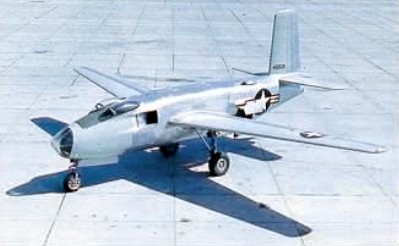
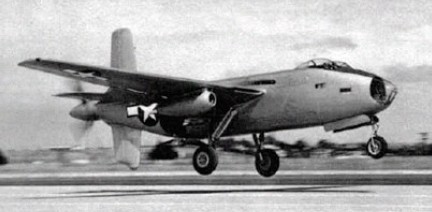
To speed the development of a pure jet bomber, the US Army Air Force contracted Douglas to produce two Douglas XB-43 bomber prototypes using the basic design of the XB-42. The proposed conversion replaced the XB-42’s Allison piston engines with two turbojets. Changes included air inlets, incorporating two extended tail pipes to discharge the jet efflux at the tail, and replacing the cruciform tail unit with a conventional structure which had a fin and rudder of increased height and area by comparison with the XB-42.

The XB-42 static test airframe was modified to produce the first XB-43. With delays resulting from the war’s end and the provision of the turbojet powerplant, eventually, the XB-43 was flown for the first time on 17 May 1946.

By that time, however, and despite the prototype’s good overall performance, The USAAF was already looking to more-capable turbojet-powered bombers and this, the US Army Air Force’s first jet-bomber, was used only for flight-test purposes. The second prototype was completed and delivered in May 1947, being used as an engine testbed before it was retired in late 1953.

XB-43
Engines: 2 x General Electric J35-GI-3 turbojet, 16.7kN
Max take-off weight: 17932 kg / 39533 lb
Empty weight: 9877 kg / 21775 lb
Wingspan: 21.69 m / 71 ft 2 in
Length: 15.6 m / 51 ft 2 in
Height: 7.39 m / 24 ft 3 in
Wing area: 52.3 sq.m / 562.95 sq ft
Max. speed: 829 km/h / 515 mph
Cruise speed: 676 km/h / 420 mph
Ceiling: 11735 m / 38500 ft
Range: 1770 km / 1100 miles
Armament: 2 x 12.7mm rear-firing guns, 2722kg of bombs

Douglas XB-42 Mixmaster

XB-42A

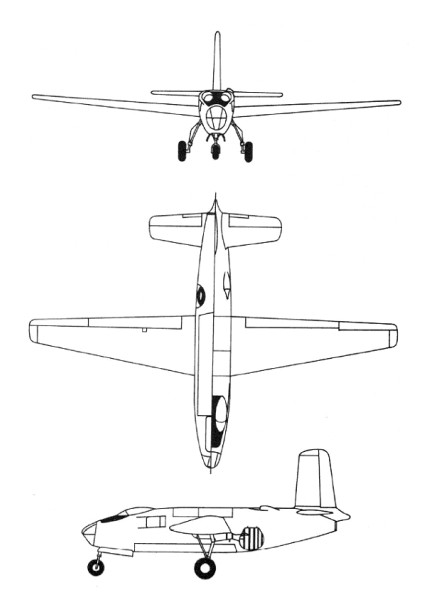
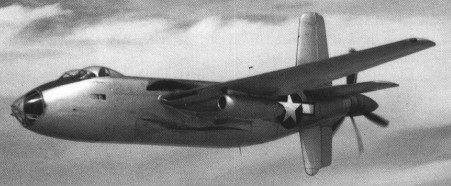
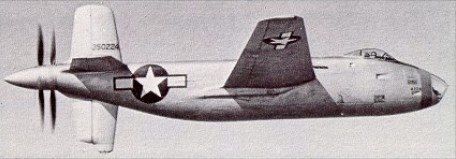
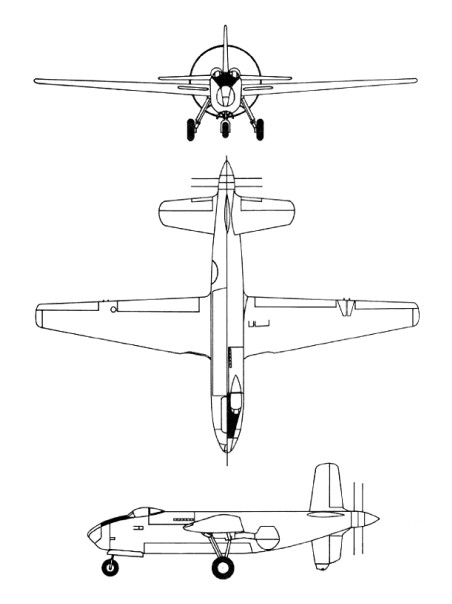
Douglas designed and built two bomber prototypes and one static test airframe under a contract received from the US Army Air Force on 25 June 1943. This was based on two 1800-hp (1342-kw) Allison V-1710-25 inline engines located in tandem in the fuselage to drive a pair of contra-rotating propellers behind the cruciform tail unit. Named Mixmaster by the company, this aircraft had a mid-set cantilever monoplane wing, cruciform tail surfaces and tricycle landing gear, whose main units retracted aft to be housed in the sides of the fuselage.
The fuselage provided accommodation for a crew of three. A bomb-aimer/navigator in the nose, and the pilot and co-pilot in a side-by-side cockpit well forward on the fuselage, each beneath an individual canopy. The fuselage also incorporated an internal bomb bay, as well as housing the twin-engine powerplant in a compartment immediately to the rear of the pilot’s cockpit. The two Allison V-1710 engines were used to drive, via shafting and a reduction gearbox in the tailcone, two three-bladed contra-rotating pusher propellers to the rear of the tail unit. Opening the bomb doors in flight interrupted the airflow to the propeller and caused excessive vibrations. The bomber version had six machine guns. The four on the wing trailing edge were aimed by the copilot, whose seat could turn to face aft. An attack version armed with 16 machine guns or a 75mm cannon and two machine guns, or two 37mm cannon was proposed.

Designated XB-42, the Mixmaster was first flown on 6 May 1944.

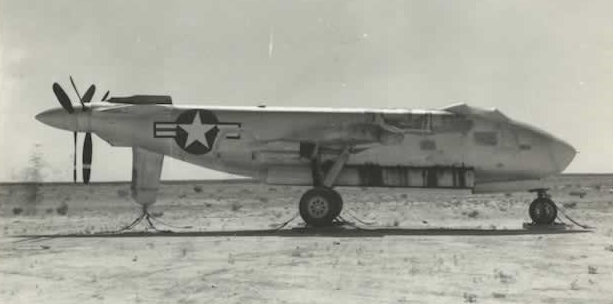
A second prototype was flown for the first time on 1 August 1944, soon afterwards being modified by the addition of a single canopy over the pilot/copilot cockpit. This prototype was destroyed in a crash during December of that year, but by that time the USAAF had decided not to proceed with production of this design, awaiting instead the development of higher-performance turbojet-powered bombers. As an interim step to allow evaluation of turbine power, the first prototype was given a mixed powerplant comprising two 1025kW Allison V-1710-133 piston engines to drive the propellers, plus two 726kg thrust Westinghouse 19XB-2A turbojets mounted in underwing nacelles.

Redesignated XB-42A, this aircraft was used for performance testing over several months before being retired at the end of June 1949. The XB-42A is now in storage for the National Air and Space Museum. Somewhere along the way its wings were removed for transport and haven’t been seen since.

Douglas XB-42 Mixmaster in storage at Pyote AFB

XB-42
Engines: 2 x Allison V-1710-125, 1800-hp (1342-kw)
Max take-off weight: 16193 kg / 35700 lb
Empty weight: 9475 kg / 20889 lb
Wingspan: 21.49 m / 70 ft 6 in
Length: 16.36 m / 53 ft 8 in
Height: 5.74 m / 18 ft 10 in
Wing area: 51.56 sq.m / 554.99 sq ft
Max. speed: 660 km/h / 410 mph
Cruise speed: 502 km/h / 312 mph
Ceiling: 8960 m / 29400 ft
Range: 2897 km / 1800 miles
Armament: 4 x 12.7mm machine-guns, 3629kg of bombs

XB-42A
Engines: 2 x Allison V-1710-25, 1800-hp (1342-kw) & 2 x turbojets.

Douglas A-26 / B-26 Invader / JD / Smith Tempo II

A-26B

Designed to fulfil a USAAF requirement for an attack bomber to replace the B 26 Marauder, the B 25 Mitchell and the A 20 Havoc, the Douglas A 26 Invader first prototype flew on 10 July 1942. Three prototypes had been ordered in differing configurations: the Douglas XA-26 attack bomber with a bomb-aimer’s position; the XA-26A heavily-armed night-fighter; and the XA-26B attack aircraft with a 75mm cannon. After flight testing and careful examination of reports from Europe and the Pacific, the A-26B Invader was ordered into production, and deliveries to operational units began in December 1943. By the end of World War Two, production of the Invader had ceased. A total of 2,446 were built.

Douglas A-26 / B-26 Invader Article

The A-26B Invader had six 12.7mm machine-guns in the nose, remotely controlled dorsal and ventral turrets each with two 12.7mm guns, and up to 10 more 12.7mm guns in underwing and underfuselage packs. Heavily armoured, and able to carry up to 1814kg of bombs, the A-26Bs two, 1491kW Pratt & Whitney R-2800 engines conferred a maximum speed of 375 mph / 571km/h, making the A-26 the fastest US bomber of World War II.

B-26B

Missions with the 9th Air Force in Europe began in November 1944, and at the same time the type became operational in the Pacific. The A-26C with a bomb-aimer’s position and only two guns in the nose entered service in 1945, but saw only limited use before World War II ended. A-26C production totalled 1,091. With little employment ahead of them, so far as anyone could see, one A-26B and one A-26C were converted to XJD-1 configuration, this pair being followed by 150 A-26Cs converted as target tugs for the US Navy with the designation JD-1; some were converted later to launch and control missile test vehicles and drones, under the designation JD-1D. These designations became UB-26J and DB-26J in 1962.

In 1948 the Martin Marauder was finally retired from service and the Invader took over the B 26 designation, it having previously been designated an ‘Attack’ aircraft as the A 26. Two principal sub types were in operation at this time, B 26B and C. The B 26B had a solid nose containing its main armament of six 0.5in Browning machine-guns and the remotely controlled dorsal and ventral turrets, each mounting two similar guns. The B 26C had a transparent nose.

Throughout the 1950s, the B 26 operated with the US Air Forces Europe (USAFE) as a light bomber, target tug and tactical reconnaissance aircraft. The build up of American forces in Europe, which had commenced in 1949 under the leadership of Lt General Curtis E LeMay, proceeded apace in the early 1950s. The B 26B arrived at Laon in France with the 126th Light Bombardment Wing in July 1952; and in December of that year the 7554th Tow Target Flight located to Furstenfeldbruck airbase in Germany. This unit flew the TB 26B variant.

A-26

The RB‑26s did not get off to an auspicious start. Primarily this was due to a lack of equip­ment, spares and appropriate facilities. On arrival in Germany only 15 days’ supply had been brought over from the US. In addition to this, their all‑important night photo missions were held up for some weeks because no one had made the necessary arrangements for a suitable range for the use of flash bomb car­tridges. Eventually arrangements were made with Strategic Air Command to use the ranges at Lakenheath.

Flying for an RB‑26 crew for the first few days of their deployment in Europe consisted of familiarisation flights over their new homeland. Even this became restricted when, in May and early June, a refinery strike in the US severely restricted the use of fuel. For the period of the emergency each pilot was only allowed to for 20 hours.

The RB‑26s were fitted with the comparatively new ‘Hell Roarer’ magnesium illuminator system with split vertical camera installation using the A18 magazine. The ‘Hell Roarer’ was demonstrated to interested parties on November 5 over the Bay of Naples. It turned out to be a veritable firework bonan­za. In the cold light of dawn, on November 6 the demonstrating RB‑26 was seen to have a badly scorched tail.

The RB‑26s suffered particularly from severe icing and were grounded for long periods when the temperatures were very low. In late 1953 the problems with the RB‑26 were such that the USAFE prepared to re‑equip the 1st and the 30th TRS with the ‘state‑of‑the‑art’ Martin RB‑57A Canberra. As early as December, crews were being checked out on their respective wings’ Lockheed T‑33s prior to going to Shaw AFB in the USA, home of the 363rd Tactical Reconnaissance Group, a unit also destined to receive the RB‑57A.

Significantly, while the 1st and 30th TRS were preparing to re‑equip with the RB‑57A and relinquish their RB‑26s, in March 1954 another squadron was activated at Spangdahlem with the 10th TRW which began to equip with the older aircraft. The 42nd TRS was activated on March 18.

The 42nd was divided into two flights ‑W and B. W Flight was for weather reconnaissance, and S had the electronic mission. The first RB­26 was assigned to W Flight on June 18 and it was not until December that the first aircraft was assigned to B Flight. By this time the weather flight had received its full complement of aircraft.

The aircraft of B Flight increased in sophistication throughout their service with the squadron until replaced in 1956 with the Douglas RB‑66C. The RB‑26s of W Flight were replaced by T‑33As in 1955.

Used also for reconnaissance and target towing, and by Air National Guard. U.S. Navy uses same type as JD-1 for target towing.

A special COIN version with very heavy armament and extra power was developed by On Mark Engineering in 1963, a prototype being designated YB-26K and named Counter Invader. Subsequently about 70 B-26s were converted to B-26K standard, 40 later being redesignated A-26A. Some were deployed in Vietnam, and others were supplied to friendly nations under the Military Assistance Program. B-26s were used also for training (TB-26B and TB-26C), transport (CB-26B freighter and VB-26B staff transport), RPV control (DB-26C), night reconnaissance. (FA-26C, from 1948 redesignated RB-26C) and missile guidance research (EB-26C). After the war, many A-26s were converted to executive, survey, photographic and even fire-fighting aircraft.

The YB-26K was the test ship for a series of highly modified B-25Ks ordered by the USAF from On Mark Engineering. The production version was to utilise clip-on gun pods instead of wing mounted guns and eliminate JATO racks seen on the YB-26K. The On Mark received old B-26’s from Davis-Monthan AFB storage or Tactical Air Command. $13,000,000 was allotted to rebuild and extensively modify the bombers. 

YB-26K

Changes between the B-26B and YB-26K included the wingspan increased 2 feet to 72 ft; normal gross weight up 5000 lb to 41,000 lb; engine horsepower up 500hp each to 2500hp; maximum speed up 31kt to 345 kt; stall speed lowered 9kt to 76kt; rate of climb up 255fpm to 2990fpm; service ceiling raised 7000ft to 30,000ft; and combat radius increased 290nm to 500nm.

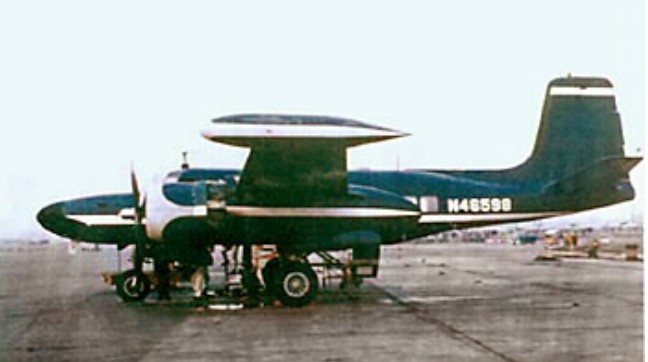
Air America’s night drop bird, 598, aka The Blue Goose or the Blivit. Parked on the Ramp at Udorn in June of 1967. It had an F111 a Terrain Following Radar (TFR) in the nose. This feature allowed low level, jungle top resupply drops at night along the Ho Chi Minh trail between the Mu Gia Pass to Tchepone. 598 had a drop ramp in the aft section and two supply pallets could be carried/dropped. It had a crew of four. Two pilots, a navigator, and a kicker or Air Freight Specialist as they were officially titled.

In total 1,355 were built.

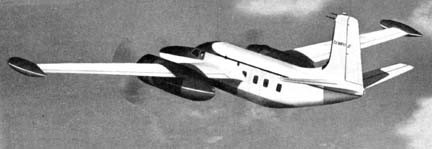
L B Smith Aircraft Corp of Miami FL., produced an executive transport version of surplus Douglas B-26 as the Smith Tempo II in 1959.

Smith Tempo II

Gallery

Variation:
On Mark Marketeer / Marksman

A 26B Invader
Engines: 2 Pratt & Whitney R-2800.
Top speed: 355 mph.

Douglas A 26 C Invader
Engine : 2 x Pratt&Whitney R 2800-70 Double Wasp, 1973 hp
Length : 51.247 ft / 15.62 m
Height: 18.241 ft / 5.56 m
Wingspan : 70.013 ft / 21.34 m
Wing area : 540.030 sq.ft / 50.170 sq.m
Max take off weight : 35006.6 lb / 15876.0 kg
Weight empty : 22854.8 lb / 10365.0 kg
Max. speed : 324 kts / 600 km/h
Cruising speed : 247 kts / 457 km/h
Service ceiling : 22096 ft / 6735 m
Wing load : 64.78 lb/sq.ft / 316.0 kg/sq.m
Range : 1217 nm / 2253 km
Crew : 3
Armament : 6x cal.50 MG (12,7mm), Bombload 1814kg

B-26B
Engines: 2 x Pratt & Whitney R-2800-27 or -79 Double Wasp, 1491kW
Wingspan: 21.34 m / 70 ft 0 in
Length: 15.24 m / 49 ft 11 in
Height: 5.64 m / 18 ft 6 in
Wing area: 50.17 sq.m / 540.02 sq ft
Max take-off weight: 15876 kg / 35000 lb
Empty weight: 10365 kg / 22851 lb
Fuel capacity: 770-1590 gal
Max speed: 571 km/h / 355 mph at 15,000 ft
Cruise speed: 457 km/h / 284 mph
Service ceiling: 6735 m / 22100 ft
Range max load: 2253 km / 1400 miles
Armament: 10 x 12.7mm machine-guns, 4000 lb / 1814kg of bombs
Crew: 3

B-26B
Engines: 2 x Pratt & Whitney R2800-79. 2,000 h.p.
Wingspan: 70 ft
Length: 50 ft. 8 in.
Loaded weight: 35,000 lb.
Max. speed: 359 m.p.h.
Ceiling: over 28,000 ft.
Max. range: 1,900 Miles.
Armament: 10 x 0.50 in. machine-guns, 6,000 lb. bombs, 14 x 5 in. rockets.
Crew: 3

RB-26 Invader

Smith Aircraft Corp Tempo II
Engines: 2 x P&W R-2800-C, 2100hp
Wingspan: 73’6″
Length: 60’4″
Max speed: 365 mph
Cruise: 350 mph
Stall: 102 mph
Seats: 12

B-26B

Douglas B-23 / C-67 Dragon

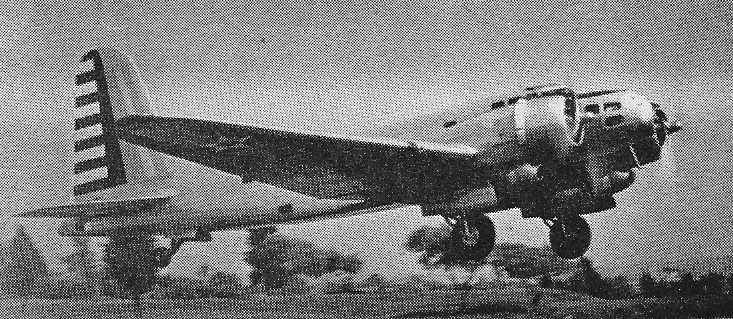
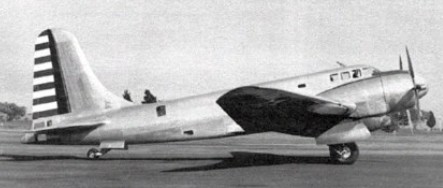
In an attempt to rectify the shortcomings of their DB-1 design, Douglas developed in 1938 an improved version and the proposal seemed sufficiently attractive for the US Army to award a contract for 38 of these aircraft under the designation B-23 and with the name Dragon.

Landing gear was retractable tailwheel type, but the engine nacelles had been extended so that when the main units were lowered in flight they were faired by the nacelle extensions and created far less drag.

The main difference was the switch to much more powerful engines (the most powerful then available), the 1450 hp Wright R 2600 1 Cy¬clone 14. The army adopted the proposal as the B 22, but soon switched to a further improvement designated B 23. The B 23 Dragon included the first US Army tail gun position, a hand aimed .03 in (12.7¬mm). Nose, dorsal and ventral positions each had one 0.30 in (7.62 mm). The tail wheel is offset to allow the tail gunner to access his position from the fuselage. Maximum bomb¬load was 2177 kg (4800 lb), all internal.

In the Fiscal Year 1939, a batch of 38 B 23 Dragons was funded, following successful trials with the prototype in the summer of 1939.

First flown on 27 July 1939, the B-23s were all delivered to the US Army during that year. Early evaluation had shown that performance and flight characteristics were disappointing. Furthermore, information received from the European theatre during 1940 made it clear that development would be unlikely to result in range, bombload and armament capabilities to compare with the bomber aircraft then in service with the combatant nations, or already beginning to emerge in the USA. As a result these aircraft saw only limited service in a patrol capacity along the US Pacific coastline before being relegated to training duties.

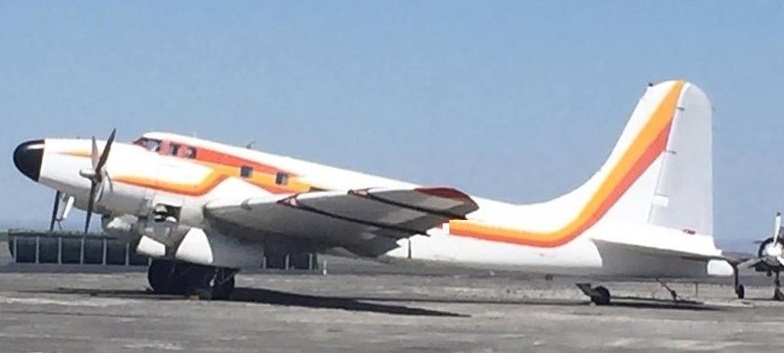
During 1942 about 15 of these aircraft were converted to serve as utility transports under the designation UC-67, and some of the remainder were used for a variety of purposes including engine testbeds, glider towing experiments and weapons evaluation. They were popular executive transports after the war.

Douglas UC-67 Dragon

A total of 38 examples were built, all powered by Wright R-2600 Cyclone engines.

Douglas UC-67 Dragon (C-67)

In 1963 Juan T. Trippe, Pan Am president flew in a B-23 owned by Pan Am, carrying no identification, flown by Pan Am pilots and based at Butler Aviation on LaGuardia. Trippe flew between New York and Washington regularly.

Gallery

B-23
Engines: 2 x Wright R-2600-3 Cyclone 14, 1193kW / 1578 hp
Max take-off weight: 13824 kg / 30477 lb
Empty weight: 8659 kg / 19090 lb
Wingspan: 28.04 m / 92 ft 0 in
Length: 17.78 m / 58 ft 4 in
Height: 5.63 m / 18 ft 6 in
Wing area: 92.25 sq.m / 992.97 sq ft
Max. speed: 454 km/h / 282 mph
Cruise speed: 338 km/h / 210 mph
Ceiling: 9630 m / 31600 ft
Range: 2253 km / 1400 miles
Crew: 4-5
Armament: 1 x 12.7mm (0.50in) + 3 x 7.62mm (0.30in) machine-guns, 2000kg of bombs

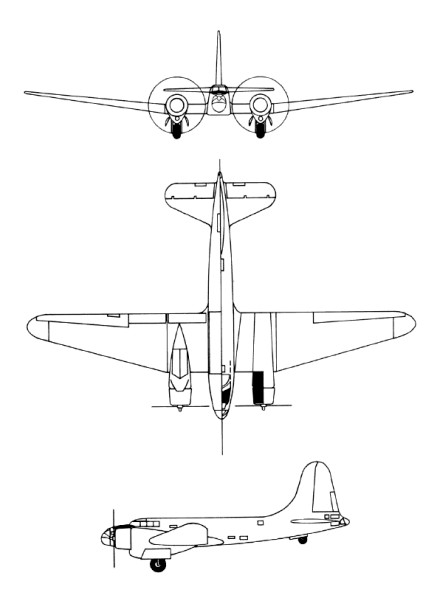
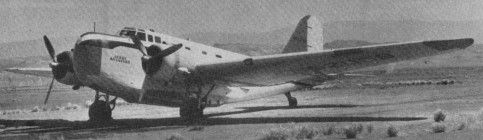
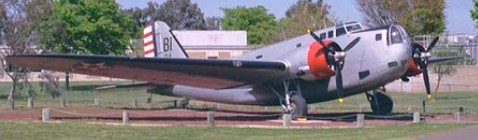
Douglas DB-1 / B-18 Bolo / DB-2 / Digby Mk I / C-58

With a 1934 US Army Air Corps requirement for a bomber with greater capability than their Martin B-10, Douglas drew on engineering experience of the DC-2 commercial transport.
Private-venture prototypes to meet the US Army’s requirements were evaluated at Wright Field, Ohio, in August 1935, these including the Boeing Model 299, Douglas DB-1 and Martin 146. The first was built as the B-17 Flying Fortress, the last was produced as an export variant of the Martin B-10/B-12 series, and the Douglas DB-1 (Douglas Bomber 1) was ordered in January 1936 into immediate production under the designation B-18.
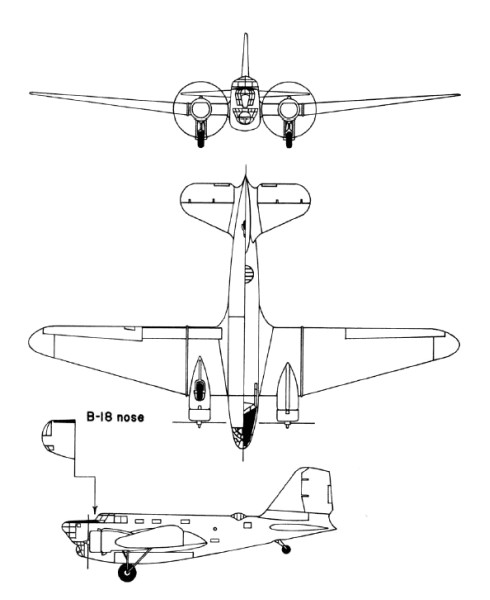
Derived from the commercial DC-2, the DB-1 prototype retained a basically similar wing, tail unit and powerplant. There were two differences in the wing: while retaining the same basic planform as the DC-2, the DB-1 had a 1.37m increase in span and was mounted in a mid-wing instead of low-wing position on an entirely new fuselage. The fuselage was deeper than that of the commercial transport to provide adequate accommodation for a crew of six, and to include nose and dorsal turrets, a bomb-aimer’s position, and an internal bomb bay. There was a third gunner’s position, with a ventral gun discharging via a tunnel in the underfuselage structure. Power was from two 694kW Wright R-1820-45 Cyclone 9 engines.
133 B-18s were covered by the first contract, including the single DB-1 which had served as a prototype. Production aircraft, which had the type name Bold, had equipment changes producing an increase in the normal loaded weight, and more-powerful Wright R-1820-45 radials. The last B-18 to come off the production line differed by having a power-operated nose turret, and carried the company identification DB-2, but this feature did not become standard on subsequent production aircraft.
A second contract covered 217 B-18A aircraft, placed in June 1937 (177) and mid-1938 (40). This version differed by having the bomb-aimer’s position extended forward and over the nose-gunner’s station, and the installation of more-powerful Wright R-1820-53 engines. Most of the USAAC’s bomber squadrons were equipped with B-18s or B-18As in 1940, and the majority of the 33 B-18As which equipped the USAAC’s 5th and 11th Bomb Groups, based on Hawaiian airfields, were destroyed when the Japanese launched their attack on Pearl Harbor.
When in 1942 B-18s were replaced in first-line service by B-17s, 122 B-18As were equipped with search radar and magnetic anomaly detection (MAD) equipment for deployment in the Caribbean on anti-submarine patrols under the designation B-18B. The Royal Canadian Air Force also acquired 20 B-18As which, under the designation Digby Mk I, were employed on maritime patrol. The designation B-18C applied to two other aircraft reconfigured for ASW patrol. Another two aircraft were converted for use in a transport role under the designation C-58, but many others were used similarly without conversion or redesignation.

B-18A
Engines: 2 x Wright R-1820-53 Cyclone 9, 746kW / 986 hp
Max take-off weight: 12552 kg / 27673 lb
Empty weight: 7403 kg / 16321 lb
Wingspan: 27.28 m / 89 ft 6 in
Length: 17.63 m / 57 ft 10 in
Height: 4.62 m / 15 ft 2 in
Wing area: 89.65 sq.m / 964.98 sq ft
Wing loading: 28.70 lb/sq.ft / 140.0 kg/sq.m
Max. speed: 187 kts / 346 km/h / 215 mph
Cruise speed: 145 kts / 269 km/h / 167 mph
Service ceiling: 7285 m / 23900 ft
Range: 1043 nm / 1937 km / 1204 miles
Armament: 3 x 7.62mm (0.30in) machine-guns, 2948kg of bombs
Crew: 6