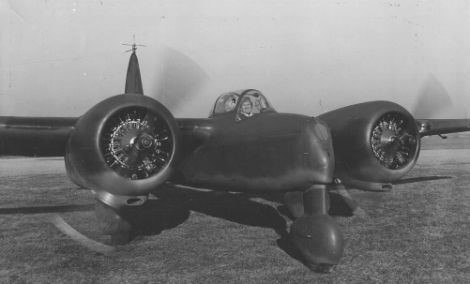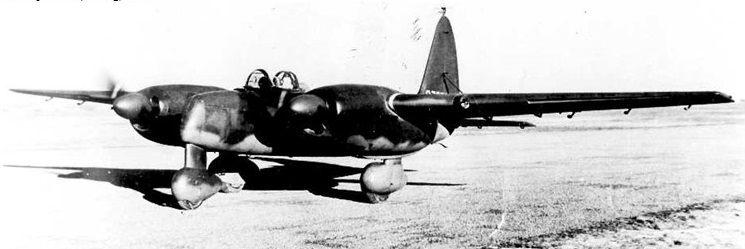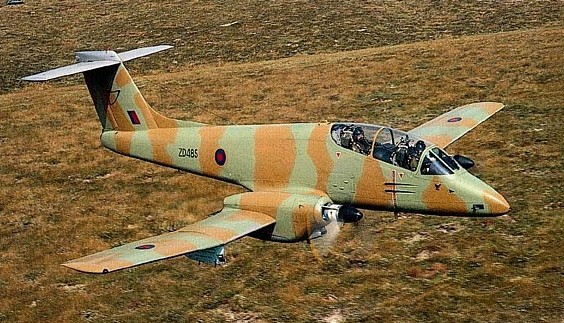
FMA IA.58 Pucara / IA.66 / AX-2 Delfin

In the mid 1960s the Argentine government issued a requirement to Fabrica Militar de Aviones (FMA), for a new combat aircraft suitable for the COIN, CAS and recce roles.
Development of the FMA IA 58 Pucara ground-attack aircraft began in August 1966 and led to the flight of an unpowered aerodynamic test vehicle on 26 December 1967. The first powered prototype, by then known as the AX-2 Delfin, and with two 674kW Garrett TPE3311/U-303 turboprop engines installed, was flown for the first time on 20 August 1969. Subsequent prototypes were powered by Turbo-meca Astazou XVIG engines and fitted to all production aircraft.

Article

A cantilever low-wing monoplane of all-metal construction, the Pucara has a T-tail, a retractable tricycle landing gear, and accommodation for a pilot and copilot in tandem on Martin-Baker ejection seats beneath a large transparent canopy. It has narrow fuselage and tail section and a tandem seat cockpit with a steep sloping nose. Because of the steep nose the pilot has excellent forward visibility. Although heavily armed the weapons are unguided and visually aimed by the crew. The IA 58 only needs a minimum of ground support to operate, it is able to operate from unprepared rough terrains.
More prototypes were produced and on 8 November 1974 the first of 60 IA 58A production aircraft for the Argentinian Air Force made its maiden flight.
The initial production version, the IA 58A, flew for the first time on 8 November 1974 and first deliveries of 108 ordered for the Argentine air force began early in 1976 and continued until 1986. Six were also ordered for the air force of Uruguay.
Forty improved IA 58B Pucara Bravos with advanced avionics and more powerful armament (30mm instead of 20mm cannon) were ordered for the Argentine air force in 1980 but were completed as IA 58As following the Falklands campaign.
A single IA 66, a Pucara with more-powerful 746kW Garrett TPE331 engines, began its flight test programme in 1980 but did not proceed any further.
Pucara production ended with a batch of 40 IA 58As built from 1986 onwards but no further sales were subsequently announced and they are believed to be in store as ‘white tails’.
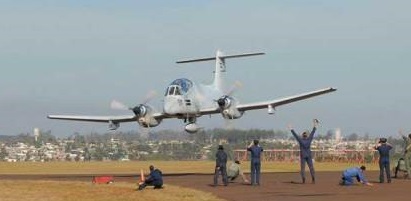
Argentine IA58 Pucara

About 3 aircraft were captured by the United Kingdom during the Falkland War, they are now preserved by the RAF.
First flown on December 30, 1985, the single-seat IA.58C is a developed version of the earlier IA.58A, in which the forward cockpit is replaced by a new nose section housing a 30mm Defa cannon with 270 rounds, in addition to the usual armament of two 20mm cannon and four 7.62mm machine-guns. The Astazou engines of the IA.58A are retained, but feature self-starters and modified exhausts to reduce their infrared signature. The IA.58C incorporates a complete avionics upgrade, including an Omega/VLF navigation system, Hud, IFF, and radar warning receiver, together with a Saab RGS-2 lead-computing sight for air-to-air or air-to-ground use.
The IA 58A is also operated by Colombia, Sri Lanka and Uruguay but only in small numbers. In December 1989, Argentina delivered three Pucaras to Colombia on loan for use against drug manufacturers and smugglers.

IA.58A
Engines: 2 x Turbomeca Astazou XVIG, 760kW / 988 shp
Max take-off weight: 6800 kg / 14992 lb
Empty weight: 4037 kg / 8900 lb
Wingspan: 14.5 m / 47 ft 7 in
Length: 14.3 m / 46 ft 11 in
Height: 5.4 m / 17 ft 9 in
Wing area: 30.3 sq.m / 326.15 sq ft
Max. speed 3.000m (9,840 ft): Mach 0.48 / 500 km/h / 311 mph
Cruise speed: 500 km/h / 311 mph
Ceiling: 10000 m / 32800 ft
Initial ROC: 1080 m / min.
Range w/max.fuel: 3400 km / 2113 miles
Combat radius hi-lo-hi: 350 km.
T/O run: 300 m.
Ldg run: 200 m.
Fuel internal: 1280 lt.
Air refuel: No.
Warload: 1500 kg.
Armament: two Hispano HS804 20mm cannons with 270 rounds per gun, four FN Browning 7.62mm guns with 900 rounds per gun; up tp 1500 kg (3,307 lb) of free fall load.
Hard points: 3.
Crew: 2

IA 66
Engines: 2 x 1,000-shp Garrett TPE331-11-601W turboprop
Wingspan: 14.5 m / 47 ft 7 in
Length: 14.3 m / 46 ft 11 in
Height: 5.4 m / 17 ft 9 in
Wing area: 30.3 sq.m / 326.15 sq ft
Crew: 2
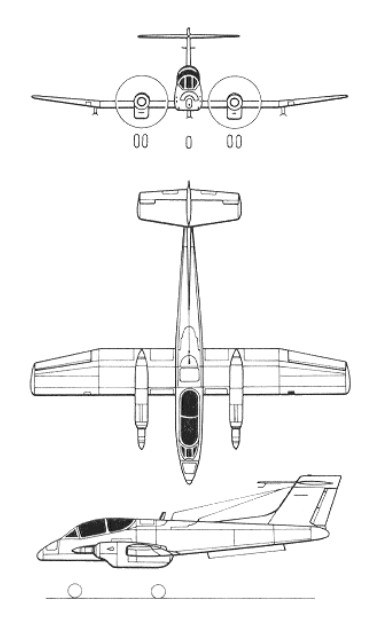
FMA I.A.58 Pucara

DINFIA IA.50 Guarani II

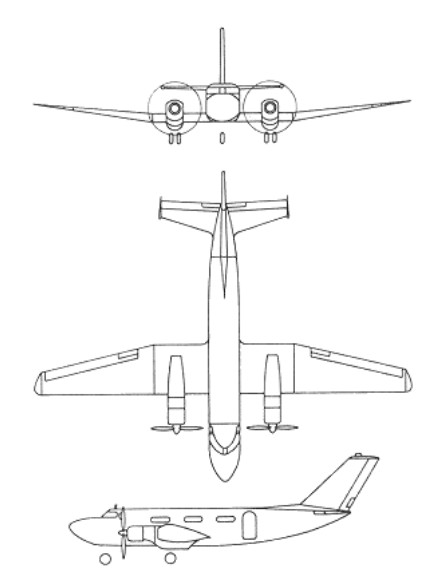
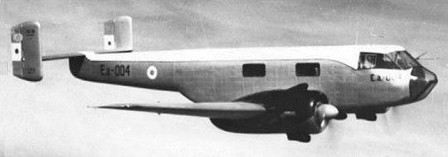
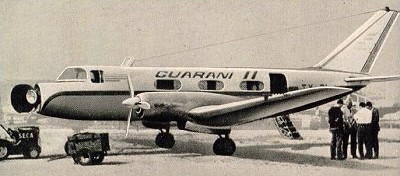
The Guarani I light transport first flew in prototype form on 6 February 1962 and utilised about 20% of the structural components of the IA.35 Huanquero. Power was provided by two 633kW Turbomeca Bastan IIIA turboprop engines. The Guarani II was developed from it and the prototype flew for the first time on 23 April 1963. It was placed in production for the Argentinian Air Force for communications, photographic (with the Military Geographic Institute) and executive transport duties, while the Navy received one as a staff transport. A total of 41 G.IIs were built.

Article

Engines; 2 x Turbomeca Bastan IVA
Wingspan; 19.6 m / 64 ft 4 in
Length; 15.3 m / 50 ft 2 in
Height; 5.6 m / 18 ft 4 in
Wing area; 41.8 sq.m / 449.93 sq ft
Max take-off weight; 6500 kg / 14330 lb
Empty weight; 4000 kg / 8819 lb
Max. speed; 490 km/h / 304 mph
Cruise speed; 485 km/h / 301 mph
Ceiling; 3100 m / 10150 ft
Range w/max.fuel; 2500 km / 1553 miles
Range w/max.payload; 2000 km / 1243 miles
Crew; 1
Passengers; 10-15

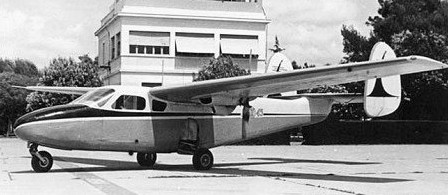
DINFIA I.A.45 Querandi

A 1957 twin-engined transport.

IA.45B
Engines; 2 x 180hp Lycoming O-360
Wingspan; 13.75 m / 45 ft 1 in
Length; 8.92 m / 29 ft 3 in
Height; 2.80 m / 9 ft 2 in
Wing area; 19.30 sq.m / 207.74 sq ft
Take-off weight; 1800 kg / 3968 lb
Empty weight; 1170 kg / 2579 lb
Max. speed; 275 km/h / 171 mph
Cruise speed; 245 km/h / 152 mph
Ceiling; 7500 m / 24600 ft
Rate of climb; 420 m/min / 1400 ft/min
Range; 684 km / 425 miles
Crew; 1-2
Passengers; 5

DINFIA IA.35 Huanquero

The I.A.35 was twin-engined multi-purpose monoplane of 1953.
The Huanquero was designed for a variety of roles and for each role a different version was
built.

Article

The 35IA was an advanced trainer for IFR flight, short range and long range navigation.
Other versions are the 35IU (bomber trainer), 35II (light transport), 35III (photo aircraft).

I.A.35-II
Engines; 2 x 620hp IA 19R El Indio
Wingspan; 19.60 m / 64 ft 4 in
Length; 13.98 m / 46 ft 10 in
Height; 4.90 m / 16 ft 1 in
Wing area; 42.00 sq.m / 452.08 sq ft
Max take-off weight; 5700 kg / 12566 lb
Empty weight; 3500 kg / 7716 lb
Max. speed; 360 km/h / 224 mph
Cruise speed; 320 km/h / 199 mph
Ceiling; 6400 m / 21000 ft
Range; 1570 km / 976 miles
Crew; 3
Passengers; 7
Armament; 2 x 12.7mm machine-guns

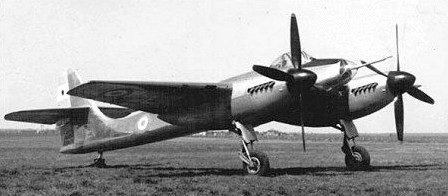
FMA I.A.30 Nancu

  1. One prototype only.

Engine; 2 x 850hp Rolls-Royce Merlin 604
Wingspan; 15.00 m / 49 ft 3 in
Length; 11.52 m / 38 ft 10 in
Height; 5.16 m / 17 ft 11 in
Wing area; 35.32 sq.m / 380.18 sq ft
Max take-off weight; 7600 kg / 16755 lb
Empty weight; 6208 kg / 13686 lb
Max. speed; 740 km/h / 460 mph
Cruise speed; 500 km/h / 311 mph
Ceiling; 8000 m / 26250 ft
Range; 2700 km / 1678 miles
Crew; 1
Armament; 6 x 20mm cannon, 250kg of bombs

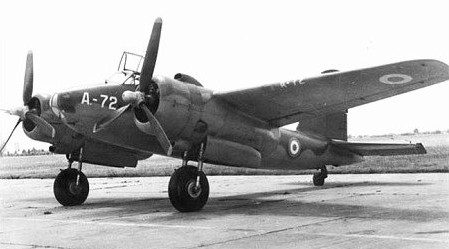
FMA I.Ae.24 Calquin

1946

Engine; 2 x 1050hp Pratt & Whitney R-1830-G Twin Wasp
Wingspan; 16.30 m / 54 ft 6 in
Length; 12.00 m / 39 ft 4 in
Height; 3.62 m / 12 ft 11 in
Wing area; 38.12 sq.m / 410.32 sq ft
Max take-off weight; 7200 kg / 15873 lb
Empty weight; 5340 kg / 11773 lb
Max. speed; 440 km/h / 273 mph
Cruise speed; 410 km/h / 255 mph
Ceiling; 10000 m / 32800 ft
Range; 1200 km / 746 miles
Armament; 4 x 12.7mm machine-guns or 4 x 20mm cannon, 800kg of bombs
Crew; 2

Flettner Helicopter / Gigant

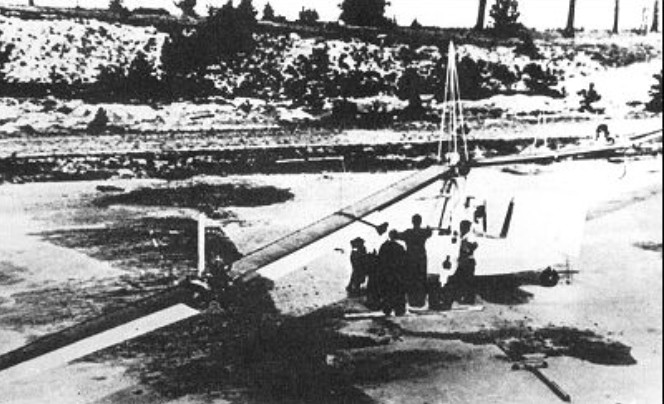
Flettner began work on his first experimental helicopter in 1930. Arranged over a relatively small fuselage was a twin-blade rotor of 30.5 meters diameter; the blades were supported by bracing wires extending from a bracing tower above the rotor axis which rotated with the rotor. A 30hp Anzani engine driving a puller propeller was mounted rather far outboard on each blade. As a result of this direct drive of the rotor blades there was no torque moment to compensate for. Fuel was drawn from a tubular tank mounted fore or aft of the engine.

The prototype, of wood and plywood construction, was built by “Segelflugzeugbau Edmund Schneider” of Grunau in 1934. A gust of wind destroyed this prototype while in tethered flight.

Fleetwings XBQ-2

XBQ-2A

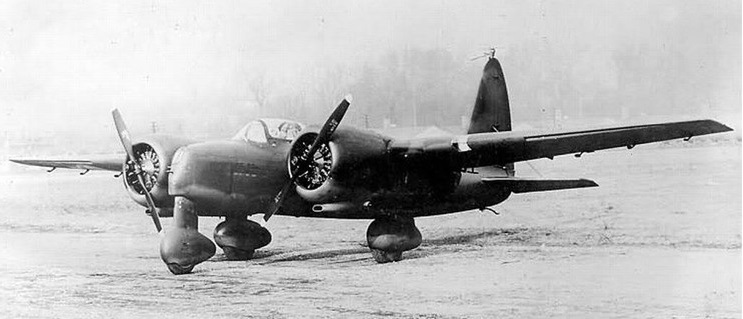
Development of the BQ-2 began on July 10, 1942, under a program for the development of “aerial torpedoes” – unmanned flying bombs – that had been instigated in March of that year. Fleetwings was contracted to build a single XBQ-2 assault drone, powered by two Lycoming XO-435 opposed piston engines, and fitted with a fixed landing gear in tricycle configuration; the landing gear was jettisonable for better aerodynamics.

XBQ-2A

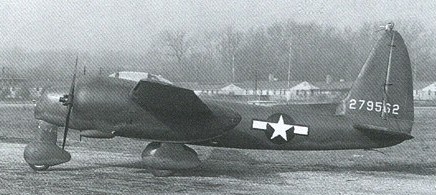
Together with the XBQ-1, the USAAF also ordered a single XBQ-2. This was to be identical to the XBQ-1 except for Lycoming XO-435-3 engines and a jettisonable landing gear. The XBQ-2 was not built, however, being replaced by a single XBQ-2A. The XBQ-2A replaced the XO-435 engines by two Lycoming R-680-13 radial engines.

The BQ-2 was optionally piloted; a single-seat cockpit was installed for ferry and training flights; a fairing would replace the cockpit canopy on operational missions. The BQ-2 was intended to carry a 2,000 pounds (910 kg) warhead over a range of 1,717 miles (2,763 km) at 225 miles per hour (362 km/h); the aircraft would be destroyed in the act of striking the target. A single BQ-1 was to be constructed as well under the same contract.

XBQ-2A

Following trials of the television-based command guidance system using a PQ-12 target drone, the XBQ-2A flew in mid 1943; following flight trials, the design was determined to be too expensive for operational use, and the program was cancelled in December of that year. The aircraft was subsequently redesignated as ZXBQ-2A to denote its obsolescence.

XBQ-2A

Variants: Fleetwings BQ-1

XBQ-2A
Engines: 2 × Lycoming R-680-13, 280 hp (210 kW) each
Wingspan: 48 ft 7 in (14.81 m)
Gross weight: 7,700 lb (3,493 kg)
Crew: 1 (optional)
Warhead: 2,000 pounds (910 kg)

Fleetwings XBQ-1

XBQ-1

In March 1942, the USAAF initiated a program to develop radio-controlled assault drones, frequently called “aerial torpedoes” at that time. These aerial torpedoes were to be unmanned expendable aircraft (either purpose-built or converted from existing types), fitted with a large payload of high-explosive, remote-control equipment and a forward-looking TV camera. The drones were to be directed to the target by radio commands from a control aircraft, where the operator would “fly” the drone watching the video transmitted by the camera.

Development of the BQ-1 began on July 10, 1942. Fleetwings was contracted to build a single XBQ-1 assault drone, powered by two Franklin O-405-7 opposed piston engines, and fitted with a fixed landing gear in tricycle configuration. The aircraft was optionally piloted; a single-seat cockpit was installed for ferry and training flights; a fairing would replace the cockpit canopy on operational missions. The BQ-1 was intended to carry a 2,000 pounds (910 kg) warhead over a range of 1,717 miles (2,763 km) at 225 miles per hour (362 km/h); the aircraft would be destroyed in the act of striking the target. A single BQ-2 was to be constructed as well under the same contract.

Following trials of the television-based command guidance system using a PQ-12 target drone, and earlier trials of the XBQ-2A, the XBQ-1 flew in May 1944; however, the aircraft crashed on its maiden flight. Following the loss of the lone prototype BQ-1, the project was cancelled.

Variants: Fleetwings BQ-2

XBQ-1
Engine: 2 × Franklin O-405-7, 225 hp (168 kW) each
Wingspan: 48 ft 7 in (14.81 m)
Gross weight: 7,700 lb (3,493 kg)
Cruise speed: 225 mph (196 kn; 362 km/h)
Range: 1,717 mi (1,492 nmi; 2,763 km)
Crew: 1 (optional)
Warhead: 2,000 pounds (910 kg)