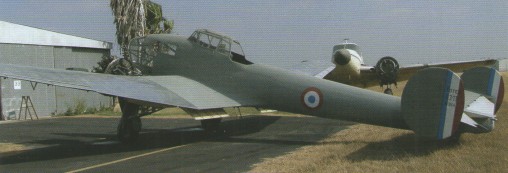
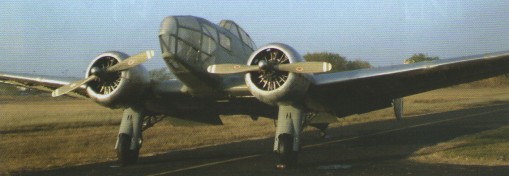
John Garric recreated an example of the long extinct Potez 63-11 twin-engined reconnaissance aircraft. Of 748 examples built, none have survived so John set about filling that glaring gap in history’s surviving French combat aircraft by building a new 63-11 from original drawings.
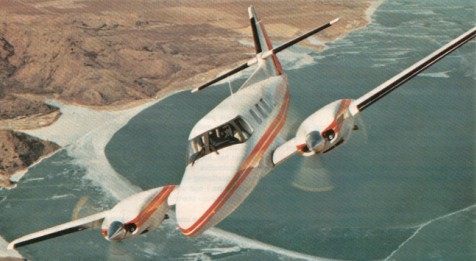
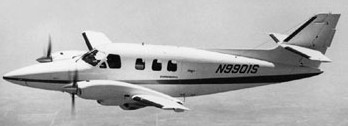
Fuji heavy industries and Rockwell International joined forces to manufacture a seven passenger pressurized twin that will be called in the US the Rockwell Commander 700. But in order to compete directly in the American marketplace, Fuji needed a dealership organization that could both sell and service the airplane. Rockwell’s problem was their Aero Commander basic design of 30 years had run out of growth potential. The resulting agreement: Fuji builds the airframe, wings and tail assembly in Japan, then ships them to Rockwell’s Oklahoma plant, where they are assembled and fitted with engines, landing gear, interiors and other American-made components, which make up approximately 80 percent of the complete airplane. The design is certificated in both countries; Fuji will market the airplane in Australia and Asia, while Rockwell, through its dealer network, will sell the Commander 700 in America and Europe. The first of five flying prototypes of the Fuji FA 300/Rockwell Commander 700 made its maiden flight at Utsonomiya on 13 November 1975 and the first flight in the U.S. was in late February 1976. Three air¬planes were involved in U.S. certification, and two in a companion pro¬gram in Japan. The Rockwell Commander 700 was certified by Japan in 1975. It features two 340 hp turbocharged Lycomings. First deliveries of the 700 were scheduled for February 1977. The 700 is a pressurized piston twin powered by two Lycoming TIO 540s that put out 340 horsepower at 2,500 rpm and have a TBO of 1,800 hours; they’re geared and turbocharged and are much the same engines Piper uses in the Navajo Chieftain. Their cooling is updraft, with air exiting out the upper rear of each nacelle through a single mo¬tor driven cowl flap that opens inward. Each wing carries 624 pounds of fuel in a single tank that supplies gas directly to its respective engine. The remainder of the fuel system is comprised of two shutoff valves, a single cross flow valve for emergency situations and two boost pumps. Pressurization was 5.5 psi, for a 5,000 foot cabin at 20,000 feet. The cabin is large 360 cubic feet including 53 cubic feet for baggage in the pressurized area. On the first flight, a cruising speed of about 200 knots was attained at 10,000 feet. Preliminary figures indicate a top speed of 240 knots at 20,000 feet. Total fuel capacity will be 190 gallons, for an en¬durance of about five hours. The airframes will be fabricated in Japan and shipped to Rockwell’s Bethany, Oklahoma plant. Engines, systems, accessories, avionics and interiors will be installed there as the airplane is assembled. Eighty percent of the total aircraft will be of U.S. manufacture. Development of the airplane started in the mid 1960s, with Rockwell entering the picture in the early 1970s. The specifications were refined, discussed and negotiated, and an agreement as to the final design for the 700 was reached in June 1974. The airfoil section was designed by Fuji and combines with an efficient flap system to produce a relatively low stalling speed in spite of a relatively high wing loading. The 700 has 200 square feet of wing area and the projected gross weight is 6,800 pounds. An extensive wind tunnel program was conducted on the design. Engine cooling drag has been minimized, and extensive use of metal bonding has resulted in smooth surfaces.
Rockwell and Fuji Jet Industries terminated their agreement on the Commander 700 in December 1979.
Aerostar Aircraft Corp acquired the design and production rights to Aero Commander.
Rockwell Commander 700 Engines: Lycoming TIO 540 R2AD, 340 hp at sea level. TBO: 1,800 hrs. Props: three blade, constant speed, 81 in diameter. Length: 38 ft. 2 in. Height: 13 ft. 4 in. Wingspan: 42 ft. 5in. Wing area: 200 sq.ft. Wing loading: 33.8 lb/sq.ft. Power loading: 9.9 lb/hp. Seats: 6. Empty weight: 4,740 lbs. Useful load: 2,010 lbs. Payload with full fuel: 762 lbs. Gross weight: 6,750 lbs. Usable fuel capacity: 208 USG/1,248 lbs. Maximum landing weight: 6,600 lbs. Maximum rate of climb: 1,633 fpm. Single engine rate of climb: 273 fpm. Single engine climb gradient at 101 kts. (Vyse): 256 ft/nm. Service ceiling: 32,000 ft. Certificated ceiling: 25,000 ft. Single engine service ceiling: 12,000 ft. Maximum speed: 221 kts. Max cruise, 75 % power at 24,000 ft: 218 kts. Econ cruise, 65 % power at 16,000 ft: 190 kts. Duration at max cruise: 5.9 hrs. Duration at econ cruise: 6.8 hrs. Stalling speed, clean: 85 kts. Stalling speed, full flaps: 67 kts. Pressurization differential: 5.5 psi. 10,000 ft. cabin at: 26,000 ft. Max SL cabin alt: 12,500 feet.
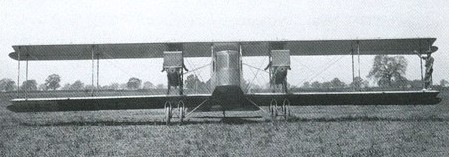
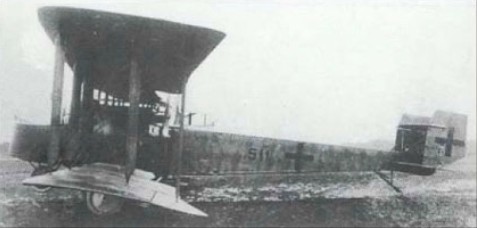
The final version of the Friedrichshafen’s G bombers was the G.IV of 1918, which was basically similar to the G.IIIa but had a slightly shorter wing span, a modified and rounded fuselage nose and D.IVa engines mounted in tractor configuration. The front gunner’s cockpit was dispensed with, leaving the main fuselage snub-¬nosed, and com¬pound tail surfaces, as in the G.IIIa, were employed. One or two examples may have seen limited operational trials, but this is unconfirmed.
Engines: 2 x 260 hp Mercedes D IVa. Span: 22.6 m (74 ft 1.5 in). Length: 12 m (39 ft 4.5 in). Endurance: 5 hrs. Armament: Bombload up to 1496 kg (3300 lb); 1 Parabellum machine gun in rear.
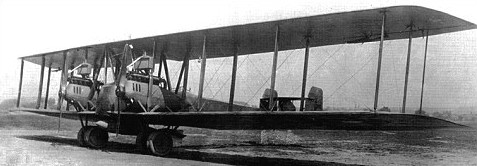
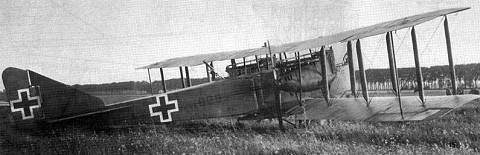
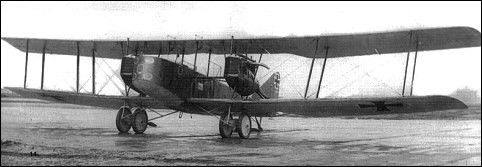
The G.III bomber was a twin 194kW Mercedes D.IVa engined scaled up version of the G.II which saw much operational service from early 1917. Its wings of increased span incorporated three bays outboard of the motors. The undercarriage comprised two pairs of wheels, with a fifth wheel immediately under the nose gunner’s cockpit the latter assisting any heavily loaded takeoff, but mainly preventing a nose over landing on the crude runways of the period. Construction of the G.III was a typical contemporary mixture of wood, plywood and steel tubing, and the three man crew consisted of a pilot and a ‘bombing officer’ in a side by side cockpit, with two cockpits mounting guns in the nose and mid fuselage connected by an internal passageway for the third crew member. Capable of lifting a 1500 kg (3310 lb) bombload, the main weight of bombs was carried externally below the main nacelle, but internal racks, each for five 10 kg (22 1b) bombs, were located either side of the communicating passage aft of the pilot’s cockpit.
G.IIIa
For the final 18 months of the First World War, Friedrichshafen G.IIIs, in company with the better known Gotha G.V bombers, formed the real strength of German heavy bomber units, particularly on the Western Front in France. Used mainly in long¬distance night raids, G.IIIs are known to have attacked such principal targets as Paris, and are believed to have participated in some of the well publicized attacks against Eng-land. During 1917 Friedrichshafen concentrated on the production of the G.III and G.IIIa with many others being built under contract by Daimler and Hansa. An improved variant was the G.IIIa, built under licence by the Daimler works. This differed from the G.III only in minor structural changes to the tail unit and wing tip configuration. It is not known how many G.IIIs and G.IIIas were built in total, but more than 330 were produced by the subcontractors.
Span: 23.7 m (77 ft 9 in). Length: 12.8 m (42 ft). Endurance: 5 hrs. Powerplants: 2 x 260 hp Mercedes D IVa Armament: Bombload up to 1496 kg (3300 lb); 1 Parabellum machine gun in nose; 1 Parabellum machine gun in rear Maximum speed: 135 km/h (84 mph)
The prototype G.I was developed into the more powerful (149kW Benz Bz.IV) G.II in 1916. With slightly shorter wings and a single fin/rudder tail unit, power came from twin 200 hp Benz Bz IV engines mounted between the wings and driving pusher propellers. Successfully passing its official trials, the G.II went into limited production. Its offensive load of just 450kg and range were not adequate for major attacks on British and other strategic targets.
Span: 20.3 m (66 ft 7.25 in). Length: 11.05 m (36 ft 3 in). Endurance: 5 hrs. Engines: 2 x 200 hp Benz Bz IV. Armament: Bombload up to 1496 kg (3300 lb); 1 Parabellum machine gun in nose; 1 Parabellum machine gun in rear.
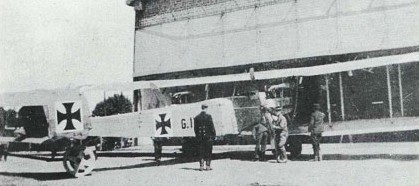
The Friedrichshafen G I of 1915 was powered by twin 150 hp Benz Bz III engines driving pusher propel-lers. The G.I carried a three man crew, and pre-dates the debut of the rival Gotha G II by the best part of a year.
Engines: 2 x 150 hp Benz Bz III. Armament: Bombload up to 1496 kg (3300 lb); 1 Parabellum machine gun in nose.
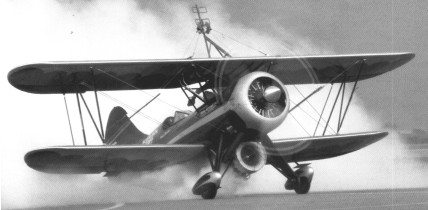
Jimmy Franklin first conceived it, built it, and then flew it. He first debuted the Jet Waco in 1999, and quickly made it one of the air show world’s most popular acts of all time.
The Franklin 1937 UPF-7 Waco bi¬plane that has a conventional radial engine and a 2200-lb-thrust jet unit from a Cessna Citation bolted between the main gear. Warm the Pratt & Whitney R-985 piston engine up well, test the smoke system a few times for good crowd effect, pretend to take off in the normal fashion by pointing the nose into wind up the runway, then give it the gas: full noise but across the runway and straight up. Jimmy Franklin put his Waco into a routine of loops and rolls, with son Kyle Franklin as wing walker, in pure jaw dropping entertainment. With over 4,500 lbs of thrust and 2,000 horsepower, Jimmy performed stunts that no one has ever attempted in this type of aeroplane.
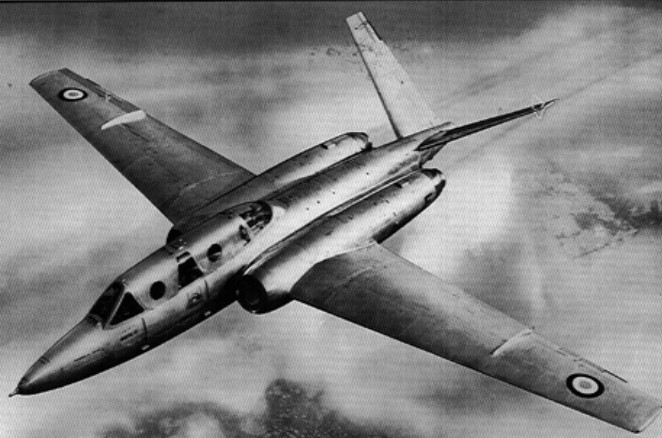
The C.M.171 was a test aircraft for a projected twin Gabizo-powered, swept-wing, butterfly-tailed trainer called the C.M.195. The Gabizo was a 1100 kg thrust turbojet, intented to power the Armée de l’air light/transonic interceptor of 1955. The C.M.170 butterfly tail for the twin engined C.M.195 was to be tested on the twin engined CM.171.
On 11 May 1956, L.Bourriau, with P.Caneil, first flew the CM.171.
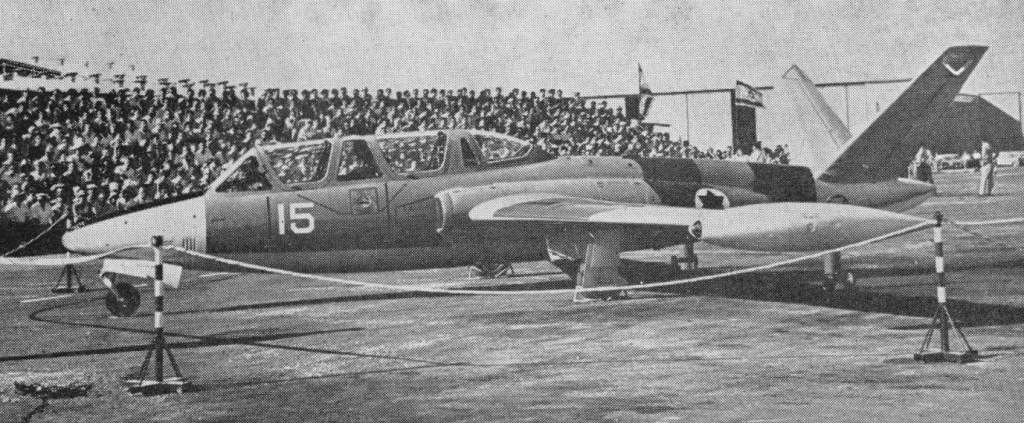
After an absence of more than three months, J.Grangette returned from the United States, where he denstrated CM170 # 15. On February 8, 1957, with J.Grangette P.Caneil, after climb at 38 m/s to 53,000 ft (1500) there was a sudden decompression. By cutting an engine and accepting painful and dangerous vibrations, the descent was made.
Flights continued and engine parameters, including speeds were transmitted by radio to the testing station flight Fuga where Yves Laborde monitored the trials.
In December 1956, after the test flights, the Makalu was given to the CGTM Marignane (General Turbo-Machine) which is a flight test center created by Hispanics Suiza and Turbomeca. The engine test flight program was flown by C.Bouton, pilot, and J.de St. Thibault, flight engineer. On 20 March 1957, the Makalu took off into the hills of l’Estaque. Soon, contact is lost with the crew. The aircraft has crashed on the first foothills that separate the land from the sea killing the crew. Causes of the accident is not known.
Engine: 2 x Turbomeca Gabizo, 1100 kg thrust Mass: 4000 kg
Designed by R. Castallo and P. Maubassin to a specification from the French Air Force for a two-seat, pure jet fighter trainer, Fouga presented a proposal for a tandem two seat trainer to the French Air Ministry, the CM.130R which was powered by two 353 lbst (160kgst) Palas engines. The design was refined and a contract for three of the resulting twin Marbore II powered CM.170R aircraft was placed with Fouga in December 1950. The Morane Saulnier company were working along similar lines at this time, and their drawing boards sired the MS.755 Fleuret. Both companies had schemed aircraft which shared essentially similar configurational layouts.
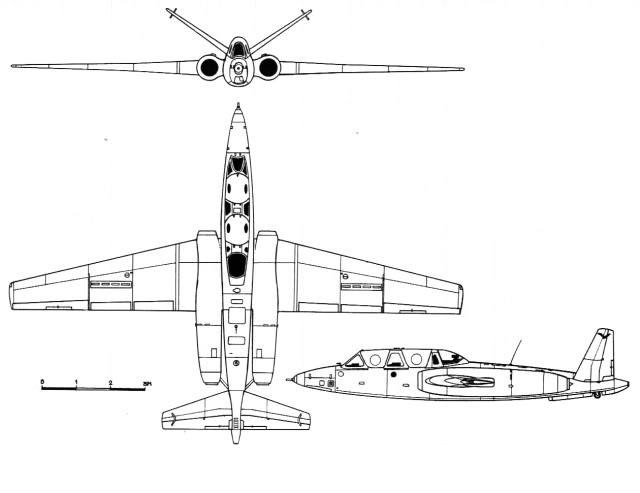
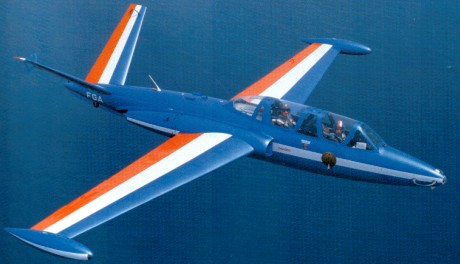
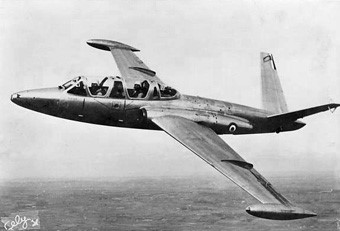
The CM.170 Magister featured tandem seating, a mid mounted wing and two Marbore II turbojets mounted either side of the fuselage in nacelles faired into the wing fuselage joint. The only unusual feature of the CM.170 was a butterfly tail, whereby fin and tailplane are replaced by two surfaces mounted at 45 degrees to the horizontal, the control surfaces of which moved the same way to act as rudders and moved in opposition to act as elevators. The Magister is all-metal. The mid-mounted wings have single-slotted flaps and airbrakes. The butterfly-type tail has surfaces separated by 110 degrees. Fuel is housed in two fuselage tanks of 255-litre and 475-litre capacity, with wingtip tanks each holding 125 litres. The tandem cockpits are pressurised and air-conditioned, with individually regulated oxygen supplies. Ejection seats are not fitted. VHF, blind flying equipment and radio compass are standard in the trainer, while UHF, Tacan and IFF may be fitted to armed Magisters. Armament combinations include two 7.5mm or 7.62mm machine-guns mounted in the nose, with 200 rounds of ammunition per gun. A gyro gunsight is fitted in both cockpits, the rear one having periscopic sighting. Underwing ordnance loads include two Matra Type 181 pods each with eighteen 37mm rockets, two launchers each mounting seven 68mm rockets, four 25kg air-to-ground rockets, eight 88mm rockets, two 50kg bombs, or two Nord AS.11 air-to-surface guided missiles.
The first of three CM.170 prototypes flew on July 23, 1952, at Mont-de-Marsan (piloted by Leon Bourriau), while the MS.755 took to the air for the first time some six months later on January 24, 1953. Two CM.170 prototypes were built; the first with the butterfly tail and second with a conventional tail. Despite the crash of the prototype, the butterfly tail was used for the production series.
After evaluating the merits of both aircraft, the French Air Force expressed a preference for tandem seating, and in 1953 placed an initial order for ten pre production and 95 production CM.170R Magister aircraft. First pre production aircraft (batch of 10) flew on July 7, 1954. First production aircraft flew on February 29, 1956.
The CM.170, MS.755 and MS.760 used only fuselage fuel tanks. The navalized version of the C.M.170M has the addition of a tail hook, the two canopies jettisonable in one piece, the oleos longer and some items of equipment different.
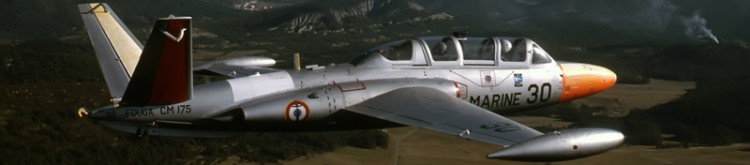
The French Navy, also looking for a training aircraft, turned to Fouga for an aircraft for operations on aircraft carriers and the marine environment and Fouga worked on several changes to their CM170R.
CM 170 M Zephyr
The Naval version, the CM-175 is distinguished by some changes. The canopy sliding backwards replacing the old, clamshell-type allowing flight and landings open. The new rear seat telescope is angled Z to allow the sliding of the front canopy. A tailhook is mounted under the rear fuselage. It retracts into the keel. A new long-stroke shock absorber increased the height of the landing gear 15 centimetres and absorb the shock of landing and catapult launches. Wing tip tanks are removable (but not releasable in flight). Their capacity is 122 lt instead of 230 lt equipping Air Force Magisters.
The CM 175 is equipped with a G- II Marboré 3 which differs very little from the F-3 of the first series of Magister. Ties back journals are more flexible on the G-3. Turbomeca Marbore II equipped the Fouga CM175 Zephyr throughout his career.
The prototype No. 1 CM 170 M Esquif, who would become the CM 175 Zephyr, was first flown on 31 July 1956, by Jacques Grangette. In addition to the two prototypes of the CM-170M Esquif, 28 aircraft were ordered and delivered from 1960. They were renamed Zephyr.
CM 170 M Zephyr
Total CM.170 and CM.175 production amounted to 916 Marbore II powered Magisters, including licence production carried out in Finland by Valmet OY (62), Israel by Israel Aircraft Industries (36) and West Germany by Flugzeug Union Sud (188). Israeli aircraft upgraded at Bedek to AMIT Tzukit status.
In the 1960s, the Finnish Air Force had MIG-21 rockets in stock which had a limited lifetime. To use this stock for training purposes the idea of rocket launchers for Fouga Magister jet trainers was born. A contract to design the launchers as a private venture was issued, and with Aulis Eerola 4-tube units covered with fiberglass skin were built. In test firings the launchers proved to be accurate but had an unfortunate end. On one of the test flights the pilot accidentally pressed the emergency release button and the units were lost deep in a bog and were never found.
The CM.170 2 Super Magister was an upgraded and refined CM. 170. The Magister is a sophisticated aircraft, with pressurised tandem cockpits and power controls (aileron boost), although in its standard form, it does not have ejection seats. To meet the latter requirement, particularly for Indian interest at one stage, a new version was produced designated the CM 173 Super Magister. Military Users: Algeria, Austria, Bangladesh, Belgium (50), Brazil, Cambodia, Congo, Eire, Finland, France, Lebanon, Morocco, West Germany, Israel, Rwanda, Salvador, Senegal, Togo.
The first aircraft built in Israel was a Fouga Magister completed from French Components by Bedek Aircraft in mid-1960.
First aircraft built in Israel
The Aerospatiale Fouga 90 was a modernised descendent of the CM 170 with a deeper mid-¬fuselage incorporating a raised cockpit for the instructor, and fitted with a pair of Turbomeca Astafan IIG turbofans. The prototype F-¬WZJB flew for the first time on August 20, 1978. A much updated and redesigned CM.170 with a view to re opening production, or establishing a conversion for the many existing CM.170 operators. The Fouga 90 featured the wing and empennage of the Magister, but coupled Turbomeca Astafan IIG engines with an all new fuselage incorporating a stepped tandem seating arrangement, including built in provision for ejector seats, and new avionics. Only one built, no further development was undertaken beyond the first aircraft.
An evolution of the CM170, the Super Magister was an improved model with two 480kg Marbore VI engines. The first flight was June 8, 1964. A single copy was built which was then be renamed Potez 94.
Potez (94) CM173 – Super Magister
Equipped with 2 Marboré VI, the Potez 94 was pressurized and had ejection seats.
In addition to French-manufactured Magisters offered for export, the trainer was manufactured under licence in West Germany by Flugzeug-Union-Sud for Luftwaffe training schools. With the transfer of most German flying training to the United States by the end of the 1960s, the Magister was phased out of service. Valmet OY in Finland built 62 Magisters under licence (in addition to 18 purchased from France) and Israel Aircraft Industries also acquired manufacturing rights for the type, building many for light-tactical use as well as training. Total production reached 929 including 194 in Germany, 62 in Finland and 36 in Israel.
About 310 Magisters of the 437 originally procured remained in service with the Armee de I’Air until the mid-1980s. A 150-hour basic flying training course was provided for commissioned pupils at the Ecole de I’Air at Salon-de-Provence, and similar instruction was provided for other ranks at Groupement Ecole 315, Cognac. Magisters also served with Groupement Ecole 313 to provide instructor training for the Armee de I’Air and basic flying training for overseas students. The Force Aerienne Belge’s Magisters at the Ecole de Pilotage Avance, Brustem, were replaced by Dassault-Breguet/Dornier Alpha Jets in 1979. Finland’s Magisters at the Central Flying School, Kauhava, were in the early 1980s replaced in service by the first of 50 British Aerospace Hawk trainers. Israel operated the Magister as a light attack aircraft and trainers, during the Six-Day War of June 1967, flying ground attack sorties on both the Egyptian and Jordanian fronts. The Irish Army Air Corps also operated six Super Magisters in the dual light attack/training role, based at Baldonnel near Dublin.
Variants: CM.170 – 1950 Fouga Magister trainer designed with Ing Szydlowski from Turbomeca CM.170: Magister, 3 prototypes (1952), 10 pre-production a/c (1955) aka CM.170R (‘R’ for Réaction = Jet-propelled) NB: CM.170 No 2 first fitted with cruciform tail, then the ‘V’ type CM.170-1: Magister, 1955, 1st production vers., 2 x Marboré IIA, 761 built CM.170M Magister – 1956, CM-170 Marin, 2 x Aéronavale PoC a/c, led to Zéphyr CM.170M aka as CM.170 Esquif (‘Wherry’) CM.170-2 Magister – 1960, 2nd production vers., 2 x Marboré IV, 137 built
CM.171 – 1956 Makalu, CM.170 n°15 conv. to take 2 x Turbomeca Gabizo turbojets CM.171: consid. engine testbed a/c for CM.195 project
CM.173 – 1966 Super Magister, 2 x 480 kg Marobé VI (Marboré Super VI), 1 prototype CM.173: aka Potez 94, higher-power CM.170 deriv. for South African market
CM.175 Zéphyr – Aéronavale shipboard trainer deriv. from CM.170M Flight 20 June 1958 refers to Zéphyr as the “CM.175 Esquif” (sic)
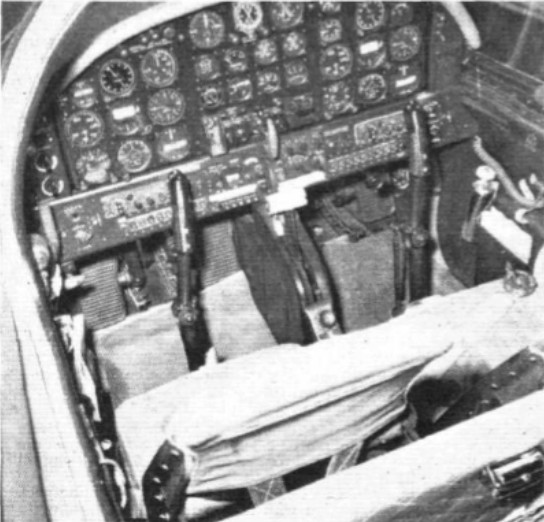
Potez-Heinkel C.M.192 cockpit
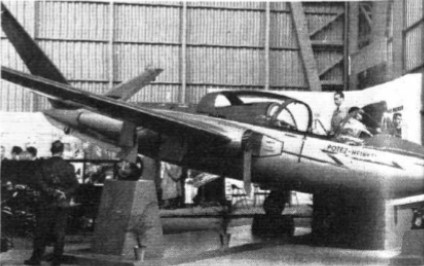
Potez-Heinkel C.M.192
CM.170 Magister I Engines: 2 x Turbomeca Marbore IIA, 400 kg / 880 lb thrust. Wing span: 39 ft 9 in ft (12.1 m) Overall length: 33 ft (10 m) Height: 9 ft 2 in ( 2.8 m) Wing area: 186.1 sq.ft (17.3 sq.m). Wing aspect ratio: 7.42. Empty wt: 4740 lb (2151 kg). Normal T/O wt: 6280 lb (2851 kg). MTOW: 7055 lb (3202 kg). Internal fuel cap: 160 Imp.Gal. (727 lt). External fuel cap: 55 Imp.Gal. (250 lt). Wing loading: 33.7 lb/sq.ft (164 kg/sq.m). Pwr loading: 3.6 lb/lbst (3.6 kg/kgst). Max speed: 432 mph (695 kph). Initial ROC: 3350 fpm (17 m/sec). TO dist 50 ft: 2600 ft (793 m). Range: 575 sm (925 km). Operating ceiling: 33,000 ft. Service ceiling: 11000 m / 36100 ft Seats: 2
Magister II Engines: 2 x Turbomeca Marbore VI, 1150 lb thrust.
Fouga 90 Engine: 2 x Turbomeca Astafan IIG turbofan, 1,520 lb Wing span: 39ft 6 in (12.04 m) Max speed: 398 mph (640 km/h)

 All Aero