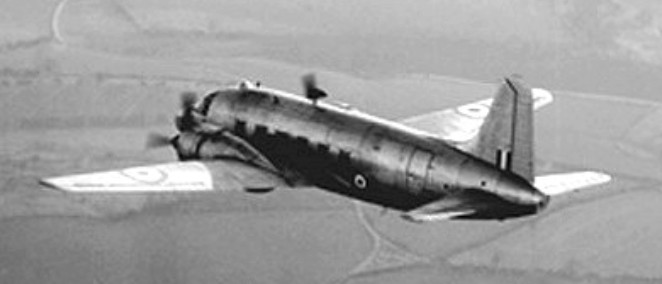
The Valetta was a military transport aircraft, the prototype of which flew for the first time on 30 June 1947. The C.I was the standard RAF version for use by Airborne Forces; could be used in various roles, such as troop-carrying, freighting, paratroop-carrying, supply-dropping and as an ambulance. The C.2 was a special VIP version for 9 to 15 passengers. The T.3 was designed specifically for use as a navigational flying classroom. A number of T.3s were later converted into T.4s with radar fitted in an extended nose. Production totalled 260 aircraft. Power was provided by two 1,472kW Bristol Hercules 230 radial engines.
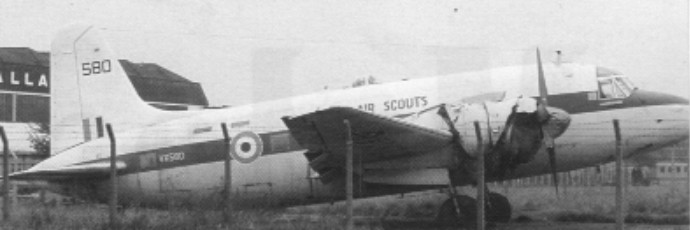
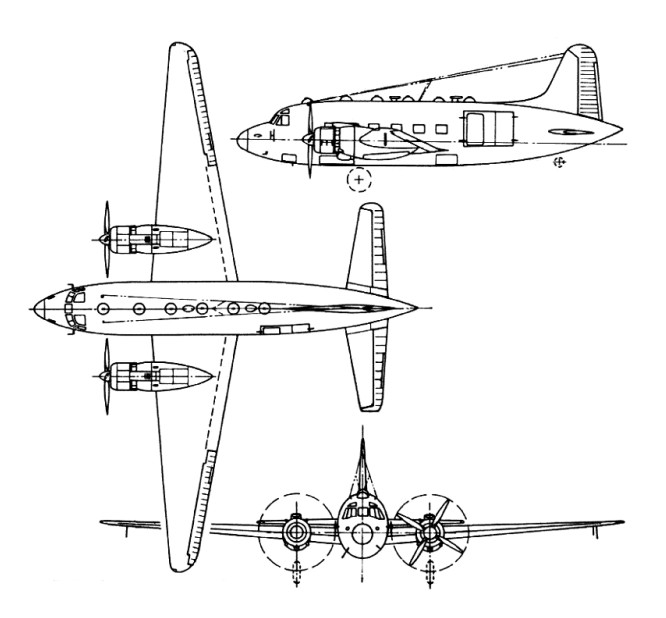
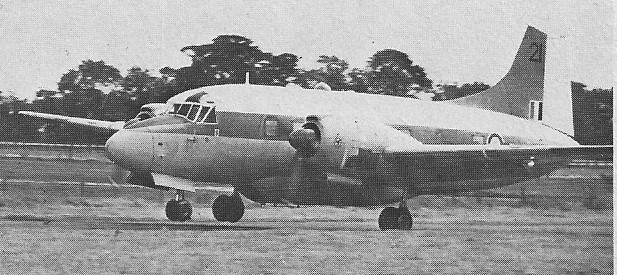
The Varsity general-purpose aircrew trainer retained the general characteristics of the Valetta C.I, but had a tricycle landing gear and a slightly longer fuselage. For bomb-aiming training, a bomb bay and bomb-aiming station were provided in the form of a pannier fitting against the fuselage underbelly.
The prototype type 648 first flew in July 1949 and type 668 Varsity T.ls went into service with the RAF in 1951. A total of 163 were built.
Varsity T.1
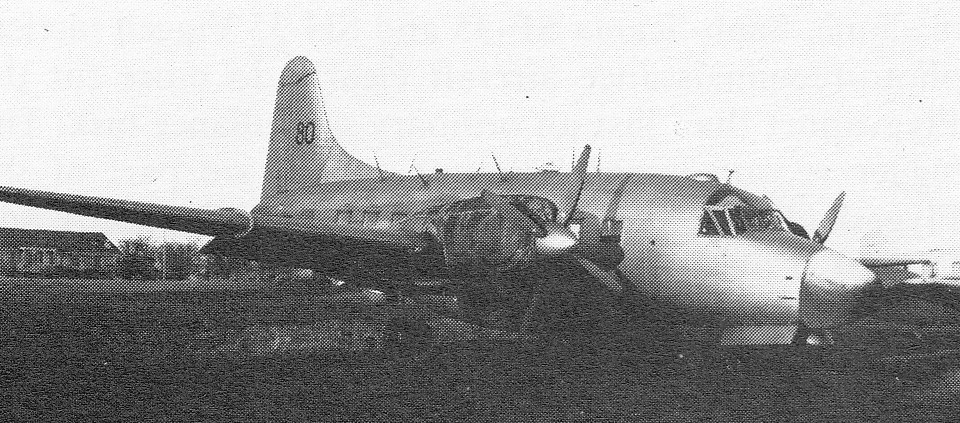
When the Swedish Air Force purchased a Vicker Varsity in the 1950s it was said it would be employed on high-altitude radio trials. It flew COMINT missions until 1973, festooned with antennas. It is now in a Swedish Air Force museum near Linköping.
Swedish COMINT Varsity
A Vickers Varsity was experimentally fitted by Napier with two Eland turboprops.
Vickers 648 Varsity Engine : 2 x Bristol Hercules 264, 1923 hp Length : 67.487 ft / 20.57 m Height : 23.917 ft / 7.29 m Wingspan : 95.571 ft / 29.13 m Wing area : 974.142 sq.ft / 90.5 sq.m Max take off weight : 37507.1 lb / 17010.0 kg Weight empty : 27044.3 lb / 12265.0 kg Max. speed : 250 kts / 463 km/h Cruising speed : 208 kts / 385 km/h Service ceiling : 28707 ft / 8750 m Wing load : 38.54 lb/sq.ft / 188.0 kg/sq.m Maximum range : 2300 nm / 4260 km Range : 2300 nm / 4260 km Crew : 2
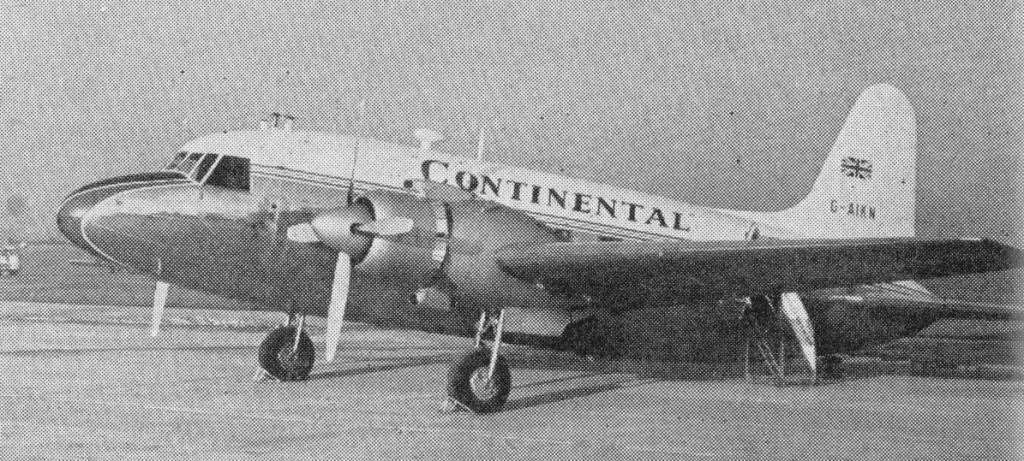
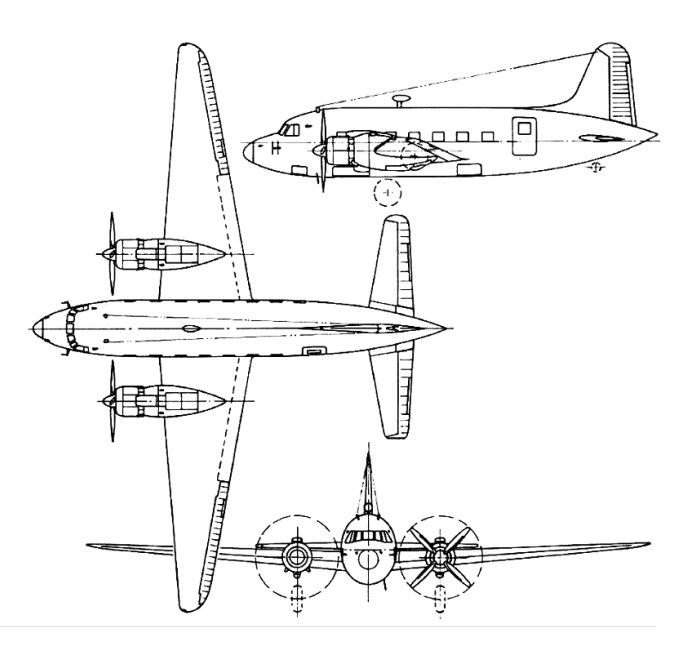
The Viking was a twin-engined 24-27-seat transport and was the first completely new post-World War II airliner to fly in the world. For speed and cheapness parts of the Wellington bomber were used, particularly in the wings. The fuselage, of stressed skin construction, was new.
British European Airways operated a fleet of 49 on its European network and total production was 163. BEA aircraft were modified to allow them to carry up to 34 or 38 tourist-class passengers when required. Four also flew with the Queen’s Flight.
On 1 September 1946 the first Viking joined the British European Airways (BEA) fleet. BEA were to eventually operate 75 Vikings, fitted for 21 passengers.
In December 1946, the Vikings were grounded due to the icing up of control surfaces. After extensive modifications to the elevators and de-icing system, the Vikings were back in the air the following April.
On 30 October 1954 two farewell flights marked the retirement of BEA Vikings and the last commercial service from RAF Northolt.
Engines 2 x 1,690 hp Bristol Hercules Length 65.1 ft (19.8 m) Wing span 89.25 ft (27.2 m) Weight empty 22,910 lb (10, 400 kg.) Seats: 2 crew and 21 passengers Cruise speed 210 mph (340 kph) Ceiling 22,000 ft (6,700 km) fully loaded Range 1,875 miles (3,000 km)
Viking IB Engines: 2 x Bristol Hercules 634, 1260kW Max take-off weight: 15354 kg / 33850 lb Empty weight: 10546 kg / 23250 lb Wingspan: 27.2 m / 89 ft 3 in Length: 19.86 m / 65 ft 2 in Height: 5.94 m / 20 ft 6 in Wing area: 81.94 sq.m / 881.99 sq ft Cruise speed: 338 km/h / 210 mph Ceiling: 7240 m / 23750 ft Range w/max.payload: 837 km / 520 miles Crew: 3-4 Passengers: 21-38
The final attempt by Vickers to develop a fighter for the RAF began in 1939 with a design for a twin-engined heavy fighter featuring an armament of a 40mm Vickers cannon in a dorsal turret. As the Type 414, this corresponded with the requirements of Specification F.22/39 for a 400 mph (644 km/h) two-seat fighter. The aircraft was to carry four 20-mm cannons, with the possibility of later mounting two 40-mm cannons.
Under a design team led by Rex Pierson, Vickers-Armstrongs Ltd. (Vickers) had been working on a fighter with a single flexibly-mounted 40-mm cannon installed in the aircraft’s nose. The twin-engine aircraft was powered by Rolls-Royce Griffon engines and met the requirements of F.6/39, aside from its armament. Vickers met with the Air Ministry in April 1939 to discuss the aircraft’s potential. The Air Ministry was sufficiently impressed and issued Specification F.22/39 that covered the Vickers fighter, which carried the internal designation Type 414. Specification F.6/39 was subsequently cancelled in November 1939.
Turret development began in a Wellington test-bed but, in the course of 1940, the requirement was changed via Specification F.16/40, to emphasise high-altitude performance, as there were growing fears that the Luftwaffe would be able to launch operations over Britain at altitudes beyond the capabilities of existing RAF fighters. A more conventional armament of 20mm cannon was adopted in the revised Vickers 420 design to the new specification, but further changes were called for in Specification F.7/41, including a pressure cabin.
Two Type 414 prototypes were ordered on 30 August 1939, and they were assigned serial numbers R2436 and R2437. After inspection of the Type 414 mockup in early February, the Air Ministry inquired about the possibility of installing several 20-mm cannons in place of the single 40-mm cannon. Vickers responded with aircraft proposals incorporating eight 20-mm cannons or two 40-mm cannons.
Vickers designated the fighter with 20-mm cannons as the Type 420. Two cannons were positioned in the aircraft’s nose, and three were on each side of the cockpit. Vickers and the Air Ministry discussed the Type 420 in June 1940, and Specification F.16/40 was issued for the aircraft’s development. The Type 420 was given a high priority, and an order for two prototypes was expected. The order for two Type 414 prototypes was still in place. However, the Type 420 took precedence, and work on the Type 414 slowed substantially.
In early January 1941, the Air Ministry requested a design change to reduce the number of 20-mm cannons to six. At the same time, Vickers had designed a high-altitude fighter that used many components from the Type 420. The high-altitude aircraft was armed with four 20-mm cannons and powered by two Rolls-Royce Merlin engines. The Air Ministry was interested in Vickers’ proposal, as they felt there was an urgent need for a heavily armed, high-altitude fighter aircraft to intercept high-altitude German bombers that were expected in the skies over Britain. However, high-altitude German bombing raids were never undertaken en masse and did not present a significant threat to Britain during World War II.
In March 1941, work on the Type 414 was stopped completely, and discussions with Rolls Royce commenced regarding the acquisition of Merlin engines. In May 1941, Vickers detailed the specifics of the high-altitude aircraft, which it had designated as Type 432. The Vickers response to this final requirement was Type 432, completely re-stressed and with an armament of six 20mm cannon in a ventral blister. The original contract for the Type 414/420s was cancelled in 1941 and a new one substituted for two Type 432s. Design work on the Type 432 continued, resulting in the switch to a single-seat cockpit placed in the nose of the aircraft and six 20-mm cannons installed in a ventral fairing. Each cannon had 120 rounds of ammunition. The Air Ministry ordered two Type 432 prototypes on 9 September 1941, and the aircraft would be built to the new Specification F.7/41. The two Type 432 prototypes were issued serial numbers DZ217 and DZ223.
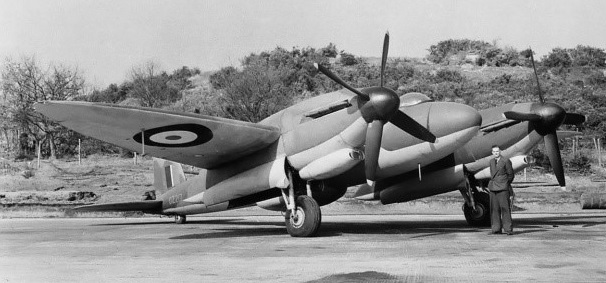
As finally built, the Type 432 was the first Vickers aircraft of wholly stressed-skin construction of stressed-skin aluminum panels that were flush-riveted to the closely-spaced circular structures that made up the airframe, and it made use of a so-called “lobster-claw” design for the wing torsion box, in which heavy-gauge skin had a thickened section to house the span wise spar booms, giving a profile shaped like a lobster claw so that conventional wing spars and ribs were omitted. Fabric covered the aft section of the wings and the aircraft’s control surfaces. The fuselage was a streamlined tube and the coolant radiators for the engines were buried within the wing. The pilot was accommodated in a relatively small, self-contained pressure cabin, his head being enclosed by a small, double-glazed dome, or “bubble”, which hinged to one side for access and egress.
The Type 432 mockup was inspected in late December 1941, and the first prototype, DZ217, was built throughout 1942. The aircraft was built at Foxwarren, a special Vickers dispersal site for experimental work near Brooklands in Surrey, England. The site did not have an airfield, so the Type 432 was disassembled and transported to Royal Aircraft Establishment Farnborough for its first flight.
The Vickers Type 432 prototype DZ217 appears shortly after its completion at Foxwarren.
Powered by two Rolls-Royce Merlin 61 12-cylinder Vee-type engines rated at 1520hp (1,178 kW) at 23,500 ft (7,163 m), the first prototype Type 432 was flown on 24 December 1942, piloted by Tommy Lucke, initial trials revealing serious handling difficulties on the ground, the aircraft snaking while taxying and necessitating 3 in (76 mm) aft movement of the mainwheels to correct the bad tracking. The impossibility of making a three-point landing was only rectified by replacement of the Irving-type ailerons with surfaces of Westland type and alteration of tail settings. The competitive Westland Welkin was ordered into production and the second prototype of the Vickers fighter, the Type 446, was cancelled on 1 May 1943 before completion. This decision was not made official until 1 May 1943.
The first prototype was retained by Vickers for test purposes until the end of 1944. The estimated maximum speed of 700km/h at 8535m was never attained as the Merlin 61 engines did not run satisfactorily above 7010m.
The sole Type 432 aircraft continued to fly occasionally until November 1944. Some efforts were made throughout the aircraft’s existence to improve its handling and flight qualities, as the Type 432 was noted as having heavy controls. Only 28 flights were made, and the aircraft was never submitted for official trials or tested to its maximum performance. Additionally, the 20-mm armament and the pressurized cabin were never installed. Although the Type 432 exceeded 400 mph (644 km/h) in a slight dive, the highest speed obtained in level flight was 380 mph (612 km/h), recorded on 14 May 1943. One of the factors that limited flight testing was that the Merlin engines installed in the Type 432 did not run well above 23,000 ft (7,010 m). Since the Type 432 had no future as a production aircraft, the performance issues of its Merlins were never fully investigated.
The entire Type 432 program was cancelled at the end of 1943.
Aircraft observers were a regular fixture during World War II, keeping an eye out for any enemy action in the skies over Britain. The rarely-seen and oddly-shaped Type 432 was only listed as “AP1480” in the recognition handbooks. This non-descript designation led the spotters to dub the Type 432 as the “Tin Mossie” on account of the aircraft’s resemblance to the wooden de Haviland Mosquito.
Engines: Rolls-Royce Merlin 61, 1520hp Wingspan: 17.34 m / 56 ft 10 in Length: 12.38 m / 40 ft 7 in Height: 4.19 m / 13 ft 9 in Wing area: 40.97 sq.m / 441.00 sq ft Fuel capacity: 506 USG / 421 Imp gal / 1,914 lt Max take-off weight: 9148 kg / 20168 lb Empty weight: 7427 kg / 16374 lb Top speed est: 320 mph (515 km/h) at sea level Top speed est: 435 mph (700 km/h) at 28,000 ft (8,534 m) Top speed est: 400 mph (644 km/h) at 40,000 ft (12,192 m) Cruise speed est: 400 mph (644 km/h) at 29,500 mph (8,992 m) Service ceiling: 43,500 ft (13,259 m) Initial climb rate: 2,750 fpm (14.0 m/s Range: 2400 km / 1491 miles
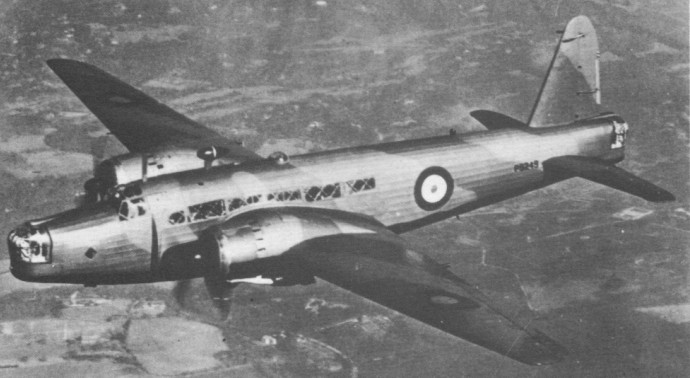
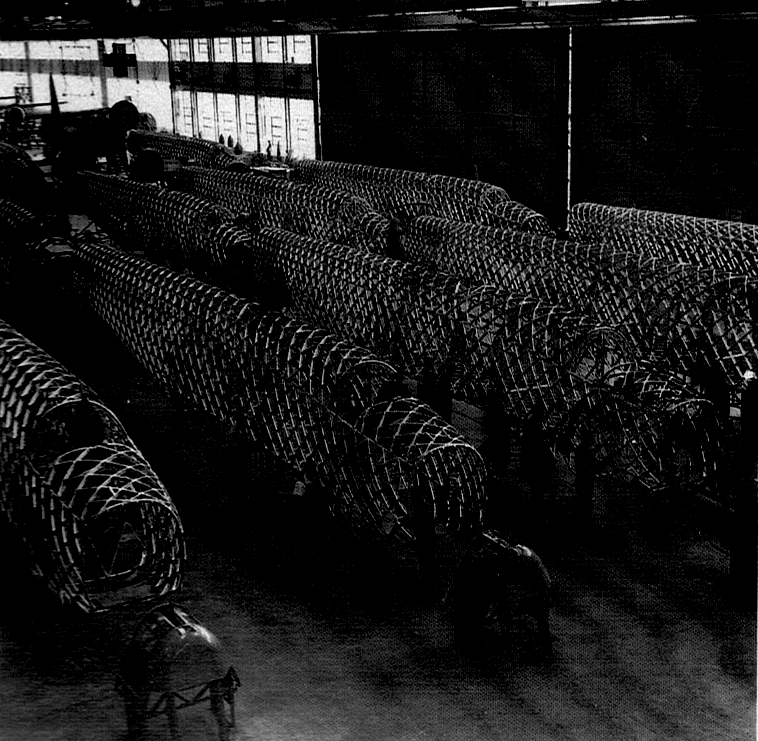
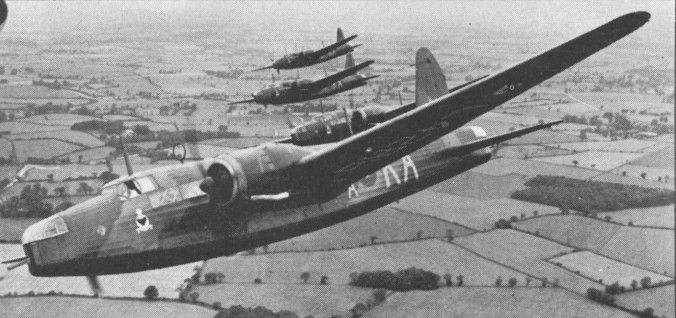
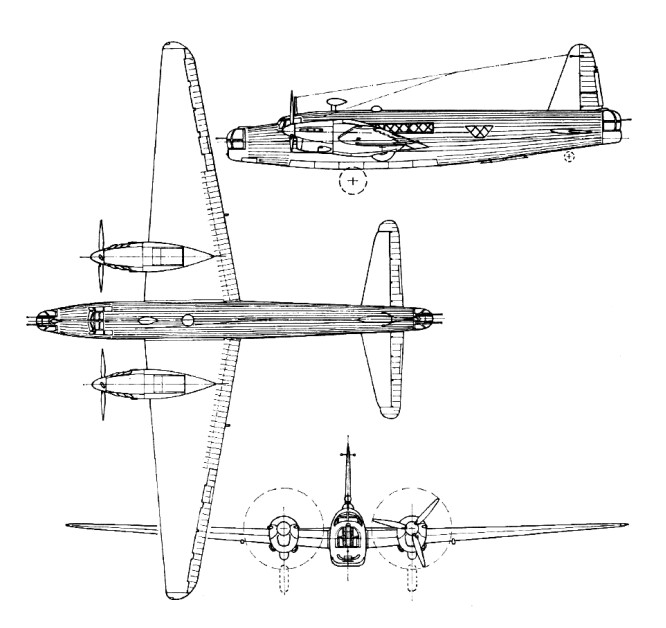
The Wellington was designed to meet an Air Ministry requirement for a long-range medium bomber under Specification B.9/32 and evolved as a mid-wing monoplane with a fuselage of oval cross-section. Both of these major structures were of the geodetic construction which Barnes Wallis had introduced in the Wellesley. But experience with the latter and development of the geodetic concept made it possible for the individual components (which were built up into the ‘basket-weave’ structure) to be smaller and lighter in weight without any loss of structural integrity by comparison with the Wellesley. Wings, fuselage and tail unit were fabric-covered; power plant comprised two wing-mounted engines; and the tailwheel-type landing-gear units were hydraulically retractable.
‘Heavy’ defensive armament – comprising five machine-guns in nose and tail turrets and a ventral dustbin – would, it was believed, enable a flight of these aircraft to put up such a curtain of fire that fighter escort would be superfluous. Those who held such beliefs (as for the Boeing B-17 Fortress developed in America) were to discover their error very quickly.
Though it had been planned to fit Rolls-Royce Goshawk inlines or Bristol Mercury radials the engine selected was the Pegasus. The prototype Wellington made its first flight on 15 June 1936, but it was not until October 1938 that production aircraft began to enter RAF service. The variant that entered service with No. 99 Squadron in October 1938 was the Wellington Mk I, of which 181 were built with Pegasus XX radials. By the outbreak of war Bomber Command had six operational Wellington squadrons.
Less than one year later (on 4 September 1939) Wellingtons were in action against targets in Germany. Wellingtons and Blenheims shared the honour of being the first Royal Air Force aircraft to attack Germany when they bombed ships at Brunsbüttel on 4 September 1939. Early deployment on daylight raids showed that these and other British bomber aircraft were extremely vulnerable to fighter attack. Following the loss of ten Wellingtons from a force of 24 despatched on an armed reconnaissance of Wilhelmshaven on 18 December 1939, the type was withdrawn from daylight operations. As a night bomber, however, the Wellington proved an invaluable weapon during the early years of Bomber Command’s offensive against Germany.
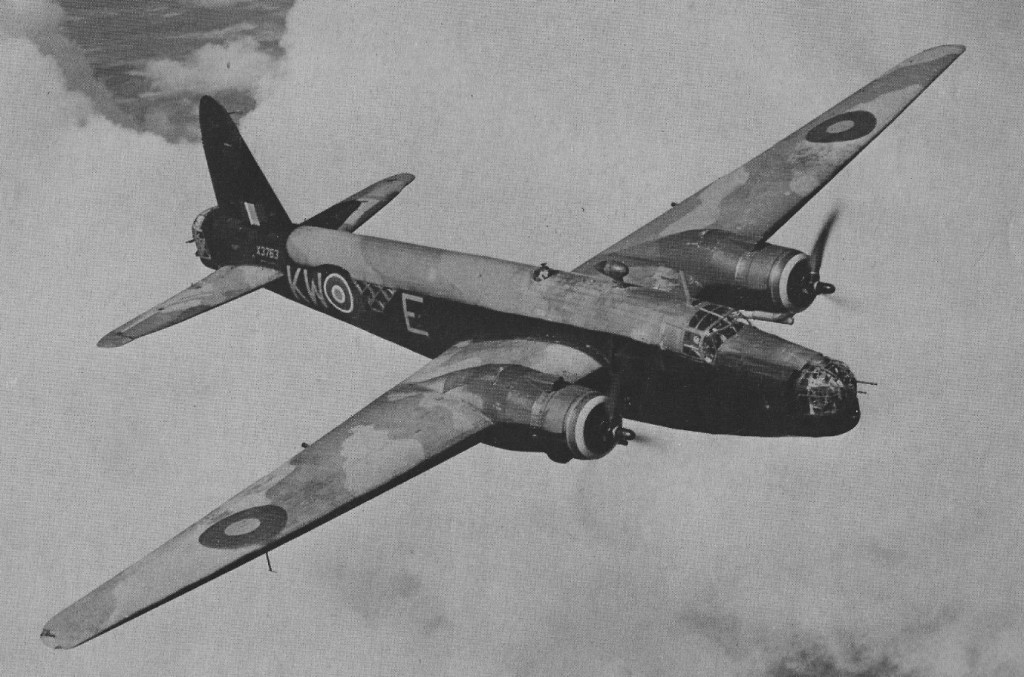
Wellington production was to total 11,461 aircraft and embraced many versions. These included Mk I bombers (782kW Bristol Pegasus XVIIIs) and the DWI with degaussing ring to trigger magnetic mines. Other variants developed before the war were the Mk IA with a Nash and Thompson turret, the Mk IC with the ventral turret replaced by beam guns.
Differing engines distinguished the 853kW Rolls-Royce Merlin X-powered Mk II; 1,021kW Bristol Hercules XI Mk III; and Pratt & Whitney Twin Wasp Mk IV.
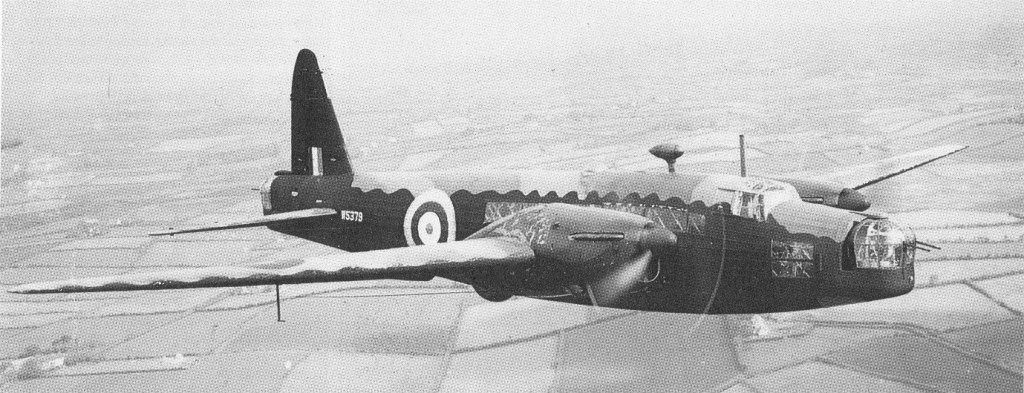
Wellington Mk.II
The Merlin engined Mk.II entered service in 1941.
Vickers Wellington III
The Wellington Mk V was a high-altitude aircraft with pressurised cabin, no nose turret and increased wing span, followed by the high-altitude Mk VI with 1,192kW Rolls-Royce Merlin 60 or 62 R6SM engines. Mk VII was designated an experimental model and Mk VIII was the first of many reconnaissance versions. Mk IX aircraft were Mk Is modified as troop carriers. The Mk X with Hercules VI or XVI engines was the last bomber. Wellingtons Mk XI, XII and XIII were ASV radar-equipped aircraft for Coastal Command. The Mk XIV with Hercules XVII engines was the final reconnaissance version. In addition to these specific versions there were many variants, and Wellingtons were also used for training and transport.
The last Wellingtons produced, Mk X RP590 being delivered from Squires Gate on October 13, 1945.
The Vickers Wellington bomber provided the mainstay of Bomber Command’s night attacks on Germany in the early stages of the Second World War. To the extent that at one period it equipped no fewer than 21 squadrons, and when the first 1,000 bomber raid was mounted against Cologne, in May 1942, more than half of the aircraft involved were Wellingtons.
Wellingtons dropped 42,440 tons of bombs on sorties from Britain, including the first 4,000 lb (900 kg) block busters.
Designed as a bomber, it became an effective torpedo carrier and submarine killer in Coastal Command before going on to Transport and Training Commands.
On 3 December 1942, Dr. R.V. Jones, chief of the scientific branch of the secret service in the British Air Ministry, obtained Churchill’s permission to send a Wellington bomber full of measuring instruments to Frankfort am Main. The plane, DV819, was to be used as a decoy in the hope that the crew could find out at least the megahertz frequency of new German target-locator system radar. The plane was shot down a short distance from the coast of Britain, but the crew were saved at the last minute and reported: ‘It was 490 megahertz’.
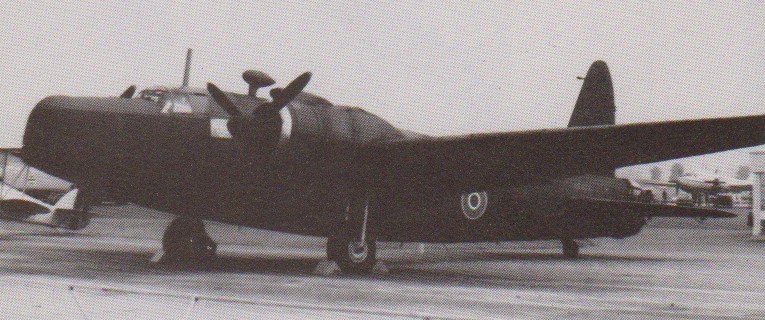
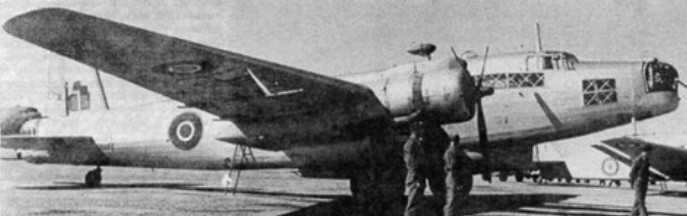
The Wellington Mk.XVI transport were conversions of the early IC model.
Mk.1A Engines: 2 x Bristol Pegasus, 1050 hp Wingspan: 86 ft Length: 61 ft 3 in Height: 17 ft 6 in MAUW: 31,500 lb
Mk IC Type: five/six-seat long-range medium night bomber Engines: 2 x Bristol Pegasus XVIII, 746kW (1,000 hp) Span: 26.26m (86ft 2in) Length: 19.68m (64ft 7in) Armament: 6 x 7.7-mm 0.303-in) machine-guns Bombload: 2041 kg (4,500 lb) internally MTOW: 12928 kg (28,500 lb) Max speed: 235 mph at 15,500ft Operational range: 2,550 miles
406 Mk II Engines: 2 x Rolls-Royce Merlin X, 853-kW (1,145-hp)
Mk III Engines: 2 x Bristol Hercules III, 1025-kW (1,375-hp) Length: 64.6 ft. (19.7 m) Wing span: 86.1 ft. (26.2 m.) Weight empty: 15,887 lb. (7,233 kg.) Crew: 6 Armament: 8 mg Max. bomb load: 4,500 lb. (2,000 kg.) Max. Speed: 255 m.p.h. (410 km.p.h.) Ceiling: 22,000 ft. (6,700 m.) fully loaded Range: 1,470 miles (2,365 km.)
B Mk.III Engines: 2 x Bristol Hercules XI, 1535 hp
Wellington Mk X Engines: 2 x Bristol Hercules XI, 1119kW Max take-off weight: 13381 kg / 29500 lb Empty weight: 8417 kg / 18556 lb Wingspan: 26.26 m / 86 ft 2 in Length: 18.54 m / 61 ft 10 in Height: 5.31 m / 17 ft 5 in Wing area: 70.0 sq.m / 753.47 sq ft Max. speed: 410 km/h / 255 mph Ceiling: 5790 m / 19000 ft Range w/max.payload: 2478 km / 1540 miles Crew: 4 Armament: 8 x 7.7mm machine-guns Bombload: 2041kg
The Warwick was a slightly enlarged version of the Wellington and employed the same geodetic form of construction. It was designed originally to Specification B. 1/35 to replace the Wellington. But because the generation of four-engined bombers was also being produced at the same time, it was subsequently adapted for reconnaissance duties with Coastal Command and first went into service in 1943. Other models were built for transport and air-sea rescue duties. The final version, the GR.V, entered service in 1945 and carried bombs, mines or depth-charges. About 840 production Warwicks were built.
Warwick GR Mk.II Engines: 2 x Bristol “Centaur VI”, 1864kW / 2466 hp Max take-off weight: 23247 kg / 51251 lb Empty weight: 14118 kg / 31125 lb Wing load: 51.05 lb/sq.ft / 249.0 kg/sq.m Wingspan: 29.48 m / 96 ft 9 in Wing area: 1006.003 sq.ft / 93.46 sq.m Length: 20.88 m / 68 ft 6 in Height: 5.64 m / 18 ft 6 in Max. speed: 228 kts / 422 km/h / 262 mph Service ceiling: 5790 m / 19000 ft Range: 3460 km / 2150 miles Bombload: 6900kg Crew: 6
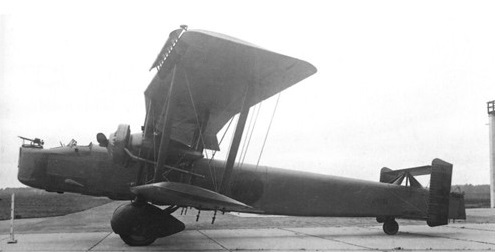
The Valentia was a development of the earlier Victoria troop-carrier, differing by having two 484kW Bristol Pegasus II.L3 or II.M3 engines (the latter for use in India) and an improved landing gear. Accommodation was for a crew of two and 22 troops; lockers were used for equipment and rifle-racks and stretcher supports were provided. Bomb racks could also be fitted if required. Twenty-eight were built as new and 54 Victorias were brought up to this standard.
Engines: 2 x Bristol II M3 Pegasus radials, 464kW / 626 hp Wingspan: 26.62 m / 87 ft 4 in Length: 18.14 m / 50 ft 6 in Height: 5.41 m / 17 ft 9 in Wing area: 2178 sq.ft / 202.34 sq.m Max take-off weight: 8845 kg / 19500 lb Empty weight: 4964 kg / 10944 lb Wing load: 9.02 lb/sq.ft / 44.0 kg/sq.m Max. speed: 104 kts / 193 km/h / 120 mph Service ceiling: 4955 m / 16250 ft Range: 695 nm / 1287 km / 800 miles Crew: 2 Bombload: 1000kg
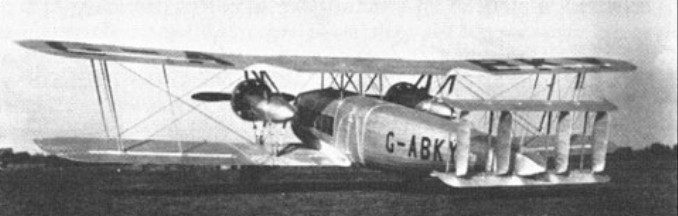
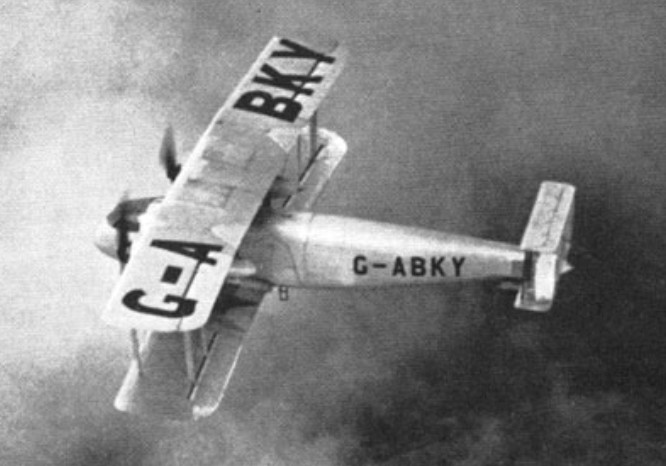
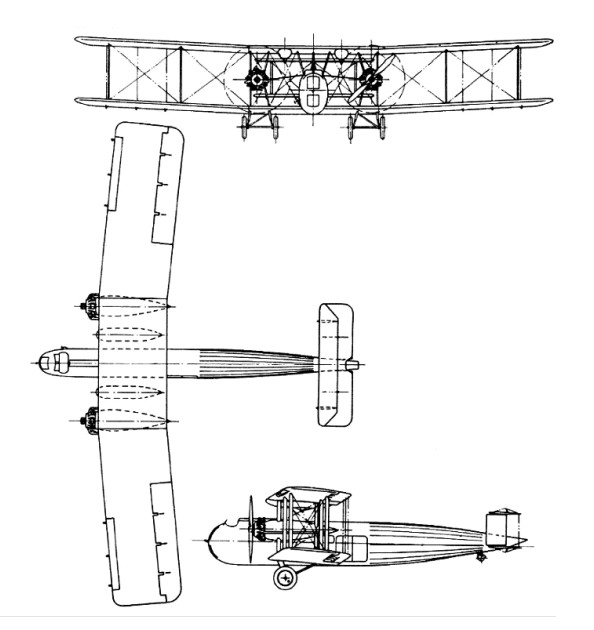
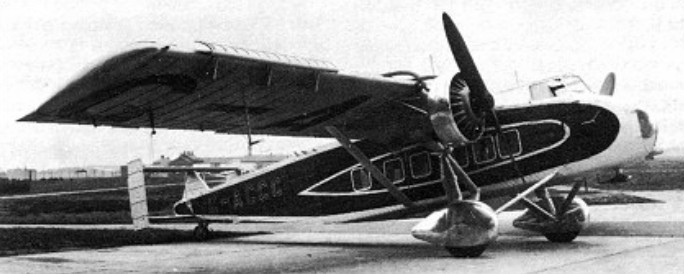
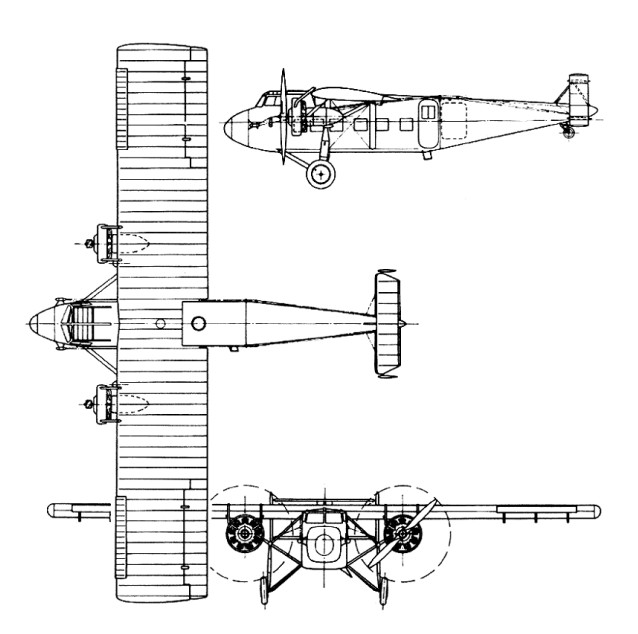
The first prototype flew on 1 October 1930 powered by 3 x 201kW Armstrong Siddeley Lynx Major. Two production Viastra IIs were powered by two 391kW Bristol Jupiter XIFs and one Viastra VI – by one Jupiter XIF.
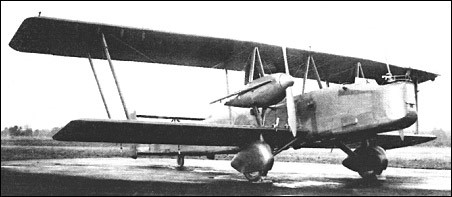
Initially a private venture, the submission of Vickers design to the Air Ministry coincided with the issuing of Air Ministry specification B.19/27 for a Virginia replacement. Conceived as a biplane powered by the Bristol Jupiter radial engine it was to have much better performance than the Virginia with similar engines.
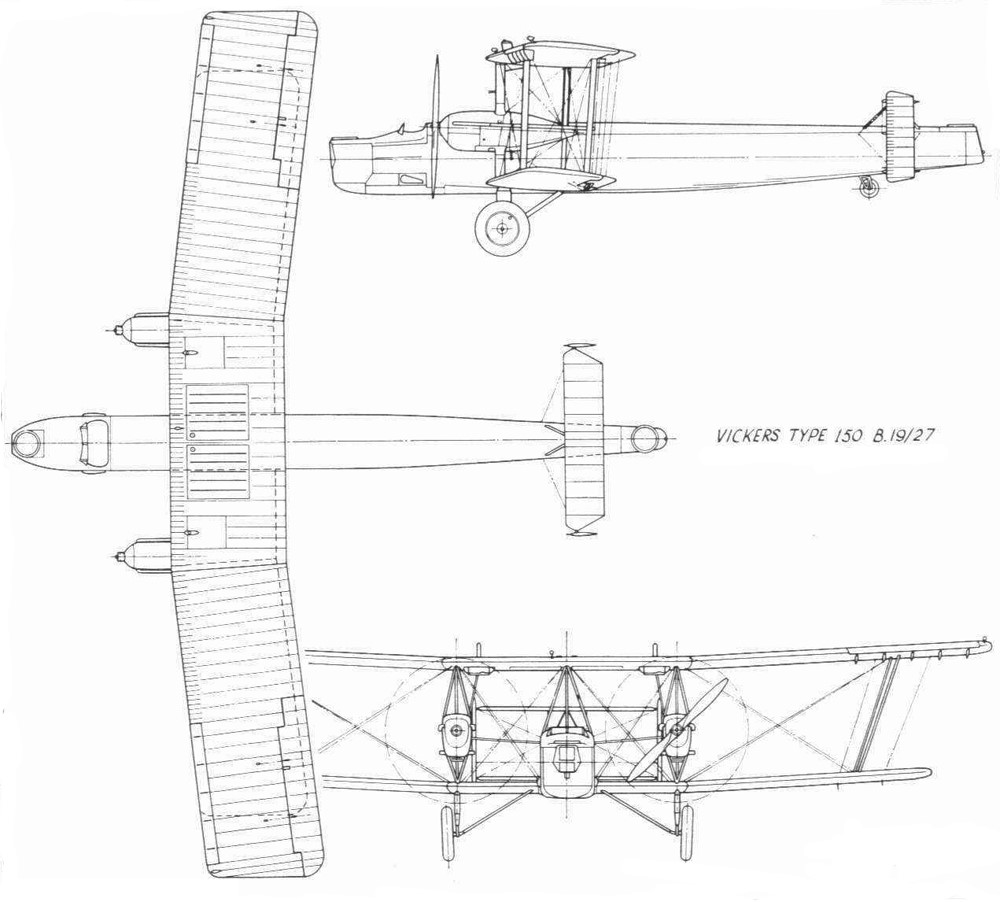
The B.19/27 specification meant that the Vickers submission would be tested competitively in trials against other manufacturer’s designs. In the redesign to meet the specification, the B.19/27 project took the Virginia Mark X all moving rudder together with an all-moving tailplane. Three designs were submitted in total; two biplanes with Jupiter and geared Bristol Mercury engines respectively and a monoplane version. The Mercury engined design, the Vickers Type 150 was selected by the Ministry for consideration and building, now to be funded by the Ministry, started. Part way through it was agreed that an alternative engine was allowable, the Rolls-Royce F.XIV.
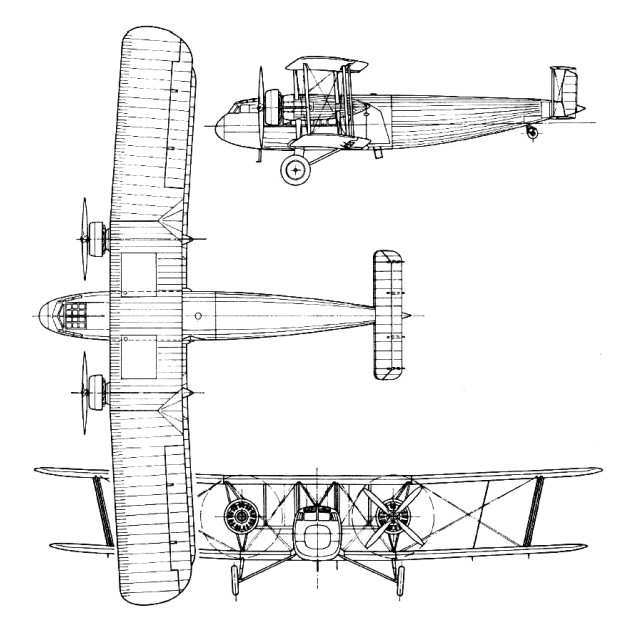
The aircraft was a two-bay biplane of all metal construction, with a biplane tailplane and with the two engines mounted between the wings.
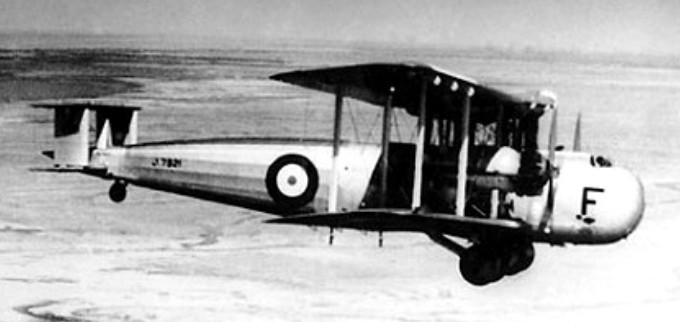
The aircraft flew for the first time on 30 November 1929. Initial testing and evaluation showed that the aircraft had poor handling, being unstable laterally, prone to Dutch roll and to severe flexing of the rear fuselage. It was handed to the RAF in 1932. Following a forced landing it was rebuilt incorporating recommendations made in reports from Ministry test pilots to try to resolve these problems, and was powered by Kestrel III engines. It was then given the name Vickers Vanox by Vickers.
These changes did not solve the aircraft’s handling problems, and the sweepback of the wings was reduced, which resolved the handling problems. The Kestrel engines proved unreliable, and were replaced by more powerful Bristol Pegasus radial engines. In this form, the aircraft was designated the Vickers Type 195 Vanox, and was demonstrated to meet the requirements of specification.
Following further modifications in February 1933 to improve performance, with extended, three bay wings being fitted, it was now designated the Type 255. However, by this time, the competing Handley Page Heyford and Fairey Hendon bombers had already been ordered into production.
The sole Type 255 spent most of its time in Malta (Raf Luqa) and Gozo on bombing trials and W/Ops training. The aircraft did not perform well and was removed from service after 1 year having been superceded by the Handley Page Heyford.
The Vanox did fly again very fleetingly in 1938 taking part in Air Refuelling trials by the Royal Aircraft Establishment in the Mediterranean, being flown for the last time on 7 January 1938.
Specifications:
Type 150 Engines: 2 × Rolls Royce F.XIV, 480 hp (358 kW) each Length: 60 ft 6 in (18.45 m) Wingspan: 76 ft 6 in (23.32 m) Height: 19 ft 3 in (5.87 m) Wing area: 1,367 ft² (127 m²) Airfoil: RAF 34 Empty weight: 10,435 lb (4,743 kg) Loaded weight: 15,400 lb (7,000 kg) Max. takeoff weight: 16,170 lb (7,350 kg) Maximum speed: 125 mph (109 kn, 201 km/h) Range: 920 mi (800 nmi, 1,481 km) Service ceiling: 23,000 ft (7,000 m) Wing loading: 11.3 lb/ft² (55.1 kg/m²) Power/mass: 0.062 hp/lb (0.10 kW/kg) Climb to 6,500 ft (1,980 m): 19 min 45 sec Guns: 2 × .303 in (7.7 mm) Lewis Guns Bombs: Up to 2,200 lb (1,000 kg) of bombs Crew: 4









 All Aero