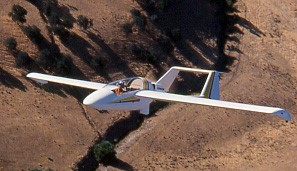
A six seat high wing aircraft first flown in July 1994. Offered with 300-400 hp engine options, or (as the Turbine Stallion) with a P&W or Walter turboprop of around 500 shp.
First flown in 1994, the SuperCruiser is a 4-place aircraft with a cruise speed of 190 mph and a stall speed of 59 mph. The aircraft has a length of 25.46 ft. and wing span of 29 ft. It has a gross weight of 2500 lbs. and a useful load of 1100 lbs. The prototype was powered by a Cont. IO-360ES. Lycoming engines from 160-200 HP are recommended and build time is 1200-1500 hours. Aircraft Spruce is a prime supplier for materials used in Super Cruiser kits.
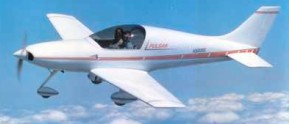
Pulsar Aircraft Corp SuperCruiser Engine: Continental IO-360, 210 hp HP range: 80-210 Cruise speed: 175 mph Stall: 55 mph Range: 810 sm ROC: 1400 fpm Take-off dist: 900 ft Landing dist: 1350 ft Fuel cap: 52 USG Weight empty: 1300 lb Gross weight: 2400 lb Length: 23.5 ft Wing span: 29 ft Wing area: 135 sq.ft Seats: 4 Landing gear: nose
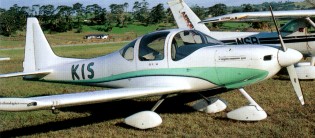
KIS TR-4 SuperCruiser Engine: Lycoming O-360, 180 hp Speed max: 195 mph Cruise: 180 mph Range: 925 sm Stall: 50 mph ROC: 1200 fpm Take-off dist: 1200 ft Landing dist: 1500 ft Service ceiling: 17,000 ft HP range: 160-200 Fuel cap: 200-400 lt Weight empty: 1200 lb Gross: 2400 lb Height: 7.2 ft Length: 25 ft Wing span: 29 ft Wing area: 135 sq.ft Seats: 4 Landing gear: nose wheel
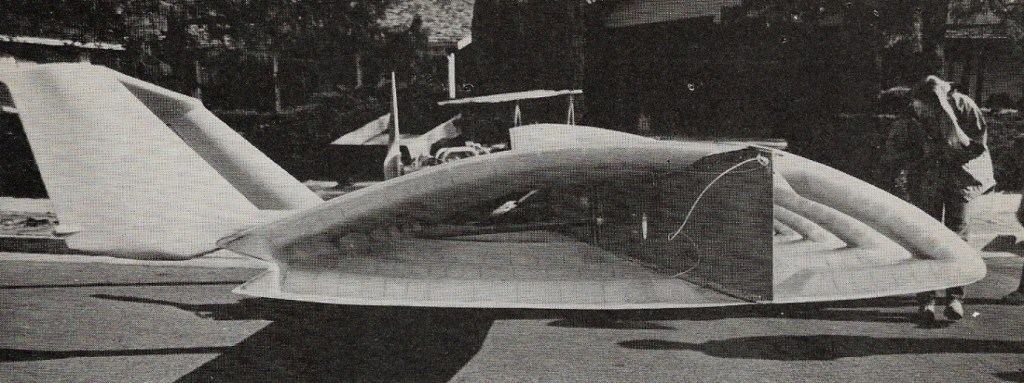
Designed by Mark Brown, the 1985 Pulsar was based on Star Lite prototype N500SS.
High Tech Composites (HTC) in Oxnard, California, USA, owned by Rich Trickle, produced composite structures for other aircraft manufactures before Rich designed the two-seat KIS TR-1 (KIS stands for “Keep It Simple”). Constructed with the assistance of Vance Jaqua and Martin Hollmann, the aircraft was first presented at the EAA event at Oskosh, Wisconsin, in July 1991
KIS TR-1
Subsequently HTC was renamed Tri-R Technologies and the composite kit plane was marketed to the homebuilt constructor. It could be fitted with a nose-wheel or tail-wheel landing gear, an 80 to 150 hp engine could be fitted, and for storage, the wings could be detached easily. The four-seat KIS Cruiser was also developed.
The KIS TD is the tail wheel version of TR-1, first flown in 1992.
KIS TD
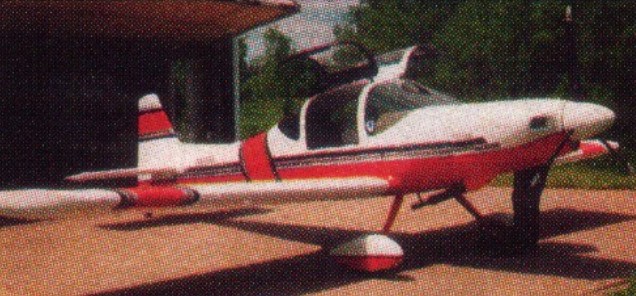
The Pulsar and Pulsar XP were designed by Mark Brown and offer great lightplane performance and economy in kit cost and operating expenses. These very popular kits are available in tailwheel or nosewheel configurations, and are easy to build and fly.
Equipped with fuel tanks in the wings, a composite spar and moulded wing skins, earlier models had a 1.5mm Finnish birch plywood/outer fibreglass matting covering foam ribs. Pulsar XP includes an in flight adjustable prop pitch option which increases 75% power cruise from 140 mph to 150 mph at 4 USG/hr, and was specifically designed for the Rotax 912. The first Pulsar XP was N912XP.
In 1996 the manufacturing rights for the Pulsar went from Aero Design to Skystar, which was then sold to become Pulsar Aircraft Corp. Pulsar Aircraft Corp. rescuing the Pulsar design from the original company’s bankruptcy. Pulsar Aircraft Corporation also keep the original legacy Pulsar design alive under the name of Pulsar XP.
Aircraft Spruce was a supplier of materials & components to Skystar for use in Pulsar kits.
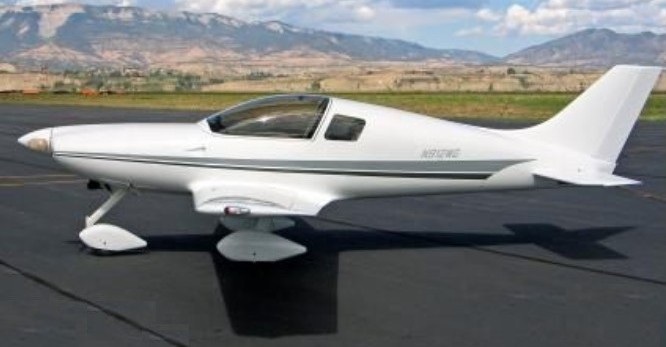
Designed by Mark Brown and Solly Melyon around the same lines as the Pulsar XP, the Super Pulsar 100 was introduced by Pulsar Aircraft Corporation in August 2001. A high performance sport airplane capable of cruising at speeds over 200 mph but yet docile and safe for low time pilots. Its 2500 fpm climb will leave you breathless and it’s docile and slow flight stability lets you land on short fields. The Super Pulsar was equipped with 38 gallon fuel capacity for seven hours of endurance and 1250 mile range.
In 2001 the Pulsar Aircraft Company (formed in 1999) acquired the design and production rights of Tri-R, while the latter still produced the composite parts. The two-seat KIS TR-1 was re-designated Pulsar 150, while the KIS TR-4 Cruiser became the Pulsar Super Cruiser. In 2005 all aircraft production was transferred to Ilopango, El Salvador.
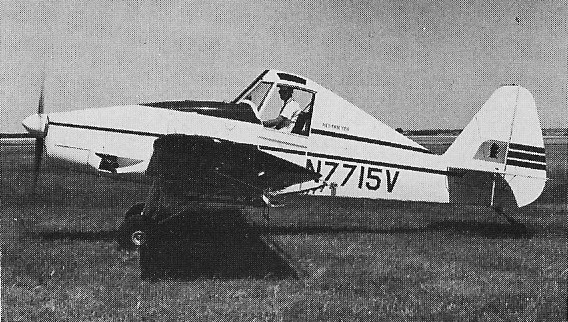
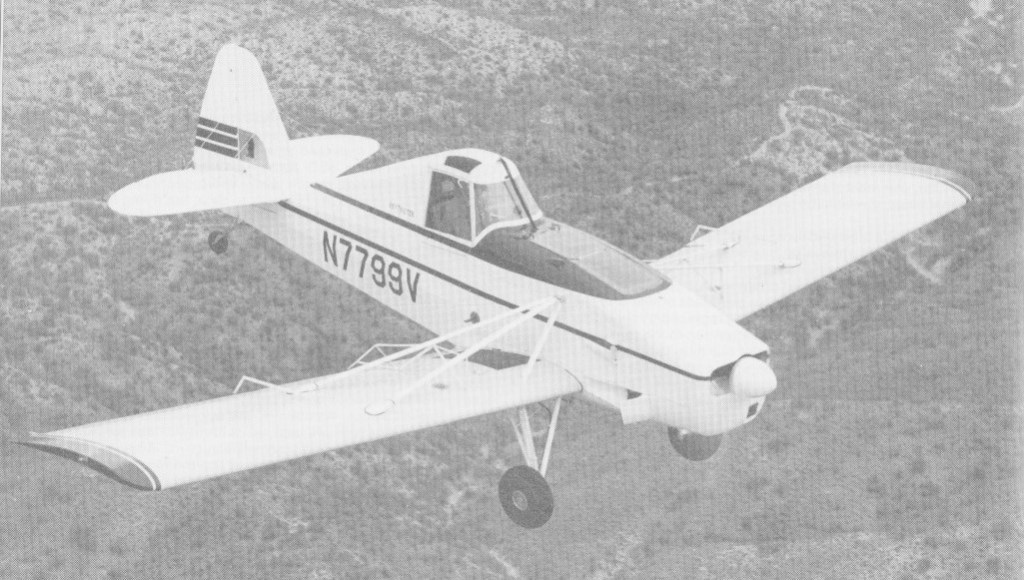
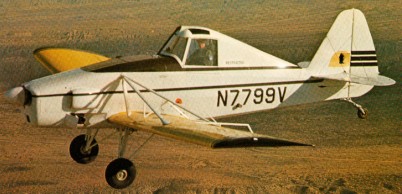
With an agreement between Industrias Unidas SA of Mexico and Rockwell International, Aeronautica Agricola Mexicana SA (AAMSA) was formed in 1971 to take over from Rockwell manufacture of the Aero Commander Quail Commander and Sparrow Commander agricultural aircraft. They had identical airframes but differed mainly by engine fit. The Sparrow Commander was powered by a 235 hp (175 kW) Lycoming O-540-B2B5 engine, while the Quail was fitted with the more powerful IO-540 engine. Both the Sparrow Commander and Quail Commander were available with liquid spray or dust disperdsal gear, or with a quick change combination dust or spray unit. Production of both types ended in the USA in 1970.
Sparrow Commander
Construction of the Sparrow Commander continued in Mexico, as the AAMSA Sparrow. Only very small numbers had been built by 1975, when production was terminated. Only spares were manufactured in Mexico by AAMSA.
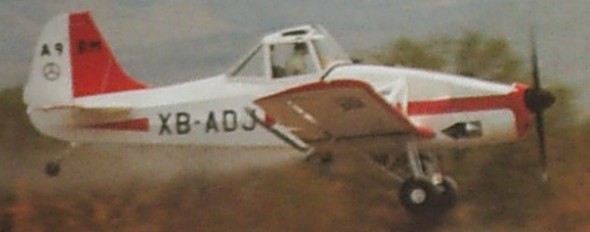
Manufacture then switched to the Quail Commander in 1971, designated A9B-M Quail. 101 A9B were built in Mexico, and by January 1982 26 A9B-M had been built.
Quail Commander
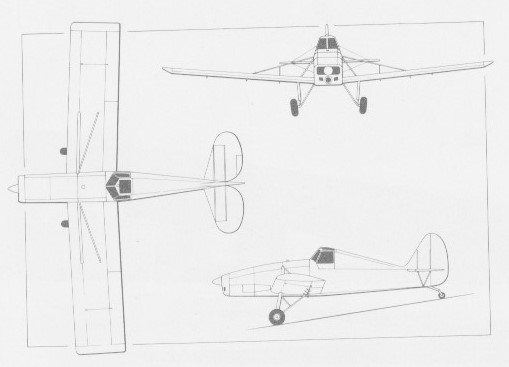
The Quail was a braced low-wing monoplane of composite construction. Its wings were based on wooden spars, with metal leading-edge skins and the remainder of the structure fabric covered; fuselage and tail unit were steel tube structures with fabric covering. The wings are Clark Y airfoil. The non-retractable tailwheel had shock absorbtion. The engine had a fixed pitch or optional variable-pitch propeller. The Quail had an enclosed cabin with a steel-tube overturn structure, cable cutters on the landing gear and windscreen, a cable deflector between the canopy and the tail fin, and proivision for avionics and night flying equipment. A 22.5 cu.ft (0.64 cu.m) glassfibre/polyester chemical hopper was fitted as standard with a capacity of 170 USG (643 lt) of liquid or 1200 lb (545 kg) of dry powder chemicals.
The Quail was manufactured in component form at the Industrias Unidas industrial complex at Pasteje in Mexico for assembly and marketing by its associated Aircraft Parts and Development Corp. in Laredo, Texas. By 1978 43 Quails had been built.
Quail Commander
Sparrow Commander Engine: Lycoming O-540-B2B5, 235 hp (175 kW) Wingspan: 34 ft 9 in / 10.59 m Length: 23 ft 6 in / 7.16 m Empty weight: 1600 lb / 726 kg Max payload: 1400 lb / 635 kg MTOW (Agricultural): 3400 lb / 1542 kg Max cruise 75% / 3000 lb / 1260 kg: 91 kt / 105 mph / 169 kph Max ROC SL (Agricultural): 650 fpm / 198 m/min Service ceiling (Agricultural): 14,000 ft / 4265 m Range max cruise (Agricultural): 260 nm / 300 mi / 483 km Seats: 1 Hopper capacity: 22.5 cu.ft / 0.64 cu.m / 170 USGal / 643 lt
NA Rockwell Quail Commander Engine: Lycoming IO-540-G1C5, 290 hp. Wing span: 34 ft 9 in / 10.59 m Length: 23 ft 6 in / 7.16 m Height: 7 ft 7 in / 2.31 m Max TO weight: 3600 lb / 1633 kg Max level speed: 120 mph / 193 kph Hopper capacity: 210 USG / 795 lt Ag payload: 1600 lb /726 kg
AAMSA A9B-M Quail Engine: Avco Lycoming IO-540-K1A5, 300 hp. Wing span: 34 ft 9 in / 15.76m Length: 24 ft 0 in / 10.89m Height: 7 ft 8 in / 3.48 m Wing area: 182 sq.ft / 16.91 sq.m Empty weight: 1800 lb / 816 kg MTOW: 3800 lb / 1724 kg Payload: 1600 lb / 725 kg Max level speed: 120 mph / 193 kph / 104 kt Normal operating speed: 90-100 mph / 145-161 kph ROC: 850 fpm / 259 m/min Service ceiling: 16,000 ft / 4875 m Range 50%: 300 sm / 483 km / 260 nm Hopper capacity: 28.5 cu.ft / 0.81 cu.m / 210 USG / 795 lt
The four-seat cabin monoplane Aero Commander 200 began as a product of the Meyers Aircraft Co, first flown on 8 September 1953, and deliveries began in 1959. With Meyers, the airplane evolved from the two-place Meyers 145 to the Meyers 200 that was initially produced with a 240-hp engine. Small numbers of this model were produced until the design was acquired by Rockwell-Standard Corporation 12 July 1965, who marketed the Model 200 as the Aero Commander 200.
Meyers MAC 200
During its nine years of production, the Aero Commander 200 was upgraded in horsepower from 260 hp to 285 hp. With the larger engine, the airplane had a top speed of 235 mph and a cruise speed of 215 mph. Fuel consumption was only 12 USgph. Takeoff and landing distances were also minimal, and the gear was sturdy enough to extend up to speeds of 210 mph. Though the airplane was high-spirited and somewhat temperamental, it achieved a strong following for its speed and outstanding flight characteristics.
Aero Commander 200D N2943T
In 1977, the Meyers 200D was about to go back into production. Tooling as well as the name and manufac¬turing rights for the four place single were bought by the Meyers Aircraft Company, a new firm in Denver. The airplane they hope to build will be identical to the Aero Commander 200 as the Meyers 200D; designer Al Meyers built the 200 and 200A, B and C between 1959 and 1965, before the sleek but labor intensive design was bought by Aero Commander and then Interceptor.
The Meyers 200D manufactured by Aero Commander had a slightly higher roofline and 15 more horsepower than the straight 200 model.
Meyers 200D
Interceptor Corporation (established November 18,1968) acquired all rights and tooling of the Myers 200C from Aero Commander Inc. A modification of this design, called the Interceptor 400, was tested by the Interceptor Corp.
Meyers MAC 200 Engine: 225 hp Continental O-470-E Wingspan: 30 ft 4 in Wing area: 160 sq.ft Length: 23 ft 8.5 in Height: 8 ft Empty weight: 1625 lb Loaded weight: 2600 lb Max speed: 196 mph Cruise: 182 mph ROC: 1050 fpm Service ceiling: 18,000 ft Max range: 700 mi Seats: 4
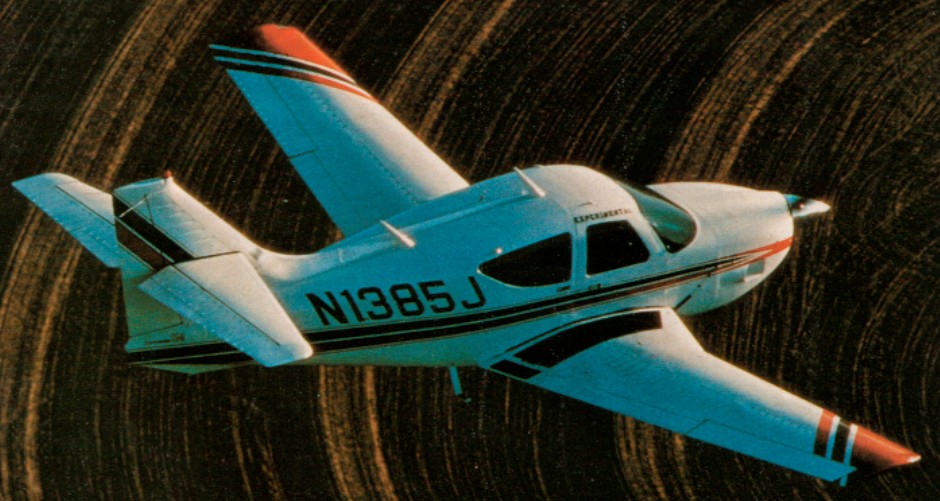
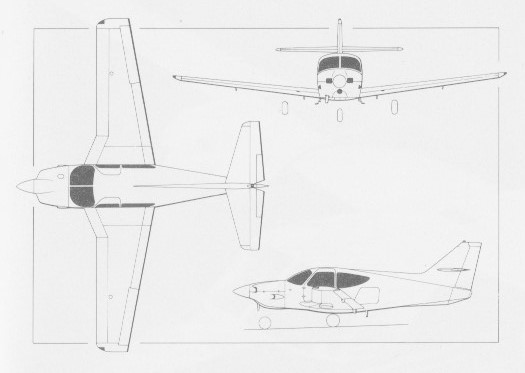
In its original conception, the 112 was to be a 120 mph fixed gear airplane that could compete with the Cessna 172. As the decision was made to begin with a retractable and compete with Mooneys, Arrows and Sierras, a Rockwell survey showed that most pilots would give up a little speed for a really comfortable cabin that could be entered from either side. From this came the wide body 112 series. The single-engined Model 112 was delivered to customers from 1972.
The airplane was not right in the beginning, when production glitches were numerous, so Rockwell recalled and modified the first batch of airplanes and moved production from the Albany, Georgia plant to Rockwell’s General Aviation Division plant in Bethany, Oklahoma, where their prop twins are made. The doors were part of the modification program of the original 112s. Original 112 doors were made of fiberglass and fitted so poorly that they shrieked in the wind and leaked in the rain. Metal doors, with plenty of latch points, cured that. (The metal doors were incorporated on existing airplanes, at no cost to the customer.) The Bethany built 112A is top quality. Rockwell offered two 112 derivatives, the 114 and the 112TC. The 114, powered by a fuel injected 260 hp engine (compared with the 112’s 200 hp engine) in the same four place airframe as the 200 hp Model 112A, was first on the scene, beating the 112TC (with a turbocharged 210 hp Lycoming) to certification by at least a month. The 114’s design goal apparently was to answer the most frequently voiced complaint about the 112A the limited payload that resulted from powering a big airplane with a relatively small engine. The 114, with a 260 hp Lycoming engine, address this problem; its useful load is 391 pounds greater than the 112’As and provides 10 percent more speed. The airplanes look almost exactly alike. The more powerful six cylinder engine fitted under the same cowl used for the four cylinder 200. The top cowling comes off for access. The only visible differences between the 112A and the 114 are at the front of the cowling where a bulge is necessary to make room for the 114’s alternator and where the prop governor pokes out. The bulge has a slot at its bottom to facilitate cooling the alternator. Only 26.5 pounds of structure were added, primarily in the area of the main landing gear attachments to absorb greater landing loads. The 112A has a maximum landing weight of 2,550 pounds, so the 114 can touch down with almost 600 pounds more. The tires and brakes on the 114 are a bit larger than on the 112A, too, and there are some small additional items in the tail cone. In total, the 114’s standard empty weight is shown as 99 pounds higher than for the 112A. Rockwell also introduced a version of the 112A that, is powered by the Lycoming TO 360, which is essentially the 112A engine fitted with a fixed waste gate turbocharger. Its ability to produce a higher manifold pressure allows the engine to develop 210 hp up to nearly 14,000 feet. With that engine, the Rockwell 112TC A can carry about 140 more pounds of payload than the 112A when both are filled with 399 pounds of fuel. The 112TC-A is equipped with auto boost; a throttle controlled turbocharger. You boost the engine to maximum allowable simply by monitoring the manifold pressure gauge. The Commander 114B received certification in 1973 and is essentially a 112A with the 260hp engine. In the Magnum 300 Machen puts in the 300 hp version of the same 540 cubic inch Lycoming six that, in derated form, powers the 114. A new, two blade aluminum Hartzell or an optional three blade Hoffmann prop of composite construction and the battery migrates to the very tip of the tail cone to redress the balance. A 25 pound optional soundproofing kit reduces cabin noise by seven decibels. The Machen Magnum’s STC raises the gross weight to 3,000 pounds, with a zero fuel weight of 2,580. The entire 420 pound fuel load can always be carried, but cabin load is limited to about 790 pounds. Machen was seeking an STC on two additional seats in the baggage space behind the rear seats, with a placard maximum of 200 pounds. The 300 hp Magnum 300’s performance includes cruising speeds at 75 percent in the 155 160 knot range at 6,500 feet, with fuel flows of around 15 or 16 USG per hour. With a usable fuel capacity of 68 gallons, the range at maximum cruise speed with a 45 minute reserve is about 550 nautical miles. Machen’s scheme calls for a week of downtime to replace the owner’s 200 hp IO-360, with five hours flying time for break in and debugging. The bigger engine just fits in the standard cowling, part of the spinner disappearing into the front of the cowling. The optional Hoffmann propeller ($1,000 more than the two blade Hartzell) is of composite construction, the main part of the blade a fiberglass laminate to which is bonded a metal leading edge for abrasion resistance. A three blade prop is quieter than two blades; but it does not produce more thrust.
The Model 111A was generally similar to the Model 112 but with a 180 hp Lycoming O-360-A1G6 and non-retractable undercarriage. It was a development aircraft only.
111A Engine: 180 hp Lycoming O-360-A1G6 Undercarriage: non-retractable
112 Engine: Lycoming IO-360-C1D6, 200 hp Wingspan: 32 ft 10,75 in / 10.03 m Length: 25 ft 0 in / 7.52 m Empty weight: 1530 lb / 694 kg MTOW: 2550 lb / 1157 kg Cruise 75% 7500ft / 2285m: 152 kt / 175 mph / 281 kph ROC SL: 100 fpm / 305 m/min Service ceiling: 17,000 ft / 5180 m Range no res: 981 nm / 1130 mi / 1818 km Seats: 4 Cabin length: 9 ft 7.5 in / 2.93 m Cabin width: 3 ft 11 in / 1.19 m Cabin height: 4 ft 1 in / 1.24 m Baggage compartment: 21 cu.ft / 0.59 cu.m / 200 lb / 90.7 kg
111A Engine: 180 hp Lycoming O-360-A1G6 Undercarriage: non-retractable
112A Engine: Lycoming IO 360 C1D6, 200 hp TBO: 1,600 hr Propeller: Hartzell 76 inch dia. 2 blade Length: 24 ft 10 in Height: 8 ft 5 in Wingspan: 32 ft 9 in Wing area: 153 sq.ft Wing loading: 17.4 lb/sq.ft Seats: 4 Empty weight: 1,761 lb Useful load: 889 lb Payload full fuel: 481 lb Gross weight: 2,650 lb Power loading: 13.3 lb/hp Fuel cap (std): 68 USG/408 lb Baggage area: 21 cu.ft Rate of climb: 1,020 fpm Service ceiling: 13,900 ft Maximum speed: 148 kt 75% Cruise 6,000ft: 140 kt 55% cruise 5,000ft: 119 kt Stall speed (clean): 66 kt Stall (gear / flaps down): 54 kt Min runway: 1,585 ft Range @ max cruise (45 min res., std. tanks): 765 nm. Range @ econ cruise (45 min res., std. tanks): 850 nm Duration @ max cruise (no res., std. tanks): 6.1 hr
112B Engine: Lycoming IO-360-C1D6, 200 hp TBO: 2000 hrs Fuel type: 100LL Propeller: Constant speed Seats: 4 Wing loading: 17.1 lb/sq.ft Pwr loading: 14 lb/hp Gross wt: 2800 lb Empty wt: 1773 lb Equipped useful load: 933 lb Payload max fuel: 525 lb Range max fuel/75% pwr: 831 nm/5.8 hr Range max fuel, 55% pwr: 945 nm/ 7.8 hr Service ceiling: 15,050 ft 75% cruise: 142 kt. 55% cruise: 122 kt Stall: 51-56 kt 1.3 Vso: 66 kt ROC: 950 fpm Min field length: 1829 ft Fuel cap: 288/408 lb Undercarriage: retractable
112 TC Engine: Lycoming TO 360 ClA6D with factory installed Rajay turbocharger, 210 hp TBO: 1,200 hrs Prop: Hartzell two blade, constant speed, 77 in. dia Length: 25 ft. 5 in Height: 8 ft 5 in Wingspan: 35 ft. 7 in Airfoil: NACA 63.415 Aspect ratio: 7.7 Wing area: 163.8 sq.ft Wing loading: 17.4 lb/sq.ft Seats: 4 Empty weight: 1,820 lb Useful load: 1,030 lb Payload with full fuel: 622 lb Gross weight: 2,850 lb Power loading: 13.6 lb/hp Fuel cap (std): 48 USG/288 lb Fuel capacity (optl): 68 USG/408 lb Baggage cap: 200 lb Baggage area: 21 cu.ft Minimum runway: 2,280 ft Rate of climb: 888 fpm Service ceiling: 20,000 ft Max speed @ 15,000 ft: 191 mph, 164 kt Stall speed (clean): 56 kt Stall (gear, flaps down): 51 kt Cruise (75 % @ 8,000 ft): 135 kt Economy cruise (55% @ 8,000 ft): 129 kt Range max cruise (45min res, std tanks): 401 nm Range @ econ cruise (45 min res, std tanks): 623 nm Endurance @ max cruise (no res, std tanks): 3.7 hr
112-TCA Engine: Lycoming TO-360-C1A6D, 210 hp. TBO hrs: 1800 Propeller: Hartzell 2 blade CS/77 Fuel type: 100LL Wingspan: 35 ft 7 in Overall length: 25 ft 1 in Height: 8 ft 5 in Wing area: 163.8 sq.ft Wing loading: 18 lb/sq.ft Power loading: 14 lb/hp Gross wt: 2950 lb Empty wt: 2035 lb Max landing wt: 2950 lb Equipped weight: 1900 lb Useful load, std: 1050 lb Useful load (equipped): 1050 lb Baggage cap: 200/22 lb Payload, full std. fuel: 630 lb Fuel cap: 68 USG/408 lb Equipped useful load: 1022 lb Payload max fuel: 614 lb Undercarriage: tri/retractable Wheel base: 6 ft 10 in Wheel track: 10 ft 11 in Tires (mains): 7.00 x 6 Tires (nose): 5.00 x 5 Cabin doors: 2 Cabin width: 44 in Cabin height: 49 in Seats: 4 1.3 Vso: 68 kt Service ceiling: 20,000 ft Min field length: 2100 ft T/O 50-ft. obstacle: 1750 ft Max level speed: 170kt/196mph @ 20,000ft ROC: 914 fpm Cruise 75% power @ 24,000 ft.: 163 kt /196 mph Cruise 65% power @ 6,500 ft.: 154 kt /177 mph Cruise 55% power @ 16,000 ft.: 137 kt /158 mph Stall speed (gear, flaps up): 58 kt /67 mph Stall speed (gear, flaps down): 54 kt /62 mph Fuel consumption 75% power: 13.2 USGph Fuel consumption 65% power: 10.0 USGph Fuel consumption 55% power: 8.5 USGph Range max fuel/75% pwr: 751 nm/4.5 hr Range max fuel/55% pwr: 1037 nm/ 7.3 hr Max range (w/ res) 75% power: 665 nm / 765 sm Max range (w/ res) 65% power: 835 nm / 960 sm Max range (w/ res) 55% power: 900 nm / 1035 sm
114 Engine: Lycoming IO 540 T4A5D, 260 hp. TBO: 2,000 hrs Prop: constant speed, two blade, 77 in dia Length: 24 ft. 10 in Height: 8 ft 5 in Wingspan: 32 ft 9 in Wing area: 152 sq.ft Wing loading: 20.7 lb/sq.ft Seats: 4 Empty wt: 1,990 lb Useful load: 1,150 lb Gross weight: 3,140 lb Payload with full fuel: 742 lb Power loading: 12.1 lb/hp Usable fuel: 68 USG/408 lb Min runway requirement: 1,650 ft Rate of climb: 1,054 fpm Service ceiling: 16,800 ft Max speed: 160 kt Stall speed, clean: 59 kt Stall speed, gear/flaps down: 55 kt Max cruise (75% power @ 2,500 rpm): 151 kt Economy cruise (55 % power 2,300 rpm): 132 kt Range at max cruise (45 min res): 615 nm Range at economy cruise (45 min res): 685 nm Duration at max cruise, no res: 5.0 hrs
114A Engine: Lycoming IO-540, 260 hp Cruise: 150 kt Seats: 4 U/C: Retract nose Useful load: 1350 lb MTOW: 3140 lb ROC: 1054 fpm Range: 820 sm
114B Engine: Lycoming IO-540-T4B5, 260hp TBO: 2000 hrs Propeller: Constant speed Landing gear: Tri/Retr Gross weight: 3260 lb Fuel (gals.): 68 Empty weight, std: 2102 lb Useful load, std: 1158 lb Wingspan: 32 ft. 9 in Overall length: 24 ft 11 in Height: 8 ft. 5 in Wing area: 152 sq.ft Seating capacity: 4 Cabin width: 47 in Cabin height: 49 in Baggage capacity: 200 lb Cruise speed 75% power: 160 kt Cruise speed 65% power: 155 kts Max range (w/res) 75% pwr: 636 nm Fuel burn 75% power: 14.3 USGph Max range (w/res) 65% pwr: 705 nm Fuel burn 65% power: 12.6 USGph Stall speed (gear, flaps dn): 54 kt Best rate of climb: 1070 fpm Service ceiling: 16,800 ft Takeoff ground roll: 1145 ft Landing ground roll: 720 ft
114TC Engine: Lycoming TIO-540-AG1A, 200 hp TBO: 2000 hr Propeller: Const. spd. Landing gear type: Tri/Retr. Gross weight: 3305 lb Empty weight, std: 2152 lb Useful load, std: 1153 lb Fuel capacity: 88 USgals Wingspan: 32 ft 9 in Overall length: 24 ft 11 in Height: 8 ft 5 in Wing area: 152 sq.ft Seating capacity: 4 Cabin width: 47 in Cabin height: 49 in Baggage capacity: 200 lb Cruise speed 75% power: 187 kts Cruise speed 65% power: 169 kts Best rate of climb: 1050 fpm Service ceiling: 25,000 ft Takeoff ground roll: 1408 ft Landing ground roll: 734 ft Max range (w/res) 75% pwr: 670 nm Fuel burn 75% power: 16.3 USgph Max range (w/res) 65% pwr: 780 nm Fuel burn 65% power: 14.1 USgph Stall speed (gear, flaps down): 59 kt
The history of the basic airframe began in 1961 when Volaircraft Incorporated received type approval for their only product, the Volaire Model 10, a two-seat prototype version N6663D. The four seat Volaire with a 135 hp O 290 Lycoming powerplant cruised at 115 mph at 75% power and sold for under $8,000 in 1964. The production version, the Model 1050, received type certification in 1965 with four seats and 150-hp achieved limited production at Aliquippa, Pennsylvania, billed as the lowest-priced four-placer in the market (at $8500).
Volaire 1050 N6666D
This design was acquired by Aero Commander and renamed Aero Commander 100. With the merger of Aero Commander and North American Rockwell the name changed again in 1968, this time to “Darter.” In 1969 the price was $8,950.
The AC 100’s NACA 2312 airfoil gives it a solid feel in slow flight, and this makes it a pleasant airplane to land, while the fiberglass-sprung gear really smooths out a rough field.
The AC 100 will spin, though it’s placarded against it. It does need reasonable rudder-aileron coordination for good turns. Its three-position flaps are quite effective. Brakes are good, operated by a single hand lever as with the TriPacer. A speed check at 5,000 feet, with two aboard and almost full tanks, trued out at 130 mph. As you would suspect, with four large people aboard and full tanks, there’s little or no baggage allowance left.
AC 100
In 1968, Aero Commander announced two “new” airplanes, the 150-hp Darter Commander ($8,950), which was simply the AC 100 renamed and repainted; and the Lark Commander ($12,995), which used the same airframe, with a new swept rudder, re-shaped cowl, and Lycoming 180 hp. But the production life of these craft was short, perhaps due in part to the lack of a proper dealer network, and none of the fixed-gear Aero Commanders are exactly plentiful supply in the used plane market today.
Aero Commander 100 Cadet N3871X
Equipped with the 180-hp engine and a fixed-pitch prop, this airplane provided rather unspectacular cruise performance and short field capability for its class. Built with a steel-tube cabin structure, semi-monocoque aft fuselage, steel landing gear legs attached to a 1” x 6” x 25” fibreglass slab spring, and a relatively roomy cabin with two doors.
Aero Commander Lark Commander
With the introduction of the Aero Commander 112 (subsequently Rockwell Commander 112), the Lark and Darter both went out of production in the early part of 1971.