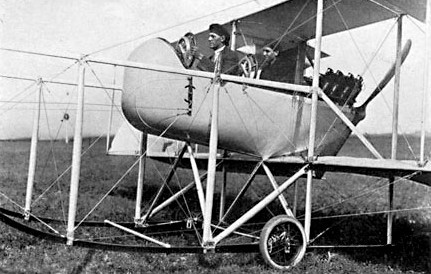
Circa 1910 the 2 seat Aeromarine 8 was powered by a pusher motor, and controlled by canard stabilisers with twin rudders between the wingtips. One was built.
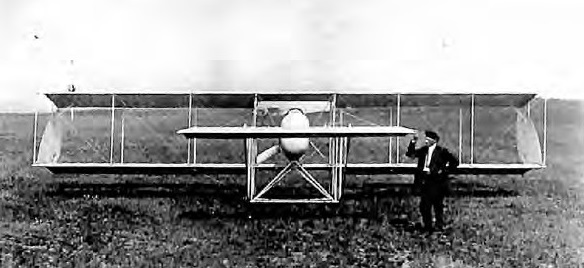
Circa 1910 the 2 seat Aeromarine 8 was powered by a pusher motor, and controlled by canard stabilisers with twin rudders between the wingtips. One was built.
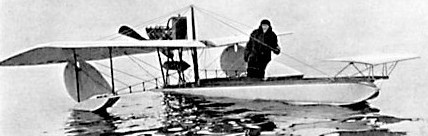
Circa 1909, Aeromarine’s first effort was a single seat canard pusher flying boat.
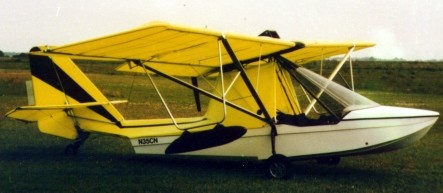
The AeroSkiff features retractable landing gear for water operation, removable wings (30 mins. Typically with 2 persons), quick assembly Dacron slip-on fabric, dual flight controls, high lift flaps, drum brakes, fiberglass fuselage, streamlined struts, and a 12 USgallon fuel tank. Options included an electric starter, Rotax 618, 75 hp, Warp Drive Carbon Fiber Prop, and a bilge pump.
1984 price US$19,990
Engine: Rotax 618, 75 hp
Length: 22 ft 4 in
Height: 7 ft 0 in
Wing Span: 29 ft 8 in / 9.05 m
Wing Area: 156 sq.ft / 14.50 sq.m
Empty Weight: 565 lb / 255 kg
Gross Weight: 1,125 lb / 510 kg
Fuel capacity: 45 lt
Fuel consumption: 18 lt/hr
Cabin Width: 44 in
Cruise Speed: 75 mph / 120 kph
Never Exceed Speed: 95 mph / 144 kph
Stall Speed: 38 mph / 61 kph
Rate of Climb: 800 fpm / 4 m/s
Take off (water): 350 ft
Take off (land): 350 ft
Service Ceiling: 15,000 ft
Seats: 2
Kit price (1998): US$22,475
Engine: Rotax 582, 65 hp
Hp range: 65-75
Length: 22 ft 4 in
Height: 7 ft 0 in
Wing Span: 29 ft 8 in
Wing Area: 156 sq.ft
Empty Weight: 565 lb
Gross Weight: 1,125 lb
Fuel cap: 12 USG
Seats: 1
Cabin Width: 44 in
Max level speed: 90 mph
Cruise Speed: 65 mph
Never Exceed Speed: 95 mph
Stall Speed: 38 mph
Rate Of Climb: 600 fpm
Take off (water): 550 ft
Take off (land): 400 ft
Landing dist land: 300 ft
Landing dist water: 300 ft
Service Ceiling: 10,000 ft
Range: 190 sm
Landing gear: tail wheel / retractable
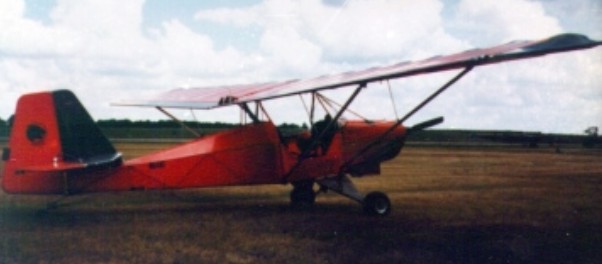
The Bearcat kit was a Baby Ace replica designed by Jack Hutchinson, with full 3 axis controls with a floor mounted joy stick and rudder pedals. Incorporating a 4130 chromolly welded fuselage, a fully cowled engine, and dual surface wings and fuselage, covered with dacron sail cloth.
Optional equipment includes electric starter, ballistic parachute, hydralic disc brakes, and the Rotax 503 2V 53 hp engine. Equipped with shoulder and lap belts, bungee shock landing gear, and a 360 degree roll-cage cockpit construction, the kit major components are pre-welded, machined, sewn, cut and bent, while the fabric slips on components and laces up, no doping required.
The Bearcat is basically a high wing mono configuration, tractor mounted engine, amateur-built aircraft with an all steel 4130 chromolly fuselage frame. The welded fuselage is designed to accommodate all other components by a series of tabs to which the components are bolted.
The wing is a simple ladder construction with strong internal diagonal bracing. This configuration has supported over +6 and -4 G in static load testing. Aluminum ribs placed in upper and lower pockets in the dacron covering shape the airfoil.
Bearcat
Engine: Rotax Model 447, 42 hp @ 6250 rpm
HP range: 42-65
Propeller: 68 x 28
Length: 17 ft 6 in
Height: 6 ft 5 in
Wing Span: 30 ft
Wing Area: 150 sq.ft
Wing Loading: 4.66 lb/sq ft
Seats: 1
Empty Weight: 275 lb
Useful Load: 425 lb
MTOW: 700 lb
Fuel Capacity: 5 USgal
Load Factor: +6, -4
Rate of climb: 750-1200 ft/min
Max level speed: 70 mph
Max level speed: 75 mph
Cruise: 63 mph
Range: 120 sm
Landing gear: tail wheel
Best rate of climb (Vy): 45 mph
Design maneuvering speed (Va): 55 mph
Never exceed speed (Vne): 110 mph
Stall, power off (Vs): 27 mph
Landing approach speed: 45 mph
Takeoff distance, ground roll: 150 ft
Takeoff distance, 50 ft obst.: 400 ft
Landing distance, ground roll: 150 ft
Landing distance, 50 ft obst.: 450 ft
Ag Bearcat
Engine: Rotax 582, 65 hp
Speed max: 90 mph
Cruise: 70 mph
Range: 140 sm
Stall: 35 mph
ROC: 1000 fpm
Take-off dist: 150 ft
Landing dist: 200 ft
Service ceiling: 10,000 ft
Fuel cap: 10 USG
Weight empty: 380 lb
Gross: 900 lb
Height: 6.5 ft
Length: 17.5 ft
Wing span: 30.7 ft
Wing area: 160 sq.ft
Seats: 1
Landing gear: tail wheel
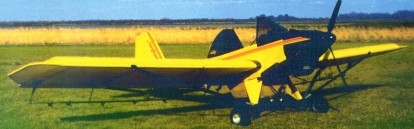
The AeroMaster AG is a complete light aerial ag system designed by a farmer for farmers. Using only 5 gallons of fuel per hour while covering 150-200 acres per hour gives low operating cost per acre. The SprayMiser rotary atomizer nozzle system provides a cost-effective technology for applying pesticides.
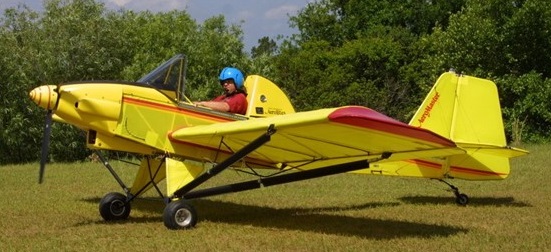
The AeroMaster is a low-wing, amateur-built aircraft with a 4130 chromoly steel fuselage frame. The welded fuselage accommodates all other components by a series of tabs to which the components are bolted. The wing’s construction with internal diagonal bracing has supported over +6 and -4 G in static load testing. Aluminum ribs placed in pockets in the dacron covering shape the airfoil. Standard three-axis control: conventional rudder pedals, throttle quadrant and joy-stick controlled ailerons and elevator are fitted.
The aircraft includes the Spray Miser CDA Ag system and 30 USG chemical tank, covering up to 120 acres.
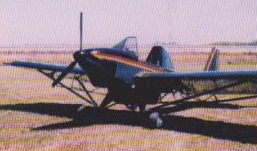
Aeromaster
Engine: Rotax 582, 64 hp
Wing span: 8.74 m
Wing area: 13.55 sq.m
Empty weight: 192 kg
MAUW: 453 kg
Fuel capacity: 37.8 lt
Max speed: 144 kph
Cruise speed: 112 kph
Minimum speed: 40 kph
Climb rate: 4 m/s
Fuel consumption: 15.8 lt/hr
Seats: 1
Kit price (1998): 22,325
Engine: Rotax Model 582, 66 hp @ 6500 rpm.
HP range: 50-80
Reduction: “C” type gear drive 3:1
Propeller: Warp Drive 3-blade carbon fiber
Length: 18 ft 6 in (5.64 m)
Height: 6 ft 11 in (2.11 m)
Wing Span: 28 ft 8 in (8.74 m)
Wing Area: 145.7 sq.ft (13.54 sq. m)
Wing Loading: 6.86 lb/sq.ft(33.5 kg/sq.m)
Empty Weight: 425 lb (193 kg)
MTOW: 1000 lb (454 kg)
Fuel Capacity: 10 US gal (38 liters)
Rate of Climb (Gross): 800 ft/min (244m)
Spray Speed: 65 mph (57 knot)
Best Rate of Climb (Vy): 45 mph (39 knot)
Design manuv. speed (Va): 60 mph (52 knot)
Speed max: 95 mph
Never Exceed Speed (Vne): 110 mph (96 knot)
Cruise: 75 mph
Stall, power on (Vs) (Gross): 32 mph (28 knot)
Range: 150 sm
Landing approach speed: 45 mph (39 knot)
Load Factor: +6, -4
Spray capacity: 30 USG
Takeoff Ground Roll (Gross): 500 ft (152 m)
Landing Ground Roll: 150 ft (46 m)
Seats: 1
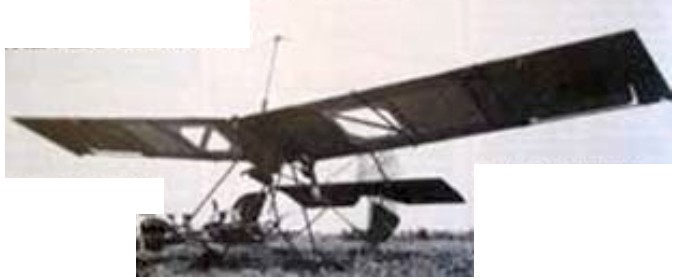
Single seat single engined high wing mono¬plane with conventional three axis control. Wing has unswept leading and trailing edges, and constant chord; cruciform tail. Pitch control by elevator on tail; yaw control by fully flying rudder; roll control by one third span ailerons; control inputs through stick for pitch/roll and pedals for yaw. Wing braced from above by kingpost and cables, from below by cables; wing profile; single surface. Undercarriage has three wheels in tricycle formation with additional tailskid; no suspension on nosewheel and torsion bar suspension on main wheels. No ground steering. No brakes. Aluminium tube framework, without pod. Engine mounted below wing driving pusher propeller. Aluminium tubing to US 6061 T6 specification.
Adjustable trim tabs and wheel spats are fitted as standard equipment.
Engine: Kawasaki TA440, 40 hp
Engine displacement: 440cc
Max static thrust: 240 lb, 109 kg
Reduction ratio: 2.4:1
Prop: 56 x 32
Wingspan: 33 ft
Wing area: 165 sq.ft
Length: 17 ft 9in
Empty weight: 243 lb
Usable payload: 210 lb
Gross weight: 453 lb
Wing loading: 2.74 lb/sq.ft
Glide ratio: 8:1
Cruise speed: 55 mph
Vmax: 65 mph
Stall speed: 23 mph
Takeoff roll: 100 ft
Landing roll: 75 ft
Climb rate: 800 fpm, 4.1 m/s
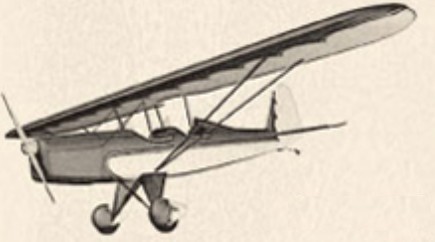
A two seat, high wing, single engine tractor configuration, the wing structure features a classical twin aluminum spar; the spars, the molded wing ribs and flap/aileron components are made from sheets of Al 6082-T6 or 6061-T6. All aluminum parts are CNC machined and protected by Alodine; a further layer of wash primer is applied where the fabric is glued to the structure. LH and RH wings are mated to the fuselage through a center cabane and extruded aluminum lift struts.
All the wing, flaps and ailerons are covered by fabric, riveted to the ribs. The fuselage structure features a TIG welded chromium molybdenum steel truss with integral wing fittings, vertical stabilizer, plywood frames and fabric covering. All the steel tubes are internally protected by a MIL-SPEC anti-corrosion treatment that leaves a waxy protective layer over the surface.
The untwisted, cantilever main wing features a rectangular planform with rounded tips, 1 degree dihedral from fuselage centerline and classical NACA4416 wing section at full span. The empennage features flat horizontal and vertical tail surfaces.
Push-pull rods for ailerons and elevator, 3/32in steel cables for rudder control. The aircraft is trimmed by the electrically actuated stabilizer. The wing flaps are electrically actuated as well.
Tail-wheel tricycle type; fixed main gear on steel struts with rubber shock absorber, hydraulic disc brakes and 6.00×6 wheels. The swiveling tail-wheel is connected to the rudder; it can be disconnected on the ground by removing a quick disconnect pin.
Tandem configuration with individual open cockpits (pilot in the rear seat); central stick controls, rudder pedals and throttles for both seats. Two luggage compartments, both with 44 lbs (20 kg.) capacity, one in the front and one in the rear.
The 14 VDC electrical system is powered by one engine driven alternator/generator and provides power for the flaps, trim, fuel pump and radio rack. The fuel is kept in two internally fitted aluminum tanks (one in each wing root), total capacity 31,6 US gallons (120 liters).
The airframe can be equipped with different engines; firewall forward kits for the following engines were available: radial ROTEC R2800 (rated power 110 HP) and the MIKRON MIIIC (rated power 80 HP). Under development was the LOM M132A (rated power 120 HP). The engine drives a 2 blade wooden propeller.
The kit comes complete from firewall to tail, including the fuselage, tail, and landing gear steel structure completely finished and TIG welded; no additional welding necessary; the spar caps completely riveted ready for assembly; pre drilled aluminum wing ribs; 6.00 x 6 wheels and hydraulic brakes; covering material (Dacron) and finishing tapes; steel firewall; aluminum fuel tanks with fuel level indicator; pre-cut steel/aluminum tangs, brackets; machined parts ready for assembly; polycarbonate windscreen; ready to install hand made Italian leather finishing; fiberglass head rest; complete AN hardware; electric flap/trim actuator; 2 seats with 4 point harness.
The firewall forward kit (less engine) includes: engine mount, TIG welded, cowling; wooden propeller; complete fuel system, including gascolator and electric fuel pump; oil system; oil tank; complete hardware kit; and was available for the Rotec R2800 or Mikron IIIC engine.
Options include full epoxy coating to steel structures; wheel fairing; classic style engine instruments set (5 pcs); passenger seat instrument panel with electronic tachometer and passenger brake system.
All parts are CAD designed and produced by CNC/laser cutting equipment to exacting tolerances and perfect finish.
The LoCamp and HiCamp models are readly available as standard 49% kit.
Engine: ROTEC R2800, 110 hp
Wing span: 29 ft 10 in / 9.10 m
Wing gross area: 145.3 sq.ft / 13.5 sq.m
Wheel track: 5 ft 6 in / 1,68 m
Propeller dia: 72 in / 1,829 m
Empty weight: 771 lb / 350 kg
Useful load: 496 lb / 225 kg
Max T-O weight: 1267 lb / 575 kg
VNE: 132 mph / 115 kts / 213 km/h
T-O distance @ S/L: 820 ft / 250 m
Landing distance @ S/L: 656 ft /200 m
Max range (w/res): 455 sm / 395 nm
Max level speed @ S/L: 121 mph / 105 kts / 195 km/h
g limits: 4.0/-2.0
Maneuvering speed (VA): 90 mph / 78 kts / 145 km/h
Max cruising speed @ S/L (75%): 106 mph / 92 kts / 171 km/h
Stalling speed clean @ S/L (Vs1): 45 mph / 39 kts / 72 km/h
Stalling speed full flaps @ S/L (Vs0): 41 mph / 36 kts / 67 km/h
Max rate of climb @ S/L, MTOP: 800 ft/min / 4 m/s
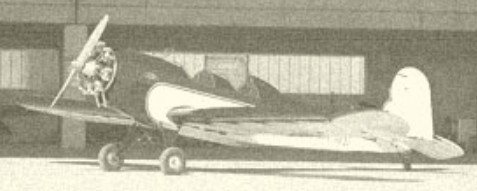
A two seat, low wing, single engine in tractor configuration, the LoCamp and HiCamp models are available as standard 49% kits. Of tandem configuration with individual open cockpits (pilot in the rear seat); central stick controls, rudder pedals and throttles for both seats. Two luggage compartments, both with 44 lb (20 kg) capacity, one in the front and one in the rear.
The untwisted, cantilever main wing features a rectangular planform with rounded tips, 3 degree dihedral from fuselage centerline and classical NACA4416 wing section at full span. The empennage features flat horizontal and vertical tail surfaces.
The wing structure features a classical twin aluminum spar; the spars, the molded wing ribs and flap/aileron components are made from sheets of Al 6082-T6 or 6061-T6. All aluminum parts are CNC machined and protected by Alodine; a further layer of wash primer is applied where the fabric is glued to the structure. LH and RH wings are mated to the fuselage through a center spar; the mating is achieved through conical pins. All the wing, flaps and ailerons are covered by fabric, riveted to the ribs. The fuselage structure features a TIG welded chromium molybdenum steel truss with integral wing fittings, vertical stabilizer, plywood frames and fabric covering. All the steel tubes are internally protected by a MIL-SPEC anti-corrosion treatment that leaves a waxy protective layer over the surface.
Push-pull rods for ailerons and elevator, 3/32in steel cables for rudder control. The aircraft is trimmed by the electrically actuated stabilizer. The wing flaps are electrically actuated as well.
The fixed main gear is on steel struts with rubber shock absorber, hydraulic disc brakes and 6.00 x 6 wheels. The swiveling tail-wheel is connected to the rudder, or it can be disconnected on the ground by removing a quick disconnect pin.
The 14 VDC electrical system is powered by one engine driven alternator/generator and provides power for the flaps, trim, fuel pump and radio rack. The fuel is kept in two internally fitted aluminum tanks (one in each wing root), total capacity 31.6 US gallons (120 lt).
The airframe can be equipped with different engines; firewall forward kits for the following engines were available: radial ROTEC R2800 (rated power 110 HP) and the MIKRON MIIIC (rated power 80 HP). Under development was the LOM M132A (rated power 120 HP). The engine drives a 2 blade wooden propeller.
The kit comes complete from firewall to tail, including the fuselage, tail, and landing gear steel structure completely finished and TIG welded; no additional welding necessary; the spar caps completely riveted ready for assembly; pre drilled aluminum wing ribs; 6.00 x 6 wheels and hydraulic brakes; covering material (Dacron) and finishing tapes; steel firewall; aluminum fuel tanks with fuel level indicator; pre-cut steel/aluminum tangs, brackets; machined parts ready for assembly; polycarbonate windscreen; ready to install hand made Italian leather finishing; fiberglass head rest; complete AN hardware; electric flap/trim actuator; 2 seats with 4 point harness.
The firewall forward kit (less engine) includes: engine mount, TIG welded, cowling; wooden propeller; complete fuel system, including gascolator and electric fuel pump; oil system; oil tank; complete hardware kit; and was available for the Rotec R2800 or Mikron IIIC engine.
Options include full epoxy coating to steel structures; wheel fairing; classic style engine instruments set (5 pcs); passenger seat instrument panel with electronic tachometer and passenger brake sys.
Engine: ROTEC R2800, 110 hp
Wing span: 29 ft10 in, 9,10 m
Wing gross area: 145.3 sq.ft, 13,5 sq.m
Wheel track: 5 ft 6 in, 1,68 m
Propeller dia: 72 in, 1,829 m
Empty weight: 848 lb, 385 kg
Useful load: 472 lb, 214 kg
Max T-O weight: 1320 lb, 599 kg
VNE: 132 mph, 115 kt, 213 kph
Max level speed @ S/L: 121 mph, 105 kt, 195 kph
T-O distance @ S/L: 820 ft, 250 m
Landing distance @ S/L: 656 ft, 200 m
Max range (with 30 min res): 455 nm
g limits: +4.0/-2.0
Fuel cap: 30 USG
Seats: 2 tandem
Cockpit width: 25 in
Undercarriage: tailwheel
Maneuvering speed (VA): 90 mph, 78 kt, 145 kph
Max cruise @ S/L (75%): 106 mph, 92 kt, 171 kph
Stalling speed clean @ S/L (Vs1): 45 mph, 39 kt, 72 kph
Stalling speed full flaps @ S/L (Vs0): 41 mph, 36 kt, 67 kph
Max rate of climb @ S/L, MTOP: 800 ft/min, 4 m/s
Aerolab Srl was founded by Francesco Rizzi, Airbus Captain for Alitalia and EAA member since 1989, in 2001. The firm was supported by a group of financial partners and its mission is to produce charming flying machines as standard equipment.
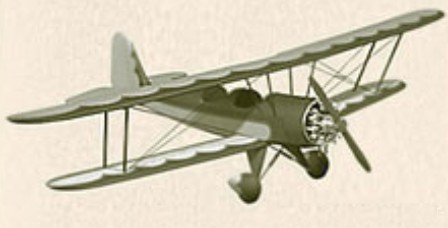
With the Sport Camper family of aircraft it is possible to choose between three different aerodydamic layouts: the low wing “LoCamp”- the parasol wing “HiCamp” – the biplane “BiCamp”.

