Aerophysics VZ-7 / Curtiss-Wright VZ-7

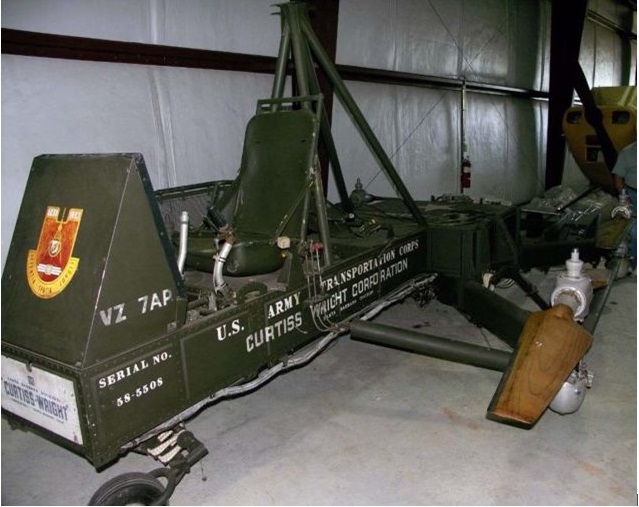
Soon after the U.S. Army ordered two VZ 7 aerial jeep research prototypes from the Aero¬physics Development Corporation, the company was absorbed by Curtiss Wright Corporation and became its Santa Barbara Division.
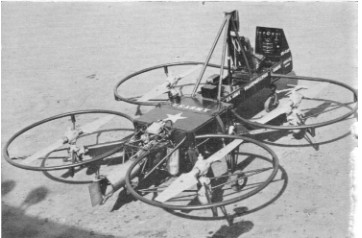
The VZ 7 was originally designed as a ducted ¬fan type, like the VZ 6 and VZ 8, but it flew only with unshrouded rotors, of which it had four. This arrangement simplified the control system, since differential pitch on the rotors gave both pitch and roll control. For yaw control, a small rudder operated in the exhaust of the Turbomeca Artouste IIB shaft drive turbine.
The VZ-7 was essentially consisting a rectangular central airframe to which four vertically-mounted propellers were attached in a square pattern. The central fuselage carried the pilot’s seat, flight controls, fuel and lubricant tanks, and a single 425shp Turbomeca Artouste IIB shaft turbine engine.
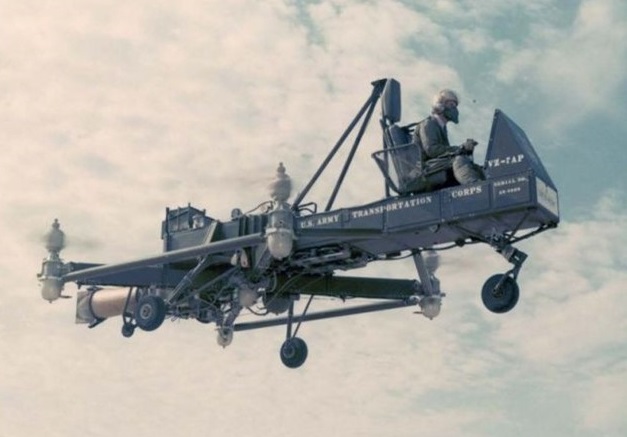
Curtiss-Wright’s Santa Barbara Division (formerly the Aerophysics Development Corporation) was awarded an Army contract in 1957 for the development and initial flight testing of two prototype aircraft. Two VZ 7s (58 5508 and 58 5509) were ordered by the Army but only the first was completed and delivered to the Army in mid-1958. It flew successfully during 1959 and 1960 and served its purpose of providing general information on this type of vehicle.
The craft was capable of hovering and forward flight and proved relatively stable and easy to operate but was consistently incapable of meeting the altitude and speed requirements specified by the Army. The VZ-7 was withdrawn from service and returned to the manufacturer in mid-1960.

One of them still exists in storage at the United States Army Aviation Museum collection.
Gallery

Curtiss-Wright VZ-7
Engine: 1 x Turbomeca “Artouste” IIB turboshaft, rated at 320kW
Wingspan: 4.87m
Length: 5.18m
Height: 2.83m
Take-off weight: 952kg
Empty weight: 771kg
Max speed: 51km/h
Ceiling: 60m
Crew: 1-2
Aeromot Ximango AMT

Super Ximango AMT 200

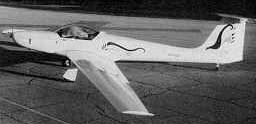
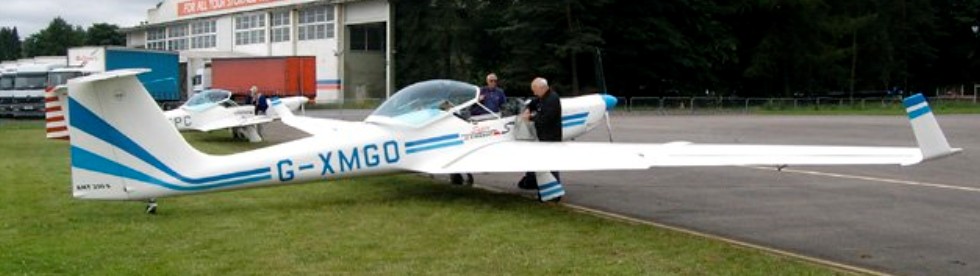
Aeronaves e Motores (Aeromot) acquired the production right to the Aerostructures (Fournier) RF 10 side-by-side two-place self-launching sailplane and built a slightly modified version under the name AMT 100 Ximango with a 80 BHP / 60 kW Limbach L 2000 E01 engine driving a Hoffmann 2 blade 3 position propellor with electric starter. The first AMT 100 flew in 1986. The AMT 200 is a development using the liquid cooled Rotax engine also with a Hoffmann propeller, but of larger diameter. The double main wheel landing gear is manually retractable. The outboard section of the wing folds for hangering. Both are air transport certified.

The Aeromot AMT-200S Ximango is powered by a Rotax 912 engine. The 57 foot wing span can be shortened by folding the outer panels of the wings, which saves hangar space. Since its first flight around 1995, it has proved very popular, with more than 135 sold.

AMT-200S Ximango

AMT 100
Engine: Limbach L 2000 E01, 80 BHP / 60 kW
Prop: Hoffmann 2 blade 3 position

AMT 200
Engine: Rotax 912A, 81 bhp / 60 kW
Propeller: Hoffman two-blade
Wing Span: 17.47m / 57.3ft
Wing Area: 18.7sq.m / 201.28 sq.ft
Overall length: 26 ft
Height: 5 ft
Empty Weight: 605kg / 1334lb
Payload: 245kg / 540lb
Gross Weight: 850kg / 1874lb
Max ramp weight: 1874 lb
Payload, full fuel: 405 lb
Max landing weight: 1874 lb
Usable fuel: 23 USG
Power loading: 23.1 lb/hp
Baggage capacity: 22 lb
Oil capacity: 3.1 qts
Wheel track: 9 ft
Wing Load: 45.45kg/sq.m / 9.31lb/sq.ft
Cruise 75% pwr: 110 kt
Max range (w/ res) 55% pwr: 650 nm
Fuel burn 75%: 4.5USG/h
Stall speed (flaps, gear down): 39 kt
Best rate of climb: 512 fpm
Takeoff ground roll: 738 ft
Seats: 2
Aspect ratio: 16.1
L/D Max: 42
Airfoil: NACA 64(3)618
Structure: Glass fiber and carbon fiber

AMT 200 Super Ximango
Engine: Limbach L 2000 EO1, 79 hp
Length: 25.886 ft / 7.89 m
Wingspan: 57.316 ft / 17.47 m
Aspect ratio: 16.32
Wing area: 201.287 sq.ft / 18.7 sq.m
MTOW: 1764.0 lb / 800.0 kg
Weight empty: 1323.0 lb / 600.0 kg
Max speed: 132 kt / 245 km/h
Stall: 42 kt / 48 mph / 78 kmh
Cruising speed: 103 kt / 190 km/h
VNE: 132 kt / 152 mph / 245 kmh
Climb Ratio: 550 ft/min / 3 m/s
Wing load: 8.82 lb/sq.ft / 43.0 kg/sq.m
Glide ratio: 30.0
Crew: 2
Take-off distance (50ft obstacle): 1060 ft / 323 m
Landing distance (50ft obstacle): 950 ft / 290 m

AMT-200S Ximango
Engine: Rotax 912
Top speed: 120mph
Range: 550 miles
wing span: 57 ft

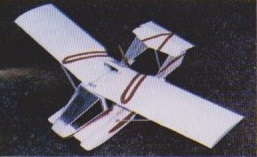
Aeronef Montreal Delta

Created by Claude Guilbault, the Delta is an amphibious pusher with retractable undercarriage. The cabin is carbonfibre, and the floats and tail are aluminium. Wings are fabric covered aluminium. The Delte was in the experimental stage in 1998.

Engine: Arrow 1000, 100 hp
Wing span: 9.75 m
Wing area: 16 sq.m
MAUW: 610 kg
Empty weight: 390 kg
Fuel capacity: 136 lt
Max speed: 195 kph
Cruise speed: 180 kph
Climb rate: 3 m/s
Seats: 2
Plan price (1998): Can$200
Kit price (1998): Can$18,000

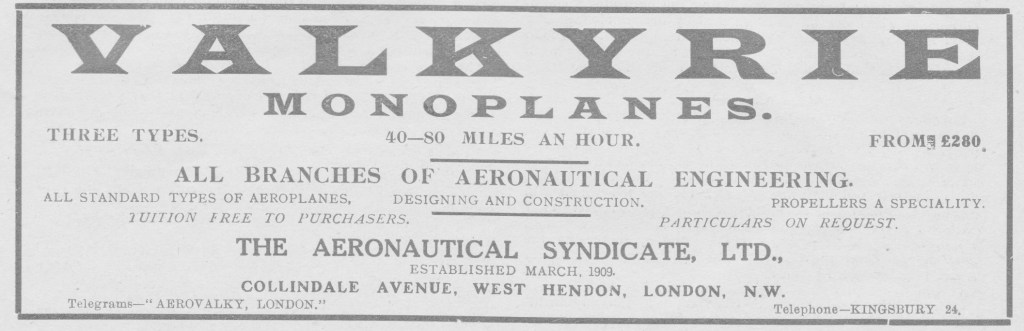
Aeronautical Syndicate Valkyrie

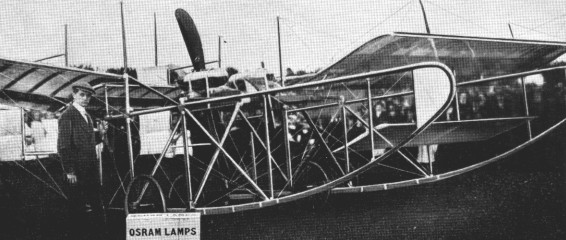
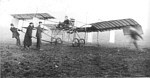
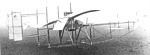
The Aeronautical Syndicate Ltd constructed Horatio Barber’s Valkyrie, tail first, monoplane circa 1911.
Horatio Barber’s Aeronautical Syndicate Limited’s Valkyrie B became the first aircraft to transport aerial cargo in Britain on 4 July 1911, when it flew a box of lightbulbs from Shoreham to Hove in Sussex.
Several Valkyrie canard pushers were built. Not easy to fly, but used successfully for training.

November 1911

Aeronautical Syndicate Valkyrie Article

Valkyrie Monoplane (type A)

Designed by Horatio Barber and powered by a Green 35 hp engine, the type A was the second of the successful Valkyrie type machines.

Type A

The 1911 ASL Valkyrie monoplane Type B – two-seater was designed and built by Aeronautical Syndicate Ltd.

1911 ASL Valkyrie monoplane Type B – two-seater
1913 Valkyrie Type C – pilot and 2 passengers

Type A
Engine: Green 35 hp
Propellor: Mahogany
Span: 34 ft 0 in / 10.36 m
Length: 22 ft 0 in / 6.71 m
Height: 8 ft 6 in / 2.59 m
Wing area: 190 sq.ft / 17.65 sq.m
Loaded weight without pilot: 520 lb / 230 kg
Speed: 45 mph / 72 kph
Seats: 1
Airframe: Honduras mahogany and ash
Fabric: un-proofed Egyptian cotton

Type B
Span: 31′
Length: 26′
Weight: 550 lb
Speed: 70 mph
Price: £920

Type C
Span: 39′
Length: 29’9″
Weight: 800 lb
Speed: 70 mph
Seats: 3

Valkyrie A

Aeronautical Products A-3

The NX1272 Model 3 of 1944 fuselage was of fabric-covered welded steel tubing, and resembled that of a light aircraft with the engine located in the forward section and placed horizontally forward of the cabin.
Power from the engine, cooled by a fan mounted directly above it, was transmitted by pulleys and vee belts to a horizontal main drive shaft, then through a bevel gear drive to the main rotor shaft which passed between the pilot’s and the passenger’s seats.
Mounted on the vertical rotor drive shaft was the main gearbox for the tail shaft operating the two-bladed anti-torque rotor, with a diameter of 1.71 metres, the pitch of which was controlled by rudder pedals. This rotor’s maximum rotational speed was 1200 r.p.m.
The three blades of the main rotor were made with tapered tubular spars and also connected to the root spars by a double-action hydraulic shock absorber.
Cyclic pitch control was obtained by a hanging stick while on the engine throttle support was the collective pitch control.
The A-3 was tested in 1945.

A-3
Engine: 1 x Franklin 6AC-298, 165hp
Number of Seats: 2
Rotor Diameter: 9.14m
Weight Fully Loaded: 544kg
Tail rotor diameter: 1.71 m
Tail rotor speed: 1200 rpm

Aeronautical Products A-1

Two undergraduate engineers of the University of Michigan, Corwin Denny and Karl Schakel, with the Aeronautical Products Corporation of Detroit, Michigan, have designed and built a helicopter. Both of the designers left the corporation, but work progressed on the helicopter they initiated. First flown April 1944, during preparations for a trial flight, was damaged, and was rebuilt.
The Denny and Schakel helicopter is a single, main-rotor machine with an auxiliary tail rotor for torque correction. The main rotor is 9m in diameter and is powered by a ninety-horsepower engine. The gross weight is reported to be approximately 540kg. It has a fixed tricycle landing gear.
Built of welded-steel tubular construction, this helicopter is a single-seater with enclosed cabin. The pilot sits behind the engine, which is mounted in the nose. A long shaft extends under the pilot’s seat and is geared to the vertical shaft of the rotor.
It was not put into production.

Aeronca 15 Sedan

Sedan

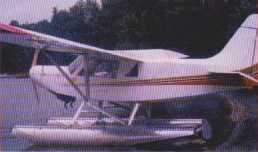
Top of the Aeronca line was the 4-seat 15AC Sedan, (built 1948-1951) a high-wing monoplane powered by a 145 hp Continental. The last civilian airplane to be produced by the Aeronca Manufacturing Corp., the 15AC Sedan (ATC 802), was also Aeronca’s first four-seater airplane. A prototype (NX/NC39800) appeared in 1947, and production began in 1948. The Sedan soon became a familiar sight at civilian fields. It featured an all-metal construction with a metal-skinned single-spar wing and fabric-covered, welded, steel-tube fuselage. Optional Franklin 165 hp engines were fitted into a few 15AC Sedans. Another option put the Aeronca on floats, and that version was called the S15AC.

Aeronca 15AC Sedan

The final production test flight took place on 23 October 1951, piloted by Earl Balon, after 561 had been built.

Gallery

Aeronca 15AC Sedan
Engine: Continental C-145, 145hp@2700@SL
Propeller type: McCauley Fixed Pitch
Fuel type: 100LL
Max ramp weight: 2050 lb / 930 kg
Gross weight: 2050 lb / 930 kg
Landing weight: 2050 lb / 930 kg
Empty weight: 1150 lb / 522 kg
Useful load, std: 900 lb
Payload, full std fuel: 684 lb
Usable fuel, std: 36 USG
Oil capacity: 8 qts
Wingspan: 37 ft 6 in / 11.43 m
Length: 25 ft 3 in / 7.70 m
Height: 7 ft
Wing area: 216.4 sq.ft
Wing loading: 9.47 lb./sq.ft
Power loading: 14.1 lb/hp
Wheel base: 84 in
Wheel size: 6.00 x 6 in
Seating capacity: 4
Cabin doors: 1
Baggage capacity: 120 lb / 54.4 kg
Cruise 75% pwr/2,000 ft: 120 kt
Cruise 65% pwr/2,000 ft: 105 kt
Vs: 53 kt
Vso: 45 kt
Best rate of climb (SL): 570 fpm
Service ceiling: 12,400 ft / 3780 m
Takeoff ground roll: 500 ft
Landing ground roll: 1300 ft
Max range (w/ res) 75% pwr/2,000 ft: 430 nm
Fuel burn 75% pwr/2,000 ft: 8.8 USG/h

Aeronca 15AC Sedan
Engine: Franklin 6A40-165-B3, 165 hp
Propeller type: McCauley Fixed Pitch
Fuel type: 100LL
Max ramp weight: 2050 lb
Gross weight: 2050 lb
Landing weight: 2050 lb
Usable fuel, std: 36 USG
Wingspan: 37 ft 6 in
Overall length: 25 ft 3 in
Height: 7 ft
Wing area: 216.4 sq.ft
Wheel base: 84 in
Wheel size: 6.00 x 6 in
Seating capacity: 4
Cabin doors: 1
Baggage capacity: 120 lb

Aeronca S15AC Sedan
Engine: Continental C-145, 145hp@2700@SL
Propeller type: McCauley Fixed Pitch
Fuel type: 100LL
Max ramp weight: 2050 lb
Gross weight: 2050 lb
Usable fuel, std: 36 USG
Oil capacity: 8 qts
Wingspan: 37 ft 6 in
Overall length: 25 ft 3 in
Wing area: 216.4 sq.ft
Seating capacity: 4
Cabin doors: 1
Baggage capacity: 120 lb
Max range (w/ res) 75% pwr/2,000 ft: 430 nm
Fuel burn 75% pwr/2,000 ft: 8.8 USG/h
Undercarriage: twin float