WAR Focke-Wulf 190

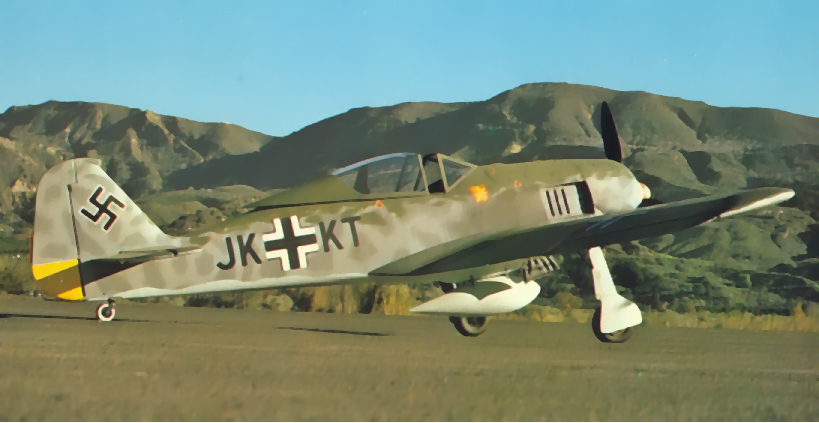
Construction is by War Aircraft Replicas, whose aim is to build scaled down versions of fighters for use as sport aircraft, instead of aerobatic sport aircraft which look like fighters.
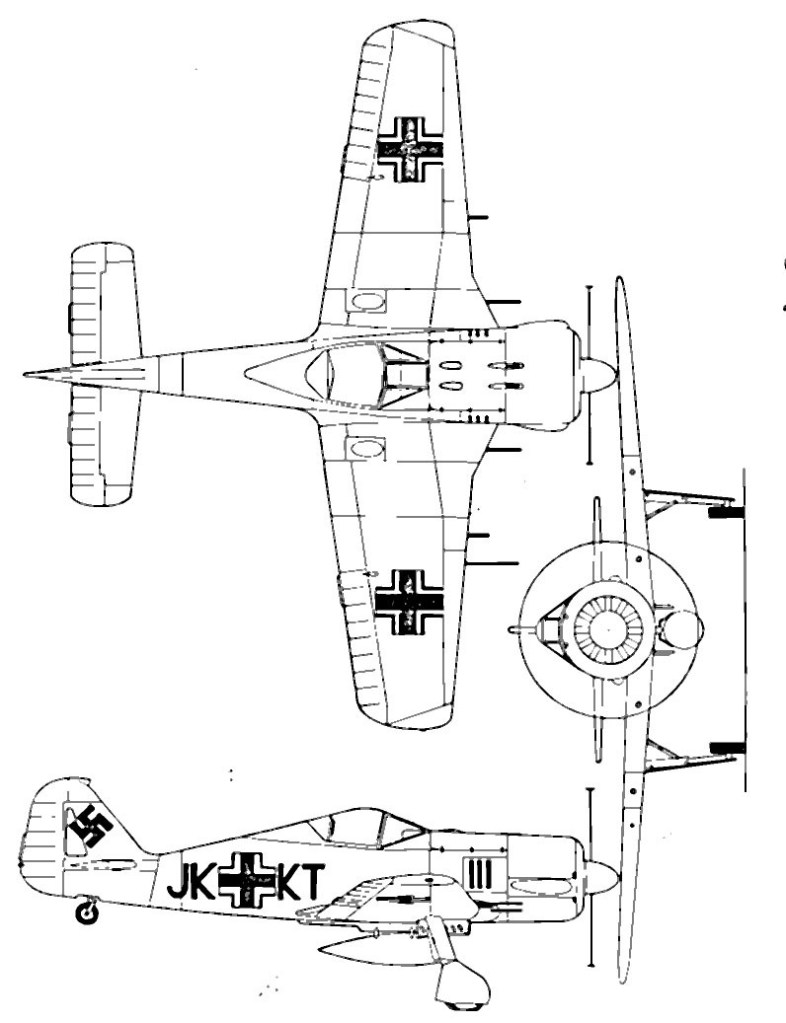
WAR Aircraft Replicas is a company formed to market kits and plans for 1/2-scale World War II aircraft replicas. The Focke-Wulf 190 was singled out to be the first prototype, and development started in 1973. The first flight was made on 21 August 1974 with a 70hp VW engine. Other versions to be certified are the F4U Corsair and the P-47 Thunderbolt. All use the same common wooden fuselage box and wing spar construction. In order to duplicate the various fighter aircraft, polyurethane foam is shaped and covered with high-strength laminating fabric and epoxy resin to form a rigid, yet lightweight structure. Landing gear are electrically-retractable tailwheel type with an emergency system. Power is supplied by a 0-200 Continental turning a three-blade, fixed-pitch prop.
Plans 2005: US$245
Features fully retractable landing gear, sliding canopy, and detachable wings.

WAR Focke-Wulf 190 Article

Gallery

Engine: Continental O-200, Lycoming 0-290-D, HCI 7 cylinder Radial
Prop: 60″dia 3 or 4 blade ground adjustable
Wingspan: 20’0″
Wing area: 70 sq.ft
Wing section root: 23015 54 in
Wing section mid: 23014 46 in
Wing section tip: 23012 31 in
2 degree twist
Length: 16’7″
Tread: 6 ft 8 in
Empty Weight: 600-620 lbs
Max Gross Weight: 900-920 lbs
Fuel capacity 15 USG
Wing Loading: 12lbs/sq ft
Cruise: 135 MPH @3.2 GPH
Vne: 195 mph
Max level speed: 165 MPH
Stall Speed: 55 MPH
Approach & Pattern Speed: 70-75 MPH
Take off Run: 800-1000 ft
Rate of Climb: 700 ft/min.
Endurance: 3-4 Hrs: 400 miles
Structural capability Aerobatic (+/- 6 g’s)
Landing roll 1200 ft
Seats: 1
LSA: yes
Wanke 1912 biplane

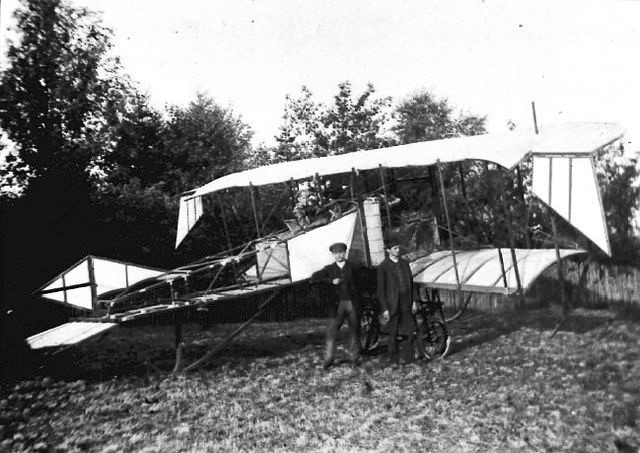
Carl Wanke of Coswig/Anhalt, Germany, started in 1912 to build aircraft. He set up a small workshop and with help of local carpenters, technicians and other enthusiasts he constructed his first aircraft. That was said to have been projected as monoplane, but it was only able to move some 30 metres on the ground. Then Wanke rebuilt the wings and apparently created the biplane shown above. It was tested with some hops, but after a somersault during the first public trial flight it was wrecked.

Walter Stein Aeroplanbau Eindecker 1911

The Walter Stein Aeroplanbau in Teltow/Berlin built two or three disserent designs, depending on how you count. The first was built by Rumpler in the spring of 1910. It was followed by a distinct reconstruction by Stein himself. The machine retained the Aeolus engine but got a sturdier undercarriage and new Taube-like wings. As with his first design, Stein was struggling to get the machine in the air during Autumn 1910. In 1911 Stein built a second Eindecker, fitted at first with a Rumpler Aeolus engine and later modified with a Gregoire-Gyp-Motor. This was the challenge machine. It was later modified, probably in 1912, with a tailwheel and an additional strut to the lower king-post.

Walsh Bros Seaplane

The business syndicate, displeased with Vivian’s seemingly excessive caution, took possession of the Manurewa; soon after, it crashed and was damaged beyond repair. Recovering from this setback, Leo, with Vivian’s help, began to design a flying boat of the American Curtiss type which he thought would suit New Zealand conditions. The brothers gained the financial and practical assistance of R. A. Dexter, an American engineer and motor dealer in Auckland, who was to be a consistent supporter.

Fifteen months’ spare time work went into the construction of this aircraft; all the work was carried out by the Walsh brothers, Leo and Vivian, with the exception of the steel fittings which were manufactured by Mr R.A. Dexter, an Auckland engineer who was backing the project.

The hull planking was cedar with ash stringers and mahogany ribs; the hull weighed 305 lbs. Aluminium decking was provided on the forward portion of the hull and the after portion was covered with a special cloth stretched over cedar battens. Seven watertight compartments were built into the hull. The two mainplanes (each 41 ft 6 ins long) had front and rear spars of ash with cedar rib. The fabric covering the wings and the tailplane was doped with cellulose. The aircraft was powered by a 10-cylinder 4-stroke Anzani engine fitted in a special housing at the rear end of the top mainplane. An 8 ft laminated walnut and mahogany propellor with brass tips was fitted.

The aircraft was constructed at the Walshs’ home in Remuera and when completed was dismantled and carried to Bastion Pt, Orakei. After re-assembly the aircraft was launched on January 1, 1915. After taxiing trials and final adjustments, Vivian Walsh took off in the flying boat for a short test flight around Bastion Pt. Many practice flights followed and on March 14 carried its first passengers (covering a distance of five miles).
Even with the light weight of this aircraft (1,200 lbs) the 80 hp Anzani radial engine was only just sufficient to keep the aircraft flying and many hours of work by Leo Walsh were required to keep the engine tuned.

In March 1915 Vivian took the first of many passengers on a flight of five miles. The flying boat itself lasted only 15 months before being dismantled and parts from it were used in the building of an im¬proved flying boat known as “The Roberts”.

Engine: 80 hp Anzani
Weight: 1,200 lbs