Airdrome Airplanes Fokker D-VI

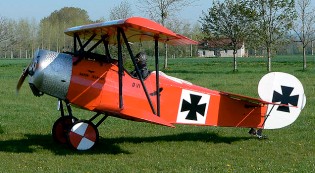
75% scale. Features aluminum tube & rivet construction, CAD designed and detailed, rigid biplane bracing, quick build (400 hrs), engine options (VW Torquemaster), and light, responsive controls.

Gallery

Engine: Rotax 503SC, 47 hp
Speed max: 78 mph
Cruise: 70 mph
Range: 210 sm
Stall: 32 mph
ROC: 750 fpm
Take-off dist: 95 ft
Landing dist: 300 ft
Service ceiling: 10,000 ft
hp range: 46-65
Fuel cap: 12 USG
Weight empty: 297 lb
Gross: 539 lb
Useful load: 242 lb
Height: 7.33 ft
Length: 15.42 ft
Wing span: 17.75 ft
Wing area: 140 sq.ft
Seats: 1
Landing gear: tail wheel

Engine: Rotax 503, 52 hp
Hp range: 46-65
Cruise: 73 mph
Stall: 30 mph
Range: 240 sm
ROC: 750 fpm
Fuel cap: 10 USG
Empty wt: 297 lb
Gross wt: 539 lb
Length: 15 ft
Wingspan: 17.9 ft
Wing area: 110 sq.ft
Cockpit width: 24 in
Seats: 1
Landing gear: tailwheel

Airdrome Airplanes Fokker E-III

75% scale. Features aluminum tube & rivet construction, CAD designed and detailed, rigid bracing, quick build (400 hrs), engine options, and light, responsive controls.
If building as experimental VW or ½ VW options are available.

The kit price in 1998 was US$4495.

Gallery

Engine: Rotax 503, 52 hp
Hp range: 45-52
Wingspan: 24 ft
Wing area: 96 sq.ft
Length: 18 ft
Empty Weight: 108 kg / 238 lb
MTOW Weight: 212 kg / 468 lb
Fuel cap: 5 USG
Max speed: 63 mph
Stall: 23 kt / 26 mph / 42 kmh
Cruise: 47 kt / 54 mph / 87 kmh
VNE: 55 kt / 63 mph / 101 kmh
Climb Ratio: 1150 ft/min / 6 m/s
Range: 80 sm
Cockpit width: 22 in
Seats: 1
Landing gear: tailwheel
Airdriven PM Paramotor

PM-30
Wing area: 30sq.m
Cell Number: 30
Wingspan: 11.29m
Glide ratio: 6.8
Sink Rate: 1.2m/s
Maximum speed: 45km/h
Pilot Weight: 85-110kg

PM-27
Wing area: 27sq.m
Cell Number: 48
Wingspan: 11.2m
Glide ratio: 7.8
Sink Rate: 1.1m/s
Maximum speed: 55km/h
Pilot Weight: 80-105kg

PM-31
Wing Area: 31sq.m
Cell Number: 56
Wingspan: 12m
Glide ratio: 8
Sink Rate: 1.1m/s
Maximum speed: 60km/h
Pilot Weight: 90-120kg
Takeoff distance: 5—20m
Vertical landing speed: <2m/s
Cruise speed: 20-45km/h
Maximum climbing: 2-3m/s

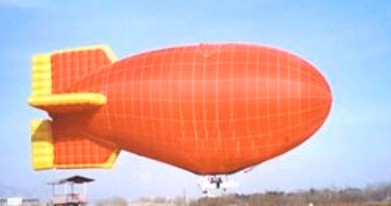
Airdriven AA-1 / AA-2 Airship

AA-1
Engine: Rotax 447, 42 hp
Total length: 33.8m
Maximum diameter: 12.6m
Envelope volume: 2600 cu.m
Maximum take-off weight: 650kg
Empty weight: 400kg
Payload: 250kg(2 seats)
Maximum level speed:
20km/h

AA-2
Engine: Rotax 582, 64hp
Total length: 33.8m
Maximum diameter: 13.2m
Envelope volume: 3000 cu.m
Maximum take-off weight: 800kg
Empty weight: 450kg
Payload: 350kg(4 seats)
Maximum level speed: 25km/h

Air Domi Trophy TT 2000

The Polish Trophy TT 2000 was inspired by the Zenair STOL 701. The fuselage is slightly larger and the centre part is of spaceframe construction.

Trophy TT 2000
Engine: Rotax 912, 80 hp
Wing span: 9 m
Wing area: 14 sq.m
MAUW: 450 kg
Empty weight: 258 kg
Fuel capacity: 68 lt
Max speed: 170 kph
Cruise speed: 140 kph
Minimum speed: 55 kph
Climb rate: 6.5 m/s
Fuel consumption: 12 lt/hr
Certification: IKCSP
Seats: 2
Plan price (1998): 2750 Fttc
Kit price (1998): 79,580 Fttc

Admiralty Air Department Scout (Sparrow)

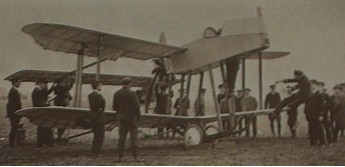
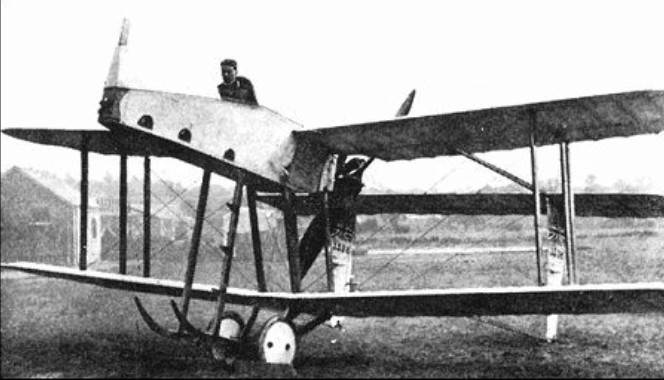
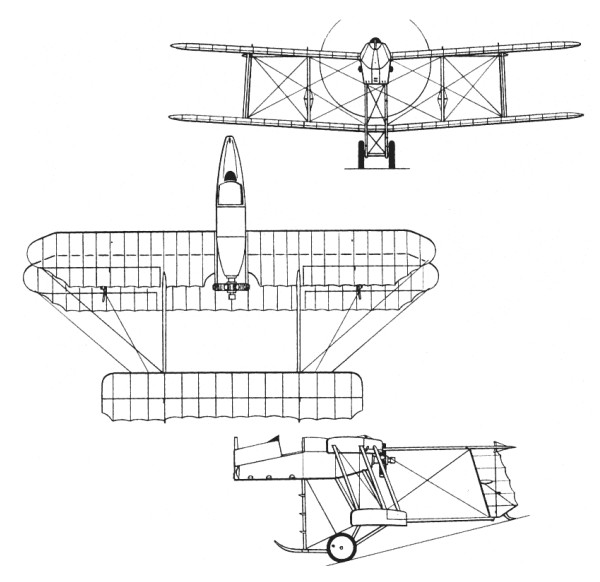
Designed by Harris Booth of the Air Department of the Admiralty as a single-seat anti-airship fighter, the A.D. Scout – later to become known unofficially as the ‘”Sparrow” – a single-bay staggered biplane intended to carry a Davis two-pounder recoilless gun. The rudders and outsize tailplane were carried by four parallel tailbooms. The gun was intended to be mounted in the bottom of the nacelle, to the tail of which was attached a 100hp nine-cylinder Gnome Monosoupape rotary engine driving a pusher propeller. Construction was of wood with fabric covering, and four prototypes were ordered and built (two by Hewlett & Blondeau and two by Blackburn) in 1915. Delivered to the RNAS, the A.D. Scouts proved seriously overweight and difficult to handle in the air. In consequence, all four aircraft were scrapped.

The narrow track main undercarriage was assisted by the lower booms set approximately 11 feet / 3.35 m apart.

A.D. Scout (Sparrow)
Engine: Gnôme Monosoupape, 99 hp / 75 kW
Length: 22 ft 9 in / 6.93 m
Height: 10 ft 3 in / 3.12 m
Wingspan: 33 ft 5 in / 10.18 m
Max. speed: 73 kt / 135 km/h
Endurance: 2 h 30 min
Crew: 1
Armament: 1 x 0.303 in / 7.7 mm mg

Admiralty Air Department Navyplane

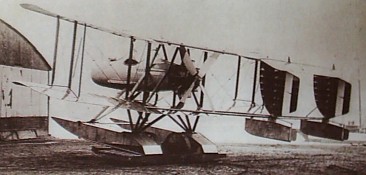
The A.D. Navyplane was designed by Harold Bolas as a two seat pusher floatplane.
Two were ordered in January 1916 for the Royal Naval Air Service and serial numbers were allocated for seven
(9095-9096, N.1070-N.1074) but only one prototype was completed (9095). It was originally fitted with an American Smith Static ten cylinder single-row engine, and flight tested in August 1916 by Lt.Cdr John Seddon. The engine was later replaced by an AR.1 rotary (later redesignated BR.1 for Bentley Rotary 1) and retested in May 1917. The performance was found to be poor and the aircraft was oficially deleted on 27 August 1917.

Engine: 1 x Smith Static, 150 hp / 112 kW
Prop diameter: 8 ft 10 in / 2.69 m
Max speed: 64 mph / 104 kph
Climb to 2000 ft / 907 m: 30 min
Service ceiling: 1300 ft / 396 m
Endurance: 6 hr
Empty weight: 2100 lb / 952 kg
MTOW: 3102 lb / 1157 kg
Wing span: 36 ft / 10.97 m
Wing chord: 5 ft / 1.52 m
Wing gap: 6 ft 6 in / 1.98 m
Tailplane span: 15 ft 6 in / 4.72 m
Length: 27 ft 9 in / 8.46 m
Height: 12 ft 9 in / 3.89 m
Wing area: 364.00 sq.ft / 33.80 sq.m
Armament: 1 x 0.303 / 7.7 mm Lewis mg

Engine: 1 x Admiralty Rotary 1, 150 hp / 112 kW
Wing span: 36 ft / 10.97 m
Wing chord: 5 ft / 1.52 m
Wing gap: 6 ft 6 in / 1.98 m
Tailplane span: 15 ft 6 in / 4.72 m
Length: 27 ft 9 in / 8.46 m
Height: 12 ft 9 in / 3.89 m
Wing area: 364.00 sq.ft / 33.80 sq.m
Armament: 1 x 0.303 / 7.7 mm Lewis mg

Admiralty Air Department Flying-Boat

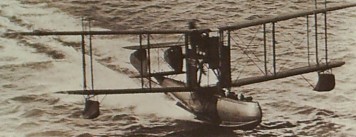
Designed in 1915 to serve in patrol and reconnaissance roles, the AD Flying-Boat was a two seat, single engined, unequal-span braced biplane. The wings could be folded for stowage, and a braced ailplane had twin fins and rudders.
Construction of two prototypes was begun in May 1915, with May, Harden & May of Southampton building the first hull. The hull being designed by Lieutenant Linton Hope. The first was then completed at Southampton by Pemberton-Billing Ltd, who also built the second prototype and the 27 production aircraft.
The first prototype was powered initially by a 200 hp / 149kW Hispano-Suiza with a four blade pusher prop.
The original order was for 85 aircraft but after the first 27 the remaining contracts were cancelled in March 1918.
The aircraft were used by the Royal Naval Air Service, armed with one forward firing 0.303 in Lewis gun and provision for eight light bombs. All 27 production aircraft were declared obsolete in late 1918.
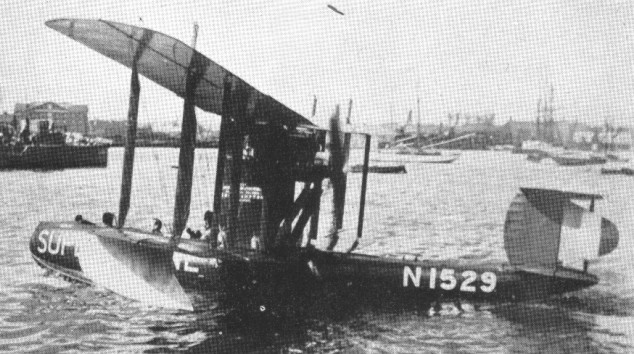
Nineteen were repurchased by Supermarine soon after the war and converted for civil use as the Supermarine Channel.

Supermarine Channel

Gallery

Engine: 1 x Hispano Suiza, 200 hp / 149 kW
Max speed: 100 mph / 161 kph at 2000 ft / 610 m
Cruise speed: 90 mph / 145 kph at 10,000 ft / 3050 m
Service ceiling: 11,000 ft / 3355 m
Endurance: 4 hr 30 m
Empty weight: 2508 lb / 1138 kg
MTOW: 3567 lb / 1618 kg
Wing spar upper: 50 ft 4 in / 15.34 m
Wing spar lower: 39 ft 7.25 in / 12.07 m
Length: 30 ft 7 in / 9.32 m
Height: 13 ft 1 in / 3.99 m
Wing area: 479 sq.ft / 44.5 sq.m
Armament: 1 x 0.303 / 7.7 mm Lewis mg

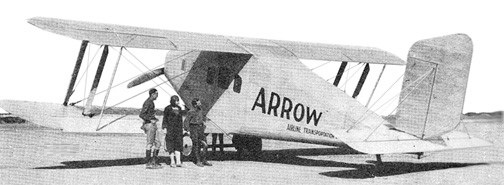
Airline Transportation Co Arrow / Rogers Aircraft Co Arrow

Feb 1923

The Airline Arrow was a 1922 major modification of a Standard J-1 by (John W) Rogers Aircraft Co, Los Angeles, for this aspiring LA-Imperial Valley airline proved unsatisfactory. Seating 8 inside the cabin, it was the second commercial airliner design, after Lawson Air-Liner. It and the fledgling company flew into obscurity in the Depression Era.

Engine: possibly 300hp Hall-Scott
Cruise speed: 100 mph
Seats: 8

Airdale Airdale

The Airdale is the production version of John Larsen’s “Pursang”. John took his original Avid MkIV “Hauler” and highly modified it to suit the 4 cycle, 4 cylinder horizontally opposed 100hp Subaru EA81 auto engine. Engine options now include Continental and Rotax.
Modifications to the original Avid included:
-Fuselage stretched by 16″ to give better ground handling and CG flexibility.
-Two piece, easy to install, 74″ wide track aluminum landing gear.
-Re-raked windshield.
-Simplified control system which incorporated differential flaperon controls.
-Redesign of cockpit structure to remove tubes from behind seats giving easier access to a larger baggage area (55 gal. drum size).
-Individual, fully adjustable, easy to remove tilt and slide seats.
-Belly structure in footwell area modified to give extra leg and head room.
-Double tailspring for better resilience to rough terrain landings.
-Wider cockpit and doors to accommodate larger pilot and passenger.
-Redesigned cowling to accommodate greater range of engines.
-Modifications to Avid wing to increase Gross Weight capability to 1400 lb.
-Full stress analysis to comply with JAR regulations at 1400 lb. Maximum Takeoff Weight.

Engine: Subaru EA-81, 100 hp
Hp range: 65-125
Cruise: 108 mph
Stall: 48 mph
Range: 860 sm
ROC: 900 fpm
To dist: 800 ft
Ldg dist: 400 ft
Fuel cap: 28 USG
Empty wt: 730 lb
Gross wt: 1400 lb
Length: 18.8 ft
Wingspan: 31 ft
Wing area: 132 sq.ft
Cockpit width: 43 in
Seats: 2
Landing gear: tail or nose wheel