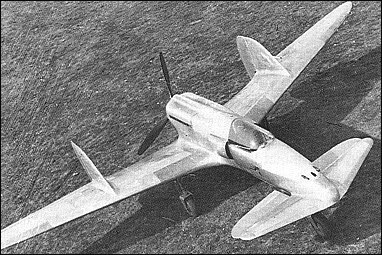
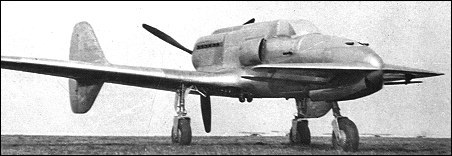
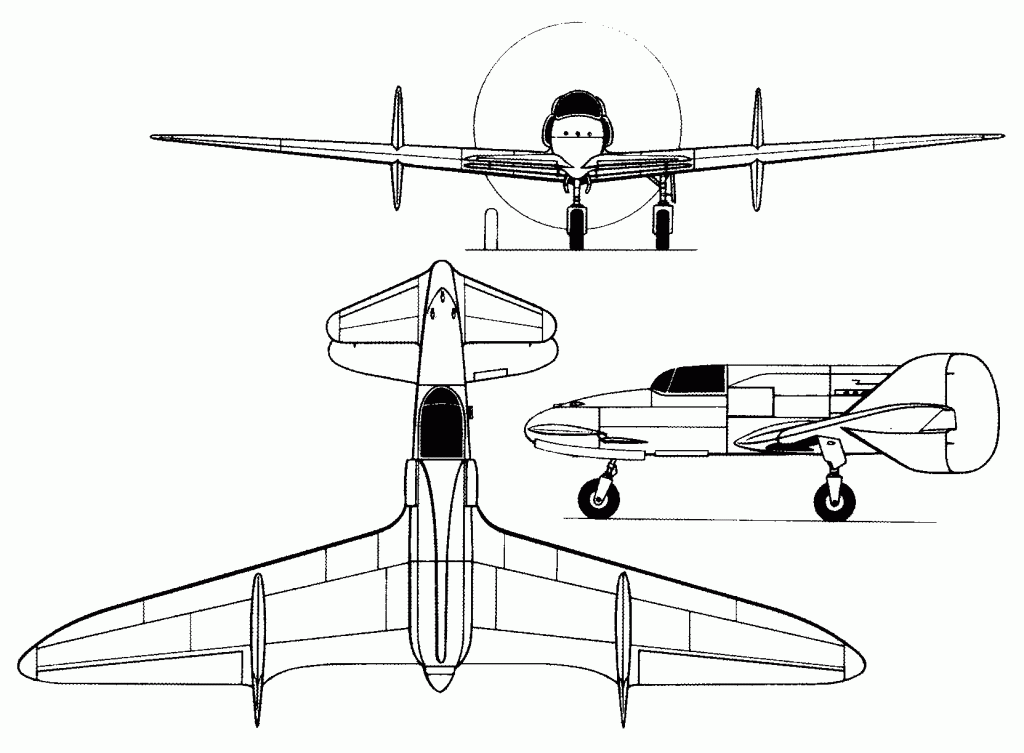
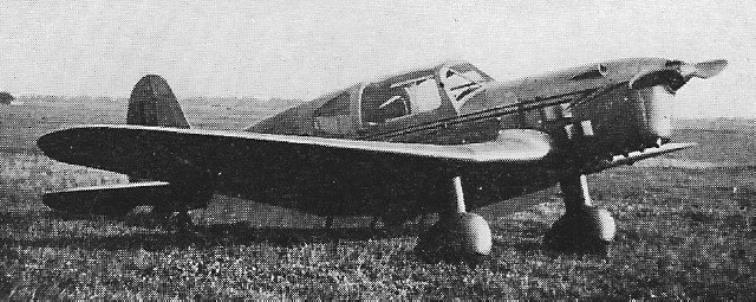
The single-seat S.S.4 monoplane fighter designed by Ing Sergio Stefanutti was tail-first configuration with a retractable nosewheel undercarriage. Built by the Societa Aeronautica Italiana Ing A Ambrosini it was of all-metal construction and powered by a 960hp liquid-cooled 12-cylinder Isotta-Fraschini Asso XI R.C.40 engine driving a three-bladed variable-pitch pusher propeller.
With a 960 hp Isotta Fraschini Asso XI 12 cylinder liquid-cooled engine, the S.S.4 was capable of a maximum speed of 540 kph (335 mph) at 5000 m (16,400 ft) and was to have been armed with two 20 mm and one 30 mm cannon.
The sole prototype was first flown on 7 March 1939, but was destroyed during its second flight on the following day when the starboard aileron separated, the wing developed a high amplitude oscillation and the aircraft entered a dive and crashed at Guidonia.
Although. the Italian Air Ministry ordered another prototype, pres¬sure of other projects caused the fighter to be abandoned. No further development was undertaken.
Manufacturer’s estimates:
Engine: Isotta-Fraschini Asso XI R.C.40, 960hp Take-off weight: 2446 kg / 5393 lb Empty weight: 1800 kg / 3968 lb Wingspan: 12.32 m / 40 ft 5 in Length: 6.74 m / 22 ft 1 in Height: 2.48 m / 8 ft 2 in Wing area: 17.50 sq.m / 188.37 sq ft Max. speed: 540 km/h / 336 mph
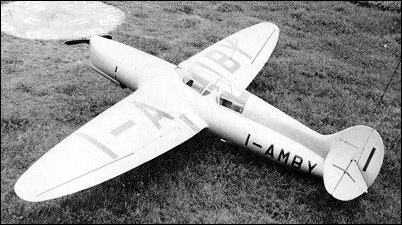
Designed as a two-seat light training and touring monoplane, the Ambrosini S.A.I.3 had long-span elliptical wings, a deep rear fuselage and a fixed tailwheel type landing gear. The chosen powerplant was either a 63kW Fiat A.50 radial or 97kW Alfa Romeo A.110 inverted inline piston engine, the latter enclosed within a close cowling. Small batches of the S.A.I.3 were built, some of them with an enclosed cabin in place of the more common tandem open cockpits. The more powerful Alfa Romeo-engined model had superior performance, despite a maximum take-off weight increase by 40kg to 830kg; maximum speed rose to 230km/h, service ceiling to 5200m and range to 680km.
S.A.I.3 Engine: 1 x Fiat A.50 piston engine, 63kW Take-off weight: 790 kg / 1742 lb Empty weight: 550 kg / 1213 lb Wingspan: 10.45 m / 34 ft 3 in Length: 7.05 m / 23 ft 2 in Height: 2.8 m / 9 ft 2 in Wing area: 14 sq.m / 150.69 sq ft Max. speed: 200 km/h / 124 mph Cruise speed: 170 km/h / 106 mph Ceiling: 4000 m / 13100 ft Range: 620 km / 385 miles
Ambrosini took over the Passignano factory of the Societa Aeronautica Italiana in 1934 and in 1935 produced the S.A.I. 2 five seat cabin monoplane for the Littorio Rally and Air Race,
The S.A.I. 2S four-seater cabin monoplane was developed from the S.A.I. 2, and the post-war Grifo and Girfalco were developed directly from this aircraft.
Engine: Alfa 115, 185 hp Wingspan: 34 ft 11 in Length: 25 ft 6 in Height: 9 ft 2 in Empty weight: 158 lb Loaded weight: 3124 lb Max speed: 161 mph Cruise: 137 mph Range: 702 mi
A single seat open frame autogyro. Frame is 2.5 x 2 bolted aluminium tube. Shock absorbing gear, 12 USG seat tank, instrument panel. Options include electric start, hydraulic brakes, prerotator, pod etc. Engine: 85 or 100 hp Amax/Subaru 1800 cc. Prop: 68” 11o Warp Drive 3 blade, carbon fibre ground adjustable. Rotor blades: Aerodyne aluminium 26’ x 7 5/8”.
Eagle LT Engine: 85 hp HP range: 85-115 Speed max: 100 mph Cruise: 75 mph Range: 200 sm ROC: 1100 fpm Take-off dist: 50 ft Service ceiling: 10,000 ft Fuel cap: 12 USG Weight empty: 410 lb Gross: 720 lb Height: 8.33 ft Length: 10 ft Disk span: 26 ft Seats: 1 Landing gear: nose wheel
Eagle TT Speed max: 100 mph Cruise: 70 mph Range: 200 sm ROC: 1100 fpm Take-off dist: 50 ft Service ceiling: 10,000 ft Engine: 85 hp HP range: 85-115 Fuel cap: 12 USG Weight empty: 410 lb Gross: 720 lb Height: 8.33 ft Disk span: 26 ft Seats: 1 Landing gear: nose wheel
A two seat tandem, open frame autogyro, the frame is 2.5 x 2 bolted aluminium tube. Shock absorbing gear, tall tail, 12 USG seat tank, instrument panel. Options include electric start, hydraulic brakes, prerotator, pod etc. Engine: 110-150 hp Amax/Subaru (EA82, EJ20, EJ22) 1800-2200cc. Prop: 7’7” 12o Warp Drive carbon fibre ground adjustable. Rotor blades: Aerodyne aluminium 28’ x 8.5”.
Engine: 105 hp HP range: 105-140 Speed max: 100 mph Cruise: 70 mph Range: 200 sm ROC: 1100 fpm Take-off dist: 100 ft Service ceiling: 10,000 ft Fuel cap: 12 USG Weight empty: 575 lb Gross: 1150 lb Height: 8.33 ft Length: 13.75 ft Disk span: 30 ft Seats: 2 Landing gear: nose wheel
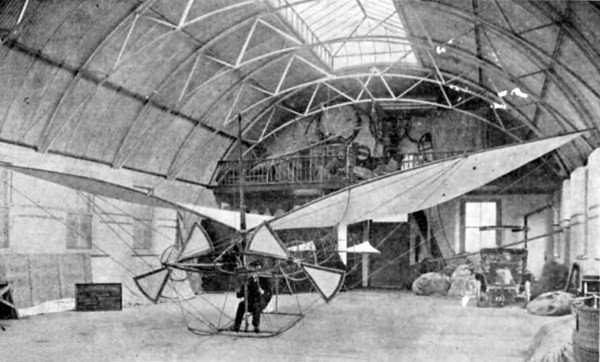
Designed by a Mr. Alvarez of Brazil, built by the firm of C. G. Spencer and Sons of Highbury and tested at Hendon with ballast instead of a pilot. It was taken to altitude of 3,000 feet by a balloon and dropped with the engine running, descending steadily to a soft landing. It had a 2 hp motor, a span of 40 ft, a wing area of 400 sq.ft and weighed 150 lbs. A larger model was planned, but nothing is known of it.
The Formula GT prototype aircraft, designed by Jeff Ackland, was completed and first flown in April, 2001. The GT shares its wing and horizontal tail planform/design with the Radial Rocket and P85.
Although the prototype Formula GT was powered by a 260 HP Lycoming engine, the GT was actually designed from the outset to utilize a liquid cooled LS V8 engine. The GT offers a side by side seating, and tricycle gear.
A new helicopter ULM produced by Alps Aviation, the Syton AH130 is an ultralight helicopter built with the precision and the technology of the certified helicopters, from a kit.
The Syton AH130 has side by side seating (equipped of dual controls). The fuselage structure is of aluminium alloys and steel. The fuselage has a lattice of steel tube.
The tail boom uses aluminium sheet, with composite material. Fairings of aerodynamic form and cockpit linings are composite material. The main rotor is two blade semi-rigid. The blades are completely composite in material, with an aluminium alloy rotor head.
Engine: Turbina Turboalbero turboshaft, 130 SHP Max continuous Max Length: 8.84 m (29.00 ft) Max Width: 1.60 m (5.25 ft) Max Height: 2.40 m (7.87 ft) Fuselage Width: 1.12 m (3.67 ft) Fuselage Height: 1.82 m (5.97 ft) Main rotor diameter: 7.63 m (25.00 ft) Tail rotor diameter: 1.28 m (4.20 ft) Empty weight: 290 Kg (693.3 lb) Normal take off weight: 450 Kg (992.0 lb) Maximum take off weight: 580 Kg (1278.7 lb) Max Cruise speed: 190 km/h (103.0 kts) Normal Cruise Speed: 160 km/h (86.0 kts) VNE: 210 km/h (113.5 kts) Max Rate of climb: 8.5 m/s (1670 ft/min) Hovering ceiling IGE: 2800 m (9200 ft) Hovering ceiling OGE: 1800 m (5900 ft) Maximum ceiling: 3800 m (12450 ft) Max endurance: 2 hr
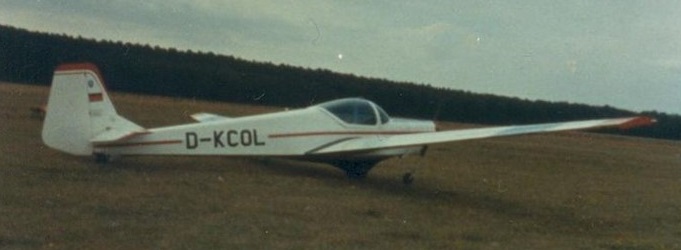
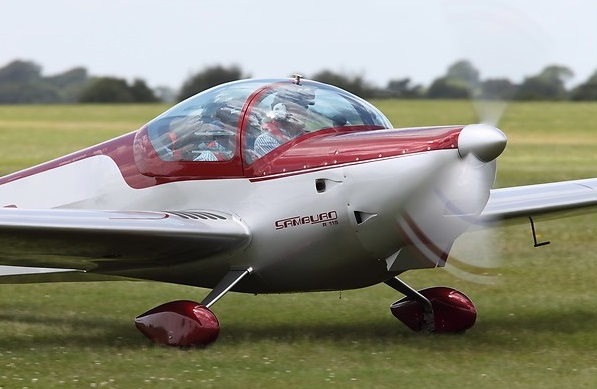
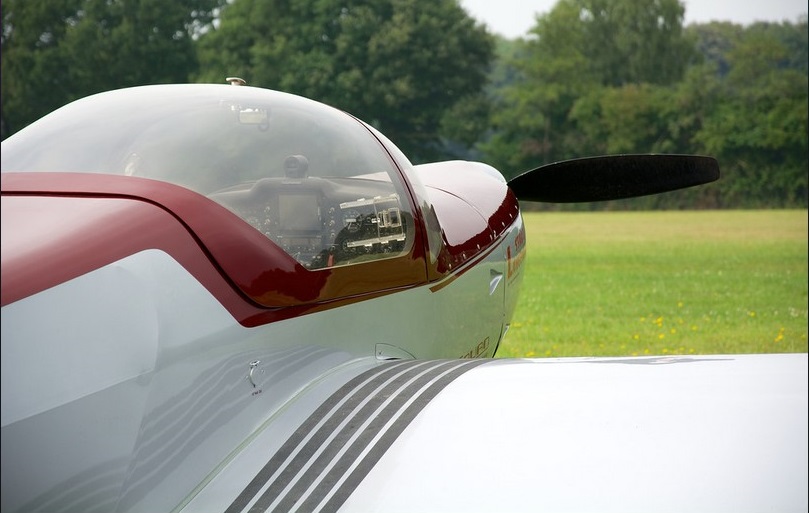
This Austrian side-by-side two-seater motor glider was designed by Werner Vogel with the assistance of Professor Dr Ernst Zeibig, and is intended for training as well as cross-country and pleasure flying.
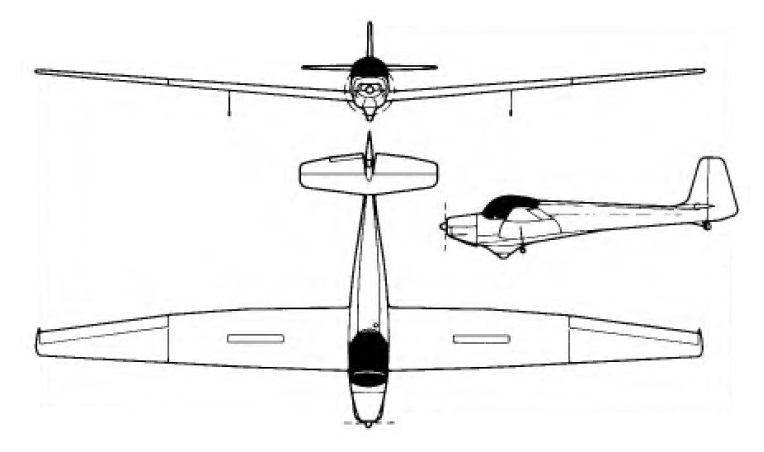
The cantilever low wings are of conventional wood and fabric construction with spoilers in the upper surfaces, and can be folded back to an overall width of 32ft 9.5 in (10m) for hangar storage. The fuselage is a fabric covered steel tube framework and the rear section of the two-piece cockpit canopy slides backwards for the pilots’ access; the latter have dual controls. The cantilever tail unit has a low-set tailplane with a trim tab in the starboard elevator. The undercarriage consists of a non-retractable monowheel recessed into a fairing under the fuselage, and small outrigger wheels on nylon legs under the wings at about 40% of each half-span; there is also a steerable tailwheel, and the main wheel brake can also be used as a parking brake.
It first appeared as the AVo 60 Samburo with a 60hp Limbach SL 1700EA ‘flat four’ engine driving a two blade fixed-pitch propeller and with a slightly smaller fuel tank. The production AVo 68V first flew in 1977 and has a 68hp Limbach SL 1700E4 engine driving a two-blade variable-pitch propeller, and has higher weights than the AVo 60. As originally designed, it also had a sailplane-like undercarriage consisting of a single mainwheel and a steerable tailwheel; however, later versions have a fixed taildragger undercarriage with two spatted mainwheels.
A total of 16 Samburos had been built by the Alpla-Werke Alwin Lechner OHG by the end of 1977, but production ended in January 1979.
With numerous design changes – including modern Rotax engines, state-of-the-art avionics, and aerotow capabilities, it was in production by the M&D Flugzeugbau company in Germany in 2011.
Variants:
AVo 60 Samburo The initial prototype powered by a 60 PS (44 kW) Limbach engine.
AVo 68 Samburo Production aircraft powered by 68 PS (50 kW) Limbach engines.
AVo 68 Engine: Limbach, 60 hp Wing span: 16.7 m / 54 ft 9.5 in Length: 7.9 m / 25 ft 11 in Height: 1.82 m / 5 ft 11.5 in Wing area: 20.7 sq.m / 222.8 sq ft Wing section: Gottingen 549/NACA 642 Aspect ratio: 13.6 Empty weight: 470 kg / 1,036 lb Max weight: 685 kg / 1,510 lb Water ballast: None Max wing loading: 31.4 kg/sq.m / 6.43 lb/sq ft Max speed: 92 kt / 170 km/h Stalling speed: 32.5 kt / 60 km/h Min sinking speed: 0.85 m/sec / 2.79 ft/sec at 40 kt / 74 km/h Best glide ratio: 24 at 43 kt / 80 km/h T-O run: 150-180 m / 492-590 ft Rate of climb: 2.8 m/sec / 9.2 ft/sec
AVo 68V Span: 54 ft 8.75 in Length: 26 ft 0.5 in Height: 5 ft 9.75 in Wing area: 222.8 sq ft Aspect ratio: 13.6 Empty weight: 1,036 lb Max weight: 1,510 lb Max speed: 106 mph Max cruising speed: 90 mph Min sinking speed: 2.79 ft/sec at 46 mph Best glide ratio: 24:1 at 50 mph Take-off run: 492-500 ft
AVo 68-R 115 Engine: 1 × Rotax 914F, 85 kW (115 hp) Wingspan: 16.68 m (54 ft 9 in) Length: 8.05 m (26 ft 5 in) Height: 1.86 m (6 ft 1 in) Wing area: 20.7 m2 (223 ft2) Aspect ratio: 13.6:1 Empty weight: 550 kg (1,212 lb) Gross weight: 750 kg (1,543 lb) Maximum speed: 215 km/h (134 mph) Range: 1000 km (623 miles) Maximum glide ratio: 25:1 Rate of climb: 6.0 m/s (1,180 ft/min) Rate of sink: 1.15 m/s (226 ft/min) Crew: one pilot Capacity: one passenger