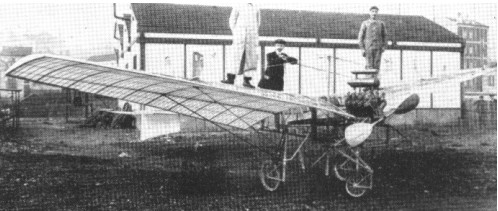
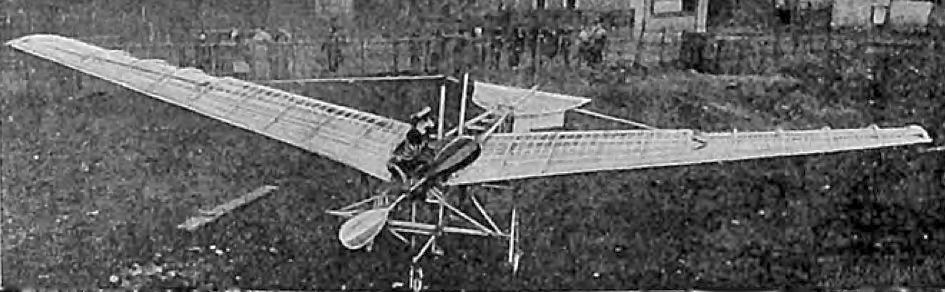
The Antoinette I was very similar to the Antoinette II, but No. II with ailerons and also carried the first passenger.
First flown in February 1908, the Antoinette II was also known as the Gastambide-Mengin II.
Characterized by its tricycle undercarriage and low-mounted rudder, this monoplane was designed and built by Léon Levavasseur and fitted with a 50-hp Antoinette V-8 engine.
The relatively successful machine made at least seven flights and went through several different design iterations.
The Gastambide-Mengin led to the later Antoinette.
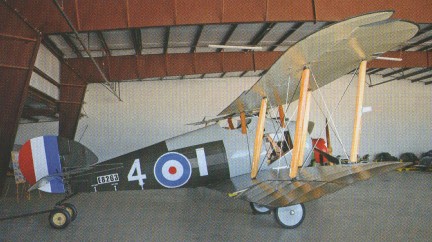
Chuck Wentworth’s Antique Aero spent four years constructing an authentic Sopwith 7F.1 Snipe replica for Javier Arango’s Aeroplane Collection at Paso Robles, California. The aircraft was made using original plans and even includes a pair of original (but deactivated) Cooper bombs. Built with a le Rhone rotary engine, arrangements had been made to obtain a Bentley in 2010.
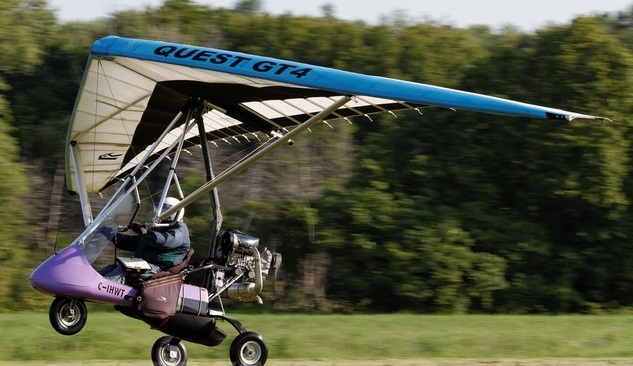
The MA-32 is a two-seat design that was originally developed for European microlight competition flying. The aircraft has a standard empty weight of 321 lb (146 kg). It features a cable-braced hang glider-style high-wing, weight-shift controls, an open cockpit, tricycle landing gear and a single engine in pusher configuration.
The aircraft is made from bolted-together aluminum tubing, with titanium used on the carriage structure and wing attachment. The wing is covered in Dacron sailcloth. Its 33.8 ft (10.3 m) span wing is supported by a single tube-type kingpost and uses an “A” frame control bar. A number of single or double surface purpose-designed trike wings are optional, including the Aeros Still-17, Aeros Stream-16, Aeros Stranger 2, Aeros Profi, Aerossa Sprinter-15, Aerossa Stratos and the Aerossa Stratos-13. The landing gear uses a unique curved, slab-sided, main gear leg design made from fiberglass that reduces aerodynamic drag. All wheels have suspension and the steerable nose wheel also features a drum brake. A fiberglass cockpit fairing is optional. Series engines include the Rotax 447 two-stroke powerplant of 40 hp (30 kW), Rotax 503 of 50 hp (37 kW), the liquid-cooled Rotax 582 of 64 hp (48 kW), the Rotax 912 and 912S four-stroke powerplants of 80 hp (60 kW) and 100 hp (75 kW) and the HKS 700E of 60 hp (45 kW).
The aircraft can all be quickly folded for storage or ground transportation.
Designed and produced by Antares Aircraft the MA-32 was at one time marketed by Leading Edge Air Foils as the LEAF Antares. The aircraft are supplied as kits for amateur construction.
As of 2005, 200 had been built, and still in production in 2011, the unit cost was US$37,000 for the Antares MA-33MR912 model.
Antares MA 34R 912 Ranger
Variants:
MA-32 Base two-seat model Engine: Rotax 447, 40 hp (30 kW) Propeller: 6-bladed composite Wingspan: 10.3 m (33.8 ft) Wing area: 15.5 m2 (167 sq ft) Empty weight: 146 kg (321 lb) Gross weight: 250 kg (551 lb) Fuel capacity: 19 litres (4.2 imp gal; 5.0 US gal) Maximum speed: 124 km/h (77 mph, 67 kn) Cruise speed: 64 km/h (40 mph, 35 kn) Stall speed: 45 km/h (28 mph, 24 kn) Range: 320 km (200 mi, 170 nmi) Service ceiling: 6,000 m (19,700 ft) Crew: one Capacity: one passenger
MA-32 R503 Two-seat model Engine: Rotax 503, 50 hp (37 kW)
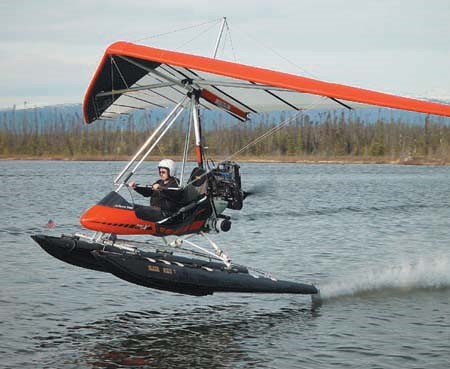
MA-32 R582 G Two-seat model Engine: Rotax 582, 64 hp (48 kW) optional twin floats
MA-33 / MA-33M R582 Two-seat model Engine: Rotax 582, 64 hp (48 kW)
MA-33M R912 Two-seat model Engine: Rotax 912 80 hp (60 kW) or HKS 700E of 60 hp (45 kW)
MA-34 R912 Ranger Two-seat model Engine: Rotax 912, 80 hp (60 kW) Fuel tank: 15 U.S. gallons (57 L; 12 imp gal)
MA-34R912S Beaver Two-seat model Engine: Rotax 912ULS, 100 hp (75 kW)
MA-34 Open Country Two-seat model Engine: Rotax 912ULS, 100 hp (75 kW) tundra tires Aeros Stratos 15.5 wing
MA-34 R582XB Crop Duster Two-seat model Engine: Rotax 582, 64 hp (48 kW) spray equipment for aerial application
LEAF Antares 503 Base model marketed by Leading Edge Air Foils circa 2000 Engine: Rotax 503, 50 hp (37 kW) Aeros Stream-16 wing Two-seat model
LEAF Antares 582 Model marketed by Leading Edge Air Foils circa 2000 Engine: Rotax 582, 64 hp (48 kW) Aeros Stranger-15 wing Two-seat model
The Antares A-10 Solo Ukrainian ultralight trike is a single-seat derivative of the two-seat Antares MA-32. It was designed to comply with the Fédération Aéronautique Internationale microlight category, including the category’s maximum gross weight of 450 kg (992 lb). The aircraft has a maximum gross weight of 450 kg (992 lb). The aircraft was supplied as a kit for amateur construction or complete and ready-to-fly. The A-10 was distributed as a kit in the United States where it is approved for the Experimental – Amateur-built category.
The aircraft design features a cable-braced hang glider-style high-wing, weight-shift controls, a single-seat open cockpit with a cockpit fairing, tricycle landing gear with wheel pants and a single engine in pusher configuration.
The aircraft is made from bolted-together aluminum tubing, with a single-piece composite mainwheel spring system and a titanium front wheel fork for off-airport landings. The double surface wing covered in Dacron sailcloth. Its 10 m (32.8 ft) span wing is supported by a single tube-type kingpost and uses an “A” frame weight-shift control bar. Optionally a “topless” wing, lacking the kingpost, can be fitted. The powerplant is a twin cylinder, air-cooled, two-stroke, dual-ignition 50 hp (37 kW) Rotax 503 engine or optionally a 40 hp (30 kW) Rotax 447 engine.
A number of different wings can be fitted to the basic carriage, including the standard Aeros Stranger 2, or Aeros Still 17. Optional wings include the Aeros Stranger 2M, Aeros Stream 16 or Aeros Profi
In production in 2018, the unit cost was US$25,000.
Antares A-10R503 SOLO Engine: 1 × Rotax 503, 37 kW (50 hp) Prop “E” gearbox reduction ratio: 2.62:1 Propeller: 3-bladed ground adjustable Length: 2.51 m (8 ft 3 in) Wingspan: 10 m (32 ft 10 in) Wing area: 14 m2 (150 sq ft) Empty weight: 170 kg (375 lb) Gross weight: 450 kg (992 lb) Fuel capacity: 19 litres (4.2 imp gal; 5.0 US gal) Maximum speed: 140 km/h (87 mph; 76 kn) Cruise speed: 83 km/h (52 mph; 45 kn) Stall speed: 43 km/h (27 mph; 23 kn) Service ceiling: 6,200 m (20,300 ft) g limits: +6/-2 Rate of climb: 5 m/s (980 ft/min) Seats: one
The Antares MA-30 was designed by Russian engineer Sergey Zozulya and manufactured in 1991. Sergey designed the aircraft with triangular engineering, distinctive fairing, and landing gear for the ultralight to be capable of flying on wheels, tundra tires, floats, or skis.
The MA-30 was built for strength and was constructed largely of titanium parts. The design features a Rogallo wing and a standard trike configuration, with a fiberglass cowling installed to protect the pilot from the weather. The MA-30 uses a weight-shift control system and is powered by a 50-hp Rotax 503 engine.
In 1992, Mike Jacober decided to fly his MA-30 to the summit of Mount McKinley, now known as Denali, the highest peak in North America. Mike enlisted the help of fellow MA-30 pilot Joel Wallace, his stepson Matthew Howard, and his friend David Swendiman. Beginning in late December of 1992, the four began meeting weekly to discuss plans for the adventure, figuring what they’d need for equipment, fuel, etc., and making contingency plans for different situations.
On May 1, 1993, the Mount McKinley flying group launched their expedition from Talkeetna, at an altitude of 346 feet, with Matthew and David flying into Kahiltna Base Camp in a Cessna 185 with all the supplies, while Mike and Joel flew their MA-30s across the 60-plus mile glacier. The group spent a total of eight days at Kahiltna, five of which were spent gearing up for the flight to the summit.
On May 6, Mike and Joel pulled on their flying garb, put on their oxygen masks and cylinders and fired up their MA-30s. A string of small problems prevented Joel from reaching the summit, but that didn’t hinder Mike. After about 20 minutes, Mike was high enough to cross the Kahiltna peaks and the valley to the south buttress of Mount McKinley. The MA-30 picked up some ridge lift for about two miles and enabled Mike to reach the south peak. At the peak, the ridge lift went away and Mike had to make a dozen or so 360-degree turns in front of the face to work his way up, eventually making it over the summit by about 150 feet, reaching an altitude of 20,470 feet. After circling the summit, Mike snapped a few pictures, turned off the engine, and glided back down to Kahiltna.
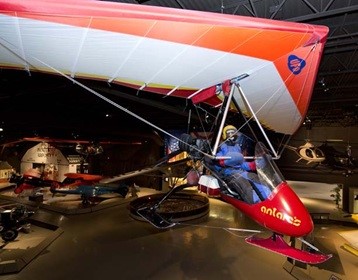
Mike Jacober an aviation pioneer, a dedicated instructor, passed away. In 2002 he was inducted into the EAA Sport Aviation Halls of Fame as one of the nation’s most respected ultralight pilots and promoters. Ginny Jacober, Mike’s widow, donated his MA-30 to the EAA Aviation Museum in 2004.
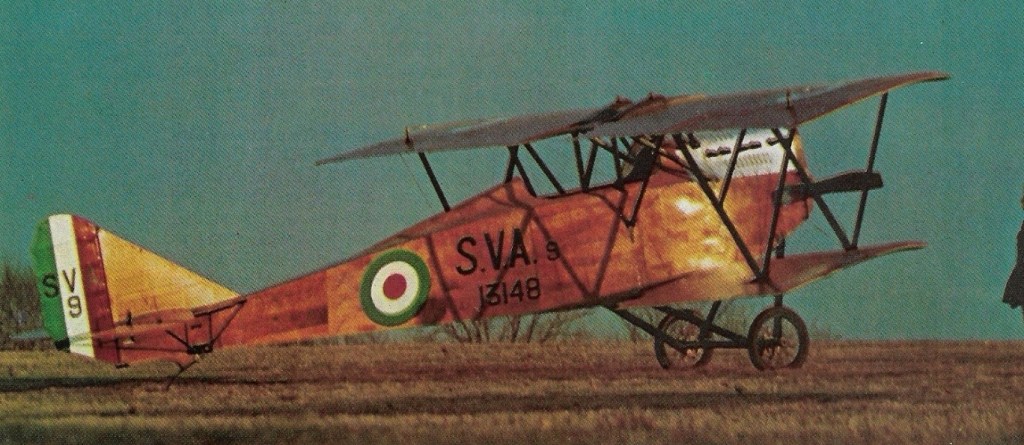
The two seat trainer, designated SVA.9, was powered by a 250 hp IsottaFraschini V 6 engine.
The 1918 two seat trainer, designated SVA.9, was powered by a 250 hp IsottaFraschini V 6 engine. Designed by Savoia and Verduzio, it was built by Ansaldo.
The 1917 SVA.1 was a single-engine one-seat biplane utility aircraft. The SVA.2 was the production version of the SVA.1.
The SVA.3 was a fast-climbing interceptor version of the SVA.2
A production version of the SVA.2 equipped for reconnaissance was designated SVA.4.
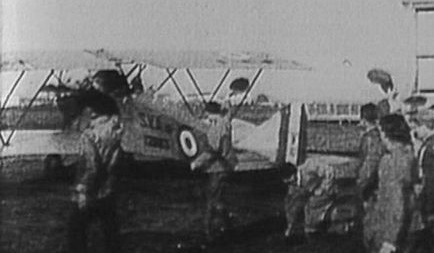
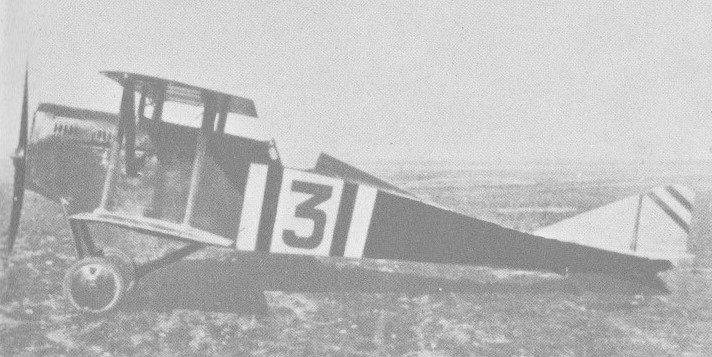
The SVA.5 production version of the SVA.2 was a fighter. Notable for fast reconnaissance flights and record-breaking. The SVA.5 had Warren truss wing bracing, later a characteristic of Fiat biplanes.
Armament was two Vickers machine guns mounted above the fuselage forward of the cockpit on the fighter. The reconnaissance version carried one gun and 220 lb of bombs.
The SVA.5 wings were of wooden construction, with Warren-truss bracing and fabric covering. The flat-sided wooden fuselage was covered with plywood. Conventional control surfaces were fitted, with ailerons on the top wing only.
The fuel capacity was 40 gallons in the fighters, and 75 gallons in the reconnaissance version.
Delivery of the SVA.5 to Italian fighter-training schools began in the Autumn of 1917.
SVA.5
However, it is as a long-range reconnaissance aircraft that it eventually played its major role. Six squadrons and five smaller units received SVA.5s, and the best known being the 87th Squadron, known as ‘La Serenissima’, from Venice, which had the Lion of St.Mark painted on the fuselage of its aircraft. The first operational flights were made in March 1918. Two months later, an SVA.5 made a round trip of 440 miles to photograph the Zeppelin sheds at Friedrichshafen. In August 1918, seven SVA.s, led by a two-seat SVA.9, flew to Vienna and back, a distance of 625 miles, to drop leaflets on the Austrian capitol. On other occasions they dropped bombs.
SVA.5
Altogether 1295 SV.5s were built, including 50 Idro-AM seaplanes.
The SVA.6 was a prototype bomber version of the SVA.2
Reconnaissance Engine: S.P.A. 6A, 220 hp Wingspan: 31 ft Wing area: 261 sq.ft Length: 26 ft 8 in Height: 9 ft 8 in Empty weight: 1533 lb MTOW: 2295 lb Max speed: 136 mph at SL Service ceiling: 22,000 ft
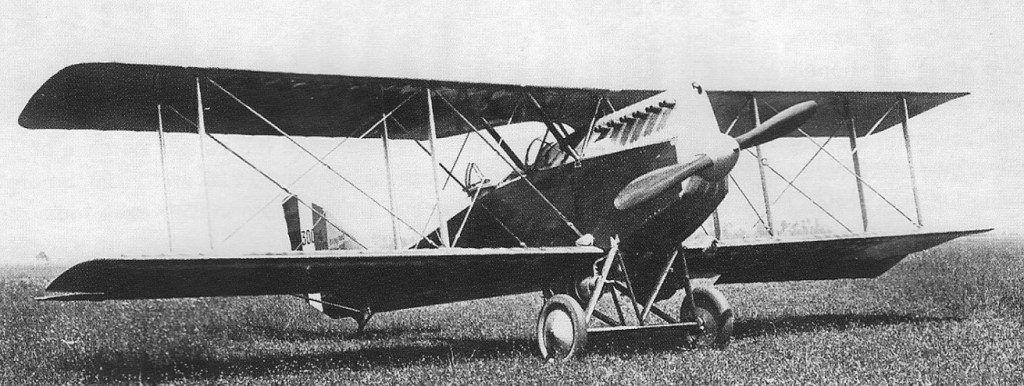
Ansaldo achieved aeronautical eminence in 1917 by providing a single-seat fighter of original Italian design (Italy having previously used French types). The aircraft was the A-1 Balilla (“Hunter”). About 150 built; others, license-built in Poland, served well into 1920s.
The Ansaldo A 1 Balilla was a basic biplane fighter design with a four-blade propeller and a 220 horsepower SPA 6A water-cooled in-line engine. A single pilot saw behind the biplane wing. Armament consisted of two 7.62mm British Vickers machine guns mounted forward of the cockpit seating area in a forward-firing fixed position. Endurance amounted to 1 hour and 30 minutes.
The A 1 appeared in the final stages of the First World War, limiting its use to post-war defence of Italy. Some models found their way into American hands and were converted to air racers fitted with a Curtiss powerplant. Still others would see combat at the hands of Russian and Polish flyers in the Russo-Polish war in 1920.
Ansaldo A 1 Balilla (Hunter) Engine: SAP 6A water-cooled in-line, 220 hp Length: 22.441 ft / 6.84 m Height: 8.301 ft / 2.53 m Wingspan: 25.197 ft / 7.68 m Wing area: 228.197 sqft / 21.2 sq.m Max take off weight: 1951.4 lb / 885.0 kg Weight empty: 1378.1 lb / 625.0 kg Max. speed: 119 kts / 220 km/h / 119kt Service ceiling: 16404 ft / 5000 m Wing load: 8.61 lbs/sq.ft / 42.00 kg/sq.m Range: 324 nm / 600 km Crew: 1 Armament: 2 x 7.62mm Vickers machine guns