
The 1909 Auffin-Ordt monoplane was designed and built by Clément Auffin-Ordt in France.
Span: 26’3″
The 1909 Auffin-Ordt monoplane was designed and built by Clément Auffin-Ordt in France.
Span: 26’3″

Built in the Paris factory of the firm Frères Voisin and powered by a 7-cylinder 35 hp R.E.P. engine – the first of two monoplanes designed by the Swiss-born Clément Auffm-Ordt (often misspelled as Auffin-Ordt). This tractor monoplane had a unique solution to lateral stability, whereas the wing could be tilted as a whole, while a small center surface could be tilted separately. Preliminary tests began at the airfield at Buc on April 23, 1908 with little success, though promising enough to build a second machine, a pusher monoplane tested in Switzerland on the frozen lake near St. Moritz in early 1909 and abandoned after crashing from a height of six meters onto the ice. Although the machine seemed to be quite intact after its mishap nothing was heard from M. Aufmm-Ordt again, at least related to aviation.
Span: 26’3″

The Audineau 1910 monoplane was designed and built by Audineu in France.

Charles Audenis (1889-1972) built two machines together with his friend Jean Jacob in 1912-1913, in which he participated in several regional meetings in the Lyon area. The rather Farman-inspired machine was powered by a Gnôme rotary.

Designed by Paul Aubert, the Aubert PA-20 Cigale (English: Cicada), PA-204 Cigale Major and PA-205 Super Cigale were a family of high-wing cabin monoplanes built in France in the years immediately before and immediately after World War II. The original Cigale was shown at the 1938 Paris Salon but its development was interrupted by the War. The Cigale was a high-wing cantilever monoplane of conventional configuration with fixed, tailwheel undercarriage.

The original two-seat PA-20 Cigale first flew on 25 February 1938, piloted by Maurice Bruneteau, powered by a Train 6T. Various refinements were made, including a change to a Renault 4Pei engine, and the aircraft was redesignated PA-201 Cigale. This original aircraft was destroyed during the course of World War II, but in 1945, Paul Aubert returned to the design, building another aircraft to the PA-201 standard. This went on to prove highly successful when flown competitively in 1945 and 1946.

Aubert further modified his design into a four-seater, flying the PA-204 Cigale Major on 21 April 1947, and soon building a second example to this standard. The aircraft was equipped with a Renault 4 Pei engine (manufactured by SNECMA), and four people could be accommodated in a closed cockpit. The Cigale Major PA-204 was certificated in 1951.

The second prototype PA-204 was subsequently re-engined first with a SNECMA-Regnier 4LO-2 in June 1955 (PA-204S), and then with a Lycoming O-290-D2B (PA-204L), tested on July 27, 1955, and a Lycoming O-320 in 1956 (PA-205 Super Cigale). The 204L has a wider cabin and better forward view than the earlier machine fitted with the SNECMA engine. With this engine, Aubert was finally satisfied with the design and built around thirty production examples, eight of which went to Aéroclub Air France.
A version equipped to carry a doctor and one stretcher patient, in addition to the pilot, was built in 1956.
Variants:
PA-20 Cigale
Pre-war prototype two-seat trainer.
PA-201 Cigale
Post-war development.
PA-204 Cigale-Major
Improved four-seat variant with a Renault 4Pei inverted inline engine. Prototype flew in 1949, with production from 1954.
PA-204S Super Cigale
Further developed with a Régnier 4L02 engine.
PA-204L Super Cigale
Final production variant with an Avro Lycoming engine with a range of power output between 135 to 180 hp.
Specifications:
PA-20 Cicada
Engine: Train 6T, 60 hp
Span: 9.50 m
Wing area: 12.84 m²
Length: 7.15 m
Empty weight: 334 kg
Max weight: 580 kg
Cruising speed: 186 kph
Range: 500 km
Crew: 2
PA-204L
Engine: 1 × Lycoming O-320, 110 kW (150 hp)
Propellers: 2-bladed
Length: 7.50 m (24 ft 7 in)
Wingspan: 10.00 m (32 ft 10 in)
Height: 2.40 m (7 ft 10 in)
Wing area: 12.90 m2 (138.9 sq ft)
Empty weight: 640 kg (1,411 lb)
Max takeoff weight: 1,250 kg (2,756 lb)
Maximum speed: 255 km/h (158 mph; 138 kn)
Cruising speed: 230 km/h (143 mph; 124 kn)
Range: 1,880 km (1,168 mi; 1,015 nmi)
Service ceiling: 4,500 m (14,764 ft)
Crew: 1
Capacity: 3 passengers
PA-204S Super-Cigale
Engine: 170 hp SNECMA-Regnier 4LO-2
Wingspan: 32 ft 9 in
Length: 25 ft 3 in
Empty weight: 1499 lb
Loaded weight: 2645 lb
Max speed: 155 mph
Cruise: 141 mph


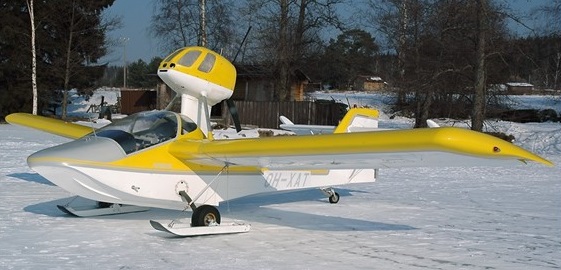
The Atol was designed by Markku Koivurova and produced by Martekno Ky and later Atol Avion Ltd. The development of Atol began in the 1970s, inspired by the American Osprey II. When the development of Atol was started, a wooden structure was selected.
The first versions of the design used the Ken Rand KR structure. Atol’s predecessors were larger and their structure recalled the traditional structure of a wooden aircraft.
Reinforced plastic basically displaced the wooden structure for manufacturing reasons, and its increasing popularity stopped the development of the wooden structure. They continued development of the wooden structure manufacturing methods and, as a result of this work, talk of a wood composite structure.
Very important safety feature is ATOL’s directed pitch trim change when changing power settings. The propeller flow has been directed to flow to the tailplane from above causing a nose-up moment higher than the nose-down moment caused by the thrust. Because the propeller flow and thrust work together, a decrease in power changes the balance towards the nose-down direction, while the speed remains relatively unchanged.
Competitors have aimed to reduce the change in trim caused by power changes by positioning the wing as close to the propeller shaft as possible. This solution reduces the phenomenon but does not eliminate it totally. Instead, this solution causes a problem with the center of gravity because the propeller and, therefore, the engine must be positioned much farther back. As a result, a balancing weight must be used in the nose or the crew must be positioned closer to the front. This reduces the balancing weight but leads to a situation where the balancing weight must be repositioned every time when one or two people fly the aircraft. There is always a potential fatal risk of forgetting the balancing weight in a wrong place.
ATOL’s wing aspect ratio allows a wide range of center of gravity (CG) and ease of loading without strict loading limitations.
ATOL’s canopy is rear hinged providing easy entry and exit when beaching. The canopy lifts backwards together with the instrument panel. This feature enables the aircraft to be accessed/exited through the front deck. Canopy locking mechanism and emergency release enables quick exit if needed. Optional skis are for snow during winter.
Two seat composite wood ATOL has conventional landing gear. Main gear retracts for flight and water operations. Aircraft has an auxiliary nose wheel assisting in beaching to steep shores. ATOL can also be fitted with ATOL Water Taxiing System (AWTS) to help water maneuveres.
First flight of ATOL amphibious aircraft in Rovaniemi, Finland on Aug 23, 1988, and the first flight on water in Lake Norvajärvi, Rovaniemi on Oct 20, 1988. A 1988 sales tour in southern Finland with the ATOL prototype resulted with five kits sold. In 1989 the prototype was destroyed in a storm in the fall but with the insurance pay off and using prototype’s front fuselage and wings a second prototype was built. The second prototype made its first flight in Norvajärvi on October 12, 1990.
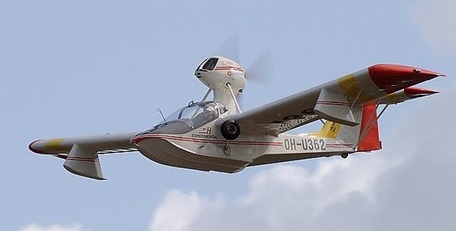
Production was launched by Martekno Finland Ltd in 1990 by building jigs and moulds and familiarizing employees. The second prototype flew off Lake Norvajärvi n Oct 12, 1990. Five kits were delivered during 1991. ATOL classified as a LSA aircraft, which maximum take-off weigh is 650 kg (1430 lbs).
With the establishment of ATOL Avion Ltd in 1991, the building of a new prototype with a longer fuselage was started. Design of the engine cowling and fuselage extension was refined. The nose, canopy and upper fuselage were redesigned for optimal aerodynamics and to reduce twirling in the tail.
Standard Equipment
Wing folding system with manual control lines connection
Dual controls
Dual Brake pedals
7-inch MGL Enigma
4,3-inch MGL XTreme Engine Monitoring System
Cockpit heater and defog
Fresh air nozzle
Emergency canopy release
Canopy locking from the outside
Four point seat belt and shoulder harness
Bilge pump
Bulkheads in the rear fuselage to prevent any bilge water from moving uncontrollably
Electric trim
Mounting for an iPad
Electrical sockets in the instrument panel and upper panel
Stern cleat and mooring posts in auxiliary float supports and tail
Four color paint scheme with decals, factory design. Special design or color subject to separate offer
Cockpit upholstery fabric/artificial leather. Luggage compartment painted.
Water rudder integrated in the tail wheel
Paddle + fasteners
Pilot Operating Handbook, service manuals and repair instructions
ATOL Service Program
In 1993 Atol Avion Ltd acquired Martekno Finland Ltd’s bankruptcy estate.
In 2012 ATOL Avion asked an FAA team to visit its overseas factory for an audit so it can also come to market.
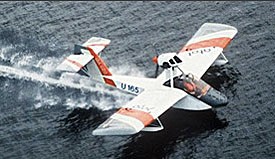
By 2014, five ATOL airplanes have flown. Two prototypes and three production line aircraft. The second ATOL prototype had the same registration number (OH-U165) as the first prototype but was a totally different aircraft. Two kits which were delivered by Martekno and one by ATOL Avion are under construction.
In 2014 the factory was building three aircraft one of these which had already flown was an extended fuselage number three prototype.
Third prototype is ready for full flight testing. Fuselage has been extended by one metre (3 ft 4 in) and nose is more curved than in previous version. Highest point is closer to the nose and spreaded over a longer distance.
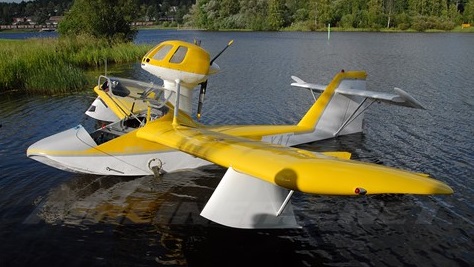
Other new features include advanced wing folding mechanism and revolutionary patent pending ATOL Water Taxiing System (AWTS). In addition, numerous pilot friendly modifications has been made.
The first water taxi tests of the new LSA version were commenced in December 2014 on the Kemijoki River, Finland, on the Arctic Circle.
The ultralight version has a lighter decoration and painting, and more limited optional equipment. The LSA version contains an auxiliary wheel in the nose (assisting in beaching when the shoreline is steep). It can also be equipped with an electronic navigation system with which beaching can be performed accurately.
A special introductory price for orders made before May 2015 was EUR 125,000.00 (VAT 0%).
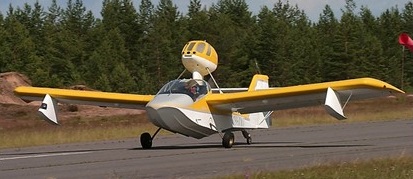
Specifications:
ATOL 495 LSA
Engine: 1 × Rotax 912 iS , 75 kW (100 hp)
Propellers: 3-bladed fixed pitch propeller, 1.72 m (5 ft 8 in) diameter
Length: 7.45 m (24 ft 5 in)
Wingspan: 9 m (29 ft 6 in)
Wing area: 13.5 m2 (145 sq ft)
Empty weight: 375 kg (827 lb)
Max takeoff weight: 650 kg (1,433 lb)
Fuel capacity: 140 liters (37 gal)
Payload: 275 kg (606 lbs)
Tail plane span: 2,40m / 7 ft 11 in
Cruising speed: 170 km/h (106 mph; 92 kn)
Stall speed: 74 km/h (46 mph; 40 kn)
Range: 750 km (466 mi; 405 nmi)
Endurance: 5 hours
Take-off distance from water (50 ft): 450 m (1,476 ft) (LSA)
Crew: one
Capacity: one passenger
The Atlas Cheetah came about through a need by the South African Air Force to update / replace its series of aging fighters while its bordering neighbors were receiving updated Soviet Bloc aircraft. Embargos limited the options available and the decision was made to modify existing SAAF Mirage III’s to a new standard.
Atlas Aviation Cheetah Article
It is believed that Atlas received some level of assistance from IAI of Israel. This brought the South African Mirage III to a new standard, implementing various proven Israeli avionics and computer systems and to the airframe, canards.
Though retaining roughly 50 percent of the existing Mirage III airframe, the Cheetah was basically an all-new aircraft. The aircraft would appear in a few variants including single-seat and twin-seat derivatives. A static inflight refueling probe was added and additional underfuselage hardpoints (wingtip hardpoints were trialed successfully for the Mirage IIIR2Z which would have become the “Cheetah R” dedicated reconnaissance platform but these never put into production). More powerful engines were also added.
Armament was centered around twin 30mm DEFA cannons and air-to-air and air-to-surface munitions of various types. The definitive Cheetah would become the single seat “Cheetah C”.
The first Cheetah conversion was revealed in July 1986, and resembles the IAI Kfir in appearance, although Atlas denies any overseas assistance with the programme. Intake mounted canards and dog-tooth leading edges are among a number of structural modifications which, together with upgraded flight systems, significantly improve the aircraft’s manceuvring performance.
Mirage 3/5/50, some having been upgraded to Cheetah standard. There are about 16 Cheetah-E conversions (all out of service); 38 Cheetah-C conversions; 16 Cheetah-D conversions; and one Cheetah-R conversion.
The Cheetah is set to be replaced in the South African Air Force beginning with the arrival of the Saab JAS J39 Gripen, of which an initial batch were ordered in 1999.
Atlas Cheetah EZ
Engine: 1 x SNECMA Atar 9C turbojet, 13,670lbs thrust with afterburner.
Length: 50.85ft (15.5m)
Wingspan: 26.97ft (8.22m)
Height: 14.76ft (4.50m)
Empty Weight: 14,568lbs (6,608kg)
Maximum Take-Off Weight: 30,203lbs (13,700kg)
Maximum Speed: 1,453mph (2,338kmh; 1,262kts)
Maximum Range: 746miles (1,200km)
Rate-of-Climb: 8,666ft/min (2,641m/min)
Service Ceiling: 55,774ft (17,000m)
Armament: 2 x 30mm DEFA 552 cannons
Hardpoints: 7
Crew: 1
The ACE all-composite turboprop trainer first flew April 1991 but later canceled.

In South Africa, Atlas Aircraft Corporation flew the prototype (ZS IZF) of the newly developed Atlas C4M Kudu on 16 June 1975, suitable for six to eight passengers or light cargo. The C4M STOL aircraft uses major components of the AM.3C. Large double doors are fitted on the left side for cargo.
It was in service with the South African air force under the name Kudu.
Wing span: 43 ft (13.1m).

Designed by Max Harlow and based on his Harlow PJC-2, the 1948 H-10 was a four-seat cabin monoplane of all-metal stressed-skin construction. It featured retractable undercarriage and two 145hp Continental O-300 mounted in tandem driving two counter-rotating props. It was priced at $2,995 in 1939.

The plane, N37463, was soon converted to a single 215hp Harlow-modified Franklin 6AB, and was active into the 1990s with a 400hp Lycoming IO-720.

Wingspan: 35’9″
Length: 28’4″
Max speed: 170 mph
Cruise: 150 mph
Stall: 55 mph
Range: 800 mi
Seats: 4

