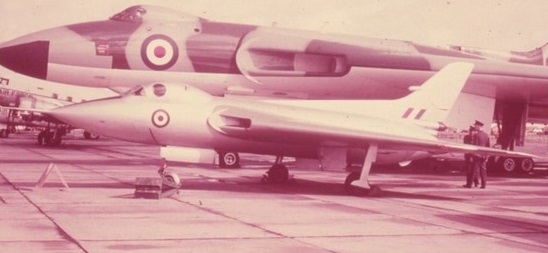
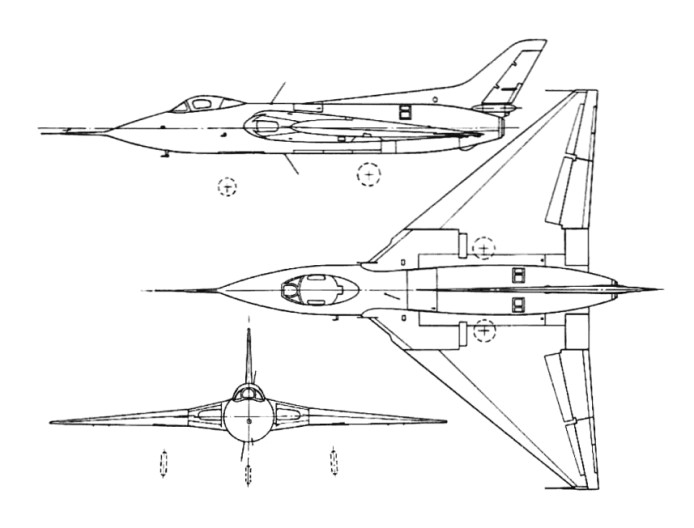
The initial Air Ministry Vulcan contract called for several forms to be built including two prototypes. Along with this commitment included the construction and delivery of several flight demonstrators. The demonstrators, designated as Type 707, proved an important part of early development of the Vulcan and were produced in five examples – Type 707, Type 707A (2), Type 707B and Type 707C.
The first aircraft made its maiden flight at Boscombe Down on 4 September 1949, but was destroyed later in an accident 26 days later. The accident revealed that the airbrake system had not closed, leading the system to enter a stall and eventually crash – and as no ejection seat system was offered to the test pilot, both man and system were lost in the event.
A new revised design appeared in the Type 707B and flew a year later, this time with an ejection system in a lengthened nose assembly for low-speed research. The Type 707A was used as a high-speed test platform and completed as two examples while a Type 707C existed as well, this becoming a test platform and featuring side-by-side seating, a single vertical tail fin and a straight-wing delta arrangement. The two seat 707C tested power control systems and electronics.
Avro 707C WZ744
In all, testing revealed the aircraft to be extremely agile considering the type and size of the aircraft, no doubt due to the large area delta-wing design choice. These development models eventually gave rise to the Type 698 prototype.
Avro 707 Engine: 1 x Rolls Royce Dervent 5, 1630kg Take-off weight: 4303 kg / 9487 lb Wingspan: 10.4 m / 34 ft 1 in Length: 12.9 m / 42 ft 4 in Height: 3.53 m / 12 ft 7 in Crew: 1
707A
707B
707C Engine: Derwent, 2600 lb Wingspan: 34 ft 2 in Length: 42 ft 4 in Height: 11 ft 7 in Weight: approx. 10,000 lb Seats: 2.
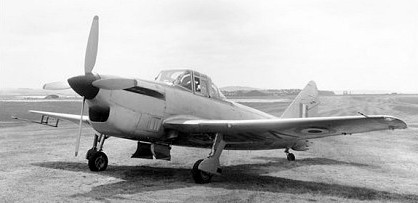
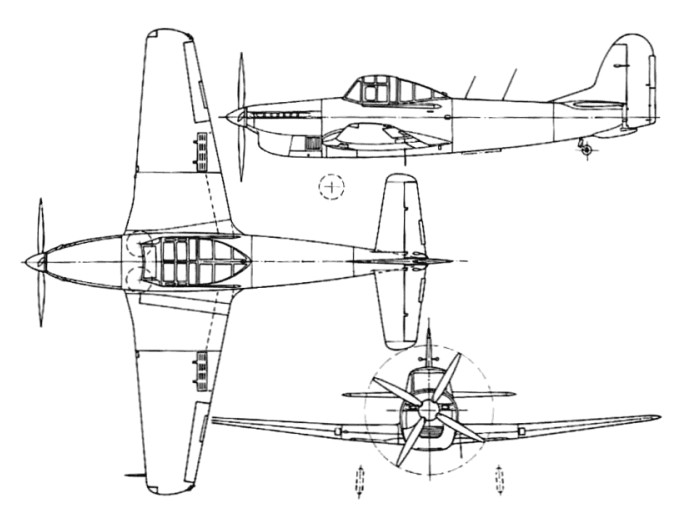
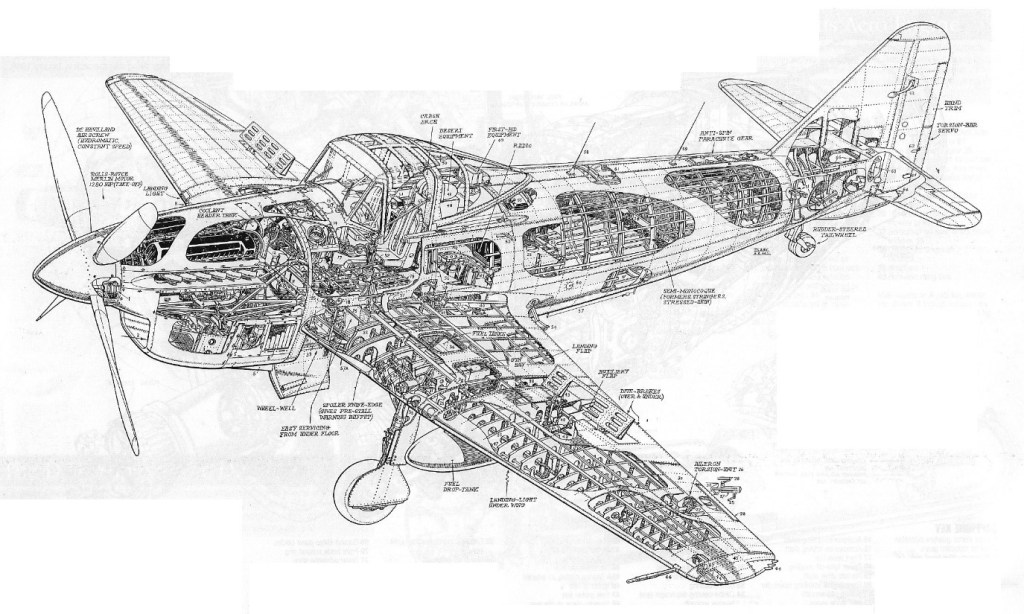
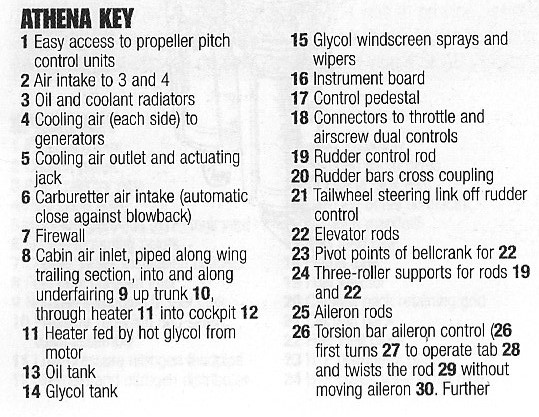
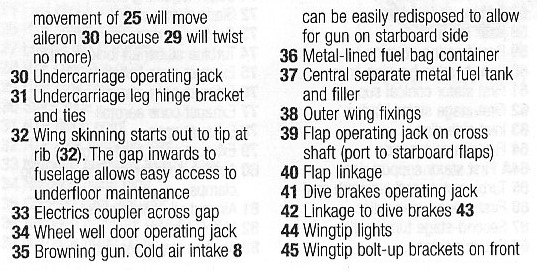
The Athena was a single engine side-by-side two seat trainer with a tail wheel undercarriage. designed to Specification T.7/45 for a three-seat turbo-prop advanced trainer.
Two turbo-prop versions were developed, the Athena T.1 with a 1135 eshp A.S. Mambe A.S.Ma.1, and the Athena T.1A with a 1125 eshp Rolls-Royce Dart R.Da.1
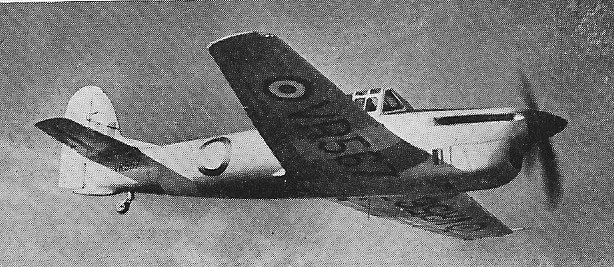
Athena T.2
The design was then modified to meet specification T.14/47, and seventeen pre-production Athena T.2s were built, powered by the 1280 hp / 954kW Rolls-Royce Merlin 35. First flown in 1948, the Athena T.2 advanced trainer was in pro¬duction by 1950. These eventually went to the RAF Flying College, Manby, as gunnery trainers.
Athena T.Mk 2 Engine: 1 x Rolls-Royce Merlin 35, 1280 hp / 954kW Take-off weight: 4256 kg / 9383 lb Empty weight: 2966 kg / 6539 lb Wingspan: 12.19 m / 40 ft 0 in Length: 11.37 m / 37 ft 4 in Height: 3.94 m / 13 ft 11 in Wing area: 25.08 sq.m / 269.96 sq ft Max. speed: 472 km/h / 293 mph Cruise speed: 359 km/h / 223 mph Ceiling: 8840 m / 29000 ft Range: 885 km / 550 miles
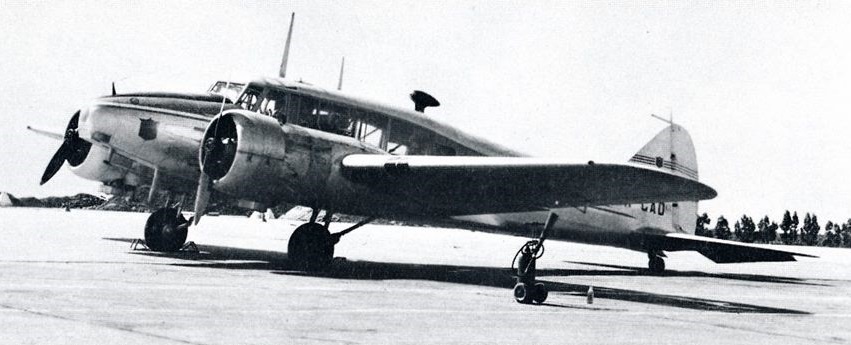
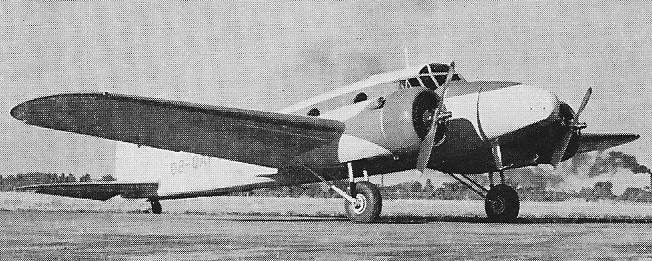
Designed by Roy Chadwick in 1934 the Anson featured twin-engines, a cantilever low-wing with retractable landing gear, and a steel tube fuselage with wooden wings construction. Two were built to an Imperial Airways order of 1933.
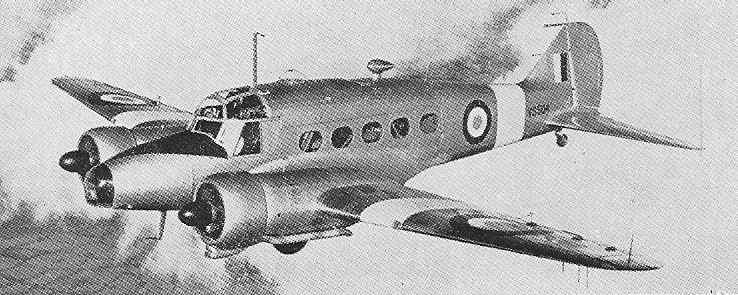
The Anson itself was produced to fulfill Specification 18/35 brought about by the British Air Ministry and originally intended for use as a maritime reconnaissance platform. The Anson protoype (Avro 652A, K4771) achieved first flight in this new militarized form on March 24, 1935. Evaluation of the system led to first-run production of the Anson Mk I model series with first deliveries occurring in March of 1936. The Royal Air Force’s No.48 Squadron became the types first user.
The Anson had capabilities that made it useful in the training of pilots, bombardiers and gunners. The arrival of the Second World War sealed the future of the Anson as a primary trainer and multi-role platform for Britain, her Commonwealth nations and nations across the globe.
The Avro 652A Anson I was both a general reconnaissance aeroplane and advanced crew and navigation trainer, descended directy from the Avro 657. Only 6 Mk.1 Ansons were delivered from Avro in 1938. The Anson Mk.1s were later re-winged to the Mk.XIX full metal mainplane.
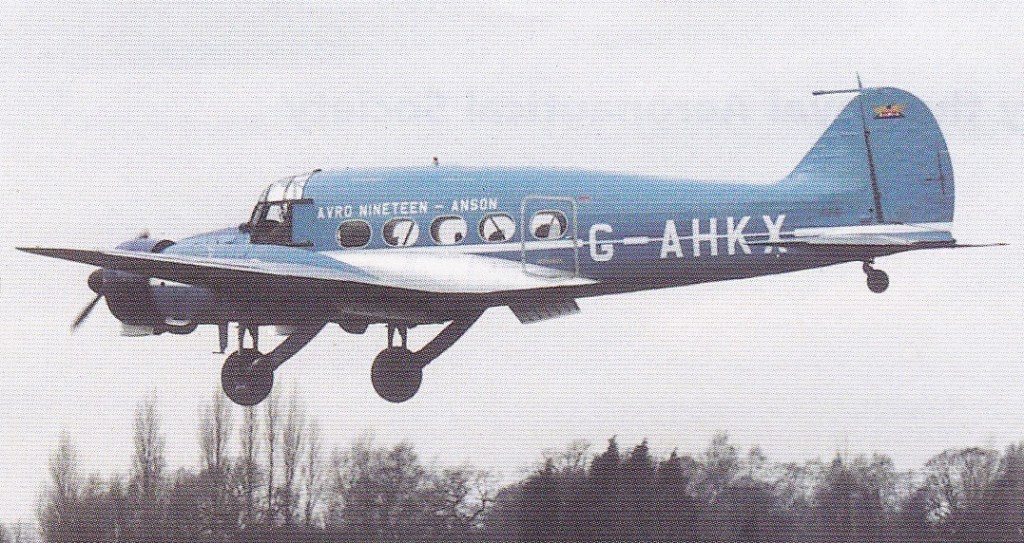
Avro XIX G-AHKX post 20-year restoration flight 8 March 2001
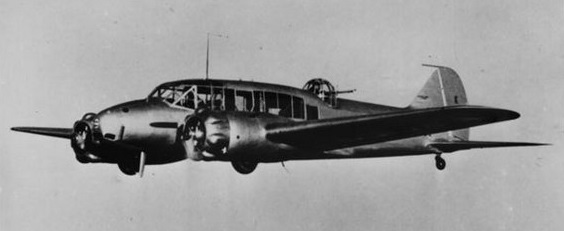
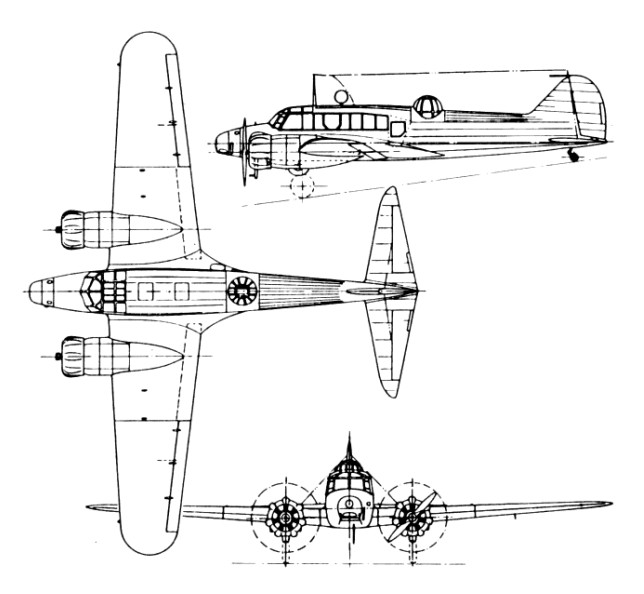
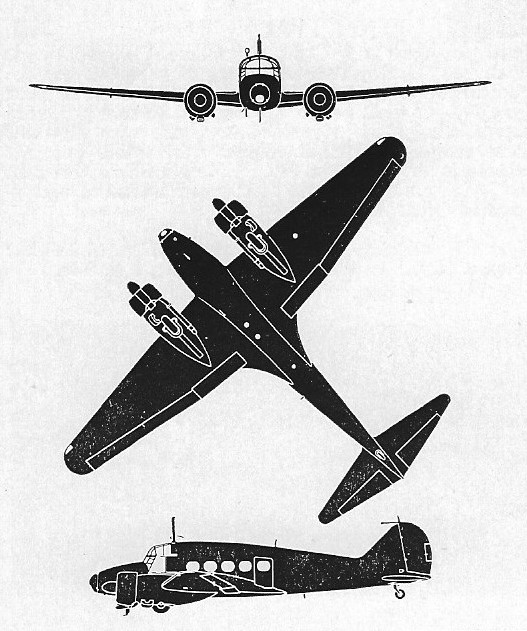
Outwardly, the Anson fuselage was rounded and decidedly streamlined (sometimes showcasing rounded cabin windows – five windows to a side). Perhaps the most distinct feature of the aircraft’s profile was its “duckbill” nose assembly, protruding well past the front windscreen. The aircraft sported low-mounted monoplane wings with rounded wingtips. Each wing held a radial piston engine housed in nacelles powering two-bladed propellers. The engines were placed well-forward of the wing leading edge and met up nearly at the length of the fuselage nose. The undercarriage was typical of the time, featuring two main landing gears and a tail wheel. The main landing gears retracted forward into the bottom of each engine nacelle. The Anson became the first RAF aircraft to feature a fully-retractable undercarriage, this accomplished via a manual hand-crank controlled by the pilot. The empennage was of a conventional sort, with a rounded vertical tail fin and low-mounted horizontal planes. Typical crew accommodations amounted to 3 or 4 personnel. Armament consisted of up to 4 x 7.7mm (.303 cal) Vickers-type machine guns in the front fuselage, a dorsal turret and at two other cabin locations. Additionally, the Anson could be fitted with up to 500lbs of internal ordnance.
The legacy of the Anson was solidified by its sheer production numbers and quantity of variants the line evolved into. The Mk I represented the most quantitative Anson, with 6,688 examples seeing delivery. This version was powered by the Armstrong Siddeley Cheetah series engines of 350 (Cheetah IX) or 395 (Cheetah XIX) horsepower. Maximum speed for Cheetah IX-powered Ansons was reported to be around 188 miles-per-hour with a range topping off at 790 miles. Service ceiling figures put the Anson Mk I at 19,000 feet with a rate-of-climb nearing 750 feet-per-minute.
The production prototype flown in December 1935 was a forerunner of 7,195 Avro-built Anson I for the RAF, RN, RAAF, SAAF, RGAF, Greece and Egypt. Production Ansons were first issued to No 48 Squadron, which put them into service on 6 March 1936. Armament included two 45kg and eight 9kg bombs, a forward-firing Vickers gun and a Lewis gun in a turret amidships.
Operational with Coastal Command between 1936 and 1939 and for air-sea rescue until 1942, the majority were delivered as turretless trainers for the Commonwealth Air Training Plan in Canada, Australia and South Africa. Canadian Car and Foundry became involved in the programme to produce the Avro Anson 1, which had been adopted as the main twin engined trainer for pilots in the British Commonwealth Air Training Programme (BCATP) in Canada. Originally the aircraft were to be assembled in Canada from British components, but problems with shipping and supply caused these plans to be abandoned in 1940. Canada, with a commitment to provide a training scheme, but without the necessary aircraft, was forced to establish its own manufacturing and production programme. Almost all of the Canadian aircraft manufacturers, including CCF, became involved in the production of what was now designated the Anson II, production being co ordinated by Federal Aircraft Ltd, a company specifically formed for that purpose.
Can Car was involved at two levels, producing components as well as entire aircraft. During a two year production period from 1941 to 1943, the company manufactured some 800 wings and 300 fuselages at its plants in Quebec and later produced more than 4,400 Hoover variable pitch propellers to replace the wooden propellers fitted as original equipment. The Anson II built in Canada was basically a copy of the British Anson 1 with Canadian made components and a number of engineering and structural modifications such as the adoption of the Jacobs L6MB engine in place of the Armstrong Siddeley Cheetah, the addition of an engine driven hydraulic system, modifications to the undercarriage and the replacement of some of the metal fittings by moulded plywood components. Can Car built 341 complete aircraft at its new factory in Amherst, Nova Scotia, and it was the prototype from that plant which was the first of the Anson IIs to take to the air in August 1941. In all, 1,832 Anson IIs were built, most destined for the flying schools of the BCATP, although fifty were ordered by the USAAF where they were designated Federal AT 20. The last one left RCAF active service in 1954. Britain took to producing these Ansons as well and designated them as Anson Mk III.
Anson MK IV’s were produced in Britain and fitted Wright Whirlwind engines.
The Anson V variant grew out of experience with the Mk II as well as the Canadian interest in replacing metal structures with the more readily available, cheaper and more easily worked wooden equivalents. The Mk V incorporated the Anson II wing, horizontal tail and undercarriage, but the fuselage was almost completely redesigned and the more powerful Pratt and Whitney R-985 Wasp Junior engines were installed. Apart from the cockpit section, which was of welded steel tube construction covered by plywood panelling, the fuselage consisted of US developed, moulded plywood, monocoque units bolted together, comprising a nose section and three after sections, the rearmost of which included the tail fin. The net result was a fuselage with a larger capacity, which was both warmer and quieter than that of the Anson II. In addition, being aerodynamically cleaner than its predecessor and with more powerful engines, the Mk V had an improved performance in all categories from load to service ceiling. The first Anson V flew in January 1943 and by the time production ceased two years later, 1,048 had been built. Of these, 300 came out of the Can Car plant at Amherst. Like the Mk II, the Anson V saw service with the BCATP, mainly in a navigational training role, although a small number were fitted for communications and photo reconnaissance work. Following the war, the Anson V became a favourite with aerial survey companies in North America, from Mexico to the high Arctic.
The Anson 5, built during the war years by Federal Aircraft Ltd in Canada, differs from British-built Ansons, featuring a Vidal moulded veneer fuselage and two 450 hp Pratt & Whitney R-985 AN-12B or 14B supercharged radials. Production commenced in 1942 as a navigation trainer for the CAF. The Anson 6 was similar but equipped as a gunnery trainer. 1050 Mk.4 and 6 were built.
Anson 5
The post-war series of Anson trainers and transport all possess the raised cabin roof first introduced on the Anson C.11. The majority later received metal wings and tailplane. Of the 326 Mk.19 built, 143 had wooden wings and tail unit, and the remaining aircraft were all metal.
Anson T.20
The Anson Mk VI was a “one-off” Canadian Anson fitting two Pratt & Whitney Wasp Junior engines of 450 horsepower and intended for gunnery and bombardier training.
Anson 10
Increased headroom created the Anson 11 or 12 according to engine. The Anson 10, introduced in 1943, had strengthened floors for continental freight runs by Air Transport Auxiliary. The Anson Mk X represented at least 104 Anson Mk I models converted to the new Mk X designation. Similarly, the Anson Mk 11 was formed from 90 Mk I models conversions. The Anson Mk 12 was well-formed in two-hundred twenty-one new-build production examples along with 20 conversions from Anson Mk I models.
The Anson 12, furnished as a feeder-liner eight-seater, became the Avro 19 Series 1 or Series 2 (tapered metal wing) for the RAF, BEA and civil operators in the UK and abroad.
The Anson Mk XIII was a proposed gunnery trainer that was never put into production. These would have been powered by twin Cheetah XI /XIX series engines. The Mk XIV was another gunner trainer proposal that never saw the light of day. These would have fitted the Cheetah XV series engines. The Mk XVI was to be a navigational trainer and the Mk XV would have been used as a bomber trainer – both of these designs were never put into production.
The Royal Air Force used 264 Ansons as transport and communications platforms under the C 19 designation. Navigational trainers were also fielded, these coming in 252 examples under the T 21 designation. Anson T 22s were 54 radio trainers for the Royal Air Force. RAF Ansons made up 26 squadrons at their peak of usage. Australia was a major Commonwealth operator, utilizing no fewer than 1,028 Ansons up until 1955.
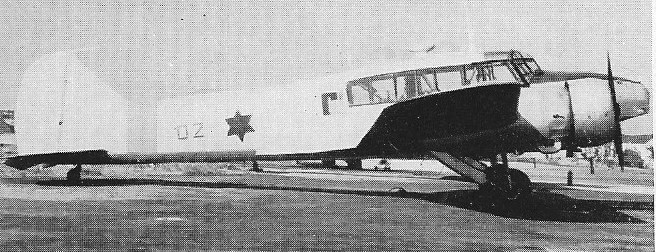
After the war surplus Ansons were sold to civil charter firms and the air forces of Belgium, Holland, Iran, Israel, Norway, Portugal and Saudi Arabia. Development continued during and after the war, culminating in the adaption of the civilian Avro XIX for service use as the Anson C19. With a completely re-designed fuselage, and metal wings and tail plane, this second generation Anson continued in RAF service until 1968. Two production series made up this mark, totaling 56 examples.
Final variants of 1948-49 were twelve communications and reconnaissance Anson 18s (spawned from the Avro XIX) delivered to Afghanistan and the thirteen pilot trainers Anson 18Cs delivered to India; 60 Anson T.20 (perspex nose) for navigation training in Southern Rhodesia; T.21 (metal nose) for the RAF in the UK; and T.22 radio trainer.
A total of 8138 built in the UK (3,881 Ansons at the Avro factory at Yeadon, plus enough parts to build another 900 Ansons) and another 2882 built in Canada, during 17 years of production.
The Avro Anson was produced from 1935 to 1952, to which some total 11,020 examples were built. Avro handled production in Britain with 8,138 total examples being produced there while Canadian Federal Aircraft LTD provided for a further 2,882 examples locally-produced in Canada. The last one was delivered to the Royal Air Force on 15 May 1952, and RAF Ansons were retired as late as 1968, thirty-three years after the type’s inception into service. No fewer than 27 nations across the world ended up fielding the Anson in some form or another.
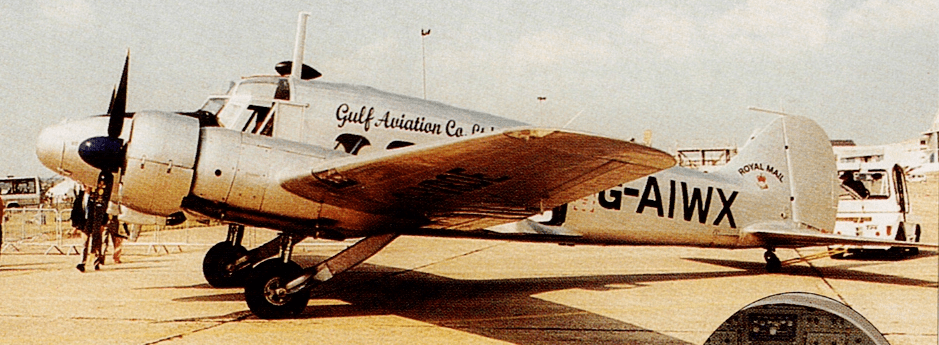
Anson G-AROE, painted as G-AIWX, left Coventry on 10 March 2000 for France, Italy, Greece, Egypt, Jordan and Saudi Arabia for Gulf Air’s 25 March official anniversary on 25 March.
Avro 652 A Anson Mk I Engine: 2 x Armstrong Siddeley Cheetah Mk IX, 345 hp Length: 42 ft 3 in / 12.88 m Height: 13 ft 1 in / 3.99 m Wingspan: 56 ft 6 in / 17.2 m Wing area: 410.001 sq.ft / 38.09 sqm Max take off weight: 8000 lb / 3629.0 kg Weight empty: 5375.8 lb / 2438.0 kg Max. speed: 164 kts / 303 km/h Cruising speed: 137 kts / 254 km/h Service ceiling: 18996 ft / 5790 m Wing load: 19.48 lb/sq.ft / 95.00 kg/sq.m Range: 686 nm / 1271 km Crew: 3 Armament: 2x MG 7,7mm, 163kg Bomb
Avro Anson C.Mk 1 Engines: 2 x Armstrong Siddeley Cheetah IX 7-cylinder radial, 350hp Length: 42.26ft (12.88m) Width: 56.50ft (17.22m) Height: 13.09ft (3.99m) Maximum Speed: 188mph (303kmh; 164kts) Maximum Range: 808miles (1,300km) Rate-of-Climb: 750ft/min (229m/min) Service Ceiling: 18,999ft (5,791m) Armament: Up to 4 x 7.7mm Vickers machine guns Up to 500lbs of bombs held internally. Accommodation: 3 to 5 Empty Weight: 5,512lbs (2,500kg) Maximum Take-Off Weight: 8,598lbs (3,900kg)
Avro 652A Anson Powerplant: 2 x Pratt & Whitney R-985AN-14 Wasp Jr, 450hp. Wing Span : 56ft 6in (17.2 m) Length : 42ft 3in (12.9 m) Height : 13ft (4 m) Range: 790 mi(1,271 km) Speed : 190 mph 304 km/h
652A Anson C.10 Engines: 2 x 320 hp Armstrong Siddeley Cheetah 9 Wingspan: 56 ft 6 in Length: 4 ft 3 in Empty weight: 6510 lb Loaded weight: 9450 lb Max speed: 188 mph Cruise: 158 mph
Anson T.21 Engines: 2 x 420 hp Armstrong Siddeley Cheetah 15 Wing span: 57 ft 6 in Wing area: 440 sq.ft Length: 42 ft 3 in Height: 13 ft 10 in Empty weight: 7766 lb Loaded weight: 10,306 lb Max speed: 171 mph at 5000 ft ROC: 700 fpm
Anson T.22 Engines: 2 x 420 hp Armstrong Siddeley Cheetah 15 Wing span: 57 ft 6 in Wing area: 440 sq.ft Length: 42 ft 3 in Height: 13 ft 10 in Empty weight: 7766 lb Loaded weight: 10,306 lb Max speed: 171 mph at 5000 ft ROC: 700 fpm
Anson II Engines: 2 x L6MB Jacob.
Anson III Engines: 2 x L6MB Jacob.
Federal Anson 5 Engines: 2 x 450 hp Pratt & Whitney R-985 AN-12B or 14B Wingspan: 56 ft 6 in Wing area: 463 sq.ft Length: 42 ft 3 in Height: 13 ft 1 in Empty weight: 6750 lb Loaded weight: 9450 lb Max speed: 194 mph at 3500 ft Cruise: 150 mph Range: 650 mi
Federal Anson 6 Engines: 2 x 450 hp Pratt & Whitney R-985 AN-12B or 14B Wingspan: 56 ft 6 in Wing area: 463 sq.ft Length: 42 ft 3 in Height: 13 ft 1 in Empty weight: 6750 lb Loaded weight: 9450 lb Max speed: 194 mph at 3500 ft Cruise: 150 mph Range: 650 mi
Engine: 1 x 240hp Armstrong Siddeley Lynx IVC Take-off weight: 1589 kg / 3503 lb Empty weight: 1016 kg / 2240 lb Wingspan: 11.38 m / 37 ft 4 in Length: 8.31 m / 27 ft 3 in Height: 3.05 m / 10 ft 0 in Wing area: 28.52 sq.m / 306.99 sq ft Max. speed: 209 km/h / 130 mph Cruise speed: 177 km/h / 110 mph Ceiling: 3505 m / 11500 ft Range: 805 km / 500 miles
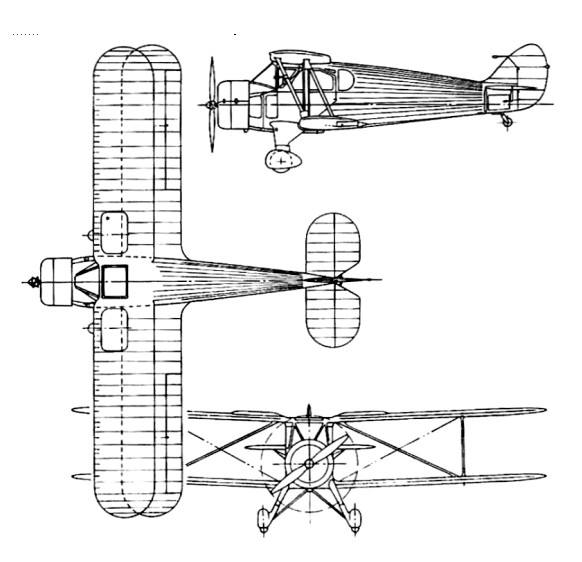
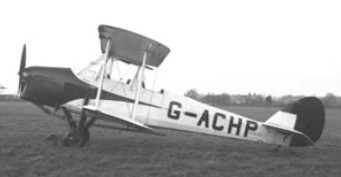
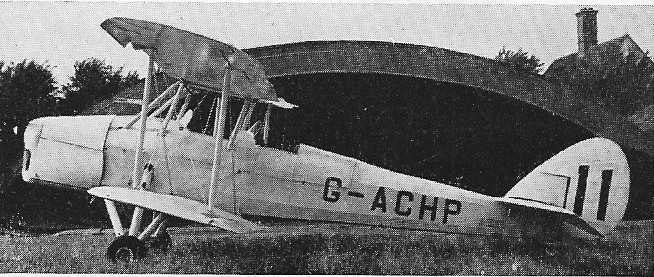
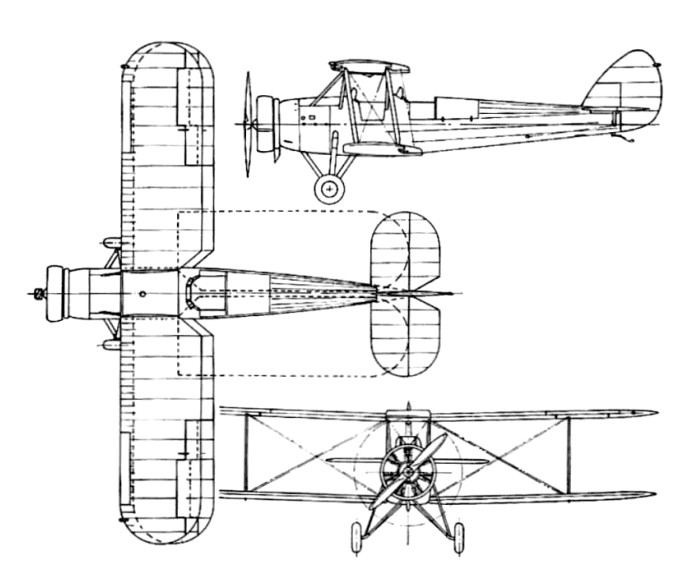
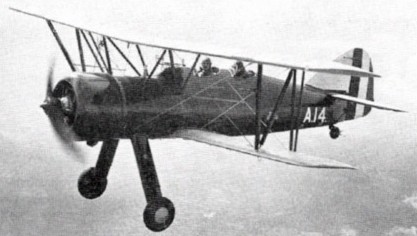
The Avro 638 Club Cadet and the basically similar 643 Cadet Mk.II were produced in the 1930s. Both types have identical wings, undercarriage and tail unit, but the wings of the Cadet have more stagger than those of the Club Cadet to provide improved view from both cockpits.
Engines used were the 130 hp DH Gipsy Major 1 and 135 hp AS Genet Major radial.
1933
638 Club Cadet
Engine: 1 x 135hp Armstrong Siddeley Genet Major I Take-off weight: 908 kg / 2002 lb Empty weight: 565 kg / 1246 lb Wingspan: 9.19 m / 30 ft 2 in Length: 7.54 m / 25 ft 9 in Height: 2.67 m / 9 ft 9 in Wing area: 24.34 sq.m / 261.99 sq ft Max. speed: 185 km/h / 115 mph Cruise speed: 161 km/h / 100 mph Range: 523 km / 325 miles
Avro 636A Engine: 1 x 680hp Armstrong Siddeley Panther XI Take-off weight: 1781 kg / 3926 lb Empty weight: 1348 kg / 2972 lb Wingspan: 10.06 m / 33 ft 0 in Length: 8.38 m / 28 ft 6 in Height: 3.53 m / 12 ft 7 in Wing area: 24.25 sq.m / 261.02 sq ft Max. speed: 370 km/h / 230 mph Cruise speed: 314 km/h / 195 mph Ceiling: 9754 m / 32000 ft Range: 467 km / 290 miles
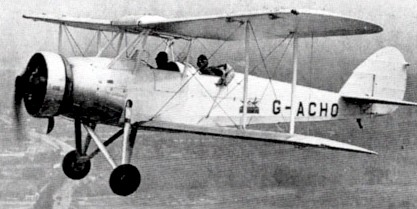
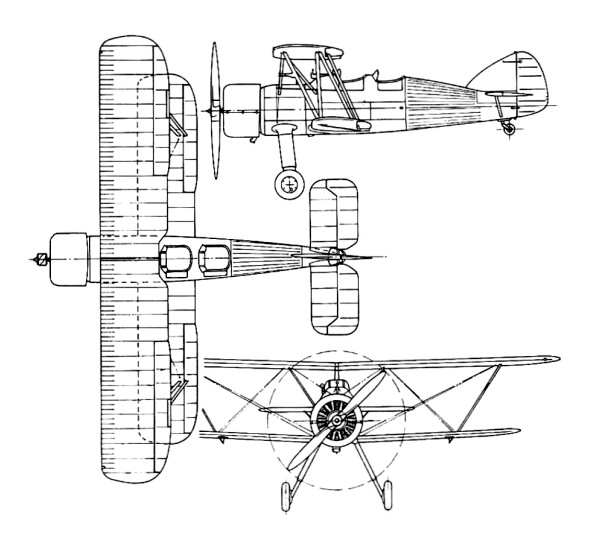
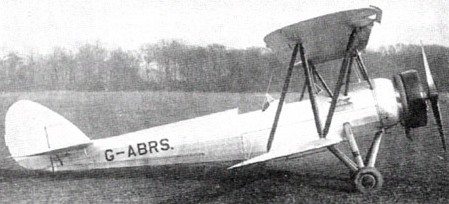
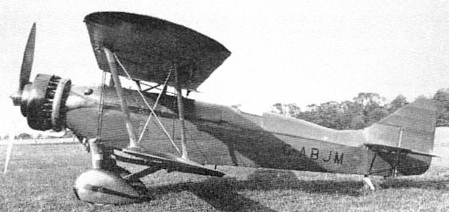
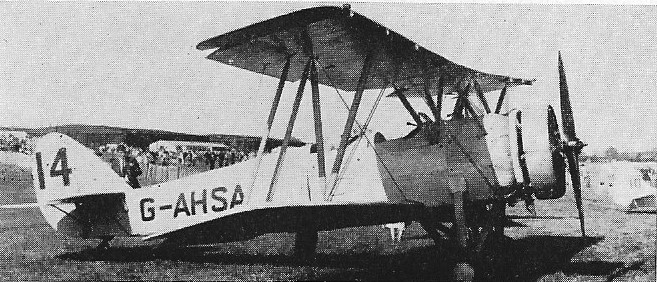
The Avro 631 Cadet was developed in 1931 as a smaller, more economical, derivative of the Tutor military trainer, for flying club or personal use, and the Irish Air Corps purchased six from the drawing board, the first three delivered on 21 March 1932. The first prototype, G-ABRS flew in October 1931. It was publicly unveiled at the opening of Skegness airfield in May 1932. A total of 35 were built.
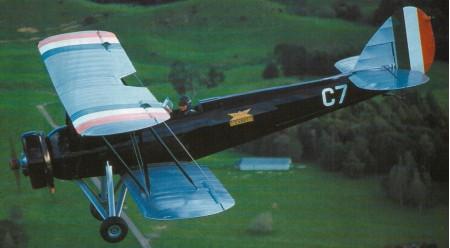
The Avro 631 also saw service with the military when six (C1-C6) were delivered to the Irish Air Corps in March 1932. One aircraft (C3) was written off in a crash in August 1932 so a replacement was ordered from Avro. This arrived in December 1934 as C7, and it was the only one not destroyed or written off during their service with the IAC. It was subsequently sol in 1945, going through several private owners and at least one crash landing before ending up in New Zealand. There, it was restored to airworthy condition, one of only two Avro 631s left in the world.
The Avro 631 Cadet was replaced in production in September 1934 by the improved Avro 643 Cadet, which had a revised rear fuselage with a raised rear seat, retaining the 135 hp (101 kW) Armstrong Siddeley Genet Major 1 engine of the Avro 631. In turn, this formed the basis for the more powerful Avro 643 Mk II Cadet with a 150-hp Armstrong Siddeley Genet Major 1A engine mounted 6 inches further forward; it was also strengthened and had improved parachute egress. An inverted fuel system was added and minor modifications were made to the wing bracing wires. This model entered service in 1935, and 69 Cadet IIs were built, including 34 fitted with a tail wheel for the Royal Australian Air Force.
The Cadet, while smaller and more economical than the Tutor, was still more expensive to run than competing two-seat light civil aircraft and was harder to hangar because of its lack of folding wings; so was mainly used as a trainer for flying schools or the military. By far, the largest civil user was Air Service Training Ltd, which operated 17 Avro 631s at Hamble, together with a further four operated by its Hong Kong subsidiary, the Far East Aviation Co. Air Service Training also operated 23 Mk II Cadets, with both these and the earlier Cadets remaining in service with Reserve Training Schools run by Air Service Training until they were impressed as ATC instructional airframes in 1941.
The other major operator was the RAAF, which acquired 34 Mk II Cadets, delivered between November 1935 and February 1939. The RAAF ordered an initial 12 Avro Cadets in 1935. Delivered from December 1935 they were joined by 22 more in 1938-39 while a 1938 order for another 20 was cancelled before deliveries began. These remained in service until 1946, when the surviving 16 were sold for civil use. Two of these were re-engined in 1963 with 220 hp (160 kW) Jacobs R-755 engines for use as crop sprayers. In the U.K., only two Cadets survived the war.
RAAF Avro Cadet
Produced from 1932 to 1939, a total of 104 were built.
Variants
Avro 631 Cadet Initial version, powered by Armstrong Siddeley Genet Major I engine, 35 built.
Avro 643 Cadet Raised rear seat, 8 built.
Avro 643 Cadet II Powered by 150 hp (110 kW) Genet Major 1A, 61 built.
Operators:
Civil operators Air Service Training Ltd
Military operators Royal Australian Air Force operated 34 Avro 643 MkII Cadet. Irish Air Corps operated 7 Avro 631 Cadets. Portuguese Air Force Chinese Nationalist Air Force – China had 5 Avro 631 deployed at Liuzhou Aviation School during the Second Sino-Japanese War, all of which were lost due to Japanese bombing in 1939. Spanish Republican Air Force
Avro 631 Engine: 1 x Armstrong Siddeley Genet Major I. 135hp / 100 kW Wingspan: 9.14 m / 30 ft 0 in Length: 7.54 m / 24 ft 9 in Height: 2.67 m / 8 ft 10 in Wing area: 24.25 sq.m / 261.02 sq ft Take-off weight: 863 kg / 1903 lb Empty weight: 536 kg / 1182 lb Max. speed: 190 km/h / 118 mph Cruise speed: 161 km/h / 100 mph Ceiling: 3962 m / 13000 ft Range: 564 km / 350 miles
Avro 643 Mk II Cadet Engine: 1 × Armstrong Siddeley Genet Major 1A seven cylinder radial, 150 hp (112 kW) Length: 24 ft 9 in (7.55 m) Wingspan: 30 ft 2 in (9.20 m) Height: 8 ft 10 in (2.69 m) Wing area: 262 ft² (24.3 m²) Empty weight: 1,286 lb (585 kg) Loaded weight: 2,000 lb (907 kg) Wing loading: 7.63 lb/ft² (37.4 kg/m²) Power/weight: 0.075 hp/lb (0.12 kW/kg) Maximum speed: 116 mph (101 kn, 187 km/h) Cruise speed: 100 mph (87 kn, 161 km/h) Range: 325 mi (283 nm, 523 km) Service ceiling: 12,000 ft (3,660 m) Rate of climb: 700 ft/min (3.6 m/s) Crew: Two
An unfinished Avro 608 Hawk was completed as the only Avro 627 Mailplane in 1933.
Avro 627 Engine: 1 x 525hp Armstrong Siddeley Panther IIA Take-off weight: 2338 kg / 5154 lb Empty weight: 1397 kg / 3080 lb Wingspan: 10.97 m / 36 ft 0 in Length: 9.40 m / 31 ft 10 in Height: 3.30 m / 11 ft 10 in Wing area: 35.40 sq.m / 381.04 sq ft Max. speed: 274 km/h / 170 mph Cruise speed: 237 km/h / 147 mph Ceiling: 5791 m / 19000 ft Range: 902 km / 560 miles
The Tutor was redesigned as the more multi-purpose Avro 626 trainer. It was essentially still used as a two-seat aircraft, but a third cockpit was aged and had a gun ring fitted to it. This allowed the aircraft to be used for gunnery training.
1930 Moravko-Slezka Vazovka Tatra (Ringhoffer-Tatra) obtained licenses to build the Avro 626 as T.126, and the Bucker Bu 131 Jungmann as the T.131.
Avro 626 Prefect Engine: Armstrong Siddeley Lynx IV C, 237 hp Length: 26.509 ft / 8.08 m Height: 9.58 ft / 2.92 m Wingspan: 33.99 ft / 10.36 m Wing area: 299.993 sq.ft. / 27.87 sq.m Max take off weight: 2749.6 lb / 1247.0 kg Weight empty: 1766.2 lb / 801.0 kg Max. speed: 97 kt / 180 km/h Cruising speed: 83 kt / 153 km/h Service ceiling: 14797 ft / 4510 m Wing load: 9.23 lb/sq.ft / 45.0 kg/sq.m Range: 191 nm / 354 km Crew: 3
Engine: Armstrong Siddeley Cheetah Va, 285 hp. Max speed: 130 mph.
Avro 626 landplane Engine: 1 x 240hp Armstrong Siddeley Lynx IVC Take-off weight: 1249 kg / 2754 lb Empty weight: 801 kg / 1766 lb Wingspan: 10.36 m / 34 ft 0 in Length: 8.08 m / 27 ft 6 in Height: 2.92 m / 10 ft 7 in Wing area: 27.87 sq.m / 299.99 sq ft Max. speed: 180 km/h / 112 mph Cruise speed: 153 km/h / 95 mph Ceiling: 4511 m / 14800 ft Range: 386 km / 240 miles
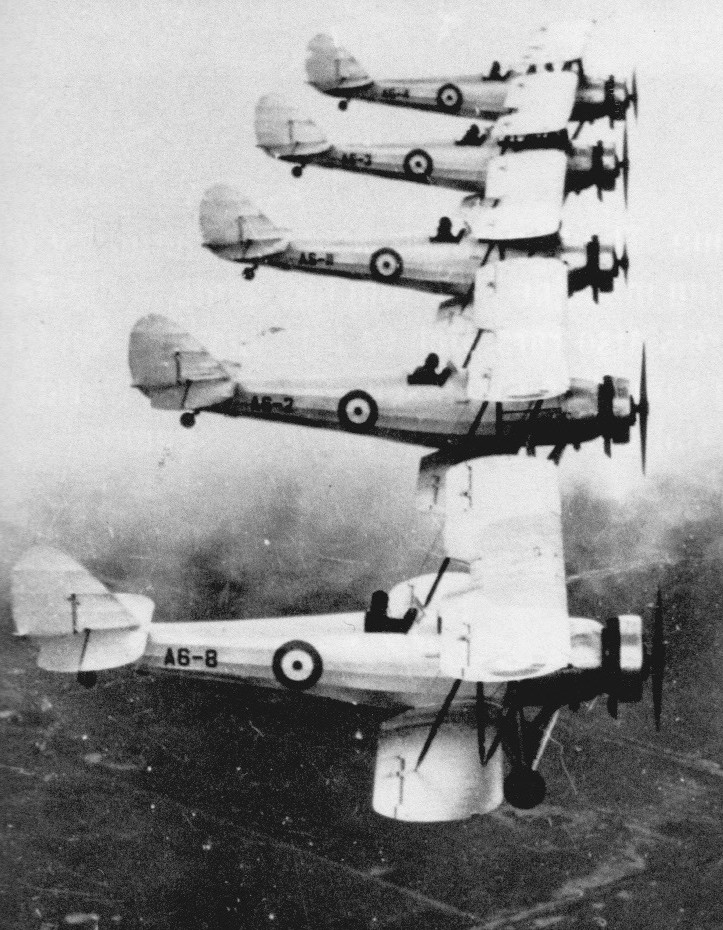
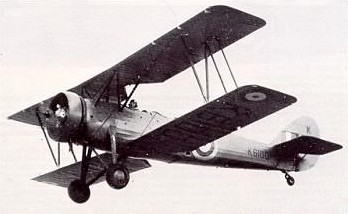
Designed as a replacement for the Avro 504N, the original Avro Trainer of 1929 featured a welded steel-tube structure and a 240-hp Armstrong Siddeley Lynx IVC radial engine. In 1930 the prototype Avro 621 Tutor made its first flight.
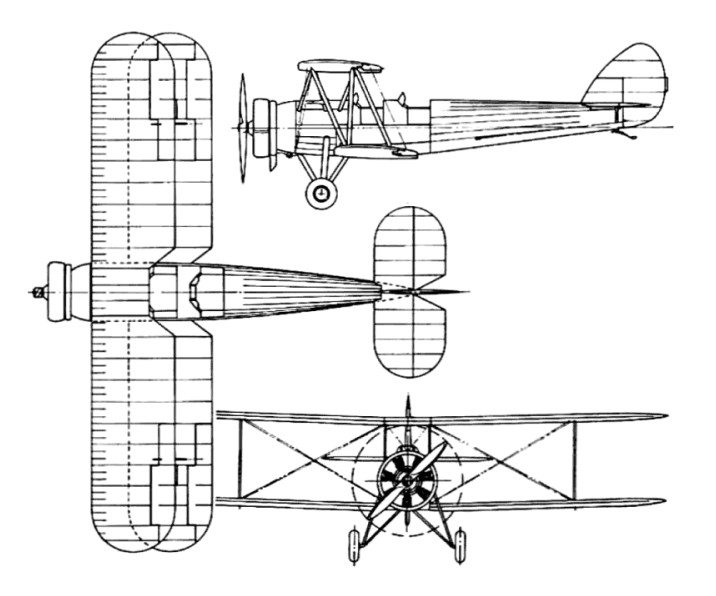
Design of the Avro 621 Tutor was of a basic biplane type with twin tandem seating for the student and instructor respectively in the tubular-shaped fuselage. Windscreens were afforded each seating position as were redundant control systems. The biplane structure was connected via a series of struts between them while the engine was fitted to the extreme forward portion of the design rotating a two-blade propeller. Landing gear were of the traditional World War 1 static design and a tail wheel was fitted at rear.
Twenty-two were built for the RAF and three for the Irish Army Air Corps.
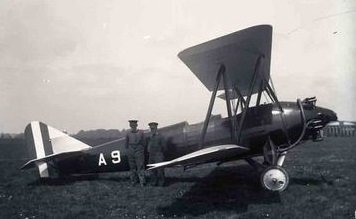
Avro 621 (serial A9). Avro A9 had been delivered to Baldonnel Aerodrome on 17 April 1930 and was crashed at Maynooth 26 November 1930 and written-off.
After evaluation Avro began mass production of the 621 for the RAF under the new name of Tutor. Some 200 Tutor trainers were still in operational use with British forces by the time of the Second World War. More than 390 were built, including 14 Sea Tutors with single-step Alclad floats and powered by a 160kW Lynx engine. The Sea Tutor was treated against corrosion by sea-water, and a metal propeller and hand-turning gear were also standard. The Sea Tutor was one of the few seaplanes that could not be converted into landplane form.
Tutors were delivered to Denmark, Greece, Poland and South Africa, plus others for civil use. Fifty-seven were built under licence in South Africa for the air force and a very small number in Denmark for the navy.
The UK line would stop production of the 621 by 1936 by which time some near 800 models would be in circulation. In total, 852 were built.
Engine: 1 x Armstrong Siddeley Lynx IVC, 179kW / 237 hp Take-off weight: 1115 kg / 2458 lb Empty weight: 839 kg / 1850 lb Wingspan: 10.36 m / 34 ft 0 in Length: 8.08 m / 27 ft 6 in Height: 2.92 m / 10 ft 7 in Wing area: 27.96 sq.m / 300.96 sq ft Wing load : 8.2 lb/sq.ft / 40.0 kg/sq.m Max. speed: 196 km/h / 122 mph Cruise speed: 169 km/h / 105 mph Service ceiling: 4940 m / 16200 ft Range: 402 km / 250 miles Crew : 2