Weedhopper JC-24 Weedhopper

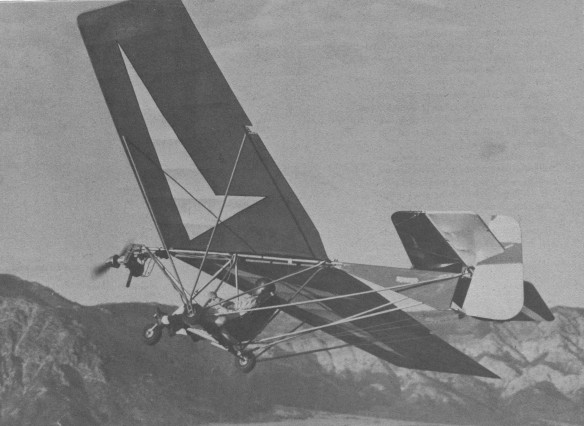
Designed by John Chotia and marketed in kit form by his company, Ultra Systems of PO Box 2253, Ogden, Utah, the Weedhopper is a powered hang glider envisaged as a low cost fun aeroplane that does away with the conventional hang glider’s need for a hill and wind, and the bruises, hard landings and other exertions that usually accompany this form of flying. The Weedhopper is Chotia’s 23rd design, following 18 hang gliders of both rigid and flex-wing types, and five powered gliders of which several are foot-launched.

Weedhopper JC-24 Weedhopper Article

Weedhopper of Utah was founded in 1977 by John Chotia, who asked Klaus Hill, creator of the Hummingbird, Hummer and the famous Fledgling, to design a minimum cost ultralight. His flying wing design was not particularly well accepted in its original form, but fitted with an empennage by John Chotia, it gave rise to one of the most popular of the early ultralights. This ultralight is perhaps the world’s simplest airplane.

It was designed from the start to take engine and landing gear loads, and has conventional rudder and elevator controls (but no ailerons) and proper seating for the pilot, who sits suspended under the wing just about on the cg position; this means that the design is not nearly so sensitive to pilot weight changes as other ultralights. The triangle undercarriage is mounted on the small platform-like structure on which the pilot sits, and has a steerable nosewheel. A rigid as distinct from flexible wing was chosen so as to retain control and stability in all attitudes, and the wings are of the ‘roll up’ kind, which can be dismantled easily for transport. The Weedhopper’s structure is basically of aluminium tubing partially covered with dacron sailcloth, which simply bolts together for assembly, and is strong enough to lift a man weighing 200lb at an airfield elevation of 5,000ft. The engine is a 292cc Yamaha which produces 19hp at 5,000 rpm and is mounted just ahead of the wing leading edge on a tubular framework. An optional double-surfaced wing is available together with streamlined struts for pilots of over 190lb weight who wish to fly at airfield elevations of 4,000ft or more, especailly on warm days. The Weedhopper can be stalled safely and does about 30 miles to a gallon of fuel. It is one of a growing number of powered hang gliders and what are termed ‘minimum aeroplanes’ – ultra-lights of low power and a very simple and basic type of airframe which, unlike motor gliders, are not intended for soaring flight with the engine stopped.

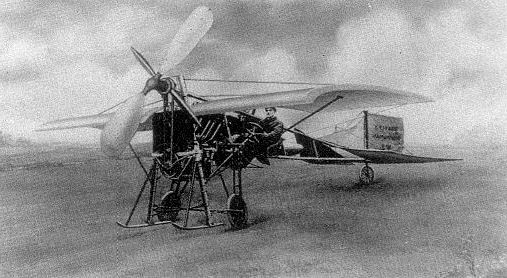
Inspired by the Demoiselle 20 of Santos Dumont, John produced two prototypes and, after an elaborate test flying programme, two pre production aircraft in February 1978, followed in November 1979 by a new prototype, this time with a larger wing area.

The first production machines were known as the Weedhopper JC 24. Single seat single engined high wing mono¬plane with two axis control (three axis option¬al). Wing has swept back leading edge, swept forward trailing edge and tapering chord. cruciform tail. Pitch control by elevator on tail; yaw control by fully flying rudder with additional fin; no separate roll control (option¬al roll control by spoilers); control inputs through stick for pitch/yaw (optional: pedals for roll). Wing braced from below by struts; wing profile; single surface. Undercar¬riage has three wheels in tricycle formation; no suspension on any wheels. Push right go left nosewheel steering independent from yaw control. Optional brake on nosewheel. Alumi¬nium tube framework, without pod. Engine mounted at wing height driving tractor prop¬eller.

John Chotia planed to retain his original two-axis Weedhopper (with a retrofit, three-axis option) for the benefit of nonpilots. “They learn faster and have a much easier time of it with linked controls,” says John. “You can’t knock it.—The Weedhopper, which was available with three different wings (and which the Navy has purchased for testing) was conceived as a trainer, and consequently it’s built like a tank, to withstand “refinements”.

The Weedhopper’s basic structure is of seamless, drawn 6061 aluminum tubing, reinforced at all attach points with larger tubing and/or wooden dowels. Premachined brackets or gussets are used to join the tubes. All bolts and hardware are of aircraft quality. Covering is 3.8-ounce stabilized Dacron sailcloth, presewn to slip into place, with no additional sew¬ing, gluing or doping necessary. Designer John Chotia disliked the high rpm inefficiencies of snowmobile engines, so he designed his own powerplant, the Chotia 460, that delivers 18.5 hp at 3500 rpm to permit a direct-drive pro¬peller. The Weedhopper has dispensed with any control sur¬faces on the wing, relying on a rudder-induced yaw and wing dihedral to achieve a positive roll force and coordinated turns. Power-on stalls result in a loss of just 10-15 feet. Carry¬ing 220 pounds, redline speed is 50 mph, and cruise is 30 mph. First year built 1974. Units delivered by June 1981 1,200.

In 1980 the full kit price was US$2995.

By 1981 the standard model was the Weedhopper JC 24B, often known simply as the Weedhopper B, which had a simpler structure than the original JC 24 and which could be fitted with spoilers to give three axis control, two axis being the standard arrangement. That year three new models were introduced. First came the Weedhopper JC 24C, often abbrevi¬ated to Weedhopper C, which replaced the JC 24B and had a redesigned engine mount, a more striking finish with black anodised tubes and a more comfortable seat. Second came the JC 24BL Weedhopper Two, which de¬spite its title was a single seater. This soaring oriented machine had a larger span and area, a reinforced structure and spoilers, but was only ever distributed in a very small way. Thirdly was the company’s two seater, which took over the ‘Two’ part of the JC 24BL’s title and was dubbed JC 31A Weedhopper Two. At first reserved for dealers, it was later sold openly but without great success.
The JC 24P Pen¬guin was a clipped wing model with smaller area, designed not to fly! It was built for Weedhopper dealers to help with ground training. The Gypsy featured ailerons and a pod.
In 1983, the JC 24C with Chotia engine was the only model, sold as a kit requiring 40h assembly for $4095. Options include a soaring specification, developed from experience with the JC 24BL and using 3.0 ft (0. 91 m) wing tip extensions and spoil¬ers, 16 inch (41 cm) wheels for $75, double ¬surface wing for $200, nosewheel brake for $35, and transport covers for $80.
The Weedhopper C is powered by a Chotia 460 two-stroke driving a Weedhopper-built, two-blade, fixed-pitch wooden propeller via direct drive. The engine is mounted in tractor posi¬tion forward of the main wing. Fuel is carried in a rotational molded HDPE tank. LANDING GEAR: Tricycle-type with steerable nosewheel. The nosewheel is fitted with a brake, and all wheels are 11” in diameter. The gears are solid mounted.
Weedhopper model 40 2009 Price: US$7995

Weedhopper 40 Standard Features:
Steerable nose wheel
Nosewheel brake
Full front windshield
Instrument Package
Tachometer
Exhaust Gas Temperature Gauge
Cylinder Head Temperature Gauge
Airspeed Indicator
Construction Type: Aluminum tubing airframe with Polyester-Dacron sailcloth wing coverings.
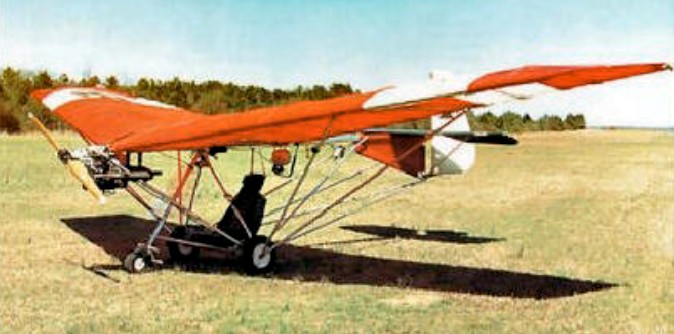
Weedhopper Model 40

Weedhopper
Empty wt: 160 lbs
Gross weight 181 lbs
Max pilot weight 220 lbs
Wing span: 28 ft
Engine: Choita 460, 18.5 hp
Vne: 50 mph
Cruise: 30 mph

Weedhopper II
Wingspan, 34 ft
Wing area, 208 sq.ft
Aspect ratio, 5.67
Overall length, 18 ft
Empty weight 195 lbs
Usable payload (include fuel), 400 lbs
Wing loading, 2 lbs/sq.ft
L/D power-off glide ratio, 9.5:1
Cruise speed (85% power), 30 mph
Stall speed, 22 mph
Approach speed, 30 mph
Flair speed, 22 mph
Liftoff speed, 18-22 mph
Takeoff roll distance, 200 ft
Rate of climb, 250 fpm
Fuel capacity, 2 USgal
Range at cruise, 50 mi
Engine: Chotia 460, 456cc
Rated HP, 30 hp
Static thrust 140-150 lbs

Weedhopper DeLuxe
Speed max: 62 mph
Cruise: 50 mph
Range: 75 sm
Stall: 22 mph
ROC: 900 fpm
Take-off dist: 50 ft
Landing dist: 100 ft
Service ceiling: 10,000 ft
Engine: Rotax 447, 40 hp
Fuel cap: 5 USG
Weight empty: 252 lbs
Gross: 500 lbs
Height: 6.9 ft
Length: 18.25 ft
Wing span: 28 ft
Wing area: 168 sq.ft
Seats: 1
Landing gear: nose

Weedhopper C
Engine: Chotia 460D, 25 hp at 3700 rpm
Propeller diameter and pitch 44 x 19 inch, 1.11 x 0.48 m
No reduction
Power per unit area 0.14 hp/sq.ft, 1.6 hp/sq.m
Fuel capacity 3.5 US gal, 2.9 Imp gal, 13.2 litre
Length overall 18.5 ft, 5.64 m
Height overall 6.0ft, 1.83m
Wing span 28.0ft, 8.53m
Mean chord 6.0ft, 1.83m
Total wing area 168 sq.ft, 15.6 sq.m
Wing aspect ratio 4.7/1
Nosewheel diameter overall 11 inch, 28cm
Main wheels diameter overall 11 inch, 28 cm
Empty weight 160 lb, 73kg
Max take off weight 380 lb, 172kg
Payload 220 lb, 100kg
Max wing loading 2.26 lb/sq.ft, 11.0kg/sq.m
Max power loading 15.2 lb/hp, 6.9kg/hp
Load factors; +5.0, 2.0 ultimate
Max level speed 50 mph, 80 kph
Max cruising speed 40mph, 64kph
Economic cruising speed 30 mph, 48 kph
Stalling speed 20 mph, 32 kph
Max climb rate at sea level 600 ft/min, 3.1 m/s
Min sink rate 350 ft/min, 1.7m/s
Best glide ratio with power off 7.3/1
Take off distance 100ft, 30m
Landing distance 75ft, 23m
Service ceiling 10,000ft, 3050m
Range at average cruising speed 90 mile, 145 km

Weedhopper Standard
Cruise: 50 mph
Stall: 25 mph
Range: 120 sm
Rate of climb: 500 fpm
Takeoff dist: 150 ft
Landing dist: 150 ft
Engine: Rotax 277, 30 hp
Fuel capacity: 5 USG
Empty weight: 235 lb
Gross weight: 485 lb
Length: 17.4 ft
Wing span: 28 ft
Wing area: 168 sq.ft
Seats: 1
Landing gear: nosewheel
LSA: yes

Weedhopper Super
Cruise: 60 mph
Stall: 25 mph
Range: 100 sm
Rate of climb: 800 fpm
Takeoff dist: 150 ft
Landing dist: 150 ft
Engine: Rotax 503, 50 hp
Fuel capacity: 5 USG
Empty weight: 330 lb
Gross weight: 830 lb
Length: 18.6 ft
Wing span: 28 ft
Wing area: 168 sq.ft
Seats: 1
Landing gear: nosewheel
LSA: yes

Weedhopper 40
Engine: Rotax 447, 40 hp
Propeller: Ground Adjustable Composite Powerfin.
VNE: 56 kt / 65 mph / 105 kmh
Cruise: 50 mph
Stall: 17 kt / 20 mph / 32 kmh
Range: 120 sm
Rate of climb: 1000 fpm / 5 m/s
Take-off distance (50ft obstacle): 100 ft / 30 m
Landing distance (50ft obstacle): 100 ft / 30 m
Fuel capacity: 5 USG
Empty weight: 113 kg / 250 lb
Gross weight: 249 kg / 550 lb
Length: 18 ft 6 in
Wing span: 28 ft
Wing area: 168 sq.ft
Height: 6 ft. 9 in.
Seats: 1
Landing gear: nosewheel
Assembly time:25 to 30 hours
LSA: yes

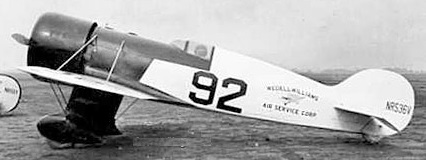
Wedell-Williams We-Winc

Wedell-Williams NX536V

Wedell halted development of the “We-Will” design and began two new aircraft, the “We-Winc” and the “We-Will Jr”.

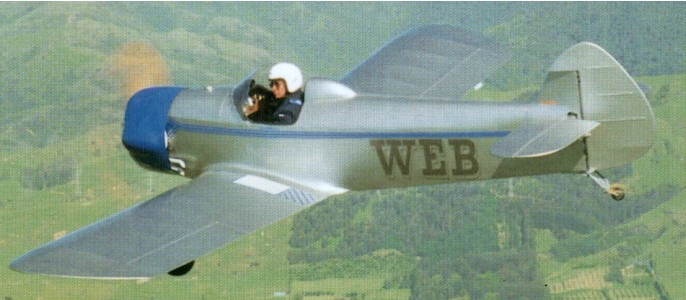
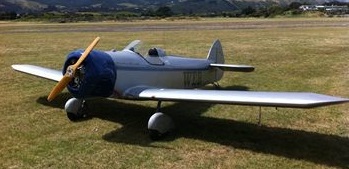
A 1930 Nationals racer registered NR536V, as We-Winc, shortened from Winchester, alluding to the company motto: “Hot as a pistol and twice as fast.”

The second plane of the first basic design had speed cowling and wheel pants.

Became Model 44 Special to win the 1932 Bendix race.

Engine: Wright J-6, 225hp
Seats: 1

Wedell-Williams Model 45

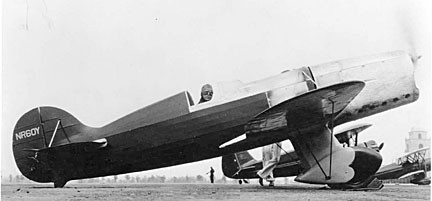
Wedell-Williams 45 NR62Y

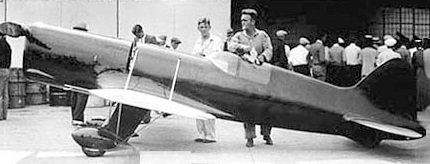
The Model 45 was a development of designer James Wedell’s earlier Model 44 and was a low-wing cantilever monoplane with tailwheel undercarriage, the main units of which were retractable.

The Model 45 (NR62Y) flew for the first time on June 28, 1933 and showed promising performance achieving an average speed of 264.703 mph on a 100 km closed course.

Wedell-Williams pilot, John Worthen flew the 45 to a second place in the 1934 Bendix Trophy race and if not for a navigation error would have demolished the 44’s first place time by at least 50 minutes.

On June 24, 1934, Jimmy Wedell died in an accident while piloting a Gypsy Moth on a flying lesson. Development of the 45 was delayed following the loss of its creator. Even so the 45 was entered in the 1934 Thompson Trophy Race. In a preliminary event, the Shell Speed Dash Unlimited, Worthen placed first with an average speed of 302.13 mph. He then qualified the 45 with a speed of 292.14 mph, third behind the 44 and Turner’s racer in the main event. However the 45 was still suffering from development problems and was withdrawn due to instability.

During the Thompson race Doug Davis crashed the 44 and was killed instantly. Devastated, the Wedell-Williams team dismantled and trucked the 45 to Patterson. It never flew again.

In rapid succession, the remaining Wedell-Williams principals were killed in air crashes: Walter Wedell, Jimmy’s brother, was killed in a crash on July 18, 1935. Company co-founder Harry Palmerston Williams and chief test pilot, John Worthen were both killed on May 19, 1936 in a crash.

After the death of Williams, the Model 45 was donated to Louisiana State University, where it eventually disappeared, its final fate unknown.

A full-scale replica Model 45, constructed by Jim B. Clevenger of Kissimmee, Florida, is on display at the Louisiana State Museum in Patterson, Louisiana.

NR62Y, Miss Patterson replica

Model 45
Engine: 1 × Pratt & Whitney R-1340, 500 hp (597 kW)
Wingspan: 26 ft 9 in (8.16 m)
Length: 23 ft 11 in (7.29 m)
Height: 9 ft 4 in (2.84 m)
Maximum speed: 320+ mph (278 kn, 515 km/h)
Crew: One pilot

Wedell-Williams Model 44

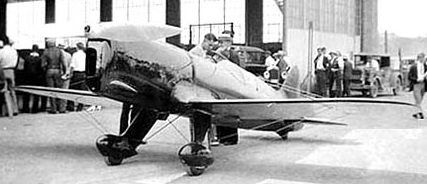
Experienced air-racer Jimmy Wedell formed a business partnership in 1929 with millionaire Harry P. Williams after giving him flying lessons. Initial plans were to teach flying, provide an aerial photography service and win an airmail contract. Wedell’s passion for air racing led him to convince Williams to build a racer for the January, 1930 Miami Air Races.

Wedel-Williams Model 44 Article

This first aircraft was named “We-Will” but as development and testing continued it became apparent it would not be ready for the 1930 Miami event. Wedell halted development of the “We-Will” design and began a new aircraft, the “We-Winc”.

In parallel to the development of the We-Winc, Wedell began the construction of a third aircraft, the “We-Will Jr.” This aircraft first appeared in the Cirrus Derby held in Detroit on July 21 but the design proved to be underpowered. Further development with improved aerodynamics, numerous technical innovations and a Hamilton Standard ground adjustable propeller radically changed the aircraft’s appearance. Incorporated into the design were the wheel spats that would be an iconic feature of the future racers. It was a typical construction with a braced, low-wing monoplane utilizing fixed landing gear in large spats. This version was however also underpowered. In development and in competition this version, by now dubbed “Model 22” proved to be a disappointment and further development was abandoned.

By 1931, Wedell had turned his attention back to the original We-Will and after a rebuild using the lessons learned in building the We-Winc and the We-Will Jr. attained an acceptable level of performance. First flown on 12 January 1930 (NR54Y), this version was named the “Model 44”. When mated with a Pratt & Whitney Wasp Jr. engine, the design’s true potential began to be realized. That year, on 13 June, the “44” placed second at the New Orleans National Air Races.

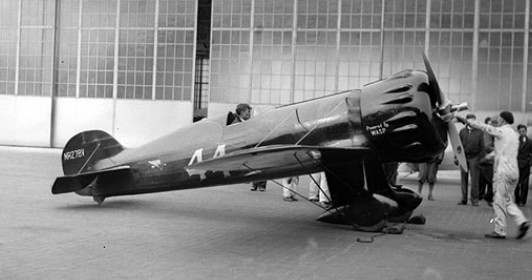
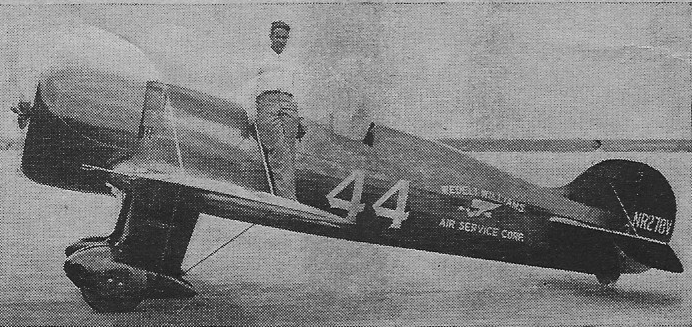
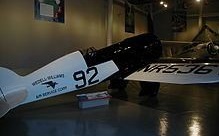
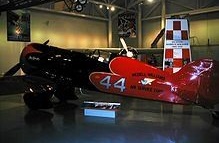
Soon after the ’31 Nationals, Wedell began rebuilding the 44 and the We-Winc as well as taking a contract to build a Model 44 for Roscoe Turner. On the second test flight of Turner’s Model 44 (NR54Y), the left wing experienced a structural failure and was destroyed in the ensuing crash. Flown on its test flight by Jimmy Wedell and seemed to perform very well. When he took it up again later that day for a high-speed low pass, aileron buzz caused a wing to flutter, then snap the flying wires and fold the wing. Wedell had designed the plane to have independent aileron control, so he held full aileron against the roll while pitching up for altitude and bleeding off speed, then pushed himself out of the cockpit. His ‘chute opened fully just as he touched down at the end of the field. After this incident, the assistance of Howard Barlow, an aeronautical engineer, was obtained in the redesign of the wings. The second Turner racer (NR536V) was built with the new wing design and proved to be an exceptional performer. The other two Model 44s (#92 NR61Y, #121, #57, #2 NR278V – #44, #91) were rebuilt according to the new wing specification as test pilots had noted wing vibrations in both aircraft previously.

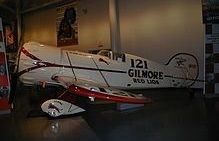
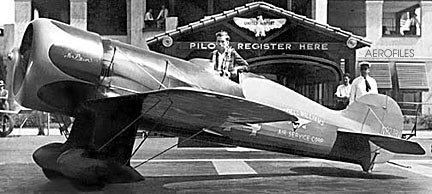
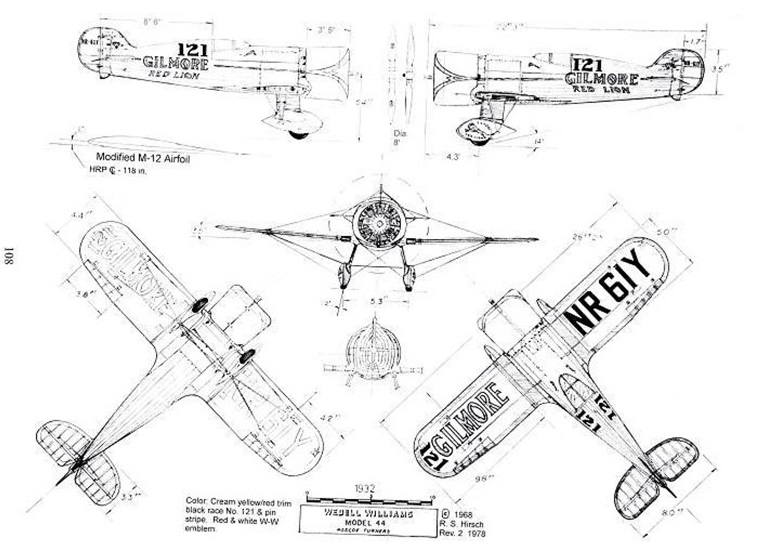
NR61Y, Roscoe Turner’s Model 44

These three aircraft went on to dominate air racing for the next several years. Model 44s were raced in 1932, 1933 and 1934 Bendix Trophy races, as well as the 1934 Thompson and Shell Trophy. In September 1933 at the International Air Race in Chicago, the 44 piloted by Wedell set the new world speed record of 305.33 miles per hour.

NR61Y was built in Patterson, Louisiana, 1932. It had a NACA cowl housing a Pratt & Whitney R-985. Roscoe Turner flew it to California for the start of the 1932 Bendix race in an unpainted condition. His mechanic, Don Young, not only built it, but painted it literally just prior to racetime. The colors for that racing season were the famous silvery creme with red and black trim, and race #121.

Nicknamed the “Gilmore Red Lion,” Turner flew it to third place behind Jim Haizlip in the Wedell-Williams #92 and Jimmy Wedell in #44. Turner placed third in the Thompson Trophy, trailing Jimmy Doolittle in the Gee Bee R-1 and Jimmy Wedell in #44.

In 1933, after spending a morning avoiding a process server at Floyd Bennett Field in New York, Turner, in disguise as a mechanic, managed to get into the cockpit and fly to first place in the Bendix — but only sixth in the Thompson. For the Nationals, NR61Y sported a whitewashed #2 atop the sparkly gold paint of the fuselage, while the wings retained the creme, red, and black Gilmore scheme.

It also had a new P&W R-1340 beneath the cowl. Also, Gilmore Oil was replaced by 20th Century Fox as the new sponsor, hustling their movie The Bowery (which, naturally, had nothing to do with airplanes or racing). By the time the Chicago races came along, Fox had been replaced by Macmillan Oil, H.T. sparkplugs, Bendix, and Smith propellers, and the plane became the first “Ring-Free Special.”

In 1934 Turner upgraded the engine to a R-1690 Hornet, for which 61Y had a smooth NACA cowl, as well as a bumped cowl for another Pratt & Whitney, and another sponsor change, the Heinz pickle works logo and race #57 on the sides. 61Y had turned all-gold by then only because Don Young found time to finish painting after building a new engine mount and cowlings.

In 1935 61Y was primarily sponsored by MacMillan Oil Co, and the Ring Free logo was placed where the previous race number was located, in a circle under the cockpit window, with number 57 in black halfway down the length of the fuselage. When it came to the Bendix Race that year, Benny Howard in Mr Mulligan beat Turner across the finish line by 23.5 seconds.

During the Thompson his supercharger impeller went to pieces and exploded, perforating the cowling, accessory section, oil lines, etc. Trailing thick black smoke, Roscoe managed to see well enough out of an oil covered windshield (that rose only 5 inches above the fuselage) to make his normal three bounce landing to a standing ovation, while Howard, ignored by all but timers and judges, won the Thompson. Roscoe is quoted as responding to a reporter’s condolences by saying that walking away from potential disaster was luck enough.

In 1936 Turner put his Wedell-Williams out of the running when he bumped into the desert near Holbrook, Arizona, breaking off the fuselage completely just aft of the cockpit. After arguing with Larry Brown, who was pressing Roscoe for money for the rebuild, Turner hired Matty Laird to finish the project, which resulted in a shortened fuselage, new wheel fairings, and some other subtle changes.

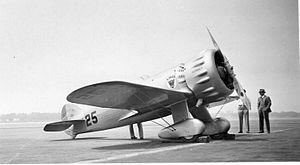
Turner moved out of the picture in 1937 to fly his Laird-Turner Racer and Joe Mackay moved in, flying 61Y as race #25, continuing to place in the money until the end of its career with retirement after the 1939 NARs at the advent of World War 2.

Lee Gehlbach 1938

NR61Y still exists, on display at the Crawford Museum in Cleveland, Ohio, where Don Young used to be the curator.

Three replica Model 44s are on display at the Louisiana State Museum, Patterson, Louisiana.

Miss New Orleans
Miss Patterson
Roscoe Turner Racer

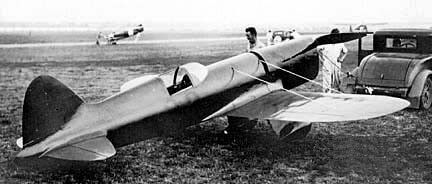
The fifth basic design was a complete rebuild of We-Will with a new wing, cowling, and enclosed cockpit, registered NR278V in 1932 as Miss Patterson for Roscoe Turner, with its old wings and undercarriage going into the Robbins Racer.

Wedell-Williams 44 at Burbank, Jimmy Wedell in cockpit of NR278V

Wedell Williams Model 44 Racing History

Gallery

Model 44
Engine: 1 × Pratt & Whitney R-1690-S1C3G, 1,020 hp (760 kW)
Propeller: 2-bladed Hamilton Standard ground adjustable, Curtiss adjustable or Smith adjustable propeller
Wingspan: 26 ft 3 in (8.0 m)
Wing area: 107.9 sq ft (10.02 m2)
Airfoil: M-10 (modified)
Length: 23 ft 0 in (7.01 m)
Height: 8 ft 1 in (2.46 m)
Empty weight: 1,702 lb (772 kg)
Gross weight: 2,677 lb (1,214 kg)
Maximum speed: 325 mph (523 km/h; 282 kn)
Range: 900 mi (782 nmi; 1,448 km)
Service ceiling: 14,000 ft (4,267 m)
Wing loading: 24.83 lb/sq ft (121.2 kg/m2)
Crew: 1

Model 44 (1932)
Gross Weight 3892 lb Empty Weight 2492 lb
Span 26 ft 2 in Length (overall) 21 ft 3 in
Powerplant P & W Wasp (500 hp) Powerplant (1933) P & W Wasp T3D1 (800 hp)
Max Speed 304.98 mph
Price $50,000

Model 44 NR278V
1931
Engine: P&W Wasp, 525hp
Wingspan: 26’0″
Length: 24’6″
Seats: 1

Wedell-Williams Model 22 / We-Will Jr / Cirrus Derby

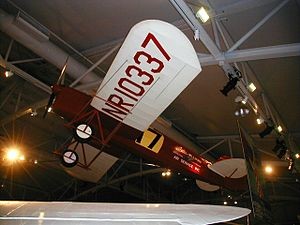
NR10337, Model 22 Prototype

Experienced air-racer James R. Wedell formed a business partnership in 1929 with millionaire Harry P. Williams after giving him flying lessons. Initial plans were to teach flying, provide an aerial photography service and win an airmail contract. Wedell’s passion for air-racing led him to convince Williams to build a racer for the January, 1930 Miami Air Races.

This first aircraft was named “We-Will” but as development and testing continued it became apparent it would not be ready for the 1930 Miami event. Wedell halted development of the “We-Will” design and began two new aircraft, the “We-Winc” and the “We-Will Jr”.

Of these two aircraft, the We-Will Jr would eventually evolve into the “Model 22”. It was designed to compete in the American Cirrus Engine Company’s “All-American Flying Derby”. The only requirement was one of the Cirrus aircraft engines be used in the competing racer. Williams chose the supercharged 110 hp Hi-Drive engine which was a poplular choice of racers at the time. Gross weight was 1,660 lbs and it could carry 54 gallons of gasoline.

The race began at Detroit, Michigan on July 21, 1930 and was a 5,500 mile cross country endurance race that would end back in Detroit. Wedell, piloting the NR10337 and sporting the race number 17, was in contention for first place all the way to the stop at Houston. After this mechanical trouble hampered his efforts and reduced his finish to eighth place.

Wedell and NR103337 after landing mishap wrecked gear fairings

The NR10337 was next entered in the 1930 National Air Races in Chicago. With the underpowered Cirrus Hi-Drive the performance of the craft was disappointing. Wedell flew in the 350cu free-for-all, finishing third and in the 450cu free-for-all finishing fifth.

Wedell turned his attention to the larger We-Will and We-Willc, with the NR10337 languishing until 1932. In order to compete in the lower power classes, the aircraft was substantially rebuilt. The fuselage was shortened from the wing root aft, the wings were shortened while the Cirrus engine was retained. A Hamilton Standard ground adjustable propeller was fitted for the first time to the Cirrus. The cockpit and cowling were redesigned to be more aerodynamic. Aerodynamic wheel “pants” and “spats” made its first appearance on a Wedell-Williams design. The aircraft was re-registered as NR60Y and was officially designated “Model 22”. In this configuration the NR60Y competed in smaller races throughout the south during 1932.

Dave Elmendorf’s NR60Y

In preparation for the 1933 Los Angeles National Air Races, the NR60Y’s Cirrus engine was replaced with a Menasco B6 Buccaneer air-cooled engine. Given race number 54, it was entered in the Shell Speed Dash 550cu race and piloted by W.A. McDonald. In the preliminary events, the Menasco proved troublesome and performance was disappointing. While taxiing, the Menasco engine backfired and ignited the fabric fuselage. The engine was removed from the frame and later installed in the NR64Y. The frame was placed in storage at the Western Airways hangar in Los Angeles until 1934 when Dave Elmendorf purchased it.

Wedell-Williams 22 NR64Y

1933 brought more development on the Model 22. A second aircraft, NR64Y, was begun in cooperation with the Delgato Trade School in New Orleans. Construction of this aircraft was overseen by a senior mechanic E.D. Dennis, using parts salvaged from Model 44 Special NR54Y. The entire rear fuselage was covered mainly with plywood utilizing a Delgato design. Not ready in time for the 1933 Nationals, NR64Y was trucked to Chicago for the 1933 International Air Races.

Wedell-Williams 22 NR64Y at Chicago 1933

After a brief test flight on September 1, the aircraft proved to be underpowered with the 160hp Menasco B6. Wedell entered one event but retired after a single lap. Testing continued briefly on February 5, 1934, but Wedell decided that further testing of the NR64Y was not warranted and donated the aircraft to Louisiana State University where it was eventually scrapped.

Wedell-Williams 22 NR64Y at Chicago 1933

In 1934, Elmendorf began reconstruction of his Model 22. Al Novotny, a former Wedell-Williams employee was hired for the work. A Menasco B6 was fitted to the airframe. Elmendorf flew the NR60Y from Los Angeles to Cleveland for the 1935 National Air Races. He entered the 549cu race as number 22 and qualified fourth but finished a disappointing seventh. In 1936, Elmendorf sold NR60Y and it is presumed the airframe was scrapped.

Only the two were built at an estimated cost of US$4000 each in 1936.

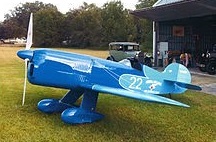
A replica Model 22 is on display at the Louisiana State Museum, Patterson, Louisiana.

Model 22 replica in 1932 race trim.

Model 22 NR60Y
Engine: 1 × Menasco B6 Buccaneer, 160 hp at 1,975 RPM
Max cruise power: 120hp at 1,800 RPM (119.3 kW/89.48 kW)
Wingspan: 20 ft 0 in (6.1 m)
Length: 18 ft 0 in (5.49 m)
Height: 6 ft 5 in (1.96 m)
Maximum speed: 180+ mph (289.7+ km/h)
Crew: One pilot

Cirrus Derby racer NR10337
1930
Engine: Cirrus Hi-Drive, 95hp
Seats: 1

Wedell-Williams We-Will

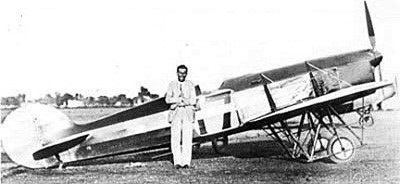
Experienced air-racer James R. Wedell formed a business partnership in 1929 with millionaire Harry P. Williams after giving him flying lessons. Initial plans were to teach flying, provide an aerial photography service and win an airmail contract. Wedell’s passion for air-racing led him to convince Williams to build a racer for the January, 1930 Miami Air Races.

This first aircraft was named “We-Will” but as development and testing continued it became apparent it would not be ready for the 1930 Miami event.

The registration NR9471 was temporarily “borrowed” from a Ryan B-1 company hack before NR278V.

Wedell halted development of the “We-Will” design and began two new aircraft, the “We-Winc” and the “We-Will Jr”.

It was rebuilt as Model 44 in 1931.

Engine: Hisso A, 150hp
Seats: 1

Weber-Sochacki Biplane

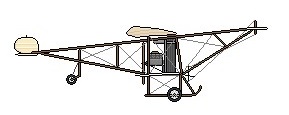
Professor of the Politechnika Lwowska (Lvov Institute of Technology) Zygmunt Sochacki and his assistant Jan Weber designed and begun construction of Farman-inspired aircraft. In November 1910 it made first short flight that ended with damage after it hit an obstacle. A repair was attempted but snowfall caused collapse of the shed in which it was stored.

Weaver Ornithoplane No. 2

William Arthur Weaver’s Ornithoplane No. 2 was a two-seater monoplane of conventional layout, with a fuselage of triangular section, using bamboo and aluminum in its construction. It was converted from parts of the No. 1 ornithopter and was re-engined in 1907-1908 with a special lightweight water-cooled engine of about 35/40hp built by The Alpha Engineering Company, Coventry. The aluminium propeller was chain driven, and was claimed to have variable pitch in flight, which seems to have been achieved by a small auxiliary propeller revolving behind the main one. Unusually, the pilot’s seat and control wheel were mounted on the starboard bottom longeron. The tail unit consisted of a rectangular rudder and large elevators, which flapped to provide lift. The machine made various short hops at Hampton-in- Arden between 1906 and 1908 culminating in a flight of a quarter of a mile on 17 May 1910.