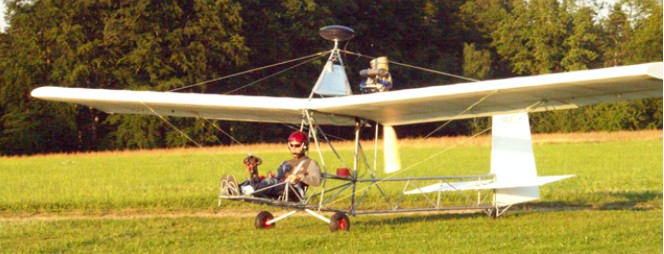
The Weller ULI NG (New Generation), sometimes called the Weller Uli NG, is a German ultralight aircraft, designed and produced by Weller Flugzeugbau of Bibersfeld. It was introduced at the Aero show held in Friedrichshafen in 2010. The aircraft is supplied as a complete ready-to-fly-aircraft.
Wingspan: 9,68 m Wingarea: 12,78 sq.m Length: 5,92 m Empty weight: 116 kg MTOW: 220 kg Stall: 45 km/h Max speed: 95 km/h Climb rate: 2 m/s Cruise: 65-85 km/h Endurance: 2:30 Std. Range: 150 km + Reserve
In the mid 1930’s HM Weiss built and used a strap on flying machine for survey work in China before the outbreak of WW2. He used a main rotor for lift along with a torque stabilizing rotor. The main rotor was perpendicular to his back and he positioned himself for lift like a runner leaving a starting gait and balanced the weight like a “fireman’s carry”. The machine was made of aluminum and cast iron and weighed 72 1/2 pounds when fueled.
Peter Weiss, nephew of the builder, was in possession of this machine, the original plans, photographs and films of it’s operation and all the engineering specs. The family were seeking patent infringement awards, Peter Weiss stating “It bothers [the] family that my uncle, HM Weiss, received no acknowledgement from our government for his patriotic sacrifices and his remarkable engineering skills”.
Fighter Protoype, Hungary, first flown September 1941
Engine: WM K 14B, 986 hp Wingspan: 34.777 ft / 10.6 m Wing area: 252.954 sqft / 23.5 sq.m Length: 35.433 ft / 10.8 m Height: 11.647 ft / 3.55 m Max take off weight: 7254.5 lb / 3290.0 kg Max speed: 286 kts / 530 km/h Wing load: 28.7 lb/sq.ft / 140.0 kg/sq.m Endurance: 2 h Crew: 1 Armament: 2 x 7.62 mm Gebaur MG, 2 x 20 mm MG151
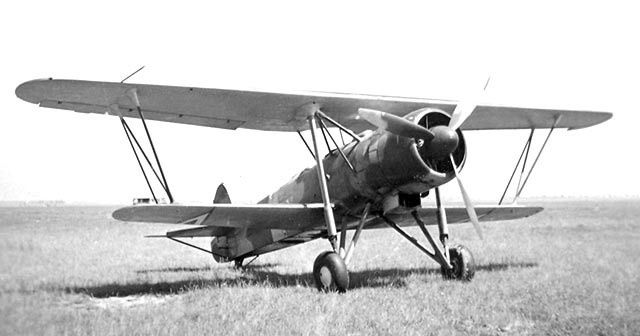
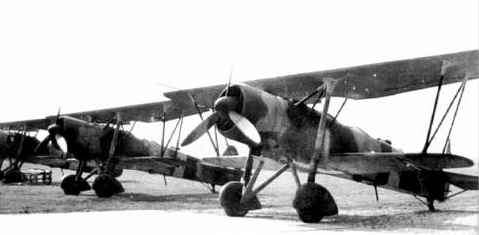
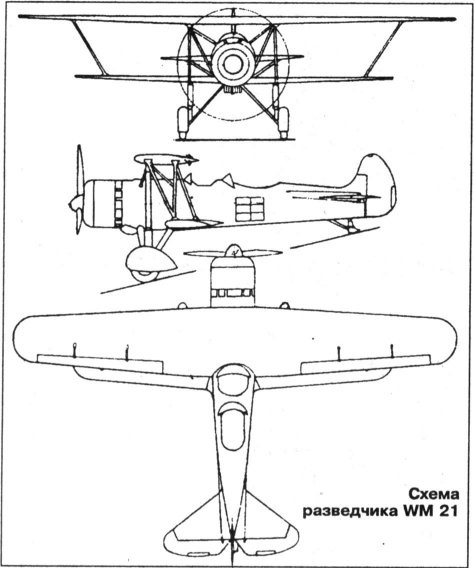
The Weiss WM-21 Sólyom (English: Falcon) was a 1930s Hungarian light bomber and reconnaissance biplane developed by the Manfred Weiss company from the earlier WM-16 which was based on the Fokker C.V.
A single-engine biplane of mixed construction with fixed landing gear, the WM-21 was designed to replace the WM-16, which was considered unsuitable for operational service. The WM-21’s structure was strengthened, and the aircraft received a new, more efficient wing set. A tailskid was fitted to allow for shorter landing runs on grass airfields. The Sólyom was powered by a 870 hp (649 kW) Weiss WM-K-14A radial engine.
A total of 128 aircraft were built by three different factories, Manfred Weiss built 25, 43 by MAVAG in Budapest, and 60 by MWG, State Railcar (“Giora vagongiar”) in Gyor.
The first aircraft entered service in 1939 with short-range reconnaissance units, although active during the 1940 dispute with Romania their first active operational use was during the Axis invasion of Yugoslavia in August 1941. From June 1941 they were used to support Hungarian Army units in Ukraine and then against Soviet partisans. Around 80 aircraft were also transferred to duties as trainers, as they were removed from operational use, until 1945.
WM-21 Scouts participated in the conflict with Romania in August 1940, they even bombed one of the Romanian airfields. Since the beginning of 1941 WM-21 is gradually transferred to the “second line”, but they are still quite a lot left in the combat units. In April – May 1941, several squadrons of the aircraft involved in the invasion of Yugoslavia. After the outbreak of war with the Soviet Union on the German side they used the Hungarian army in the Ukraine, the Don, Stalingrad in 1941-43. The last case of their appearance on the eastern front was recorded in March 1943, near Kharkov. Later they served as training and used against guerrillas in the occupied areas of the USSR. WM-21B stopped producing in early 1942
WM-21 Engine: 1 × Weiss WM-K-14A, 650 kW (870 hp) Upper wingspan: 12.90 m (42 ft 4 in) Lower wingspan: 9.40 m (30 ft 10 in) Length: 9.64 m (31 ft 8 in) Height: 3.5 m (11 ft 6 in) Empty weight: 2,300 kg (5,071 lb) Gross weight: 3,400 kg (7,496 lb) Maximum speed: 320 km/h (199 mph; 173 kn) Range: 750 km (466 mi; 405 nmi) Guns: 3 x 7.9mm (0.31in) Gebauer machine-guns Bombs: 12 x 10kg (22lb) Anti-personnel bombs or 60 x 1kg (2.2 lb) incendiary bombs Crew: 2
WM-21B Engine: WM 14KB, 1030 hp Wingspan: 12.90 m Wing area: 30.40 sq.m Length: 9.64 m Height: 3.58 m Empty weight: 2300 kg Maximum take-off weight: 3500 kg Maximum speed: 380 km / h Cruising speed: 336 km / h Range: 700 km Service ceiling: 8500 m Crew: 2 Armament: three 7.9-mm Gebauer 34 M machine guns Bombload: 300 kg
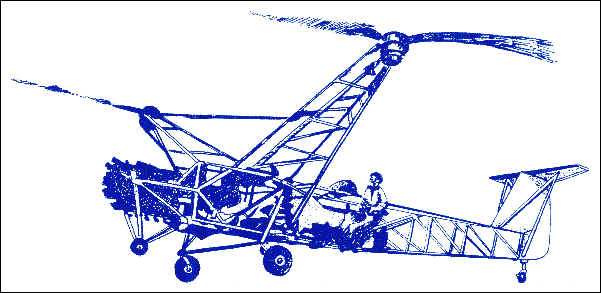
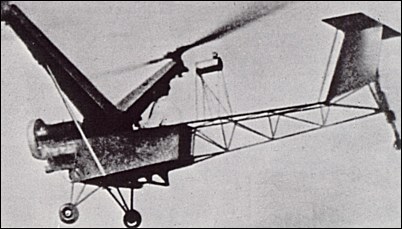
Much larger than its predecessors, this two-seater helicopter was powered by a more powerful fan-cooled engine located in the nose. Each of the two rotors had three blades made of compressed wood with leading edges in metal. They rotated at 275 r.p.m. and had both cyclic and collective control all enclosed within the hub. A ratchet-type freewheeling device was used for flying in auto-rotation. The maiden flight took place in Scotland in October 1939, but World War II, then in its early stages, caused all work to be stopped on the W.6 in the middle of 1940.
Weir’s chief designer, C.G.Pullin, first thought of converting the W.4 autogyro into a helicopter by using two co-axial rotors, but he finally adopted the system of rotors carried by outriggers on either side of the fuselage, like the 1937 Focke 61.
The W.5 was a single-seater powered by a 50 hp 4-cylinder air-cooled Weir engine; each of the two two-bladed rotors had cyclic and collective pitch control and they turned at 430 r.p.m.
This helicopter made its first flight at Dalrymple, Ayrshire, on 7th June 1938, when it was piloted by R.A.Pullin, son of the chief designer. By the outbreak of World War II it had logged eighty hours’ flying time.
Seats: 1 Engine: 1 x Weir, 50hp Rotor diameter: 4.57m Gross weight: 381kg Max. speed: 112km/h Rate of climb: 122m/min
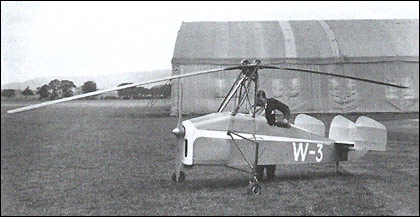
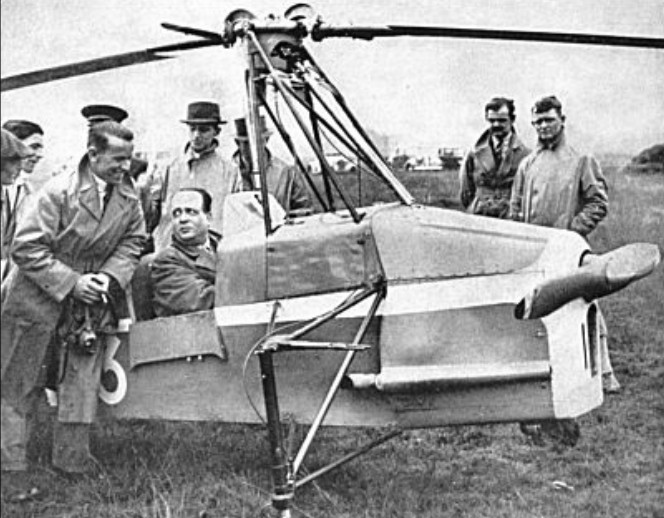
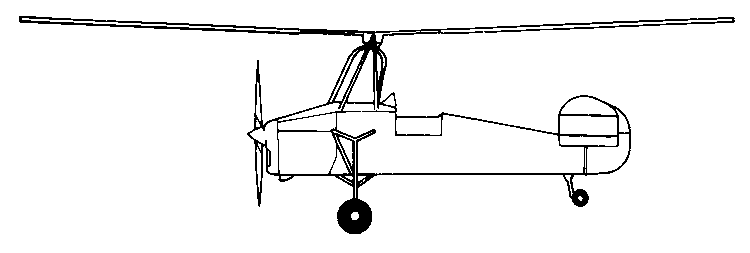
This single-seater was powered by an inverted 4-cylinder in-line engine and fitted with a two-bladed ‘auto-dynamic’ rotor. It could make a ‘jump take-off’: to do this, the rotor was run at overspeed in flat pitch then suddenly given sufficient positive pitch to produce the jump while the engine was declutched. The W.3 was publicly displayed at Hounslow Heath on 23rd July 1936.
Draggin Fly was designed to be easy to build, inexpensive to fly and maintain, strong, safe, easy to fly with a stock 1600cc VW engine. Ron Weir recommends using only the 1600cc or 1700cc VW — “Smaller engine won’t fly it well, and a larger engine won‘t balance the plane well.”
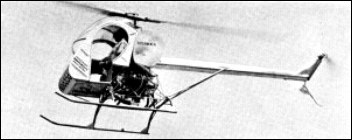
The Weilage Boon was an American two-seater side-by-side light helicopter developed for use by missionaries during the 1960’s. The Weilage Boon was powered by a Lycoming O-235-C four-cylinder horizontally-opposed air-cooled engine providing a top speed of 185km/h.



 All Aero