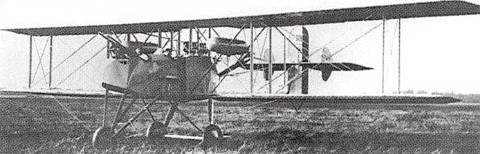
Breguet Bre.4 / BUC / BLC / BUM

BLC

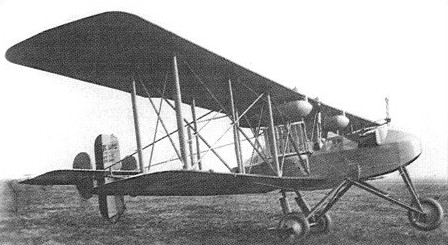
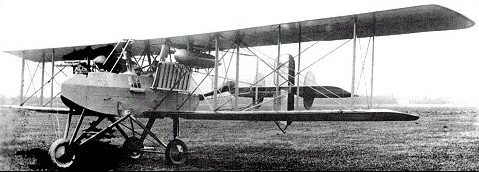
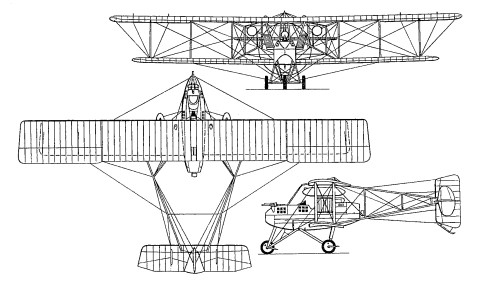
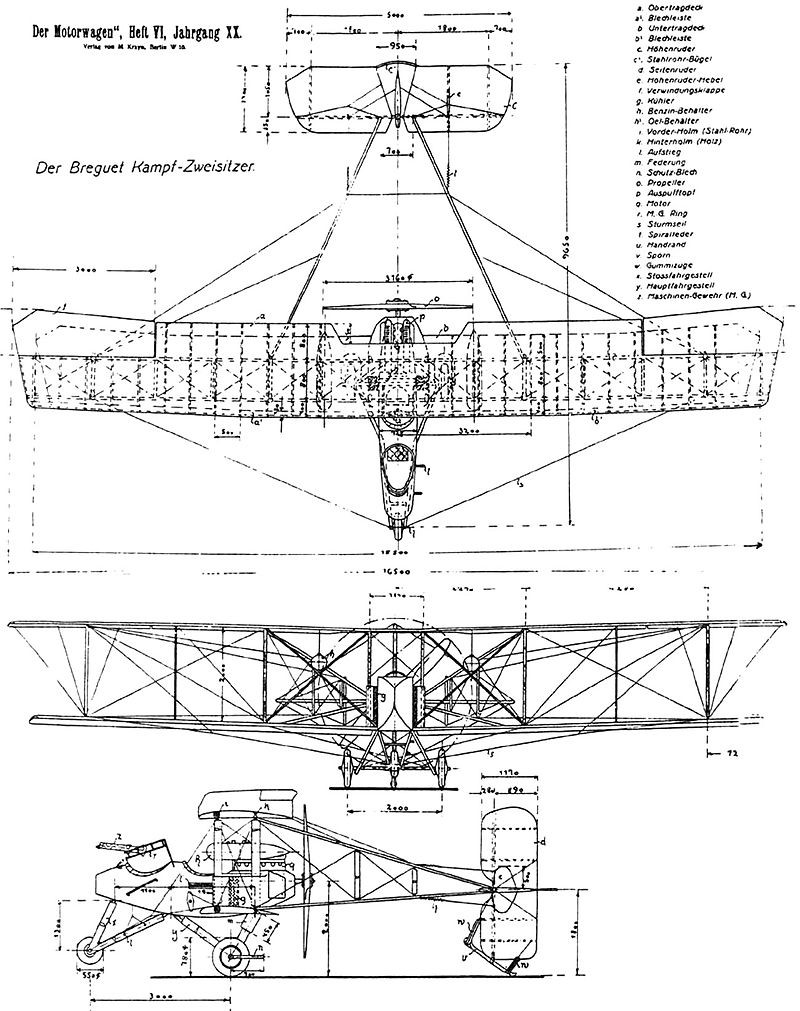
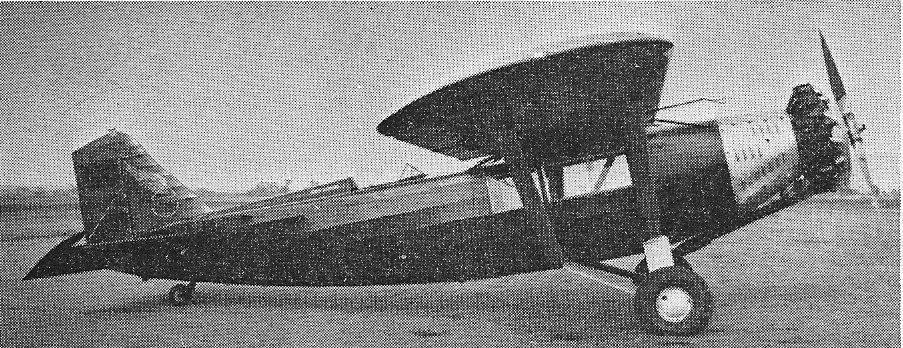
Developed during 1914 when French military planners began to express a preference for pusher- over tractor-configured aircraft, leading Breguet to cease further development of its original Type IV design and pursue military contracts with an aircraft of the preferred layout. The Bre.4 evolved indirectly from the BU3 two-seat twin-boom pusher biplane of late 1914 as a smaller and lighter development of its bomber derivative, the BUM (B=Breguet, U=Salmson engine and M=Michelin-built), the BUC (the letter “C” signifying Chasse) was intended primarily as a bomber escort.
The Type IV was a two-bay, equal-span, unstaggered biplane that seated the pilot and observer in tandem open cockpits in a nacelle that also carried the pusher engine at its rear, and the tricycle undercarriage. As the prototype neared completion, the Breguet factory at Douai was threatened by the advancing German Army, and the machine and its builders were evacuated to Villacoublay where construction and testing were completed. At this point, André and Édouard Michelin approached the French government with an offer to sponsor the construction of 100 bombers for the Army, and were awarded a licence to the Breguet design.
This was put into production as the BUM (B for pusher-driven, U for Canton-Unné-powered, M for Michelin), and later revised to the BLM as the definitive Renault-powered version.
With the installation of a 220hp Renault 12Fb 12-cylinder water-cooled engine in place of the Salmson, prototype trials were performed in June 1915, a few additional aircraft being built under the designation BLC.
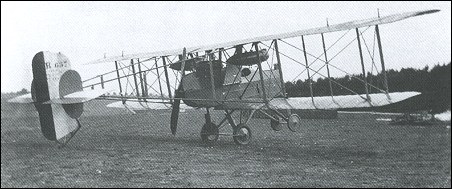
Soon after the BUM had entered service, the French Army requested that an escort fighter version be developed to protect the bombers from interception. Breguet responded with a lightened design armed with a 37 mm (1.46 in) Hotchkiss cannon on a flexible mounting in the forward cockpit of the fuselage nacelle intended to pick off enemy fighters before they closed to within range of their machine guns. This entered production as the BUC (C for chasse, or pursuit) in its original 200hp Salmson Canton-Unné 14-cylinder radial powered version and BLC in its Renault version. Few of these escort fighters were built, as their performance and utility were discovered to be lacking, and the doctrine of the cannon-armed escort fighter was soon abandoned in favour of countering fighters with other similar fighters. A number of BUCs were also built for Britain’s RNAS using British engines.
The performance of both the BUC and BLC versions of the Breguet de Chasse was unspectacular and, with fewer than 20 delivered, they were declared obsolete by the Aviation Militaire before the end of 1916. During that year, a 17 essentially similar aircraft were supplied to the Royal Naval Air Service. These differed from the BUC/BLC primarily in having the 225hp Sunbeam Mohawk 12-cylinder engine, armament being a single 7.7mm Lewis machine gun (which was an alternative weapon to the Hotchkiss on French machines). The RNAS was disappointed with the performance of the Breguet de Chasse, which proved unsuitable for employment in the fighting role, and the service withdrew the type from its first-line inventory in June 1916.

BLC
Take-off weight: 1535 kg / 3384 lb
Empty weight: 1160 kg / 2557 lb
Wingspan: 16.40 m / 54 ft 10 in
Length: 9.50 m / 31 ft 2 in
Height: 3.70 m / 12 ft 2 in
Wing area: 54.0 sq.m / 581.25 sq ft
Max. speed: 138 km/h / 86 mph
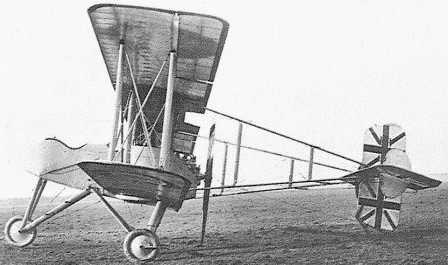
Variants:
Type IV (BU3)
Breguet prototype.
BUM (BrM2B.2)
Michelin-built, Canton-Unné-powered bomber version.
BLM (BrM4B.2)
Michelin-built, Renault-powered bomber version.
BUC
Michelin-built, Canton-Unné-powered escort fighter version.
BLC
Michelin-built, Renault-powered escort fighter version.
Breguet de Chasse
Version of BLC for RNAS, powered by Sunbeam Mohawk or Rolls-Royce Falcon engine.
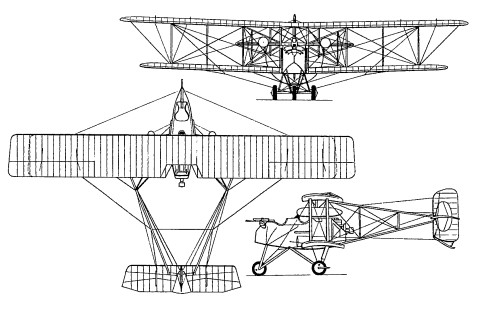
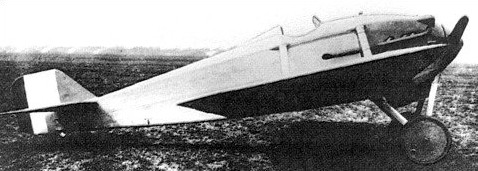
Breguet LE

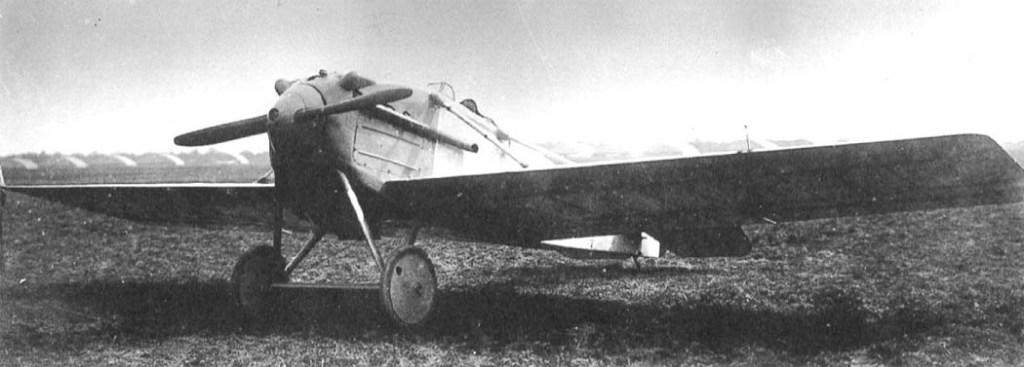
The Breguet LE (Laboratoire Eiffel) single-seat fighter monoplane was aerodynamically an advanced design with emphasis being placed on minimising drag in order to achieve high performance. The basis of the design was produced by the Director of the Laboratoire Eiffel in collaboration with the Breguet design staff, the Breguet company having overall responsibility for translating the basic concept into a prototype.
The first prototype LE was fitted with a 180hp Hispano-Suiza 8Ab eight-cylinder water-cooled engine. Proposed armament consisted of a single 7.7mm Vickers machine gun totally enclosed within the fuselage, although this was never fitted. The LE made a short initial flight at Villacoublay in mid-March 1918, but the undercarriage failed on landing. After repairs, a further flight was made on 28 March, this terminating when the aircraft dived into the ground at full throttle, the pilot, Jean Saucliere, losing his life. Developments of the LE with a 220hp Lorraine-Dietrich and a 300hp Hispano-Suiza 8Fb were proposed, and construction of an airframe to take the latter power plant was nearing completion at the time of the loss of the first prototype, when further work was suspended.

LE
Engine: 180hp Hispano-Suiza 8Ab
Take-off weight: 700 kg / 1543 lb
Empty weight: 495 kg / 1091 lb
Wingspan: 9.78 m / 32 ft 1 in
Length: 6.35 m / 21 ft 10 in
Height: 2.00 m / 7 ft 7 in
Wing area: 20.0 sq.m / 215.28 sq ft
Max. speed est: 220 km/h / 137 mph

Breguet  6 / Bre 6 Ca2

The Type 6 (Bre 6 Ca2) two-seat escort fighter of 1916 was a 225hp Salmson A9 water-cooled nine-cylinder radial engined counterpart of the Renault-powered Type 5, and resulted from a fear that Renault engine production would prove inadequate to meet demands. The Type 5 airframe was modified to take the Salmson engine mounted immediately above the rear undercarriage legs and driving the propeller by means of an extension shaft, the power plant being entirely enclosed. Armament of the Type 6 fighter normally consisted of a short-barrel 37mm Hotchkiss cannon in the forward fuselage. Performance, weights and dimensions were essentially similar to those of the Type 5.

Breguet Br 5 / Br2 5 Ca2 / Bre.12 / Grahame-White Type XIX / G.W.19 / Breguet-Michelin 5

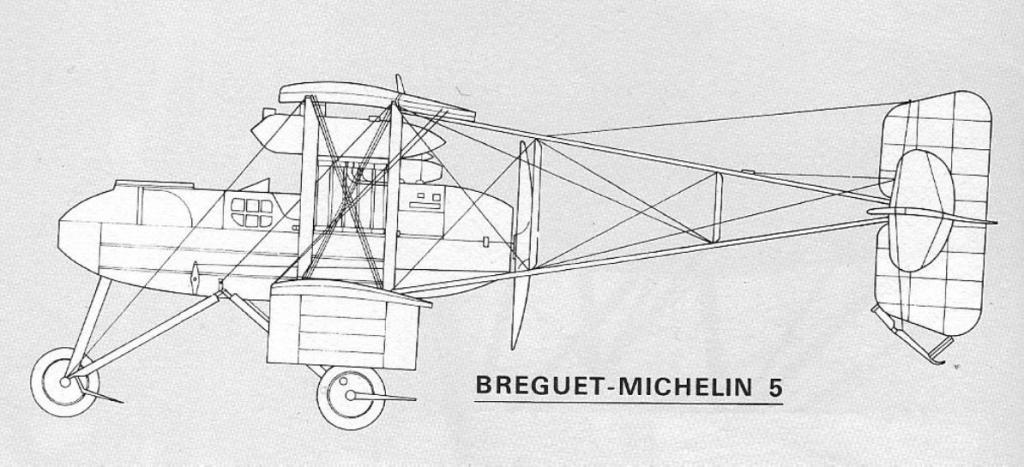
The relative success of the use of cannon in the Breguet BU.3 led the Breguet company to install it in their latest aircraft, the Breguet 5. This was a three-bay, unequal span biplane powered by a 225-hp Renault 12Fb engine. The tail section was the same as that of the Breguet BU.3, with four tail booms extending from the upper and lower wings. The Breguet Br.M5 series of biplane bomber was developed from the Breguet Br.M4 late in 1915 and was regarded by the Aviation Militaire as a two-seat escort fighter or reconnaissance-fighter.

Breguet Br.M V Article

The Br.M5 was operated by a crew of two with the pilot seated in the middle of the aircraft and the gunner/observer to the front. The engine sat behind the crew area – directly behind the pilot and was a pusher driving a two-blade propeller. Design was with a bathtub-like fuselage, a static tricycle landing gear array and framework and cables leading out to the empennage.

The RNAS purchased 59 Breguet 5s from the Breguet factory and ordered an additional 3 from Graham-White Aviation Company (as Grahame-White Type XIX / G.W.19), but only 10 were ever built in Britain. Twenty-five of the Breguet 5s built in France had the 250-hp Rolls-Royce engine installed, the remaining models were powered by the 225-hp Renault engine.

In action, the Br.M5 was fielded primarily as a night bomber and used by both the French and English forces from 1916-1917 though it first appeared in the summer of 1915. The Type 5 fighter, or Bre 5 Ca2, never equipped a complete escadrille, a few aircraft of this type being issued to each of the units operating the Bre 5 B2 bomber version, for which it was expected to act as escort. Armament comprised a 37mm Hotchkiss cannon on a flexible mounting in the forward cockpit and a rear-firing 7.7mm Lewis gun on an elevated mounting over the leading edge of the upper wing. Eleven Type 5 fighters were operational with the Aviation Militaire by 1 February 1916, but the type was generally unpopular.

Bre.12

Breguet Br.M5
Engine: 1 x Renault 12Fb, 220hp or 1 x Rolls-Royce Eagle, 250hp.
Wingspan: 17.50 m / 57 ft 5 in
Length: 9.90 m / 33 ft 6 in
Height: 3.90 m / 12 ft 8 in
Wing area: 57.70 sq.m / 621.08 sq ft
Take-off weight: 1890 kg / 4167 lb
Empty weight: 1350 kg / 2976 lb
Max. speed: 133 km/h / 83 mph
Service Ceiling: 11,483ft (3,500m; 2.2miles)
Armament:
1 x 7.7mm Lewis machine gun or 1 x 37mm cannon in forward observer/gunner position.
Accommodation: 2
Hardpoints: 2

Breguet-Michelin 5
Engine: Renault, 220 hp
Wingspan: 57 ft 8 in
Length: 26 ft 1 in
Max weight: 4235 lb
Speed: 86 mph at SL
Endurance: 5 hr
Armament: 1 x mg, 1 x 37 mm cannon
Bombload: 660 lb
Crew: 2

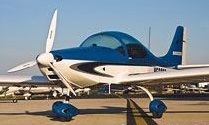
Breezer Aircraft Breezer

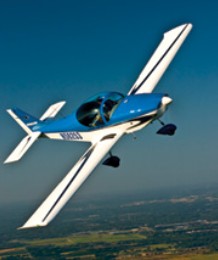
Breezer is an ultra light, LSA, and experimental category design.
The entire cockpit was designed ergonomically; from the instrument panel to the seating arrangement, everything was modeled and shaped.
Planning for a Breezer kit plane version from day one, the aluminum airframe structure design was kept simple and sturdy. To assemble the pre-manufactured components, you only need a flat table top. The high level of prefabrication allows a rapid fuselage assembly. Accurate matched drilling lets you to assemble aluminum alloy parts without extensive jigging. Other parts, like the spar center section, are provided fully assembled. Wherever needed the fuselage is reinforced in an optimal way.
The wings are built in a spar/rib structure. As the wings sport no wash-out, neither aerodynamically nor geometrically, these can be built on a flat table top. Jigging is minimal. Like with the fuselage, the wing parts come with most holes match drilled into the ribs, spar and wing skin. This assures that assembly errors are eliminated from the outset.
This same simple and sturdy structure is used to assemble the horizontal stabilizer and elevator.
The Breezer experimental category kit plane was developed along with the ultralight. The following items were modified for the experimental category kit plane:

  • MTOW raised to 580 kg / 1279 lb
  • Stronger wing spar
  • Stronger wing spar center section
  • Stronger stabilizer (as requested by the Swiss)
    After Germany allowed sailplanes to be towed by ultra light aircraft, the Breezer was tested and found suitable for towing flights.
    The Breezer is made in three models. The Breezer CR. The Breezer Club as a dedicated flight training edition, and the Breezer Acro, aerobatic aeroplane.
Breezer II

In 2012 the all-metal Breezer II was available as a ready built or E-LSA kit airplane. Price 2012: S-LSA Breezer is US$125,800. Quick Build kit (less engine and avionics): US$46,600.

Engine: Rotax 80 hp
Cruise speed (75%): 180 km/h / 112 mph
Maximum Speed Vne: 245 km/h / 152 mph
Stall speed: 64 km/h / 40 mph
Climb speed: 4,5 m/s / 886 fpm
Wingspan: 8,03 m / 26.4 ft
Cabin width: 1,16 m / 45,7 in
Length: 6,40 m / 21 ft
Height: 2,15 m / 7 ft
Wing area: 10,92 sq.m / 117.5 sq ft
Empty weight incl. BRS: 296 kg / 652.6 lb
Maximum gross weight: 472,5 kg / 1041.7 lb
Load: 176,5 kg / 389 lb
Fuel capacity: 70 liter / 18.5. USgal
Average fuel consumption / hr: 11-14 lt / 2.9 -3.7 USgal
Take off dist: 135 m / 443 ft
Landing dist: 140 m / 459 ft

Engine: Rotax 100 hp
Cruise speed (75%): 200 km/h / 124 mph
Maximum Speed Vne: 245 km/h / 152 mph
Stall speed: 64 km/h / 40 mph
Climb speed: 6 m/s / 1181 fpm
Wingspan: 8,03 m / 26.4 ft
Cabin width: 1,16 m / 45,7 in
Length: 6,40 m / 21 ft
Height: 2,15 m / 7 ft
Wing area: 10,92 sq.m / 117.5 sq ft
Empty weight incl. BRS: 300 kg / 661.4 lb
Maximum gross weight: 472,5 kg / 1041.7 lb
Load: 172,5 kg / 380 lb
Fuel capacity: 70 lt / 18.5 USgal
Average fuel consumption / hr: 12-15 / lt / 3.1-3.9 USgal
Take off dist: 95 m / 312 ft
Landing dist: 140 m / 459 ft

Breezer II
Engine: Rotax 912 ULS, 100hp@SL
Propeller: 3-blade Neuform
Gross weight: 1320 lb
Empty weight with optional BRS: 763lb
Useful load, std: 557 lb
Payload, full std. fuel: 518lb
Fuel capacity (lbs.): 21
Wing area: 117.5 sq. ft
Cruise speed, 75% power: 105 kt
Range with 30-min. reserve, 75% power: 420 nm
Best rate of climb, solo: 1181 fpm
Best rate of climb, two people: 900 fpm
Service ceiling: 14,500 ft
Takeoff over 50 ft obstacle: 925 ft
Landing ground roll: 606 ft
Vne: 120 kt
V Stall: 36 kt

Breda-Pensuit B.2 / Ba.1 / Caproni-Pensuti triplane

Breda-Pensuti B.2

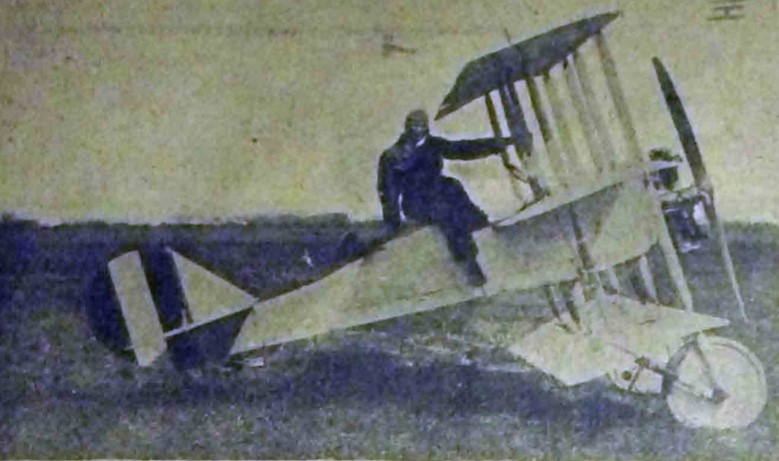
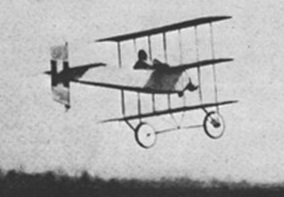
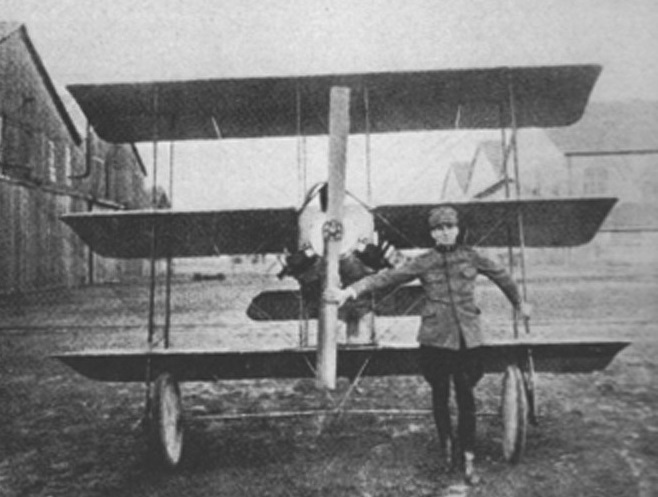
The Pensuti 2 was a very compact, low-powered triplane flown in about 1918. Its first flight, piloted by Lt. Lodovico Montegani, was delayed by the death of its designer and Caproni test pilot Emilio Pensuti in an unrelated aircraft crash. Designed to do in the air “what bicycle [sic] does for the man on the road”, it was categorised post-World War I as a small sporting aeroplane.

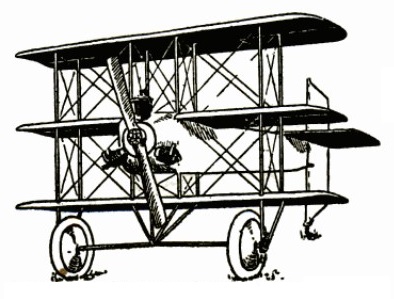
The single-seat triplane had unswept rectangular wings, each with a full span of only 4 m (13 ft 1 in). These were mounted without stagger, each wing braced to the one below by two pairs of vertical, parallel interplane struts, one pair out beyond mid-span and the other from the fuselage sides. The central wing was attached to the upper fuselage and the other two held well clear of it by the struts. There were ailerons on each wing.

The Pensuti had a simple rectangular cross-section fuselage, with the open cockpit at the wing trailing edge. A three cylinder, inverted Y configuration Anzani air-cooled engine of 26 kW (35 hp) in the nose drove a two-blade propeller. The triplane had a fixed undercarriage of wide track, with a single wheel at each end of a single axle with its extremities attached to extensions of the outer interplane struts. Its cruciform tail had horizontal surfaces mounted on the top of the fuselage; the vertical surface was trapezoidal and extended equally above and below the fuselage. A small tailskid was carried on its lower tip.

A second aircraft with a redesigned tail, Anzani 10-cylinder radial engine and other modifications was built at the Breda factory in Milan as the Breda-Pensuti B.2, (regn. I-BADZ). It gained the second prize at the Italian low-powered aircraft competition held in the summer of 1920 in Milan.

The Italian Air Force used them for quick recon flights for the infantry. The Pensuti 2 remained in service until 1923.

‘Ba.1’ has been applied to the B.2.

Possibly a variant with an 80 hp Breda V-8 was also built.

Powerplant: 1 × Anzani Y 3-cylinder, 26 kW (35 hp)
Propeller: 2-bladed
Wingspan: 4.0 m (13 ft 1 in) all wings
Length: 3.80 m (12 ft 6 in)
Height: 2.40 m (7 ft 10 in)
Gross weight: 230 kg (507 lb) in flight with pilot
Maximum speed: 95 km/h (59 mph, 51 kn)
Stall speed: 40 km/h (25 mph, 22 kn)
Rate of climb: 1.1 m/s (220 ft/min)
Take-off and landing distances: 20 m (65 ft).
Crew: one

Breda Ba.205

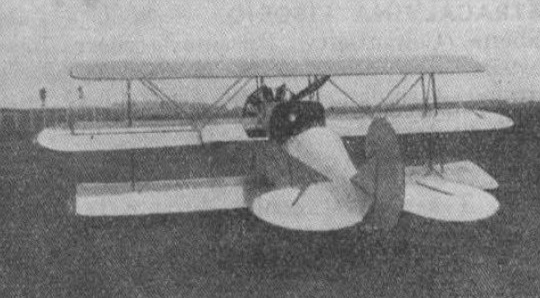
The 1942 Ba.205 biplane aerobatic trainer was proposed with an all-metal fuselage and forward-mounted cockpits.

Two prototypes (MM.472 & MM.473) were built with fabric/steel-tube fuselage, and the front cockpit covered.

The design was eliminated from competition in January 1943.

Engine: IF Beta RC.10, 280 hp
Wingspan: 9.90m