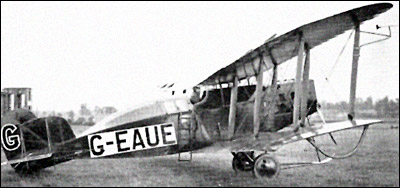
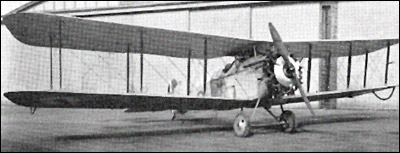
Engine: 1 x 650hp Rolls-Royce Condor III ake-off weight: 3690 kg / 8135 lb Empty weight: 2361 kg / 5205 lb Wingspan: 17.65 m / 57 ft 11 in Length: 14.48 m / 47 ft 6 in Height: 4.37 m / 14 ft 4 in Wing area: 91.51 sq.m / 985.00 sq ft Max. speed: 193 km/h / 120 mph Ceiling: 5456 m / 17900 ft Range: 1385 km / 861 miles Armament: 3 x 7.7mm machine-guns, 1 x 250kg or 2 x 100kg bombs
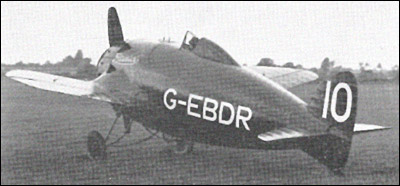
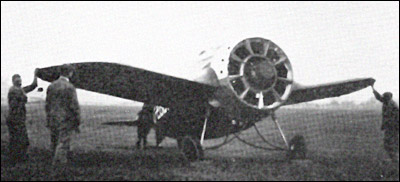
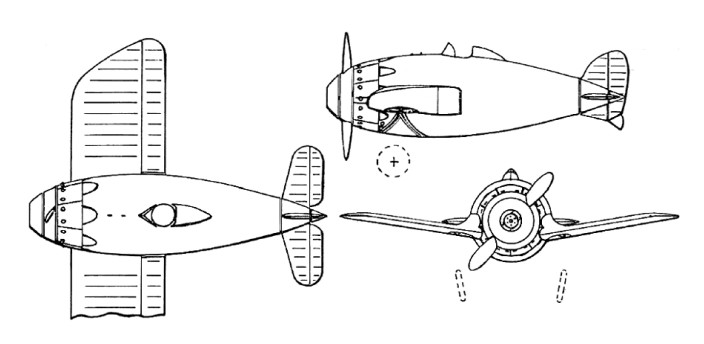
The Bristol 72 Racer was designed in 1922, by engineer Wilfrid Thomas Reid. It has a cylindrical monocoque fuselage and retractable landing gear. Of mixed construction wood and metal for the fuselage, the wings fabric covered. Power way provided by a Bristol Jupiter IV of 480 hp.
Controlled by Mr. FC Uwins, it first flew in June 1922. The Racer encountered many problems with instability. Envisaged entering the Aerial Derby of 1922, it was painted red, registered G-EBRD, and given the number 10, it did not take part as it was not ready. With continuing difficulties with development, it was abandoned in 1924 after having flown only 8 times.
Greek Tourer Engine: 1 x 230hp Siddeley Puma Take-off weight: 1271 kg / 2802 lb Empty weight: 795 kg / 1753 lb Wingspan: 12.01 m / 39 ft 5 in Length: 7.92 m / 25 ft 12 in Height: 3.05 m / 10 ft 0 in Wing area: sq.m / 406.98 sq ft Max. speed: 193 km/h / 120 mph
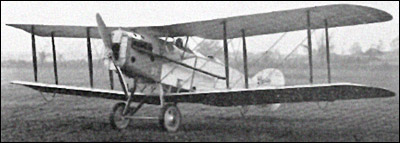
The Bristol Tourer was originally a conversion of the Bristol F.2b Fighter built for and flown by the RAF in World War I. At the end of the war a number were converted in the UK as low-cost commercial airliners, fitted with a 134 kw (180 hp) Wolseley Viper, 179 kw (240 hp) Siddeley Puma, or 224 kw (300 hp) Hispano Suiza engine. Four distinct conversions were built, all flown from the front seat, varying in type of accommodation provided for the passengers, ie an enclosed cabin or open cockpit. Bristol type-numbers 27, 28, 29 and 47 were allotted to the series in 1923.
The first conversion was flown in 1919 and another was shown at the Paris Salon in December of that year. Two were sold in the USA and two others were fitted with floats. Two went to Spain and eight to Australia.
Replica: Air Charter Bristol F.2b Tourers
Bristol Tourer 2-seater Engine: 1 x 230hp Siddeley Puma Take-off weight: 1271 kg / 2802 lb Empty weight: 772 kg / 1702 lb Wingspan: 12.01 m / 39 ft 5 in Length: 7.95 m / 26 ft 1 in Height: 3.05 m / 10 ft 0 in Wing area: 37.81 sq.m / 406.98 sq ft Max. speed: 193 km/h / 120 mph Ceiling: 6706 m / 22000 ft
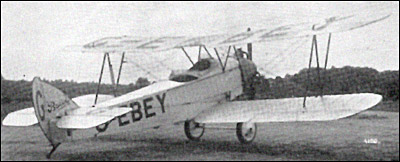
Bristol Taxiplane Engine: 1 x 120hp Bristol Lucifer Take-off weight: 835 kg / 1841 lb Empty weight: 549 kg / 1210 lb Wingspan: 9.47 m / 31 ft 1 in Length: 7.09 m / 23 ft 3 in Height: 2.69 m / 8 ft 10 in Wing area: 26.38 sq.m / 283.95 sq ft Max. speed: 145 km/h / 90 mph
Bristol Biplane Type T Sequence number 45 was used by Marcel Tabuteau in the June 1911 Circuit de L’Europe. Alternatively the machine was sometimes known as the Challenger-Dickson Biplane.
Engine: 1 x 70hp Gnome Take-off weight: 454 kg / 1001 lb Empty weight: 363 kg / 800 lb Wingspan: 10.67 m / 35 ft 0 in Length: 7.47 m / 24 ft 6 in Wing area: 32.52 sq.m / 350.04 sq ft Max. Speed: 93 km/h / 58 mph Crew: 1
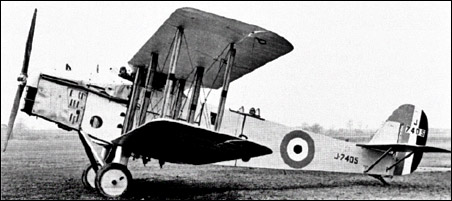
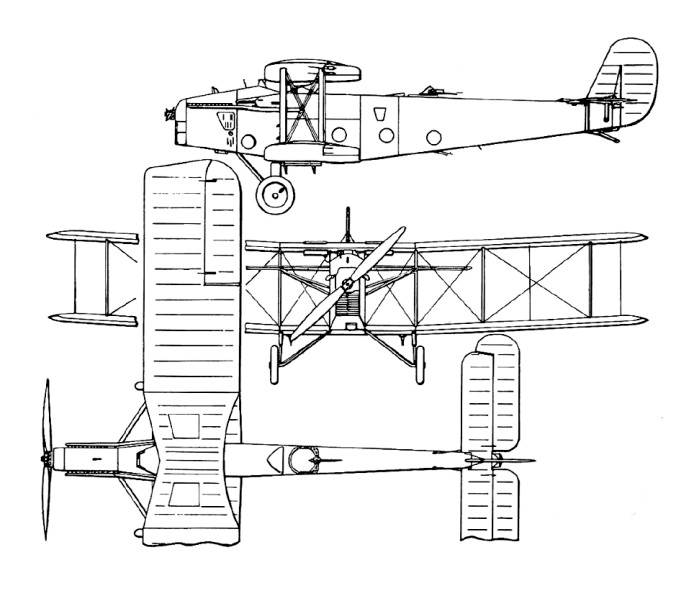
The Bristol Ten-seater and Bristol Brandon were British single-engine biplane transport aircraft built by the Bristol Aeroplane Company in the early 1920s. Only three were built, two of which were used as civil transports and one of which (the Bristol Brandon) served with the Royal Air Force.
Early in 1921, the British government provided subsidies for approved airlines, so Bristol’s management authorised Barnwell to proceed with a design for a single-engined transport aircraft. It was intended to be powered by a Bristol Jupiter engine, but this had not yet been type approved, so the initial prototype was fitted with a Napier Lion.
The Lion-engined prototype, the Bristol Type 62, or Bristol Ten-seater, with the registration G-EAWY first flew on 21 June 1921. The Ten-seater was a large, two bay biplane, with a cabin for nine passengers and a forward cockpit for the single pilot. The Type 62 had its Certificate of Airworthiness issued on 14 February 1922 and was transferred to Instone Air Line for service on its London to Paris route, carrying passengers and cargo. It was later transferred to Handley Page Transport Ltd.
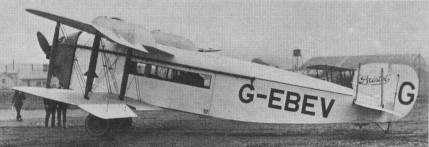
The second aircraft, the Bristol Type 75 was powered by the preferred Jupiter engine, which was mounted behind a fireproof bulkhead, with the entire engine installation capable of being swung open like a gate to allow easy access to the rear of the engine. The Type 75 was designed to accommodate eight passengers and two crew. This aircraft, registered G-EBEV, first flew in July 1922.
The Type 75 received its Certificate of Airworthiness on 16 July 1924. By this time, Instone Air Lines had merged with the other three subsidised British airlines to form Imperial Airways. Imperial had a policy of using only multi-engine aircraft for passenger flights, so the Type 75 was converted into a freighter to carry 1,800 lb (820 kg) of cargo, operating the London – Cologne route from 22 July 1924 until 1926. A second Type 75 was not completed, and was broken up for spares in 1923.
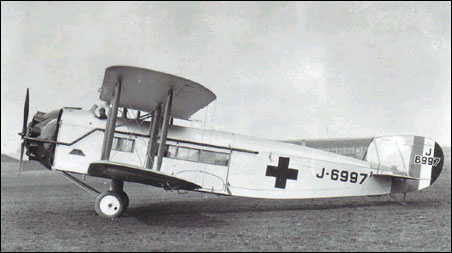
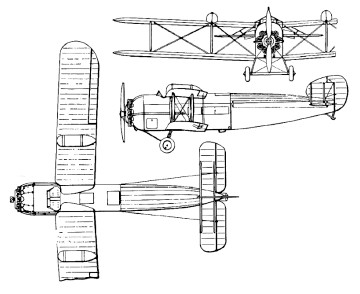
A third aircraft, the Bristol Type 79 was ordered by the Air Council to be equipped as a troop-carrier and air ambulance for the Royal Air Force. It was fitted with wings of greater chord, and had accommodation for three stretchers and an attendant or two stretchers and four sitting patients. The Type 79 first flew on 19 March 1924 and was delivered to the RAF, as the Bristol Brandon, in 1925. It was overweight at full load and did not go into overseas service, being used as an ambulance at RAF Halton together with the Avro Andover.
B.79 Brandon
Variants
Bristol Type 62 Ten-seater Engine: 450 hp (340 kW) Napier Lion
Bristol Type 75 Engine: Bristol Jupiter IV 9, 425 hp (317 kW) Wingspan: 56 ft 0 in (17.07 m) Length: 40 ft 6 in (12.35 m) Height: 11 ft 0 in (3.35 m) Wing area: 700 sq.ft (65.1 sq.m) Empty weight: 4,000 lb (1,818 kg) Max takeoff weight: 6,755 lb (3,070 kg) Service ceiling: 8,500 ft (2,600 m) Wing loading: 9.65 lb/sq.ft (47.2 kg/sq.m) Endurance: 5 hours 30 min Maximum speed: 96 knots (110 mph, 177 km/h) Crew: 2 Capacity: Eight passengers or 1,800 lb (820 kg)
Bristol Type 79 Brandon Engine: 425 hp Bristol Jupiter IV Take-off weight: 3223 kg / 7106 lb Empty weight: 1984 kg / 4374 lb Wingspan: 16.48 m / 54 ft 1 in Length: 12.88 m / 42 ft 3 in Height: 4.37 m / 14 ft 4 in Wing area: 82.68 sq.m /889.96 sq ft Max. Speed: 185 km/h / 115 mph Ceiling: 2591 m / 8500 ft Crew: 2 Passengers: 8
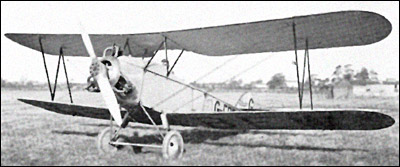
Rules of a competition released in July 1919 emphasised safety in terms of a short takeoff and slow landing speed as well as useful load and economy, and Bristol decided that a modification of the Tourer was their best hope.
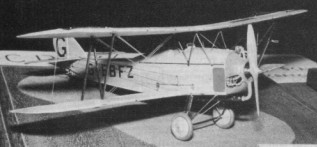
The single passenger was enclosed in a cabin immediately behind the pilot’s open cockpit, with a raised roof and windows in the decking where the second seat in the Tourer had been. The fuselage was deepened by dropping the lower longerons and floor to the lower wing spar. Ahead of the pilot, the fuselage bays were built from steel rather than wood spars. The single-axle main undercarriage carried wheels with disc brakes; there was a central skid to prevent nosing over and fenders under the wing tips. The tail skid was steerable and sprung. The Seely was a three-bay biplane with greater wing area than the Tourer, with ailerons on both upper and lower wings. The rudder was horn balanced and the fin area generous. For the competition, it was powered by a water-cooled upright in-line 240 hp (180 kW) Siddeley Puma with a large nose radiator behind the wooden two-blade propeller. There were only two other aircraft in the competition, held at RAF Martlesham Heath in August 1920, the Westland Limousine and the Sopwith Antelope. Westland was the winner of the competition and Bristol retained the Seely on general duties until 1923, when it was converted into a test bed for Jupiter development, being purchased by the Air Ministry for use with the Royal Aircraft Establishment. It was fitted with a 435 hp (324 kW) Jupiter III nine-cylinder radial engine driving a steel two-bladed Leitner-Watts propeller. The Jupiter had an exhaust-driven supercharger to enhance high-altitude performance, raising the Seely’s service ceiling from 18,000 ft (5,490 m) with the Puma to 24,000 ft (8,230 m). At these altitudes, the enclosed cabin provided the observer with relief from the elements.
Engine: Siddeley Puma, 240 hp (180 kW) Gross weight: 3,000 lb (1,360 kg) Empty weight: 908 kg / 2002 lb Wingspan: 14.40 m / 47 ft 3 in Length: 8.99 m / 29 ft 6 in Height: 3.66 m / 12 ft 0 in Wing area: 52.58 sq.m / 565.97 sq ft Max. Speed at sea level: 177 km/h / 110 mph Ceiling: 5486 m / 18000 ft Seats: 2