Westland PV.6 Wallace

Westland PV.6 Wallace Article

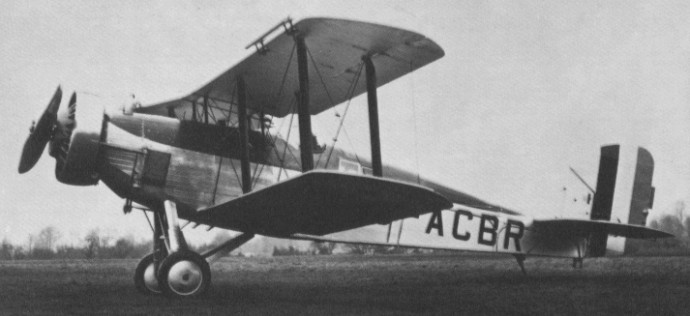
In the year 1931 a British Empire Exhibition was held in Buenos Aires, Argentina, at which Westland was represented by a special A.S. Panther-engined Wapiti, G-AAWA, piloted by Mr. H. J. Penrose. This machine embodied the accumulated experience gained with the first 500 Wapitis constructed, and was fitted with a lengthened fuselage and braked undercarriage.
After a successful tour in South America the machine was returned to Yeovil, where further refinements were made, including the fitting of a divided axle chassis, improvements to the fuselage lines, and the installation of a Pegasus engine with Townend ring. By this time both the performance and the appearance of the aircraft differed considerably from that of the standard Wapiti and it was given the designation P.V.6, under which it successfully completed Air Ministry acceptance trials as a general-purpose machine.
With the placing of a production order the type was given the name of Wallace, but the original machine, again returned to Yeovil, underwent yet another change and was converted for service with the Houston-Mount Everest Expedition.
The very successful realisation of the Expedition’s object brought this veteran aircraft once more into Westland hands, this time to be converted back into a standard Wallace and issued to a Squadron.
On the early Wallace machines the cockpits were of the open type, with a Scarff gun-ring over the rear cockpit, but the type is now best remembered by reason of a later development. This was the fitting of a transparent cabin over both cockpits, thus making it the first R.A.F. aeroplane to be so equipped. Apart from the greatly increased comfort, this enabled the Wallace to use its rear gun with increased accuracy when operating at maximum speed.
The Wallace had a long period of service with the Royal Air Force, and with the various Auxiliary Squadrons, and although succeeded by the Lysander and other general-purpose types.

The Wallace was the last of the inter-war general purpose biplanes, but its useful life was extended, with many being converted into target tugs and wireless trainers.

Engine: 1 x 655hp Bristol Pegasus IV 9-cylinder air-cooled radial
Max take-off weight: 2610 kg / 5754 lb
Empty weight: 1670 kg / 3682 lb
Wingspan: 14.1 m / 46 ft 3 in
Length: 10.4 m / 34 ft 1 in
Height: 3.5 m / 12 ft 6 in
Wing area: 45.4 sq.m / 488.68 sq ft
Max. speed: 289 km/h / 180 mph
Ceiling: 9150 m / 30000 ft
Armament: 1 x Vickers gun + 1 Lewis gun

Westland Wallace Mk. II
Length : 34.154 ft / 10.41 m
Height : 11.516 ft / 3.51 m
Wingspan : 46.424 ft / 14.15 m
Wing area : 488.04 sq.ft / 45.34 sq.m
Max take off weight : 5750.6 lb / 2608.0 kg
Weight empty : 3841.1 lb / 1742.0 kg
Max. speed : 137 kts / 254 km/h
Cruising speed : 117 kts / 217 km/h
Service ceiling : 24098 ft / 7345 m
Wing load : 11.89 lb/sq.ft / 58.0 kg/sq.m
Range : 408 nm / 756 km
Engine : Bristol Pegasus IV, 671 hp
Crew : 2
Armament : 2x cal.303 MG (7.7mm)
Bombload : 263kg

Westland Wallace

Westland PV.3 / Houston-Westland

In the final phase of the biplane era, marked by the successful Wapiti and Wallace machines, the Westland design team produced, as a Private Venture, an aeroplane capable of combining Army Co-operation and General Purpose duties with Fleet Air Arm requirements and, although the type did not go into production, the only example built had an interesting and exciting career.
Known as the P.V.3, the design was based on that of the previous General Purpose and Army Co-operation biplanes, but was arranged to incorporate a wide-track divided type undercarriage – to facilitate the slinging of a 450kg torpedo -and to have folding wings for shipboard stowage.
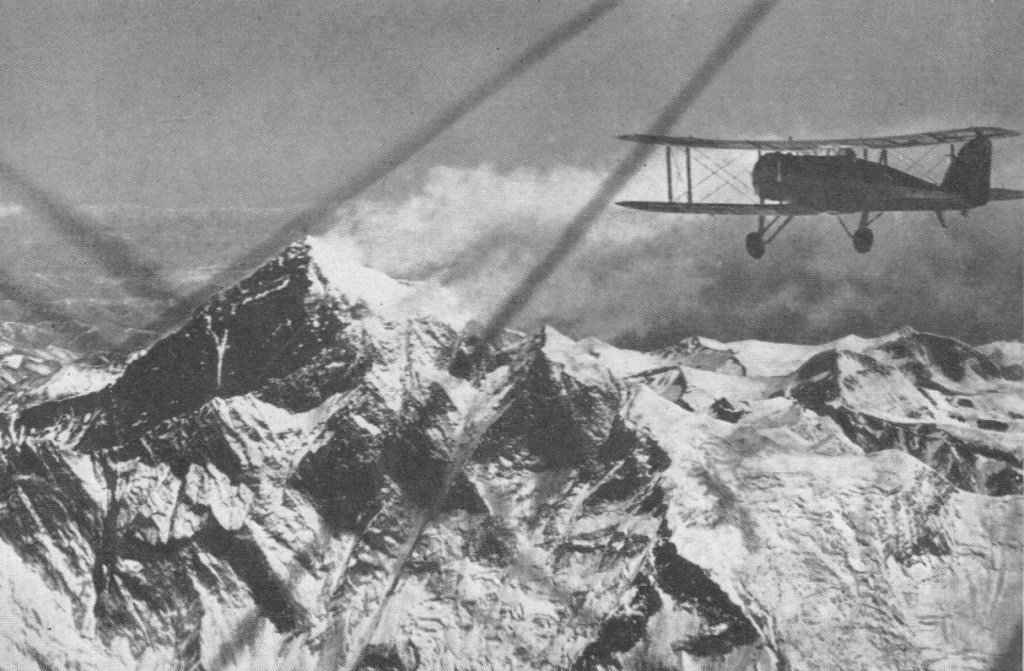
First flight-tested by Flt.-Lt. Louis G. Paget, A.F.C., in 1931, the P.V.3 was being used for experimental work at the time machines were being sought for the 1933 Houston-Mount Everest Expedition. Investigation showed that, when lightened and fitted with the fully supercharged Bristol Pegasus S.3 engine, its performance was more suited than any other type for this arduous and exacting adventure.
Modifications to the fuselage, involving the removal of military equipment and the conversion of the rear cockpit to a closed cabin, were made with the co-operation of members of the Expedition, and the final tests, made by Mr. H. J. Penrose, were completely successful. On January 25th, 1933, accompanied by Air Commodore P. F. M. Fellowes, D.S.O., leader of the Expedition, he set out from Westland aerodrome to perform a test climb which would prove that Everest could be cleared by a comfortable margin. They returned after an absence of an hour and forty minutes, having taken the P.V.3 to a height of over 10500m, where the temperature was less than -60°C.

For the Expedition the P.V.3 was renamed the Houston-Westland and, with the converted Wallace, made the first historic flights over Mount Everest. With the successful conclusion of the Expedition’s work the Houston-Westland was returned to Yeovil, and later had a long period of service as a flying test-bed for experimental engines of the Bristol Aeroplane Company.

Westland PV.3 Flight Over Everest Article

Engine: 1 x 575hp Bristol Jupiter XFA 9-cylinder supercharged air-cooled radial
Max take-off weight: 2540 kg / 5600 lb
Empty weight: 1569 kg / 3459 lb
Wingspan: 14.17 m / 47 ft 6 in
Length: 10.41 m / 34 ft 2 in
Height: 3.55 m / 12 ft 8 in
Wing area: 46.4 sq.m / 499.44 sq ft
Max. speed: 262 km/h / 163 mph
Ceiling: 7900 m / 25900 ft
Crew: 2
Armament: 1 x Vickers gun + 1 x Lewis gun, 500kg of bombs

Houston-Westland
Engine: Bristol Pegasus I.S.3

Westland PV.3

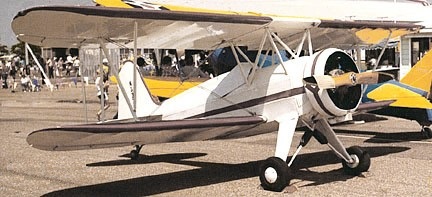
Westfall Sport

Westfall Sport N13954

The first Westfall Sport (N13954) was rebuilt c.1957 with a Continental A-75 and was active into the ’70s.

Westfall Sport with 90hp Ken-Royce

The second Sport was built in 1937 with a 65hp LeBlond engine.

An unknown number were built by others from marketed plans.

Engine: 40hp Ford A
Wingspan (upper): 25’0″
Wingspan (lower): 23’0″
Length: 15’4″
Max speed: 98 mph
Stall: 30 mph
Ceiling: 14,000′
Seats: 1

Engine: 65hp LeBlond
Useful load: 274 lb
Max speed: 115 mph
Cruise speed: 100 mph
Stall: 25 mph
Range: 315 mi

Western Airplane Sport

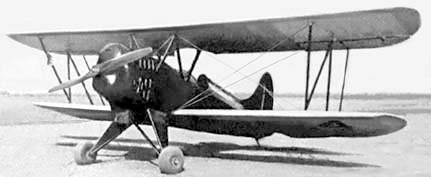
The 1928 Western Airplane & Supply Co Sport three seat open cockpit biplane was possibly designed or constructed by secretary-treasurer W W Wright, who was also credited with the Wright Light Sport of the same year.

Only the one was built, N4225, and the registration was cancelled in 1930.

Engine: 90hp Curtiss OX-5
Wingspan: 34’0″
Length: 33’6″
Seats: 3

Western Aircraft Co West Air 204 / 214

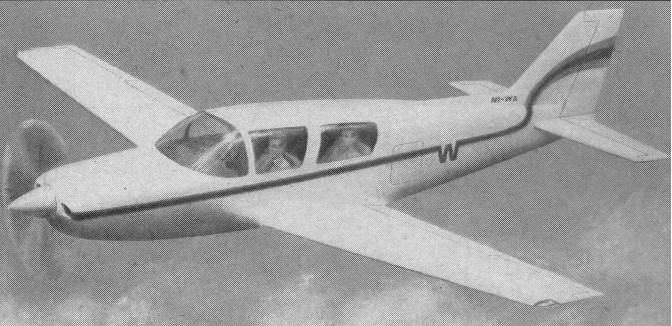
In 1984 Western Aircraft Company was manufacturing the newly designed West Air 214. The craft follows the successful flight testing and evaluation of the proof of concept aircraft, the West Air 204 N258, first flown in November 1982. The West Air 214’s changes include a bubble windshield, swept vertical stabilizer, additional wing area and a redesigned fuselage. The 214 will have a tri-cycle retractable gear. The West Air will still retain its all composite construction of epoxy, graphite and tri-directional glass and four place seating.

Engine: Lycoming IO-360 200-hp.
Wingspan: 31 feet
Length: 26.75 feet
Gross weight: 2690 lb
Empty weight: 1410 lb
Fuel capacity: 70 USgallons
Top speed: 245 mph
Cruise speed: 215 mph
Stall speed: 59 mph
Seats: 4

Engine: Lycoming TIO-360-A1B
Wingspan: 29’0″
Length: 23’8″
Useful load 1166 lb
Max speed: 240 mph
Cruise speed: 180 mph

Westbrook W-5 / W-5-B Sportster

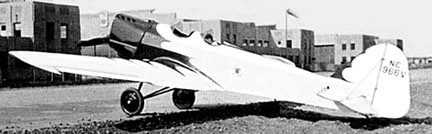
Westbrook W-5 NC966V

Designed by Neil Perdew, the 1931 Westbrook W-5 (ATC 2-444) was powered by a 90hp ACE Cirrus Mk III engine. The ATC were issued in 1933.

Westbrook Sportster

The W-5-B Sportster had an 85hp British Cirrus (2-455). Folding all-wood wings and selling for $2,650.

Westbrook Sportster

About five were built, and several partly constructed before the business failed in 1931.
NC9N c/n 501 destroyed in a 1931 crash
N853W c/n 502
NC966V c/n 503 lost in a 1938 accident
NC92V c/n 504
possibly c/n 505 unlicensed one

The design was planned for revival in 1939 as the Allied H-28 Sport Trainer, but apparently no planes were built.

W-5
Engine: 90hp ACE Cirrus Mk III
Wingspan: 32’0″
Length: 23’6″
Useful load: 500 lb
Max speed: 125 mph
Cruise speed: 100 mph
Stall: 40 mph
Range: 400 mi
Seats: 2

W-5-B Sportster
Engine: 85hp British Cirrus
Seats: 2