Brotero Bichino / IPT IPT-0

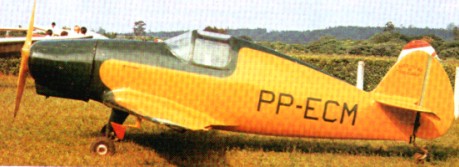
Designed as a private venture in the late ‘thirties, the Bichino subsequently served as a test-bed for the IPT (Instituto de Pesquisas Tecnológicas or Technological Research Institute) of the São Paulo State University. Four examples were built. In 1938, the IPT’s Aviation Research Department was, by a fair margin, the most important aviation research centre working in Brazil and had completed a long series of studies of the use of native Brazilian woods in aircraft. A special technique had been developed for producing in industrial quantities a new kind of plywood for aircraft using Brazilian pine, and studies had been made of freijo, a Brazilian hardwood 20 per cent stronger and heavier than spruce. One of the principal researchers at the IPT was Frederico Abranches Brotero, who was also a gifted aircraft designer. In company with Orthon Hoover, an American who had come to Brazil as a demonstration pilot for Curtiss in 1911 and had decided to stay, Brotero set about putting freijo and the new plywood to the test in a light aircraft. Work on Brotero’s tiny wooden aeroplane, designed around a 60 hp Walter Mikron engine, began late in 1939 in a workshop of the São Paulo Polytechnic School under IPT supervision and it was transferred to Rio Claro city aero club for completion and first flight. The latter was effected in 1940. The Little Bug was of all wood construction, the cantilever low-wing being a two-spar structure with a Clark Y aerofoil; the spars were of paumarfim, ribs of freijo and covering of Brazilian pine plywood. Ailerons were fabric covered; fixed letter-box slots were incorporated ahead of the ailerons and split flaps extended along each trailing edge from aileron to fuselage. The wooden monocoque fuselage structure had guapuruvu longerons and freijo reinforcements with plywood construction. Tail unit construction was of freijo with fabric covering for the elevators and rudder; there was a controllable trim-tab in the starboard elevator. The fixed landing gear had rubber-in-compression shock absorbers and a steel tail skid. Phenolic resin was used to bond the wooden components. The open cockpit was just wide enough for a pilot of average build, but was comfortable and afforded good visibility. In 1943, the Bichino prototype (PP-THH) was purchased by the IPT to be used as a flying test bed and three more examples were put in hand, with some structural redesign to reduce weight and improve performance. The three new Bichinos had 65 hp, 75 hp and 85 hp Continental engines respectively. By this time, IPT had completed other prototypes designated the IPT- 1, IPT-2 and IPT-3, and the Bichino was consequently given the designation IPT-0, the three new examples becoming the IPT-0-A, -B and -C respectively. The fourth and last was completed in 1947 and proved to be the best performer and most pleasant to fly
Broome Le Beau

second aircraft

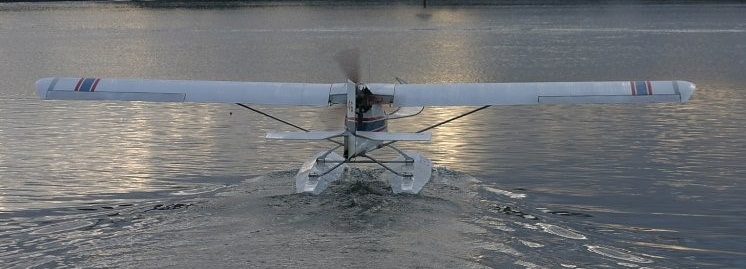
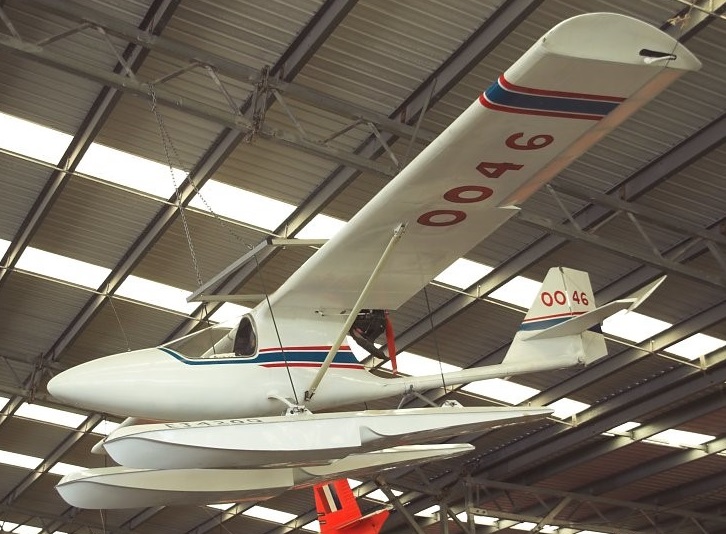
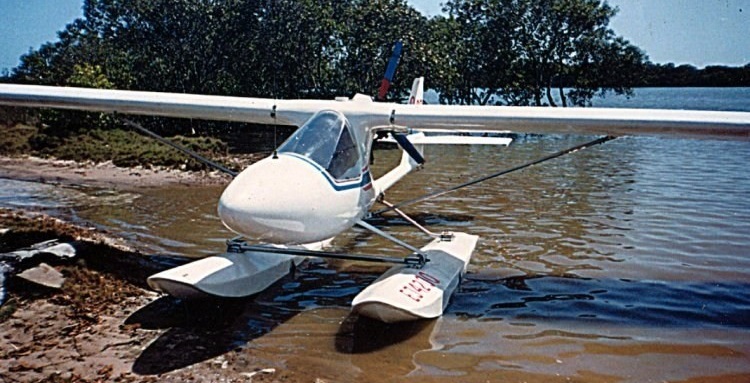
Ray Broome designed and built two ultralight aircraft in the late 1980s early 1990s based on the Resurgam parameters.

Number one was completed in 1987 as a landplane with a tricycle undercarriage although it was operated on floats for a time. The fuselage of the first aircraft was built solely from fibreglass. It was sold unregistered in 1991 and reconfigured as a taildragger and was still flying in NSW, Australia, as late as mid-2014.

The second aircraft was built in 1992 and took up the registration 10-0046 C/N 2. It was always operated as a floatplane, mostly around the Moreton Bay area until 2008 by which time it had accumulated approximately 330 hours in service.

The fuselages of both aircraft were built on a mould taken from the front section of a damaged Club Libelle glider which inspired the name LeBeau. The composite was 6mm Kevlar foam sandwich. The rear fuselage is an aluminium tube with the tail sections having timber ribs on aluminium spars. The wings similarly have timber ribs with a double sided plywood main spar and plywood nose skin. Wing, rudder and tailplane are covered with Stits aircraft fabric painted in two-pack.

second aircraft

The floats are single skin fibreglass with plywood ribs and sealed flotation chambers. The engine is a 2-stroke, 4-cylinder Konig SD-570, rated at 28hp at 4200 rpm with a toothed belt reduction drive. The propellor is a 3 bladed ground adjustable in pitch. A third nose cone and fuselage was moulded but not taken any further.

second aircraft

The second aircraft was delivered by road to QAM Caloundra by the builder/donor Ray Broome.

second aircraft
Engine: Konig SD-570, 21kW (28hp)
Wing Span: 9.75m / 32ft
Wing Area: 11.89sq m / 128sq ft
Wing Chord: 1.22m / 48in
Wing Section: NACA 4415
Length: 5.64m / 18ft 6in
Height: 1.98m / 6ft 6in
Weight Empty: 150.88kg / 337lb
Weight Loaded/MTOW: 258.55kg / 570lb
Fuel Capacity: 35L / 7.7gal
Max Speed: 105km/h / 65mph
Cruising Speed: 96km/h / 60mph
Initial Climb: 122m/min / 400ft/min
Range: 193km / 120mile
Fuel Consumption: 14L/hr / 3.3gal/hr

Brookland Mosquito         

The Brookland Mosquito was a British amateur-built single-seater ultra-light gyroplane first flown in 1962. The Mosquito was powered by a Ernie Brooks-converted Volkswagen four-cylinder horizontally-opposed air-cooled engine providing a top speed of 137km/h, and in a second version 161km/h, and a range of 225km.

September 1968

Versions:
Mosquito Mk.1 Hornet
Mosquito Mk.2
Mosquito Mk.3

Engine: VW 1200cc, 70 hp at 3750 rpm
Rotor diameter: 22 ft
Fuselage length: 12 ft
Height: 6 ft
Weight: 310 lb
Top speed: 80 mph
Cruise: 65 mph
ROC: 750 fpm

Bronislawski Farman

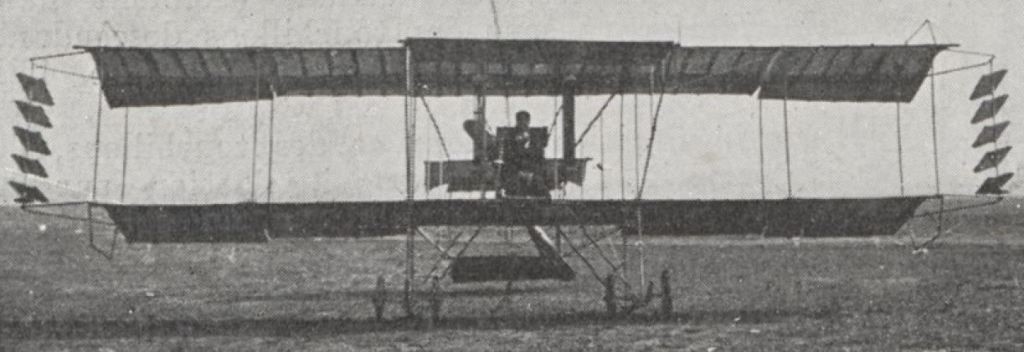
A standard Farman with the ailerons locked (otherwise they would be hanging down on stationary plane) and replaced by a system of five stabilizing surfaces at each wing tip, invented by Boleslaw Bronislawski, a Polish doctor of science working in France. The plane was tested at Port-Aviation in late 1911 by Florentin Champel, who might also have been the owner of the Farman.

Bronislawski II Biplane

In 1910-1911 dr.eng. Bolesław Bronisławski developed in France the original system of the airplane steering in longitudinal axis by other means than conventional ailerons or by twisting the wingtips. His design utilized vertical axis on wingtips which had several surfaces mounted diagonally to the flight level and were rotated to achieve roll movement. Initial trials were conducted on modified Farman III aircraft. After relatively successful trials the system was further refined and installed on a new aircraft that was built utilizing large parts of Farman and tested 1911-1912.

Brokaw BJ-520 Bullet

Dr. D.F. Brokaw, with the aeronautical engineering help of Dr. Ernest R. Jones, has developed a high-speed homebuilt with good cross country capability, comfortable seating for two in tandem fashion, retractable gear, full FR capability and the ability to perform aerobatics. While the prototype took Brokaw seven years to build, offspring can be built in about three years working from plans.

At the 1983 Oshkosh Brokaw had re-engined the prototype and extended the wings.

The original powerplant was a 285-hp Continental, but the most common options are a 310-hp Continental or the 380-hp Lycoming turning a Sensenich three-blade propeller. The fuselage, wings, tail and all control surfaces are built from light alloy, while the tricycle landing gear are retractable. Stressed to 6G for aerobatics, with 322 mph top speed and a service ceiling of 28,000 feet, the Bullet ranks as a high performance homebuilt.

Engine: 380-hp Lycoming
Gross Wt. 3142 lb
Empty Wt. 2033 lb
Fuel capacity 47-92 USG
Wingspan 24 ft 4 in
Length 23 ft l0 in
Top speed 322 mph
Cruise 293 mph.
Stall 86 mph.
Climb rate 2100 fpm
Ceiling 28,000 ft
Takeoff run (50 ft) 2000 ft
Landing run (50 ft) 1300 ft
Range 1323 miles.

Brodbeck Air Ship            

In 1863 Jacob Brodbeck built a small model with a rudder, wings, and a propeller powered by coiled springs. Encouraged by the success of his model at various local fairs, Brodbeck set about raising more funds to build a full-sized version of his craft. On September 20, 1865, a small crowd gathered in a field near Luckenbach to see if the spring coil air ship could actually fly. The airship featured an enclosed space for the “aeronaut,” a water propeller in case of accidental landings on water, a compass, and a barometer. According to published accounts, Brodbeck’s air ship managed to lift off from the ground above 12 feet and fly a distance of about 100 feet before the coil came unwound and the ship crashed into a chicken coup injuring the inventor.

Brochet MB.120

The Brochet MB.120 two-seater light touring monoplane has the airframe of the three-seat MB.100 remodelled as a two-seater, lighter wings, the landing flaps of the MB.80 and a 90 hp Continental C90 engine.

Flown for the first time on 5 April 1954, the MB.120 has a steel-tube fuselage and a spring-steel cantilever undercarriage. The cabin seats two side-by-side and dual controls can be fitted.

Two prototypes were built.

Engine: 90 hp Continental C90
Wingspan: 34 ft 11 in
Length: 21 ft 3.75 in
Height: 6 ft 6.75 in
Empty weight: 1113 lb
Loaded weight: 1686 lb
Max speed: 121 mph
Cruise: 105.6 mph
Ceiling: 16,404 ft
Range: 497 mi
Seats: 2

Brochet MB.100 / MB.101

The M.B.100 three seat cabin monoplane was developed from the earlier M.B.70 and M.B.80. The M.B.101 is identical to the M.B.100 apart from the addition of an air filter and tropical finish to suit it for service in North Africa.

An initial order for eight M.B.100s and twelve M.B.101s was placed by the French Service de l’Aviation Legere Sportive which were distributed to flying clubs in France and Norg Africa.

Engine: Hirth H.M.504A-2, 100 hp
Wing span: 34 ft 11 in
Wing area: 153 sq.ft
Length: 21 ft 4 in
Height: 6 ft 7 in
Empty weight: 1023 lb
Loaded weight: 1716 lb
Max speed: 112 mph
Cruise: 102 mph
ROC: 590 fpm
Service ceiling: 11,480 ft
Range: 375 mi
Seats: 3

Brochet MB-80 / MB-81 / MB-83 / MB-84 

Brochet MB.84

The MB.80 was a derivative of the Brochet MB.71, using essentially the same wood airframe, but with a redesigned wider fuselage, balanced control surfaces, and revised, spring steel undercarriage.

The MB.80 No.1 F-BGLA first flew on 4 October 1951 (or 15 November) with André Deschamps at controls. The Certificat de Navigabilite was obtained on 6 June 1952.

The Service de l’Aviation Légère et Sportive purchased ten examples for distribution to French aeroclubs. Most examples were operated in France, but one example was later sold privately to the United Kingdom.

MB.80
Engine: Minie 4DC-32B, 56 kW (75 hp
Wingspan: 10.45 m (34 ft 3 in)
Wing area: 14.2 m2 (153 ft2)
Length: 6.58 m (21 ft 7 in)
Height: 2.55 m (8 ft 4 in)
Empty weight: 385 kg (849 lb)
Gross weight: 615 kg (1,356 lb)
Maximum speed: 158 km/h (99 mph)
Range: 500 km (310 miles)
Rate of climb: 3.5 m/s (690 ft/min)
Crew: One pilot
Capacity: 1 passenger
10 built

MB.81
Engine: Hirth HM 500B-2
1 built

MB.83
Engine: Continental C90
1 converted from MB.80

MB.84
Engine: Continental A65
1 converted from MB.80 F-BGLI