Westland Yeovil

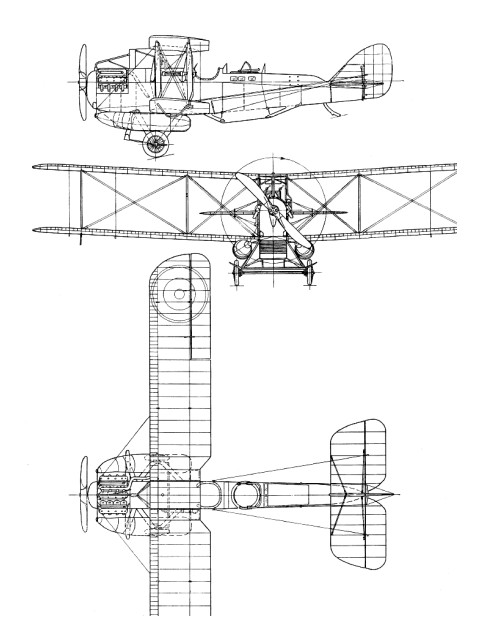
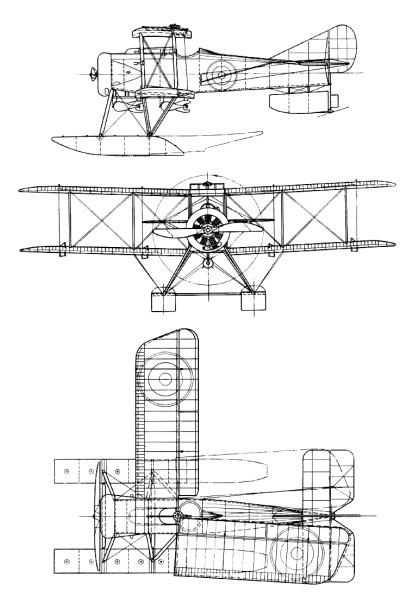
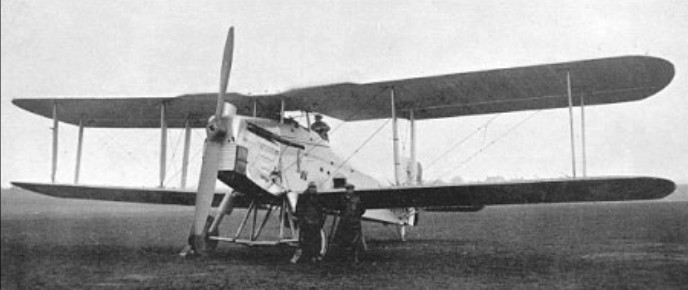
The Yeovil day-bomber biplane design was commenced by Westland in 1923. The Yeovil was the first of the Westland post-war military designs, to an Air Ministry Specification, and was built specially to accommodate the biggest engine then available, the newly developed 650hp Rolls Royce Condor engine. Three machines in all were produced, numbered J.7508, J.7509 and J.7510, the first slightly differing from the others in undercarriage arrangement and the fairing of the wing tanks. The prototype was initially test-flown at Andover, in the summer of 1925, by Captain Frank Courtney, the development testing of the subsequent machines being in the hands of Major L. P. Openshaw.
Several other firms built prototypes to the same Specification and, although the Yeovil did not go into production the three examples built were used for research work.

Engine: 1 x 650hp Rolls Royce Condor
Max take-off weight: 3567 kg / 7864 lb
Empty weight: 2113 kg / 4658 lb
Wingspan: 18.13 m / 60 ft 6 in
Length: 11.22 m / 37 ft 10 in
Height: 4.34 m / 14 ft 3 in
Wing area: 74.13 sq.m / 797.93 sq ft
Max. speed: 193 km/h / 120 mph
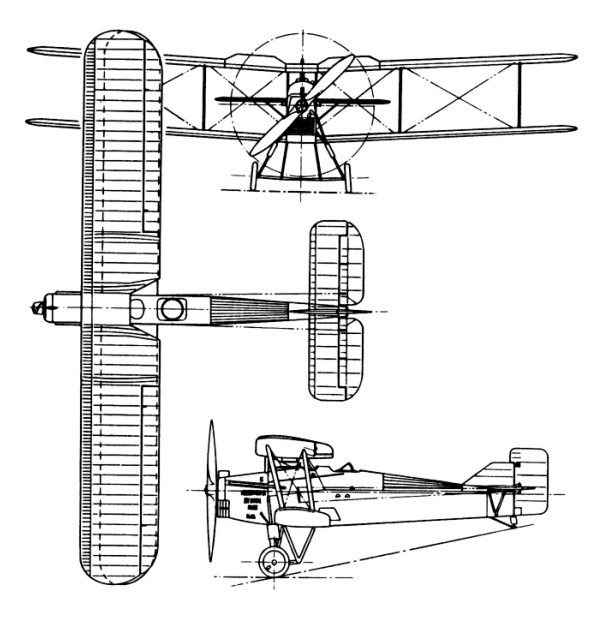
Westland Yeovil

Westland Widgeon

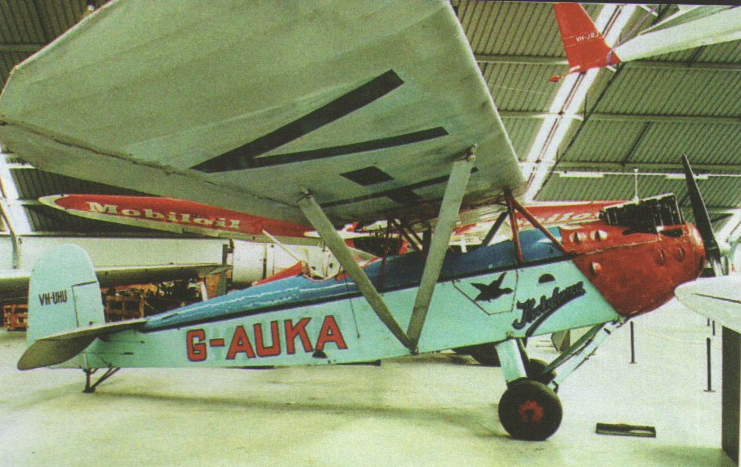
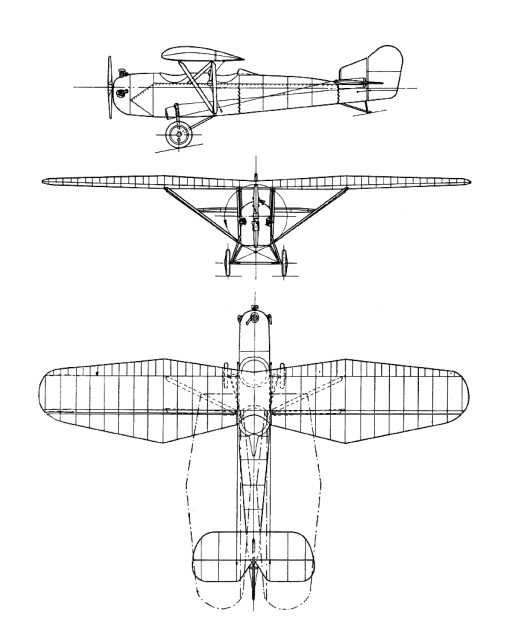
The Widgeon was the first high-wing monoplane to be built by Westland. The design originated as the result of a discussion regarding the relative merits of a biplane or a monoplane, to be entered in the Air Ministry’s Light Aeroplane Competition of 1924, and as both types had promising points in their favour it was decided to build one of each.
Originally intended to be powered with a twin-cylinder Bristol Cherub engine, the Widgeon was eventually flight-tested with a three-cylinder Blackburne Thrush engine. At the Competition trials, held at Lympne in the autumn of 1924, the machine was flown by Captain Winstanley, but was unluckily wrecked by a down-current on its first circuit of the course.
Undismayed by this set-back the Westland design team, realising that the Widgeon was underpowered, had it rebuilt and fitted with the more powerful Armstrong Siddeley Genet engine, a five-cylinder radial of 70hp. The results of the competition proved that engines in the 30-40hp class were quite unsuitable for two-seat light aeroplanes.
With the new engine installation the machine became known as Mark II of the series, and was used by Westland for full-scale tests of various theories connected with monoplane design. In the late twenties the Widgeon Mark II took part in many sporting flying events, eventually becoming the property of Dr. Whitehead-Reid, of Canterbury.

1928 Widgeon III VH-UHU – false G-AUKA markings are from ‘Kookaburra’ lost in Tanami Desert NT, Australia while searching for Charles Kingsford Smith

Widgeon Mk II
Engine: 1 x 70hp Armstrong Siddeley Genet
Max take-off weight: 370 kg / 816 lb
Empty weight: 215 kg / 474 lb
Wingspan: 9.3 m / 31 ft 6 in
Length: 6.2 m / 20 ft 4 in
Height: 2.2 m / 7 ft 3 in
Wing area: 12.47 sq.m / 134.23 sq ft
Max. speed: 116 km/h / 72 mph

Westland Widgeon

Westland Woodpigeon

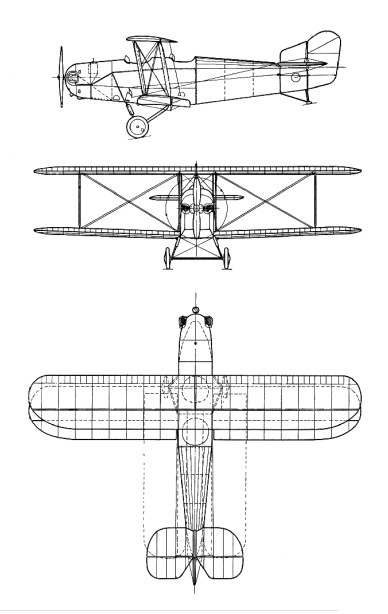
The Woodpigeon biplane was first conceived as the Westland entry in the Air Ministry’s Light Aeroplane Competition of 1924, but was finally produced with the main object of being tested side-by-side with another Westland competitor, the Widgeon high-wing monoplane, in order to weigh the relative merits of a biplane and a monoplane with almost identical wing areas and power loadings. In the Competition and in later trials at Westland it soon became obvious that the Widgeon monoplane was much superior although, on paper, each machine should have had identical performances. In their endeavour to make a fair assessment the Westland technicians insisted on cutting a runway, with a hand-mower, through the long grass of Yeovil aerodrome, in order to get the Woodpigeon airborne. In fact it was so difficult to keep the little aeroplane in the air that it was decided to decrease the wing loading, so a second Woodpigeon, G-EBJV, was built with a large span, and the wings of the original machine, G-EBIY, were also increased to suit. Further tests in this form, and with the more powerful Anzani engine, were carried out by Major L. P. Openshaw, and in the end the Woodpigeons were flying reasonably enough to attract the interest of two private owners.

original Competition machine
Engine: 1 x 32hp Bristol Cherub
Max take-off weight: 353 kg / 778 lb
Empty weight: 199 kg / 439 lb
Wingspan: 6.93 m / 23 ft 9 in
Length: 5.94 m / 20 ft 6 in
Height: 2.15 m / 7 ft 1 in
Wing area: 14.4 sq.m / 155.00 sq ft
Max. speed: 116 km/h / 72 mph

Westland Woodpigeon

Westland Dreadnought

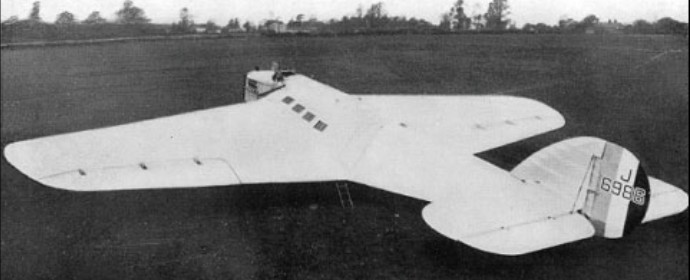
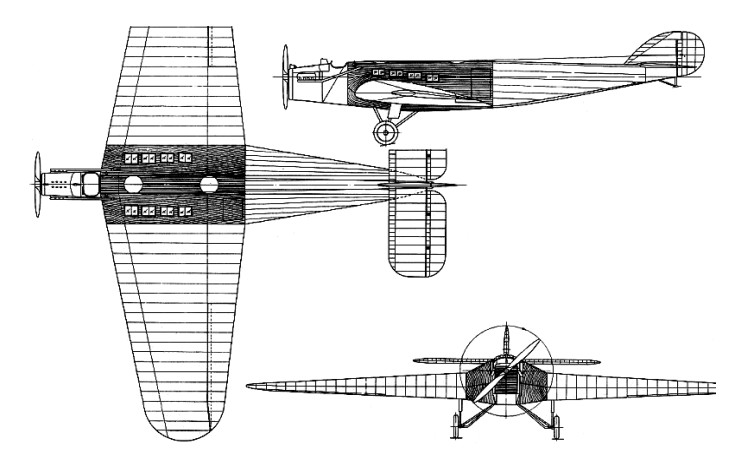
For some time the Air Ministry’s Directorate of Technical Development had been interested in the theories of a Russian inventor, M.Woyevodsky, whose idea of the perfect aeroplane was that the fuselage and wings should be in the form of a continuous aerofoil, with external wing bracing eliminated, rather like the modern conception of the “flying wing.”
Several Woyevodsky models were tested in wind-channels and, when the results seemed to confirm the inventor’s claims, the final model was handed over to the Westland design staff to be put into practical form. This rather idealistic model was of a twin-engined freight-carrying monoplane of 21.1m span and a length of 17.08m, with a wing area of 78.04sq.m. A retractable undercarriage was also a feature of the model design, and the single 450hp Napier Lion engine.
The original model design was translated into an all-metal monoplane and construction methods employed were also ahead of the times, use being made of drawn metal channelling and corrugated metal panels, much in the style of the modern “stressed skin” method of manufacture.

The Dreadnought was completed in the spring of 1923, and its taxying trials attracted considerable local interest. Captain Keep conducted these tests, often accompanied by Mr. Bruce, and had the machine satisfactorily airborne for a few yards in short hopping flights.
Everything pointed to the success of this unique design, but the initial test flight, which took place on an afternoon in early May, 1923, ended in disaster. After a seemingly smooth take-off the Dreadnought rose steadily towards the aerodrome boundary, but near the factory buildings it was apparent Captain Keep was having difficulty in controlling the machine. Shortly after this the Dreadnought stalled and crashed from a height of about one hundred feet, the engine and wings striking the ground squarely and the fuselage breaking off at the cockpit.
Captain Keep was seriously injured and had to have both his legs amputated, but this major personal misfortune did not lessen his interest or work in aviation, and he has since added many years of technical and advisory service to his career.
The Dreadnought design was abandoned from this point.

Wingspan: 21.1 m / 69 ft 3 in
Length: 17.08 m / 56 ft 0 in
Wing area: 78.04 sq.m / 840.01 sq ft

Westland Dreadnought

Westland Walrus

The years following the conclusion of the First World War were notable for an official lack of attention to the needs of the fighting services. The Westland design staff was asked to produce, in 1920, a carrier-borne fleet reconnaissance biplane for the Royal Navy.
The machine required had to be, basically a D.H.9A, but was to have a 450hp Napier Lion engine in place of the 400hp Liberty motor, and to be equipped with the various items of gear as a naval aircraft.
Westland Aircraft produced thirty-six aircraft of the type demanded. The machine, which was given the name of Walrus, carried a crew of three. The pilot’s cockpit was situated immediately aft of the wing trailing edge, with a Scarff-mounted Lewis gun over the cockpit behind him. The floor of the rear fuselage was fitted with a glazed observation blister, for use in the prone position, while a radio transmitter – operated by the observer – was situated in a third cockpit, aft of the rear gunner’s position.
Features of the machine included rubber flotation bags, which could be inflated from compressed air bottles, a patent jettison valve on the main fuel tank, which allowed the petrol to be discharged in a few seconds and then, if the machine alighted on the sea, would automatically re-seal the tank into an additional flotation chamber. The aircraft had folding wings. Another special feature was the undercarriage, capable of being dropped by the pilot in the event of an emergency and fitted with a set of jaws for gripping the carrier’s deck arresting-wires. These wires ran along the length of the flight-deck and not across the beam of the ship.
The prototype Walrus, and the subsequent production machines, were flight-tested by Captain A. S. Keep, M.C., who reported the aircraft as being somewhat vicious in its behaviour. In Service use the Walrus did not shine and the type was not produced beyond the original contract number – which in those days was regarded as a big order.

Engine: 1 x 450hp Napier Lion
Wingspan: 14.06 m / 46 ft 2 in
Length: 9.14 m / 30 ft 0 in
Height: 3.52 m / 12 ft 7 in
Armament: 1 x Vickers gun, 1 x Lewis gun

Westland Walrus

Westland Weasel

In April 1918, Westland gained a three-prototype contract for a two-seat fighter-reconnaissance aircraft that was designed to provide a successor to the Bristol F.2b fighter. In configuration, the new fighter, to which the name Weasel was given, closely resembled a scaled-up Wagtail. The pilot was located beneath the trailing edge of the upper wing, with the observer/ gunner close behind, with a single 7.7mm Lewis gun on a Scarff ring. Two fixed and synchronised forward-firing Vickers guns of the same calibre were provided for the pilot. The Weasel had a two-spar wooden wing and a wire-braced wooden fuselage, with fabric covering for all but the ply-covered front fuselage. In common with the competing Austin Greyhound and Bristol Badger, the Weasel was powered by the 320hp ABC Dragonfly nine-cylinder air-cooled radial engine, which (like the ABC Wasp in the Wagtail) proved so unsatisfactory as to rule out any possibility of production, even if the ending of World War I had not removed the urgency from the requirement. Flight testing did not begin until November 1918 and a Weasel went to Martlesham Heath in April the following year, followed by the third prototype in November. Subsequently, two of the Weasels were used for engine development at the RAE Farnborough, one being re-engined with a 385hp Cosmos Jupiter II nine-cylinder radial and the other with a 350hp Armstrong Siddeley Jaguar II 14-cylinder radial. A Jupiter II was also used to power a fourth Weasel, which was ordered in August 1919 and delivered in 1920 with full armament, although also used primarily for engine development.

Engine: 320hp ABC Dragonfly
Max take-off weight: 1393 kg / 3071 lb
Empty weight: 847 kg / 1867 lb
Wingspan: 10.82 m / 36 ft 6 in
Length: 7.56 m / 25 ft 10 in
Height: 3.07 m / 10 ft 1 in
Wing area: 34.19 sq.m / 368.02 sq ft
Max. speed: 210 km/h / 130 mph
Ceiling: 6310 m / 20700 ft

Westland Weasel

Westland Wagtail

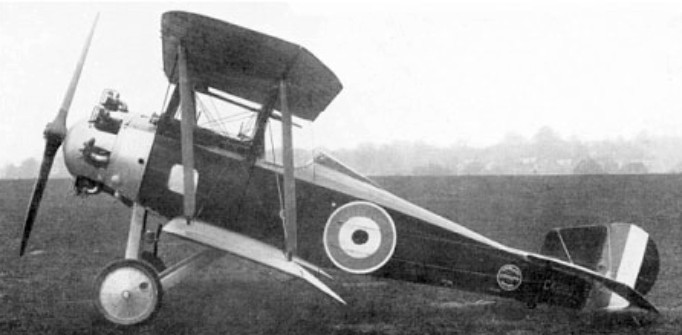
A contemporary of the Sopwith Snail and the BAT Bantam, the Wagtail was similarly designed to comply with the A.l(a) Specification drawn up by the Air Board in 1917 to define its requirements for a single-seat fighter. Emphasis was to be placed upon manoeuvrability and climb, with the ability to achieve 217km/h at 4570m when carrying oxygen equipment and three machine guns. Like its competitors, the Wagtail was powered by the 170hp ABC Wasp I seven-cylinder radial, an engine that eventually thwarted further development of all three A.l(a) types. A well-proportioned, diminutive single-bay biplane, the Wagtail gained a contract for three prototypes late in 1917, and the first was flown in April 1918. Construction was of fabric-covered wood, with metal-framed rudder and elevators, and two synchronised 7.7mm Vickers guns were fitted. An overwing Lewis gun was planned, but not fitted to the prototypes. Whereas the first Wagtail to fly had equal dihedral (2° 30″) on upper and lower wings, the second and third were completed (and the first later modified) to have a larger cutout in the upper wing centre section with 5° of dihedral on the outer panels of the upper wing and a flat lower wing. Destroyed in a fire at Yeovil soon after its first flight on 29 April 1918, the second Wagtail had to be replaced later that year; the third went to Martlesham Heath on 8 May, but problems with the Wasp limited flying. In October 1918, the engine was officially abandoned, and with it any plans to produce Wasp-engined aircraft. Two more Wagtails were ordered from Westland in 1919, to serve as test-beds for the 160hp Armstrong-Siddeley Lynx seven-cylinder radial engine. Unarmed, these two aircraft were delivered to the RAE in September/October 1921.

Max take-off weight: 603 kg / 1329 lb
Empty weight: 338 kg / 745 lb
Wingspan: 7.06 m / 23 ft 2 in
Length: 5.77 m / 19 ft 11 in
Height: 2.44 m / 8 ft 0 in
Wing area: 17.65 sq.m / 189.98 sq ft
Max. speed: 201 km/h / 125 mph

Westland Wagtail

Westland N.1B / N.16 / N.17

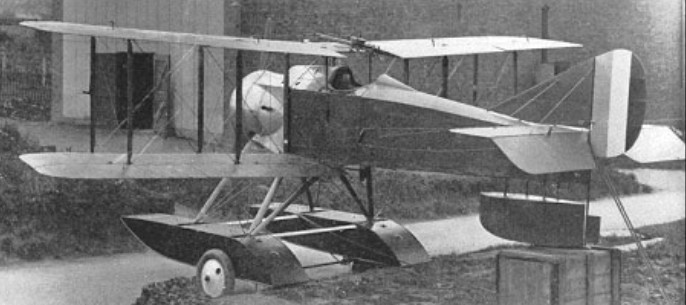
Westland Aircraft began design of its first aircraft in 1917, in response to an Admiralty requirement for a single-seat fighting scout seaplane. In the Admiralty’s N.1B category, the aircraft was designed by Robert Bruce and Arthur Davenport, and was a compact two-bay equi-span biplane of conventional wooden structure and fabric covering. First flown in August 1917, it was powered by a 150hp Bentley BR1 rotary engine. Inboard of the ailerons, on both upper and lower wings, the trailing-edge camber could be varied to obtain the effect of plain flaps. The wings could be folded backwards for shipboard stowage. Armament comprised one synchronised 7.7mm Vickers gun and a flexibly-mounted Lewis of the same calibre above the upper wing centre section. Two prototypes were built and sometimes referred to as the Westland N16 and N17 from their RNAS serial numbers. The first was flown with short Sopwith floats and a large strut-mounted tailfloat whereas the second was used to evaluate long Westland floats that eliminated the need for a tail float. This second aircraft, which lacked the camber-changing mechanism on the wings, also flew with the Sopwith floats and a tail float directly attached to the underside of the rear fuselage. By the time the N.1Bs were on test at the Isle of Grain, the RNAS was experimenting successfully with the shipboard operation of wheeled aircraft and the requirement for a floatplane fighting scout faded away.

Westland N17
Max take-off weight: 897 kg / 1978 lb
Empty weight: 682 kg / 1504 lb
Wingspan: 9.53 m / 31 ft 3 in
Length: 7.76 m / 25 ft 6 in
Height: 3.40 m / 11 ft 2 in
Wing area: 25.83 sq.m / 278.03 sq ft
Max. speed: 175 km/h / 109 mph

Westland N17

Westland F.7/30

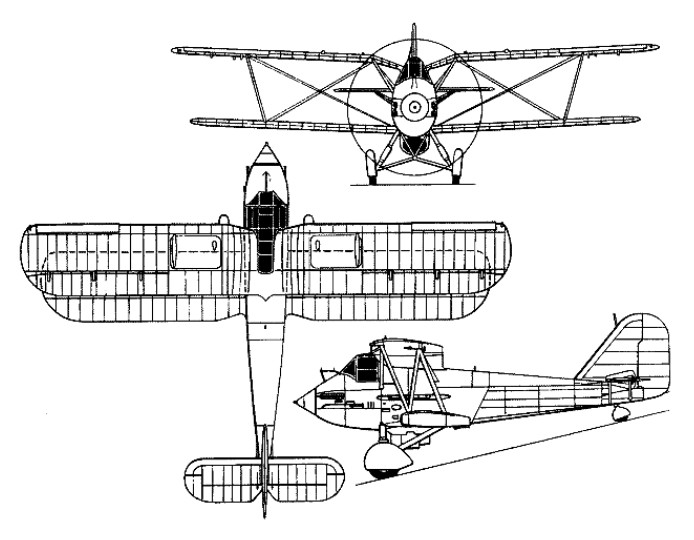
To meet the requirements of Specification F.7/30 for a four-gun day and night fighter powered by the Rolls-Royce Goshawk engine using evaporative cooling, Westland schemed a parasol monoplane in continuation of the Wizard concept, but found it impossible to combine the required slow landing speed with the 402km/h maximum. An alternative biplane, the P.4, was successfully tendered, however, one prototype being ordered in 1931. With a 600hp Goshawk VIII buried in the fuselage behind the pilot, driving the propeller via a long extension shaft, this single-bay biplane featured a gulled upper wing with short inboard struts in place of the usual cabane, and a staggered lower wing of slightly shorter span. When first flown on 23 March 1934, the F.7/30 had an open cockpit, but a full canopy was soon added. Armament of four 7.7mm Vickers guns was concentrated in the nose. Construction was of metal throughout, with metal skins for the forward fuselage and engine bay, and fabric elsewhere. Ailerons were fitted to the upper wing only, this also having Handley Page slots.
Although it handled well, the F.7/30 was found deficient in performance when tested at Martlesham Heath, and no further development occurred.

Max take-off weight: 2359 kg / 5201 lb
Empty weight: 1672 kg / 3686 lb
Wingspan: 11.73 m / 39 ft 6 in
Length: 8.99 m / 30 ft 6 in
Height: 3.28 m / 11 ft 9 in
Wing area: 34.37 sq.m / 369.96 sq ft
Max. speed: 298 km/h / 185 mph

Westland F.7/30

Westland PV.7

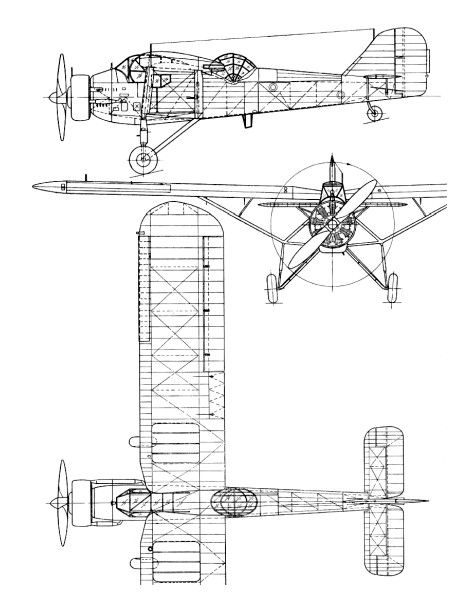
In 1931 Air Ministry Specification G.4/31 called for a General Purpose aircraft, capable of level bombing, army co-operation, dive bombing, reconnaissance, casualty evacuation and torpedo bombing. The Vickers Type 253 won against the Fairey G.4/31, Westland PV-7, Handley Page HP.47, Armstrong Whitworth AW.19, Blackburn B-7, Hawker PV-4 and the Parnell G.4/31.

The Westland team produced the two-seat high-wing monoplane design, the P.V.7. This machine was capable of fulfilling all the standard general-purpose requirements and could, alternatively, be used as a torpedo-bomber, carrying an externally slung 450kg torpedo or an equivalent bomb load.

The preliminary test-flights at Yeovil, in the hands of Mr. H. J. Penrose, produced extremely satisfactory results and there were high hopes that the machine would have a long production run. However, while undergoing extended official trials at Martlesham Heath, the P.V.7 was unfortunately wrecked.

Mr. Penrose, who was flying the machine solo at the time, was engaged in making a series of dives under overload conditions and, while travelling at high speed in rough air, the port rear outrigger strut failed under an unexpected down-load. The resulting fracture brought about the collapse of the complete wing structure and, as it broke away from the machine, it severed the empennage. The pilot made what must be one of the first parachute escapes from an enclosed-cockpit military aeroplane, emerging through one of the small side doors of the coupe and eventually landing unhurt some distance from the wreckage.

The inevitable delay caused by the necessary investigation into the cause of the accident rendered the risk of building a further Private Venture too great, and the type, despite its great promise, was dropped.

Engine: 1 x 722hp Bristol Pegasus III M.3 9-cyl air-cooled radial
Max take-off weight: 3395 kg / 7485 lb
Empty weight: 2048 kg / 4515 lb
Wingspan: 18.36 m / 60 ft 3 in
Length: 11.88 m / 39 ft 0 in
Height: 3.65 m / 12 ft 0 in
Wing area: 49.8 sq.m / 536.04 sq ft
Max. speed: 278 km/h / 173 mph
Ceiling: 6900 m / 22650 ft

Westland PV.7