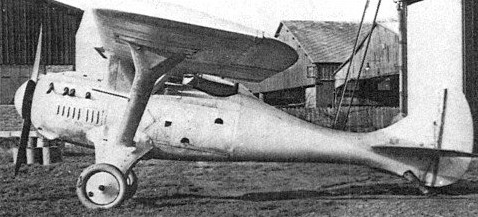
Buscaylet de Monge 5/2

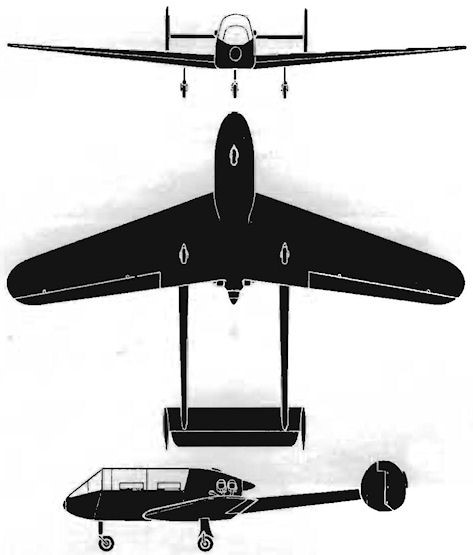
During 1922, Buscaylet Pere et Fils-Bobin produced a single-seat parasol fighter monoplane designed by Louis de Monge. Known as the Buscaylet- de Monge 5/2, the fighter was of metal construction with metal fuselage skinning and wooden wing skinning. Provision was made to fit auxiliary stub wings (serving to increase the wing area from 24sq.m to 32sq.m to convert the aircraft to sesquiplane configuration for the high altitude role. Powered by a 300hp Hispano-Suiza 8Fb water-cooled engine and carrying an armament of two 7.7mm synchronised machine guns, the Buscaylet-de Monge 5/2 was flown for the first time in 1923 at Villacoublay, but was declared to modern for service use, further development being abandoned.

Engine: 300hp Hispano-Suiza 8Fb
Take-off weight: 1350 kg / 2976 lb
Wingspan: 10.90 m / 36 ft 9 in
Length: 7.15 m / 23 ft 5 in
Height: 2.70 m / 9 ft 10 in
Wing area: 24.0 sq.m / 258.33 sq ft
Max. speed: 270 km/h / 168 mph
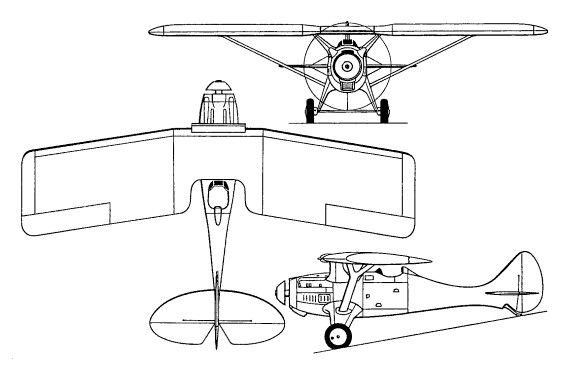
Burgfalke M-150 Schulmeister

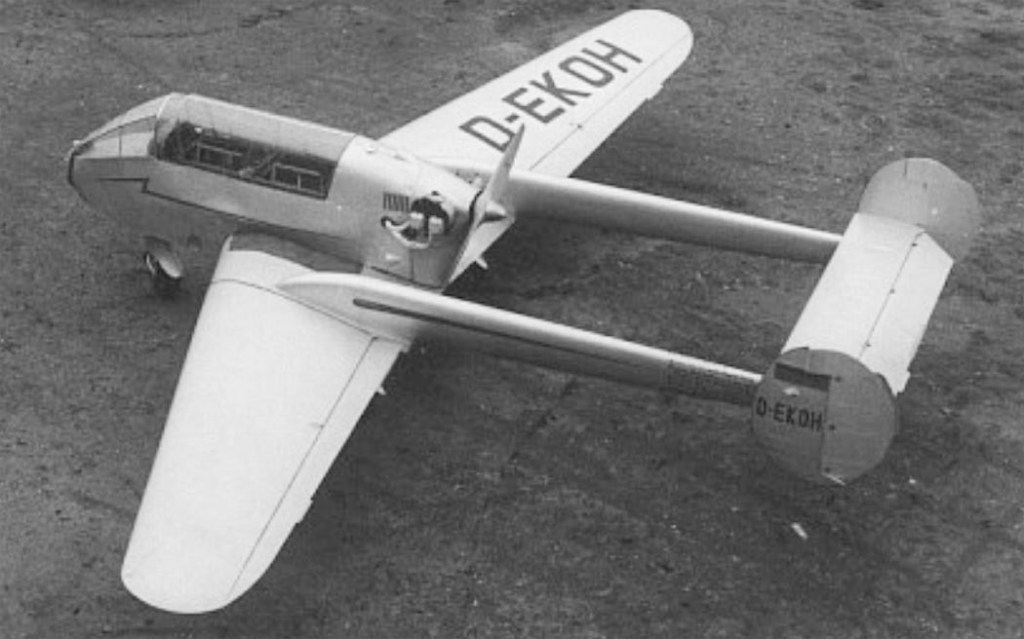
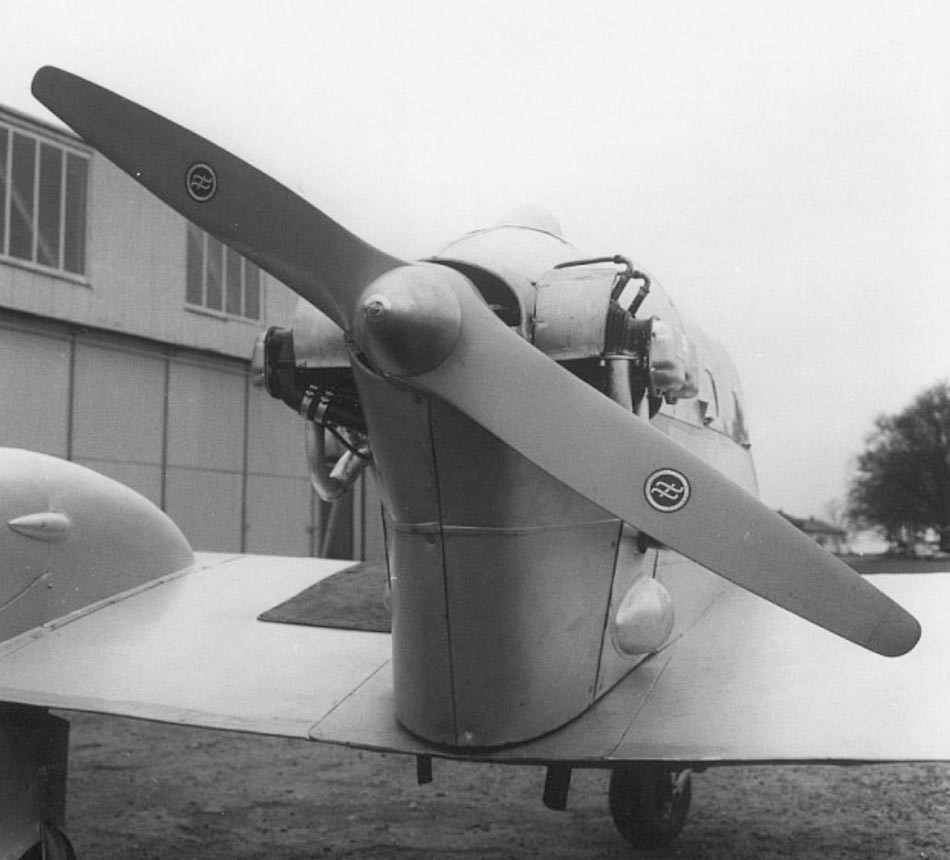
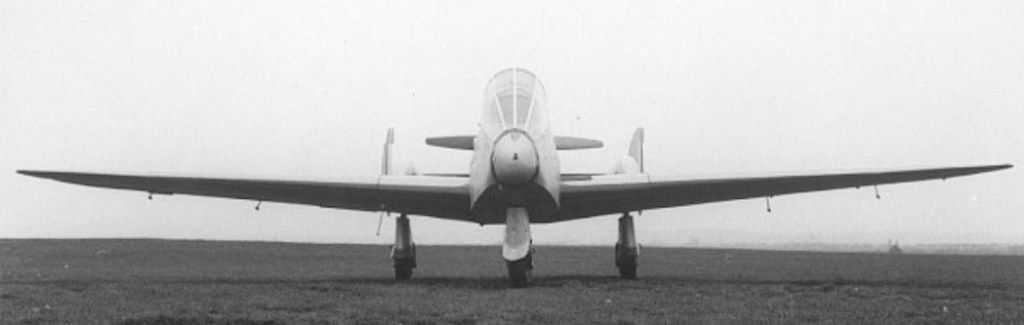
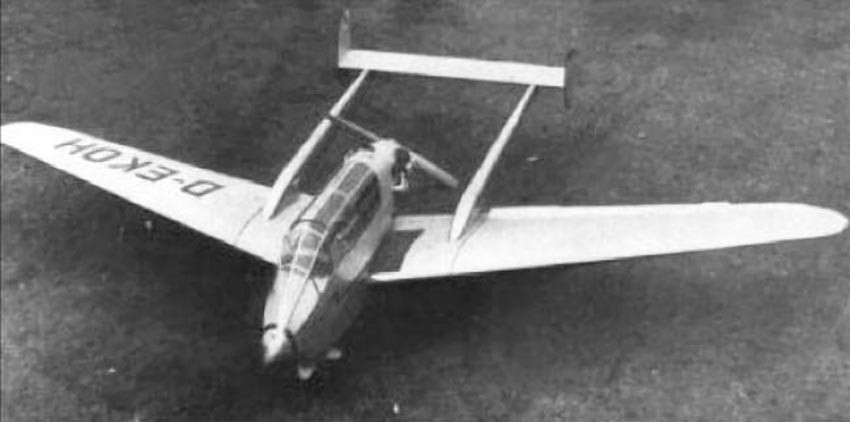
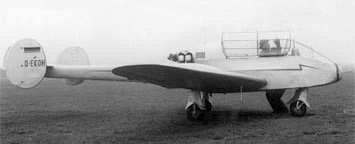
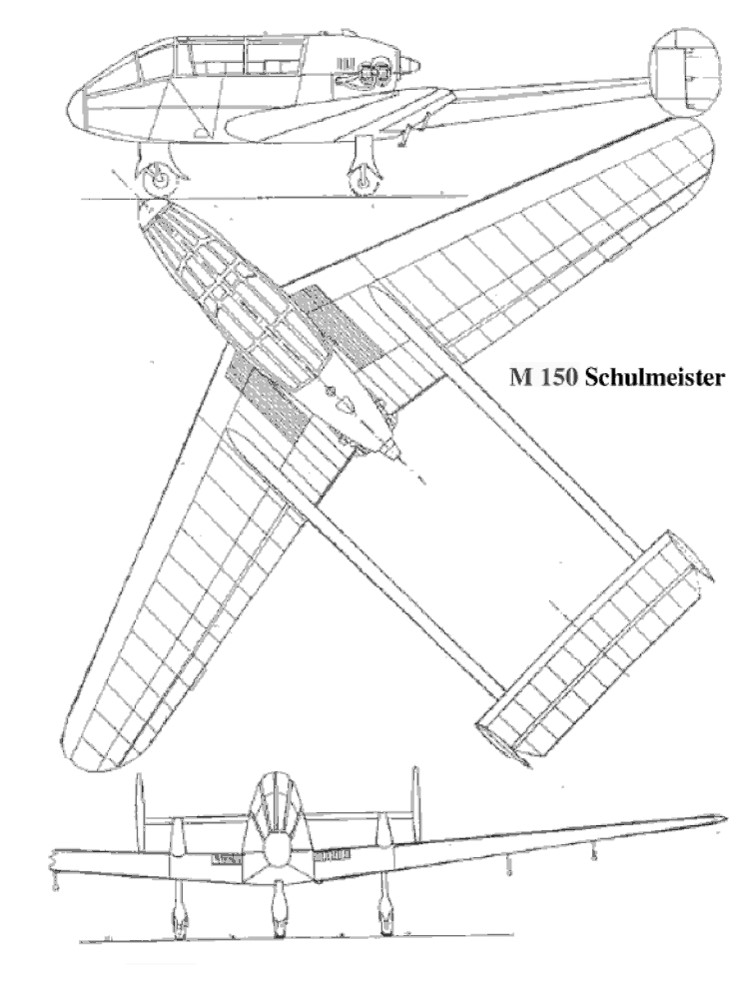
Developed from the A-15 (WN-16) aircraft, designed by the former Wiener-Neustadt company, the M-150 Schulmeister (Schoolmaster) is a two-seat, low-wing type, powered by a 65 hp Continental C90 incorporating a pusher propeller.

In the early 1950s, the German company Burgfalke Segelflugzeugbau became interested in the aircraft. Maidl modernized the project to meet new requirements resulting in 1956, with the M-150 Schulmeister.

The M-150 is capable of simple aerobatics, and the makers claim that it is almost impossible to spin even under extreme flight conditions. Construction is of mixed wood and steel, the main structural members being of steel. The wing and tail units are mostly of wood, with the leading edge and undersides ply covered, and the upper surfaces fabric covered. Fuselage is of a tubular structure and fabric covered.

The prototype aircraft first flew on September 14, 1957. Having received the civil registration D-EKOH in the same year, the aircraft was tested, but could not interest potential customers.

M-150
Engine: Continental C90, 90 hp
Wingspan: 9.84 m
Wing area: 13.50 sq.m
Length: 7.27 m
Height: 1.80 m
Empty weight: 350 kg
Maximum takeoff weight: 590 kg
Maximum speed: 165 km/h
Cruise speed: 145 km/h
Practical range: 500 km
Practical ceiling: 4200 m
Crew: 2

Burgess K / D-1 / AB-6

Burgess K

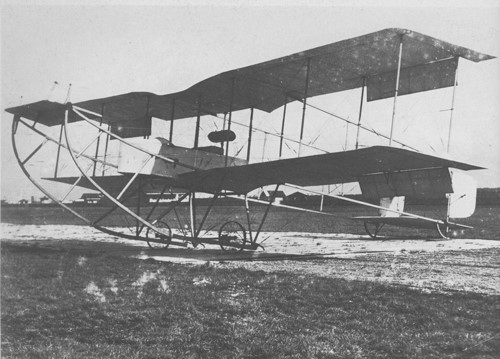
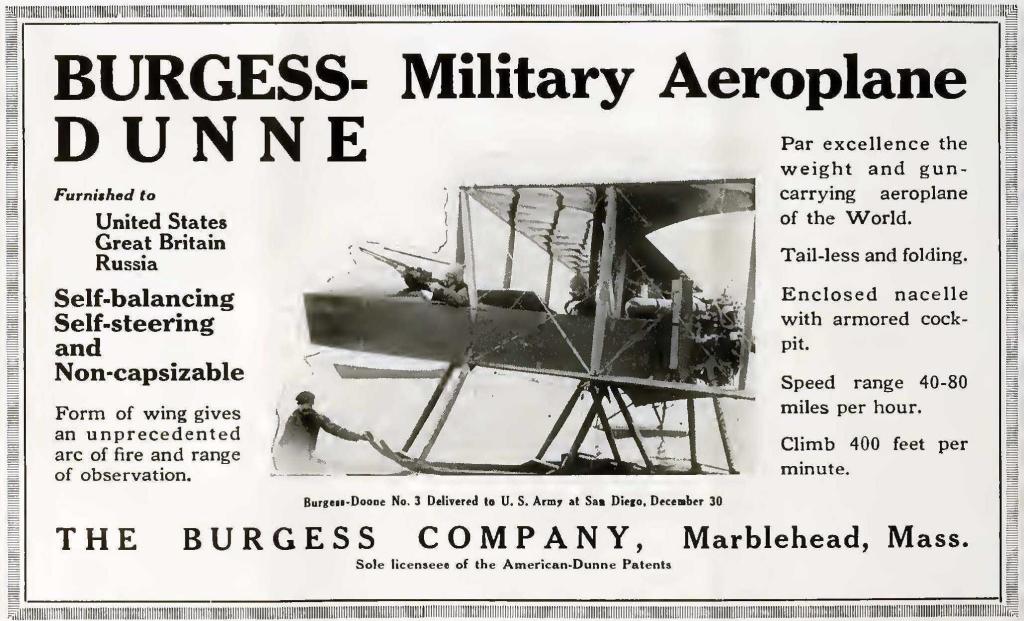
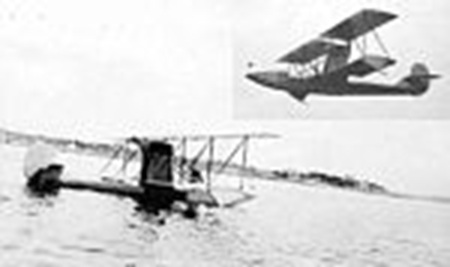
The Burgess K was flown in April 1913 with a 70 hp Renault pusher engine. The two-bay biplane wings had inverted V-struts with a single tube metal spar, and wooden hull.

The single example built, purchased by the Navy, was taken into service as the D-1 (later AB-6) and was destroyed in a crash in early 1914.

Burgess K
Engine: 70 hp Renault
Span: upper 40’9″ lower 35’5″
Length: 30’9″
Seats: 2