Caudron C.510 Pelican

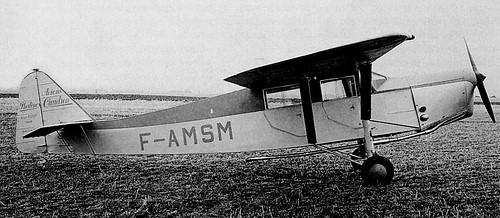
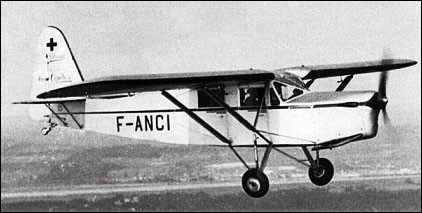
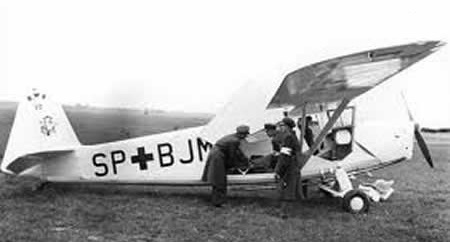
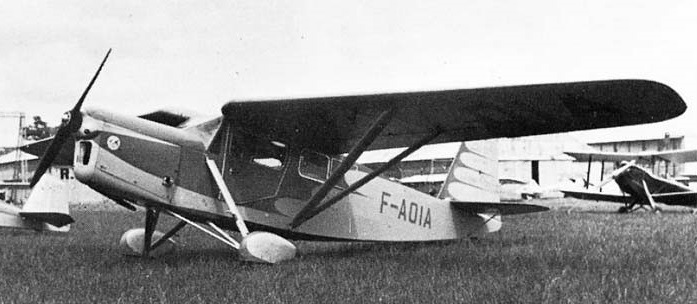
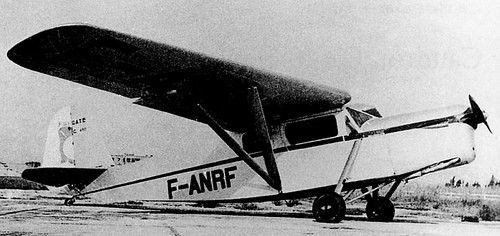
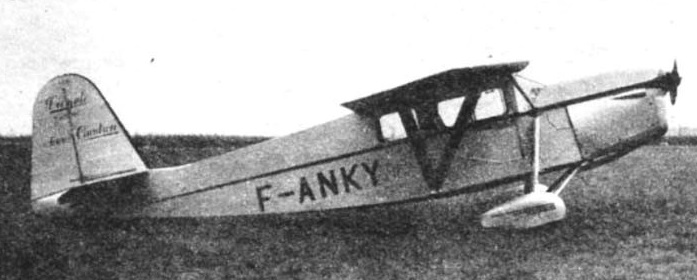
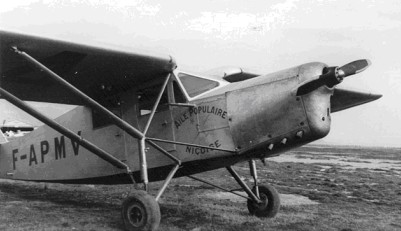
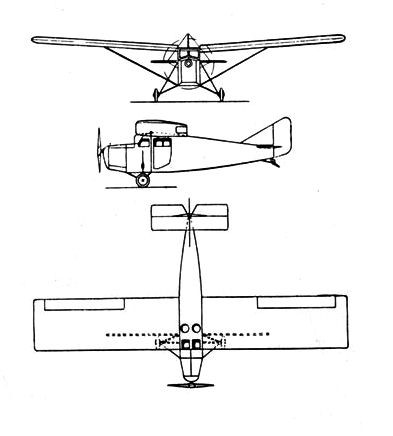
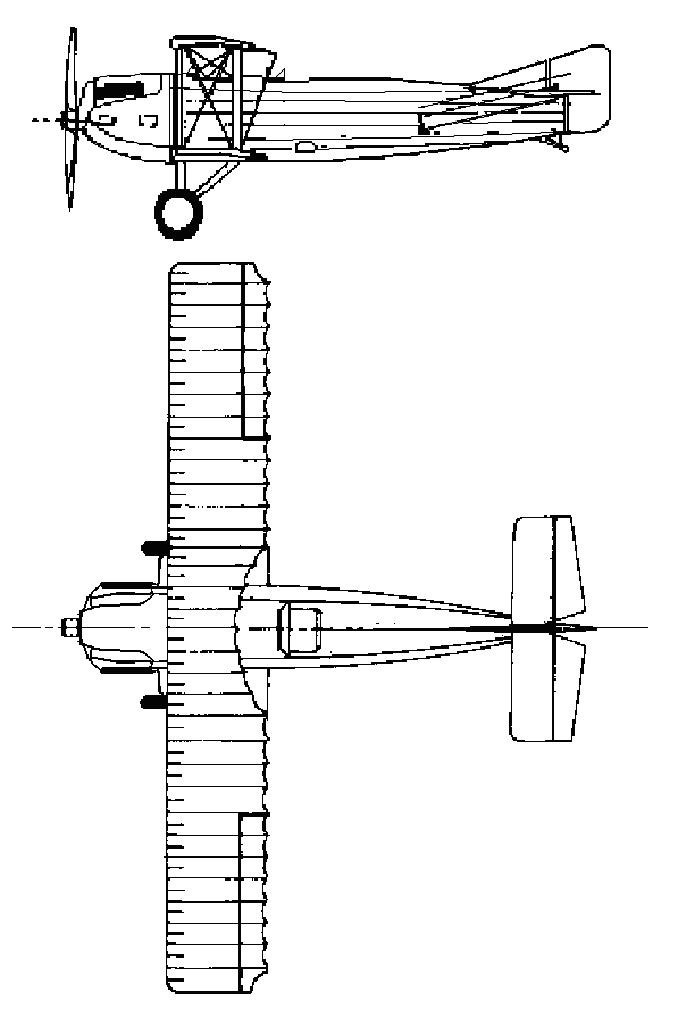
The Caudron C.510 Pélican was a 1930s French air ambulance or touring monoplane. Designed and built by Caudron and based on the earlier Caudron C.282/8.

To create room for a stretcher and attendant the earlier Caudron C.282/8 design was modified with a lengthened fuselage, an improved wing and tailplane design. A single-engined high-wing monoplane, the Pélican had a conventional landing gear. As a touring aircraft the Pélican could carry three passengers. First flying in 1934, a total of 62 were built as both air ambulances and tourers.

The C.510 was operated in the Belgian Congo by Force Publique, and by the French Air Force.

Gallery

Specifications:

Ambulance
Engine: 1 × Renault 4Pei Bengali Junior, 100 kW (140 hp)
Wingspan: 11.82 m (38 ft 9 in)
Wing area: 23.75 m2 (255.6 sq ft)
Length: 8.52 m (27 ft 11 in)
Height: 2.25 m
Empty weight: 626 kg (1,380 lb)
Max takeoff weight: 1,140 kg (2,513 lb)
Maximum speed: 185 km/h (115 mph; 100 kn)
Cruising speed: 165 km/h (103 mph; 89 kn)
Stall: 43.47 mph
Range: 1,000 km (621 mi; 540 nmi)
Service ceiling: 4000 m
Crew: 1
Capacity: 2 (Stretcher and attendant)

Caudron C.480 Frégate

The Caudron C.480 Frégate was a French three-seat touring monoplane designed by Maurice Devlieger and built by Société des avions Caudron.

Based on the earlier Caudron C.280 the Frégate was a high-wing braced monoplane with an enclosed cabin for the pilot with two side-by-seats behind for passengers. Powered by a front-mounted 140 hp (104 kW) Renault 4Pei inline piston engine it had a tailwheel landing gear. First flown in 1935, the company built 27 Frégates, in 1939, 20 were requisitioned into service with the French Air Force for liaison work.

Engine: 1 × Renault 4Pei, 100 kW (140 hp)
Length: 8.18 m (26 ft 10 in)
Wingspan: 11.90 m (39 ft 1 in)
Height: 2.12 m (6 ft 11 in)
Wing area: 20.00 m2 (215.3 sq ft)
Empty weight: 600 kg (1,323 lb) equipped
Max takeoff weight: 1,050 kg (2,315 lb)
Maximum speed: 210 km/h (130 mph; 113 kn)
Cruising speed: 185 km/h (115 mph; 100 kn)
Range: 850 km (528 mi; 459 nmi)
Service ceiling: 4,500 m (14,764 ft)
Crew: 1
Capacity: 2

Caudron C.340 / C.344 / C.345 Junior Phalène

The 1933 Caudron C.340 Micro Phalène series were a reduced-scale Phalène light aircraft. Of wooden construction with fabric covering, five were built.

C.340
Folding wings
Engine: 30 hp Chaise 4D motorcycle engine

C.344 Junior Phalène
C.340 re-engined with 1 x 40 hp Chaise 4E 2-cyl.
First flight: 29 April 1933
Wingspan: 9.20 m
Length: 5.55 m
Wing area: 13.80 m²
Empty weight: 270 kg
Total weight: 375 kg
Maximum speed: 135 km / h
Seats: 1
One built

C.345
Phalène Junior, revised struts
Engine: 40 hp Train 4E
One built

C.344

Caudron C.282 Phalène (Moth)

C.282-8

The C.282 Phalene models differ primarily in the type of engine installed.

The C.480 Fregate is a development of the Phalene with 140 hp Renault 4 Pei and accommodation for five persons.

C.282-3
Engine: Gipsy Major I, 120 hp

C.282-8 Phalene VIII
Engine: Renault 4 Pdi. 120 hp
Wing span: 38 ft 1 in
Wing area: 252 sq.ft
Length: 27 ft
Height: 6 ft 7 in
Loaded weight: 2420 lb
Max speed: 115 mph
Cruise: 96 mph
Ceiling/; 14,760 ft
Range: 528 mi

C.282-9
Engine: Renault 4 Pei. 140 hp

C.282-10
Engine: Renault 4 Pei. 140 hp

Caudron C.270 / C.271 / C.272 / C.273 / C.274 / C.275 / C.276 / C.277 Luciole

Caudron C-270 Luciole

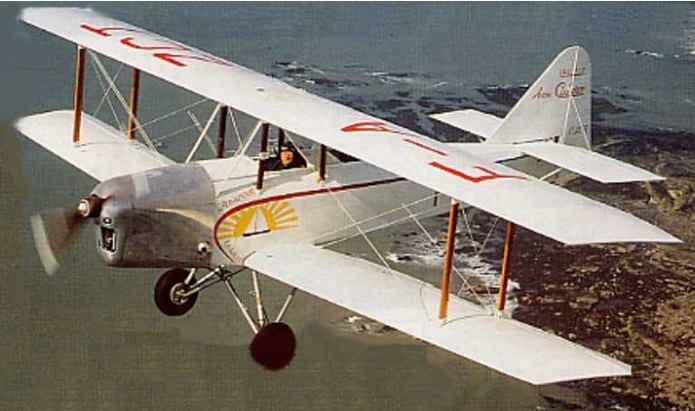
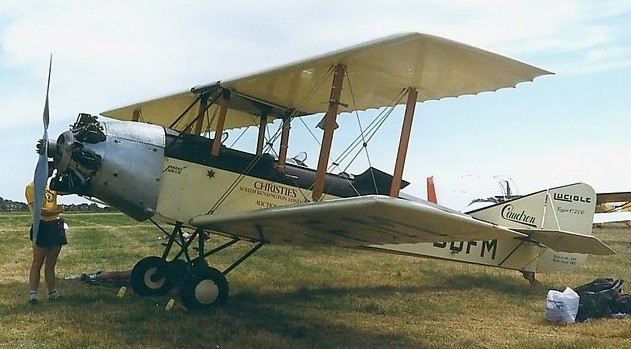
Designed by Paul Deville, the Caudron C.270 Luciole (“Firefly”) was a sporting, touring and trainer aircraft derived from the C.230.

It was a conventional biplane with single-bay, unstaggered wings of equal span. The pilot and a single passenger sat in tandem open cockpits. It featured a fabric-covered fuselage in place of the C.230’s wooden one, and other refinements including revised control surfaces and undercarriage, and an improved and simplified wing-folding mechanism.

Over 700 were built in the decade leading up to World War II. Of these, 296 were purchased by the French government for its pilot training programme, the Aviation Populaire. Some were operated by the Spanish Republican Air Force. Many examples saw wartime service as liaison aircraft, and those surviving the conflict saw postwar use as glider tugs in the Ecole de l’Air.

Gallery

Variants:
C.270 – first production version with Salmson 7Ac radial engine (82 built)
C.270/1 – version with Salmson 7Ac2 engine
C.271 – version with Lorraine 5Pc engine (1 built)
C.271/2 – version with Lorraine 5Pb engine
C.272 – version with Renault 4Pb inline engine (52 built)
C.272/2 – version with Renault 4Pci engine and taller, more pointed tail fin (22 built)
C.272/3 – version with Renault 4Pdi engine and wheel brakes (15 built)
C.272/4 – version with Renault 4Pei engine and wheel brakes (21 built)
C.272/5 – version with Renault 4Pgi engine(80 built)
C.273 – version with Michel 4A-14 engine (14 built)
C.274 – version with Chaise 4Ba engine for 1932 Paris Salon de l’Aéronautique (1 built)
C.275 – main production version derived from C.272/5 but without wing folding (433 built)
C.276 – version with de Havilland Gipsy III engine
C.276H – version with Hirth HM 504A-2 engine (2 re-engined from C.276)
C.277 – similar to C.272/4 with non-folding wings (9 built)
C.272R – C.275 re-engined with Renault 4Po3 after the war (1 converted)
C.278 – version with new undercarriage and Salmson 9Nc engine to compete in Challenge 1932 (1 built)

Specifications:

C.272
Engine: 1 × Renault 4Pb, 71 kW (95 hp)
Length: 7.67 m (25 ft 2 in)
Wingspan: 9.90 m (32 ft 5 in)
Height: 2.76 m (9 ft 1 in)
Wing area: 24.0 m2 (258 ft2)
Empty weight: 516 kg (1,138 lb)
Gross weight: 780 kg (1,720 lb)
Maximum speed: 158 km/h (98 mph)
Range: 500 km (311 miles)
Service ceiling: 4,000 m (13,120 ft)
Crew: One pilot
Capacity: 1 passenger

C.277 Luciole
Engine: Renault 4 Pei, 140 hp
Wing span: 32 ft 5.5 in
Wing area: 248.2 sq.ft
Length: 25 ft 2 in
Height: 9 ft
Empty weight: 1067 lb
Loaded weight: 1848 lb
Max speed: 107 mph / 93 mph at 3280 ft
Range: 388 mi

Caudron C.230 / C.232 / C.233 / C.235

C.230

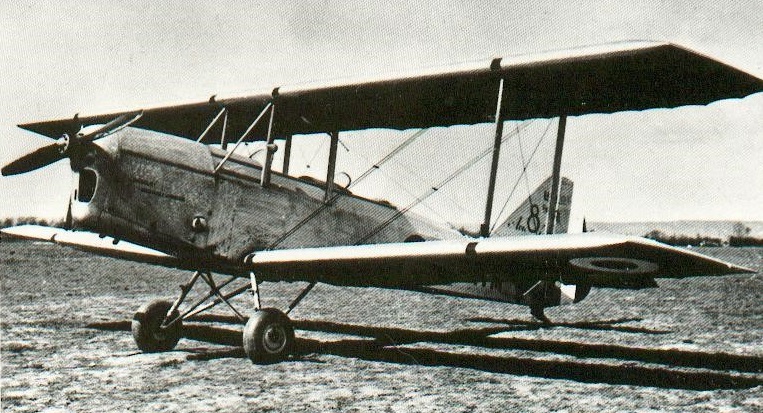
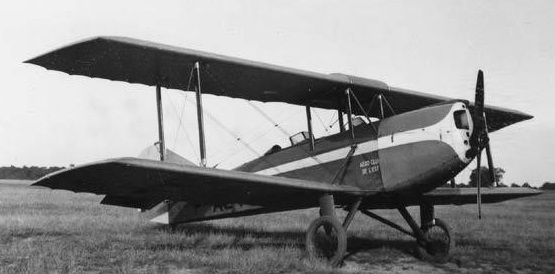
Designed by Paul Deville, the Caudron C.230 was a two-seat light biplane with equal-span unstaggered single-bay wings. The upper wing centre-section was braced to the fuselage by four short vertical steel-tube struts; the outer panels, which could be folded, had a pair of vertical spruce inter-plane struts on each side. Ailerons were fitted on the lower wing only. The wooden fuselage structure was fabric-covered, and the cantilever tailplane had a wood frame and was plywood-covered. Each main unit of the wide-track fixed landing gear incorporated a vertical compression leg. The pilot and a single passenger sat in tandem open cockpits.

The prototype Caudron C.230 made its maiden flight in November 1930, piloted by Raymond Delmotte.
The C.230 was powered by a 71kW Salmson radial engine and 15 were built, to be followed by a number of variants.

Caudron C.232

C.232 is identical to the C.230 except for the Renault engine which replaces the Salmson radial.

The C.232 is a biplane with a 95 hp Renault engine, mainly of wood construction, folding wings, and a steel tube undercarriage. An 85 lt fuel tank is mounted in the top centre section.

The C.232 was introduced into Britain by B.N Aircraft Ltd of Heston Air Park.

C.232

Gallery

Variants:

C.230
first production version with Salmson 7Ac radial engine (15 built)

C.232
50 built, powered by a Renault 4Pb inline engine in place of the Salmson radial of the same horsepower; the fuselage had plywood covering.

C.232/2
Three built; same as C.232 but with wheel brakes.

C.232/4
Seven built. Identical to C.232/2 except improved equipment.

C.233
A single prototype powered by the unsuccessful Michel AM-16 engine. Later fitted with Salmson engine becoming a C.230

C.235
One airframe fitted with a German Argus As 8R 75kW inline for French Air Ministry tests of this engine.

Specifications:

C.232
Engine: Renault 4Pb, 71 kW / 95 hp
Wingspan: 11.00 m / 36 ft 1 in
Wing area: 24.0 m2 / 258.33 ft2
Length: 7.87 m / 25 ft 10 in
Gross weight: 780 kg / 1715 lb
Empty weight: 420 kg / 926 lb
Fuel capacity: 85 lt / 18.75 Imp.Gal
Luggage capacity: 50 kg / 110 lb
Max. Speed: 165 km/h / 103 mph
Top speed: 150 km / 93 mph
Cruise speed: 130 kph / 81 mph
Ceiling: 4300 m / 13,100 ft
Time to 4300 m / 13,100 ft: 1 hr
Range: 500 km / 310 miles
Endurance: 4 hr
Seats: 2

Caudron C.190 / C.191 / C.192 / C.193

C.193

The Caudron C.190 was a French two-seat low-wing single-engine sports plane, built by Caudron in the late 1920s. First flown in 1929, the only variant of the C.190 family (C.190/191/192/193) to be built in series was the C.193.

C.193

Information in publications is vague, but at least six C.193s were produced (reg. F-AJHG, F-AJOB, F-AJSG, F-AJSH, F-AJSI, F-AJSJ) and one Salmson-powered C.192 (F-AJHF). One aircraft, C.193 F-AJSI, was sold to Great Britain in 1930 and registered as G-ABFX, but returned to France in 1931 to be registered as F-ALLJ.

In 1929, aircraft F-AJHF and F-AJHG participated in the Challenge 1929 international touring plane contest, and one of them completed it in 28th place, flown by Raymond Delmotte.

In 1930, three C.193s participated in the Challenge 1930 international touring plane contest (F-AJSG, F-AJSH, F-AJSI), Maurice Finat completing it in 17th place and François Arrachart in 24th place.

C.193 during the Challenge 1930

Variants:
C.190 – first variant, with 80 hp (58.8 kW) Renault straight engine
C.191 – variant with 95 hp (69.8 kW) Salmson 7AC radial engine
C.192 – variant with 95 hp (69.8 kW) Salmson 7AC radial engine
C.193 – series variant, with 98 hp (72 kW) Renault 4Pb straight engine

Variation:
Odier & Bessiere Clino-giro

Specifications:

C.193
Engine: 1 × Renault 4Pb, 72 kW (97 hp)
Length: 7.48 m (24 ft 6 in)
Wingspan: 11.5 m (37 ft 9 in)
Height: 2.5 m (8 ft 2 in)
Wing area: 13.6 m2 (146 sq ft)
Empty weight: 440 kg (970 lb)
Gross weight: 760 kg (1,676 lb)
Maximum speed: 185 km/h (115 mph; 100 kn)
Cruising speed: 160 km/h (99 mph; 86 kn)
Range: 600 km (373 mi; 324 nmi)
Service ceiling: 4,500 m (14,764 ft)

Caudron C.59 / C.320

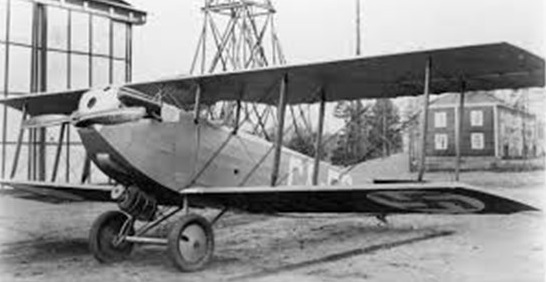
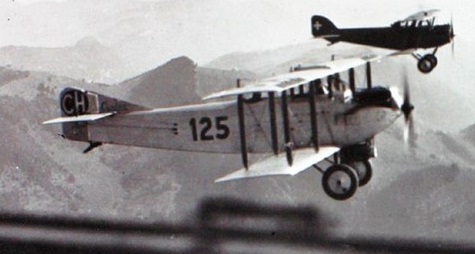
The Caudron C.59 was a French, two-seat biplane with a single engine and a canvas-covered fuselage. The French aircraft manufacturer Caudron made this aircraft between 1922 and 1924. It was suitable for several purposes.

Training aircraft intermediate preparation Caudron C.59 was developed with the assistance of Paul Deville René Talpina, the aircraft has a wooden frame and fabric covering. The ailerons were present only on the upper wing. The student was placed in an open cockpit under the central section of the upper wing, and instructor cabin was directly behind him under the back edge of the wing. The aircraft had dual controls standard.

The prototype flew in August 1921 and after extensive testing was ordered in large quantities for the French Air Force in seven contracts. More than 1,000 aircraft were manufactured and supplied to the French army and remained in service for 15 years.

A large batch of 32 was sold to Turkey. The aircraft arrived at their destination within 1924 to 1926 and were numbered 801-832. The main base was stationed Eskisehir Hava Okulu, where they were widely used until 1936. Then, they gradually began to be replaced by German Gotha Go.145. By the time they complete the withdrawal of the Air Force in 1937, only 7 machines remained in operation. They were handed over to the TNC (Turkish Aviation League), where they remained until 1941.

The Finnish Air Force purchased three Caudron C.59s from France in 1923. The aircraft first carried the air force designation codes 2E3-2E5 and from 1927 on CA-48 – CA-50. The manufacturing numbers of the aircraft were 5407–5409. The aircraft were equipped with landing gear, but there were at least one aircraft (2E3) was fitted with floats. The aircraft were accepted into service on March 8, 1923 and the last one was taken out of service in 1931.

The Caudron C.59 was also used in Bulgaria, China, and in the Spanish Civil War.

There was also a C.59/2 version, which was equipped with a 230 hp (170 kW) Lorraine 7Ma Mizar engine and had a wide track undercarriage.

More than 1,800 Caudron C.59s were manufactured.

Variants
C.59
Original design.

59/2
Fitted with 230 hp (170 kW) Lorraine 7Ma Mizar radial engine.

C.320
c.1932, Original C.59s but refitted with 250 hp (190 kW) Renault 9A 9-cylinder radial engine. Some later returned to their original Hispano engines.

Operators:
Argentine Air Force
Brazilian Air Force
Bulgarian Air Force
Republic of China Air Force
French Air Force
French Navy
Finnish Air Force
Portuguese Air Force
Romanian Air Force
Spanish Republican Air Force
Spanish Air Force
Turkish Air Force
Venezuelan Air Force

Engine: 1 × Hispano-Suiza 8Ab, 134 kW (180 hp)
Wingspan: 10.24 m (33 ft 7 in)
Wing area: 26.00 sq.m
Length: 7.80 m (25 ft 7 in)
Height: 2.90 m
Empty weight: 700 kg (1,543 lb)
Gross weight: 988 kg (2,178 lb)
Maximum speed: 170 km/h (106 mph)
Endurance: 3 hr 30 min
Cruising speed: 138 km / h
Practical range: 500 km
Practical ceiling: 5500 m
Crew: 2