
Of 46 foot span and fitted with a 35 hp JAP radial motor, this triplane was designed by Henry Seddon Wildeblood and built by the Upper India Motor Company of Lucknow, India, in August 1911.
Of 46 foot span and fitted with a 35 hp JAP radial motor, this triplane was designed by Henry Seddon Wildeblood and built by the Upper India Motor Company of Lucknow, India, in August 1911.
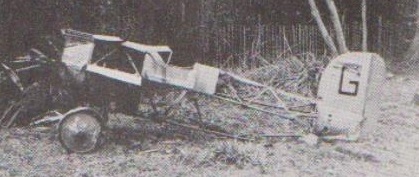
A single-seat mid-wing monoplane designed and built by A.H.Wheeler in 1931. Construction was started in Hinaidi, Iraq, that year. It was fitted with a Blackburn Tomtit engine.
It was not flown and brought to Henlow where it was registered G-ABOI c/n AHE.1.
In 1932 it was converted to an ABC Scorpion engine but it was never flown.
It was donated to the Shuttleworth Trust at Old Warden and stored there until loaned to the Midland Aircraft Preservation Society. It was stored in the Coventry area.
Span: 22.00 ft
Length: 14.09 ft

Engine: 1 x 650hp Hispano-Suiza
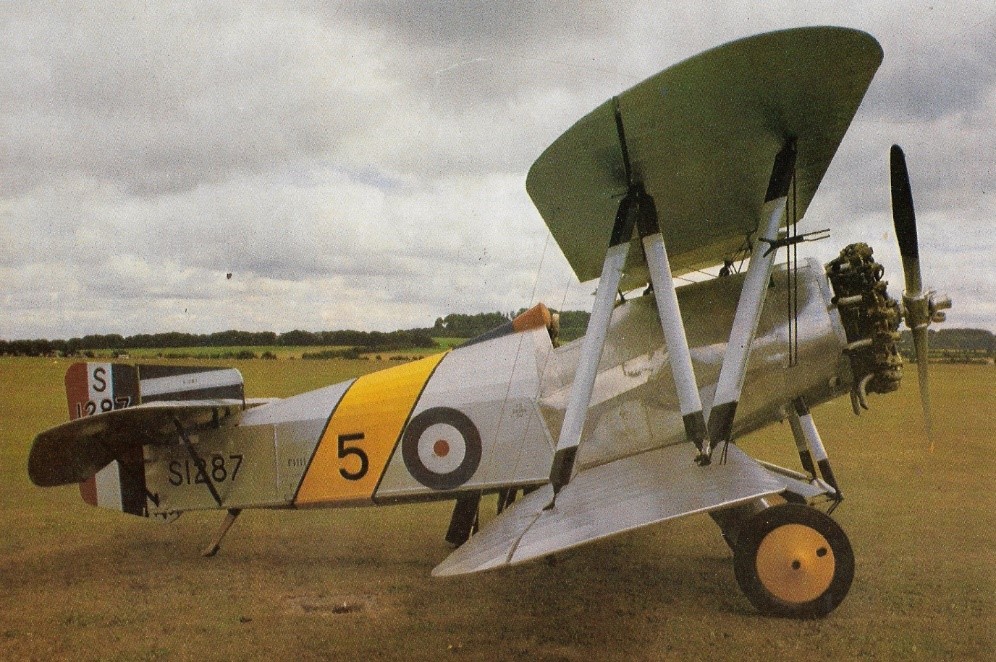
In January 1977 construction of Fairey Flycatcher replica S1287 was started by Robinson Aircraft at Blackbushe, later transferred to Rod Bellamy, whereas the CAA Aircraft Register states Westward Airways, Lands End, England as the manufacturer
On 17 July 1977 it was registered as G-BEYB to John Fairey, and powered by a Pratt & Whitney R-985-AN-14B engine, making its first flight, at Middle Wallop, on 23 July 1979. The first public display was at the Middle Wallop Air Show on 28 July 1979.

It was damaged following a take-off accident on 4 October 1980, flying again following repair on 23 July 1981.
On 01 September 1995 it was flown to Lee-on-Solent for a static role at the Fleet Air Arm Officers Association reunion, the last public function before sale to FAAM.

On 05 June 1996 it was flown to RNAS Yeovilton by John Fairey and put into 12 hanger (FSAIU).
In July 1996 it moved into the FAAM and onto public display.
By 2012 it was in the Reserve Collection at Cobham Hall Store.
Reportedly at least one of the 1919 West Virginia C-3 were built. A three-place, open triplane, power was a 150hp Wright-Hispano A engine.
The West Virginia Aircraft Co biplane, built circa 1918, was a twin-tail, headless Wright-type design, with trailing-edge ailerons on upper wing.
A single-place open cockpit, it was powered by a pusher motor.
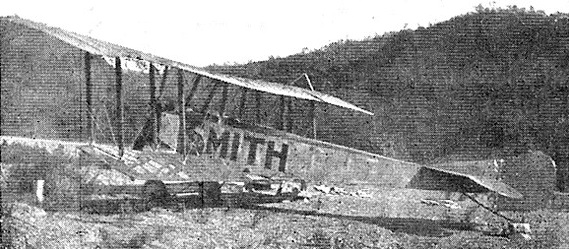
A two-place, open cockpit biplane built in 1917.
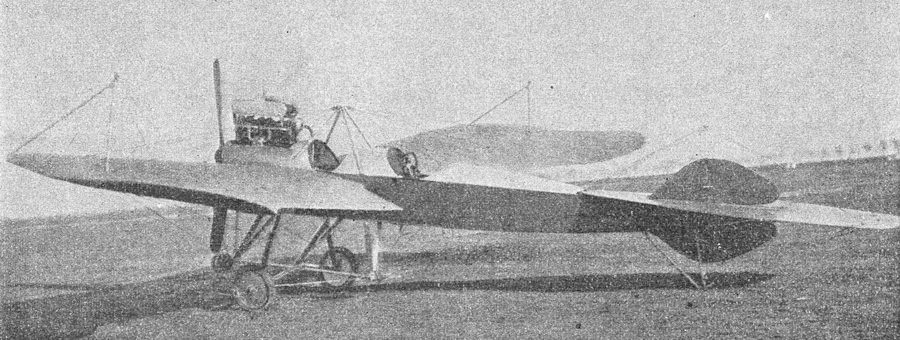
Paul Westphal built his second design “Taube” after the guidelines of the army. It passed the tests easily, but was not bought. He then gave up his own attempts.
Built by Gordon W. Westphal, the Rose Parakeet replica N16N sn GW-100 was first registered on 23 February 1976. Classified as an amateur built experimental, it was powered by a Lycoming O-290 engine.
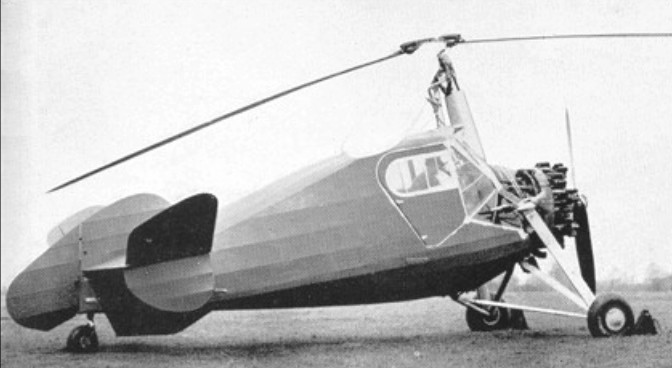
In 1934 the Westland design staff, in co-operation with the Cierva Autogiro Company, produced a large five-seat cabin autogiro in Duralumin tubing, powered with a 600hp Armstrong Siddeley Panther engine.
The fuselage was of square-section steel and duralumin tubing, arranged in the characteristic Westland style, with composite stringers and formers to give a deep oval section. The fabric-covered tailplane and vertical and oblique fins were built up of duralumin tubing and pressings, the aerofoil section of the port half of the tailplane being inverted, to offset airscrew torque effect. The seating in the cabin was arranged in the 2-3 plan.
It was much larger and heavier than anything of its kind previously attempted. The Cierva Company was responsible for the rotors and rotor mechanism, the direct control system being employed, while the airframe was designed and built by Westland.
Test of this machine, which was known as the C.29 Autogiro, disclosed vibration problems with the rotor system, which could not be immediately solved. In the circumstances it was decided to shelve this particular design, until further experience had been gained with other experimental autogiros, but the untimely death of Senor Cierva ultimately prevented development of this work. This aircraft never flew.
Westland-Cierva C.29
Engine: Armstrong Siddeley Panther, 600hp
Rotor diameter: 15.23m
Length: 11.58m
Height: 3.88m
Loaded weight: 2268kg
Empty weight: 1461kg

 All Aero