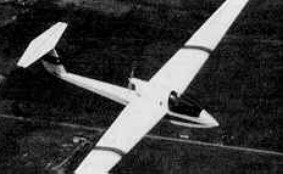
The J-1 Juptier was an all original design of Kenneth R. Champion and Horace Sackett in 1959 using wooden construction methods based on the Pietenpol Air Camper and new applications of fiberglass layups.
The J-1 is a low wing aircraft with conventional landing gear and a large bubble canopy. The wings are configured without dihedral. The fuselage uses a wooden geodesic airframe construction with steel secondary wing spars. The wing panels are covered with single seamless flat fiberglass panels that are bonded to the wooden wing ribs and spars. The leading edge is formed with fiberglass layered up in place. The same process is used on the elevators.
The J-1 Jupiter won the Outstanding Design award at the Experimental Aircraft Association airshow in 1959.
Variants Jupiter K-2
Specifications:
Jupiter J-1 Engine: 1 × Continental A65, 65 hp Propellers: 2-bladed MacCauley 65-60 Length: 17 ft 4 in (5.28 m) Wingspan: 21 ft (6.4 m) Wing area: 88 sq ft (8.2 m2) Airfoil: NACA 4412 Empty weight: 627 lb (284 kg) Gross weight: 910 lb (413 kg) Fuel capacity: 16 U.S. gallons (61 L; 13 imp gal) Max speed: 160 mph Cruise speed: 96 kn; 177 km/h (110 mph) Stall speed: 48 kn; 89 km/h (55 mph) Rate of climb: 400 ft/min (2.0 m/s) Range: 300 miles Crew: 1
Bellanca also produces the Scout, an aircraft very similar to the Citabria. Two versions were offered, the Model 7GCBC with a 150 hp Lycoming O 320 A2B engine and a slightly larger Model 8GCBC, with a 180 hp Lycoming O 360 C2A, two feet more span, and Hoerner wing tips.
Bellanca 8GCBC
ACA 8KCAB Super Decathlon
From the manufacturing line at Bellanca’s Osceola, Wisconsin plant. The Champion Model 8KCAB Decathlon is a close cousin to the Bellanca Citabria, the principle difference being its symmetrical NACA 1412 wing section, 2.5 foot shorter span, reinforced front spar, stronger, more closely spaced ribs and constant speed prop. The Decathlon semi-symetrical NACA 1412 wing makes the plane a vastly superior aerobatic ship compared to the Citabria, particularly in rolls, where the Decathlon’s shorter span and larger ailerons offer a noticeable difference. The all metal Decathlon does not have flaps.
Both planes come with 150 hp Lycoming IO 320 engines capable of prolonged inverted flight, but the Citabria also can be purchased with a 115 hp Lycoming 0 235 powerplant and a 150 hp Lycoming not specifically outfitted for viewing the world upside down. The Decathlon is designed for loads of +6 Gs and 5 Gs, whereas the Citabria is approved for + 5 Gs and 2 Gs. The initial 14 Champion Decathlons were hand built, but they sold so well that the model soon became this country’s first production aerobatic plane.
Designed by Ken Champion, the Self-Lauching Freedom Falcon, which first flew in 1982, uses a Wankel type rotary engine with variable pitch propeller. Approach control is with spoilers.
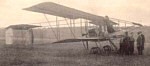
In 1913 Frank Champion spent 4,000 dollars to build the “Long Beach Flyer” monoplane, with local merchants putting up much of the money. The plane, which was similar to contemporary Caudron designs, apparently flew well. Champion was killed when his plane broke up during a display in Kochi, Japan on November 1, 1917.
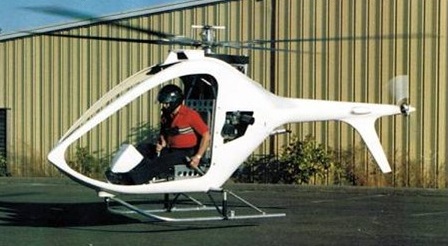
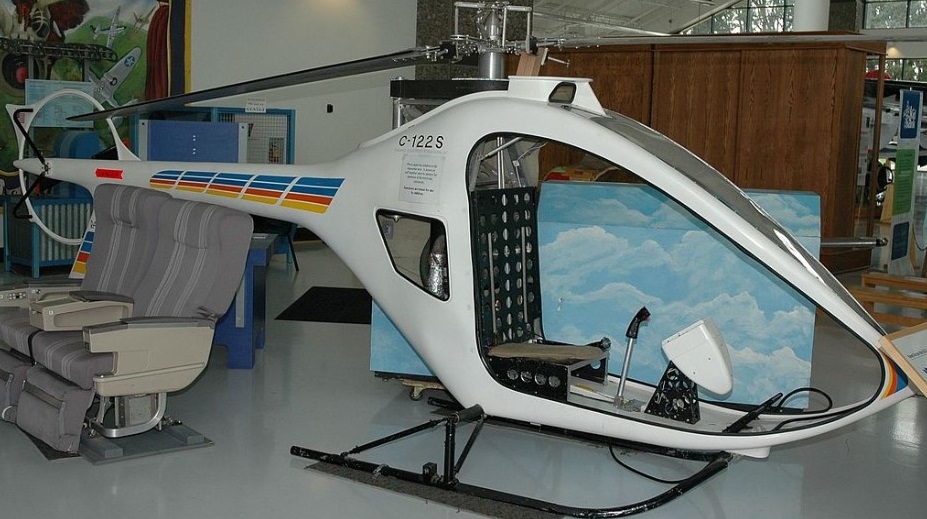
The single-seat C-122 Rainbow helicopter was a design of Russell Chadwick, and was intended to be available in kit form for amateur construction. Powered by a 40 hp Rotax 503 two-stroke piston engine, the prototype started tethered tests late 1985 and was mainly intended as a proof of concept/technology demonstrator.
The design consists of a fibreglass shell enclosing a truss structure to which the engine, rotor mast, landing gear, and pilot’s seat were attached. The skid-type undercarriage could be quickly fitted with wheels for ground-handling, or floats for operations from water.
A prototype was constructed in 1985, and publicly unveiled at the Helicopter Association International annual convention the following year. Flight testing continued through 1987, with deliveries anticipated for that Autumn.
In 1986 Chadwick formed Chadwick Helicopters International, Inc. at Sherwood, Oregon for development, marketing and production of the type in ready-to-fly form. These were to have a longer tail boom, new rotor blades and a tail rotor guard ring, but reportedly only two C-122S machines were built and further development was halted.
Chadwick C-122 Engine: Rotax 503, 40 hp Rotor diameter: 18 ft 6 in (5.64 m) Rotor disk: 268.8 sq.ft (24.97 sq.m) Length (rotors turning): 22 ft 6 in (6.86 m) Length: 19 ft 0 in (5.79 m) Height: 7 ft 2.25 in (2.19 m) Weight empty: 253 lb (115 kg) Weight loaded: 500 lb (227 kg) Max speed: 94 mph (151 kmh) Cruise speed: 74 mph (119 kmh) Climb: 945 ft (288 m)/min Service ceiling: 13,480 ft (4,110 m) Range: 120 mls (193 km) Seats: One pilot
In early 1980, CGS conducted a market study at Sun N Fun and also Oshkosh to determine the features of an ultralight most desired by pilots. The “Hawk” was the end result of that study. The first prototype took to the air in January 1982. The CGS Hawk’s debut was in March, 1982, at Sun N Fun air show held in Lakeland, Florida There, the findings of the market study were proven out as the Hawk took top honors, winning Best New Design for 1982.
Considering that the FAA originally required these “devices” to be foot-launchable, the introduction in early 1982 of Chuck Slusarczyk’s enclosed-cockpit CGS Hawk was sensational—one of several ultralight firsts for this design. The CGS Hawk won a similar award at that summer’s EAA convention in Oshkosh. One year later, it won the Dupont Kevlar ARV (air recreational vehicle) design competition. More than 100 aircraft competed. Late in 1983 the FAA’s FAR Part 103 ultralight regulation became effective, soon followed by a waiver to allow two-place ultralight trainers including the CGS Hawk II. The Hawk II had been built and licensed as an Experimental/Amateur-Built. When the CGS Hawk debuted in 1982, it was the first fully enclosed ultralight. It was also the first ultralight to use full strut bracing, and incorporated full 3 axis controls (including conventional steerable nose or tail wheel). The CGS Hawk was also the first ultralight to utilize fully functional wing flaps. The CGS Hawk includes as standard features: A 360 degree roll cage structure including seat belts, shoulder harness, and rigid pilot seat. Fully enclosed, with or without side curtains. The 3-axis control system uses the same configuration as conventional aircraft; control stick for ailerons and elevator movement, and pedals for rudder control. This system is harmonized using the A:E:R=1:2:4 ratio developed by the military. This ratio of aileron, elevator, and rudder forces feels most natural to the pilot and minimizes fatigue on long flights. Supplemented with the four-position wing flaps, this gives the pilot the capability to handle strong crosswind and tight approaches. Stall and spin resistant characteristics were designed into the Hawk based on a National Advisory Committee for Aeronautics (NACA) Report. The wings have 4 degrees of washout (twist), which provides gentle stall characteristics and excellent aileron response at all speeds. The positioning of the horizontal stabilizer allows the pilot to sideslip the Hawk, even with the flaps down. Larger than usual tail surfaces offer solid control at low speeds and docile CG characteristics. The CGS Hawk has a wide-track landing gear that, coupled with a low center of gravity and steerable nose or tail wheel, allows excellent ground handling in crosswind conditions. The CGS Hawk meets FAA Part 103-7 for ultralights. All CGS Hawks can be licensed in the Experimental and Homebuilt category and can be issued an “N” number and Airworthiness Certificate by the FAA. This allows licensed pilots to legally log their flight time. The CGS Hawk also meets the requirements of FAR 29.191 (q), (51% rule), concerning experimental and homebuilt aircraft. CGS Aviation invested thousands of hours in engineering and testing. A complete structural analysis was performed, as well as load and fatigue testing. CGS Aviation is committed to quality engineering and comprehensive testing of all products. Single seat single engined high wing mono¬plane with conventional three axis control. Wing has unswept leading and trailing edges, and constant chord; flaps fitted. Cruciform tail. Pitch control by elevator on tail; yaw control by fin mounted rudder; roll control by one third span ailerons; control inputs through stick for pitch/roll and pedals for yaw. Wing braced from below by struts; wing profile UI 1720; double surface. Undercar¬riage has three wheels in tricycle formation, with additional tailskid; suspension on all wheels. Push right go right nose¬wheel steering connected to yaw control. Optional brakes on main wheels. Aluminium ¬tube framework, totally enclosed. Engine mounted below wing driving pusher propeller.
The first (yellow) prototype of the Hawk, built by Dan Shotwell, made several test flights during the winter of 1981 at the hands of Terry Fuller, fitted with the Zuber 380 cc 20 hp snowmobile engine and of course a Power Hawk 152 reduction drive. Consi¬dered by Chuck Shisarczyk to be a flying test bed, this aircraft was initially fitted with flaps and ailerons from the beginning. They never experimented with flaperons. The production Hawks use conventional ailerons and manual control flaps with four positions – 8 degs, 15 degs, 30 degs and 40 degs.
To comply with legisla¬tion in force in the US, CGS has offered since the end of 1982 two different versions of the Hawk: Hawk A, which is classed as an experimental aircraft, (requiring pilot’s li¬cence), and the Hawk B, which is classified as an ultralight. Both are supplied in kit form requiring between 60 and 150 h for comple¬tion without any special tools. The Canadian company, Micro¬nautic Ltd, was to make the Hawk under licence for the Canadian, Australian and New Zealand markets at Prescott, Ontario. Powered by the new Cuyuna II 02 in place of the 430R used earlier, the Hawk model A was sold for $6195 in 1982, and options include brakes for $120, wheel fairings, instrument panel, navigation lights and a strobe light. The Rotax becoming standard later. The Hawk B has an optional tail dragger undercarriage with tailwheel steering. The Hawk B is powered by a Kawasaki TA440 engine in place of the Cuyuna UL II 02. The Kawasaki develops the same power as the Cuyuna and also drives through the same six V belt reduction drive. Like the Hawk A, it can be rigged or derigged by one person in around 20 min, each wing being attached to the fuselage by three pins. The Hawk B is sold in kit form for $6345; options include floats, a strobe and electric start.
CGS Hawk Classic Single Seat basic model includes wing struts that are round tubing, and incorporate jury struts. The wing design has a double surface flat bottomed airfoil for stable flight characteristics. The nose is rounded on the bottom and the windshield has a flatter angle than the CGS Hawk Arrow models. Flaps (not flaperons) are standard equipment on all Hawks and are very effective in increasing climb rate and decreasing landing distance. At the heart of the Hawk’s unique design is its curved boom tube (which has never been successfully copied by any other ultralight manufacturer). The curved boom allows the horizontal stabilizer to be placed up and above the down wash of the wing, especially when flaps are deployed. Another benefit of the curve is shorter landing gear legs, which make it easier to get in and out of your plane. The curved boom also is stronger in torsion than a straight boom, and allows the airplane to rotate for take offs and landings in a normal fashion without banging the boom on the ground. Basic kit includes as standard equipment: Airframe 3-position wing flaps (not flaperons) 3-axis control Full fuselage pilot surround (roll cage) Heavy duty wings 2 ¼” dia. Leading edge, 1 ¾” dia. Trailing edge (factory pre built) Shoulder harness and seat belt All control surfaces (factory pre built) (flaps, ailerons, rudder, vertical stab, horizontal stab, & elevator) Heavy duty fiber glass landing gear legs (guaranteed against breakage for ten years) Your choice of tail dragger with steerable tail wheel or tricycle/steerable nosewheel Rough terrain wheels – 16″ x 6.5″ x 6″ Strut braced wing 5 USgallon fuel tank Anodized tubing Basic single place hawk classic kit 2009 US$8,095.00
The Hawk Arrow series was originally designed as an updated version of the Hawk Classic, incorporating features requested over a period of years. The nose section is longer, more pointed, and angles downward (steeper) than what you find in the Hawk Classic. This allows for better forward visibility at low sun angles. The nose also has a flatter floor section. Since the nose was made longer, the area of the rudder and vertical stabilizer were increased in order to enjoy the same excellent yaw stability of the Hawk Classic. The tail boom was also reinforced to handle the loads of this larger tail assembly. The Hawk Arrow Two Seat wing has the same semi symmetrical airfoil as the Hawk Sport, and streamlined extruded aluminum wing struts. Standard features of the Hawk Arrow also include curved overhead and curved windshield. This model is for those who like the more modern jet plane look, yet still want the excellent flying characteristics of the Hawk Classic. Primarily it?s a personal preference, some folks seem to like the smoother rounder lines of the Classic while others like the more modern jet plane look of the Arrow. Either way they all have the same excellent flying characteristics. The Hawk Arrow Two Seat incorporates tandem seating rather than side by side. This allows a student to feel as if he is flying in a single place during his all important instructional phase because the instructor is out of sight and behind him. When it is time to solo, the student pilot experiences more confidence and less stress with this seating arrangement. He is not suddenly dealing with an empty seat next to him. With tandem seating, turns to the left or right are equally comfortable because you don\’t have to look across a seat to check behind you. In addition, since most ultralight aircraft are pushers, the tandem configuration allows for better inflow to the propeller, and much less drag. Center of gravity changes are also much less pronounced when flying solo vs. with a passenger. In a tandem set up, the front pilot balances the engine, and the passenger sits on the center of gravity, so it makes no difference if you have a passenger or not. The center of gravity changes very little. In a side by side arrangement, however, when the passenger exits the plane, the center of gravity makes a drastic shift to the rear, and must be compensated for in some way. On the Hawk Arrow Two Seat the rear seat is designed to sit slightly higher than the front seat so the field of vision of the passenger or instructor in the rear seat is not obstructed. Flaps (not flaperons) are standard equipment on all Hawks and are very effective in increasing climb rate and decreasing landing distance. At the heart of the Hawk\’s unique design is its curved boom tube (which has never been successfully copied by any other ultralight manufacturer). The curved boom allows the horizontal stabilizer to be placed up and above the down wash of the wing, especially when flaps are deployed. Another benefit of the curve is shorter landing gear legs making it easier to get in and out of your plane. The curved boom also is stronger in torsion than a straight boom, and allows the airplane to rotate for take offs and landings in a normal fashion without banging the boom on the ground.
CGS Hawk Arrow Single Seat
Basic kit includes as standard equipment: Airframe with curved windshield, sharper slope of nose for improved visibility 3-Position Wing Flaps (not flaperons) 3-Axis Control Full fuselage pilot surround (roll cage) Strengthened tail boom, and streamlined wing struts Shoulder Harness and seat belt Larger vertical stabilizer and rudder Heavy duty wings 2 ¼” dia. Leading edge, 1 ¾ “ dia. Trailing edge (FACTORY PRE BUILT) Curved overhead carry through increases head room by 3” All control surfaces (FACTORY PRE BUILT) (flaps, ailerons, rudder, vertical stab, Horizontal stab, & elevator) Heavy duty fiber glass landing gear legs (guaranteed against breakage for ten years) Your choice – tail dragger with steerable tail wheel or tricycle/steerable nosewheel Rough terrain wheels – 16″ x 6.5″ x 6″ Streamlined Struts – aluminum Streamlined landing gear fairings 5 USgallon fuel tank Anodized Tubing Basic single place hawk arrow kit 2009 us$9,136.00
CGS Hawk “Sport” Single Seat
The Hawk “Sport” Single Seat is the “Hot Rod” version of the standard Classic Single Seat. It was first developed to compete in the European World Air Games in 1999. This competition is held once every two years in different countries. In the last three competitions at the World Games, the Hawk Sport and it’s owners have won First Place (two competitions in a row), Second Place, and a Third Place. The Hawk Sport differs from a Classic in several ways. First, It has a double surface wing with a semi symmetrical airfoil instead of a flat bottomed one like the standard Classic. This is achieved by the addition of lower rib battens on the lower surface of the wing forming the airfoil. This allows the stall speed to remain the same but the top speed to increase. The wing struts are a fully streamlined aluminum extrusion, which doesn’t require the use of jury struts. This allows for less drag and more speed, or you can cruise at the same speed with a lower power setting. In addition, the gear legs have streamline fairings over the fiberglass gear legs for even more drag reduction. The Sport also incorporates a curved overhead and curved windshield as standard equipment. The curved overhead offers taller pilots an additional 3 ” of headroom; enough for tall pilots with helmets. A fiberglass nose cone also reduces drag and offers a sleeker appearance. The Hawk Sport model has the same top speed as the standard single seat Hawk Arrow. Basic kit includes as standard equipment: Airframe 3 Position Wing Flaps (not flaperons) 3-Axis Control Full fuselage pilot surround (roll cage) Heavy duty wings 2 ¼” dia. leading edge, 1 ¾” dia. trailing edge (FACTORY PRE BUILT) Shoulder Harness and seat belt All control surfaces (FACTORY PRE BUILT) (flaps, ailerons, rudder, vertical stab, horizontal stab, & elevator) Heavy duty fiber glass landing gear legs (guaranteed against breakage for ten years) Tail dragger with steerable tail wheel or tricycle/steerable nosewheel Larger rear doors Streamlined struts – aluminum Streamlined landing gear fairings Curved overhead carry through increases head room by 3” Lower Rib battens Fiberglass Nose Cone – Adds 3-4 mph to top speed, provides streamlined appearance Rough terrain wheels – 16″ x 6.5″ x 6″ 5 USgallon fuel tank Anodized Tubing Basic single place hawk sport kit US$9,107.00 in 2009
CGS Hawk ‘Classic Ultra’
When the CGS Hawk Classic was introduced to the world at the Sun-n-Fun Air Show, Lakeland, Florida in the spring of 1982, it was originally designed to be a legal ultralight under FAR Part 103 with the 30 hp Cuyuna or 35 hp Kawasaki 440. Over the years the airplane gradually gained weight with design refinements and evolved into the various CGS Hawk models. As customer demands have returned to wanting a “true ultralight”, the CGS Hawk Classic “Ultra” is the model to fit that bill. The original award winning Classic airframe, included all the improvements that were perfected over the years, and combined into a lighter airframe, with a re-engineered structure removing excess weight from components that were originally over built. The result produced the new CGS Hawk Classic Ultra, our lightest single seat aircraft offered. The basic model includes tubular fiberglass gear legs, round tubing wing struts, with jury struts. The wing design has a double surface flat bottomed airfoil for stable flight characteristics. The nose is rounded on the bottom and the windshield has a flatter angle than the CGS Hawk Arrow models. Curved overhead, and flaps (not flaperons) are standard equipment on the Ultra, and are very effective in increasing climb rate and decreasing landing distance. The curved boom allows the horizontal stabilizer to be placed up and above the down wash of the wing, especially when flaps are deployed. Another benefit of the curve is shorter landing gear legs making it easier to get in and out of your plane. The curved boom also is stronger in torsion than a straight boom, and allows the airplane to rotate for take offs and landings in a normal fashion without banging the boom on the ground. Basic kit includes as standard equipment: Airframe 3-Position Wing Flaps (not flaperons) 3-Axis Control Full fuselage pilot surround (roll cage) Heavy duty wings 2 ¼” dia. leading edge, 1 ¾” dia. trailing edge (FACTORY PRE BUILT) Shoulder Harness and seat belt All control surfaces (FACTORY PRE BUILT) (flaps, ailerons, rudder, vertical stab, horizontal stab, & elevator) Heavy duty fiber glass landing gear legs Your choice – tail dragger with steerable tail wheel or tricycle/steerable nosewheel (w/lighter engines) Strut braced wing Curved Overhead 5 USgallon fuel tank Anodized Tubing basic hawk kit $9,095.00 in 2009
CGS Hawk “Plus” Single Seat
The Hawk “Plus” is basically a revised version of the 1983 Two Place Hawk, with two place cargo area combined into a single seat. While the Classic and Arrow single seat models have a large baggage area behind the seat, it can be difficult to place large bulky items back there. The “Plus” was designed to accommodate the requests of customers needing a larger cargo capacity. The Hawk “Plus” has larger passenger doors coupled with a two place fuselage. This combination allows for easy access to the baggage area while keeping the space large enough for a jump seat to be installed. Wing tanks are standard on the “Plus” leaving the rear compartment available for optimal use of the space. It can be used for storage or additional fuel tanks. With the larger engine options offered, up to 250 lbs. can be carried in the rear baggage area. Another feature of the Hawk “Plus” are the wing spars, which are stronger than those found on standard single seat models. They are 2 1/4″ dia. X .083 (instead of .049) wall thickness to provide the same load factors as the single place models. The Hawk “Plus” is based on the Hawk Arrow design. It has the same forward fuselage pod as the Two Place Arrow, which is 2″ wider than the single place models. The Hawk “Plus” also has the semi symmetrical wing, streamline struts, reinforced boom, wing tanks, fiberglass nose cone, folding tail, curved overhead and windshield as standard equipment. Basic kit includes as standard equipment: Airframe 3 Position Wing Flaps (not flaperons) 3-Axis Control Reinforced boom tube Full fuselage pilot surround (roll cage) Heavy duty wings 2.25 in leading edge, 1.75 in trailing edge (FACTORY PRE BUILT) Shoulder Harness and seat belt All control surfaces (FACTORY PRE BUILT) (flaps, ailerons, rudder, vertical stab, horizontal stab, & elevator) Heavy duty fiber glass landing gear legs (guaranteed against breakage for ten years) Tail dragger with steerable tail wheel or tricycle/steerable nosewheel Large rear doors to accommodate bulky items transported in cargo area Streamlined struts – aluminum Streamlined landing gear fairings Curved overhead carry through increases head room by 3” Folding Tail Lower Rib battens Fiberglass Nose Cone-adds 3-4 mph to top speed, provides streamlined appearance Rough terrain wheels – 16″ x 6.5″ x 6″ 10 USgallon wing tank Anodized Tubing Price 2009 US$9,281.00
The Ag-Hawk incorporates a reinforced wing and agricultural boom. A high-wing monoplane with enclosed cabin and conventional tail. Three-axis controls with ‘flaperons” for roll and speed control. The main structure is aluminum tubing covered with 3.8-ounce Dacron throughout, with doped fabric used only for the fuselage. POWERPLANT: CGS Powerhawk 152 derived from a Zuper engine mounted in pusher position aft of the main wing. A 2.47:1 reduction unit turns a two-blade wooden Ritz propeller. Fuel is carried in a plastic tank aft of the pilot’s seat. LANDING GEAR: Spring-type conventional taildragger or tricycle gear with steerable nosewheel. Brakes are optional using a mechanical disc. Main wheels measure 16 “ and the nosewheel in the case of tricycle gear is also 16“.
Hawk II
The Hawk Arrow Two Seat wing has the same semi symmetrical airfoil as the Hawk Sport, and streamlined extruded aluminum wing struts. Standard features of the Hawk Arrow also include curved overhead and curved windshield. This model is for those who like the more modern jet plane look, yet still want the excellent flying characteristics of the Hawk Classic. Primarily it’s a personal preference, some folks seem to like the smoother rounder lines of the Classic while others like the more modern jet plane look of the Arrow. Either way they all have the same excellent flying characteristics. The Hawk Arrow Two Seat incorporates tandem seating rather than side by side. This allows a student to feel as if he is flying in a single place during his all important instructional phase because the instructor is out of sight and behind him. When it is time to solo, the student pilot experiences more confidence and less stress with this seating arrangement. He is not suddenly dealing with an empty seat next to him. With tandem seating, turns to the left or right are equally comfortable because you don’t have to look across a seat to check behind you. In addition, since most ultralight aircraft are pushers, the tandem configuration allows for better inflow to the propeller, and much less drag. Center of gravity changes are also much less pronounced when flying solo vs. with a passenger. In a tandem set up, the front pilot balances the engine, and the passenger sits on the center of gravity, so it makes no difference if you have a passenger or not. The center of gravity changes very little. In a side by side arrangement, however, when the passenger exits the plane, the center of gravity makes a drastic shift to the rear, and must be compensated for in some way. On the Hawk Arrow Two Seat the rear seat is designed to sit slightly higher than the front seat so the field of vision of the passenger or instructor in the rear seat is not obstructed. Flaps (not flaperons) are standard equipment on all Hawks and are very effective in increasing climb rate and decreasing landing distance. At the heart of the Hawk’s unique design is its curved boom tube (which has never been successfully copied by any other ultralight manufacturer). The curved boom allows the horizontal stabilizer to be placed up and above the down wash of the wing, especially when flaps are deployed. Another benefit of the curve is shorter landing gear legs making it easier to get in and out of your plane. The curved boom also is stronger in torsion than a straight boom, and allows the airplane to rotate for take offs and landings in a normal fashion without banging the boom on the ground. It is also aesthetically pleasing to look at. Basic kit includes as standard equipment: Airframe with curved windshield, sharper slope of nose for improved visibility 3-Position Wing Flaps (not flaperons) Dual 3-Axis Control Full fuselage pilot surround (roll cage) Strengthened tail boom, and streamlined wing struts Heavy duty wings with 3” dia. leading edge and 2” dia. trailing edge Shoulder Harnesses and seat belts Larger vertical stabilizer and rudder Heavy duty wings (FACTORY PRE BUILT) Curved overhead carry through increases head room by 3” All control surfaces (FACTORY PRE BUILT) (flaps, ailerons, rudder, vertical stab, horizontal stab, & elevator) Heavy duty fiber glass landing gear legs (guaranteed against breakage for ten years) Tail dragger with steerable tail wheel or tricycle/steerable nosewheel Rough terrain wheels – 16″ x 6.5″ x 6″ Streamlined Struts – aluminum Streamlined landing gear fairings 10 USgallon fuel tank Anodized Tubing Basic two place hawk arrow kit price 2009 US$11,319.00
CGS Hawk Classic Two Seat The Hawk Classic Two Seat was designed for those who wanted the excellent flight and handling characteristics of our Hawk Classic Single Seat, but needed to carry a passenger or give flight instruction. The Hawk Classic Two Seat easily fits the requirements of Part 103-7 Waiver for Two Seat Instruction. With an empty weight of 395 lbs. equipped with a Rotax 503 and 440 lbs. equipped with a Rotax 582 (electric start and brakes), we are well under the weight limit of 490 lbs. The Hawk Classic Two Seat incorporates tandem seating rather than side by side. This allows a student to feel as if he is flying in a single place during his all important instructional phase because the instructor is out of sight and behind him. When it is time to solo, the student pilot experiences more confidence and less stress with this seating arrangement. He is not suddenly dealing with an empty seat next to him. With tandem seating, turns to the left or right are equally comfortable because you don’t have to look across a seat to check behind you. In addition, since most ultralight aircraft are pushers, the tandem configuration allows for better inflow to the propeller, and much less drag. Center of gravity changes are also much less pronounced when flying solo vs. with a passenger. In a tandem set up, the front pilot balances the engine, and the passenger sits on the center of gravity, so it makes no difference if you have a passenger or not. The center of gravity changes very little. In a side by side arrangement, however, when the passenger exits the plane, the center of gravity makes a drastic shift to the rear, and must be compensated for in some way. On the Hawk Classic Two Seat the rear seat is designed to sit slightly higher than the front seat so the field of vision of the passenger or instructor in the rear seat is not obstructed. Other design features of the Hawk Classic Two Seat include: the wing design has a double surface flat bottomed airfoil for stable flight characteristics. The nose is rounded on the bottom and the windshield has a flatter angle than the CGS Hawk Arrow models. Flaps (not flaperons) are standard equipment on all Hawks and are very effective in increasing climb rate and decreasing landing distance. At the heart of the Hawk’s unique design is its curved boom tube (which has never been successfully copied by any other ultralight manufacturer). The curved boom allows the horizontal stabilizer to be placed up and above the down wash of the wing, especially when flaps are deployed. Another benefit of the curve is shorter landing gear legs making it easier to get in and out of your plane. The curved boom also is stronger in torsion than a straight boom, and allows the airplane to rotate for take offs and landings in a normal fashion without banging the boom on the ground. High-wing monoplane with conventional tail, enclosed cabin, standard 3-axis controls. Double surface wings of aluminum tubing/Dacron construction; general construction is aluminum. LANDING GEAR: tricycle, chromemoly. Meets NASAD standards.
Hawk Engine: Cuyuna 35 hp or UL II-02. Prop: 152 x 76 cm. Static thrust: 260-290 lbs. Wing span: 8.79m / 28 ft 10 in Wing area: 135 sq.ft. Length: 6.25m. Empty wt: 250 lbs. Max wt: 294.8 kg (650 lbs). Fuel cap: 19 lt. Cruise: 54 kt / 55-75 mph Stall: 22 kt / 26-30 mph Vmax 63 mph. Vne: 100 mph ROC: 600-800 fpm. Range: 180 sm. T/O run: 100 ft. Ldg roll: 75 ft.
Hawk A Engine: Cuyuna ULII 02, 35 hp at 6250 rpm. Propeller diameter and pitch 60 x 30 inch, 1.52×0.76m. V belt reduction, ratio 2.4/1. Max static thrust 235 lb, 106kg. Power per unit area 0.26 hp/sq.ft, 2.783hp/sq.m. Fuel capacity 5.0 US gal, 4.2 Imp gal, 18.9 litre in main tank Fuel capacity optional: 10.0 US gal, 8.3 Imp gal, 37.8 litre Length overall 20.7 ft, 6.30 m. Height overall 6.8 ft, 2.08 m. Wing span 28.8 ft, 8.78 m. Constant chord 4.8 ft, 1.42 m. Dihedral 3 deg. Sweepback 0 deg Total wing area 135 sq.ft, 12.6 sq.m. Wing aspect ratio 6.1/1. Nosewheel diameter overall 12 inch, 30 cm. Main wheels diameter overall 12 inch, 30cm. Empty weight 270 lb, 122 kg. Max take off weight 550 lb, 249 kg. Payload 280 lb, 127 kg . Max wing loading 4.07 lb/sq.ft, 19.8 kg/sq.m. Max power loading 15.7 lb/hp, 7.1kg/hp. Load factors +4.0, 3.0 design. Max level speed 72 mph, 116 kph. Never exceed speed 80 mph, 124 kph. Max cruising speed 60 mph, 97 kph. Economic cruising speed 55 mph, 88 kph. Stalling speed 27 mph, 43 kph. Max climb rate at sea level 800 ft/min, 4.1 m/s. Min sink rate 250 ft/min at 30 mph, 1.3 m/s at 48 kph. Best glide ratio with power off 8.3/1 at 42mph, 67 kph. Take off distance 150 ft, 45 m. Land¬ing distance 150 ft, 45 m. Range at average cruising speed 100 mile, 161 km.
Hawk B – Engine: Kawasaki TA440, 35 hp at 6000 rpm. Propeller diameter and pitch 60 x 27 inch, 1.52 x 0.68 m. V belt reduction, ratio 2.4/1. Max static thrust 235 lb, 106kg. Power per unit area 0.26 hp/fsq.ft, 2.783hp/sq.m. Fuel capac¬ity 5.0 US gal, 4.2 Imp gal, 18.9 litre in main tank Fuel capacity optioal: 10.0 US gal, 8.3 Imp gal, 37.8 litre Length overall 20.7 ft, 6.30 m. Height overall 6.8 ft, 2.08 m. Wing span 28.8 ft, 8.78 m. Constant chord 4.8 ft, 1.42 m. Dihedral 3 degs. Sweepback 0 degs. Total wing area 135 sq.ft, 12.6 sq.m. Wing aspect ratio 6.1/1. Nosewheel diameter overall 12 inch, 30 cm. Main wheels diameter overall 12 inch, 30cm. Empty weight 251 lb, 114 kg. Max take off weight 530 lb, 240 kg. Payload 279 lb, 126 kg . Max wing loading 3.921b/sq.ft, 19.1kg/sq.m. Max power loading 15.1 lb/hp, 6.9kg/hp. Load factors +4.0, 3.0 design. Max level speed 62 mph, 100 kph. Never exceed speed 80 mph, 129 kph. Max cruising speed 60 mph, 97 kph. Economic cruising speed 55 mph, 88 kph. Stalling speed 26 mph, 42 kph. Max climb rate at sea level 600 ft/min, 3.0 m/s. Best glide ratio with power off 8.9/1.
Ag-Hawk Engine: Rotax 447, 42 hp. Fuel cap: 5 USG. Speed max: 78 mph. Cruise: 67-70 mph. Range: 150 sm. Stall: 28 mph. ROC: 900 fpm. Take-off dist: 100 ft. Landing dist: 150 ft. Service ceiling: 12,500 ft. Weight empty: 270 lbs. Gross: 760 lbs. Height: 6.83 ft. Length: 20.67 ft. Wing span: 28.9 ft. Wing area: 131 sq.ft. Seats: 1. Landing gear: nose or tail wheel.
Engine: Rotax 503, 52 hp. Fuel cap: 5 USG. Speed max: 90 mph. Cruise: 70 mph. Range: 150 sm. Stall: 28 mph. ROC: 900 fpm. Take-off dist: 100 ft. Landing dist: 150 ft. Service ceiling: 12,500 ft. Weight empty: 270 lbs. Gross: 800 lbs. Height: 6.8 ft. Length: 20.7 ft. Wing span: 28.9 ft. Wing area: 135 sq.ft. Seats: 1. Landing gear: nose or tail wheel.
Arrow Speed max: 90 mph. Cruise: 65 mph. Range: 170 sm. Stall: 35 mph. Vne: 100 mph ROC: 800 fpm. Take-off dist: 125 ft. Landing dist: 150 ft. Service ceiling: 12,500 ft. Engine: Rotax 447, 42 hp. Fuel cap: 5 USG. Weight empty: 292 lbs. Gross: 650 lbs. Height: 6.83 ft. Length: 21.3 ft. Wing span: 28 ft 10 in Wing area: 135 sq.ft. Seats: 1. Cockpit width: 24 in Takeoff distance; 125 ft Landing distance: 150 ft Landing gear: nose or tail wheel. LSA