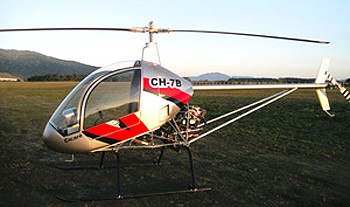
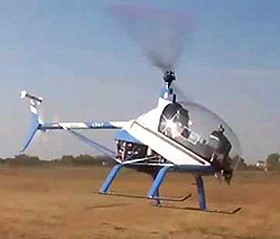
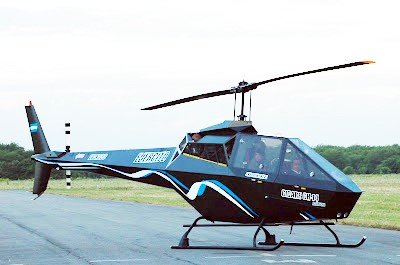
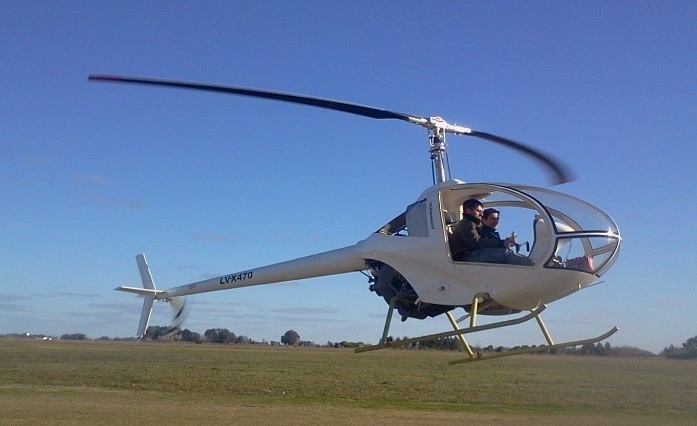
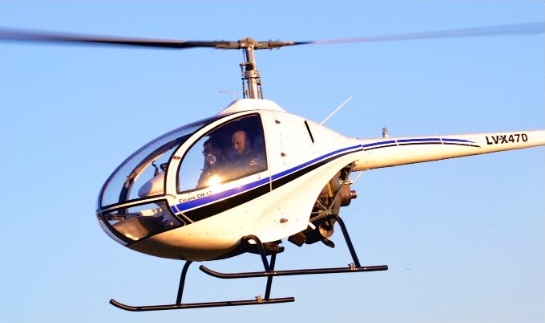
It is an evolution of the Ch-6 and CH-7 Angel helicopters with a notable increase in performance with the new refined version having been repowered with the Rotax 912 ULS 100HP four stroke engine adding to endurance, performance and reliability.
The CH-7B helicopter also features minor cabin changes along with engineering improvements. Quality Aeronautical components are used throughout its construction.
Augusto Cicare CH-7 2000VL
In 1996 Augusto Cicare created the Cicare CH-7 2000VL. It was later presented to the public in 2010. This was an ultralight helicopter with two separate and independent engines that can land with only one of the engines operating, thus giving greater security and minimizing risks from engine failure during flight.
The Augusto Cicare CH-14 light two-seat tandem helicopter development began in January 2005 under an Argentine Army request in conjunction with CITEFA, La Plata University and Army Aviation Maintenance Batallion.
First revealed Nov 23, 2007 during the Army Aviation Day and is intended to be used in both civilian and military applications.
Powerplant: Rolls Royce Allison 250-C20-B, 420 hp Maximum Continuous Power: 370 hp MTOW: 1450 kg Empty Weight: 750 kg Useable Load: 700 kg Vne: 240 km/h Cruise Speed: 210 km/h Range: 630 km Climb Rate: 8 m/s Service Ceiling: 4500 m
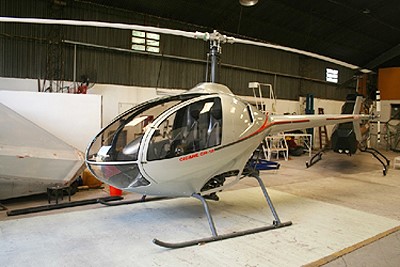
The Cicaré CH-12 side by side seat helicopter is built in the Argentne Republic, for private and recreational use. This particular design seems to incorporate the traditional style of helicopter swash plate along with a new composite cabin and tail boom.
It is equipped with a Subaru EJ25 engine, however it has been designed to also accept a Lycoming O-360.The airframe is made of SAE 4130 steel tubes. The skids are made of SAE 4130 steel tubes and aluminium.
The main and tail rotors are with composite blades. The vertical and horizontal stabilizer are aluminium and the cabin is composite. Dual controls are standard and two fuel tanks are fitted.
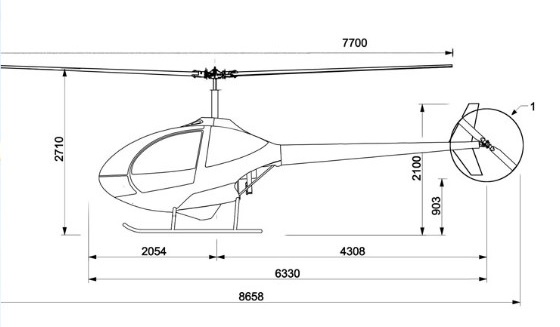
CH-12 Engine: Subaru EJ25 or Lycoming HIO-360- G1A Rotor diam: 7,70m Height: 2,71m Width: 2,20m MTOW: 700 Kg (1540 lbs) Empty Weight: 430 Kg (946 lbs) Maximum Speed (VNE): 205 Kmh (128 mph) Cruise Speed: 160 kph (100 mph) Climb Rate: 7 m/s (1380 ft/m) Service Ceiling: 3500 m (11,500 ft) Endurance: 3.0 hr Seats: 2 Fuel: AVGAS 100LL
Argentinian engineer Augusto Cicare has designed and built a successful ultralight helicopter that weighs in at 135 kg, the CH IV. Powered by a Rotax 532, the prototype completed over 150 hours by 1988.
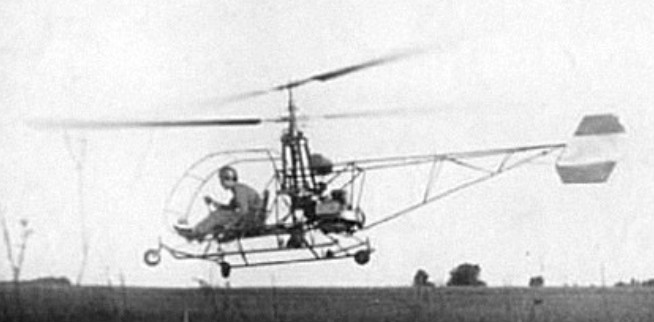
The first (1961) helicopter designed and built by Augusto Cicare is a single-seat single-engine with two counter-rotating coaxial rotors. Each rotor has two blades. The cyclic control varies the inclination of the rotors axis. The airframe is made of steel tubes. The four stroke, four opposite cylinders engine was also designed and built by Augusto.
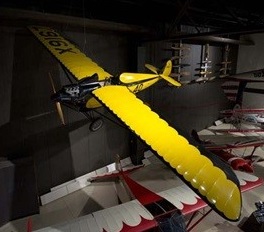
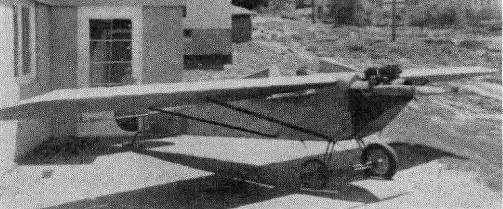
The Church Midwing was originally advertised as “the sportiest, safest, best-looking airplane in the light, single seat class,” and sold as a home-built kit.
Like the first Church aircraft, built by James Church in 1928, the Church Midwing has a Heath fuselage, which is wire-braced and bolted. The Midwing lacks a windscreen, providing the pilot protection from windblast with a cowling, which extends from the firewall to the instrument panel. The instrument panel itself consists only of a tachometer, and oil pressure and temperature gauges.
1955
Gene Chase acquired the fuselage, stabilizer and elevator, Church wings with ailerons, windshield cowling, and a set of plans in the 1960’s. Working from those plans, which are copies of the original set drawn by James Church, Gene began a five-year restoration process. Gene’s restored Midwing made its first appearance at EAA during the 1970 Oshkosh fly-in. It made its first flight at the Ottumwa Fly-In in September of that year, witnessed by the plane’s creator, James Church. On May 29, 1972, James Church visited Gene Chase in Tulsa and flew the plane; he notes in the plane’s log book that this was, “my first flight in one of my Mid-Wings since 1941 (31 years ago).”
Ultralight replica: RagWing Aircraft RW4 Midwing Sport
Engine: Heath-Henderson 83ci, 27 hp @ 2,700 r.p.m. Length: 16 ft. 9 in. Span: 26 ft. 8 in. Wing area: 110 sq. ft. Chord: 4 ft. 6 in. Empty Weight: 367 lbs. Gross Weight: 584 lbs. Fuel capacity: 4 ½ USgals. Oil capacity: 6 quarts Fuel consumption: Approx. 2 g.p.h. @ 2,500 r.p.m. Top speed: 90 m.p.h. (est.) Cruising speed: 70 m.p.h. (est.) Landing speed: 28 m.p.h. (est.)
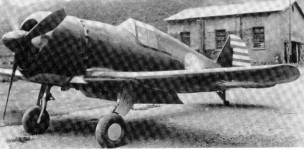
The reliance on foreign imports was not ideal, and so, despite having to pick up and move their comparatively new and basic aircraft industries further west as the Japanese advanced, the Chinese began to explore building their own aircraft designs. And this has led to two, known as the Chu XP-series.
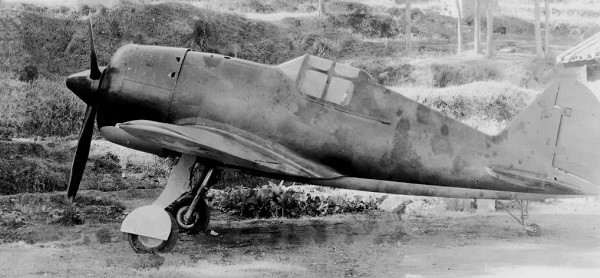
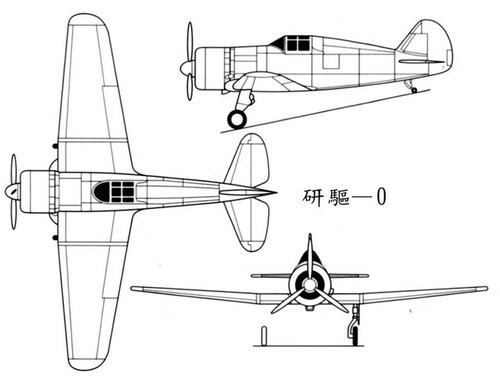
The first of these Chinese aircraft, the XP-0 was initiated in early 1941. Major General Chu Chia-Jen, who was Chief of the Air Force Technical Bureau, started development of an indigenous fighter that would be heavily based on the Curtis Hawk 75 export fighter.
This aircraft had been ordered in kit form from the United States and production had been attempted, but proved too much for the young aero industry, especially with the pressures of Japanese bombing and factory relocation. However, it was the most modern design that the Chinese had experience with, so it formed the basis of the XP-0.
Lacking modern aeronautical materials, the Chinese had to institute many compromises. Instead of the Hawk’s all metal structure, the XP-0 used a mixed construction, utilizing a welded tube metal fuselage which was clad in a plywood skin. The wings too were of wooden construction.
The engine was the Pratt & Whitney Twin Wasp that produced 1,200hp, an engine that was the most powerful available in any numbers to the Chinese.
A unique prototype was manufactured in 1943 by AFAMF-Yangling, using the tail surfaces of a Hawk 75, the centre section of the wing and the landing gear of a North American NA-6, the tailwheel from P-43 and the engine and cockpit of a P-66. The wings were built in wood/plywood.
There are some issues in the information on armament. Generally, it is stated that this aircraft had a rather heavy weapon load of either two or four 20mm cannons, which it carried in underwing fairings, and a centreline bomb rack. But for early 1941, that would be an extremely powerful punch for a single-engine fighter, and certainly a massive step up from the Hawk 75. As said, the available evidence is fragmentary. But it is possible that both may be correct. Because the design was initiated in early 1941, and the first prototype didn’t fly until 1943, it is conceivable that considering the development time involved, the weapon fit did evolve before that first flight.
First flight
Apparently, the aircraft handled well in the air, but its performance as a fighter by 1943 standards was low. Top speed was reported as 313mph (c.503kp/h) and XP-0 seems to have been broadly comparable to aircraft of its generation.
How well it would have stood up to prolonged flight testing is also a question because on landing the aircraft ground looped and was written off. However, the pilot survived and his debrief apparently allowed at least one more prototype to be developed.
1944
It is confusing as to how many other variants of the XP-0 were built, but some Chinese online sources assert that as many as nine improved models were built through 1944-46.
An upgraded X-P0 with different appearance was shown in 1944.
By mid-1941 China was the recipient of Lend-Lease aid from the United States, and though it would take a while to really build up the Nationalist forces, the massive influx of modern aircraft meant the need for a home-grown fighter was vastly diminished.
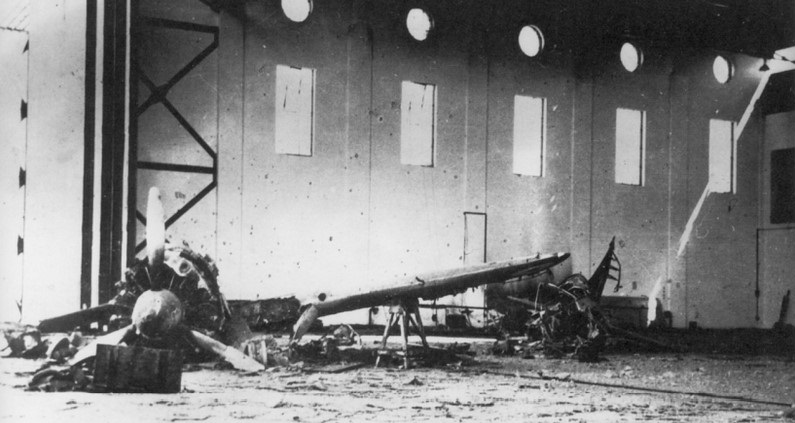
Lei Yun 1942 after Japanese bombing
Engine: Pratt & Whitney Twin Wasp, 1,200hp Wingspan: 11.4 m Length: 8.8 m Height: 3.70 m Wing area: 22 sq.m Max weight: 2,990 kg est max speed: 504 kph Range 1,400 km
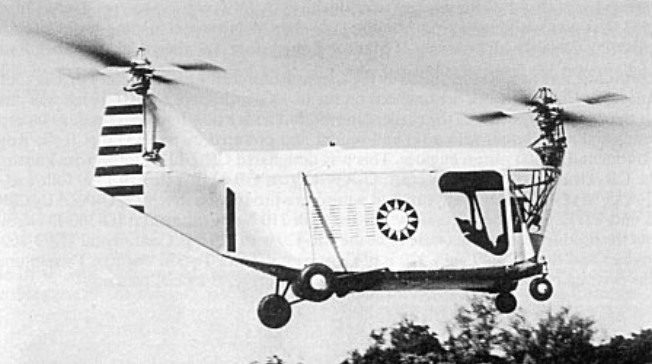
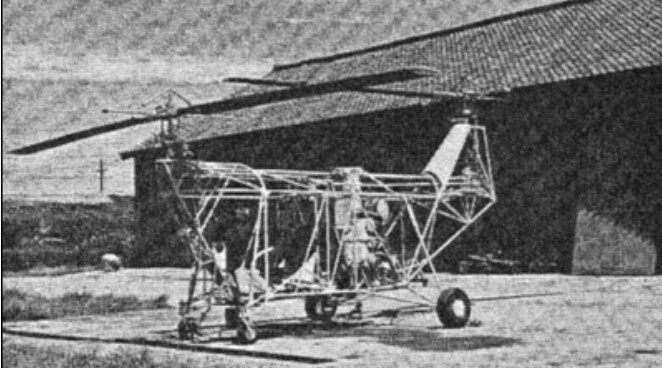
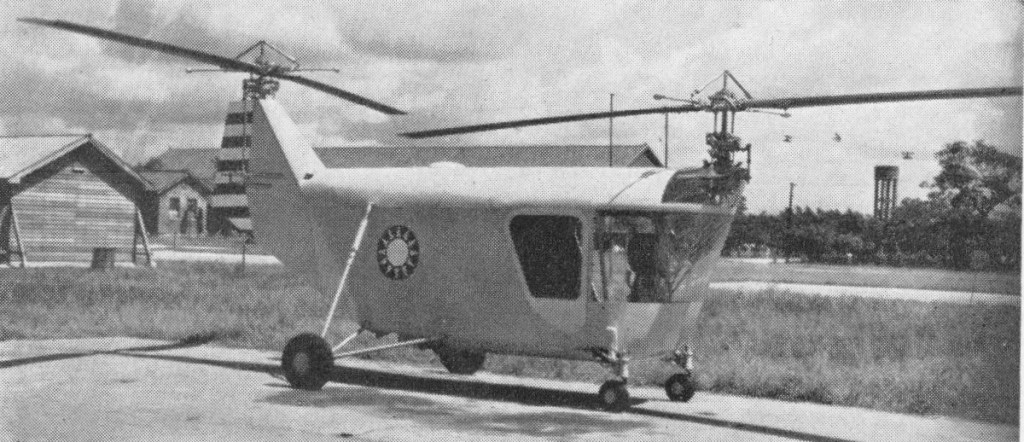
In 1952 Major-General C.J. Chu produced a small tandem-rotor helicopter known as the CJC-3 which was a side-by-side two-seater with a centrally-mounted 190hp Lycoming engine and fixed four-leg undercarriage.
CJC-3 Engine: 1 x Lycoming, 190hp Rotor diameter: 6.47m / 25 ft Overall length: 32 ft. 10 in. Gross weight: 930kg Empty weight: 680kg Maximum speed: 180km/h Cruising speed: 136km/h Inclining climb: 466m/min Ceiling: 3660m / 16,800 ft Range: 216km / 130 miles at 68 m.p.h. Seats: 2