Dallach Fascination / W.D. Flugzeugleichtbau Fascination / Siggi’s Aeroplane Works D-4 Fascination / DG Aircraft Fascination / UL-Jih Fascination

The Fascination was marketed by WD Flugzeugleichtbau of Heubach, Germany as the Dallach D.4 Fascination. This was an aircraft of mixed construction, including wood, composites and steel components with fabric covering. It first flew in 1996. An all-composites version, the Dallach D.4 BK Fascination was flown in 1999.

The Fascination has a spaceframe fuselage and composite wings covered in Dacron. It is equipped with a retractable undercarriage, wing flaps and a variable pitch prop. It is powered by a Rotax 912 UL or Rotax 912 ULS engine. Price 2009: 84000 EURO
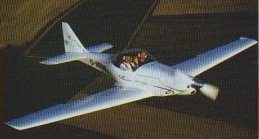
The Fascination F100 is an advanced version of the ultralight/VLA airplane which was based on the all composite VLA layout of the Fascination (D4BK) by Wolfgang Dallach. During and after his collaboration with Wolfgang Dallach, Jaroslav Sedláĉek from UL-Jih in the Czech Republic made own contributions to the design which finally led to the UL-Jih F-100.
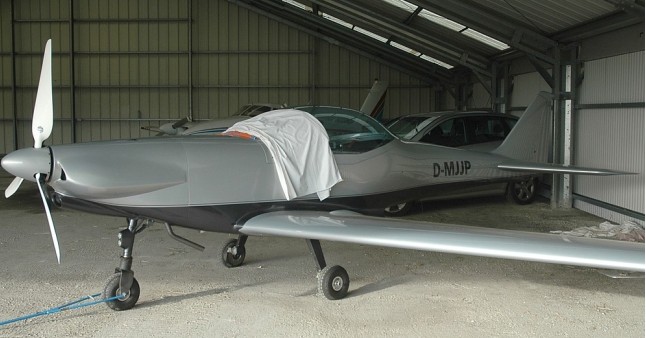
Fascination D-4B

The Wolfgang Dallach Company collapsed and on 1 August 2008 DG Aircraft GmbH took over support of the Dallach “Fascination”, “Evolution”, “Sunwheel” and all derivatives.

The Czech Kaplice company UL-Jih successfully completed testing the Fascination F100. On December 12, 2007, the craft was weighed in the presence of the LAA’s chief inspector, the German engineer Otto Bartsch, and a representative of the French company J.F. Boudet. The aircraft, together with adjustable propeller and retractable landing gear in operational mode, weighed 294 kg. The hull also passed the stress test with an overall burden of 3265 kg. In July of 2007 the wings were subjected to a fracture test with a 2100 kg load. In 2008 the aircraft will be ready for the French and German market. 2009 Price: 62500 EURO
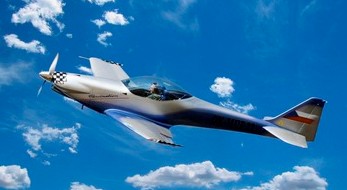
Fascination F100

UL-Jih fabricated the Fascination F100 models and claimed sole production and marketing rights both to the D.4 and D.5 when WD Flugzeugliechtbau ceased trading in 2005, though those rights are challenged by Swiss Light Aircraft AG, who build their own versions.

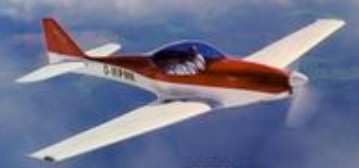
The later Fascinations are all-composite aircraft, with a low wing of trapezoidal planform. The ailerons have external balance trim tabs and sealed nosegaps. Inboard, there are electrically operated Fowler flaps. The fuselage becomes slender towards the tail, where the trapezoidal tailplane is set at mid-height, the elevators having a small cutout for rudder movement. The fin is swept but the rudder has vertical edges; it extends to the bottom of the fuselage. The cockpit seats two in side-by-side configuration under a one-piece bubble canopy, lever hinged from the rear; behind the seat backs there is luggage space. Until 2008, all Fascinations had a retractable tricycle undercarriage. The main wheels, mounted from the fuselage on cantilever spring legs, retract electrically outward into the wing and the nosewheel retracts rearwards. The fixed wheel option has wheel fairings. The main wheels have brakes and the nosewheel power steering. A Stratos Magnum 501 ballistic recovery parachute is fitted.
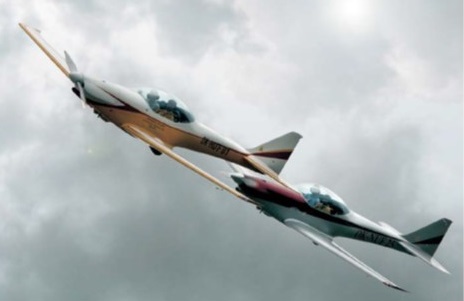
The Fascination has been marketed both complete and in kit form. More than 200 had been sold by 2006 and 183 appeared on the mid-2010 civil registers of European countries, excluding Russia. The price in 2017 was €89.380 for the F100.

It was reported that Fascination-airplanes (various versions) were flying in countries as remote as Brazil, Australia, and the Philippines.

Gallery

DN4
Original mixed construction Fascination
First flew 1996
41 built

DN4 BK
Composite construction
Stall: 35 kt / 40 mph / 64 kmh
Cruise: 146 kt / 168 mph / 270 kmh
VNE: 157 kt / 180 mph / 290 kmh
Empty Weight: 290 kg / 639 lbs
MTOW Weight: 450 kg / 992 lbs
Climb Ratio: 1600 ft/min / 8,5 m/s

F80
Engine: Rotax 912UL, 59.6 kW (79.9 hp)
Wing span: 9.10 m (29 ft 6 in)
Wing area: 10.6 sq.m (115.2 sq ft)
Length: 6.87 m (22 ft 6 in)
Height: 2.10 m (6 ft 11 in)
MAUW: 472.5 kg (1,042 lb)
Empty weight: 297 kg (655 lb)
Fuel capacity: 96 L (25.3 US gal; 21.1 Imp gal)
Never exceed speed: 270 km/h (170 mph, 150 kn)
Cruise speed: 243 km/h (151 mph, 131 kn)
Stall speed: 65 km/h (40 mph, 35 kn) flaps extended
Climb rate: 6.0 m/s (1,180 ft/min)
Range: 1,400 km (870 mi, 760 nmi) with max fuel
g limits: +4.0/-2.0
Certification: VZ
Seats: 2
Fuel consumption: 15 lt/hr
Price (1998): 120 500 DM
Kit price (1998): 76 300 DM

F100
Engine: Rotax 912ULS
Propeller: ground-adjustable DUC, or variable-pitch Woodcomp SR 3000/2W
Span: 9,00 m
Wing area: 10,76 sq.m
Length: 6,65 m
Stall: 35 kt / 40 mph / 65 kmh
Cruise: 132 kt / 152 mph / 245 kmh
VNE: 146 kt / 168 mph / 270 kmh
Empty Weight: 300 kg / 661 lbs
MTOW Weight: 472 kg / 1041 lbs
Climb Ratio: 1200 ft/min / 6 m/s
Glide Ratio: 10
Take-off distance (50ft obstacle): 690 ft / 210 m
Landing distance (50ft obstacle): 1150 ft / 350 m
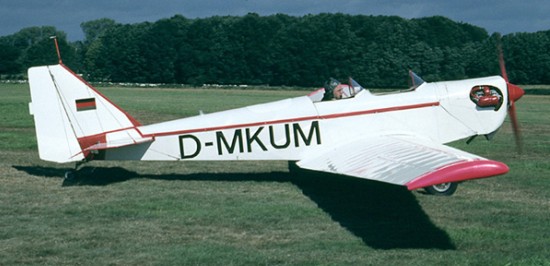
Dallach D.3 Sunwheel / W.D. Flugzeugleichtbau D.3 Sunwheel / DG Aircraft Sunwheel / UL-JIH Sunwheel

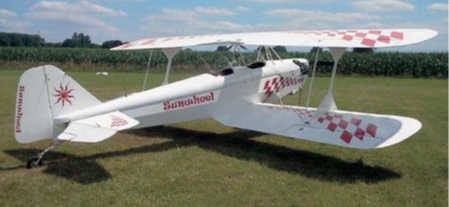
A tandem two seat biplane capale of aerobatics, the Sunwheel has a welded steel spaceframe fuselage while the wings have spars of argon-welded dural tube. The retro style biplane tail-dragger has dual controls and powered with a Rotax 912 UL four stroke engine. The wing spars are aluminum tubes with PU ribs covered with fabric. The ailerons are fitted on both upper and lower wings.

W.D. Flugzeugleichtbau GmbH marketed in completed and kit forms the Dallach D.3 Sunwheel tandem two-seat biplane.

The Wolfgang Dallach Company collapsed and on 1 August 2008 DG Aircraft GmbH took over support of the Dallach “Fascination”, “Evolution”, “Sunwheel” and all derivatives.

Sedláček UL-JIH marketed the Sunwheel UL.

Engine: Rotax 912, 80 hp
Wing span: 7 m
Wing area: 16 sq.m
MAUW: 450 kg
Empty weight: 250 kg
Fuel capacity: 30 + 30 lt
Max speed: 145 kph
Cruise speed: 135 kph
Minimum speed: 65 kph
Climb rate: 3.5 m/s
Certification: VZ
Seats: 2
Fuel consumption: 15 lt/hr
Price (1998): 88 800 DM
Kit price (1998): 62 700 DM

Sedláček UL-JIH Sunwheel UL
Engine: Rotax 912 UL
Span: 7 m
Length: 6,1 m
Wing area: 16 sq.m
Empty weight: 251 kg
MTOW: 400 kg
Stall speed: 50 km/h
Cruising speed: 130 km/h

Dallach Sunrise II

The Sunrise II was the first UL-aeroplane designed and built by Wolfgang Dallach, the prototype first flying in 1986. About 40 Sunrise II were built by Wolfgang Dallach Flugzeugbau and delivered complete or as a building package before production ended in 1991; the airframe remaining in production as the basis for the Sunwheel biplane. Originally powered by a 40 hp, 2 cylinder 4-stroke Lemon-Visas engine, most of the Sunrise UL aeroplanes have modified or replacement heavier engine.

Engine: Lemon-Visas, 40 hp
Seats: 2

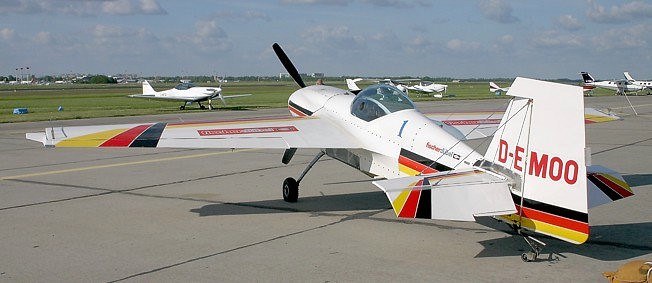
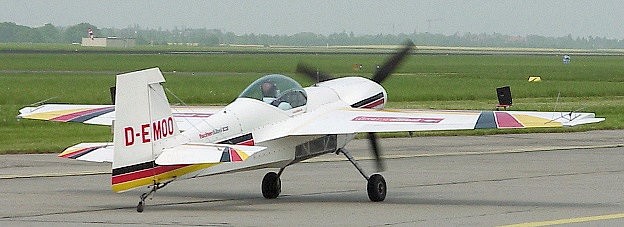
Dallach D1 Diabolo

The D1 Diabolo by Wolfgang Dallach basically consist of a simple tube construction. The engine is attached to a welded steel mount and is equipped with a Christians inverted oil supply system. The propeller is a hydraulically adjustable 3-blade wood propeller (Constantspeed) from Hoffmann. It consists of multiple glued wood. The front edge of the propeller is provided with a steel guard.

The fuel tank contains 90 liters, with 85 liters useable. It is located in the fuselage between the cabin and the firewall and consists of 2 compartments, with the lower compartment equipped with a pendulum for fuel supply in inverted flight. In normal flight, this compartment runs full again. Indefinite inverted flight is not possible due to the small size of the aerobatic compartment of only 5 liters.

For starting and generating the fuel pressure in normal situations, the Diabolo is equipped with a mechanical fuel pump.

Engine: Lycoming AEIO-540 – D4-B5, 260 hp at 2,700 rpm
Propeller: Hoffmann HO-V123K-V / 200AH 3-blade
Propeller diameter: 2,00 m
Weight: 700 kg
Max speed: 228 mph
Stall: 65 mph
TO roll: 130 m
TO to 15m: 360 m
Landing roll: 230 m
Landing from 15m: 480 m
ROC: 12.7 m/s / 2,500 fpm
Ceiling: 20,000 ft

Dakomat DEKO-5

Deko 51

DEKO-5 was designed by Polish aeronautical engineers: Marek Debski, Krzysztof Kotlinski, Type: Side-by-side ultra-light, training and observation aircraft – ideal for recreational flyer. First flight, June 1996 Design Features: Pod-and-boom fuselage. Wings braced by V-type struts. Structure: Wing and elevator are made of aluminum tubes and dacron (or ceconite) soft skin. Fuselage structure is construction, as space truss of aluminum tubes with composite joints (Polish Patent). Tail boom is made of two aluminum tubes. Cockpit canopy is made of glassfibre laminate and organic glass. The open cabin offers a very good view. The DEKO-5 is designed to a +4g / -2g load limit Power Plant: One Rotax 582 (65 hp, electric start and brakes), piston engine with reductor gear 2.58. Propeller: Junkers three-blade, carbon fibre, ground-adjustable pitch propeller. System: Ballistic parachute recovery system

Engine: One Rotax 582 (65 hp, electric start)
Reduction gear: 2.58.
Propeller: Junkers three-blade, carbon fibre, ground-adjustable pitch
Stall: 32 kt / 37 mph / 60 kmh
Cruise: 57 kt / 65 mph / 105 kmh
VNE: 86 kt / 99 mph / 160 kmh
Empty Weight: 250 kg / 551 lbs
MTOW Weight: 450 kg / 992 lbs
Climb Ratio: 600 ft/min / 3 m/s
Glide Ratio: 6:1
Take-off distance (50ft obstacle): 590 ft / 180 m
Landing distance (50ft obstacle): 460 ft / 140 m

Daily Old Glory

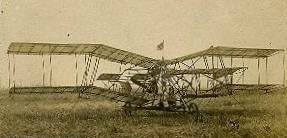
The Daily ‘Old Glory’ built in 1910 in Chicago, Illinois, was an early “gull-wing” aircraft built for entry in one of the popular local air meets. The ship was motorless at the time of the photo.

The machine had the name “Old Glory” painted on the petrol tank that was mounted under the center of the drop in the upper wing. Although apparently built to completion, it is doubtful the machine was ever flown.

Daedalus Apex 2

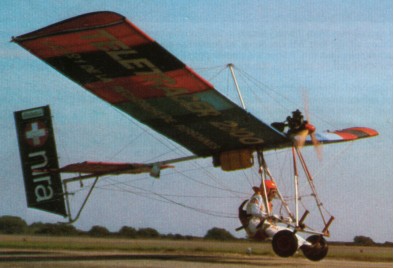
Single seat single engined high wing mono¬plane with hybrid control. Wing has unswept leading and trailing edges, and constant chord; cruciform tail. Pitch control by elevator on tail; yaw control by fully flying rudder; no separate roll control; control inputs through weight shift for pitch/yaw/roll. Wing braced from above by kingpost and cables, from below by cables; wing profile 100% double surface. Undercarriage has two wheels with tailskid. Aluminium tube framework, without pod. Engine mounted at wing height driving tractor propeller.
The Daedalus Apex 2, is similar in concept to the Quicksilver E, in that it uses weight shift allied to a rudder and elevator to give hybrid control, a formula which is popular in North America but unusual in Europe.
The obvious difference between the Apex 2 and the Eipper product, however, is the choice of power unit and the use of a tractor propeller. Marco uses the Konig SC430 three cylinder radial engine, allied to a three blade propeller, a combination which has proved highly effective. Not only has Marco flown extensively in the Alps with the Apex 2, but he also competed in the 1982 London Paris, where he got a special award for having the quietest aircraft in the competition.

Engine: Konig SC430, 24 hp.