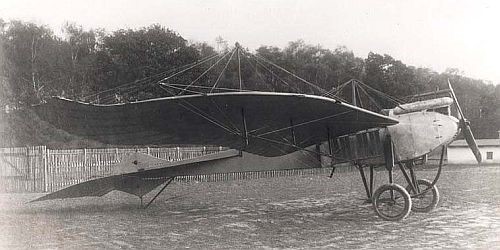
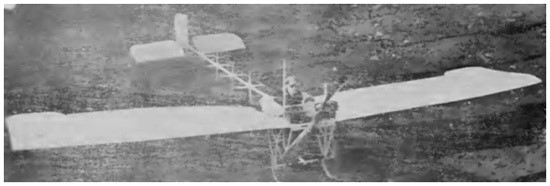
The D.F.W. Stahltaube was a licence built version of the Jeannin Stahltaube reconnaissance and training aircraft of 1913.
The Deutsche Flugzeug-Werke G.m.b.H. firm at Lindenthal, Leipzig received an order for 18 of these copies but delivered only two.
Engine: Mercedes G 4 F, 94 hp Length: 37.73 ft / 11.5 m Wingspan: 45.932 ft / 14.0 m Wing area: 322.92 sq.ft / 30.0 sq.m Max take off weight: 1896.3 lb / 860.0 kg Weight empty: 1323.0 lb / 600.0 kg Max weight carried: 573.3 lb / 260.0 kg Max speed: 59 kt / 109 km/h Cruising speed: 51 kt / 95 km/h Wing load: 5.95 lb/sq.ft / 29.0 kg/sq.m Range: 205 nm / 380 km Crew: 2
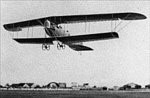
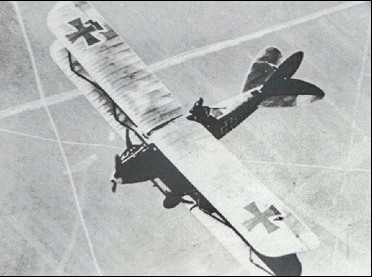
With the power of a 200hp Benz Bz IV, the top level speed was 155km/h at 1000m, while the C.V’s operational ceiling was 5000m. Built not just by DFW, but by four other sub-contractors. Just under 1,000 were in operation on every front at the end of September 1917. Armament comprised the standard 7.92mm guns, one fixed forward-firing and one mounted in the rear cockpit, plus light bombs.
Max. speed: 155 km/h / 96 mph Ceiling: 5000 m / 16400 ft
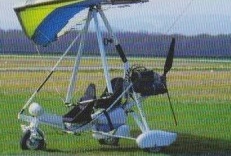
The Dynamic wings were designed by DTA and Jean Marc Rousellet and are manufactured exclusively for DTA by the Ellipse company in France.
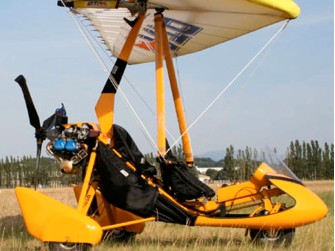
The Dynamic 503 16 is based on a stainless steel spaceframe. This trike has an articulated monopole under the seat for easy rigging of the wing, which is a Dynamic 16 produced by llipse on the company’s behalf.
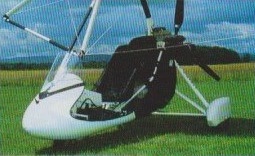
The Dynamic 582 Feeling is a higher performance version of the 16. The same structure is fitted with a Rotax 582, a fairing and smaller Dynamic 15 wing. A four stroke 912 is an option.
They feature individual composite seas.
Dynamic 582 Feeling
Dynamic 503 16 Empty weight: 152 kg Wing span: 10.30 m Wing area: 14.50 sq.m Fuel capacity: 50 lt Engine: Rotax 503, 50 hp MAUW: 400 kg Seats: 2 Max speed: 115 kph Cruise speed: 80 kph Minimum speed: 50 kph Climb rate: 3.6 m/s Fuel consumption: 11.5 lt/hr Price (1998): 93 540 F
Dynamic 582 Feeling Empty weight: 180 kg Wing span: 9.90 m Wing area: 15 sq.m Fuel capacity: 50 lt Engine: Rotax 582, 64 hp MAUW: 400 kg Seats: 2 Max speed: 136 kph Cruise speed: 100 kph Minimum speed: 56 kph Climb rate: 4.5 m/s Fuel consumption: 11 lt/hr Price (1998): 28 000 Fttc
Dynamic 15/430 Max take-off weight: 430 kg / 946 lbs Maximum speed: 86 mph Minimum speed: 32 mph Double surface: Yes
Dynamic 16 Max take-off weight: 400 kg / 880 lbs Maximum speed: 75 mph Minimum speed: 31 mph Double surface: Yes
Dynamic 450 Max take-off weight: 450 kg / 990 lbs Maximum speed: 85 mph Minimum speed: 31 mph Double surface: Yes
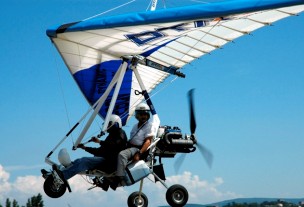
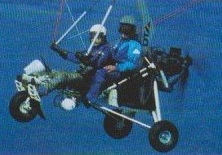
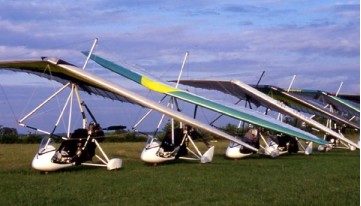
Available with the Rotax 503 and 582 as well as the Rotax 912 and 912S, this machine gives you performance capabilities and robust strength not normally found in an affordable and easy to inspect/maintain aircraft. With the available option of the Voyageur-II’s cantilever mast, this machine can be flown with no front strut.
The Voyageur 912 XP15 is a large trike with a topless wing, designed for aerial work or long rallies. It features individual composite seats.
The basic design is an aluminum sandwich with extra reinforcing structure. It also has a safety cable running through the sandwich. The sandwich is riveted and also bonded with aeronautical Araldite structural epoxy. The Voyageur 912 was created for this purpose and became the first trike to be fitted with the 4-stroke 80HP Rotax 912 engine. With the available option of the Voyageur-II’s cantilever mast, this machine can be flown with no front strut, just like its big brother. The Voyageur II trike features a cantilever mast that is structurally strong enough to eliminate the need for the standard front tube. The basic design is an aluminum sandwich with extra reinforcing structure. It also has a safety cable running through the sandwich. The sandwich is riveted and also bonded with aeronautical Araldite structural epoxy. The Voyageur trike utilizes only 4130 chromoly steel, a primarily stainless steel frame and aircraft grade aluminium, and is made in France. Features that come standard on the Voyageur II include: Full front and rear shock absorbers (rear gas shocks) 3-wheel brakes with parking brake Cruise throttle Large aviation tires Padded seat covers Rear seat head rest Side luggage bags Large capacity fuel tank with fuel level gauge Instrument panel RPM gauge, hourmeter, water temp gauge Full electrical system Assembled pitot system
Voyageur II / Dynamic 16 Engine: Rotax 582
Voyageur II / Dynamic 15/430 Engine: Rotax 582 Engine: Rotax 912 UL Engine: Rotax 912S ULFR
Voyageur II / Dynamic 450 Engine: Rotax 582 Empty Weight: 407 lbs Gross Weight: 992 lbs Useful load (582): 585 lbs Useful load (912/S): 532 lbs Wingspan: 33’ 5” (10.2 m) Wing Area: 167 sq. ft (15.5 sq.m) Length: 9’ 9” inches Height: 12’ 5” Fuel Capacity: 18 gallons Cruise Speed: 56 mph Vne: 90 mph Rate of Climb: 700 fpm Takeoff distance at gross weight: 262 feet Takeoff distance over a 50′ obstacle:n 590 feet Landing distance at gross weight: 165 feet Landing distance over a 50′ obstacle: 560 feet
Voyageur 912 XP15 Empty weight: 225 kg Wing span: 10 m Wing area: 15.50 sq.m Fuel capacity: 80 lt Engine: Rotax 912, 80 hp MAUW: 450 kg Seats: 2 Max speed: 135 kph Cruise speed: 100 kph Minimum speed: 63 kph Climb rate: 5 m/s Fuel consumption: 10 lt/hr Price (1998): 220 950 Fttc
The Detroit Aeroplane Co. displayed a monoplane fitted with the company’s two-cylinder opposed 30 hp engine at the 1910 Philadelphia show, where it was “the hit of the show”. Two of them were sold, one to Atlantic City, where a training school is to be started next summer. It had a main plane with a span of 30 ft and an area 150 sq. ft. Stability was achieved by an arrangement where “the extremities of the wings sections have been cut out and hinged to the rear lateral beam. These float in the air stream in flight, being depressed individually through their attachment to the steering column”, i.e. ailerons… The fuselage was a single seamless steel tube of large diameter, braced with wires over cruciform horizontal and vertical masts.