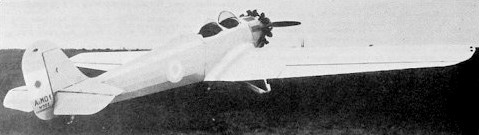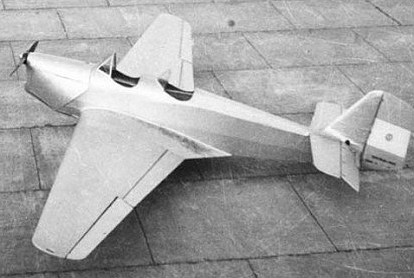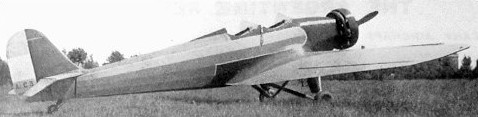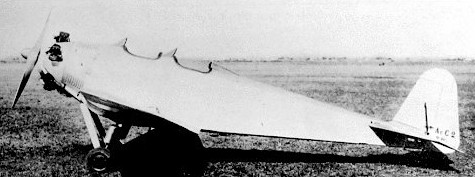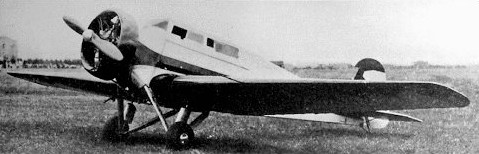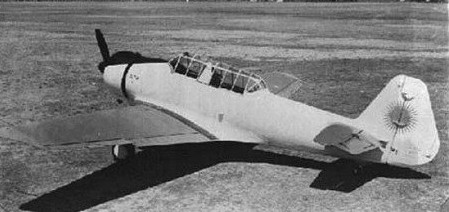
FMA I.Ae.22

FMA I.Ae.22 DL

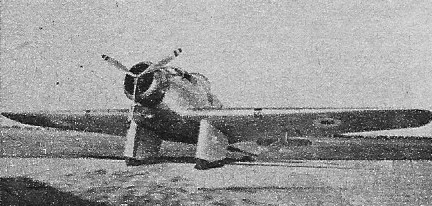
The first airplane designed by the Institute Aviation, and first counting on an Argentine engine. It flew for the first time the 8 of August of 1944 commanded by the Lieutenant First Osvaldo Rovere. Two series of 100 units each were ordered by the Commando of Military aviation; in 1946 the first series was completed and in 1950, the second.
A monoplane of cantilever low-mounted wing, its construction was totally in native wood from the province of Missions. The fuselage was of semimonocoque structure of oval section. The stabilizer covered in wood and rudder in linen cloth. A conventional undercarriage retractable towards the center, operating electrically or manually, with hydraulic brakes.
The cockpit with tandem seats, acrylic cover; the forward with a height restriction.
The Ae 16 GAUCHO 9 cylinders radial offered 450 hp at 2200 r.p.m. with a mixed wood FMA prop initially, later a metal two-blade Hamilton Standard 2M-D30 of variable pitch.
An Armstrong Siddeley Cheetah radial of 475 hp with a two-blade Rotol constant speed propeller was fitted to a version designated I.Ae.22-C.
Initially used as an advanced trainer with dual controls, the armament included two fixed Madsen machine guns of 7.65 mm with 450 rounds each.
An observation model has a movable machine gun in the rear position and carried three bombs of 50 kg and six rockets of 11 kg each.

Engine; 1 x 450hp Ae.16 Gaucho
Wingspan; 12.60 m / 41 ft 4 in
Length; 9.20 m / 30 ft 2 in
Height; 2.84 m / 9 ft 4 in
Wing area; 23.19 sq.m / 249.61 sq ft
Max take-off weight; 2200 kg / 4850 lb
Empty weight; 1520 kg / 3351 lb
Max. speed; 290 km/h / 180 mph
Cruise speed; 226 km/h / 140 mph
Ceiling; 6000 m / 19700 ft
Range; 1100 km / 684 miles
Crew; 2
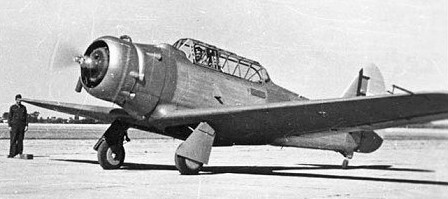
FMA I.A.21

1943

Engine; 1 x 450hp Wright Whirlwind 975-E-3
Wingspan; 12.00 m / 39 ft 4 in
Length; 8.52 m / 28 ft 11 in
Height; 2.60 m / 9 ft 6 in
Wing area; 22.30 sq.m / 240.03 sq ft
Max take-off weight; 2330 kg / 5137 lb
Empty weight; 1550 kg / 3417 lb
Max. speed; 300 km/h / 186 mph
Cruise speed; 240 km/h / 149 mph
Ceiling; 6200 m / 20350 ft
Range; 1200 km / 746 miles
Crew; 2

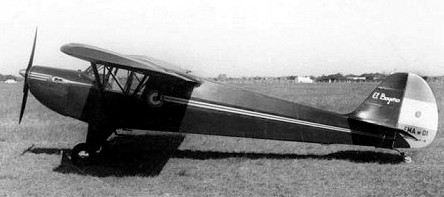
FMA I.A.20 El Boyero

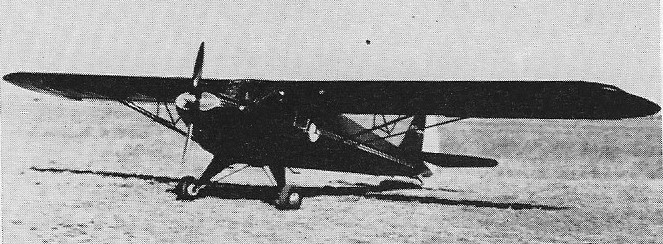
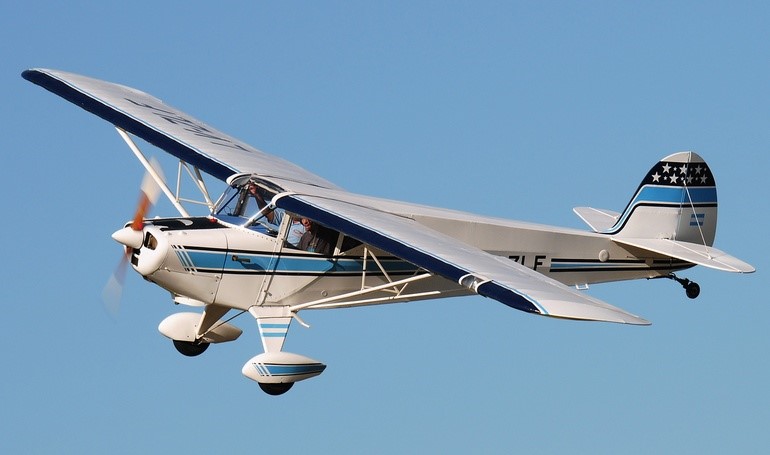
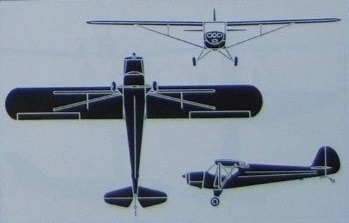
The two-seat El Boyero was designed by the Fabrica Militar de Aviones in 1939 and the first of two prototypes were flown on 2 November 1940.

The FMA’s preoccupation with the manufacture of military aircraft necessitated the transfer of production to SA Sfreddo y Paolini. However, the inability of the company to acquire the necessary materials resulted in production of El Boyero being shelved until 1949 when manufacture was undertaken by Petrolini Hermanos on behalf of the Direccion General de Aeronautica Civil, 130 being produced of which a number were delivered to the Air Force and Army for liaison and AOP tasks.

Whereas the prototypes were powered by the 50 hp Continental A-50 engine, the production model had 65 hp Continental A-65-8 engines.

The FMA.20-B has a 75 hp Continental A-75.

Petrolini took over production of the El Boyero two-seat light monoplane from the Instituto Aerotecnico in late 1940s, and built 160 to government contracts for flying clubs and schools.

Engine; 1 x 65hp Continental A-65-8
Wingspan; 11.50 m / 38 ft 9 in
Length; 7.10 m / 23 ft 4 in
Height; 1.80 m / 6 ft 11 in
Wing area; 17.70 sq.m / 190.52 sq ft
Max take-off weight; 500 kg / 1102 lb
Empty weight; 225 kg / 496 lb
Max. speed; 160 km/h / 99 mph
Cruise speed; 145 km/h / 90 mph
Ceiling; 4000 m / 13100 ft
Range; 650 km / 404 miles
Crew; 2

FMA Ae.M.B.1 / M.B.2

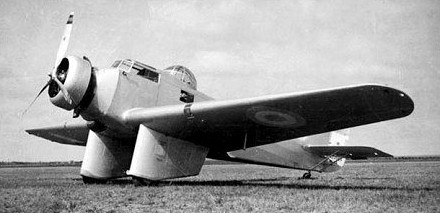
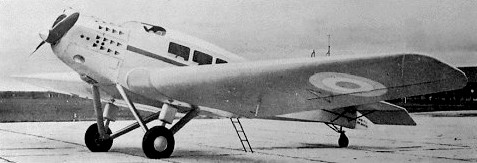
The Ae.M.B.1 was the first light bomber built in Argentina, and this aircraft, built by the Fabrica Militar de Aviones. Was flown for the first time on 9 June 1935, powered by a Wright Cyclone SGR-1820F.3 engine rated at 715 hp at 6890 ft.

Extensive modifications to the design were made, and the bomber entered production as the Ae,M.B.2, fifteen machines being completed during 1936.

Similarly powered to the prototype, the Ae.M.B.2 was a low-wing cantilever monoplane with a fixed, spatted undercarriage, and defensive armament of a single fixed forward-firing 7.65mm Madsen 1933 machine gun in the engine Cowling, two similar weapons in a manually operated dorsal turret, and an 11.35mm machine gun firing though a ventral hatch.

Popularly known as the ‘Bombi’, the Ae.M.B.2 was equipped with Telefunken radio, a Nistri camera, and an 880 lb bombload.

Ae.M.B.2
Engine; 1 x 715hp Wright SGR-1820-F3 Cyclone
Wingspan; 17.20 m / 56 ft 5 in
Length; 10.90 m / 36 ft 9 in
Height; 2.80 m / 9 ft 2 in
Wing area; 35.00 sq.m / 376.74 sq ft
Max take-off weight; 3500 kg / 7716 lb
Empty weight; 2120 kg / 4674 lb
Max. speed; 285 km/h / 177 mph at 6890 ft
Cruise speed; 240 km/h / 149 mph at 6890 ft
Service ceiling: 19685 ft
Ceiling; 6700 m / 22000 ft
Time to 3280 ft: 3 min 30 sec
Time to 9840 ft: 14 min 36 sec
Range; 600 km / 373 miles
Endurance: 5 hr
Crew; 4
Armament; 2 x 7.76mm machine-guns, 1×11.35mm machine-gun
Bombload: 400kg

FMA Ae.T.1

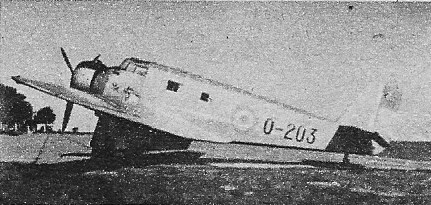
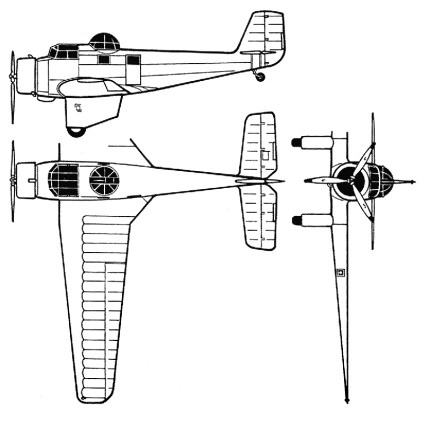
A five seater of 1933

Engine; 1 x 450hp Lorraine-Dietrich 13Eb
Wingspan; 17.30 m / 57 ft 9 in
Length; 9.70 m / 32 ft 10 in
Height; 4.36 m / 14 ft 4 in
Wing area; 37.00 sq.m / 398.26 sq ft
Max take-off weight; 2810 kg / 6195 lb
Empty weight; 1750 kg / 3858 lb
Max. speed; 225 km/h / 140 mph
Cruise speed; 195 km/h / 121 mph
Ceiling; 6000 m / 19700 ft
Range; 1170 km / 727 miles
Crew; 1
Passengers; 3-4

FMA Ae.M.O.1

The Ae.M- 01 was built for Argentine Army in 1934.

Engine; 1 x 235hp Wright Whirlwind R-760ÅÒ
Max take-off weight; 1434 kg / 3161 lb
Empty weight; 950 kg / 2094 lb
Wingspan; 12.32 m / 40 ft 5 in
Length; 7.85 m / 26 ft 9 in
Height; 2.70 m / 9 ft 10 in
Wing area; 19.00 sq.m / 204.51 sq ft
Max. speed; 220 km/h / 137 mph
Cruise speed; 196 km/h / 122 mph
Ceiling; 6200 m / 20350 ft
Range; 926 km / 575 miles

FMA Ae.C.4

1936

Engine; 1 x 130hp de Havilland Gipsy Major
Wingspan; 12.16 m / 40 ft 11 in
Length; 7.44 m / 24 ft 5 in
Height; 2.70 m / 9 ft 10 in
Wing area; 16.00 sq.m / 172.22 sq ft
Max take-off weight; 932 kg / 2055 lb
Empty weight; 610 kg / 1345 lb
Max. speed; 200 km/h / 124 mph
Cruise speed; 165 km/h / 103 mph
Ceiling; 6000 m / 19700 ft
Range; 1000 km / 621 miles
Crew; 2

FMA Ae.C.3

Ae.C-3 light aircraft of 1934.

Engine; 1 x 145hp Armstrong Siddley Genet Major
Wingspan; 12.30 m / 40 ft 4 in
Length; 8.20 m / 27 ft 11 in
Height; 2.50 m / 8 ft 2 in
Wing area; 16.90 sq.m / 181.91 sq ft
Take-off weight; 964 kg / 2125 lb
Empty weight; 670 kg / 1477 lb
Max. speed; 170 km/h / 106 mph
Cruise speed; 152 km/h / 94 mph
Ceiling; 5500 m / 18050 ft
Range; 700 km / 435 miles
Crew; 2

FMA Ae.C.2

The Ae.C-2 trainer of 1932.

Engine; 1 x 165hp Wright Whirlwind R-54013
Wingspan; 12.00 m / 39 ft 4 in
Length; 7.90 m / 26 ft 11 in
Height; 2.70 m / 9 ft 10 in
Wing area; 19.00 sq.m / 204.51 sq.ft
Max take-off weight; 1130 kg / 2491 lb
Empty weight; 650 kg / 1433 lb
Max. speed; 220 km/h / 137 mph
Cruise speed; 175 km/h / 109 mph
Ceiling; 5000 m / 16400 ft
Range; 1500 km / 932 miles
Crew; 1
Passengers; 2

FMA Ae.C.1

The first Argentine plane designed and built was the Ae.C.1A three-seat monoplane of April 1931.

Engine; 1 x 150hp Armstrong Siddeley Mongoose
Wingspan; 12.00 m / 39 ft 4 in
Length; 7.75 m / 25 ft 5 in
Height; 3.16 m / 10 ft 4 in
Wing area; 19.00 sq.m / 204.51 sq ft
Max take-off weight; 1120 kg / 2469 lb
Empty weight; 700 kg / 1543 lb
Max. speed; 171 km/h / 106 mph
Cruise speed; 154 km/h / 96 mph
Ceiling; 4300 m / 14100 ft
Range; 1300 km / 808 miles
Crew; 1
Passengers; 2