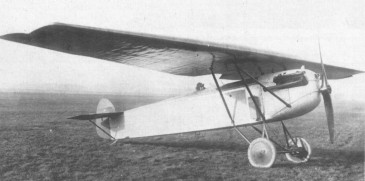
Fokker D.X

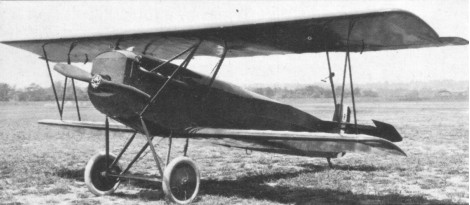
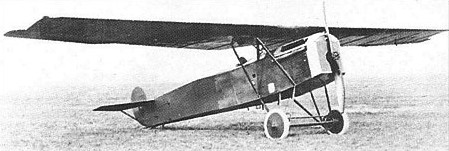
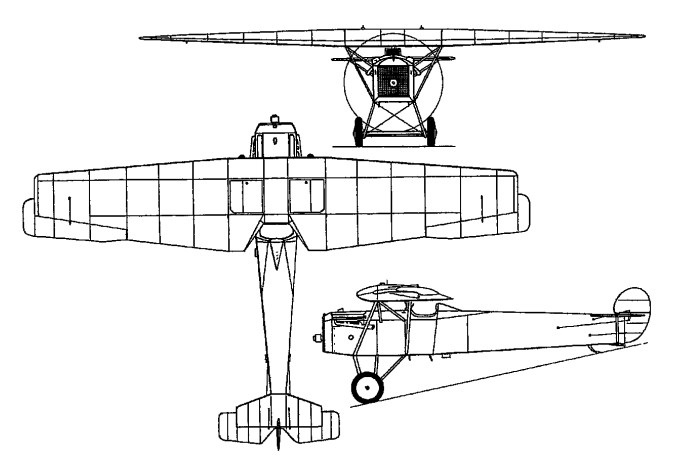
Developed at Schwerin from the V.41, the partly-completed single-seat fighter prototype was taken to the Netherlands, where, in 1921, it was completed with a 300hp Hispano-Suiza 8Fb eight-cylinder water-cooled engine in place of the 185hp BMW Ilia six-cylinder engine for which it had been originally intended.
A cantilever parasol monoplane with a plywood-skinned wooden wing and a steel-tube fuselage, the prototype crashed as a result of wing flutter during a demonstration in Spain in 1922. An order for 10 D X fighters was placed on behalf of the Aeronautica Militar Espanola, these being supplied during the course of 1923. In the same year, one example of the D X was supplied to Finland. Armament comprised two 7.92mm machine guns.

Engine: 300 h.p. Hispano-Suiza
Wingspan: 13.75 m / 45 ft 1 in
Length: 8.00 m / 26 ft 3 in
Height: 3.00 m / 9 ft 10 in
Max take-off weight: 1246 kg / 2747 lb
Empty weight: 860 kg / 1896 lb
Max. speed: 225 km/h / 140 mph
Armament: two 7.92mm machine guns
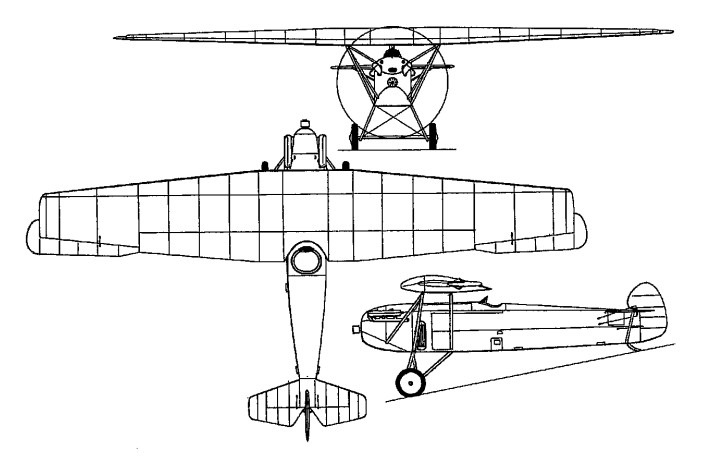
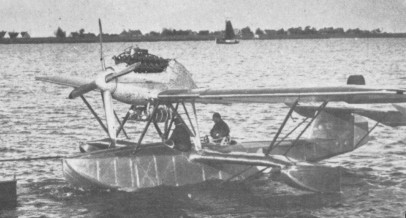
Fokker V.41

The D.X was developed at Schwerin from the V.41, and was partly finished when Platz moved to Veere with his staff. The aeroplane was completed there in 1919 as the prototype for the D. X. In 1923 Spain purchased ten production aircraft. Its engine was a 300 h.p. Hispano-Suiza and its speed 255 kph.

Fokker D.IX / PW-6

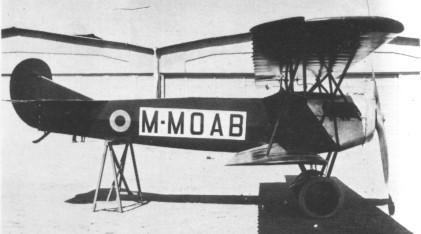
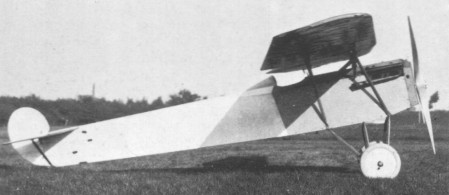
After the Armistice in 1918, Anthony Fokker returned to Holland and began to develop a new series of fighter designs originating from the D.VII of First World War. The first to appear, in prototype form only, was the D.IX, powered by a 300 hp Wright Hispano engine and was armed with two machine guns, flown for the first time in 1921, maximum speed was 220 kph. The prototype had a streamlined fuel tank built around the wheel axle, (like the C.I), but this tank was later removed upon delivery as PW 6 to the US Army Air Services. The sole prototype of the DI X was purchased for evaluation by the US Army Air Service and shipped to the USA in 1922, being assigned the designation PW-6. As evaluated by the USAAS, the aerofoil-section fuel tank was deleted, but the PW-6 was not considered to offer a sufficient advance over the D VII to warrant further development.
Of typical Fokker construction in employing a welded steel-tube fuselage and wooden wings each having two box spars, the D IX featured an aerofoil-shaped fuel tank between the main wheels as first tested by the V 36. Only one was built.
The D.IX was used as the design basis for the D.XI.

Max take-off weight: 1253 kg / 2762 lb
Empty weight: 874 kg / 1927 lb
Wingspan: 8.99 m / 29 ft 6 in
Length: 7.09 m / 23 ft 3 in
Height: 2.74 m / 8 ft 12 in
Wing area: 22 sq.m / 236.81 sq ft
Max. speed: 223 km/h / 139 mph
Cruise speed: 188 km/h / 117 mph
Range: 471 km / 293 miles

Fokker S.II

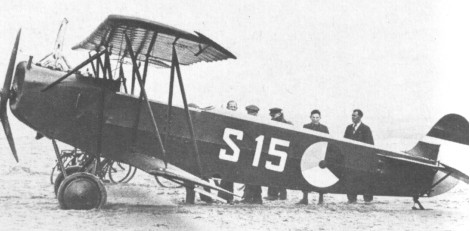
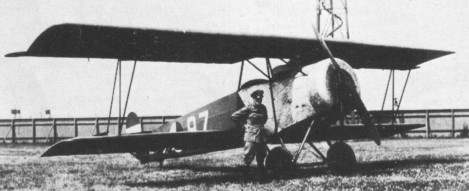
S.II Trainer with side by side seats for pupil and tutor. The aircraft was fitted successively with Thulin, Oberursel and Curtiss engines. The Aviation Department purchased 15 S.IIs with the registration numbers 84 to 98.
At least one was an S.IIA Ambulance aircraft, an S.II modified at Soesterberg Airfield, the open space between the top wing and fuselage top surface being covered in with transparent panels. The patient lay on a stretcher with his legs towards the tailplane.

Fokker F.VI / PW-5

Evolved from design work undertaken in Germany for the V.37 during the closing stages of World War I, the F VI single-seat parasol fighter monoplane powered by a 300hp Wright (Hispano-Suiza) H-2 water-cooled engine was of mixed construction, with a one-piece plywood-covered wooden wing and a welded steel-tube fuselage.
Two examples were ordered for evaluation by the US Army Air Service and were delivered in 1921, designation PW-5. Although the first of these crashed on 13 March 1922 as a result of a wing failure, a further 10 PW-5s were supplied to the USAAS that year. Armament comprised either two 7.62mm guns or one 12.7mm and one 7.62mm gun, and provision was made for small bombs to be carried on a rack beneath the fuselage.

Engine: 300hp Wright (Hispano-Suiza) H-2
Max take-off weight: 1218 kg / 2685 lb
Empty weight: 878 kg / 1936 lb
Wingspan: 12.02 m / 39 ft 5 in
Length: 7.94 m / 26 ft 1 in
Height: 2.74 m / 8 ft 12 in
Wing area: 22.95 sq.m / 247.03 sq ft
Max. speed: 232 km/h / 144 mph