General Aircraft Corp / GAC G1-80 Skyfarer

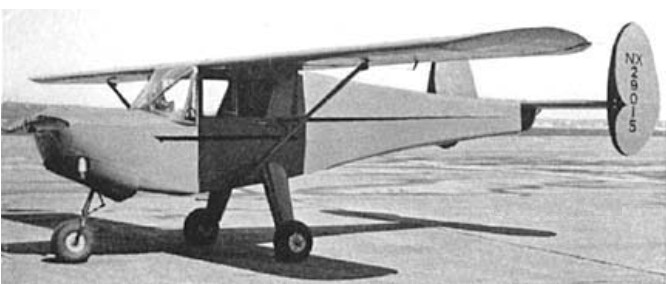
The General Aircraft Corporation was established to build an aircraft designed by Doctor Otto C. Koppen from the Massachusetts Institute of Technology. The aircraft was the G1-80 Skyfarer, a two-seat cabin high-wing braced monoplane with a light alloy basic structure and a mixed steel tube and fabric covering. It had an unusual tail unit, a cantilever tailplane with the elevator mounted on the upper surface of the tail with aluminum endplate fins and no movable rudders. It was powered by a 75 hp (56 kW) Avco Lycoming GO-145-C2 geared air-cooled four-cylinder engine.

The aircraft incorporated aerodynamic control principles covered by patents issued to Fred Weick, an early aeronautical engineer who went on to design and market the Ercoupe. Since it had no rudders (or rudder pedals), it was simpler to fly (it had a single control wheel, which controlled the ailerons and elevator), and was considered spin-proof. The aircraft was certified in 1941 with a placard that stated the aircraft was characteristically incapable of spinning. The company also made a comment to Popular Science in a September 1941 article, with first public photos that an “average” person could learn to fly the Skyfarer …in an hour or so…

It was anticipated that many aircraft would be ordered and built, but the United States became involved in the Second World War and the Skyfarer programme was abandoned after 17 examples had been built. The rights and tooling passed to Grand Rapids Industries in 1943, who built 2 aircraft before stopping production. The company became a manufacturer of the Waco CG-4A troop glider.

L.W. DuVon and Dr. David O. Kime of Western Union College convinced the type holder Grand Rapids Industries, to give the equipment, tools and one of the finished planes to the college in 1944. They then found local investors who formed Mars Corporation in 1945. The aircraft was later licenced as the Mars M1-80 Skycoupe with a 100 hp engine. One example was built and production plans were estimated to be as high as 75 planes in its first year. The glut of aircraft produced after the war left little market for the aircraft. The facility to manufacture the aircraft was sold by 1946.
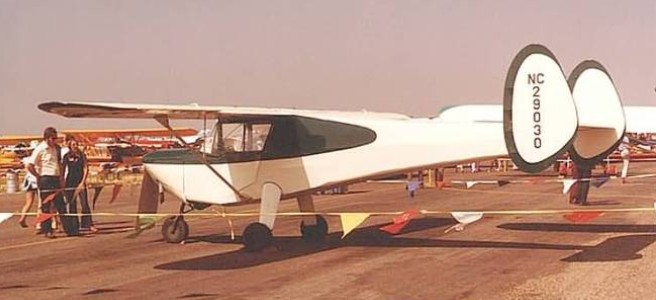
The aircraft NC29030 resides in the Plymouth County, Iowa Historical Museum.

Gallery

G1-80 Skyfarer
Engine: 1 × Lycoming GO-145-C2, 75 hp (56 kW)
Wingspan: 31 ft 5 in (9.58 m)
Wing area: 121.3 sq.ft (11.27 sq.m)
Length: 22 ft 0 in (6.71 m)
Height: 8 ft 8 in (2.64 m)
Empty weight: 890 lb (404 kg)
Gross weight: 1350 lb (612 kg)
Maximum speed: 144 mph ( km/h)
Cruise speed: 100 mph (161 km/h)
Range: 350 miles (563 km)
Service ceiling: 10,000 ft (3050 m)
Seats: 1 pilot, 1 passenger, side-by-side
General Aircraft GAL-42 Cygnet / Owlet

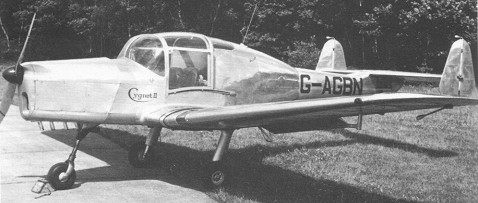
Cygnet II

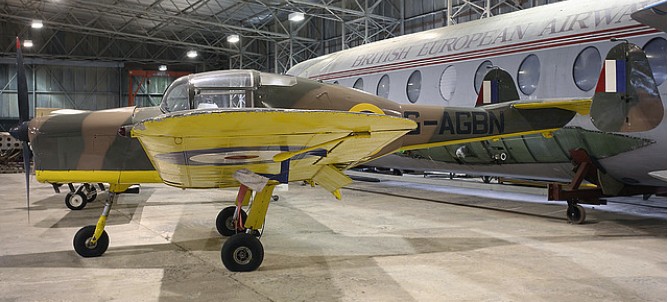
CW Aircraft was established in 1936 by C R. Chronander and J. I. Waddington to design and develop Cygnet two-seat all-metal cabin monoplane, which first flew in 1937. Rights in Cygnet acquired by General Aircraft Ltd. in 1938.

General Aircraft GAL-42 Cygnet Article

This 1936 side by side two seat training and club aircraft was an attempt at a more robust and easily made machine than those of longeron, plywood and fabric construction. It was the first British light aeroplane to have both metal skinned wings and fuselage. The first version had a single fin and rudder and a tailwheel landing gear. The later Cygnets had twin fins and a tricycle landing gear making it easier to fly.
There was also an experimental open-cockpit version, the Owlet.

General Aircraft GAL-42 Cygnet 2 a

Cygnet
Engine: One 150 h.p. Blackburn Major II.
Length: 23.25 ft. (7.08 m.).
Wing span: 34.5 ft. (10.5 m).
Weight empty: 1,475 lb. (670 kg.).
Seats: 2.
Max cruise: 115 m.p.h. (185 km.p.h.).
Ceiling: 14,000 ft. (4,300 m.) fully loaded.
Range: 445 miles (720 km.).

General Aircraft Genairco

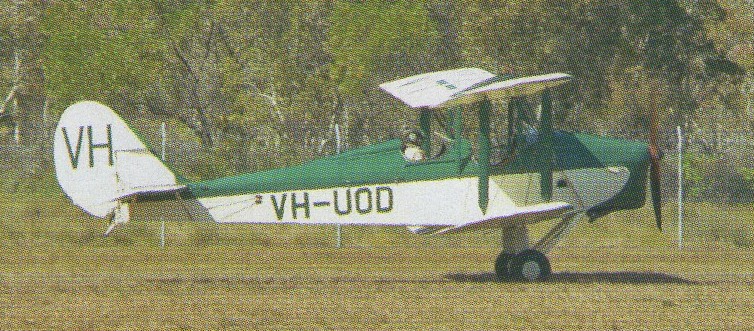
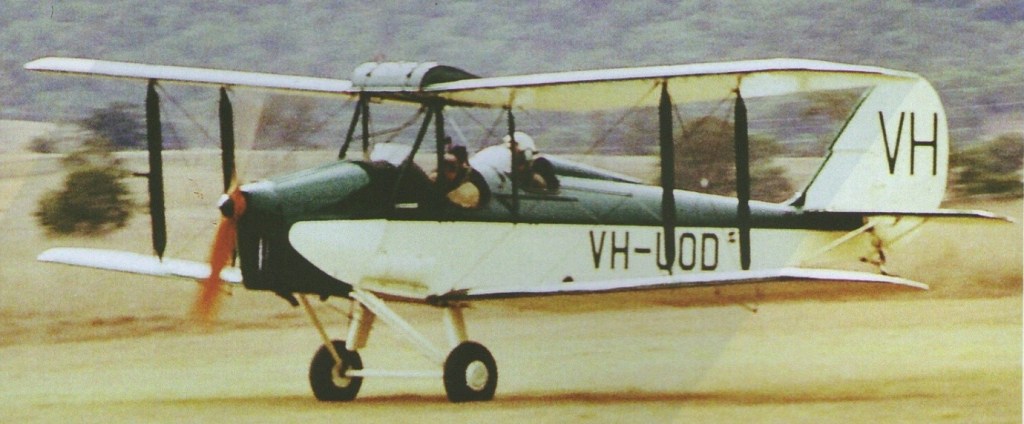
The first Genairco flew on December 20, 1929, and bore a marked similarity to the D.H.60, although it had a two-place front cockpit. The seventh and eighth aircraft produced were modified into cabin biplanes, resembling the D. H, 83 Fox Moth. The Depression and availability of D.H. types put General Aircraft out of business by early 1933.

Genairco VH-UOD

General Aircraft built about 12 Genaircos from late 1929 in ‘cabin’ and ‘open’ forms. A three-seater, two passengers are side-by-side in the front and pilot behind.

GEFA Eindecker

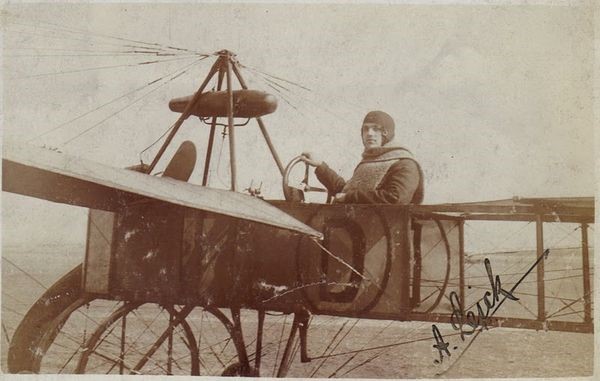
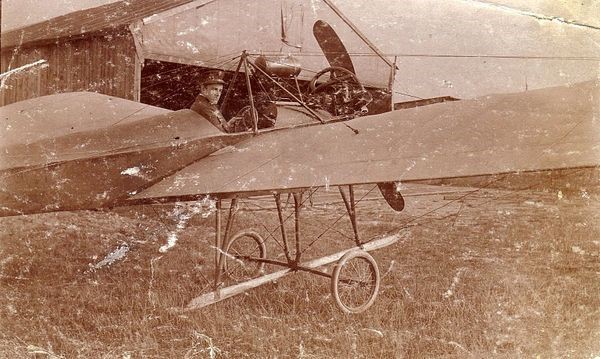
A construction of “Gesellschaft für Flugmaschinen- und Apparatenbau” at Bonn-Hangelar; designed and built by Dr. Josef Hoos – a “Kölner” – and a flyer since 1911. Similar monoplanes were built in “some” numbers during 1910-13, with various engines and used by the Hoos flying school up until 1914 – at first in Cologne and from December 1913 in Bonn-Hangelar.

The earlier G.E.F.A. eindeckers (of 1911/12) had a small rudder, the later rudders were larger. This example, probably a later model with a partially covered fuselage, is shown at Hangelar Flugplatz in early 1914 with flight-student Albert Leick seated.

Geest-Wolfmüller Motorflugzeug

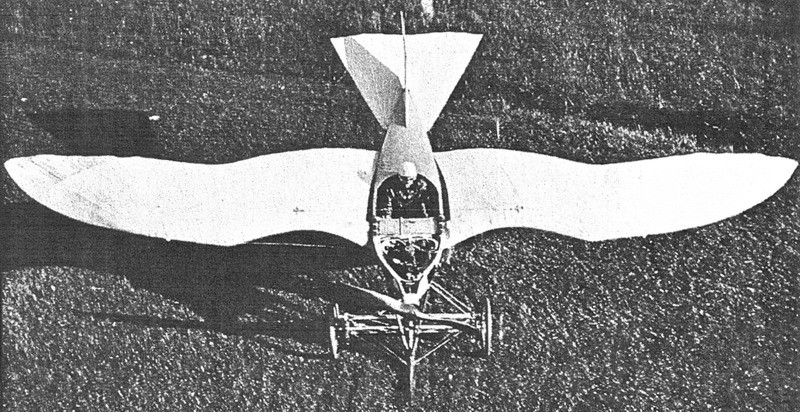
Development of the machine started in December 1909. It was powered by a 12 hp engine driving a two-bladed tractor propeller. The undercarriage was a tricycle construction with a strong skid in the middle of the front wheels. The characteristic wing – later the trademark of the Geest Möwe Eindecker types – was based on earlier work of Alois Wolfmüller. The machine was not tested as Wolfmüller realized that the machine would not reach the required speed to get into the air.

Geest Möwe 2

The Geest Flugzeugbau GmbH Möwe 2 was built at L.V.G. in Johannisthal during the second part of 1911. The idea was to build a Morane E.D fuselage with a Geest’s wing, but the result looks quite different. The engine was a 70 hp Gnome. It was successfully flown before winter by the L.V.G. pilot Alois Stiploschek. Some time later, it crashed.

Granville Bros / Gee Bee R6H / QED

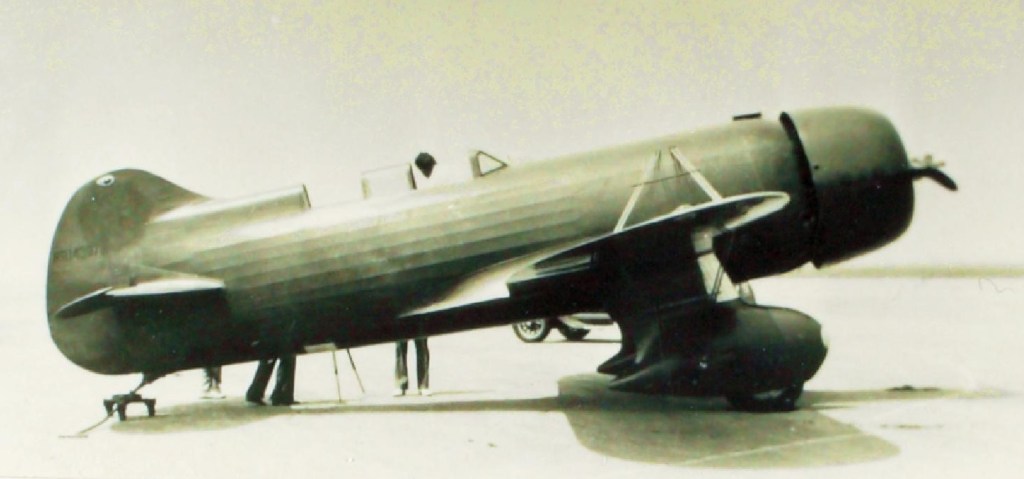
After liquidation the workforce built the QED, and the ‘Time Flies’ a racer for Frank Hawks. The Gee Bee R6 (later designated Q.E.D.) was designed and built as a two place transcontinental air racer specifically to complete in the MacRobertson Trophy Race – a transcontinental air race from London to Melbourne, Australia. The QED was powered by a 650 hp P&W R-1690 Hornet engine.

The QED did not finish the MacRobertson Trophy Race only reaching Bucharest and in 1939 was sold to Mexican competition pilot Francisco Sarabia.

After setting a new speed record from Mexico City to New York City in 10 hrs 48 minutes, tragedy struck and Sarabia was killed when the engine quit on take off from Washington D.C. and the aircraft plunged into the Potomac River.

The Q.E.D. was not badly damaged, and was restored and is now on display in Mexico as a tribute to Francisco Sarabia.

Replica:
Moss Gee Bee QED

Granville Bros / Gee Bee R-2

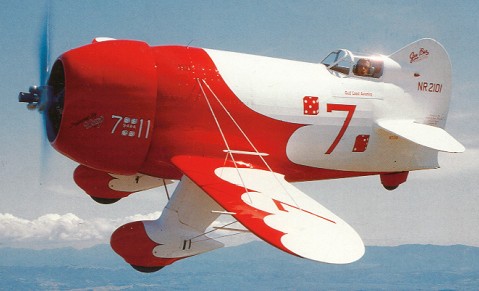
The Granvilles and their new chief engineer, Howell “Pete” Miller, came up with two of the most powerful models yet—the R Series Super Sportsters, race numbers 7 and 11—tailor-made to win the 1932 Nationals. For the Bendix there was No. 7, the Wasp Jr.-powered R 2; for the Thompson Trophy event there was No. 11, the Gee Bee R 1.

Gee Bee R 2 Super Sportster

P&W R-985, 535 hp
Built for the Bendix trophy.
302 USG fuel cap.
Fixed tailwheel.

Granville Bros / Gee Bee R-1

Jimmy Doolittle and the Gee Bee R-1

The Granvilles and their new chief engineer, Howell “Pete” Miller, came up with two of the most powerful models yet—the R Series Super Sportsters, race numbers 7 and 11—tailor-made to win the 1932 Nationals. For the Bendix there was No. 7, the Wasp Jr.-powered R 2; for the 1932 Thompson Trophy event there was No. 11, the Gee Bee R 1.

The Granvilles needed a pilot, and Jimmy Doolittle needed a plane. Doolittle flew to Springfield for a look. The Granvilles rolled out their creation, in a scalloped, black-piped, red-and-white paint scheme, set off by red 11s and dice showing 5 and 6. The R 1, essentially a scaled-up version of the Model Z, struck Doolittle as “all engine with minuscule wings and a bomblike fuselage.” The Granvilles had simply streamlined a Wasp Sr. engine with a modicum of bodywork, adding just enough wing and control surface area to keep it airborne, barely under control, and moving at nearly 300 mph.

Doolittle knew the airplane would be “extremely hot to handle.” After his one brief test flight, Boardman had reported severe directional instability, and the Granvilles had added two square feet of fin to the rudder. Doolittle clambered into the cockpit and asked that the engine be fired up. As the Wasp Sr. roared to life, one of the Granvilles, no doubt thinking ahead to locating the wreckage, asked where he was headed.

“I’m going to Cleveland, of course!” answered Doolittle. He took off and, without even a turn around the field, headed west. In less than two hours the Granvilles received a telegram: “Landed in Cleveland O.K., Jim.”

(replica)

Granville Brothers Gee Bee R-1 Article

Gallery

Super Sportster R-1
Engine: Pratt & Whitney R-1340, 800 hp
Length: 17.749 ft / 5.41 m
Height: 8.104 ft / 2.47 m
Wingspan: 25.0 ft / 7.62 m
Wing area: 79.654 sq.ft / 7.4 sq.m
Max take off weight: 3065.0 lb / 1390.0 kg
Weight empty: 1841.2 lb / 835.0 kg
Max. speed: 254 kt / 470 km/h
Landing speed: 103 kt / 190 km/h
Service ceiling: 4921 ft / 1500 m
Wing loading: 38.54 lb/sq.ft / 188.0 kg/sq.m
Endurance: 1 h
Crew: 1
Fuel capacity 160 USG.
Steerable tailwheel.