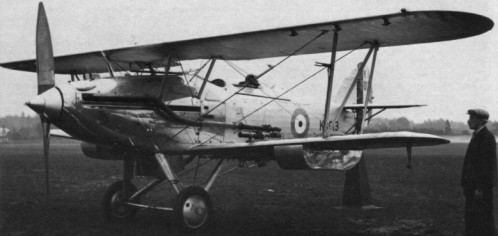
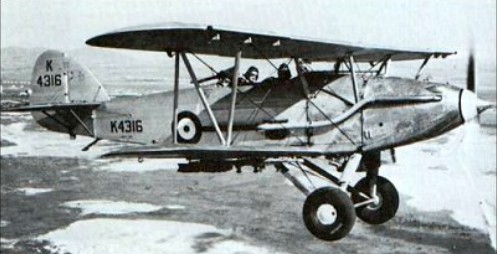
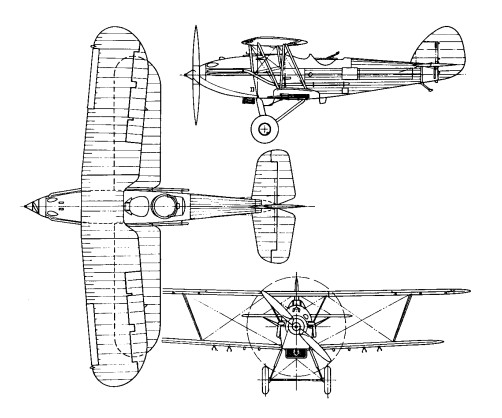
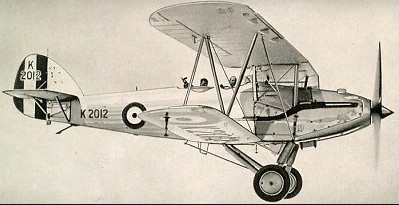
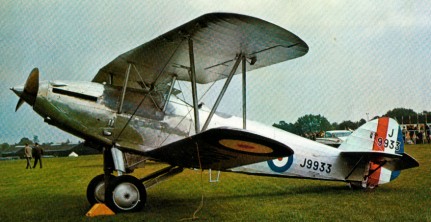
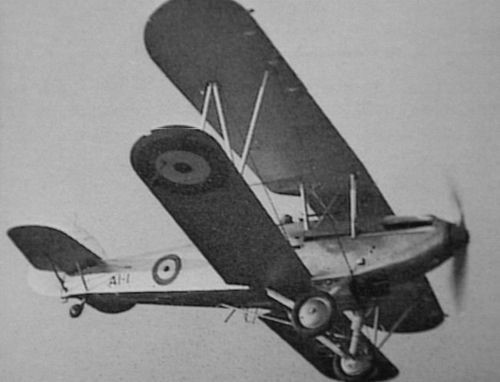
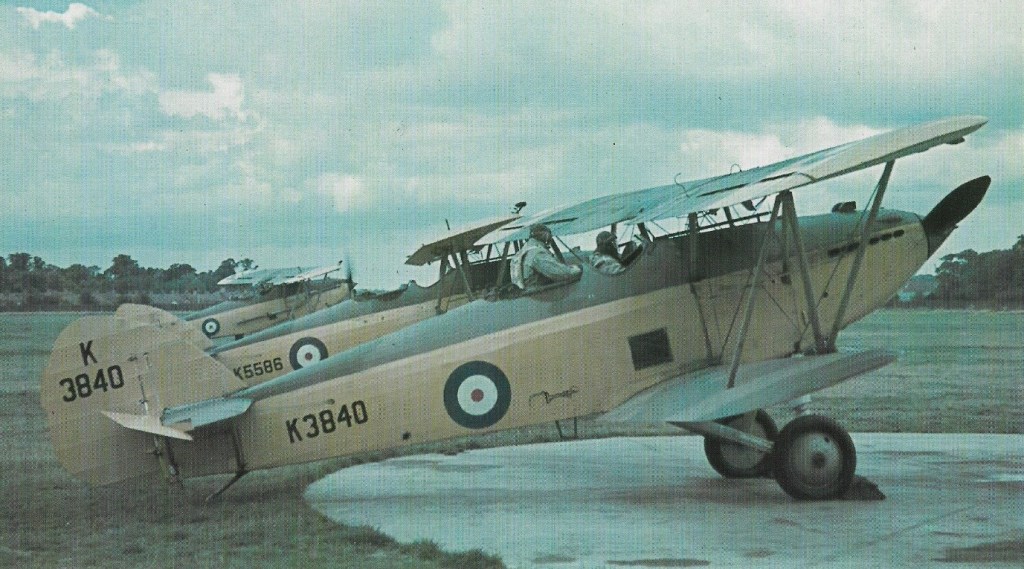
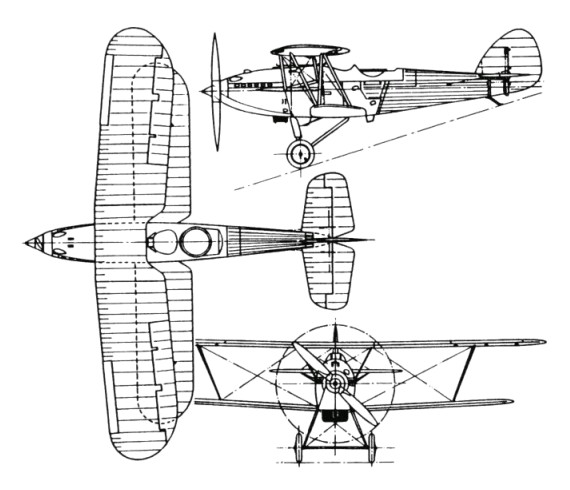
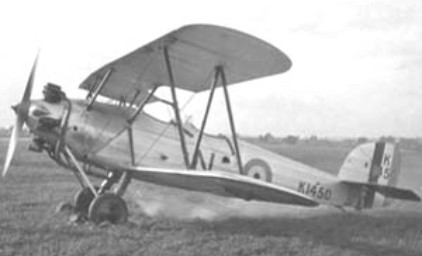
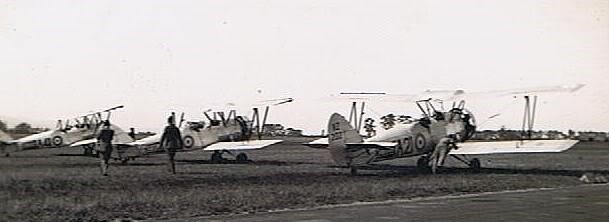
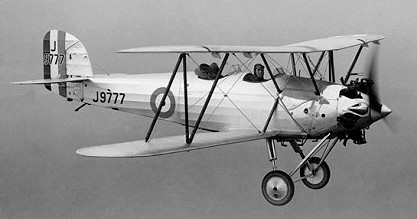
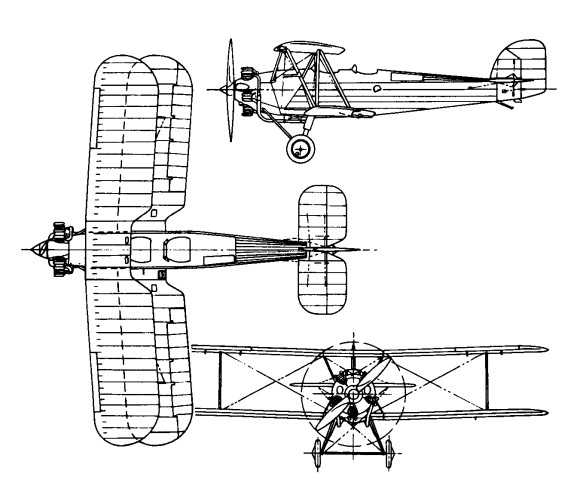
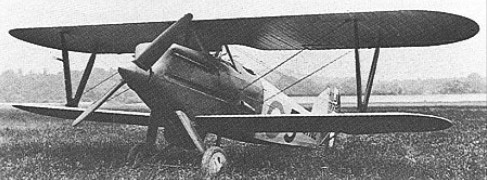
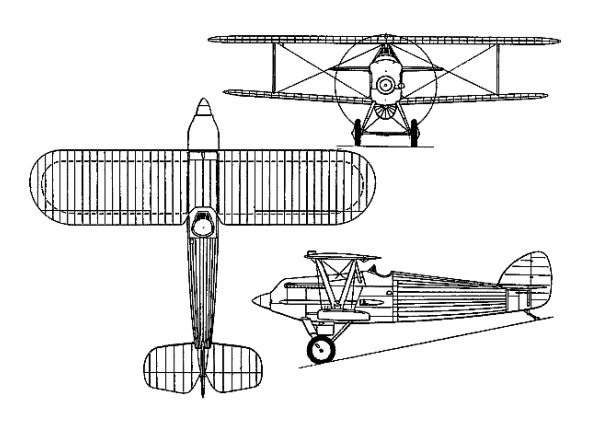
Originally designated Hart General Purpose, the pro¬totype Hardy, a converted Hart, first flew on September 7, 1934. Fitted with a message pick up hook and wing racks for supply containers or light bombs, it was slightly longer and its empty weight was substantially higher than that of the Hart.
The first 37 were powered by 530 hp / 391kW Rolls-Royce Kestrel IB engines, the remaining ten by 585 hp Kestrel Xs. The long exhaust pipes resembling those of the Audax, and the Hart’s armament of a Vickers machine gun on the port side of the fuselage and a Scarff mounted Lewis in the rear cockpit were retained. A total of 47 Hardys were built by Gloster during 1935, the first examples going to 30 Squadron, RAF, in Iraq in April. The type was used in the Middle East for army co operation, dive bombing and reconnaissance and to provide valuable close support to ground troops under pressure. These served with the RAF, latterly as a communications type, until 1941.
Engine: 1 x Rolls-Royce Kestrel IB, 395kW / 523 hp Max take-off weight: 2270 kg / 5005 lb Empty weight: 1450 kg / 3197 lb Wingspan: 11.35 m / 37 ft 3 in Wing loading: 14.35 lb/sq.ft / 70.00 kg/sq.m Length: 9.02 m / 29 ft 7 in Height: 3.23 m / 10 ft 7 in Wing area: 32.33 sq.m / 348.00 sq ft Max. speed: 140 kts / 259 km/h / 161 mph Service Ceiling: 5180 m / 17000 ft Armament: 2 x .303in / 7.7mm machine-guns Crew: 2
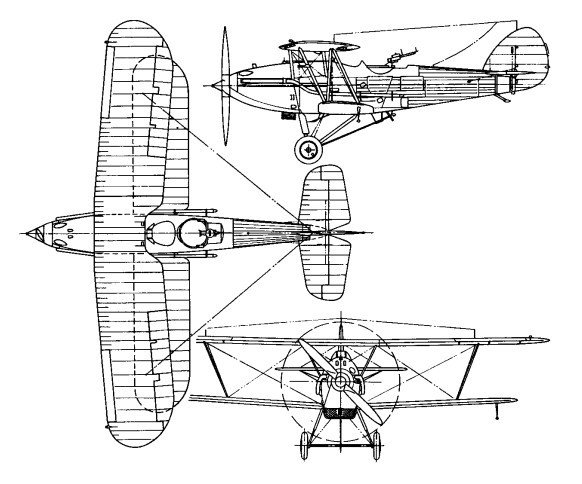
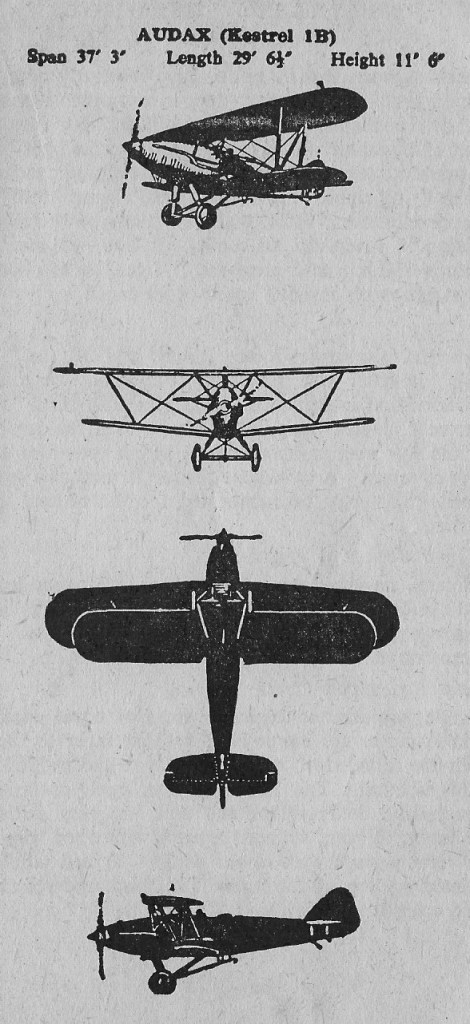
One of the first adaptations of the Hart day bomber involved fairly minor changes to satisfy an Army cooperation requirement, with the RAF needing a replacement for Armstrong Whitworth Atlas and Westland Wapiti aircraft. For this role the Hart was provided with a message pick-up hook and other equipment changes. About 652 Audax biplanes were ordered for the RAF, including those purchased by South Africa and those transferred to Malaya for the Straits Settlement Volunteer Air Force. Others were constructed for Persia (with Bristol Pegasus and Pratt & Whitney Hornet engines), Iraq, Canada, Singapore and Egypt. The Egyptian aircraft with Armstrong Whitworth Panther X engines and supplied to allow Egypt to share with Britain the defence of Egypt, the Sudan and the Canal zone under the terms of the Anglo-Egyptian Treaty. RAF Audaxes entered service in 1932 and some based overseas were still flying in 1941-42. An Audax squadron was used as fighter cover at the Digboi air station in north east Assam, India in 1942. Most of the remaining Audaxes were operated during the early war years as Hotspur glider tugs and trainers, 18 having previously been converted into Hart Specials.
Engine: 1 x Rolls-Royce “Kestrel IIS”, 385kW Max take-off weight: 1987 kg / 4381 lb Empty weight: 1336 kg / 2945 lb Wingspan: 11.4 m / 37 ft 5 in Length: 9.0 m / 29 ft 6 in Height: 3.2 m / 10 ft 6 in Wing area: 32.4 sq.m / 348.75 sq ft Max. Speed: 274 km/h / 170 mph Cruise speed: 240 km/h / 149 mph Ceiling: 6400 m / 21000 ft Range w/max.fuel: 600 km / 373 miles Armament: 2-4 .303 MG (7,7mm) machine-guns, 250kg of bombs Crew: 2
Hawker Audax Engine: Rolls Royce Kestrel II B, 523 hp Length: 29.593 ft / 9.02 m Height: 10.4 ft / 3.17 m Wingspan: 37.238 ft / 11.35 m Wing area: 348.000 sqft / 32.33 sqm Max take off weight: 4385.7 lb / 1989.0 kg Weight empty: 2939.3 lb / 1333.0 kg Max. speed: 148 kts / 274 km/h Service ceiling: 21506 ft / 6555 m Wing load: 12.71 lb/sq.ft / 62.00 kg/sq.m Endurance: 4 h Crew: 2 Armament: 2x .303 MG (7,7mm) machine-guns, 4x 9kg Bomb / 2x 51kg Cont.
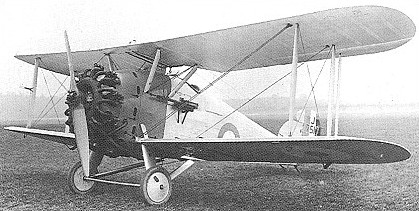
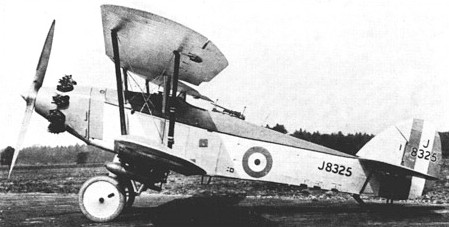
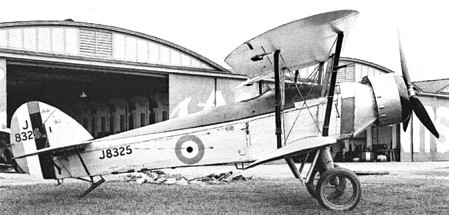
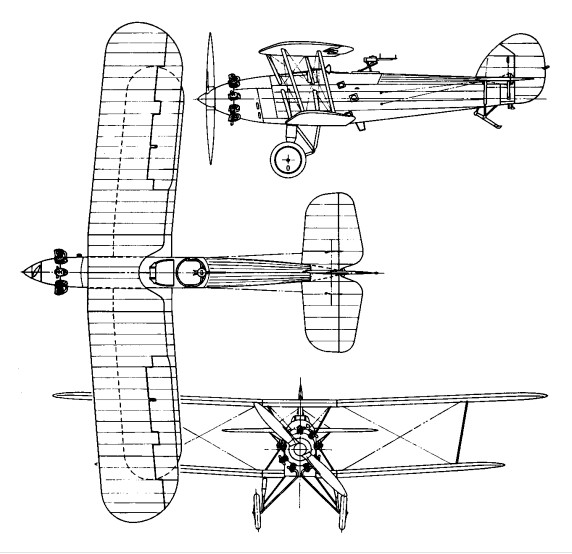
The task of redesigning the Woodcock was undertaken by W G Carter, who retained little of the original design apart from the fundamental fuselage structure. A new single-bay wing cellule was adopted, with marginally increased incidence and chord, and reduced sweepback. The fuselage decking was recontoured, tail surfaces were redesigned and the armament was repositioned. Powered by a 380hp Bristol Jupiter IV nine-cylinder radial like that eventually installed in the original Woodcock, but featuring individual cylinder heads, a new prototype designated Woodcock II was flown early in 1924. The redesigned fighter overcame most of the shortcomings of its progenitor, and a contract was placed on behalf of the RAF before the end of 1924. Similarly armed to the original fighter prototype, the Woodcock II was awarded successive contracts, a total of 62 being built, with deliveries being completed in 1927. The type served with two RAF squadrons until 1928, some late production examples being fitted with the Jupiter IV uprated to 416hp.
Max take-off weight: 1351 kg / 2978 lb Empty weight: 913 kg / 2013 lb Wingspan: 9.91 m / 32 ft 6 in Length: 7.97 m / 26 ft 2 in Height: 3.02 m / 9 ft 11 in Wing area: 32.14 sq.m / 345.95 sq ft Max. speed: 227 km/h / 141 mph Cruise speed: 166 km/h / 103 mph
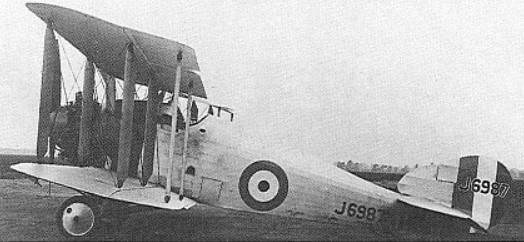
The Woodcock was designed by Capt B Thomson to meet Specification 25/22 calling for a single-seat night interceptor fighter. Of wooden construction with fabric skinning, the Woodcock was a two-bay biplane with variable-camber flaps and a 358hp Armstrong Siddeley Jaguar IX 14- cylinder radial. Mounting an armament of two 7.7mm Vickers guns, the Woodcock was flown in 1923, but its qualities proved disappointing. Lacking manoeuvrability, it suffered serious wing flutter and an ineffectual rudder. Several revisions of the vertical tail were undertaken, and the Jaguar engine was replaced by a Bristol Jupiter, but the Woodcock failed to find favour during Martlesham Heath evaluation. Further development was discarded in favour of a redesign that led to the Woodcock II.
Engine: 1 x Bristol Jupiter IX, 400 hp Max take-off weight: 1371 kg / 3023 lb Empty weight: 945 kg / 2083 lb Wingspan: 10.57 m / 34 ft 8 in Length: 7.80 m / 25 ft 7 in Height: 2.74 m / 8 ft 12 in Wing area: 33.07 sq.m / 355.96 sq ft Max. Speed: 230 km/h / 143 mph Cruise speed: 169 km/h / 105 mph Armament: 2 x 7.7mm machine-guns
As a result the Air Ministry Specification 12/26 for a new light bomber required an improvement upon the performance of the Fox. Hawker’s submission for this requirement, which eventually became known as the Hart, was evolved in conjunction with Rolls-Royce, and when submitted in late 1926 proved sufficiently attractive for construction of a prototype to be authorised. Sidney Camm’s design utilised what became known in later years as ‘Hawker’s patent metal construction system’, a lightweight and robust structure with fabric covering. From Rolls-Royce came a new engine – known then as the F.XI, a development of the Falcon engine -which had weight-saving six-cylinder monoblocs instead of individual cylinders. The airframe design was that of an uncluttered single-bay biplane, streamlined fuselage, a conventional Hawker tail unit, and fixed landing gear with tailskid. The biplane wings were of unequal span, the lower wing of constant chord and with a straight leading edge. The upper wing was slightly swept back and incorporated the ailerons and Handley Page leading-edge slots.
The prototype (J9052) was flown for the first time in late June 1928 by Flt Lt Bulman and was subsequently flown in competitive evaluation against the Avro Antelope and Fairey Fox II. With superior performance of the Hart confirmed, 15 pre-production aircraft were ordered initially for development and familiarisation, and the first 12 of these entered service with the RAF’s No 33 (Bomber) Squadron in late 1929 or January 1930 and one was sent for trials in India.
In RAF service the Hart was to have a number of variants. These included the 1932 Hart Trainer (483 built, not including conversions of other models); Hart C communications aircraft; and tropicalised versions known as the Hart India and Hart Special. A version was built for the Royal Navy, serving both with wheeled and float landing gear, and this was designated Hawker Osprey. In addition Harts were built for overseas customers which included Estonia, Sweden (also licence-built 42 Pegasus-engined Harts) and Yugoslavia, while ex-RAF aircraft eventually went to South Africa, Egypt and Southern Rhodesia.
Hawker Hart I of the RAF
Harts remained in service with the RAF on the North-West Frontier in India until displaced by Bristol Blenheims in 1939. Some Royal Navy Ospreys were used for target towing and training until 1940, but so far as is known the last in operational service was a Hart used by the South African Air Force well into World War II. Most extensively built between-wars British military aircraft, a total of 952 had been constructed when production ended in 1937, with Armstrong Whitworth, Gloster and Vickers acting as sub-contractors. Hawker records also refer to a civil-registered Hart, first flown on 15 September 1932 and known as the Hart II. This was powered in succession by a Kestrel IIS, Kestrel VI and Kestrel XVI, with the latter having an all-up weight of 2,109kg. It was used for demonstrations at air displays and for taking air-to-air photographs of Hawker aircraft, accumulating 627 flying hours in these roles from August 1933.
Powered by a single 525 hp Rolls Royce Kestrel IB, the Hart had a maximum speed of 172 mph (276 km/h) at 10,000 ft (3,050 m.
Engine: 1 x Rolls-Royce Kestrel XDR, 380kW / 525 hp Max take-off weight: 2066 kg / 4555 lb Empty weight: 1148 kg / 2531 lb Wing loading: 13.12 lb/sq.ft / 64.0 kg/sq.m Wingspan: 11.35 m / 37 ft 3 in Length: 8.94 m / 29 ft 4 in Height: 3.17 m / 10 ft 5 in Wing area: 32.33 sq.m / 348.00 sq ft Max. speed: 160 kts / 296 km/h / 184 mph Service Ceiling: 6510 m / 21350 ft Range: 408 nm / 756 km / 470 miles Armament: 2 x 7.7mm / .303 in machine-guns, 230kg of bombs Seats: 2.
The type was designed in 1928, a two-¬seater trainer biplane with a 130 hp Armstrong Siddeley Mongoose III engine with five cylinders, a top speed estimated at 120 miles an hour and a cruising speed of between 85 and 90 miles an hour. As a replacement for the Avro 504N for RAF pilot training, 25 were supplied to the RAF between 1929 and 1931. The last, K1786, was delivered in January 1931. They entered service with No.3 FTS at Grantham and the CFS at Wittering but the type were relegated to communications tasks from 1935. Six Tomtits were used for communications duties during the war and two, as G-ABII and G-AFTA survived post-war. G-ABII was written off in 1948.
A total of 36 were built for the RAF, for civil registration and for export to Canada and New Zealand. The last Tomtits left the RAF in 1938. Civil and ex-RAF Tomtits were fitted with a variety of engines, including the ADC Cirrus Hermes and Wolseley Aquarius and were used by several aero clubs up to the out-break of the war.
Engine: 1 x Armtrong Siddeley Mongoose IIIC, 112kW / 150 hp Max take-off weight: 794 kg / 1750 lb Empty weight: 499 kg / 1100 lb Wingspan: 8.71 m / 28 ft 7 in Length: 7.21 m / 23 ft 8 in Height: 2.54 m / 8 ft 4 in Wing area: 22.09 sq.m / 237.77 sq ft Max. speed: 200 km/h / 124 mph Ceiling: 5945 m / 19500 ft Crew: 2
Engine: 1 x 583hp Bristol Jupiter 9-cylinder air-cooled radial engine Max take-off weight: 2568 kg / 5662 lb Empty weight: 1488 kg / 3280 lb Wingspan: 14.10 m / 46 ft 3 in Length: 9.02 m / 29 ft 7 in Height: 4.06 m / 13 ft 4 in Wing area: 46.15 sq.m / 496.75 sq ft Max. Speed: 217 km/h / 135 mph Ceiling: 6096 m / 20000 ft Crew: 2
Basically Hawker Horsleys with their 665 hp Rolls Royce Condor engines replaced by 800 hp Armstrong Siddeley Leopard IIs, two Dantorps were ordered from Hawkers by the Danish Government in 1930, pending licenced production by the Danish Naval Dockyard factory at Copenhagen. Both aircraft were to have alternative wheel and float undercarriages. Of composite wood and metal construction, the Dantorp differed from the Horsley in having a third crew member between the pilot and observer/gunner. The first aircraft, 201, made its first flight at Brooklands on September 19, 1932, piloted by “Gerry” Sayer. The second machine, 202, flew shortly afterwards and, in November 1932, was tested on its float undercarriage at Felixstowe. Before delivery both aircraft were re engined with the 805 hp Leopard IIIA. Licensed production of the type was not taken up, however, though the two Hawker built originals flew extensively with the Royal Danish Naval Air Service from 1933 onwards.
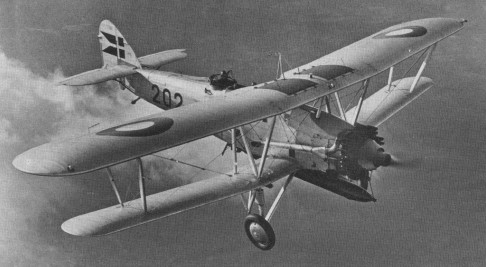
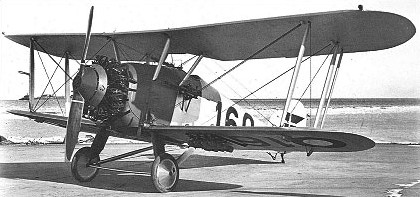
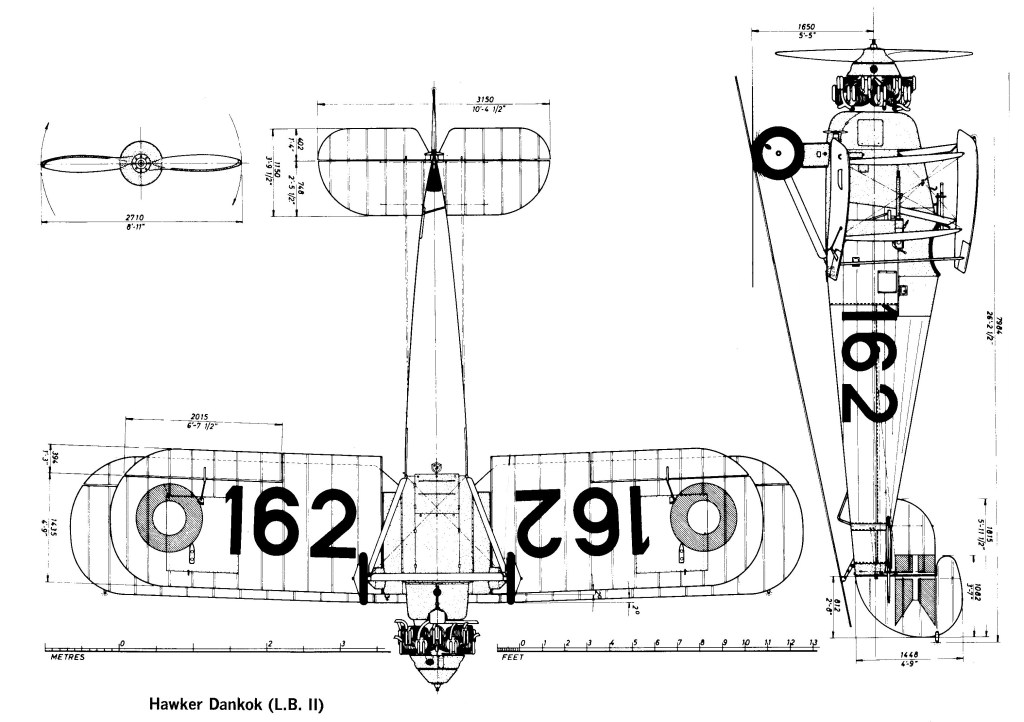
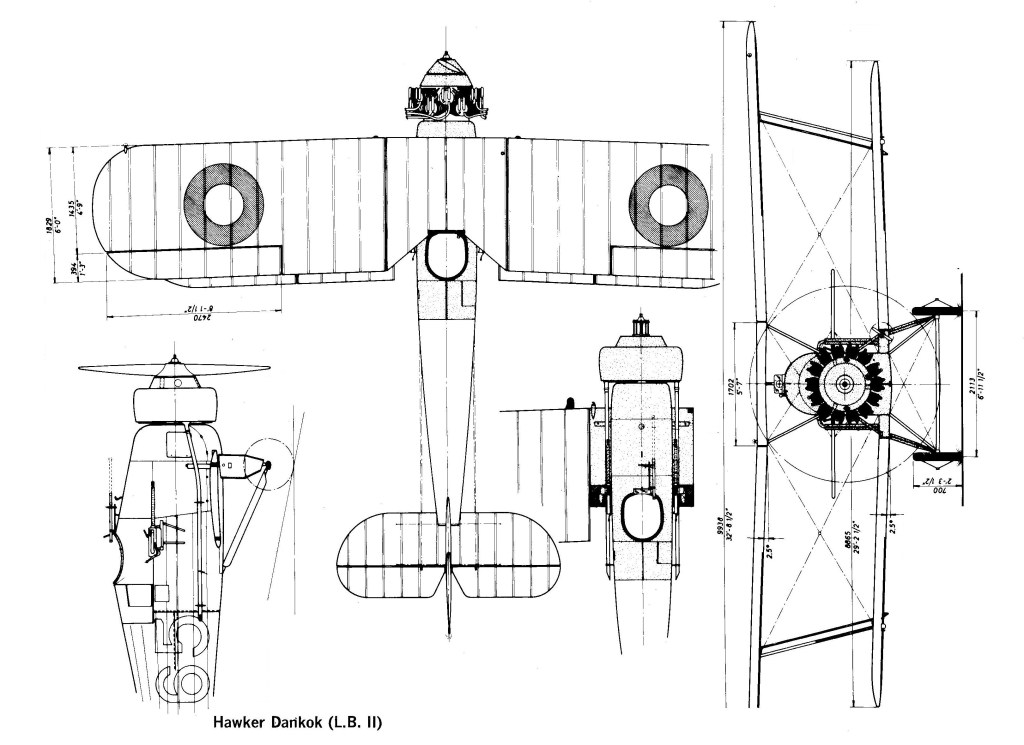
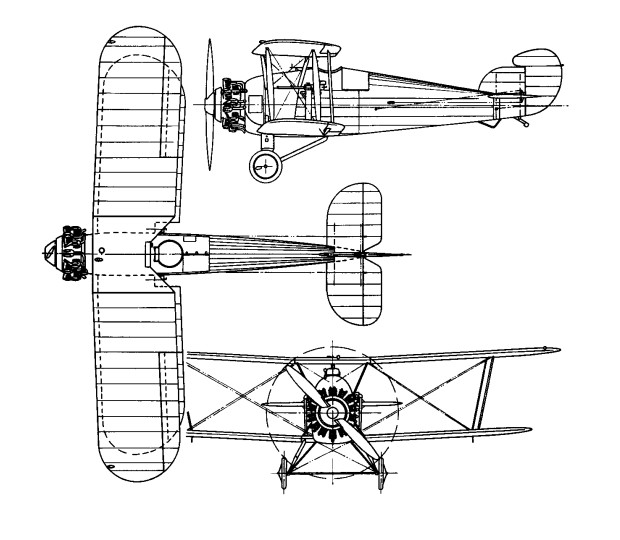
Based on the Woodcock II and designed by Sydney Camm, the Danecock was developed to meet a requirement of the Danish Naval Air Service, or Marine Flyvevaesenets. By comparison with the Woodcock II, the Danecock (Dankok) had unequal span wings, a slightly lengthened fuselage, a 385hp Armstrong Siddeley Jaguar IV engine and an armament of two 7.7mm Madsen machine guns. The first of three Danecocks ordered from the parent company was flown on 15 December 1925, and the licence manufacture of a further 12 was undertaken by the naval dockyard (Orlogsvaerftet) during 1927-28. They were fitted with 2 blade Danish Orlogsvaerftet wooden propellors.
With serials 155-165, they served from January 1926 until the German occupation in April 1940 as the Hawker Dankok (LB.II for Land Biplane Type 2). A single Dankok (165) was experimentally fitted with a streamlined ownsend Ring which raised the top speed from 235 kph/148mph to 245 kph/152mph.
Max take-off weight: 1381 kg / 3045 lb Empty weight: 965 kg / 2127 lb Wingspan: 9.92 m / 32 ft 7 in Length: 7.96 m / 26 ft 1 in Wing area: 31.59 sq.m / 340.03 sq ft Max. speed: 233 km/h / 145 mph Cruise speed: 169 km/h / 105 mph
Representing an attempt to design the smallest and lightest practical airframe around the most powerful available engine suitable for fighter installation, the Hornbill was built to Specification 7/24 and flown in late summer 1925. Of mixed construction, with a duralumin-skinned steel tube forward fuselage and fabric-covered rear fuselage, wings and tail surfaces, the Hornbill was at first powered by an 826hp Rolls-Royce Condor III eight-cylinder water-cooled inline engine with twin radiators under the lower wing. In May 1926, it flew with a 698hp Condor IV and a single ventral radiator. It possessed an armament of one 7.7mm Vickers Mk 2 machine gun. The Hornbill was the fastest armed aircraft to have been tested by the RAF when it commenced service evaluation at Martlesham Heath in late 1925, but rate of climb and service ceiling were poor and some handling aspects unsatisfactory. No production order materialised.
Max take-off weight: 1732 kg / 3818 lb Empty weight: 1349 kg / 2974 lb Wingspan: 9.45 m / 31 ft 0 in Length: 8.11 m / 26 ft 7 in Height: 2.95 m / 9 ft 8 in Wing area: 29.49 sq.m / 317.43 sq ft Max. speed: 301 km/h / 187 mph Cruise speed: 220 km/h / 137 mph Ceiling: 6920 m / 22700 ft