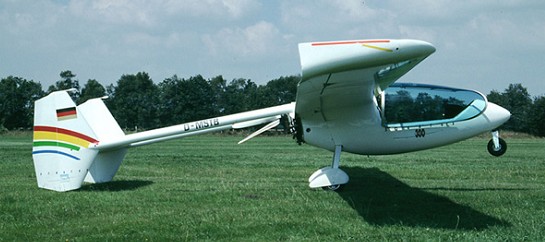
Stratos 300
Length: 6,3 m
Wing-span: 12,60 m
Prop: 3-blade
Engine: König SC-430
Cruise speed: 92 kph
Maximum speed: 120 kph
Stall: 45 km/h
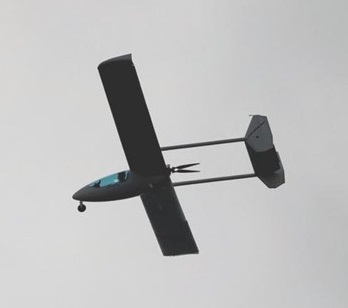
Stratos 300
Length: 6,3 m
Wing-span: 12,60 m
Prop: 3-blade
Engine: König SC-430
Cruise speed: 92 kph
Maximum speed: 120 kph
Stall: 45 km/h
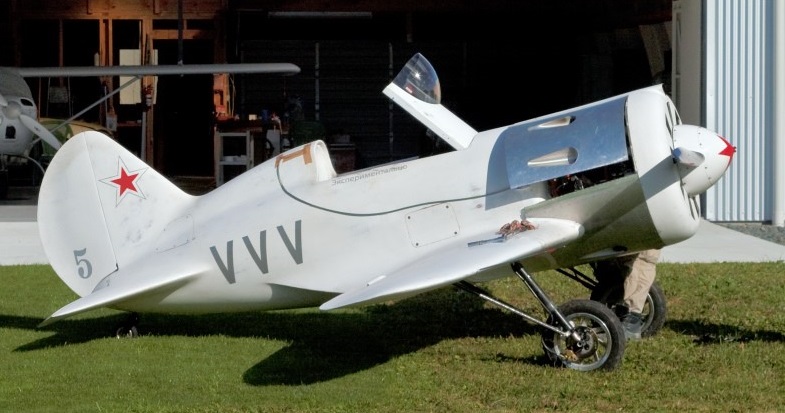
A home built 2/3 scale Polikarpov I-16 replica built by Volker Heydecke of Drury, New Zealand. Volker Heydecke is a mechanical engineer but did not weld a single piece on this airplane. He trusted a licensed airplane welder to do this. The only welded truss-system is the engine mount. There are a few welded brackets made from steel, the undercarriage is bolted. The rest is self supported composite structure (monocoque).
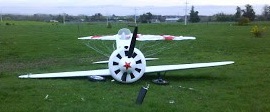
On Saturday, 29 August 2009, around 1730 hrs, the pilot was conducting stalls as part of the test flying regime. On on the second stall, the left wing dropped and the aircraft entered a spin. Standard recovery techniques did not arrest the spin, so the pilot transmitted a distress message and deployed the aircraft ballistic recovery chute. The aircraft sustained damage to the propeller and undercarriage on landing in a farm paddock. The pilot was able to vacate the aircraft with only minor injuries.
Serial: V16001
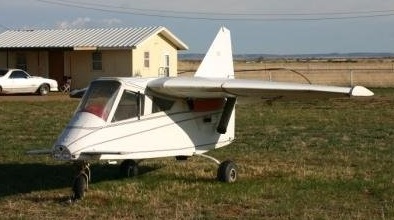
The Heuberger-Rinker H-5 Stinger N3638G was a designed by Lawrence K. “Larry” Heuberger, who started its construction at Tucumcari, New Mexico, around the early 1960s.
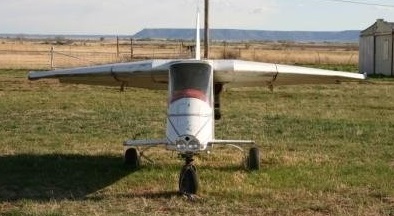
Prior to completion the project was acquired (around 1968) by Bud Rinker of Santa Barbara, Cal., who almost certainly did some limited testing in 1970.
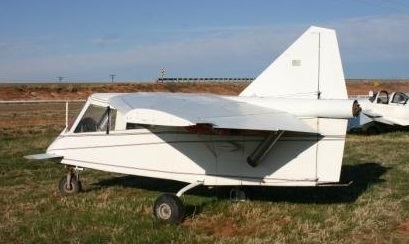
Engine: 140hp Lycoming O-290-G
Wingspan: 16ft 6 in
Length: 14ft 8 in
Seats: 2
Est. performance
Max. speed: 180 mph
Cruise: 160 mph
Ceiling: 10,500ft
Climb rate: 1.200ft/minute.
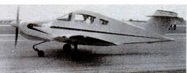
Lawrence K. “Larry” designed and built the Sizzler in 1957. The two-place Sizzler features a T-tail arrangement and gets a fair amount of lift from its fuselage. The low-wing monoplane is built entirely of metal and flush-riveted throughout. Compound curves are no problem on the Sizzler, which uses flap panels. It stands on tricycle landing gear and carries a 125-hp Continental engine.
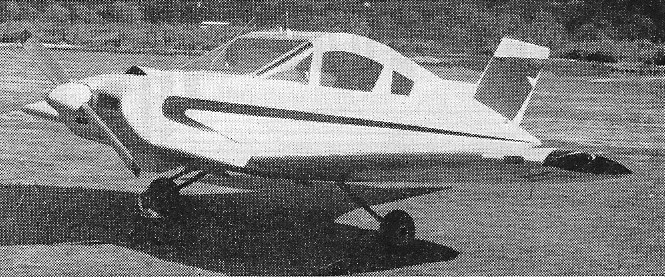
At least two were built (the prototype N75345 of Mr. Heuberger and C-GSIM of Mr. James Sim in Canada).
Engine: Lycoming O-290-D, 125 hp
Wingspan 18 ft 4 in
Length 20 ft 7 in
Wing area: 100 sq.ft
Gross Wt. 1350 lbs.
Empty Wt. 950 lb
Fuel capacity 33 USG
Payload: 510 lb
Top speed 175 mph
Cruise 160 mph
Stall 70 mph
Climb rate 900 fpm
Takeoff run 1200 ft
Landing roll 700 ft
Range 600 sm
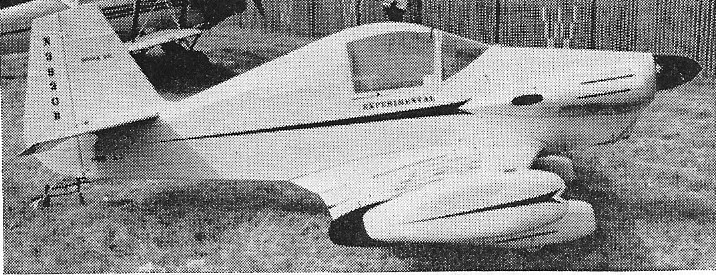
This fast single-seater picked up three trophies when it flew to the 1955 EAA Fly-In at Oshkosh, Wisconsin. The Doodle Bug was registered N3930B cn.A.1. With its 12½-gallon main fuel tank and a pair of 6½-gallon fiberglass tip tanks, the Doodle Bug boasts an amazing 700-mile range. It is built from welded steel tube. The fuselage and tail group is fabric covered. The wings are all metal.
Engine: 90-hp Continental.
Gross Wt. 970 lb
Empty Wt. 616 lb
Fuel capacity 25 USG
Wingspan 18 ft
Length 16 ft 6 in
Top speed 196 mph
Cruise 170 mph
Stall 70 mph
Climb rate 2000 fpm
Takeoff run 1000 ft
Landing roll 800 ft
Range 700 sm

Industrialist Henry Hettinger constructed this airplane, whose fabric-covered wings were sewn by his wife Mary. Hettinger made flights along the Cohansey River meadows, at the fairgrounds on Fayette Street, Bridgeton, New Jersey, and later outfitted the plane with pontoons. The 40 HP six cylinder engine was built by the Hettinger Engine Company.
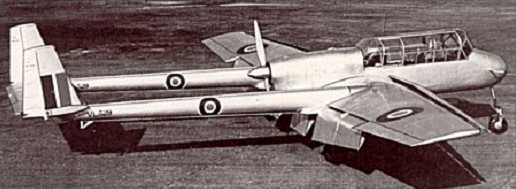
Prototype two-seat air observation post powered by a 179kW de Havilland Gipsy Queen 33 engine mounted as a pusher.
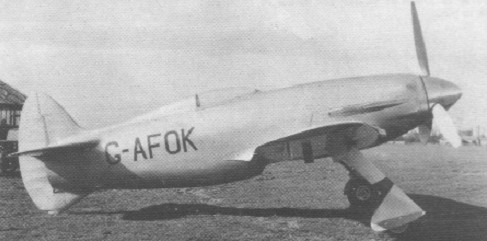
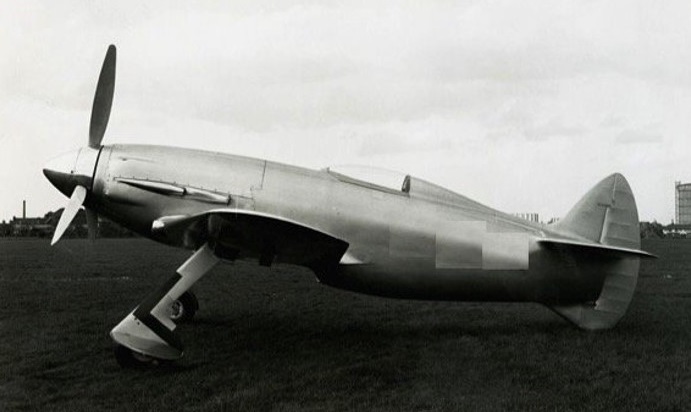
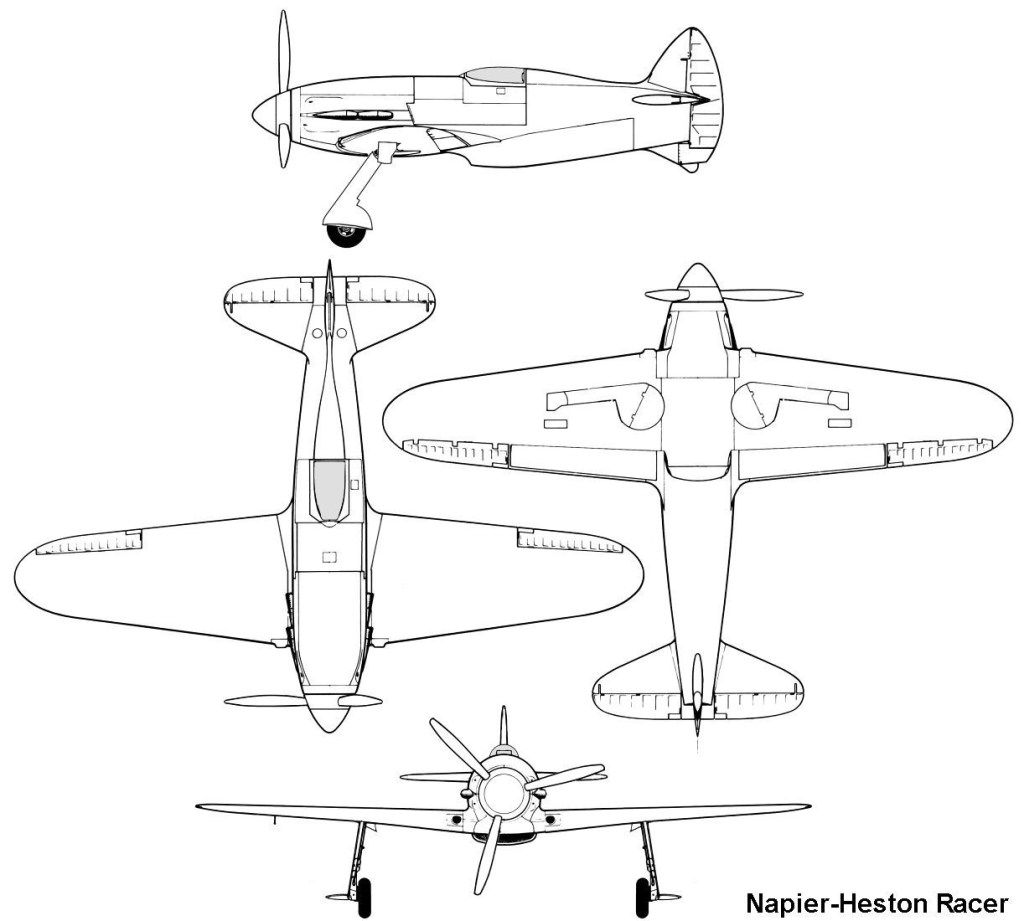
The Heston Type 5 Racer G-AFOK, designed by A.E.Hagg and G.Cornwell, was built at Heston during 1939-40, but crashed there on its maiden flight on June 12, 1940.
On June 12, 1940, the first aircraft for the record attempt, G-AFOK (Fox Oboe King), made its maiden flight at Heston Aerodrome, piloted by Squadron Leader G.L.G. Richmond, Heston Aircraft’s Chief Test Pilot. A heavy bump during the high-speed take-off run, with the canopy off, caused an unexpected early liftoff.
After an abrupt take-off, Richmond conducted a brief test flight with gear extended, but inadequate elevator control and engine overheating forced an emergency landing. Scalded by steam or coolant, he stalled the aircraft at 30 feet, crashing heavily. The undercarriage pierced the wings, and the tail detached. Richmond survived with minor burns.
The 2,300 hp Napier Sabre-powered racer was sponsored by Lord Nuffield for a British attempt on the world speed record. A second was never completed.
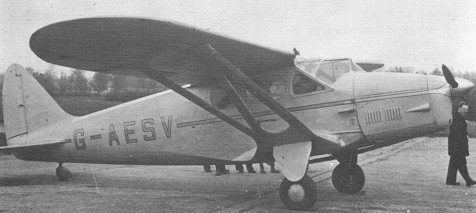
This 1935 five seat training aircraft featured hydraulically operated retractable landing gear. The main wheels retracted into a small stub wing which formed part of the wing bracing struts. The aircraft had a particularly quiet cabin which was also bigger than normal for its type. It was not, however, commercially successful.
The Heston Type 1 Phoenix was a five-seat cabin monoplane, the first on a British high-wing aircraft.
Engine: One 200 hp / 149kW D.H. Gipsy VI
Length: 30.1 ft (9.15 m)
Wing span: 40.3 ft (12.3 m.)
Weight empty: 2,000 lb (900 kg)
Passengers/Cargo: 1 pilot; 4 passengers.
Max. cruise: 135 mph (217 kph)
Ceiling: 20,000 ft (6,000 m) fully loaded
Range: 500 miles (800 km)
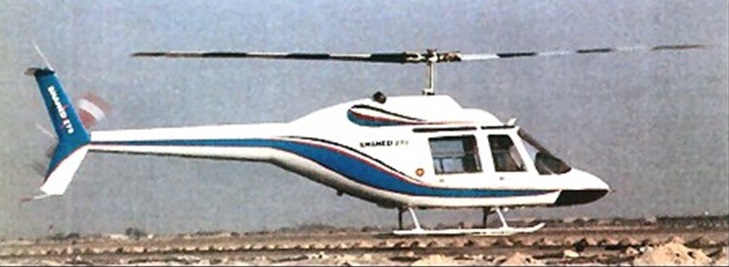
Three prototypes, first of which made maiden flight late 1997 or early 1998; most-flown prototype had accumulated 200 hours by March 2001. Public debut late 2002 as HESA 278, having previously been reported as Panha 287.
A fonr-seater; intended for dual military/civil use, though designed primarily to meet military requirements. Designed entirely in Iran, according to manufacturer, although some sources report use of locally made airframe and dynamic components of Bell 206 JelRanger.
Power is by a single turboshaft. Prototypes have evaluated Rolls-Royce 250 and equivalents from Turbomeca and a Russian supplier, but final selection apparently not made by late 2002. Fuel capacity 287 litres.
Shahed 278
Max. take-off weight: 1451kg
Empty weight: 682kg
Max. level speed: 240km/h
Service ceiling: 6400m
Hovering ceiling IGE: 6200m
Hovering ceiling OGE: 4800m
Range: 340km

