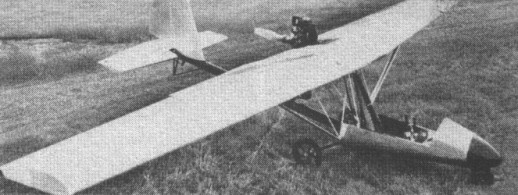
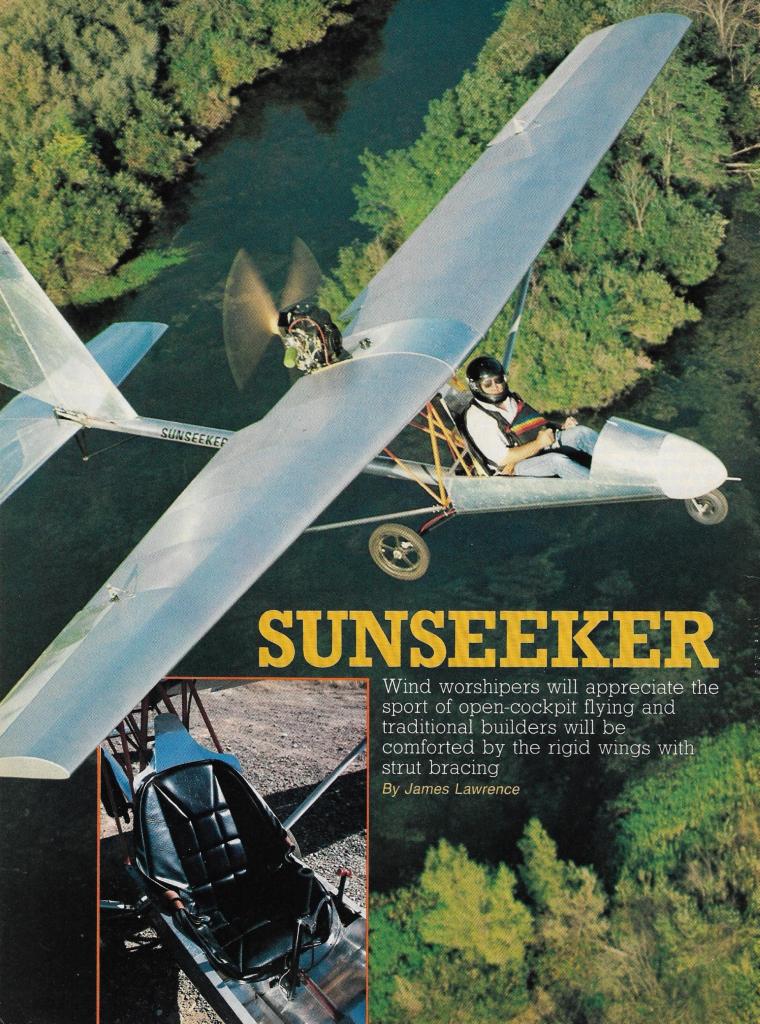
High monowing, strut-braced, Kevlar/foam construction. Full three-axis control system. Powered by a WAE two-cylinder horizontally opposed British microlight engine. The landing gear was Chrome-moly steel, trike type.
After spending something like $200k developing the aircraft and all the tooling, the original designers found they couldn’t obtain product liability insurance and they decided to sell the project to someone who was going to manufacture it in Mexico. That never came to.
Only 10 came out of the factory.
Engine: WAE 2 cyl, 30 hp Wingspan 31 ft Wing area 112 sq.ft Length 18 ft Empty weight 245 lb Payload 245 lb Gross 600 lb Wing loading 4 lbs/sq.ft L/D 22:1 Cruise speed 60 mph Stall speed 19 mph Vmax 63 mph Climb rate 1000 fpm Takeoff run 150-200 ft Landing roll 150-200 ft Fuel capacity 5 USG
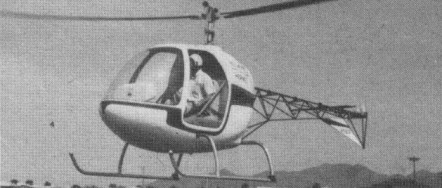
The Hillman Hornet, first flown in 1978, was top rotorcraft award winner at Oshkosh ‘78 and received the Best Helicopter Design honors at the Popular Rotor-craft Convention in Rockford, Illinois. Developed in 1979, in 1980 a Turbo Hornet was in production. Standard features include a comfortable cockpit for two, excellent visibility, room for a variety of avionics and dual controls. Flight performance has been favorably compared with that of the Hughes 300. The Hornet is available in kit form for owner assembly for $29,950 under one of several factory-supervised programs. Assembly assistance is available at the factory in addition to flight training. Optional features now under development are floats, cargo hook, fibreglass tailboom shroud, doors and turbo-charging.
Gross Wt. 1400 lb. Empty Wt. 800 lb Fuel capacity 22 USG Rotor span 25 ft 5 in Length 21 ft 2 in Engine 150-hp Lycoming Top speed 100 mph. Cruise 90 mph. Climb rate 1000 fpm. Ceiling 12,000 ft Range 200 miles
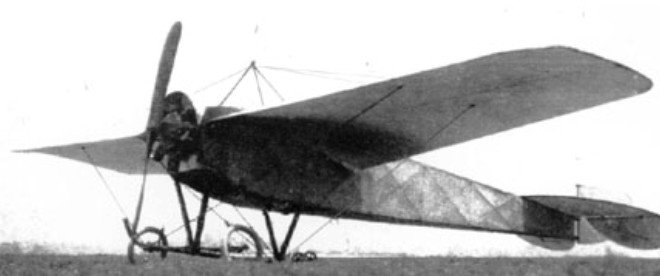
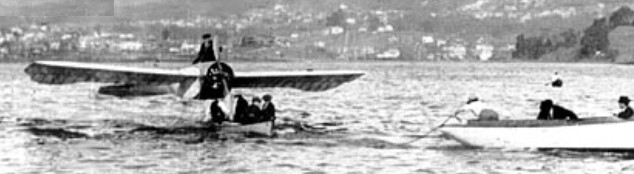
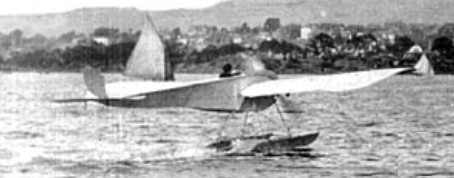
Stanley Hiller Snr began designing gliders in 1909 and this, his first powered aircraft, flew at Alameda and a 1911 air meet at Tanforan race track in South San Francisco. On pontoons, it was flown from Lake Merritt, Oakland, by Charles Patterson in August 1912.
Power was 60hp and 80hp Hiller rotary built from Hiller’s plans by C E Kelsey, San Francisco.
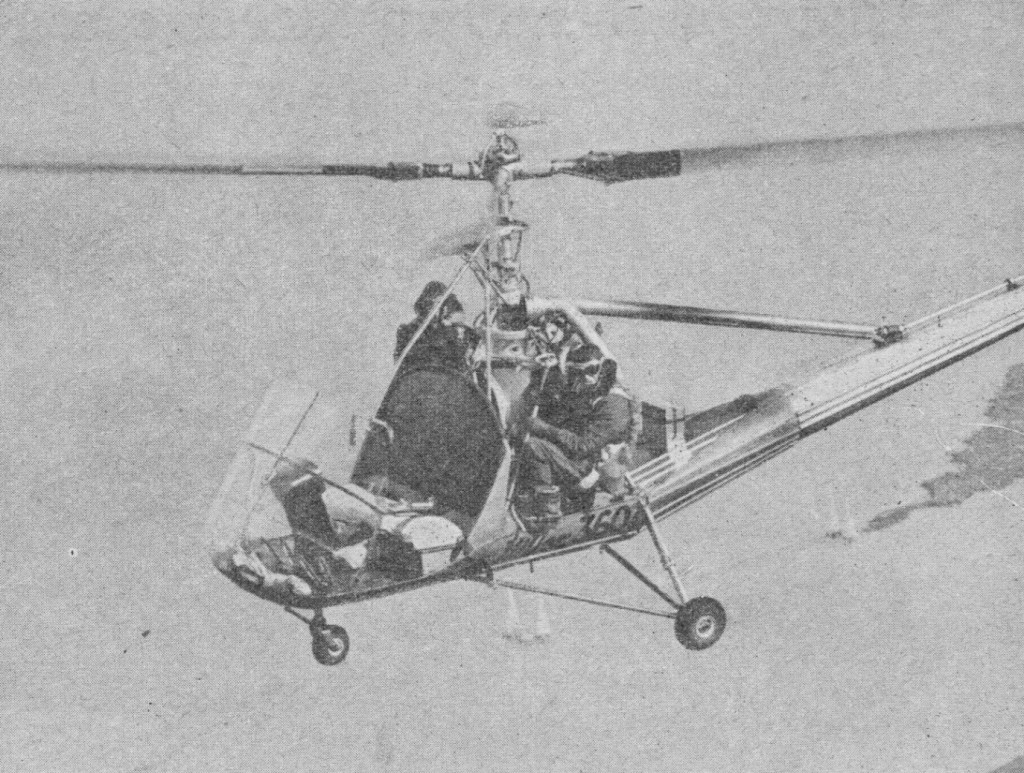
Stanley Hiller Jr designed the Model 360 which has enjoyed considerable commercial success since its first flight in 1948. It was derived from the UH-5 which had proved very unstable during trials and had subsequently been fitted with a new stability system patented as the Hiller ‘Rotormatic’. It entailed fitting the two-blade rotor with two small paddles which acted as a control rotor and were also connected to a hanging stick. This servo ‘paddle control’ system tilts the rotor head and actuates the cyclic pitch control. The Hiller 360 received its FAA (Federal Aviation Administration) approval in October 1948 and a year later a production model designated Model 12 made the first transcontinental helicopter flight across the USA. At that time it still had an open cockpit, and the 178hp Franklin 6V4-178-B33 was in an open engine bay.
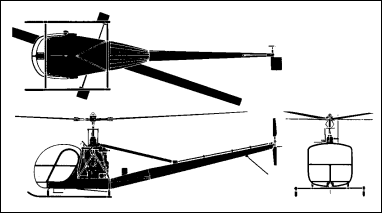
Known as the Hiller UH-12 as Hiller had become part of United Helicopters, the Hiller UH-12, incorporating a two-bladed main rotor and a two-bladed tail rotor on an upswept boom. The UH-12 had a framed ‘bubble’-type cabin, no fuselage structure around the engine, skid undercarriage and a 175hp Franklin 6V4-178-B33 engine. Maximum takeoff weight was 1015kg.
The UH-12A Raven production two-seat UH-12 with collective pitch ballast system and wooden rotor blades for civil and military customers had a takeoff gross weight of 1082kg. With an uprated engine and new UH-12A rotor blades, it was purchased by the US Army and Navy for battlefield evacuation and observation tasks, with the designation H-23 Raven, whilst the Navy ordered the same basic model as the HTE-1 for training.
The commercial UH-12A to UH-12D became the OH-23A to OH-23D Raven respectively for service with the US Army, and the US Navy acquired UH-12As as HTE-1 and HTE-2.
HTE-2
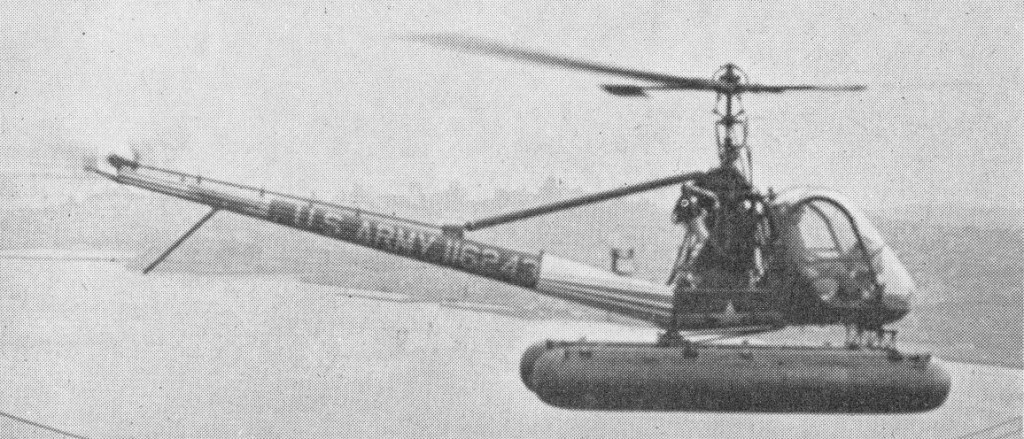
The UH-12A successor, the H-23B, powered by a 200-210hp Franklin engine, was the first version used by the US Army as a trainer. 216 were assigned to the Primary Flying School at Fort Walters and another 237 were used for various tasks. The Hiller UH-12 was the US Army’s primary trainer until 1965. The UH-12B (and as the HT Mk.1 for the Royal Navy) normally had skid or flotation gear, but a wheeled undercarriage was fitted to a batch ordered by the US Navy (the HTE-2).
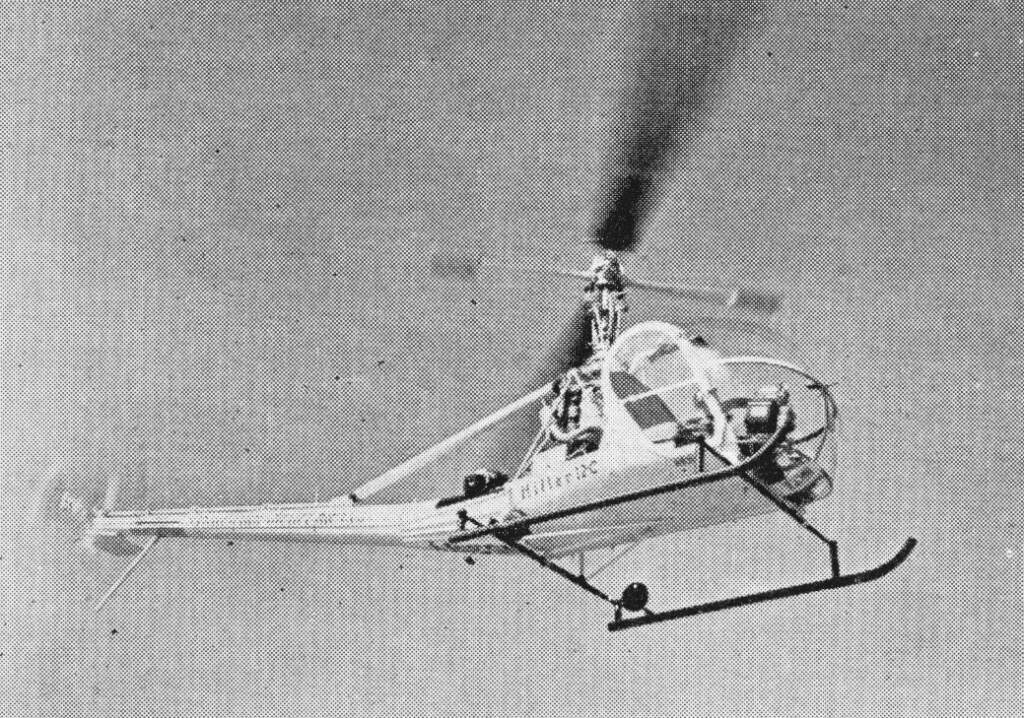
In 1955 the UH-12C, was basically a UH-1B. It retained the 200hp Franklin engine, but had all-metal rotor blades and a “goldfish bowl” cockpit canopy and three seats. From 1956, 145 were delivered to the US Army as the H-23C.
UH-12C
A purely military version, the UH-12D / OH-12D, flew on 3 April 1956 and 483 went to the US Army. The Franklin engine had been replaced by the more powerful 320hp Lycoming VO-540, and the transmission had also been changed to increase the service life of the helicopter.
The commonest version was the UH-12E which had a more powerful 305hp Textron Lycoming VO-540-A1A engine. The US Army replaced nearly all the OH-23Ds by Hiller 12Es, designated OH-23G 3-seat dual control trainer. In 1960 the Model E4 was developed from the Hiller 12E, with a longer cabin to seat four and an anhedral stabilizer on the tail boom. Twenty-two of these were acquired by the US Army as the OH-23F, for geodetic research.
Hiller UH-12E ZK-HFG
In 1963 the US Army was buying 137 more Hiller OH-23 observation helicopters to meet its requirements until a five-way competition for a light helicopter was decided at Ft. Rucker, Alabama. In 1963 the British navy was adding seven UH-12E to the 14 bought in 1962. The Royal Navy used its 12E’s to train fleet pilots at Culdrose Naval Air Station in Cornwall. They were fitted for instrument flying. 12E were also in use with Canada’s army and air force, known as CH-112.
The UH-12EL was a UH-12E retro-fitted with Ham-Standard rotor stability augmentation system, stainless steel rotor blades and 1400kg TOGW. UH-12E3 was the revised designation for Hiller Aircraft Corp production UH-12E with 3 seats, and UH-12E3T the Hiller Aircraft Corp UH-12ET. The UH-12E4 featured inverted rear tail planes and lengthened cabin to accommodate pilot plus rear bench seat for 3 pax. All new helicopters now have these features and they can be retrofitted on Model 12Es. Designated UH-12E4T when fitted with Soloy conversion to 400shp Allison 250-C20B turboshaft. This engine conversion was jointly developed with Soloy Conversions of Chehalis, Washington who began work on it in 1976.
The UH-12ET was the UH-12E fitted with Soloy conversion to 400shp Allison 250-C20B turboshaft. UH-12E5 was the UH-12E4 fitted with five seats and 340hp Textron Lycoming VO-540 piston engine. A prototype was flown but no further development was undertaken. The Korean War gave an added impetus to improvements and when the Hiller 12E appeared in 1959 it came either as the L3 with a 305hp Lycoming VO-540-C2A or as the SL3 with a supercharged 315hp TIVO-540-A2A engine. The UH-12SL was the UH-12E with supercharged Textron Lycoming TIVO-540 engine and ‘L’ series rotor head with gyro-controlled stability augmentation system. UH-12L was UH-12SL with unsupercharged VO-540 engine.
Civil versions with uprated powerplant included the UH-12E variants suffixed L3, L4, SL3 and SL4. The last civil variant, which appeared in 1963, was the Hiller 12L4 which was also used as a test-bed for a PT6 turbine, but the project was taken no further. Total sales of the Hiller 12E family exceeded 2000. Over 1,600 UH-12s went to the US Army and were used in Korea and Vietnam. At the height of UH-12/OH-23 production Hiller was taken over by the Fairchild Corporation, but in 1973 a new company, Hiller Aviation, acquired design rights and production tooling for the UH-12E, and for some years provided support for the world-wide fleet of UH-12 variants. UH-12E5T was a proposed turbine-powered UH-12E5 with Allison 250-C20B. Not built. UH-12J-3 was an unofficial designation for Soloy-converted UH-12E. UH-12SL4 was the UH-12L with the E4 four-seat cabin.
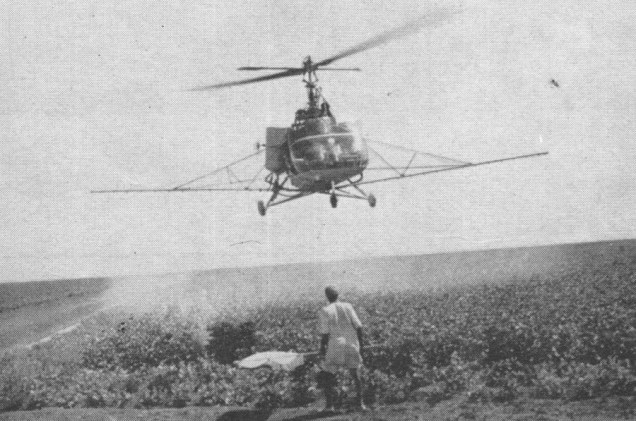
The Canadian army acquired OH-23Gs which it operated with the designation CH-112 Nomad, and the Royal Navy used a number of ex-US Navy HTE-2s under the designation Hiller HT.Mk 2. In April 1984 Hiller became a subsidiary of Rogerson Aircraft of Port Angeles, Washington. Renamed Hiller Helicopters and later Rogerson Helicopters, the company, now known as Rogerson Hiller, relaunched the piston-engined UH-12E in 1991 as the Hauler, and a number have been exported. The company is also proposing the Allison turbine-powered UH-12ET development for the US Army’s NHT (New Training Helicopter) requirement. The Model 12 has the usual equipment for helicopter safety and civil work, but can also be fitted with a night-lighting kit, a 454kg capacity cargo hook, twin heavy duty cargo racks, and auxiliary fuel tanks. Equipped with extra tanks the 12E has a maximum range of 676km. Production of both the 12E and 12E-4 is ran at about five a month.
A number were fitted with an Allison 250-C20 turbine as Soloy UH12E-SCL conversions. The 400shp Allison (derated to 305 shp) is mounted slanting backwards from the adaptor gearbox, leaving a large uncluttered area where the previous engine was.
UH-12E / OH-23G Engine: 305hp Textron Lycoming VO-540-A1A / Lycoming VO-540-C2A, 305 hp. TBO: 1200 hrs. Main rotor: 10.8 m / 35.3 ft. Seats: 3. Length: 40.7 ft. Height: 10.1 ft. Max ramp weight: 3100 lbs. Max takeoff weight: 3100 lb / 1410 kg. Standard empty weight: 1759 lbs. Max useful load: 610 kg / 1341 lbs. Max landing weight: 3100 lbs. Max sling load: 1000 lbs. Disc loading: 3.2 lbs/sq.ft. Power loading: 10.2 lbs/hp. Max usable fuel: 516 lbs. Max rate of climb: 993 fpm. Service ceiling: 15,000 ft. Hover in ground effect: 10,400 ft. Hover out of ground effect: 6800 ft. Max speed: 83 kts. Normal cruise @ 3000 ft: 51 kts. Max cruise: 80 kts Fuel flow @ normal cruise: 125 pph. Endurance @ normal cruise: 3.9 hr. Max range: 390 km. Seats: 3.
UH-12EL Engine: 305hp Textron Lycoming VO-540-A1A TOGW: 1400 kg
UH-12E-L3 Engine: Lycoming VO-540-C2B, 305 hp Main rotor diameter: 35 ft 5 in / 10.80 m Empty weight: 1759 lb / 798 kg Normal TO weight: 2800 lb / 1270 kg Max overload weight: 3100 lb / 1405 kg Max cruise SL: 78 kt / 90 mph / 145 kph Max ROC SL: 1290 fpm / 393 m/min Service ceiling: 15,200 ft / 4630 m Range w/aux fuel, 2800lb/1270kg: 379 nm / 437 mi / 703 km Seats: 3 Baggage capacity: 125 lb / 57 kg Cabin length: 5 ft 0 in / 1.52 m Cabin width: 4 ft 11 in / 1.50 m Cabin height: 4 ft 5 in / 1.35 m
Stanley Hiller Jr designed the two-seat Model 360 which first flew in 1948. It was derived from the UH-5 which had proved very unstable during trials and had subsequently been fitted with a new stability system patented as the Hiller ‘Rotormatic’. It entailed fitting the two-blade rotor with two small paddles which acted as a control rotor and were also connected to a hanging stick. This servo ‘paddle control’ system tilts the rotor head and actuates the cyclic pitch control.
Of all-metal construction with fixed tricycle undercarriage. Equipped with a fully enclosed cabin and rear fuselage, an overhead mounted control stick is attached to a Hiller rotor control. Power is by one 175hp Franklin 6V4-178-B32 engine. The prototype was registered N68940.
It received its FAA (Federal Aviation Administration) approval in October 1948 and a year later a production model designated Model 12 made the first transcontinental helicopter flight across the USA in the summer of 1949. At that time it still had an open cockpit, and the 178hp Franklin 6V4-178-B33 was in an open engine bay.
Hiller 360
In 1949 a Hiller 360 demonstrated a pilot-less cross-country flight with two observers well away from the pilot’s seat. The 25 mile flight over San Francisco Bay was at 3800 ft after a normal piloted take off.
Pilotless Hiller 360
Hiller 360 Engine: Franklin 6V4-200-C33, 200 h.p. Rotor diameter: 35 ft. Rotors: 2-blade main; 2-blade tail Fuselage length: 27 ft. 6 in. Loaded weight: 2,500 lb. Max. speed: 84 m.p.h. Ceiling: 9,400 ft. Typical range: 135 miles at 70 mph Seats: 3.
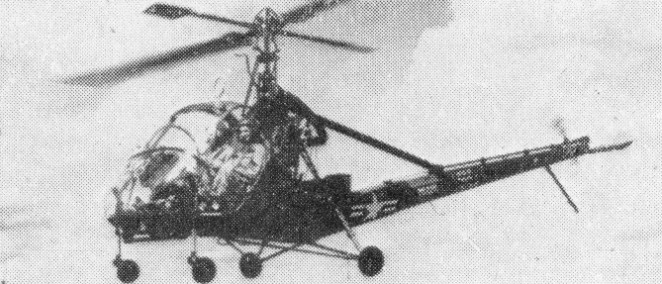
HTE-1 Engine: Franklin 178 hp Undercarriage: 3-wheel
The UH-5 had proved very unstable during trials and had subsequently been fitted with a new stability system patented as the Hiller ‘Rotormatic’. It entailed fitting the two-blade rotor with two small paddles which acted as a control rotor and were also connected to a hanging stick. This servo ‘paddle control’ system tilts the rotor head and actuates the cyclic pitch control.
The UH-4 was a development of the XH-44, which retained the co-axial contra-rotating two-bladed rotors, though the diameter was considerably increased. A two-seat all-metal helicopter with tricycle undercarriage, three were built. The prototype was registered N67706.
The FH1100 originated from Hiller Aircraft Company’s entry for the US Army requirement of a Light Observation Helicopter (LOH). Designated OH-5A for the technical “fly-off’ it competed against Bell’s OH-4A (B206) and Hughes OH-6A (H369).
Fairchild Stratos Corporation acquired Hiller in 1964 believing they were about to secure a large military contract as the OH-5A stood out the preferred winner. Leaked production data of the OH-5A resulted in Howard Hughes successfully under bidding with the OH-6A. The first FH1100, N81005, flew on 21 January 1963, powered by the Allison T63 turbine engine. Fairchild meanwhile announced they would begin civilian helicopter production of a refined OH-5A, designated the FH1100, offered for sale in June 1966 with either 4 or 5 seats. It became the first US civil turbine helicopter to go into production with a modest 246 units completed by 1971. A small number were produced between 1983 and 1985. This utility helicopter has a semi-monocoque fuselage and conventional tail boom. The semi-rigid two-blade main rotor, able to be stored folded, is controlled by dual hydraulics, with the primary assisting cyclic and collective, the secondary pump actuating the cyclic only. A prototype was constructed by Helicopter Technology Inc. in Century, Florida, in 2002 for the new FH1100 to go back into production as the FHoenix.
RH1100
Under development in 1991 by Rogerson Hiller, the RH1100S features a lengthened and widened cabin and a LCD instrument display.
Stanley Hiller flew the first successful American co-axial helicopter, the XH-44, in July 1944, when he was only 19 years old. It also featured the world’s first successful all-metal rigid-rotor blades. Hiller had learned to fly from his father at an early age, and at 16, Hiller had started a business building small gasoline engine model cars; revenue eventually grew to $100,000. Hiller became interested in helicopters in 1937 when he saw pictures of the Focke Wulf Fw 61 and Sikorsky’s VS-300 in 1939. Hiller felt the tail rotors used on the VS-300 and the outriggers on the Fw 61 were wasteful and possibly unnecessary. The XH-44 evaluated three different rotor configurations: rigid, articulated, and semi-rigid, which was selected. The engine was uprated from a 90hp Franklin to a 125hp Lycoming. The XH-44 was the first successful helicopter west of New York, and Hiller made public demonstrations of the XH-44 in nearby San Francisco.