
Hughes Aircraft Co was founded in 1935 by businessman/film magnate Howard Hughes to produce the Hughes H-1 racing aeroplane, in which Hughes established a world landplane speed record of 352.46mph (567.23kmh).
Engines: 1
Hughes Aircraft Co was founded in 1935 by businessman/film magnate Howard Hughes to produce the Hughes H-1 racing aeroplane, in which Hughes established a world landplane speed record of 352.46mph (567.23kmh).
Engines: 1
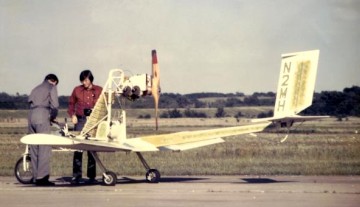
This aircraft was designed and built by Mike Huffman during the late 1960s and early 1970s. It featured a welded steel-tube fuselage, aluminum wings and tail boom, and composite tail surfaces. Powered by a McCulloch 72-hp target drone engine, it was essentially an ultralight before the ultralight movement began.
Flugzeugbau Dr. Georg Huffer produced a civilian version of the First World War Fokker D.VII fighter, known as the Huffer H.9. It was an open-cockpit training/sporting two-seater powered by a Mercedes engine.
The Huff Daland XHB 1 of 1926 27 was an enlarged LB 1, with a single 800 hp Packard 2A 2540, but never progressed beyond prototype stage.
Keystone Aircraft Corpora¬tion built a total of 220 aircraft in the US Army Air Corps LB (light bombardment) category, venturing briefly also into the B (bombardment) and HB (heavy bombardment) classifications. All except ten of the LBs were twin engined aircraft, but had their origins in the single–engined XLB 1 prototype and nine pre series LB 1 biplanes produced in 1925 by Key¬stone’s predecessor company, Huff Daland and Co Inc of Ogdensburg, New York, which became Keystone in March 1927.
The XLB-1 three-seat, single-engine light bomber was tested in 1923, mount¬ing an 800 hp Packard and was developed as the twin-engined XLB-3, with a crew of five. The basic LB 1 airframe was redesigned by Keystone in 1927 as the twin engined XLB¬3A.
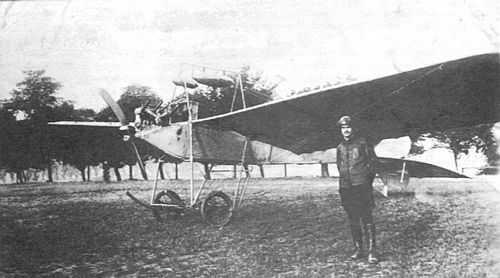
The Hübner Eindecker of 1912, tentatively identified as his second monoplane (E II), powered by a 50 hp Argus.
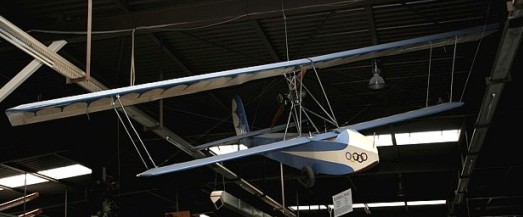
At the end of of 1935 Hübner flew the Mücke for the first time. Flight areas were the Neckarwiesen and Obrigheim, Germany. The biplane is detachable and can fit a trailer. The 2 cyliner, pusher, 1.8Ps engine was fastened between two struts.
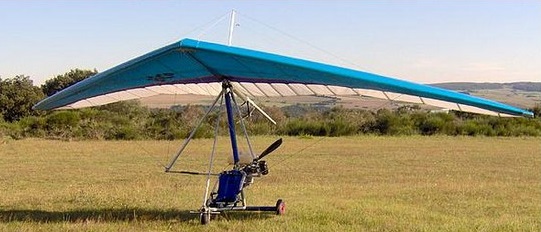
The Hubertec Thermik (English: Thermal) is a German ultralight trike, designed and produced by Hubertec of Aach, Rhineland-Palatinate. The aircraft was supplied as a complete ready-to-fly-aircraft.
The company is an industrial prototyping and exercise machine specialist that decided to produce an ultralight trike design as a sideline project.
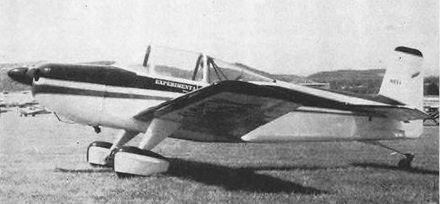
Designed and built by Harold Hayden, Robert Kinney, Arthur Payne and Reno Benner in their spare time, over about five years, near Bristol, PA, USA.
Fuel is carried in the wing tips. Flaps are fitted.
Engine: Lycoming O-235-C1, 115 hp
Wing span: 25 ft
Wing area: 99 sq.ft
Length: 19.1 ft
Height: 8 ft 1 in
Gross weight: 1300 lb
Fuel capacity: 36 USG
Cruise: 145 mph
Wing loading: 13 lb/sq.ft
TO dist: 400 ft
Stall: 50 mph
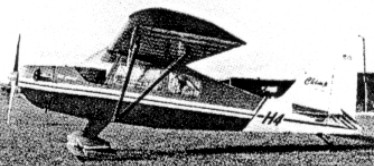
Speed max: 100 mph.
Cruise: 63 mph.
Range: 100 sm.
Stall: 31 mph.
ROC: 650 fpm.
Take-off dist: 200 ft.
Landing dist: 250 ft.
Service ceiling: 14,000 ft.
Engine: Rotax 377, 35 hp.
HP range: 35-65.
Fuel cap: 5 USG.
Weight empty: 315 lbs.
Gross: 550 lbs.
Height: 6 ft.
Wing span: 28 ft.
Wing area: 112 sq.ft.
Seats: 1.
Landing gear: tail wheel.

