Iranian Aviation AVA-202

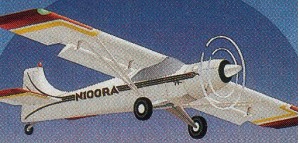
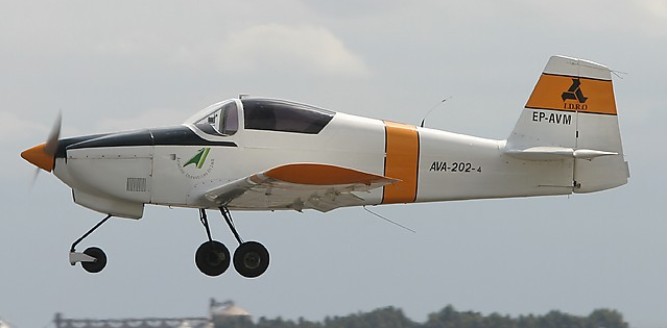
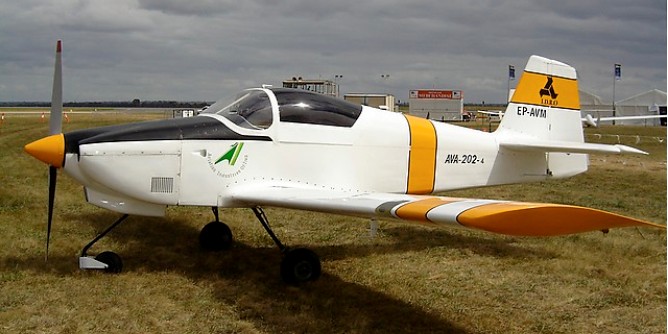
The Aviation Industries of Iran AVA-202 is an Iranian two-seat, light aircraft designed as a trainer and sporting aircraft. It was intended for the Iranian domestic market to avoid dependence on imports.

The AVA-202 was based on the Van’s Aircraft RV-6A and was designed to comply with European JAR-22 and JAR-VLA aircraft certification rules. It features a cantilever low-wing, a two-seats-in-side-by-side configuration enclosed cockpit under a bubble canopy, fixed tricycle landing gear and a single engine in tractor configuration.

The aircraft is made from aluminum sheet. Its 8.74 m (28.7 ft) span wing employs a NACA 63-215 airfoil and the wing root and a NACA 63-015 airfoil at the wing tip. The wingspan is greater than the RV-6’s wingspan of 7.01 m (23.0 ft) from which it is derived. The AVA-202’s wing has an area of 10.87 sq.m (117.0 sq ft) and is equipped with flaps. The standard engine fitted is the 160 hp (119 kW) Lycoming AEIO-320-B2B four-stroke aerobatic powerplant.

First flown on 3 June 1997, four had been built by 2002.
Engine: 1 × Textron Lycoming AEIO-320-B2B, 120 kW (160 hp)
Length: 6.02 m (19 ft 9 in)
Wingspan: 8.74 m (28 ft 8 in)
Height: 2.04 m (6 ft 8 in)
Wing area: 10.87 sq.m (117.0 sq ft)
Aspect ratio: 7.0:0
Airfoil: NASA 632-215
Empty weight: 500 kg (1,102 lb)
Max takeoff weight: 750 kg (1,653 lb)
Maximum speed: 259 km/h (161 mph; 140 kn) at sea level
Cruising speed: 250 km/h (155 mph; 135 kn) (75% power)
Stall speed: 84 km/h (52 mph; 45 kn) (flaps down)
Range: 1,000 km (621 mi; 540 nmi)
Service ceiling: 6,400 m (20,997 ft)
Rate of climb: 7.6 m/s (1,500 ft/min)
Crew: 2
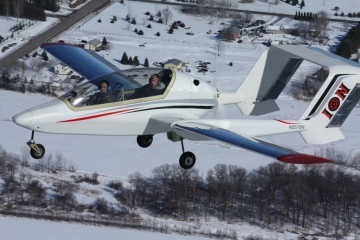
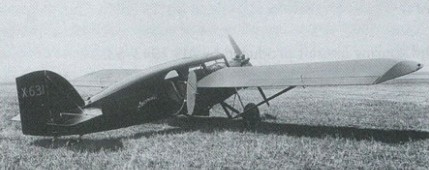
Ion Aircraft Ion 100 / 105 / 110 / 120

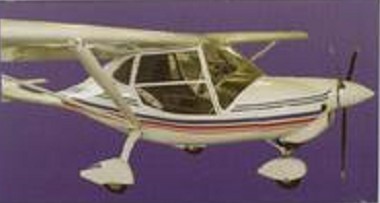
Ion Aircraft is developing a line of light, two-seat (tandem) airplanes suitable for training, sightseeing, cross-country cruising, and generally having fun. All of Ion Aircraft’s engineering is being done by AirBoss Aerospace of Reno, Nevada.
The Ion 100 is a kit aircraft being designed from the ground up to be Light Sport Aircraft (LSA) compliant.

The Ion 105 is a non-LSA variant of the 100, with better cruise performance. The 105 version is meant for the US Experimental category.

The Ion 110 is the export version, intended to comply with upcoming European rules.
All three versions feature easily removable wings for trailer storage and two sets of interchangeable wings to meet differing performance requirements.

The majority of the plane is carbon fiber/epoxy composite material. Specifically;
The cowl is fiberglass. Although it is very slightly heavier than carbon fiber would have been, the cowl is not structural and the fiberglass is much less expensive.
The wings are bonded aluminum as the bonded aluminum process is actually calculated to be a little lighter than composite would have been.
Tthe Ion 120 has a 10 inch (25 cm) removable nose cone to allow access to the nose gear and the batteries. It will also allow it to fit in a 24 foot trailer.

Ion 100
Cruise: 156 mph
Stall: 45 mph
Range: 920 sm
Rate of climb: 1600 fpm
Takeoff dist: 394 ft
Engine: Jabiru 3300, 120 hp
HP range: 100-150
Fuel capacity: 25 USG
Empty weight: 890 lb
Gross weight: 1320 lb
Length: 24 ft
Wing span: 29 ft
Wing area: 113.5 sq.ft
Seats: 2
Cockpit width: 31 in
Landing gear: nose wheel

Ion 120
Engine; 100 hp
Length: 24 ft (7.3 meters)
Wing span / LSA wings: 30 ft, 4 in (9.25 m)
Wing span / cruise wings: 26 ft 10 in (8.2 m)
Cockpit width: 30 in (76 cm)
Cruise 75% SL: 132 kt / 152 mph
Cruise 75% 3000 ft: 135 kt / 155 kt
Cruise 75% 9000 ft: 138 kt / 159 mph

Inter-Tech Raptor

Various aspects of this design have been tested and flown on approximately six previous dates. First flown in September 1997.
Kit price in 1997 was US$22,950.

Top speed: 155 mph
Cruise: 130 mph
Stall: 37 mph
Range: 600 sm
Engine: Continental IO-520, 300 hp
HP range: 200-300
Fuel capacity: 60 USG
Empty weight: 1500 lb
Gross weight: 3000 lb
Height: 6.7 ft
Length: 25.8 ft
Wing span: 37 ft
Wing area: 194 sq.ft
Seats: 4
Landing gear: tailwheel

Interstate S1B Cadet / L-6 Grasshopper

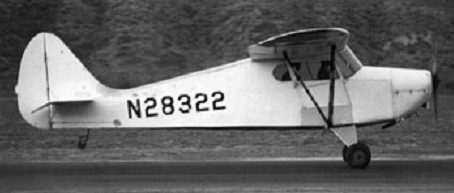
In 1940, the Interstate Aircraft & Engineering Corp. began production of the Interstate Cadet. The S1B was a member of a family of taildraggers, such as the Piper Cub, Taylorcraft, Luscombe, and Aeronca Champ that served many a weekend pilot with fun-filled hours during the late 1930s and early 1940s. The original Cadet was produced in a number of versions using engines from 65 hp to 102 hp. Most popular was the S5B using a 102-hp four-cylinder Franklin.
The tandem two-seater was modified for the military at the beginning of the war and called the L-6 liaison plane. This version was equipped with a glazed canopy that extended well aft toward the tail.
In 1969, production of the Interstate Cadet was resurrected by Bill and Jan Diehl, owners of Arctic Aircraft Co. in Anchorage, Alaska. The revived Cadet was dubbed the S2B2.

Engine 102-hp Franklin
Length: 23.458 ft / 7.15 m
Height: 6.988 ft / 2.13 m
Wingspan : 35.499 ft / 10.82 m
Wing area : 173.839 sq.ft / 16.15 sq.m
Gross wt. 1,650 lb / 748.0 kg
Empty wt. 1,103 lb. / 500.0 kg
Wing loading: 9.43 lb/sq.ft / 46.0 kg/sq.m
Fuel capacity 15 USG.
Top speed 114 mph / 99 kts / 183 km/h
Cruise 105 mph / 91 kts / 169 km/h
Stall 38 mph.
Initial climb rate 900 fpm.
Range: 469 nm / 869 km
Service ceiling 16,500 ft / 5030
Seats 2.

Interplane Skyboy / S1 Cobra

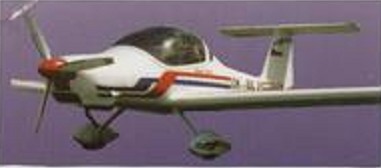
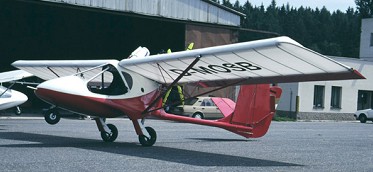
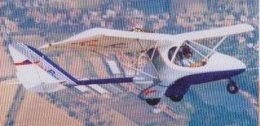
A two place, side by side ultralight has a composite fuselage, an automobie like instrument panel and faired undercarriage. Power is with a Rorax 503, with a Rotax 582 optional, in pusher configuration at the back of the cockpit area and behind the trailing edge of the wing. The tail is on a tubular tailboom with conventional three axis controls. A high wing-aluminium & composite microlight, the Skyboy has a fully enclosable composite cabin with dual controls.
The Skyboy comes preassembled by Czech firm LET.
The agent in France was Junkers Profly.
The price in France, 1997, ex France, including engine and propeller was approximately US$22,400.
The “Skyboy” was renamed the S1 Cobra.

1998

The Skyboy was offered with two different wing profiles. One for low speed manoeuvrability and one for fast cruise.

Engine: Rotax 503
Wing span: 34.5 ft
Length: 20.8 ft
Empty weight: 447 lb
MTOW: 990 lb
Stall: 35 kt / 40 mph / 64 kmh
Cruise: 83 kt / 95 mph / 153 kmh
VNE: 111 kt / 128 mph / 206 kmh
Climb Ratio: 1050 ft/min / 5 m/s
Take-off distance (50ft obstacle): 330 ft / 101 m
Landing distance (50ft obstacle): 380 ft / 116 m

Engine: Rotax 582, 64 hp
Wing span: 10.5 m
Wing area: 15.2 sq.m
MAUW: 450 kg
Empty weight: 210 kg
Fuel capacity: 42 lt
Max speed: 150 kph
Cruise speed: 120 kph
Minimum speed: 54 kph
Climb rate: 5.5 m/s
Seats: 2
Fuel consumption: 15 lt/hr
Price (1998): 32 000 DM