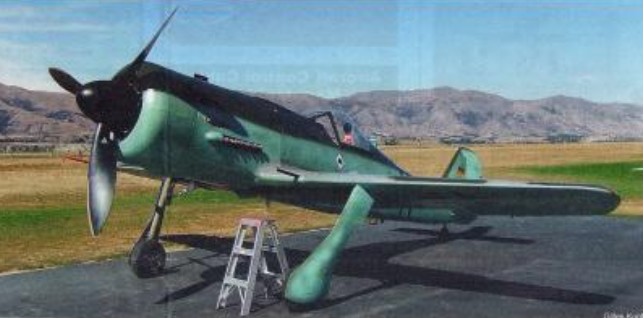
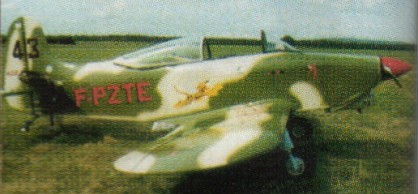
A 75 percent scale replica of the Focke-Wulf Fw 190 fighter developed for the Luftwaffe. Engines from 220 hp to 350 hp can be used. The replica Focke-Wulf Fw 190 D9 is fully aerobatic and certified to +6, -4G.
MJ-8 (75%) Engine: Lycoming, 290 hp. HP range: 200-300. Length: 21.75 ft. Wing span: 55.8 ft. Wing area: 109.8 sq.ft. Weight empty: 1500 lbs. Gross: 2500 lbs. Fuel cap: 30 USG. Cruise: 225 mph. Range: 143 sm. Stall: 67 mph. ROC: 2000 fpm. Take-off dist: 1500 ft. Landing dist: 1500 ft. Seats: 1. Landing gear: retractable tail wheel.
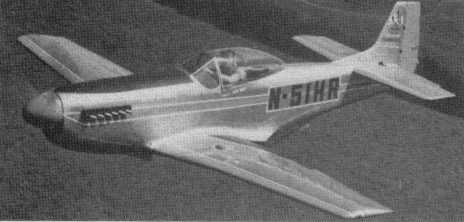
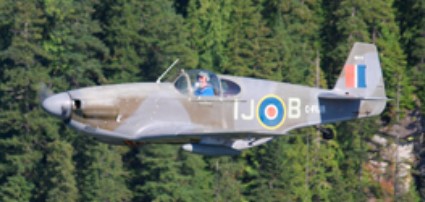
To facilitate homebuilding replicas of fighter planes, designer Marcel Jurca has created a scaled-down ver¬sion of the P-51 Mustang, the Supermarine Spitfire and the Focke Wulf FW-190. The Mustang is available in 2/3 (MJ-7) or 3/4 scale (MJ-77). Only the relative size of a pilot’s head identifies the Baby P-51 from its bigger brother. The ship first flew with a 200-hp Ranger inline engine. Others that can be used include: any of the six-cylinder Rangers, the 125-hp Mènasco, the 130-hp Gipsy Major, the 125 to 160-hp Canadian Rambler, or the General Motors Buick F58. Materials used are wood and fabric.
The Mustang replica is of all-wood construction and uses many components from the aircraft industry. It has a retractable undercarriage and conventional flight control surfaces and flaps. The fuselage, wings and empennage are of sitka spruce framework with a plywood covering and an exterior finish of thin fiberglass. It is powered by a six-cylinder Lycoming aircraft engine.
Although capable of carrying two persons, with the second seat removed and an additional fuel tank installed, the design represents the earlier P-51B with the high rear fuselage, rather than the more common P-51D with a bubble canopy.
The two-thirds scale replica P-51B Mustang is the model MJ-7-G.
Boeve Fiberglass Components Inc offered full kits (1997) for US$35,000. Plans were selling for US$500.
MJ-7 Engine: V8 350/351, 330 hp. HP range: 200-330. Height: 8.7 ft. Length: 22 ft. Wing span: 24.5 ft. Wing area: 112 sq.ft. Weight empty: 1800 lbs. Gross: 2450 lb Fuel cap: 52 USG. Speed max: 300 mph. Cruise: 255 mph. Range: 1000 sm. Stall: 69 mph. ROC: 2000 fpm. Take-off dist: 800 ft. Landing dist: 1000 ft. Seats: 2. Landing gear: retractable tail wheel.
MJ-7-G P-51B Mustang Engine: Lycoming O-540, 260 hp Maximum speed: 200 mph (322 km/h) Loaded weight: 1900 lb (862 kg) Span: 24 ft 9 in (7.5 m) Length: 23 ft 3 in (7.1 m) Height: 6 ft 3 in (1.9 m) Wing area: 114 sq ft (10.6 sq m)
Wingspan 25’l0” Length 22’4” Gross Wt. 2000 lb Empty Wt. 1175 lb Fuel capacity 30 USG Top speed 225 mph Cruise 175 mph. Stall 65 mph. Range 570 miles Takeoff run 900 ft Landing roll 800 ft
Boeve Fibreglass Components MJ-7 Engine: V8 351/350, 330 hp HP range: 200-330 Height: 8.7 ft Length: 22 ft Wing span: 24.5 ft Wing area: 112 sq.ft Empty weight: 1800 lb Gross weight: 2450 lb Fuel capacity: 52 USG Top speed: 300 mph Cruise: 235 mph Stall: 69 mph Range: 1000 sm Rate of climb: 2000 fpm Takeoff dist: 800 ft Landing dist: 1000 ft Seats: 2 Landing gear: tailwheel retractable G limits: +6/-4
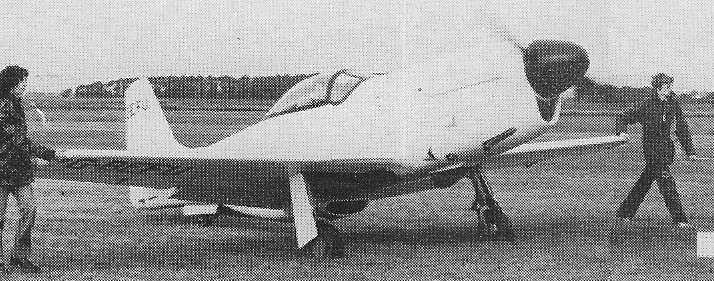
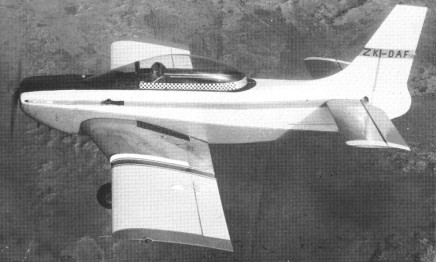
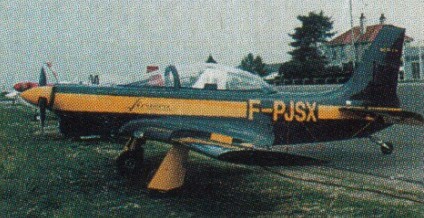
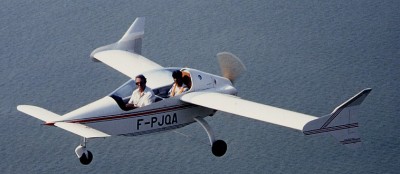
The prototype MJ.5 Sirocco tandem two-seat aerobatic monoplane, built in France, was first flown in 1962. The Sirocco, an all-wood, fiberglass or fabric-covered low-wing design, can be identified by its rooster tail. The Sirocco sports retractable landing gear.
Flying with or without wing end plates, the inboard wing fence is employed in either case. The prototype flew with a Hirth engine, but 90 to 100 hp Continental or 105 hp Potez engine may be fitted. The original prototype was still flying after 30 years.
Engine: Lycoming, 160 hp. HP range: 125-200. Weight empty: 1260 lbs. Gross: 1860 lbs. Height: 8.5 ft. Wingspan: 21.45 ft Wing area: 107.6 sq.ft. Speed max: 196 mph. Cruise 162 mph. Stall: 64 mph. ROC: 1850 fpm. Service ceiling: 16,400 ft. Seats: 2. Landing gear: nose or tail wheel. Takeoff run 820 ft. Landing roll 750 ft. Range 570 sm.
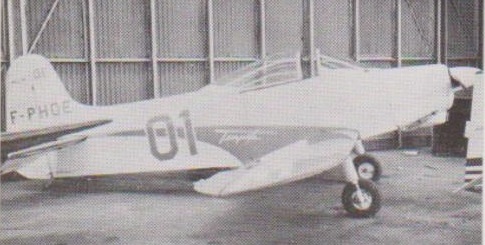
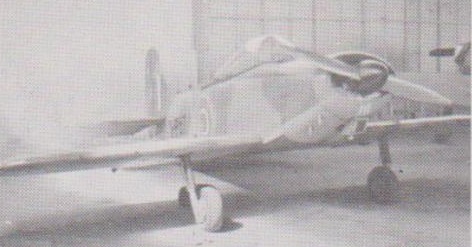
Marcel Jurca incorporated many Jodel Components in the design of the MJ-2 Tempete. The Tempete is a cantilevered low-wing monoplane that can be fitted with engines ranging in horsepower from 65 to 125.
MJ-2 Tempete prototype – Guyancourt, 1965
The single-seat wood/fabric aerobatic MJ.2 Tempete was first flown in 1956.
The standard version is powered by a 65-hp engine. Another common version powered by a 90-hp engine cruises at 120 mph and climbs to 3280 in three minutes.
MJ-2 LX-PUT cn 18, Findel, Luxembourg 5 August 1975. Built as F-PNUD Continental O-200-A
Engine: Lycoming, 110 hp. HP range: 65-180. Height: 7.8 ft. Length: 18.5 ft. Wing span: 19.5 ft. Wing area: 85.9 sq.ft. Weight empty: 639 lbs. Gross: 950 lbs. Fuel cap: 16 USG. Speed max: 120 mph. Cruise: 102 mph. Range: 375 sm. Stall: 62 mph. ROC: 555 fpm. Take-off dist: 820 ft. Landing dist: 800 ft. Service ceiling: 11,500 ft. Seats: 1. Landing gear: retractable tail wheel.
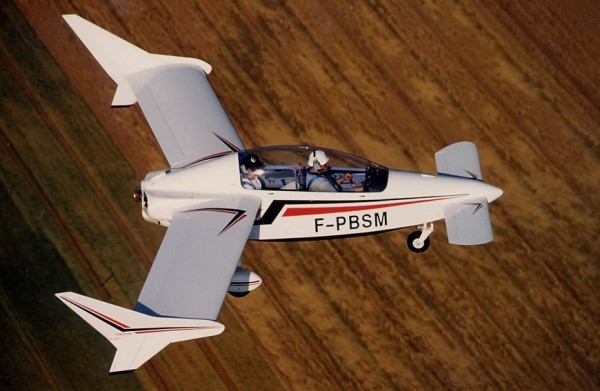
Developed from the RJ.02 Volucelle, the RJ.03 Ibis tandem two-seat canard monoplane, first flown 1991, was offered in plans form for home construction. In March 1992 the Ibis received its French certification at Pau airport in France. Totally enclosed in wood (spruce, douglas fir), it requires no fabric coverings. By utilizing a combination of “Styrodur” (polystyrene) with identically-matching plywood ribs and depression-bonding of surface-coatings, its surface finish matchs that of synthetic-fibre aircraft.
Fitted with “flaperons” on the wings, its approach speed is identical to that of classic aircraft bearing the same load per sq.m. With little nosing-up during approach, rearward and forward visibility is excellent. Due to the use of a nonlaminar surface on the canard, flights are not affected by rain.
The fuel consumption is only 13 l/h at 200 km cruising speed or 10 l/h at 180 km. The rate of climb is 700 fpmat max. take-off weight with only 60 hp.
The IBIS is designed to be used with different types of engines (VW-1830cc, VW-1915cc, French JPX-475T, Australian JABIRU 2200cc, Limbach-2000 EC) and can be fitted with certain types of rotary engines (MID-WEST). The structure comprises 7 frames, 4 longerons and diagonal struts. It is covered with plywood and requires no padding. The fuselage is assembled on the model plane principle, upside down on a table, and after construction of the different frames. The 150 pages handbook, included in the instruction document pack, will give you all the necessary explanations as regards: construction, adjustments and test flight techniques.
The canard wing is rectangular, with no twisting or dihedral angle. It has round tips which are bevelled on the underside. The trailing edge is fitted with a built-in slotted flap, which runs along the whole length of the wing. The canard structure consists of a “box-form spar” the same thickness as the profile and which joins 8 identical plywood former-ribs. The whole structure is filled with “Styrodur” foam, and covered with thin plywood which is glued by suction using the same technique as that employed in the construction of certain model planes. The wing spar is a “box-form” construction and consists of two caps braced together by means of plywood strips on each side. It is in one single piece, at an angle to the airframe. Width and height are constant along whole thickness of the profile. There is no dihedral angle or twisting. All wing ribs are identical, and are in plywood. They are made in a single operation using a metal template and a joiner’s spindle moulding machine. This can be done very quickly. The wing is filled with blocks of “styrodur” foam hollowed out to allow passage of flight control linkages and is covered with thin plywood glued by suction. This method represents a saving of circa 40% on the production time required for standard wood and fabric wing construction. The wing can be dismantled only for major overhaul. Each stabilizer consists of two half-stabilizers made of main plywood longerons and 5 plywood ribs. Thc stabilizers are completely filled with “styrodur”, and covered with glued plywood. The rudders are incorporated in the profile of the stabilizers. The cabin is heated. Internal luggage stowage is behind the passenger’s head. The one-piece canopy, opens laterally. The front undercarriage is mounted on a steering wheel, and is connected to the rudder dual controls; it is not retractable. It is made of steel tubes and fitted with a wheel mounted on a rocker, rubber shock absorbers with brakes on the rear-weels. The main undercarriage is made of glued laminated plywood, for weight, easy assembling and low cost. It is highly efficient even on grass runways. The dual flight control system is the “rigid linkage” type with ball, bell-crank levers and rod connecting joints. The steering and rudder controls are the only system making use of cables. Flight control of the plane is performed through: flaperons (flaps/ailerons) running the whole length of the main wing span, elevator on the canard wing, rudders on stabilizers. The IBIS is flown in a totally classic way. Fuel tanks are in epoxy resin and are incorporated in the leading edge of the wing. They have a capacity of 60 litres; they are equipped with a feed-tank and have a single refuelling point on the wing or on the luggage hold. The tanks are fitted with an electric fuel gauge and with a single pipe leading from the lower part of the feed-tank. There is no manual system for transferring fuel. The IBIS plane has been designed for use with VW (Volkswagen) engines in the 60 to 80 HP range, i.e. engines of at least 1830 CC or any more powerful VW engine. Any four stroke four cylinder engine, without reducing gear, weighing 75 kg or less, in good working order (and roughly equivalent to the VW or up to 20 kg lighter) presently in use or coming on line, can be mounted on the IBIS. It is also possible to use the French engine “JPX 4T 75A” 80 HP, the German “LIMBACH 2000 EC” 68 HP or Australian “JABIRU 2200” 80 HP. All of these engines are without a reduction gearbox. A two-stroke engine is not recommended as its specific consumption is much greater than that of the four-stroke engines. Some rotary engines can also be considered as alternative solutions. The 65 HP Continental engine is too heavy. Plans (set of 12 drawings and a 160 pages contruction handbook) of the IBIS aircraft are available in French and English version. Estimated construction time is put at 2200 hours. The IBIS RJ03 is classified in a “light aircraft category”. It cannot be modified as “ultra-light”.
Engine: VW Wing span: 6.3 m MAUW: 470 kg Empty weight: 260 kg Fuel capacity: 60 lt Max speed: 250 kph Cruise speed: 203 kph Minimum speed: 95 kph Climb rate: 3.5 m/s Seats: 2 Plan price (1998): 3000 F
Engine: VW, 60 hp. HP range: 60-80. Wing span: 6.30 m / 20.66 ft Length: 4.90 m / 16 ft. Height: 5.6 ft. Wing area: 52 sq.ft. Vertical stabilizer height: 1.76 m / 5.6 ft Fuselage width: 0.64 m / 26 in Cabin height: 1.04 m / 3.15 ft Cabin width at pilot elbow: 0.64 m / 26 in. Max. take-off weight: 470 kg / 1034 lbs Weight empty: 260 kg / 572 lbs. Fuel capacity: 60 lt / 16.2 US.G Payload (full fuel): 170 kg / 374 lbs Front pilot weight limits: 65-95 kg / 143-209 lb Vmo / Vne: 161 mph / 260 km/h / 140kts Normal cruise 65%: 200 km/h / 108 kt / 124 mph Long range cruise: 180 km/h / 97 kt / 112 mph Max. range: 900 km (485 nms) + VFR reserves – 559 sm Approach speed: 120 km/h / 65 kts / 74 mph Stall speed: 95 km/h / 52 kts / 59 mph ROC: 650 fpm. Vz: 3.5 m/s Takeoff distance: 1050 ft Landing distance: 1500 ft G-loading: +4.5 and -3.0 Seats: 2 tandem. Landing gear: nose wheel.
Engine: VW 1835 cc Wing span: 6.30 m / 20.66 ft Length: 4.90 m / 16 ft. Height: 5.6 ft. Wing area: 52 sq.ft. Vertical stabilizer height: 1.76 m / 5.6 ft Fuselage width: 0.64 m / 26 in Cabin height: 1.04 m / 3.15 ft Cabin width at pilot elbow: 0.64 m / 26 in. Climb rate: 700 fpm at M.T.O. weight. Fuel capacity: 60 lt / 16.2 US.G
In 1987, Roger Junqua and his son Jean-Claude presented a small, all-wood two seater canard at the International Amateurs Builders air show in Brienne-le-Chateau in France. The “VOLUCELLE”, as it was called, with its futurist lines, after testing, turned out to be an excellent airplane. However, it remained a prototype which was used as a research and test-bed airplane for the development of the “IBIS”.
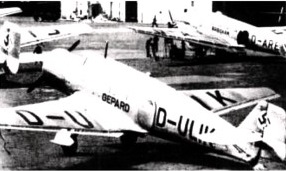
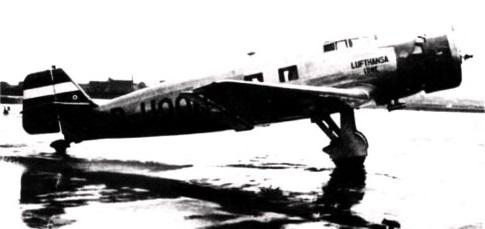
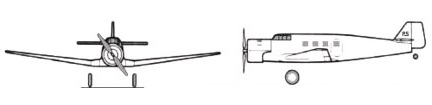
Only two of the 1932 Ju 60s were built, but in 1934 an improved version, the Ju 160, made its appearance. The single engined, high speed transport, featured a new wing configuateion, fully retractable undercarriage and was fitted with three cabin side windows.
V-1 C/no 4202 ‘Luchs’ (Lynx) D-UNOR First flew 30 January 1934
V-2 Military version prototype
V-3 Wider chord wings, passenger door changes & other minor modifications
Ju.160A Modified rudder and faired tailwheel Eleven served with Lufthansa
Ju.160D Improved version Ten served with Luftwaffe
Forty-eight Ju 160s were built, entering service with Lufthansa during 1935-36.
As well as operating on domestic routes, the Ju 160s also flew on the Breslau-Prague-Munich route. Most were commandeered by the Luftwaffe on the outbreak of World War II and were widely used for communications and training.
Engine: 1 x 600hp BMW Hornet Prop: 2 blade metal Wingspan: 14.32 m / 46 ft 11 in Length: 38 ft 10 in Height: 3.92 m / 12 ft 10 in Wing area: 366 sq.ft Empty weight: 4996 lb Loaded weight: 6836 lb Max. speed: 177 mph Cruise speed: 150 mph Landing speed: 59 mph Service Ceiling: 5200 m / 17050 ft Range: 620-750 mi Endurance: 3 hrs 12 mins Crew: 2 in tandem Passengers: 6
Engine: 1 x 600hp BMW 132E Wingspan: 14.32 m / 46 ft 11 in Length: 12.00 m / 39 ft 4 in Wing area: 377 sq.ft Empty weight: 5556 lb Loaded weight: 7820 lb Max. speed: 340 km/h / 211 mph Cruise speed: 196 mph Landing speed: 62 mph Service Ceiling: 5200 m / 17050 ft Range: 620-750 mi Endurance: 3 hrs 12 mins
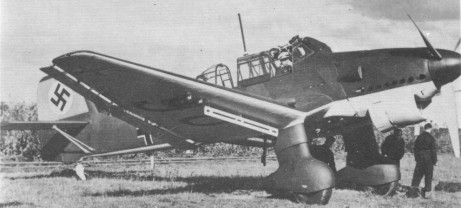
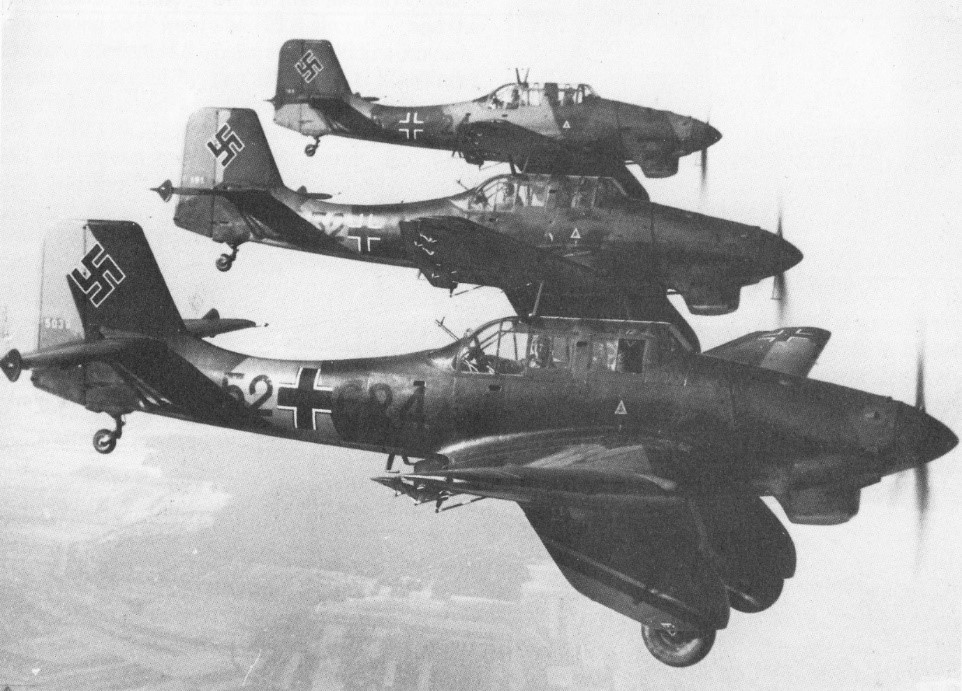
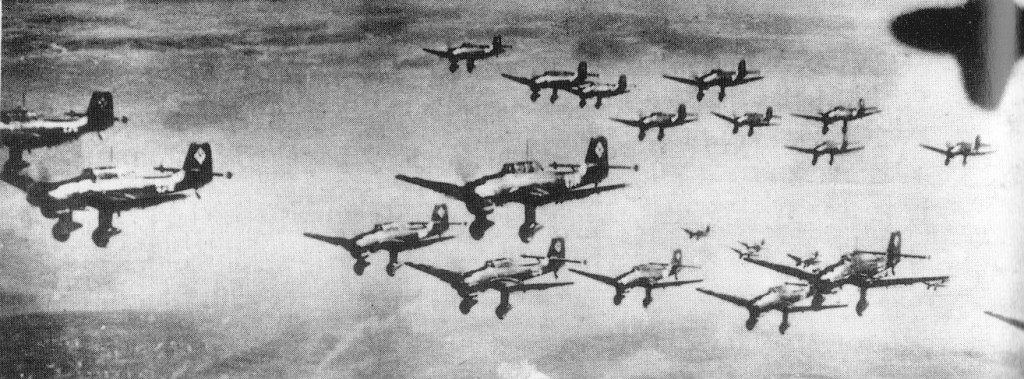
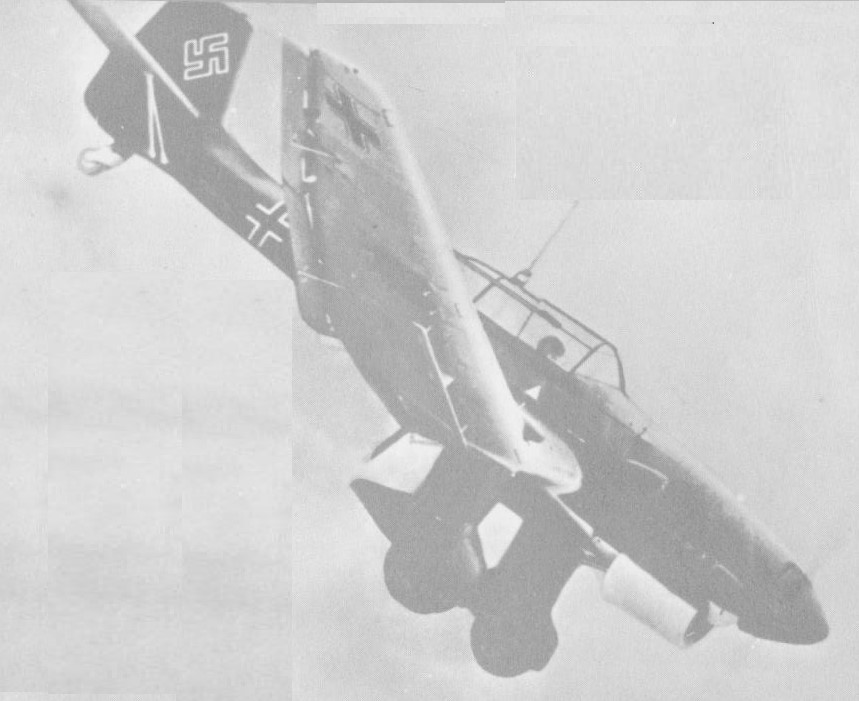
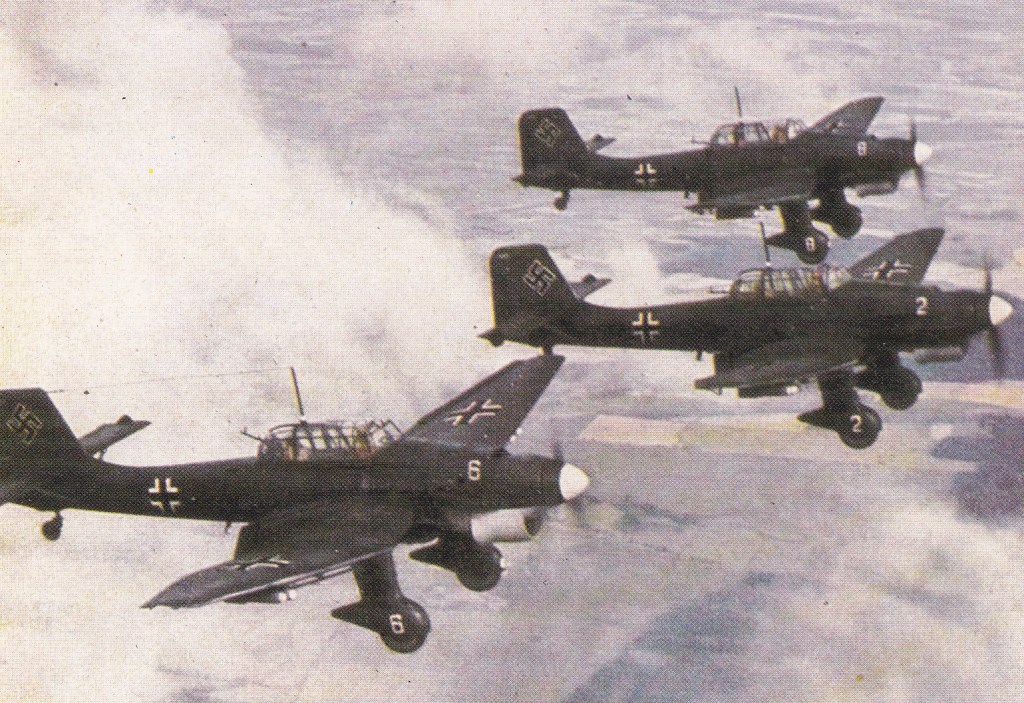
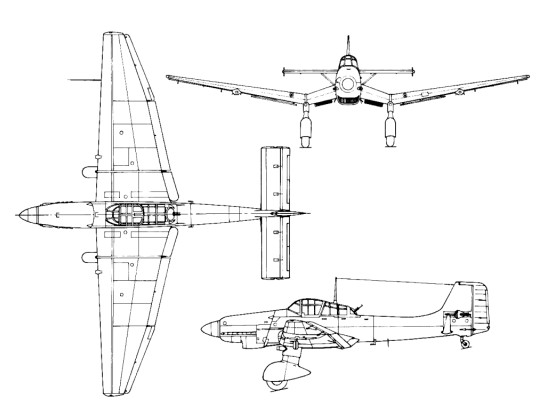
The reputation of the Junkers Ju 87 Stuka (Sturzkampfflugzeug, or dive-bomber) was made during the Polish campaign in close-support operations across Europe. The Luftwaffe believed it to be virtually invincible, but this was true only after air superiority had been gained, as demonstrated during the Battle of Britain when the Stukas were mauled so severely by the RAF that they were later withdrawn from operations over western Europe.
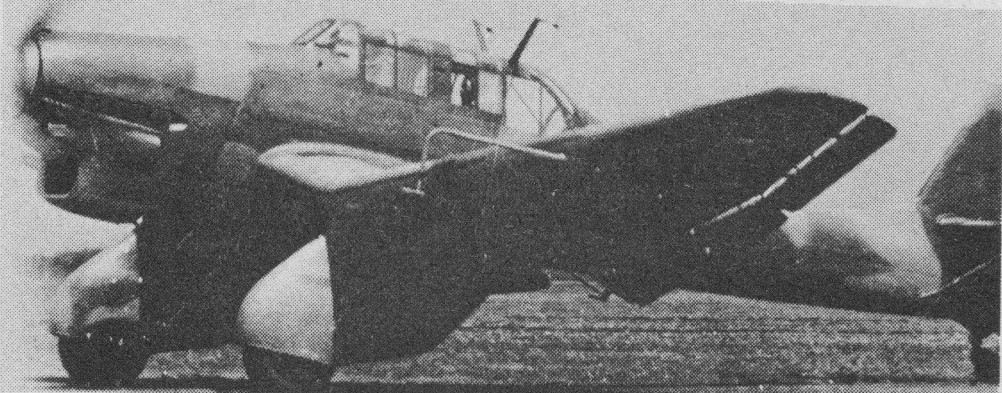
Designed by Hans Pohlmann, the fuselage has a metal structure with top hat section stringers and stressed skin covered. The gull wings were two metal spars with a flush riveted stressed skin and fitted with double wing ailerons and flaps.
Three prototypes were started in 1934, the first with twin vertical tail surfaces and powered by a Rolls-Royce Kestrel V engine rated at 640 hp at 14,000 ft / 4267 m. This Ju 87 V1 was flown at Dessau in the late spring of 1935. During dive tests in 1935 the tail unit of this aircraft collapsed and the aircraft was destroyed. The second prototype, Ju 87 V2, introduced a single fin and rudder and was powered by a 455kW Junkers Jumo 210A, with which the flight test programme was resumed in the late autumn on 1935.
The Ju 87 V2 was powered by the intended Junkers Jumo 210Aa engine, rated at 610 hp at 8530 ft / 2600 m. This aircraft was fitted with dive brakes prior to its delivery to the Rechlin test centre of official ecaluation in March 1936. Attached beneath the wings just aft of the leading edges and outboard of the main undercarriage, these took the form of slats turning through 90 degrees. Prior to commencing the dive, the pilot had to throttle back the engine in order to close the cooling gills, switch over to the sea-level supercharger and turn the propeller to coarse pitch, a series of lines of inclination marked on the starboard front side screen of the cockpit enabling the pilot to estimate the dive angle by aligning the lines with the horizon.
The official evaluation of this aircraft and a further improved third prototype led to a pre-production batch of 10 Ju 87A-0 aircraft with the 477kW Jumo 210Ca engine. The initial Ju 87A-1 production version began to replace Hs 123 biplanes in the spring of 1937.
Ju 87A-1 of Stukageschwader 163 Immelmann in late 1937
The V3 and V4 protypes offered various refinements, the latter introducing a single 7.9mm MG 17 machine gun in the starboard wing and a crutch on swing links which, attached immediately aft of the radiator bath, lowered and swung the bomb, either 551 lb / 250 kg or 1102 lb / 500 kg, forward on release to ensure clearance of the propeller arc.
The first pre-series Ju 87A-0 dive bombers came off the Dessau assembly line before the end of 1936, 10 of these being followed by the series Ju 87A-1 early in 1937.
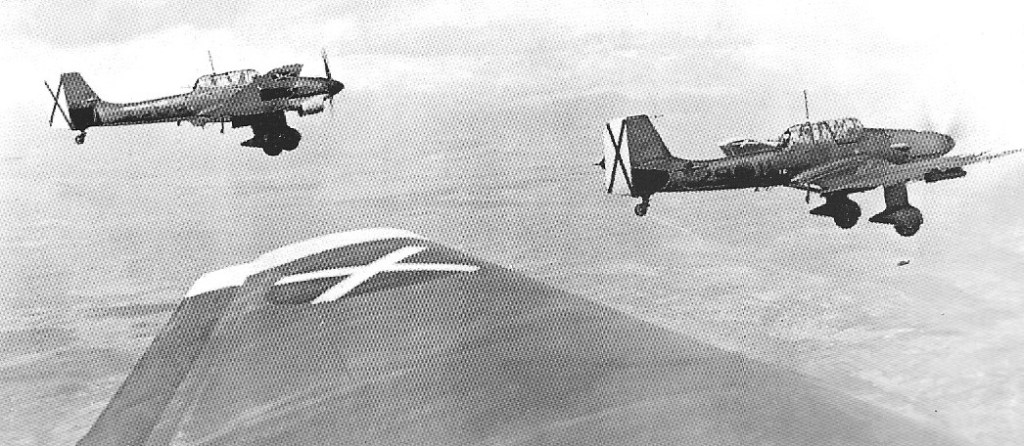
Late in 1937 three Ju 87A-1 dive-bombers of Stukageschwader 162 Immelmann were despatched to Spain for service under the Legion Condor. These aircraft were powered by the 477-kW (640-hp) Jumo 210Ca and were replaced in October 1938 by five examples of the Ju 87B-1, the first definitive variant of this dive-bomber series with a considerably more powerful engine, improved offensive armament, and revised structural and aerodynamic features including a recontoured fuselage, larger vertical surfaces, cantilever main landing gear units without the struts that braced the Ju 87A’s main units to the fuselage. These aircraft operated with Kampfgruppe 88 into early 1939, validating many of the dive-bomber’s tactical principles.
Before the Pacific War began Japan had imported an example of the Ju.87A for study by the Army. It was placed on display at Tokorozawa Air Base in late 1940. It was thought the Ju.87 would be used in quantity and the allied code name ‘Irene’ was assigned.
The Ju 87A-1 gave way to the A-2 with a Jumo 210Da engine of 680 hp for take-off in 1937, but by then a major re-design accommodated the Jumo 211A engine of 1000 hp for take-off.
Ju-87B-2
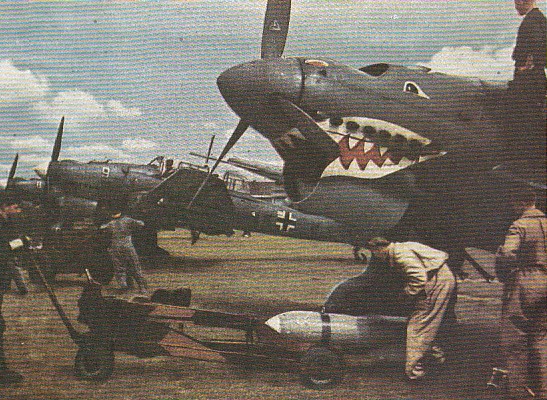
The more powerful engine was installed in the pre-series Ju 87B-0, the Jumo 211A giving way in the series model, the Ju 87B-1, to the Jumo 211Da with direct fuel injection and an emergency take-off rating of 1200 hp. The substantial boost in power enabled the Ju 87B-1 to lift a 1102 lb / 500 kg bomb with both crew members in situ whereas the Ju 87A had only been able to carry this weapon when flown as a single-seater. An alternative warload consisted of a 551 lb / 250 kg bomb on the fuselage crutch and four 110 lb / 50 kg bombs on underwing racks. Forward firing armament was increased to two 7.9mm MG 17s with 500rpg, and a single 7.9 mm MG 15 was attached to a flexible mounting in the rear cockpit with 900 rounds.
Five of the first Ju 87B-1s were despatched to Spain in October 1938 with the same success as the Ju87A before them. With the transfer of the assembly line from Dessau to the Weser Flugzeugbau at Berlin-Tempelhof, production increased dramatically, exceeding 60 aircraft monthly by mid-1939, in which year 557 were to be delivered.
Brunete front, Spain
At the beginning of World War II the Luftwaffe had 336 Ju 87B aircraft on strength, and others were supplied to Italy (which named them Picchiatello), Bulgaria, Hungary and Romania. Nine Ju 98B-1 equipped Stukagruppen were included in the Luftwaffe order of battle on 1 September 1939, these possessing 336 aircraft of which 288 were serviceable. Only 31 Ju 87Bs were lost during Polish operations.
The Ju 87B-2 had succeeded the B-1 on the Weser assembly line late in 1939, this incorporating several refinements, such as a broad-bladed propeller, hydraulically-operated radiator cooling gills and ejector exhausts.
Ju 87B-1 of II Gruppe of Stukageschwader 77
Manufactured in parallel was a longer-range Ju 87R, R for Reichweite or range, which, for extended-range missions such as anti-shipping, made provision for substantial addition fuel and oil.
The Polish campaign influenced boosted production and a total of 769 were built during 1940.
Breda also built a number of Junkers Ju 87Bs under license as the Breda 201 Picchiatelli before suspension of production soon after the Italian surrender.
Ju-87D
Ju 87s were deployed extensively on the Eastern Front, initially with great success, but by 1943 they were suffering such severe losses by daylight that they were switched to a night assault role.
Ju-87G with the BK-37s
Later in the war a specialist anti-armour version was produced which brought havoc to the tank armies on the Russian Front.
Ju.87B
When production ended in September 1944 more than 5,700 had been built, the majority after 1940 when their vulnerability without adequate fighter cover had been highlighted in the Battle of Britain. A redesigned and improved Ju 187 was projected in 1943, but following consideration of the design no examples were built.
Ju.87 V-1 cn 4921 – The first prototype flew for the first time on 17 Sept 1935 and was later possibly registered D-UBYR Powered by a 640 hp Rolls Royce Kestrel and fitted with a fixed pitch two blade wooden propeller. Also with the vertical end plate tailplane surface. The aircraft was later destroyed in a crash due to tail flutter. Length: 33 ft 1.25 in
Ju.87 V-2 cn 4922 – D-UHUH Powered by 610 hp Junkers Jumo 210A with a Hamilton Standard three blade variable pitch metal propeller. This time with the single vertical tail surfaces. Length: 34 ft 10.75 in
Ju.87 V-3 cn 4923 – D-UKYQ – similar to the V-2 Fitted with special dive brakes under the wings Length: 35 ft 3 in
Ju.87 V-4 cn 4924 – D-UBIP – with a larger vertical tail and flew for the first time on 20 Jun 1936 Armed with a 7.92mm MG 17 in the starboard wing The prototype for the A-0 production series
Ju.87 V-5 cn 4925 – B-0 series prototype, first flew 14 Aug 1936
Ju.87 V-6 cn 0870027 – Powered by 1000 hp Junkers Jumo 211A Also a B-0 series prototype, first flew 14 Jun 1937
Ju.87 V-7 cn 0870028 – Prototype for the B series which first flew on 23 Aug 1937 Powered by 1000 hp Junkers Jumo 211A
Ju.87 V-8 cn 4926 – First flew 11 Nov 1937
Ju.87 V-9 cn 4927 – D-IELZ – First flew 16 Feb 1938, later as WL-IELZ on 16 Oct 1939
Ju.87 V-10 cn 4928 – D-IHFH – First flew 17 Mar 1938 As a fixed wing test aircraft for the C series – TK+HD, as C-1
Ju.87 V-11 cn 4929 – TV+OV – First flew 12 May 1938 Folding wing test type for the C series, as C-0
Ju.87 V-15 cn 0870321 – D-IGDK crashed during 1942
Ju.87 V-16 cn 0870279 – GT+AX
Ju.87 V-19 cn 4930 – VN+EN used as a torpedo test aircraft for the E series types during 1941
Ju.87 V-21 cn 0870536 – D-INRF D series prototype, first flew during February 1941
Ju.87 V-22 cn 0870540 – SF+TY D series prototype, first flew on 1 March 1941
Ju.87 V-23 cn 0870542 – PB+UB D series prototype, first flew during April 1941
Ju.87 V-24 cn 0870544 – BK+EE D series prototype, first flew duringMay 1941
Ju.87 V-25 cn 0870538 – BK+EF D series tropical variant prototype
Ju.87 V-30 cn 2296 D-5 prototype, first flew 20 June 1943
Ju.87A 210 built
Ju.87A-0 10 pre-production types, first flown November 1936 Engine: Junkers Jumo 210C, 600 hp Prop: 10 ft 10 in two position adjustable
Ju 87A-1 Engine: Junkers Jumo 210Ca, 477-kW (640-hp).
Ju.87A-1 Production type Entered service with Sturkampfgeschwader Immelmann August 1937 Engine: Junkers Jumo 210Da, 635 hp Max speed SL with bombload: 174 mph Max speed 12,000ft: 199 mph Max speed 13,120ft with bombload: 180 mph Service ceiling: 22,960 ft Range: 620 miles Wingspan: 45 ft 3.25 in Length: 35 ft 5 1/6 in Height: 12 ft 9.5 in Wing area: 343.38 sq.ft Empty weight: 5104 lb Loaded weight: 7496 lb Armament: 1 x fixed 7.92mm MG 17, 1 x flexible 7.92mm MG 15, Later armament: 2 x fixed 7.92mm MG 17, 1 x flexible 7.92mm win barrel MG 81z Bombload: 1 x 550 lb bomb or 1100 lb (with one man crew) Later bombload: 3968 lb, or 2 x pods of six MG 17 or 2 x 2cm MGFF cannon each, or 2 x packs of 92 – 4.4 lb anti-personnel bombs. Sirens were also fitted to undercarriage fairings
Ju.87A-2 Engine: Junkers Jumo 210Da, 680 hp
Ju.87B Larger vertical tail 200 delivered to Italy – known as Picchiatello Evaluated by the Japanese Supplied to Bulgaria, Hungary, and Romania Last B type produce during October 1940 Engine: Junkers Jumo 211A-1, 899 hp Prop: controlable pitch 11 ft 5.75 in 3-blade Length: 35.6 ft. (10.85 m.). Wing span: 45.3 ft. (13.8 m.). Weight empty: 6,085 lb. (2,760 kg.). Armament: Two mg in wings, one in rear cockpit. Bomb load: 1100 lb (500 kg.) Max speed: 232 m.p.h. (373 km.p.h.). Range: 370 miles (600 km.). Crew: pilot & 1 gunner. One aircraft trialled with 1475 hp Daimler-Benz DB 605 engine
Ju.87B-0 Ten pre-production aircraft built 1938 Engine: Junkers Jumo 211A, 900 hp
Ju.87B-1 1938 – fitted with larger canopy, re-designed cockpit and undercarriage wheel spats Powerplant: 1 x Junkers Jumo 211Da, 895kW (1,200 hp). Span: 13.8m (45ft 3.3 in). Length: 11.1m (36ft 5in). Max TO weight: 4340 kg (9,560 lb). Max speed: 238 mph at 13,410 ft. Max speed SL with bombload: 211 mph Max speed 16,405ft: 217 mph Cruise speed: 175 mph Landing speed: 68 mph Climb rate to 13,500 ft: 12 min Service ceiling: 26,250 ft Height: 12 ft 9.5 in Wing area: 343.38 sq.ft Empty weight: 6052 lb Operational range: 490 miles. Armament: 2 x 7.92mm Rheinmetall MG 17 mg in wings, 1 x 7.92mm MG 15 mg in rear cockpit Bombload: 4 x 110 lb underwing racks & 1 x 551 lb or 1 x 1102 lb under fuselage
Ju.87B-1 / U-1 Standard variant
Ju.87B-1 / U-2 Alternative radio equipment
Ju.87B-1 / U-3 Additional armour
Ju.87B-1 / U-4 Similar to U-3 but ski undercarriage
Ju.87B-1 / Trop Tropicalised variant
Ju.87B-2 Fitted with automatic dive control Modified undercarriage legs and hydraulically operated radiator cooling flaps Later internal electrical equipment modified Engine: Junkers Jumo 211Da, 1100 hp (1200 hp with fuel injection) Prop: Junkers VS 5, 11 ft 1.75 in dia., 3-blade Wing span: 45 ft 3.5 in (13.8 m). Length: 36 ft 1 in (11.0 m). Height: 12 ft 9.5 in (3.9 m). Loaded weight: 9321 lb / 11,023 lb max Max level speed: 237 mph (380 kph). Service ceiling: 26247 ft / 8000 m Armament: 2 x 7.92mm Rheinmetall MG 17 mg in wings, 1 x 7.92mm MG 15 mg in rear cockpit Bombload: 2200 lb (2200 lb as a single seater) Crew: 2
Ju.87C 87B’s converted for carrier ‘Graf Zeppelin’. Strengthened, fitted with folding wings, arrester gear, jettisonable undercarriage, inflatable flotation bags under each wing and some carried a two seat rubber dingy.
Ju.87C-0 One only, fitted with 88mm recoilless gun Damaged while testing
Ju-87C-1 Armed with two wing mounted MG 17 machine guns and an aft firung MG 15 machine gun. Project abandoned and those being built converted to B-2s
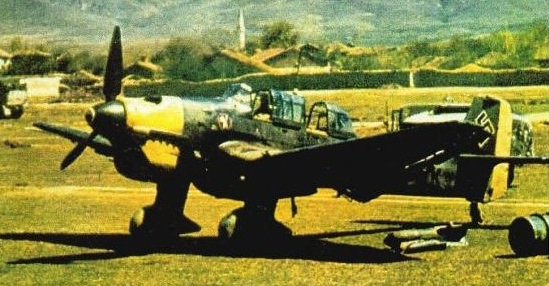
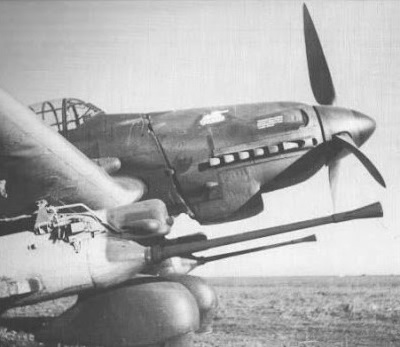
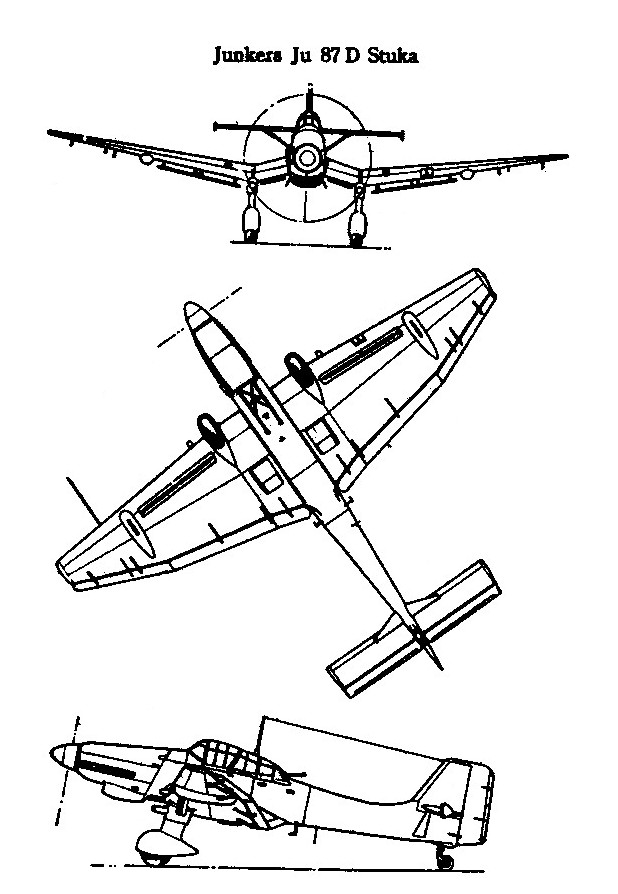
Ju.87D Ground attack and dive bomber, two crew Introduced during late 1940 Engine coolant radiator now under wing. Oil coolant radiator replaces engine coolant radiator Redesigned engine cowling, cockpit canopy, undercarriage fairings and improved armour protection. Sirens fitted to undercarriage Engine: Junkers Jumo 211J-1, 1350 hp Propeller: VDM 3-blade controllable pitch Wingspan: 45 ft 3.5 in Length: 37 ft 8.75 in Take-off weght: 12,600 lb Max speed: 255 mph Armament: 2 x 7.92mm MG 81 mg Bombload: 1 x 1100 lb under fuselage or 1 x 550 lb under fuselage & 4 x 110 lb under wings Some fitted with twin 37mm (flak) cannon, revised canopy, simplified landing gear and larger vertical tail. Some 6000 built.
Ju-87D-1 Engine: 1 x Junkers Jumo 211J-1, 1410 hp / 1051kW Wingspan: 13.80 m / 45 ft 3 in Length: 11.50 m / 37 ft 9 in Height: 3.90 m / 12 ft 10 in Wing area: 31.90 sq.m / 343.37 sq ft Max take-off weight: 6600 kg / 14550 lb Empty weight: 3900 kg / 8598 lb Cruise speed: 195 mph Endurance max load: 2 hr Max endurance: 4 hr Range 1100 lb load: 370 miles Loaded weight: 12,600 lb normal / 14,550 lb max Max. speed: 410 km/h / 255 mph at 12,600 ft / 3480 m Service ceiling: 7300 m / 23,950 ft Climb to 16,405 ft / 5000m: 19 min 49 sec Range w/max.fuel: 1535 km / 954 miles Armament: 4 x 7.92mm MG 81 mg Bombload: 3968 lb / 1800 kg under fuselage Crew: 2
Ju.87D-1 / Trop Tropicalized with filters and desert survival equipment
Ju.87D-2 Strengthened, sirens removed and fitted with glider towing equipment
Ju.87D-3 Different armament and added armour protection Trialled with over-wing passenger pods (pods to be released and descend by parachute – never tested)
Ju.87D-4 Able to carry a torpedo Armament: 6 x MG 81 in under-wing WB81 weapon containers.
Ju.97D-5 Longer span, no dive brakes, jettisonable landing gear Max speed: 250 mph Service ceiling: 23,900 ft Wingspan: 49 ft 2.5 in Length: Height: Wing area: Empty weight: Loaded weight: 14,550 lb
Ju.87D-6 Simplified version similar to D-5 – not produced
Ju.87D-7 Night ground attack type Engine: Junkers Jumo 211P, 1500 hp Max speed 15,745ft: 248 mph Cruise speed: 187 mph Wingspan: 49 ft 2.5 in Length: 37 ft 8.75 in Height: 12 ft 9.5 in Wing area: 362.6 sq.ft Empty weight: 8690 lb Loaded weight: 13,010 lb Armament: 2 x 20mm MG 151 cannon in wings
Ju.87D-8 Daytime version of D-7
Ju.87E Proposed two seat, catapult launched dive bomber. Able to carry bombs or torpedo. Not built.
Ju 87F Experimental version with larger tyres, uprated engine Modified airframe, greater wingspan Engine: Junkers Jumo 213, 1750 hp
Ju 87G Anti-tank variant of D-3, with dive brakes deleted during late 1942 Armament: 2 x 37mm BK (Flak 18) under wing cannon & 1 x 7.92mm MG 81 mg aft cockpit
Ju 87G-1 Anti-tank, glider tug, & transport duties Entered service 1942 Engine: Junkers Jumo 221J-1, 1400 hp Max speed: 195 mph Cruise speed: 120 mph Wingspan: 49 ft 2.5 in Length: 37 ft 8.75 in Height: 12 ft 9.5 in Wing area: 362.6 sq.ft Empty weight: 10,584 lb Loaded weight: 14,550 lb
Ju 87G-2 Improved version
Ju 87H Ju 87D converted as two seat dual trainers Many had armament removed and bulged side blister pods in rear canopy
Ju 87R Ju 87Bs converted to long range anti-ship Entered service 1940 Engine: Junkers Jumo 211D
Ju 87R-1 Larger fuel tanks, 2 x 33 Gal drop tanks – outer wing position Bombload: 1 x 551 lb One trialled as cargo transport with container on main bomb crutch Range: 875 miles
Ju 87R-2 Increased range
Ju 87R-3 Experimental glider tug with minor equipment changes
Ju 87R-4 Last R type, produced during October 1941 Engine: Junkers Jumo 211J