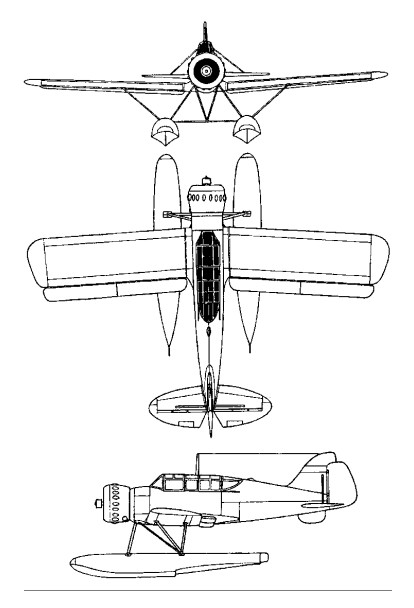
The Yokosuka E14Y1 was built to a total of 126 as the Navy Type 0 Small Reconnaissance Seaplane. Used aboard ocean-going submarines of the Japanese fleet, these aircraft made some notable flights: one from the submarine 1-7 made a post-attack assessment of damage at Pearl Harbor.
On 9 September 1942, launched from the Japanese submarine I-25 under Frigate Captain Meija Tagami, Naval pilot N.Fujita used a Yokosuka E14Y1 seaplane to bomb forests in Oregan, USA. The first raid on the United States of America. On 29 September a second raid was made at the same spot, 50 miles west of Cape Blanco. This was the last raid made on the USA.
E14Y1 Engine: 1 x Hitachi Tempu-12, 255kW Max take-off weight: 1450 kg / 3197 lb Empty weight: 1119 kg / 2467 lb Wingspan: 11.0 m / 36 ft 1 in Length: 8.54 m / 28 ft 0 in Height: 3.8 m / 12 ft 6 in Wing area: 19.0 sq.m / 204.51 sq ft Max. speed: 245 km/h / 152 mph Cruise speed: 165 km/h / 103 mph Ceiling: 5420 m / 17800 ft Range: 880 km / 547 miles Crew: 2 Armament: 7.7mm machine-guns, 60kg of bombs
Influenced by flight tests with a Heinkel He 118 in 1938, the Japanese navy decided that future carrier based aircraft should be much cleaner aerodynamically. A 13 Shi (1938) specification was issued to the Yokosuka naval air arsenal for a carrier-based dive bomber of exceptionally high performance. It had to operate from small carriers and carry a 250 kg (551 lb) bombload for 800 nautical miles (1481 km) and reach 280 knots (519 km/h).
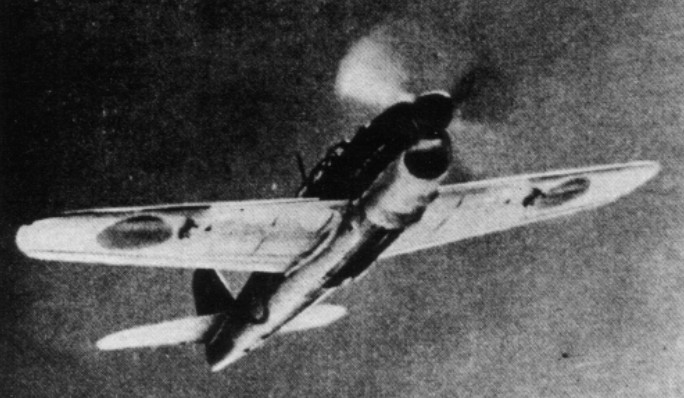
Designed as a fast carrier-based attack bomber and powered by an imported Daimler-Benz DB 600G engine, the D4Y1 was first flown in December 1941.
Achieving excellent performance despite having only a 960 hp DB 600G, the D4Y1-C reconnaissance aircraft were ordered into production at Aichi’s Nagoya plant, the first of 660 aircraft being completed in the late spring of 1942.
It was not until March 1942 that the first production D4Y1 Model 11 emerged from the Aichi factory at Nagoya (the Allies later thought this an Aichi design). Powered by the 1200 hp, Aichi AE1A Atsuta 12 inverted V 12 (licence built modified DB 601A) the aircraft had such speed and range it was ordered as the D4Y1 C reconnaissance aircraft, with rear fuselage camera(s) and underwing drop tanks, and the C model remained in use until Japan’s final surrender. Work continued to perfect the basic D4Y1 and eventually it entered service in March 1943. The first service aircraft were lost when the Soryu was sunk at Midway. The Model 21 was generally similiar. Many D4Y1s were completed as dive-bombers, and 174 Suiseis of the 1st, 2nd and 3rd Koku Sentais were embarked in nine carriers before the Battle of the Philippine Sea. However, they were intercepted by American carriers, and suffered heavy casualties without achieving any success.
Production amounted to 660 by Aichi, with the Japanese name Suisei (Comet) and the Allied code name ‘Judy’, but in the first big action at the Marianas ‘turkey shoot’ they suffered severe casualties at the hands of US Navy fighters and failed to sink any major warships. Their chief faults were complete absence of armour or self sealing tanks and the armament of two fixed 7.7 mm (0.303 in) Type 97 machine guns in the nose and a 7.92 nun (0.312 in) Type 1 aimed by the radio operator/navigator/gunner in the rear seat. Normal bombload was 310 kg (683 lb), but for short ranges 560 kg (1234 lb) could be accommodated.
Like many of the best Japanese aircraft of the Second World War, the D4Y had the misfortune to enter service just as the era of Japanese superiority was coming abruptly to an end. The fleet carriers were fairly soon all sent to the bottom of the Pacific, and most of the total of 2038 of all versions of D4Y operated from escort carriers and shore bases, often in roles quite different from those for which the type was designed. The first new sub type, other than the C, was the D4Y2 (Model 22), which had the 1400 hp Atsuta 32 engine, and the fin and rudder were modified and increased in area, and, in the main D4Y2a variant, a 13mm (0.51 in) Type 2 gun in the rear cockpit. Entering service just in time for the Leyte Gulf and Philippines battles in October 1944, the new model was coolly received, because it still had neither armour nor tank protection. Aichi built 326, plus about 100 by Dai Juichi Kaigun Kokusho (Hiro Naval Air Arsenal), but they were shot out of the sky and soon appeared as kamikaze suicide attackers, usually with an 800 kg (1764 lb) bombload, carried externally.
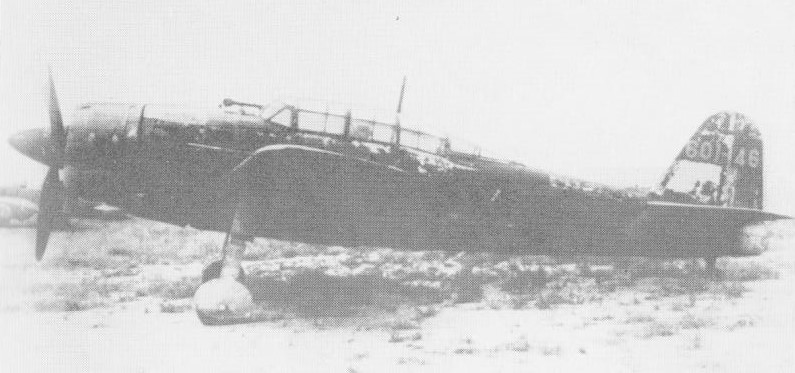
D4Y3
From the start the liquid cooled engine had been unpopular, owing to its difficult main¬tenance and poor reliability. The general feeling about the trim Suisei had been that there was not much wrong with it that proper protection and a radial engine would not cure, and in the winter of 1943/4 the Aichi team schemed an installation for the 14 ¬cylinder two row Mitsubishi Mk8P Kinsei 62.
The D4Y3 prototype, flown in May 1944, showed acceptable handling qualities and almost identical performance to the earlier models, with marginally lower speed but longer range and improved takeoff and climb capability. Production was authorized at once, and both Aichi and Hiro arsenal deli¬vered a total of about 350 in all. These still did not have any protection for crew or fuel, and only the later D4Y3a had a 13 mm (0.51in) rear gun. Most had provision for catapulting but as there were virtually no carriers, the majority were also equipped to have three RATO rockets clipped below the rear fuselage to assist takeoff from island airstrips.
The last sub type was the D4Y4, a pur¬pose designed kamikaze aircraft. A single-¬seater, it carried an 800 kg (1764 lb) bomb or explosive charge (made from a mine or tor¬pedo) semi externally. 296 were deli¬vered by Aichi in 1945.
The proposed D4Y5, with 1825¬hp NK9C Homare engine and proper armour and protected tanks, did not fly. The D4Y2 was later converted to a night fighter.
A total of 2,319 D4Ys was completed. Aichi handled most of the payroll and 500 were completed by Hiro Arsenal.
In the first year of the war some types were given more than one code name due to inaccurate descriptions. ‘Dot’ was assigned to a carrier dive bomber, later also assigned the name ‘Judy’. ‘Dot’ was dropped in favour of the more accepted ‘Judy’.
D4Y2 Engine: 1 x Aichi AE1P Atsuta, 1050kW Max take-off weight: 3840 kg / 8466 lb Empty weight: 2640 kg / 5820 lb Wingspan: 11.5 m / 38 ft 9 in Length: 10.2 m / 33 ft 6 in Height: 3.75 m / 12 ft 4 in Wing area: 22.8 sq.m / 245.42 sq ft Max. speed: 575 km/h / 357 mph Cruise speed: 425 km/h / 264 mph Ceiling: 10700 m / 35100 ft Range: 3600 km / 2237 miles Crew: 2 Armament: 7.92 or 13mm machine-guns Bombload: 1 x 500-kg, 2 x 30-kg
D4Y3 Engine: Mitsubishi Kinsi 62, 1560 hp Span: 11.5 m (37ft 8.75in) Length: 10.22 m (33 ft 6.5 in) Height: 10 ft 9.5 in Empty weight: 5514 lb Gross weight. 4657 kg (10267 lb) Maximum speed: 575 km/h (357 mph) at 19,360 ft Service ceilig: 34,450 ft Max range: 944 miles Armament: 1 x 7.9mm mg, 2 x 7.7mm mg Bombload: 1650 lb Crew: 2
The Yokosuka B4Y1 three-seat carrier attack bomber was designed to meet a requirement of 1934, the evaluation of five prototypes with different power-plant being followed by 205 production aircraft built during 1937-38. Designated officially as the Navy Type 96 Carrier Attacker, these aircraft were used as advanced trainers after Pearl Harbor but, as the Allies believed they were still in first-line service, the type was allocated the code-name ‘Jean’.
B4Y1 Engine: 1 x Nakajima Hikari-2, 630kW Max take-off weight: 3600 kg / 7937 lb Empty weight: 2000 kg / 4409 lb Wingspan: 15.0 m / 49 ft 3 in Length: 10.15 m / 33 ft 4 in Height: 4.36 m / 14 ft 4 in Wing area: 50.0 sq.m / 538.20 sq ft Max. speed: 278 km/h / 173 mph Ceiling: 6000 m / 19700 ft Range: 1580 km / 982 miles Crew: 3 Armament: 1 x 7.7mm machine-guns Bombload: 800-kg torpedo or 500kg of bombs
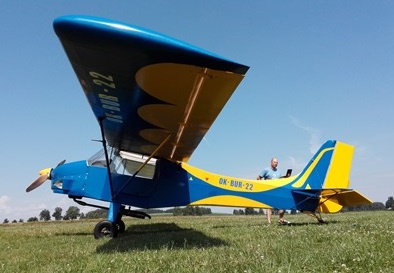
The Yetti J-03 was developed in the Czech Republic as a mass-produced fixed wing aircraft with a welded steel frame structures with metal duralumin wing spars and ribs covered with cloth or ceconite.
Dual controls are fitted. The original version was fitted with Skoda Favorit 136 B engines of 68 HP. With this engine it needed about 250m for take off. Climb rate was around 2.5 m / s.
Later examples had modified Skoda Favorit Sprint 70-75 hp engines with a noticeable increase in performance. Modification consisted of lowering the head to increase the compression ratio, and milling and polishing inlet and exhaust ports in the head. This was performed by Autospektrum 2000 sro from Marianske Lazne, with permission from the Ministry of Transport. With this motor the cruise was 90 to 140 km / h and climb solo around 3-4 m / s. The ideal propeller is the a two-blade in-flight adjustable composite propeller KAŠPAR KA 1-3 or the Woodcomp SR 30 wooden two-blade diameter 1800 mm. The aircraft climbs at 90 km / h 6 m / s solo and 4-5 m / s two up. The cruising speed ranges from 95 to 175 km / h. Climbing speed is from 95 to 100 km / h. Vne is 182 km / h. Recommended maximum speed in turbulence is 120- 140 km / h depending on the type and the type of engines and airframe.
Yetti was also powered by two-stroke water-cooled Rotax 65 hp. Now is fitted conversions automotive engine type 1600, 106HP Suzuki, Subaru 1800 output of 80 to 100 HP, VW-Skoda Fabia 1400ccm 16V 101-112HP, or a certified aircraft engine Rotax 912 S 74kW- 100 hp and three-blade ground adjustable propeller Woodcomp Varia 1700 or economical variant WOODCOMP propulsion, which gives it unprecedented performance. Seat pilot and copilot are height adjustable and side by side. The cabin width ranges from 115 to 120 cm.
A total of 18 were produced. 11 were flying in the Czech Republic.
The required length for landing is about 150-200 m from 15 m. The required length for takeoff to 15m is about 150-240 meters two up.
OK BUR 06 has a larger wing span and features more flap throughout the span of the wing. Furthermore, increased length and increased deflection of the elevator, enables shorten landing. Flaps are adjustable in three positions – 15, 20, and 40 degrees. Flaperons can be positioned at 0-18 degrees on OK BUR 22.
Zejda Skoda Fabia engine
The aircraft are equipped variometer, airspeed indicator, altimeter with heated Pitot static probe, transceiver, and bank indicator tachometer, motor clock, thermometer, cylinder heads, oil thermometer, oil pressure, voltmeter, signaling charging thermometer on the carburetor, outdoor thermometer, portable aviation GPS mapping Pilot III, intercom.
In winter, skis landing gear can be mounted, and a heated cabin from OAT minus 15 C to +20C in the cab.
Engine: Zejda Skoda Fabia 1.2 TSI CBZB, 144 hp Wing span: 9.8 m Empty weight: 320.5 kg MTOW: 472.5 kg Stall speed: 35 kts Cruise speed: 120-160 km / h Economical speed: 100 km / h VNE: 100 kt / 182 km / h Vs1: 56 km / h Climb: 5.5 m/sec Glide ratio: 10:1 Takeoff distance: 150 m
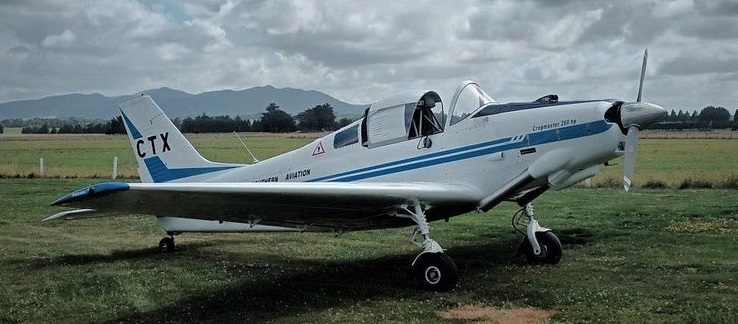
Australian designed and built, based on the CAC CA-6 Wackett trainer. A new wing, tail, and engine were fitted and twenty-one were built between 1959 and 1967. The first flying in February 1960.
Production versions were the KS.3 Cropmaster 250 and Fieldmaster 285.
Yeoman Cropmaster YA 1 250R
At least one was converted to three seats and, as a Yeoman Hanes 250, fitted with an extended glazed canopy to cover all seats.
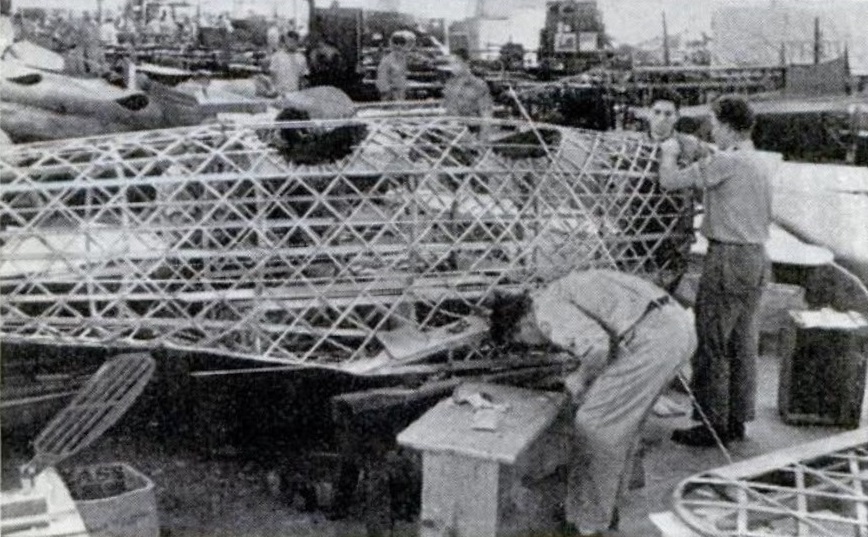
In 1945, an updated Oregon O parasol was built. An open cockpit, midwing monoplane Oregon O was powered by a 125 hp Martin 4-333 inverted 4-cylinder, it had wooden geodetic basket-weave construction.
Circa 1932 George Yates built the single-place, open cockpit, midwing monoplane Oregon O. Powered by a 40hp Salmson AD-9, it had wooden geodetic basket-weave construction. One was built, N15508, and possibly one other.
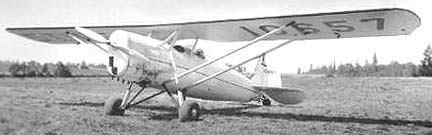
The two-place Yates Stiper of 1930 was built for Elmer Stipe. Registered N10657, it was originally powered by a 125hp Martin 333 and later refitted with a 90hp Cirrus.
The plane had two seats and a parasol wing.
It eventually flew 4,000 hours, carrying passengers.








 All Aero