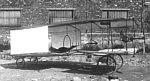
Kolb FireStar / FireStar II

Firestar II

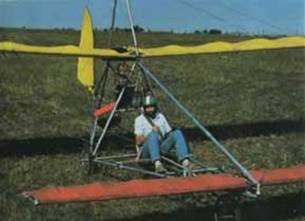
First produced in 1985. The wings and tail fold for transport.
Designed by Homer Kolb
The 1997 kit price including a Rotax 447 was $9039.
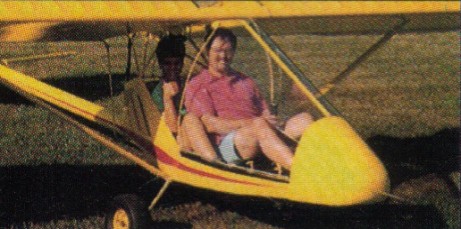
FireStar II

The FireStar II is a two place version of the Firestar I.
The 1997 kit price was US$9264 including the engine.
The New Kolb Aircraft LSA Firestar II 2009 Price: 9000 US$

Firestar
Engine: Rotax 377
Empty wt. lbs: 264
Max wt. lbs: 535
Wing span: 27ft 8in
Wing area sq.ft.: 148
Wing loading lbs/sq.ft: 3.6
Power loading lbs/hp: 15.3
Max speed mph: 63
Cruise mph: 55
Stall mph: 26
Vne mph: 75
Seats: 1

Firestar I
Engine: Rotax 447, 41 hp.
Speed max: 70 mph.
Cruise: 60 mph.
Stall: 26 mph.
ROC: 1000 fpm.
Take-off dist: 125 ft.
Landing dist: 125 ft.
Fuel cap: 5 USG.
Weight empty: 275 lbs.
Gross: 550 lbs.
Height: 5.83 ft.
Length: 21.25 ft.
Wing span: 27.5 ft.
Wing area: 143 sq.ft.
Seats: 1.
Landing gear: tail wheel.

New Kolb Firestar I
Engine: Rotax 503, 52 hp.
Wing span: 27.8 ft.
Wing area: 143 sq.ft.
Length: 22.6 ft.
Weight empty: 325 lbs.
Gross: 760 lbs.
Fuel cap: 10 USG.
Cruise: 70 mph.
Stall: 27 mph.
ROC: 850 fpm.
Take-off dist: 150 ft.
Landing dist: 200 ft.
Seats: 2 tandem.
Cockpit width: 23 in
Landing gear: tail wheel.

FireStar II
Engine: Rotax 447, 41 hp.
Height: 5.83 ft.
Length: 21.25 ft.
Wing span: 27.5 ft.
Wing area: 143 sq.ft.
Weight empty: 290 lbs.
Gross: 725 lbs.
Fuel cap: 10 USG.
Speed max: 70 mph.
Cruise: 60 mph.
Stall: 30 mph.
ROC: 650 fpm.
Take-off dist: 225 ft.
Landing dist: 200 ft.
Seats: 2.
Landing gear: tail wheel.

The New Kolb Aircraft Firestar II
Stall: 30 kt / 35 mph / 56 kmh
Cruise: 61 kt / 70 mph / 113 kmh
VNE: 74 kt / 85 mph / 137 kmh
Empty Weight: 147 kg / 325 lbs
MTOW Weight: 329 kg / 725 lbs
Climb Ratio: 800 ft/min / 4 m/s
Take-off distance (50ft obstacle): 250 ft / 76 m
Landing distance (50ft obstacle): 300 ft / 91 m
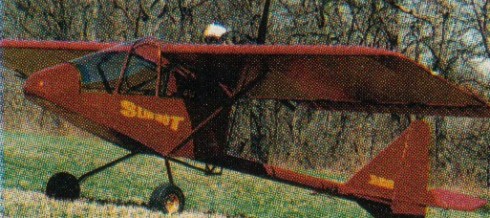
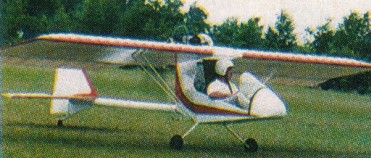
Kolb Slingshot

LSA Single or two seat.
Designed by Homer Kolb, the kit cost US$12,784 in 1997.

Engine: Rotax 582, 65 hp
HP range: 65-80
Cruise: 87 mph
Stall: 44 mph
Rate of climb: 1300 fpm
Takeoff dist: 200 ft
Landing dist: 200 ft
Fuel capacity: 10 USG
Empty weight: 395 lb
Gross weight: 850 lb
Length: 19 ft
Wing span: 22 ft
Wing area: 110 sq.ft
Cockpit width: 23 in
Landing gear: tail

Kolb Firefly

Designed by Homer Kolb, the Firefly was designed to be a legal ultralight with the twin cylinder 40HP Rotax 447 engine installed.
This single seat LSA Firefly features 10 minute wing folding and a Quick-build option. The Quick-buid option represents approximately 50% of the building / assembling time of the aircraft.

Engine: Rotax 447, 41 hp.
Wing span: 22 ft.
Wing area: 117 sq.ft.
Height: 5.83 ft.
Length: 19.5 ft.
Empty weight: 252 lbs
Gross weight: 500 lbs
Fuel tank: 5 USgal.
Speed max: 70 mph.
Cruise speed: 60-65 mph
Stall speed: 30 mph
Climb rate: 1,000 fpm
Take-off roll: 150 ft.
Landing dist: 150 ft.
Cockpit width: 22 in
Landing gear: tail wheel.
Seats: 1.

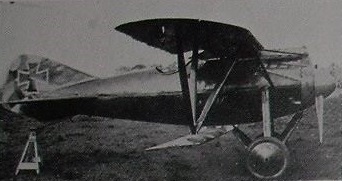
Kondor D-7

The Kondor Dreidekker, first flown in October 1917, was not a success. Instead, Kondor used the fuselage, empennage and lower wing of the Dreidekker to produce over the winter of 1917-18 a biplane or sesquiplane called the D.7 designed by Walter Rethel.

The common fuselage was a tube steel internal structure with plywood skin, rounded in cross-section. At the front the fuselage reduced smoothly in diameter to a large spinner with a two blade propeller driven by a 160 hp (120 kW) six-cylinder, liquid-cooled upright inline Mercedes D.III engine, though there are hints in the records suggesting an earlier, different engine. The upper part of the engine protruded above the fuselage, enclosed in its own cowling. At the rear the tailplane was mounted at mid-fuselage under a long chord fin with a strongly swept leading edge, carrying a deep rudder. There was a shallow ventral fin. The D.7 had a fixed conventional undercarriage, with each mainwheel’s leg placed vertically and mounted at mid-fuselage, assisted by a forward leaning strut attached under the nose. A long tailskid reached rearwards from the forward edge of the ventral fin.

The wings of the D.7 had constant chord and the upper one was supported just above the fuselage on a cabane. The cockpit was aft of its trailing edge, where there was a central rounded cut-out to assist the pilot’s upward and forward view. The lower wing, narrower in chord, was not directly attached to the fuselage but supported centrally by rear leaning struts from the undercarriage structure. The interplane struts were also unusual; three struts were attached at the same point on the lower wing, spreading out upwards into an inverted tripod or pair of Vs.

The date of the D.7’s first flight is not known though it must have been after October 1917, when the Dreidekker was flying, and before May 1918 when a report from the Idflieg said the D.7 was about to recommence testing with the Mercedes engine. It was not entered into the second D-type (fighter) competition of June 1918, suggesting Kondor were beginning to concentrate on the monoplane designs suggested by the success of the Fokker D.VIII, a process that led to the Kondor E.III.

The D.7 remained a prototype and its development was soon abandoned.

Engine: 1 × Mercedes D.III, 120 kW (160 hp)
Propeller: 2-blade
Wingspan: 8.50 m (27 ft 11 in)
Wing area: 15.70 m2 (169.0 sq ft)
Length: 6.20 m (20 ft 4 in)
Height: 2.30 m (7 ft 7 in)
Empty weight: 590 kg (1,301 lb)
Gross weight: 785 kg (1,731 lb)
Maximum speed: 180 km/h (112 mph; 97 kn)
Endurance: 1.45 hr
Crew: One

Kondor Dreidekker

In the summer of 1917 Kondor followed the lead of Fokker’s Dr.I July 1917 triplane with one of their own. Known only as the Kondor Dreidekker this aircraft, first flown in October 1917, was not a success; its development programme was soon abandoned because of severe vibrational problems. Instead, Kondor used the fuselage, empennage and lower wing of the Dreidekker to produce a biplane or sesquiplane called the D.7.
The common fuselage was a tube steel internal structure with plywood skin, rounded in cross-section.

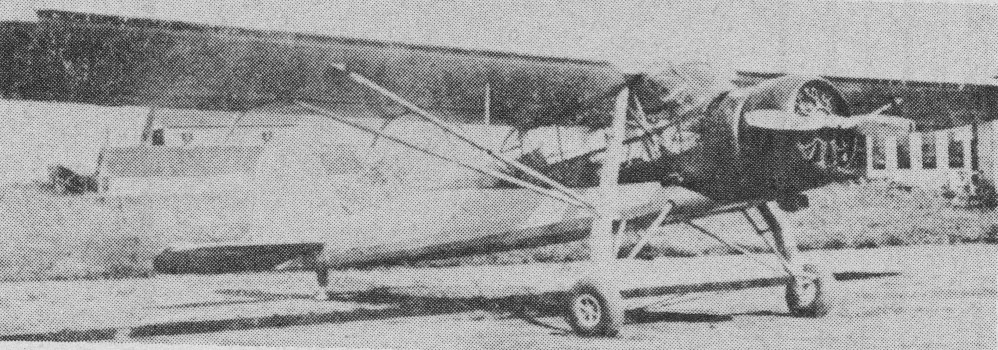
Konchus Antis

The Lithuania Konchus Antis is a single-seat monoplane with cable braced wing plus canard. 25 hp pusher engine. Tricycle landing gear. Length 20’, wing span 31.3’, wing area 170 sq/ft. with canard. Empty weight 220 lbs. Gross weight 400 lbs. Top speed 38 mph and stall speed 26 mph. Wing and tail structure from tubing and fabric. Fuselage is tubing.

Kokusai Ki-76 / Nippon Ki-76

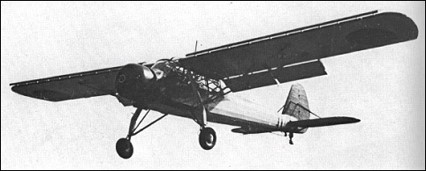
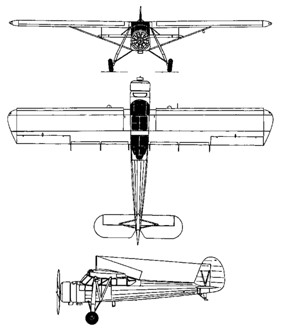
In 1940, the Imperial Japanese Army Air Force ordered the Nippon Kokusai Koku Kogyo to produce an artillery spotting and liaison aircraft. The resulting Ki-76, or Liaison Aircraft Type 3 (in Japanese: 三式指揮連絡機), was inspired by, and similar to, the German Fieseler Fi 156 “Storch”, although not a direct copy. A high-winged monoplane with a fixed tailwheel undercarriage, the Ki-76 used Fowler flaps, and was powered by Hitachi Ha-42 radial engine.

First flying in May 1941, the Ki-76 proved successful when evaluated against an example of the Fi-156, and was ordered into production as the Army Type 3 Command Liaison Plane in November 1942. 937 including a single prototype were built.

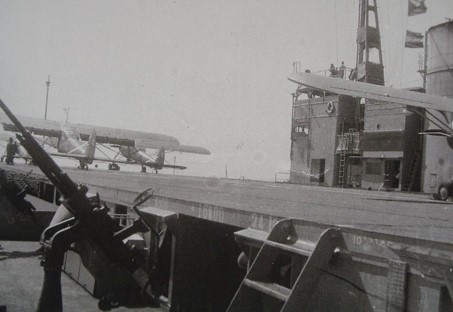
The Ki-76 remained in service as an artillery spotter and liaison aircraft until the end of the war. Ki-76s were also used as anti-submarine aircraft, operating from the Japanese Army’s escort carrier, the Akitsu Maru, being fitted with an arrestor hook and carrying two 60 kg (132 lb) depth charges.

Kokusai Ki-76 spotter planes on deck of Imperial Japanese Army landing vehicle carrier Akitsu Maru

The Allied reporting name was “Stella”.

Some were used by the Royal Thai Air Force.

Ki-76
Engine: 1 × Hitachi Ha42, 231 kW (310 hp)
Propeller: 2-bladed fixed-pitch
Wingspan: 15 m (49 ft 3 in)
Wing area: 29.4 m2 (316 sq ft)
Length: 9.65 m (31 ft 8 in)
Height: 2.9 m (9 ft 6 in)
Empty weight: 1,110 kg (2,447 lb)
Gross weight: 1,530 kg (3,373 lb)
Max takeoff weight: 1,623 kg (3,578 lb)
Maximum speed: 178 km/h (111 mph, 96 kn) at sea level
Range: 750 km (470 mi, 400 nmi)
Service ceiling: 5,630 m (18,470 ft)
Guns: 1× 7.7 mm (0.303 in) machine gun in rear cockpit
Bombs: 2× 60 kg (132 lb) depth charges (some variants)
Crew: 2

Koenig Engineering AK.09 Faucon / Junkers Profly Ultima

Junkers Profly Ultima

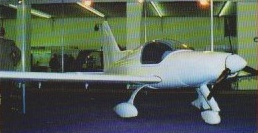
Classed as a microlight under the FAI definition, the all carbonfibre Ultima two seater was at the point of being marketed in 1998.
Koenig Engineering offers kit to construct AK.09 Faucon two-seat composites monoplane, also available from Germany as Junkers Ultima.

Engine: Rotax 912, 80 hp
Wing span: 8.20 m
Wing area: 10.5 sq.m
MAUW: 450 kg
Empty weight: 250 kg
Fuel capacity: 90 lt
Max speed: 260 kph
Cruise speed: 230 kph
Minimum speed: 65 kph
Climb rate: 6.2 m/s
Seats: 2
Fuel consumption: 12 lt/hr
Price (1998): 98 000 DM
Kit price (1998): 52 270 DM