Zalewski WZ-I

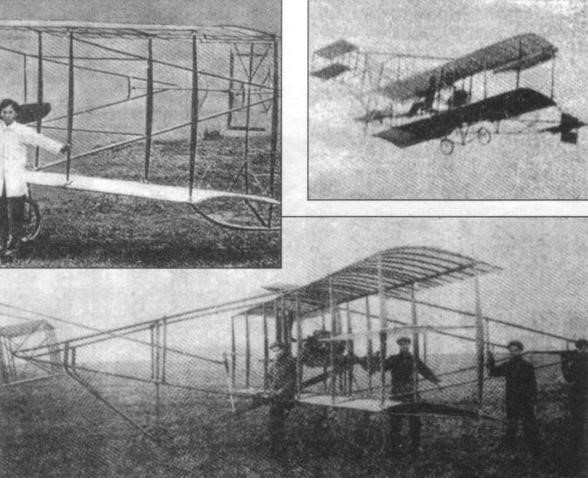
In 1909 the then-17-year old student of engineering Władysław Zalewski begun designing an airplane being essentially a scaled-down Farman. In 1911 he proceeded to construction works but financial constraints caused a break until 1913 when they resumed only to be interrupted again year later by the outbreak of the Great War, this time for good. Interestingly, already built elements managed to survive the war and years later some of them were used in construction of another Zalewski’s aircraft, the WZ-XI/XII.

Zafar 300

The Zafar 300 is an Iranian attack helicopter based upon the American Bell Model 206A Jetranger utility helicopter, adapted for a military gunship role. It is armed with a General Electric GAU-2B/A Minigun rotary six-barrel machinegun in an under-nose turret, and disposable stores on two hard points. The Zafar 300 is manned by a crew of two comprising a pilot and gunner seated in tandem.

Yvon Perret EViva

The Yuneec EViva was originally designed by Martin Wezel in conjunction with the Czech company Composit and initially intended to be powered by a 50 hp (37 kW) Rotax 503 two-stroke or 60 hp (45 kW) HKS 700E four-stroke powerplant.

The aircraft was designed to comply with the Fédération Aéronautique Internationale microlight rules. It features a cantilever wing, a T-tail, a two-seats-in-side-by-side configuration enclosed cockpit under a bubble canopy, retractable monowheel gear with wing tip and tail casters, and a single electric motor in tractor configuration driving a folding propeller.

The design was purchased by Yuneec, development shifted to China and the aircraft was adapted for electric power.

The aircraft is made from composites. Its 17 m (55.8 ft) span wing has an area of 14.2 m2 (153 sq ft) and upper wing telescopic air brakes as well as flaps. The wing is derived from the Wezel Apis 2 wing. The standard engine fitted is the 40 kW (54 hp) Yuneec Power Drive 40 electric motor, controlled by a Yuneec Power Block 40 400 Amp power controller and powered by two Kokam Lithium polymer battery packs of 31 Ampere-hours (Ah) each (62 Ah total). The engine weighs 23 kg (51 lb), the controller 7 kg (15 lb) and the batteries weigh 67 kg (148 lb) in total. The propeller folds aft into the engine cooling vents when not in use and deploys automatically on engine start. The batteries are charged by a Yuneec E-Charger that can run on 110-240 volts and charge in 3–4 hours.

First flown in 2012, the projected price in 2011 was €91,000.

Powerplant: 1 × Yuneec Power Drive 40 electric motor, 40 kW (54 hp)
Battery packs: two Kokam Lithium polymer packs of 31 Ah each (62 Ah total)
Propeller: 2-bladed folding carbon fibre
Prop diameter: 1.60 m (5 ft 3 in)
Wingspan: 17 m (55 ft 9 in) / 11.6 m with wing tips removed
Wing area: 14.2 m2 (153 sq ft)
Length: 6.9 m (22 ft 8 in)
Height: 2.65 m (8 ft 8 in)
Empty weight: 225 kg (496 lb)
Gross weight: 472.5 kg (1,042 lb)
Maximum speed: 180 km/h (112 mph; 97 kn)
Cruise speed: 160 km/h (99 mph; 86 kn)
Stall speed: 65 km/h (40 mph; 35 kn) flaps down
Never exceed speed: 230 km/h (143 mph; 124 kn)
Endurance: 1.3 hours on batteries
Maximum glide ratio: 38:1
Rate of sink: 0.65 m/s (128 ft/min) at 85 km/h (53 mph)
Wing loading: 33.3 kg/m2 (6.8 lb/sq ft)
Crew: one
Capacity: one passenger

Yurev 1912 Helicopter

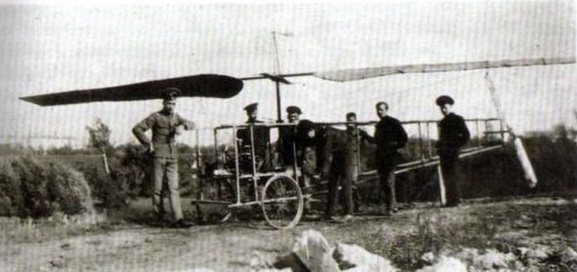
Student of the Moscow Technical College (МВТУ), Борис Николаевич Юрьев (Boris Nickolaevich Yurev) was the inventor of an automatic pitch-control mechanism, but because of lack of funds this full scale model was built without an engine nor pitch-control mechanism. Later however, a 30 hp Anzani radial was installed yet the machine remained without the poorly working pitch-control, which was used only on rotating tests. Considered to be the first modern helicopter with a single main rotor and a tail rotor.

Yunker Y-1 / Y-2

Designed by Felix Knoll during 1929-1930, the Y-1 and Y-2 were three place open cockpit biplanes.

The Y-1 N421N c/n 1 was powered by a 165hp Warner. When the company floundered it sold for a whole dollar ($1) to Carrol Beckwith of Larned KS. The registration was cancelled by CAA 7 January 1933 after he informed them it was dismantled.

The Y-2 N490N c/n 2 was powered by a165hp Wright R-540A. the Y-2 crashed on 27 March 1930 and its registration was cancelled.

Yuneec E-430 / GreenWing International GW430

The Yuneec International E430 is a Chinese two-seat electric aircraft designed for commercial production by electric model aircraft manufacturer Yuneec International.

The E430 is a two-seat, V tailed, composite aircraft with a high-aspect ratio wing. Take-off speed is 40 mph, cruise speed is 60 mph, and max speed is 95 mph.

The company claims that the battery packs have an expected lifespan of 1500 hours and cost US$7000 each, with the aircraft carrying 3-5 battery packs, giving two to two and half hours endurance. The batteries can be recharged in 3–4 hours from a 220v outlet.

The aircraft was being developed as a kit aircraft for the US market. The development of the E430 was being funded entirely by Yuneec CEO Tian Yu.

The aircraft was first flown on 12 June 2009 from the Yuneec factory near Shanghai, China, and then shipped for further testing to Camarillo, California. On 14 July 2009 the prototype aircraft was registered in the USA as N386CX and on 18 July 2009 it was given a Certificate of Airworthiness by the Federal Aviation Administration and further test flights were carried out, totalling 22 hours. The prototype E430 was then shipped by truck to Wisconsin and displayed at EAA AirVenture Oshkosh in July 2009. It was also on display at that venue in summer of 2010.

In July 2009 the company estimated that the price for a commercially available light sport aircraft production version of the E430 would be US$89,000.

At AirVenture 2010 the company announced that it would start accepting orders for the aircraft after the show. At that date the aircraft was advertised as having an endurance of 2.25 to 2.5 hours with a useful load of 390 lb (177 kg). The E430 was named the winner of the Lindberg prize for electric aircraft at AirVenture in 2010. The Lindbergh Electric Aircraft Prize (LEAP) was awarded by Erik Lindbergh, the grandson of Charles A. Lindbergh and Anne Morrow Lindbergh. In the same year it was named Brit Insurance Design of the Year in the transport category. Deliveries were initially scheduled for late 2011, but by the end of 2012 there was no indication that more than prototypes had been completed.

Yuneec International, created GreenWing International and in June 2013 it was announced that their GW280 (eSypder) and GW430 (e430) airplanes will be produced, marketed and supported by GreenWing International, however that company went out of business in about 2014.

By December 2012 a total of two examples had been registered in the United States with the Federal Aviation Administration. The first one was the initial prototype shipped to the US, registered in the Experimental – Exhibition category on 14 July 2009, although its registration expired on 31 March 2012. The second was registered in the Experimental – Research and Development category on 26 January 2011 to Flying Tian of Monterey Park, California.

E430
Engine: 1 × Yuneec Power Drive 40, 40 kW (54 hp)
Batteries: Yuneec OEM Lithium Polymer, 13 kg (28.6 lbs), 66.6V (30 Ah) each
Propeller: 2-bladed fixed pitch
Length: 6.98 m (22 ft 11 in)
Wingspan: 13.8 m (45 ft 3 in)
Wing area: 11.37 sq.m (122.4 sq ft)
Empty weight: 250 kg (551 lb) with batteries
Gross weight: 470 kg (1,036 lb)
Maximum speed: 150 km/h (93 mph; 81 kn)
Cruising speed: 90 km/h (56 mph; 49 kn)
Stall speed: 70 km/h (43 mph; 38 kn)
Range: 227 km (141 mi; 123 nmi)
Maximum glide ratio: 25:1
Rate of climb: 3.5 m/s (690 ft/min)
Wing loading: 41.3 kg/sq.m (8.5 lb/sq ft)
Seats: 2
Yuneec eSpyder / GreenWing International GW280

The Flightstar is a large family of single and two-seat, high wing, single engined kit aircraft that was produced by Flightstar Sportplanes of South Woodstock, Connecticut. In 2009 the rights, tooling and parts inventory were sold to Yuneec International of China when Flightstar Sportplanes’ business was wound up.

In April 2014 Yuneec International of China debuted its eSpyder electric at the AERO event in Germany. The eSpyder is a reworked Flightstar ultralight from the 1980s. Flight Design USA’s Tom Peghiny, producer of the Flightstar for many years, sold the design to Yuneec but continued helping with development. The eSpyder, has completed Germany’s DULV aviation standard.

In July 2009 a new single seat model was exhibited at EAA AirVenture Oshkosh. The aircraft is intended to be developed into a commercially available kit and forecast to be available for under US$25,000.

The e-Spyder is an electric-powered and beefing up (enlarging and strengthening) version of the Flightstar Spyder. The aircraft replaces the Spyder’s two-stroke engine with a Yuneec Power Drive 20 20 kW / 27 hp electric motor and two 28 lb (13 kg) Lithium polymer battery packs which provide a 40-minute endurance.

e-Spyder

The E-Spyder, a single seat electric powered aircraft featuring the PowerDrive 24 propulsion system integrating the Motor, Motor Controller, 75 Volt Battery, and Charger, received the world’s first type certification for an electric aircraft from Deutschen Ultraleichtflugverbandes (DULV) E.V in 2013.

Yuneec International created GreenWing International to further develop and market their GW280 (eSypder) and GW430 (e430) airplanes. GreenWing International went out of business in about 2014.

GreenWing International had announced the release of its first 50 eSpyder single-seat electric planes, which were to be sold as build-it-yourself kits for for under US$40,000. The company was to ship 25 eSpyders in the United States at a cost of US$39,990. Another 25 were to be sold in Europe for €34,990 each.

Power: PowerDrive 24, 24 kW / 32 hp
Battery: 75 Volt, 13-kWh lithium
Wingspan: 10.1 m / 33.1 ft
Length: 5.9 m / 19.4 ft
Height: 2.4 m / 7.9 ft
Empty weight: 186 kg / 410 lb
Max cruise: 68 mph / 109 km/h
Economy cruise: 38 mph / 61 km/h
Standard flight time: 60 – 90 min
Battery recharging: 2 – 3 hr

Yue No.2 / Ru, Feng No. 2

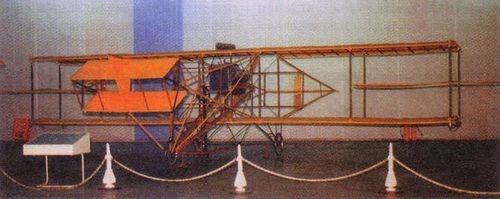
Feng Yue #2 at the National Aviation Museum in Nanking.

Although the “Feng Ru No. 1″ airplane was damaged during the first test flight, it can be proven that it flew, and the Chinese immigrants in the USA were legitimately very proud. They continued to support Feng Ru’s airplane endeavors, and in January 1911 Yue started his new airplane”Feng. 2” in Oakland.

Yue launched his second airplane above the Piedmont hills on September 21, 1909. The Feng Yue #2 was Curtiss-like, but had some differences in the front elevator assembly.

This was the first airplane manufactured by an Oakland resident to fly in that area. Unfortunately, this airplane crashed as well after a twenty minute flight when the bolt holding the propeller shaft broke. Fong continued building planes, and in 1911, his plane stayed in the air for 40 minutes and landed without a mishap.