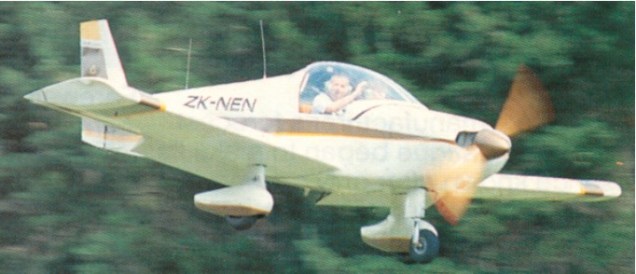
Zenair CH250 Zenith

A long range derivative of the CH200, carries 34 USG of fuel in wing tanks, larger baggage compartment and rear windows.

Engine: Lycoming, 150 hp
Max speed: 166 mph.
Cruise speed: 150 mph
Range: 540 sm.
Stall speed: 54 mph
ROC: 1300 fpm.
Take-off dist: 650 ft
Landing dist: 650 ft.
Service ceiling: 12,000 ft
Fuel cap: 34 USG.
Empty wt: 990 lb
Gross wt: 1610 lbs.
Height: 6.67 ft
Length: 20.5 ft.
Wing span: 23 ft
Wing area: 105 sq.ft.
Seats: 2

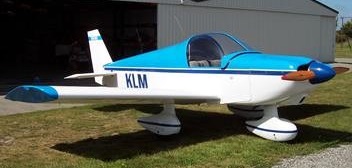
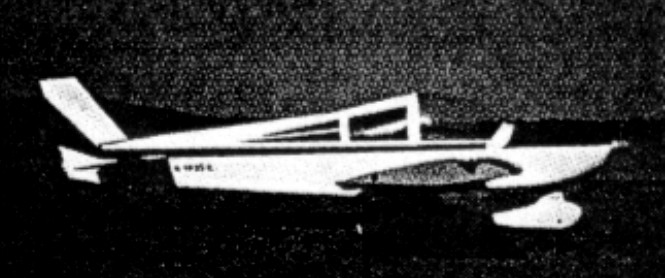
Zenair CH-200 Zenith

With 100 hp the CH-200 will cruise for four hours at 130 mph carrying two passengers and baggage, while 150 hp and an aerobatic option turns the Zenith into a powerful per¬former. (The Zenith is stressed for engines from 85 to 160 hp). First designed and built in 1974. Two ¬place seating is under a sliding canopy in a fuselage formed by four longerons with stiffened skins, blind riveted to longerons. Five bulkheads carry the top skin. The constant-chord wings have a single cantilevered spar with three sections and electronically-operated flaps. One-piece, all-moving, horizontal and vertical control surfaces constitute the tail.

Price 1982: $8,500 (excludes engine, instruments and paint). Units delivered to June 1981: 450.

Engine: 125-hp
Gross Weight: 1500 lbs.
Empty Weight: 930 lbs
Fuel Capacity: 24 USG.
Wingspan: 23 ft
Length: 20ft 6in.
Wing area: 105 sq.ft
Top speed: 151 mph.
Cruise speed: 141 mph
Stall speed: 54 mph.
Climb rate: 1100 fpm
Takeoff run (to 50ft): 1400 ft.
Landing run (from 50ft): 1400 ft
Range: 450 sm.
Seats: 2
Design load: +9g.

Engine: Lycoming, 150 hp
Max speed: 167 mph.
Cruise speed: 152 mph
Range: 400 sm.
Stall speed: 53 mph
ROC: 1700 fpm.
Take-off dist: 600 ft
Landing dist: 600 ft.
Service ceiling: 12,000 ft
Fuel cap: 24 USG.
Empty wt: 970 lbs
Gross wt: 1500 lbs.
Height: 6.75 ft
Length: 20.5 ft.
Wing span: 23 ft
Wing area: 105 sq.ft.
Seats: 2

Engine: Lycoming O-235
Cruise speed: 110+ mph.
Endurance: 3.5 hr

Engine: Rolls Royce Continental 0200A 100 hp

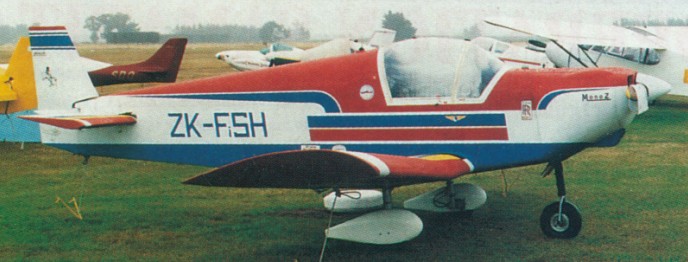
Zenair CH-100 Mono-Z

The Mono-Z is a single-place, scaled-down version of the original Zenith first built in 1974. It offers maximum operating economy with VW power at a three gph cruise. Detachable wings leave an 8-foot-wide section for easy road towing, requiring only 20 minutes to install both wings. It is stressed for 9G’s and with 100-hp becomes a powerful aerobatic performer. Engine range from the VW 1600 to 100-hp Continental.

Zenair CH-100 Article

It was marketed as plans and kits for home-builders.

Engine: VW 1600cc
Wingspan: 22’0″
Length: 19’6″
Useful load: 330 lb
Cruise speed: 105 mph
Stall: 47 mph
Seats: 1

Engine: 100-hp Continental
Gross Weight: 960 lbs.
Empty Weight: 630 lbs
Fuel capacity: 15 USG.
Wingspan: 22 ft
Length: 19ft 6in.
Wing area: 91 sq.ft
Top speed: 125 mph.
Cruise speed: 110 mph
Stall speed: 48 mph.
Climb rate: 820 fpm
Takeoff run (to 50ft): 1000 ft
Landing run (from 50ft): 1000 ft
Range: 400sm

Zenair Zenith

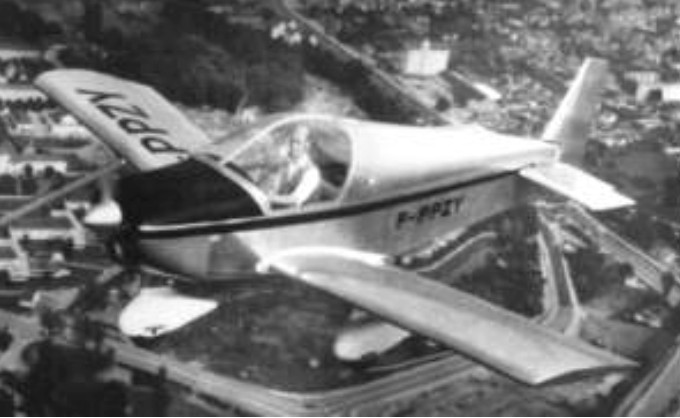
In his spare time, Heintz began to design and build his own aircraft, which he named the Zenith, anagram of Heintz. After a little more than a year’s work, the two-place low-wing Zenith was rolled out and successfully flown on 22 March 1970 as F-WPZY.

Soon after, detailed blueprints and construction manuals of the aircraft were drawn up and offered to the growing number of interested builders and flyers.

Engine: 85-160 hp
Span: 22.11 ft
Length: 20.08 ft

Zdarsky Trike

Zdarsky in Austria

Czechoslovakian engineering student Ivo Zdarsky escaped into Austria in a homemade ‘ultralight’ aircraft powered by a 2-cylinder car engine.

In 1984 the plane was confiscated by police but he bribed the police and got it back.

The student, wearing a bright yellow crash helmet, flew the craft only about 100 to 200 yards above the ground for the entire trip. He parked his homemade, 3-wheeled craft with a basket-like seat outside an Austrian Airlines hangar used for DC-9 jets and sat there until airport employees spotted him.

Police said the man took off from the town of Lozorno, about 6 miles inside Czechoslovakia, at 3 a.m. and landed at Vienna’s Schwechat airport about 4:45 a.m., a 25-mile trip. Police said the student told them he had planned his escape for a year, making secret test flights of the ultralight aircraft.

A witness said the student’s plane was powered by a 600-cubic centimeter, 2-cylinder engine and had a fuel tank taken from a Czechoslovak-made Java motorcycle. Ultralights are prohibited in Austria because of noise and environmental regulations.

The 24-year-old Ivo Zdarsky spoke fluent English and asked for political asylum and wanted to emigrate to the United States or Australia, police said.

Zdarsky was able to sell his plane to Checkpoint Charlie German museum that housed escape vehicles. Afterwards he moved to Los Angeles where he started his own company, called Ivoprop, which produced propellers of his own design.

Zbierański and Cywiński Biplane

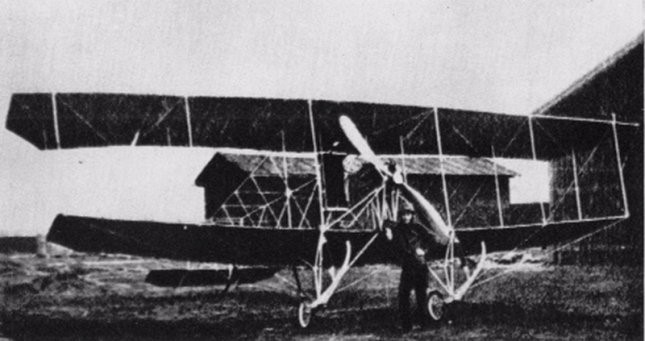
On the initiative of the Association of Technicians at the Technical Association in Warsaw in the autumn of 1909, Czeslaw Zbierański went to Paris to get acquainted with the aviation technique of the time. On his return, he designed a wooden plane using a pulling propeller engine, while the biplanes at that time had pushing propellers. After the approval of the project by Wheeler Zbierański left for France to buy materials. Having encountered a Voisin airplane with a steel tube construction, he decided to build a hull from the tube.

Stanisław Cywiński became Stanisław Cywiński’s co-worker, who in the spring of 1910 adapted the project to steel construction and elaborated on the design. The hull of the aircraft was built in the summer of 1910, in a shed on the premises of E. Krzemiński’s lamp factory at ul. Solec 103 in Warsaw. After the construction of the hangars of the Warsaw Aircraft Association “Awia” on the Mokotowskie Field, they moved in the early autumn of 1910 to the hangar No. 1. There construction was completed. In the autumn of 1910 Cywiński bought the engine for the plane.

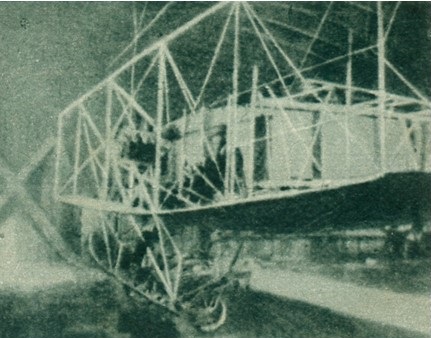
The biplane was rectangular, double-girder, wooden construction panels, supported by steel pipe posts and crossed with wires. Canvas cover. Controls were only on the upper wing. Truss lattice made of steel pipes connected by screws. Tubes stiffened by ash rods. Rear hull triangular section. Trusses framed by wires. With fabric covering

In May 1911, while attempting to fly an improper connection of the wires to the spark ignition caused gasoline to burn and burn part of the airfoil. In the summer the plane was renovated.

On September 25, 1911, the plane was flown by Michał Scipio del Campo, flying 15-20 km, at a height of 50-60 m, within 15 minutes. The engine was too heavy and too weak, so the Gnome engine from the Morane-Borel aircraft belonging to M. Scipio del Campo was mounted.

When the Russian army took over at the beginning of 1912, the plane was evacuated by Russian lieutenant Krachowiecki, fictitiously buying it. Cywinski dismantled the engine, and Zbierański donated the craft to the Union of Students of the Lviv Polytechnic. The plane was transported to Cracow in 1912, where it was exhibited in the Oleander area and then stored for over a year. There at the beginning of the war in 1914, it burned down during the fire of the exhibition buildings.

Engine: ENV type D, 29 kW (39 – 40 hp)
Wingspan: 10 m
Length: 8.5 m
Height: 3.3 m
Wing area: 31-34 sq.m
Gross weight: 240 kg
Useful weight: 100 kg
Total weight: 340 kg
Speed: 70 km / h
Flight time: 1 h 30 min
Zaschka Helicopter

In 1928 Zaschka carried out experiments with a two-rotor helicopter at Tempelhof Airport in Berlin.

“His [Engelbert Zaschka’s] plane, the first helicopter, which ever worked so successfully in miniature, not only rises and descends verticially, but is able to remain stationary at any height. Herr Zaschka is fully aware that the perfection of his invention will be the greatest forward step in aviation since the Wright brothers made their historical hop. As he pointed out, the danger of flying would immediately be decreased by at least 80 per cent, since four fifths of the accidents in flying occur either in the takeoff or in landing. […] A motor giving thirty to forty horsepower is installed in Zaschka’s present experimental machine. It is so delicately adjusted that he has been able to keep the plane at a height of several feet above the ground, with no movement either up or down.”

Source: German Plane Promises New Stunts in Air, The Bee. Danville, Virginia, USA, June 25, 1927, p. 16.

Zalewski WZ-V

In September 1916 Imperial Russian Army opened a contest for a design of a three-seat army co-operation aircraft. Zalwski designed a quadruplane (which he designated WZ-V) that was to be built at Kiev, but overall situation made it impossible. The designed aircraft had a crew of three (two seating abreast in the front cockpit plus gunner behind them), a wooden construction and 220 hp Renault engine.