A single-seat, shoulder-wing monoplane experimetal aircraft of 1922.
Fitted with an annular radiator and a 450 hp W-12 Napier Lion II.
The Sm-8 designation was possibly applied to a projected or commercial variant.
1 engine
Letov Š.7
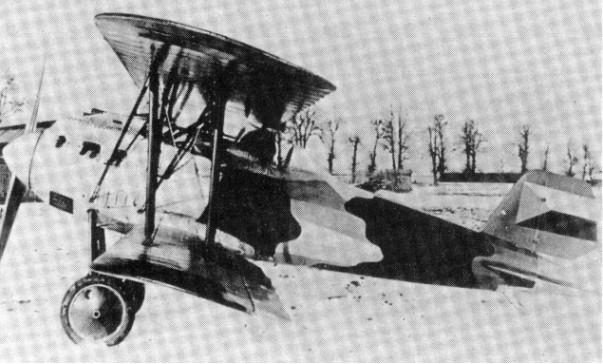
The Š 7 was designed by Alois Smolik and built in 1923 to participate in an official competition for single-seat fighters powered by the 300 hp Skoda-manufactured Hispano-Suiza 8Fb engine. Of similar mixed construction to preceding Smolik¬ designed fighters, the Š 7 was an equi-span single-bay staggered biplane with twin 7,7-mm gun armament. The Š 7 was initially flown with a ring-type frontal radiator, but cooling problems dictated redesign of the radiator system and the prototype was fitted with a redesigned engine cowling and a ventral radiator as the Š 7a. This type failed to attract a production order and further development was discontinued.
Engine: 220 hp V-8 Skoda HS 8Fb
Span, 30 ft 6 ½ in (9,30 m)
Length, 22 ft 10 3/8 in (6,97 m)
Height, 8 ft 8 1/3 in (2,65 m)
Wing area, 238.43 sq ft (22,15 sq.m)
Max speed, 158mph (255 km/h)
Time to 3,280 ft (1 000 m): 15 min
Empty weight, 1,682 lb (763 kg)
Loaded weight, 2,315 lb (1 050 kg)
Letov Š.4 / SHS. 1
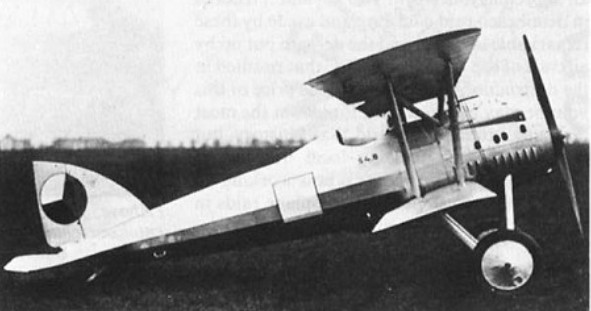
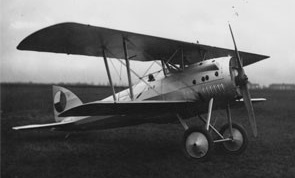
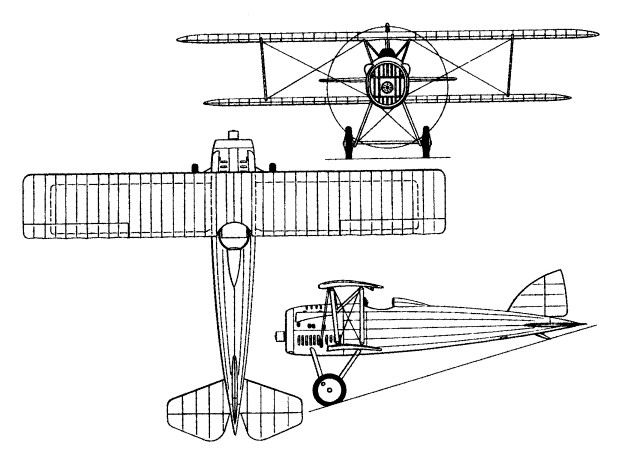
Intended as a successor to the Spad 7 and 13 in service with the newly-created Czechoslovak Air Force, and selected in preference to the Š 3 parasol monoplane, the Š 4, initially designated S HS. 1, was a single-bay unstaggered biplane of mixed construction with fabric-covered wooden wings and metal fuselage and tail.
Flown in 1922, the Š 4 was powered by a 220 hp Hispano-Suiza 8Ba engine and carried an armament of two synchronised 7,7-mm Vickers machine guns.
A series of S-4 fighters was ordered, but 20 of these were completed with the 180 hp HS 8Aa engine as Š 4a aerobatic trainers. As a result of low manufacturing standards a number of difficulties were experienced with the S4 which was grounded in 1927, the surviving aircraft being rebuilt in 1928 to Š 4a trainer standard.
Letov Š -4 / SHS-4
Engine: 1 x 220hp Hispano-Suiza 8Ba
Max take-off weight: 980 kg / 2161 lb
Empty weight: 673 kg / 1484 lb
Wingspan: 8.00 m / 26 ft 3 in
Length: 6.58 m / 21 ft 7 in
Height: 2.62 m / 8 ft 7 1/8 in
Wing area: 16.43 sq.m / 176.85 sq ft
Max. speed: 232 km/h / 144 mph
Cruise speed: 200 km/h / 124 mph
Rate of climb: 323 m/min / 1050 ft/min
Climb to 5000m: 21 min 50 sec
Service ceiling: 5500 m
Range: 500 km / 311 miles
Armament: 2 x 7.7mm
Crew: 1
Š -4a
Engine: 180 hp HS 8Aa
Letov Š.3 / SB-3
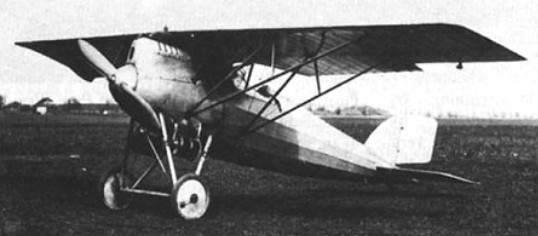
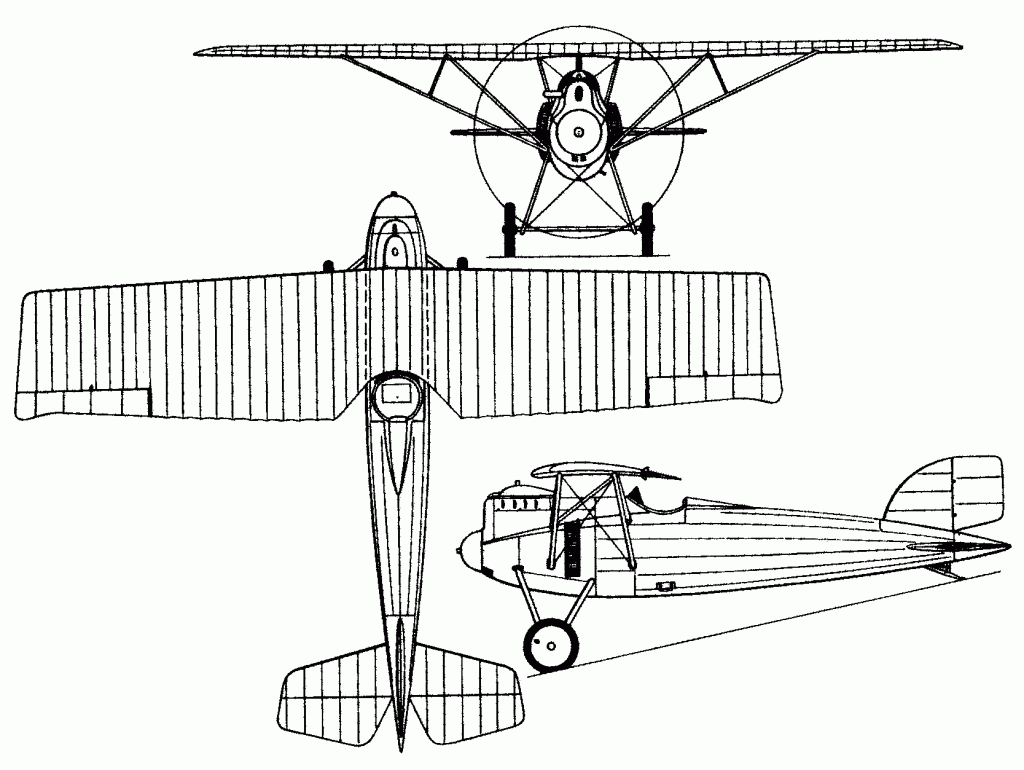
The first original fighter design to be produced by the Vojenská továrna na letadla (State Aircraft Works) “Letov”. The Š 3 was created by Ing Alois Smolik who had formerly worked for the Austro-Hungarian government Initially designated as S B.1, the original prototype was destroyed in a fire at the Prague-Letnany factory on 5 November 1921, but a second prototype entered flight test early in 1922.
A single-seat parasol monoplane powered by a 185 hp BMW l1la six-cylinder in-line engine and carrying an armament of two 7,7-mm Vickers machine guns, the Š 3 was of mixed construction with a wooden wing and metal fuselage and tail. The Š 3 participated in the International Meeting in Zurich in 1922, taking third place in the precision take-off and landing contest and seventh place in the aerobatic contest. Further development was discontinued in favour of the S 4.
Š.3
Crew: 1
Engine: 1 x 185hp BMW IIIa
Max take-off weight: 928 kg / 2046 lb
Empty weight: 662 kg / 1459 lb
Wingspan: 10.13 m / 33 ft 3 in
Length: 7.08 m / 23 ft 3 in
Height: 3.04 m / 10 ft 12 in
Wing area: 17.60 sq.m / 189.44 sq ft
Max. speed: 225 km/h / 140 mph
Cruise speed: 195 km/h / 121 mph
Rate of climb: 508 m/min / 1650 ft/min
Time to 9,840 ft (3000 m): 5.9 min
Range: 472 km / 293 miles
Armament: 2 x 7.7mm
Letov SH-1 / Š.1 / Š.10 / SM-1 / Š.2 / Šm A 1 / Š.5
Since the first controllable heavier-than-air flights had been made, the Austria-Hungarian administration did not intend to establish aeroplane manufacturing in Bohemian or Moravian Lands. An Aeroplane Repairs Works “Al-Ma” was set up by Dr. Martius, being of German origin, in the Prague district of Holešovice in 1916. Several days after the independent state of Czechoslovakia had come into existence on October 28, 1918 the Air Force Corps was founded and an order to move all the aeroplanes and air material to Prague was issued. On November 18, 1918 nine planes were seized by the Czechs and eight of them ferried from the town of Cheb to Prague situated near border on Germany so that the Germans were prevented from flying them into Germany. This unexpected raid was commanded by Cpt. Adamec [Addammaets] who was later appointed the Aeroplane Arsenal`s CO. The ninth Czech pilot had to land in Germany and his aircraft was confiscated.
Every plane was concentrated at the Prague Fair Facility until February 1919. A young P/O Alois Smolik was in charge of repairs. He used to be as an asistant to the Air Expert and Scholar Profesor Miess. The Sm-1 biplane designed by Alois Smolik and flight-tested in Apríl 1919 persuaded the Czechoslovak government to prefer the home-production aircraft to ones imported from France, though 115 French planes were presented them.
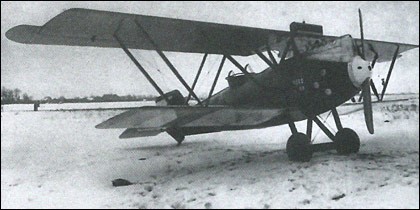
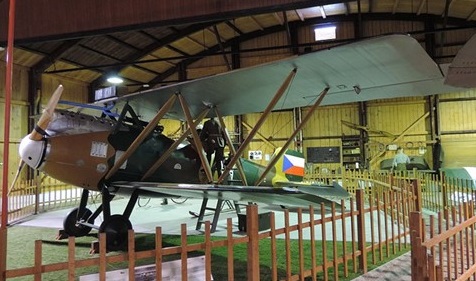
Originally built in 1910 as the SH-1 with 127 kW (230 hp) Hiero L engines, the SH-1 was later redesignated Š-1. 28 were built.
The Letov Š-1 was a single-engined, two-seat biplane surveillance aircraft. Designed by Alois Šmolík at Letov Kbely, it was first military aircraft built in Czechoslovakia.
The Š-1 first flew in 1920.
The SM-1 variant was powered by 194 kW (260 hp) Maybach Mb.IVa engines and later redesignated Š-2. 64 were built. This 2 seater was armed with one forward firing machine gun and had a twin movable machine gun in the rear. 28 were built.
The Sm A 1 was a commercial variant with a canopy over the rear cockpit for 2 passengers.
The Letov Š-10 of 1921 was an Š-1 trainer variant with a 100 hp 6-cyl Breitfeld & Danek Blesk (Czech Mercedes DI) engine.
The Letov Š-5 was an Š-1 modified for evaporate cooling trials.
The primary user was the Czechoslovakian Air Force.
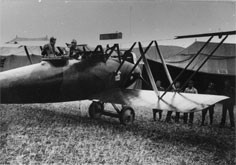
SH-1 / Š.1
Engine: 1 × Hiero 6L inline engine, 169 kW (230 hp)
Wingspan: 13.23 m (43 ft 4.75 in)
Length: 8.31 m / 27 ft 3 in
Height: 3.10m / 10 ft 2 in
Empty weight: 861 kg
Max takeoff weight: 1,375 kg (3,031 lb)
Maximum speed: 194 km/h (120 mph)
Range: 715 km / 445 miles
Climb to 5000 m: 52 min
Service ceiling: 6,000 m / 19,685 ft
Crew: 2
Armament: 1x fixed machine gun, 1x twin machine gun on swivel mount
SM-1 / Š.2
Engine: 1 x 260hp Maybach Mb.IVa
Max take-off weight: 1492 kg / 3289 lb
Empty weight: 970 kg / 2138 lb
Wingspan: 13.02 m / 43 ft 9 in
Length: 8.52 m / 28 ft 11 in
Height: 3.31 m / 11 ft 10 in
Wing area: 36.17 sq.m / 389.33 sq ft
Max. speed: 198 km/h / 123 mph
Cruise speed: 167 km/h / 104 mph
Ceiling: 6500 m / 21350 ft
Range: 667 km / 414 miles
Armament: 3 x 7.7mm, 120kg of bombs
Crew: 2
Š.10
Engine: 100 hp 6-cyl Breitfeld & Danek Blesk
Letord et Niepce 1909 monoplane
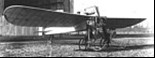
The 1909 Letord et Niepce monoplane was designed and built by Letord and Niepce in France
Span: 31’6″
Length: 27.11″
Weight: 772 lb
LET Mont Piper UL / TUL-09 Tulak
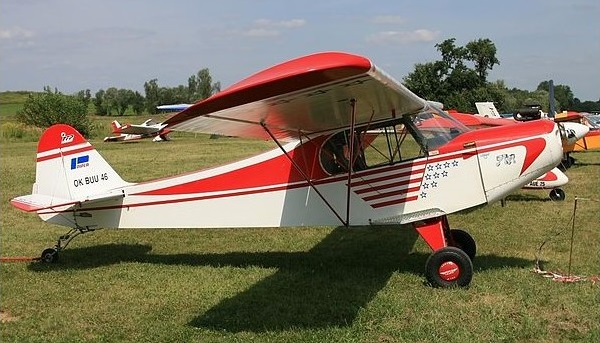
The UL Tulak (Rambler) is a side-by-side, factory-built or kit. There is no kit version for the Piper UL.
The Tulak was certified in 1996 and Piper in 1998. The Tulak was marketed by HB Flugtechnik as Dandy and the UL Piper as the Cubby. German name for the Piper UL being Tandem Tulak.
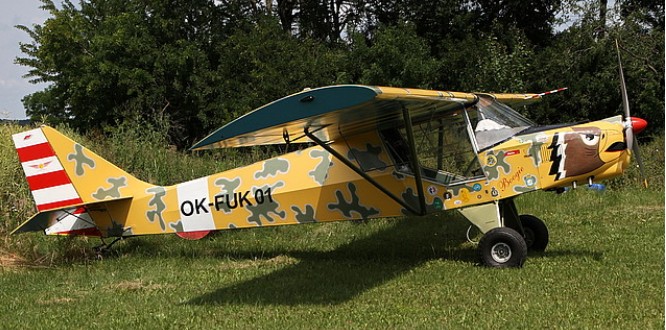
The Piper UL and TUL-09 Tulak feature a high constant-chord wing braced by V struts, with optional tapered or downturned wingtips. The wings fold back for storage and transportation. A Clark Y wing section, thickness/chord ratio 12.5 per cent, is used. Flying controls are conventional and manual wth a flight-adjustable trim tab in each elevator. Plain flaps are fitted.
The fuselage is fabric-covered metal tube and two-spar wooden wing. The engine cowling is metal, and some composites are used.
The landing gear is tailwheel type, fixed, with a steerable tailwheel; 420×150 mainwheels with bungee suspension and cable-operated brakes. Mainwheel spats optional.
Engine options include 58.8 kW (78.9 hp) or 73.5 kW (98.6 hp) BMW; 58.8 kW (78.9 hp) Verner; 62.5 kW (83.8 hp) Tatra; and 51.5 kW (69.0 hp) Limbach..
In total 55 kits and complete aircraft were built by the end of 2002. The ninth factory-built machine was registered in Poland in 2002. Known sales were in Czech Republic, France, Germany and Poland.
HB Flugtechnik marketed the Piper UL and TUL-09 Tulak as the Dandy and Tulak.
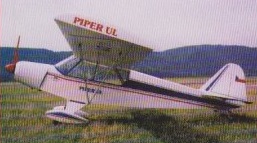
Piper UL / TUL-09 Tulak
Engine: Rotax 503 UL-2V, 37.0 kW (49.6 hp)
Propeller: SportProp three-blade, ground-adjustable pitch, glass fibre
Span: 9.82 m (32 ft 2½ in)
Length: 5.96 m (19 ft 6½ in)
Fuel capacity: 50 litres (13.2 US gallons; 11.0 Imp gallons).
Max cruising speed: 70 kt (130 km/h; 81 mph)
Piper UL
Engine: Rotax 912, 80 hp
Wing span: 9.6 m
Wing area: 13 sq.m
MAUW: 450 kg
Empty weight: 250 kg
Fuel capacity: 50 lt
Max speed: 180 kph
Cruise speed: 160 kph
Minimum speed: 55 kph
Climb rate: 5 m/s
Fuel consumption: 8 lt/hr
Certification: C2
Seats: 2
Price (1998): 58 780 DM
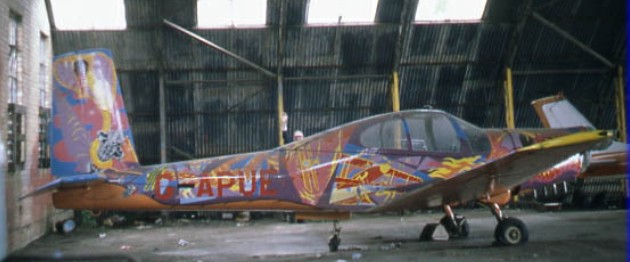
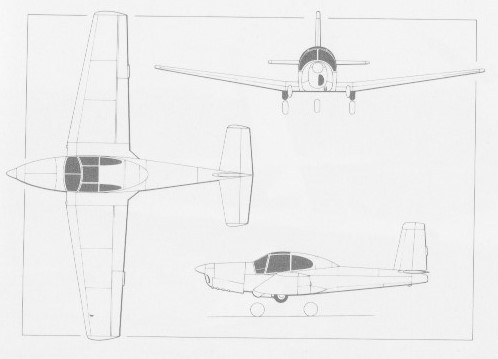
Let L-40 Meta-Sokol
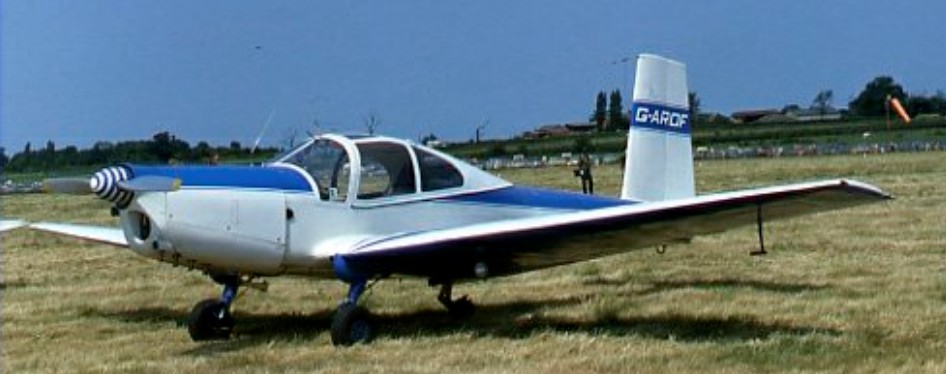
First flying in 1954 the Omnipol L-40 Meta-Sokol originated from Czechoslovakia. The initial version was a three-seater with either a 105 hp Walter Minor 4-III or 115/140 hp M 332 engine.
The four-seater is powered by a 110hp Let M-332 four-cylinder inline engine. Its retractable undercarriage is a reverse tricycle, though the technique is just the same as a normal taildragger.
Late production aircraft had provision for wingtip auxiliary fuel tanks.
Engine: M 332, 110 hp / 140hp supercharged
Wingspan: 32 ft 9 in / 10.00 m
Length: 24 ft 9 in / 7.54 m
Wing area: 157.154 sq.ft / 14.6 sq.m
Weight empty: 1177.5 lb / 534.0 kg
Max take-off weight: 2028 lb / 920 kg
Max. speed: 130 kts / 240 km/h
Cruising speed: 111 kts / 205 km/h / 129 mph
Initial climb rate: 630 ft/min / 192 m/min
Service ceiling: 14,765 ft / 4500 m
Wing load: 13.12 lb/sq.ft / 64.00 kg/sq.m
Range: 458 nm / 8500 km / 528 mi
Crew: 1
Payload: 2-3 Pax
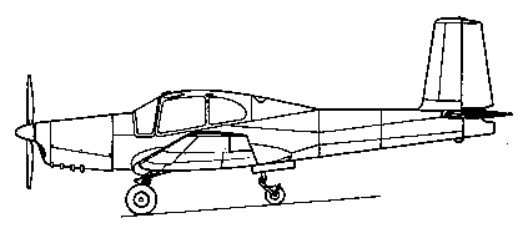
LKB KB-6 Matajur / Letov KB-6 Matajur
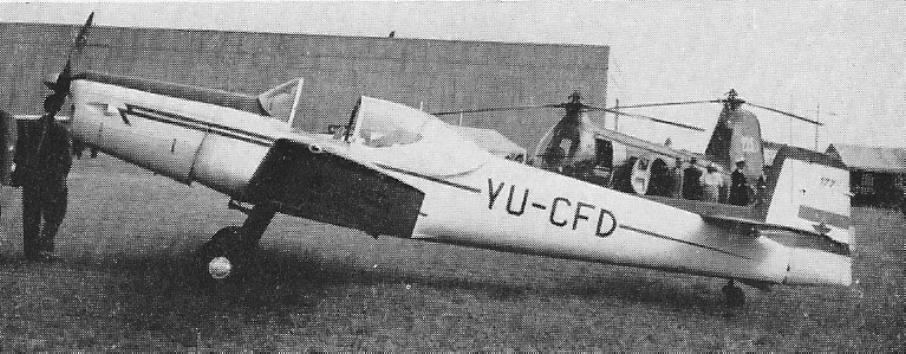
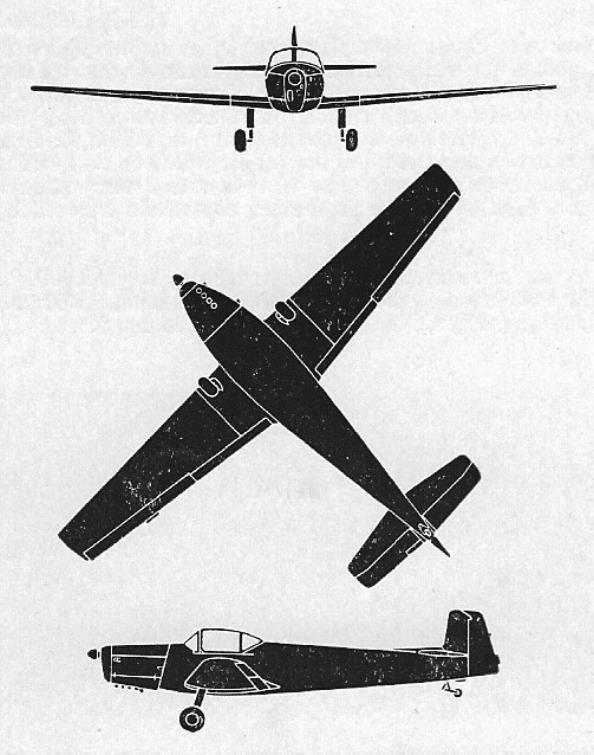
Designed by an amateur design group. The Konstrukeijski Letalskt Zveze Slovenije, comprising students of the Ljubljana Technical High School, the KB-6 Matajur flew for the first time on 4 June 1952.
The first prototype Matajur was powered by a 136 hp Regnier 4 L00 engine, but the second prototype and production aircraft have been powered by the 160 hp Walter Minor engine.
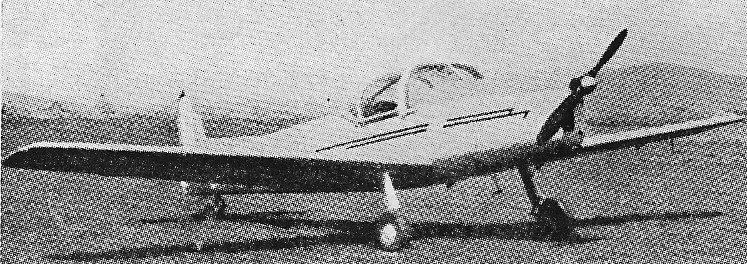
It was produced in quantity by the Letov factory at Ljubljana.
Engine: Regnier 4L00, 136 hp
Wing span: 34 ft 9 in
Length: 27 ft 5 in
Height: 7 ft 1 in
Empty weight: 1453 lb
Loaded weight: 2159 lb
Max speed: 138 mph at SL
Cruise: 124 mph
ROC: 689 fpm
Service ceiling: 14,800 ft
Seats: 2
Engine: 160 hp Walter Minor 6-III
Wing span: 34 ft 9 in
Wing area: 150.7 sq.ft
Length: 27 ft 5 in
Height: 7 ft 1 in
Empty weight: 1453 lb
Loaded weight: 2185 lb
Max speed: 138 mph at SL
Cruise: 114 mph
ROC: 699 fpm
Range: 441 mi
Seats: 2
Lesseps La Frigate
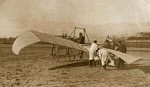
The 1910 Lesseps “La frigate” monoplane was designed and built by Comte Jacques de Lesseps in France.

